Dr. Phil McGraw Responds to Charlie Kirk Murder: Are We at an Inflection Point in American Discourse?
Enjoying this? Share it with someone who needs to see it.
Up Next
A Tribute to Charlie Kirk: The Dialogue Champion Murdered for Bridging Political Divides at 31
33:01
Nick Freitas Explains Why Charlie Kirk's Murder Changed Everything for America's Future
2:00:33
Piers Morgan Uncensored Panel Debates Political Violence After Charlie Kirk Assassination and America's Dangerous Turning Point
1:30:11
Dr. Phil McGraw Responds to Charlie Kirk Murder: Are We at an Inflection Point in American Discourse?
Dr. Phil McGraw addresses the murder of conservative speaker Charlie Kirk at a Utah university campus, examining how one-third of U.S. college students now believe violence is acceptable to stop speech. He explores the contagion effect and challenges viewers to take personal responsibility for rhetoric that can activate unstable individuals on the fringe. McGraw asks whether Americans are at an inflection point and calls for everyone, left and right, to turn down the temperature in political discourse before more violence occurs.
American conservative speaker Charlie Kirk was murdered while speaking on a university campus in Utah. The suspect, Tyler Robinson, a 22-year-old Utah resident, shot Kirk in the neck with a bolt-action rifle. Robinson was turned in to authorities with his family's involvement and is currently being held on suspicion of aggravated murder, felony discharge of a firearm causing serious bodily injury, and obstruction of justice.
The casings found with the rifle were engraved with messages that reveal the shooter's mindset. One was engraved with lyrics from an Italian anti-fascist anthem, Bella Ciao. Another was engraved with the words, "Hey, fascist catch." A third was engraved with the symbol from Hell Divers 2. These engravings tell us something about who we're dealing with and what his motives appear to have been.
The Disturbing Response
Many people have come out celebrating this murder. Some have blamed Kirk for his own death, claiming he brought it on by his hateful rhetoric. However, anyone who bothers to find out anything about Charlie Kirk will quickly realize that while they may not have liked everything he said, he certainly was not hateful or aggressive in the way he interacted with people. He was a Christian, a father, and a husband. He didn't deserve to die. He didn't deserve to be shot.
The State of Free Speech on College Campuses
The Foundation for Individual Rights and Expression (FIRE) tracks attitudes on college campuses. They found that a third of U.S. students believe that to some degree violence is acceptable to stop speech. In 2022, that number was just 20%. Now it's 33%. The breakdown shows 29% were women, 38% men, and 46% were gender non-conforming.
FIRE also examined where campuses stand regarding students' perception of their right to free expression. Of 257 campuses measured and monitored, 166 out of 257 received an F on students' perception of whether they had the right to speak out. Only 11 received a C or higher. American campuses are not practicing free speech.
Of the eight Ivy League schools, only Yale and Dartmouth are in the top 50%. Columbia University, which has seen considerable action on its campus, came in next to last. Barnard, an extension of Columbia University, was last.
The statistics are alarming:
33% of students think it's acceptable to use violence to stop speech
71% think it's acceptable to shout down speakers if they disagree
54% think it's acceptable to block others from attending events
Personal Responsibility and the Contagion Effect
Some people are blaming one side or the other for something like Charlie Kirk's death. You could find 99% of people on the left and ask, "Did you want Charlie Kirk to get shot?" and they would say, "Of course not. Absolutely I didn't. I didn't want that to happen." And you would believe them when they said that.
But here's what people need to understand: There are certain people in our society who may be mentally unstable, who live on the fringe, who are marginalized and isolated. They don't know their place in society, and they are subject to being activated by what they see and hear coming out of mainstream media, mainstream politicians, and mainstream ideology. Why? Because the number one need in all people is to belong and to be accepted.
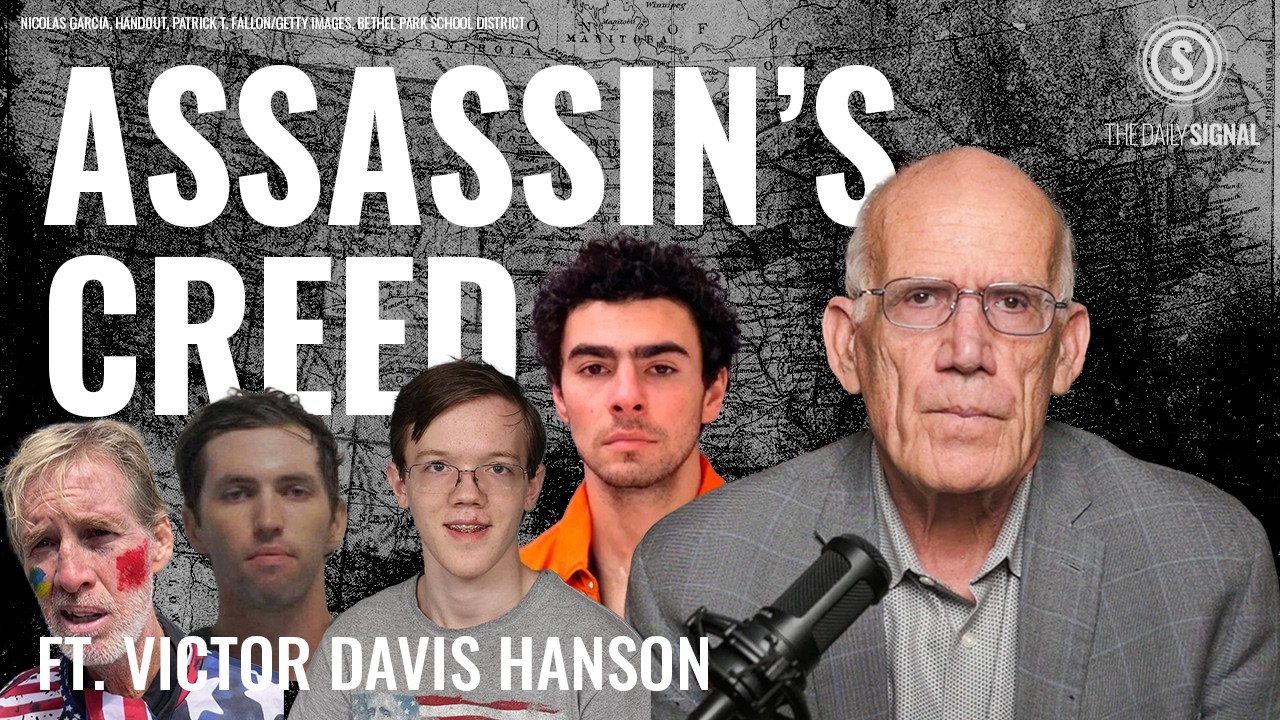
We know these people exist. When we say things that we are aware can activate these kinds of people, we have to take responsibility for that. When someone like Luigi Mangione walks up on a sidewalk in broad daylight and shoots the CEO of an insurance company in the back of the head and is then romanticized and treated like a hero—when people rally around, lift this person up, and amplify his conduct and behavior—others on the fringe who have hungered for that kind of attention see that and are activated.
Does everyone who behaves in that way toward such a heinous act not have to hold themselves responsible for activating these people? We're aware that they exist. We're aware that they're out there.
Guidelines for Responsible Discourse
There's something called the contagion effect. The American Psychological Association has put out guidelines for media suggesting that if a young person commits suicide, those in the media shouldn't include certain details in the story about that person because it is likely to activate others to do the same thing.
For example, we don't show memorials where someone puts all the flowers and ribbons to memorialize the person who took their own life. Why? Because there are people on the bubble who might say, "Wow, I would love it if people did that for me," making them more likely to take their own life when they see that. We don't show or talk about how someone took their life in some dramatic or romanticized way because of the suggestibility of people who live on the fringe.
When people in the media, in Congress, or famous people who are looked up to respond to these kinds of acts, there's no question that this is going to trigger someone who's on the fringe, who's unstable. We have to be aware of that.
A Personal Commitment
In all the time on the air, Dr. Phil has never suggested that a parent can even spank the hand of a child or swat a child who's getting ready to run into traffic. Why? Because he knows that if he were to even say that, some deranged individual would say, "Dr. Phil says it's okay to spank your child" and would use that as justification to beat their child.
He can't even say that you can spank your child's hand if they're getting ready to touch a hot burner because he knows there are people on the fringe who would use that, distort that as justification to beat their child. He has to be aware of that because there are those people who would be activated by that validation.
The Question for Each Individual
We have to be cautious of the fact that when we do things or say things, it's very likely to activate someone. So we have to ask ourselves: Are we contributing to this? Are we contributing to the fact that a third of students think it's okay to use violence? That 71% think it's okay to shout down a speaker or physically block them from going?
It starts with us. Have we shot someone? No. But are we yelling? Are we raising our voices? Are we using rhetoric that every one of us can change? It's a question we have to ask ourselves.
Can we, in our own way, one voice at a time, one individual at a time, turn down the temperature, turn down the rhetoric, and change what we're doing? The hope is that we do—that each person does, that we all do—and that we make that the real story.