Up Next

Tucker Carlson on Charlie Kirk's Christian Faith and the Forces That Made Him a Target

Tucker Carlson on Charlie Kirk's Christian Faith and the Forces That Made Him a Target

1:50:30

Hollywood Stars Defend Charlie Kirk as Trish Regan Reflects on Cultural Turning Point in America

Hollywood Stars Defend Charlie Kirk as Trish Regan Reflects on Cultural Turning Point in America

13:10

How Charlie Kirk's Legacy Sparked Religious Revival Across America and Terrified Antifa Groups

How Charlie Kirk's Legacy Sparked Religious Revival Across America and Terrified Antifa Groups

7:23

Related Books

View All

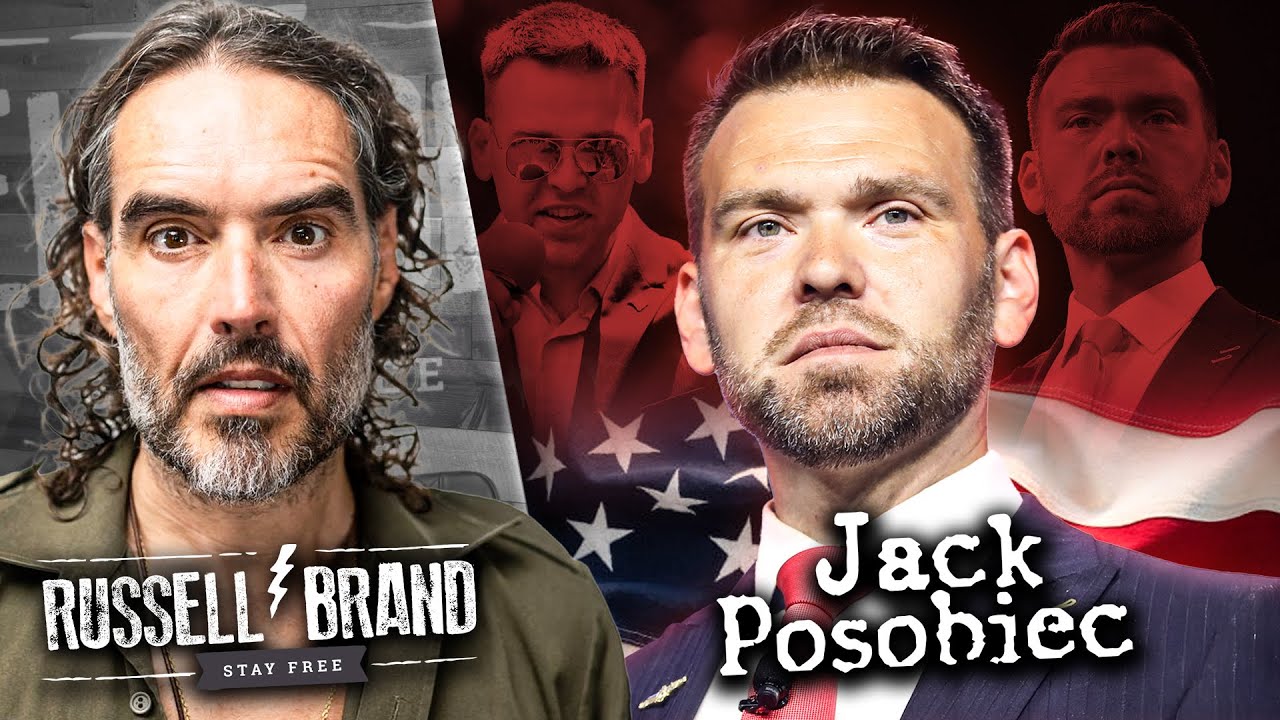
Dave Rubin and Russell Brand Process the Shooting of Charlie Kirk in Raw Real-Time Conversation

September 13, 2025

Dave Rubin and Russell Brand recorded this unscripted conversation moments after learning that Charlie Kirk had been shot at Utah Valley University. With no confirmed information about his condition, the two friends grapple with shock, fear, and the broader questions this tragedy raises about political discourse, online rhetoric, and violence in America. Rubin, who worked closely with Kirk for years, shares personal stories while Brand reflects on the responsibility content creators bear in an increasingly polarized climate. This raw, unedited dialogue captures two people trying to make sense of an unthinkable moment as it unfolds.

A Moment of Unthinkable Violence

Dave Rubin opens with a heavy disclaimer: what follows is not a normal show. He and Russell Brand recorded this conversation just as news broke that Charlie Kirk had been shot at Utah Valley University. At the time of recording, Kirk's condition remained unknown, with conflicting reports circulating online. Rubin had planned to begin the episode celebrating his producer Sage's wedding from the previous week, but instead found himself facing every content creator's nightmare—trying to process a tragedy involving a close friend in real time.

Rubin describes seeing the video of the shooting, though he chooses not to show it. Recording at 3:01 PM Eastern time on Wednesday, he explains that one Twitter report suggested Kirk was at the hospital, but beyond that, information remained scarce. The shock in his voice is palpable as he struggles to articulate his feelings about a friend whose fate hangs in the balance.

Charlie Kirk: Provocateur, Christian, Friend

Russell Brand offers his perspective on Kirk's role in the cultural landscape. He describes Kirk as someone who undeniably provokes—a characteristic embodied in Turning Point USA's "Prove Me Wrong" campus events. But Brand emphasizes a crucial distinction: Kirk is authentic. Whether you agree with him or not, Kirk genuinely believes what he says. He's not performing for profit or clout; he's a Christian and a Republican for whom Turning Point USA represents his life's work.

Brand raises a troubling question: in an era where heated rhetoric has become almost performative, where people casually use phrases like "that person should be killed" online, when does discourse cross from the realm of debate into real-world violence? Kirk enjoys combative discussion, but the fundamental assumption is that such engagement occurs within reason and certainly doesn't result in someone getting shot.

Rubin shares his history with Kirk, recounting the year and a half he spent doing events through Turning Point alongside Kirk and Candace Owens. Those tours involved police escorts, pulled fire alarms, constant threats, people throwing objects, and someone dumping hot coffee on him. Both Rubin and Brand have experienced various degrees of hostility at public events, making this violence feel simultaneously shocking and, disturbingly, not entirely surprising.

The Stew of Cultural Toxicity

Rubin reflects on a question that has haunted him: can something be both shocking and not surprising? He believes the answer is yes, because that's precisely how he feels about this shooting. He traces the roots of this moment back over a decade to when he was among a small group of people questioning safe spaces, trigger warnings, and the casual labeling of everyone as Nazis. Mainstream outlets like The New York Times dismissed these concerns as making mountains out of molehills.

But Rubin's fear was always about the long-term consequences. What happens when you raise entire generations to be terrified of ideas? When you tell young people the earth will end in 12 years, that the country is fundamentally racist, add gender ideology to the mix, and then amplify everything through the doom-scrolling culture of social media? The result, Rubin suggests, is a toxic stew that makes violence not just possible but almost inevitable.

Brand connects this to the broader phenomenon of how commodities and topics become weaponized in political discourse. Whether it's the Cracker Barrel logo or Tesla cars, everything gets pulled into a machine that demands people pick a side. Even with something as serious as a shooting, there's pressure to determine whether it's good or bad for "my side." This tribalistic framing prevents genuine human connection and understanding.

The Van Jones Moment and Escalating Rhetoric

Rubin brings up a CNN segment from just two days prior that now seems chillingly prescient. Host Abby Phillip, discussing the murder of a 23-year-old woman in Charlotte, suggested the case was giving "fodder to people like Charlie Kirk." She specifically named Kirk—a detail Rubin notes doesn't happen accidentally but reflects a producer's decision. Van Jones then claimed there was no reason to think the murder was racially motivated, but that "people like Charlie" wanted it to be, despite video evidence of the perpetrator saying twice, "I got that white girl."

In Rubin's analysis, rocket fuel had been poured on anti-Kirk rhetoric in the 48 hours before someone shot him. Charlie Kirk had become what Brand describes as an "avatar" for the extreme right in left-wing circles—a token name you could invoke to represent everything you oppose. But as Brand points out, Kirk is also a person, vulnerable and mortal, whose life might never be the same or might even end as a result of his wounds.

The Impossible Balance

Both Rubin and Brand wrestle with their own roles in this ecosystem. Brand describes them as "the shock jocks of our time," pioneers in online political commentary who must now confront how they participate in creating an environment where violence becomes possible. Rubin admits he thinks about this constantly, particularly during his August break when he considered how to do his show better—"better" meaning in a way that might deescalate rather than simply narrate civilization's decline.

But therein lies the dilemma: how do you forcefully oppose bad ideas without contributing to an atmosphere of escalating tension? Rubin points to examples like the communist running for mayor of New York City. He doesn't want anyone to shoot such a person, obviously, but the ideas are genuinely terrible. How do you discuss horrible ideas without either righteous anger or mockery? And if you choose humor as your tool, as Rubin and Brand often do, does that sufficiently deescalate, or does it merely add entertainment value to the broader cultural conflict?

Brand suggests the answer might lie in grace—specifically, the Christian principle of non-judgment, love, and tolerance that Charlie Kirk himself professes. Rather than approaching political opponents like the mayor with mockery or ridicule, Brand proposes attempting to understand why such figures become successful, doing so with love and appreciation rather than entertainment value as the primary goal. He references the Oscar Wilde quote tattooed on his arm: "If you want to tell people the truth, you better make them laugh, otherwise they'll kill you."

Live and Let Live—But What If They Won't?

Brand raises a structural question: perhaps the solution is devolving power so that different communities can live according to their values. If New York wants a communist mayor, maybe New York should have one. Some people want to provide gender therapy to their children; others want to raise them Amish. Are Americans going to shoot each other until only one set of ideas remains?

Rubin acknowledges the appeal of "live and let live" but identifies the fundamental problem: one set of people is okay with that approach, and another set isn't. What do you do when you're willing to leave others alone, but they want what you have or seek to encroach on your values and territory? This asymmetry, in Rubin's view, makes pure tolerance an incomplete solution.

The Kobe Story and Life's Fragility

Rubin shares a personal story about Kobe Bryant's death that illuminates the fragility of life. A day or two before Bryant died, Rubin was living in LA and happened to flip past the Lakers channel. He saw Bryant looking better than ever—healthy, bearded, wearing a sharp suit, embodying someone living his best life. Rubin watched for a minute, then changed the channel.

The next day, while waiting for an Uber to LAX, Rubin saw the news about the helicopter crash. He immediately teared up, despite never having met Bryant. His Uber driver, a young Black man in his late twenties or early thirties, was hysterically crying—bawling like a child. Rubin told him they didn't need to rush, and for half an hour they just sat there talking about Kobe, working through the grief together.

The point of the story, beyond its emotional power, is the reminder it offers: Rubin saw someone at the peak of life, and the next day that person was gone. This tenuous nature of existence applies equally to Charlie Kirk lying in a hospital with a gunshot wound.

The Brutal Reality Sets In

As the conversation continues, Rubin and Brand receive an update. Though the specific details aren't shared aloud, the gravity in Rubin's voice suggests the news is not good. Rubin mentions having seen the video of Kirk being shot and describes it as disturbing. The two decide to end the recording rather than continue processing in real time.

Before signing off, Brand offers a prayer—a genuine, heartfelt plea that cuts through the intellectual analysis that preceded it. He asks God to show them what can be authentically learned from this tragedy. Is there a way to reach out to one another differently? He acknowledges that the final video will soon have millions of views, with some people joking, others crying, and all attempting to deploy it for their own benefit and advantage.

Brand prays for comfort for those genuinely affected, for Kirk's family, and for fatal consequences to be avoided if possible. He reminds listeners that less high-profile people suffer and die every day in ways that don't impact the public because of lack of connection, but death is universal and inevitable. His prayer calls for appreciation of life, celebration of beautiful things like marriage and family, and for a way beyond the "incessant blizzard of entertainment, vitriol, and rhetoric."

He asks that he and Rubin, as participants in this media ecosystem, find ways to be "valuable guardians of something that goes beyond continually escalating these tensions." The prayer ends with a direct appeal: "In the name of Jesus, please look after dear Charlie and his family. Amen."

An Unscripted Moment of Humanity

This conversation represents something rare in modern political media: two people who make their living commenting on current events caught completely off guard by tragedy, processing it without preparation or agenda. There are no talking points, no carefully crafted narratives, just two friends trying to make sense of violence directed at someone they know.

The discussion raises questions without providing easy answers. How much responsibility do content creators bear for the cultural atmosphere? Can you forcefully oppose ideas while promoting peace? Is mockery a tool of de-escalation or escalation? Where is the line between passionate advocacy and dangerous rhetoric?

What emerges most clearly is the humanity of all involved—Kirk as more than a political avatar, Rubin and Brand as more than political commentators, even political opponents as more than abstractions to be defeated. In the face of real violence and potential death, the performance falls away, leaving only the recognition that these are actual people whose lives matter beyond their utility in political warfare.

As Rubin noted at the opening, this is not a normal show. It's a document of a specific moment when the abstract became terrifyingly concrete, when rhetoric met reality, and when two people in the media tried to grapple with what that means for how they do their work and live their lives.

Comments

Be the first to comment on this video.

Video Transcript

[00:00] All right, everybody. So, um, obviously

[00:02] what you're going to see today is not

[00:03] going to be a normal show. Uh, Russell

[00:07] Brand and I tape this just as the news

[00:11] of Charlie was breaking. Um, as of

[00:14] course everyone knows at this point, he

[00:15] has passed on. Uh, we did not know that

[00:18] at the time. There was a lot of

[00:19] conflicting reports and we didn't want

[00:20] to speculate. So, you're going to see

[00:22] just our absolutely raw

[00:25] um real-time emotion on this. Uh it is

[00:29] this is a horrible episode for America

[00:31] and I can only imagine what the

[00:32] repercussions are going to be because of

[00:34] it. So um hopefully uh you know we

[00:37] didn't we weren't even sure what we were

[00:38] going to do there. Obviously there was

[00:39] nothing scripted. This was just two

[00:41] friends talking about uh well Charlie

[00:44] was a friend of mine and and a colleague

[00:45] I would say of Russell then they had met

[00:47] a few times um and just talking it out

[00:49] in in in real time as something

[00:51] unbelievably horrific was unfolding. Um,

[00:54] so I hope it offers you a little solace

[00:56] in this uh in this crazy time and

[00:59] hopefully we'll be back to something

[01:01] with a little more humor and a little

[01:02] more our style next week. Okay.

[01:06] All right, Russell. Um, I guess we're

[01:08] doing something a little different at

[01:10] the moment because uh, literally five

[01:14] minutes before we just started this, we

[01:16] have heard that our friend Charlie Kirk

[01:19] has been shot at Utah Valley University.

[01:23] Um, I saw the video. We're not going to

[01:25] show it. I don't think there's any need

[01:26] to show any pictures or anything. As of

[01:29] literally right this moment, we're

[01:30] taping this at uh it's now 3:01 Eastern

[01:33] time on Wednesday. Um, we don't have

[01:36] more info. I One thing I saw on Twitter

[01:39] said he's at the hospital right now. I

[01:40] can only pray for my friend and um I'm

[01:46] sort of speechless. We just did a quick

[01:47] powout for 60 seconds whether we were

[01:49] going to even do this today. Sage

[01:51] obviously uh got married last week,

[01:53] which I was hoping to start the show

[01:54] with today because it was such a

[01:56] incredible um celebration of love and

[01:59] everything that's right with the

[02:00] universe. Uh but she couldn't make it

[02:02] because she's uh you know, post wedding.

[02:04] Um

[02:06] I I don't know what to say, man. I I

[02:08] actually don't know what to say. I I've

[02:09] done a million of these events with

[02:10] Charlie. Um I I know him well. We've

[02:14] broken bread dozens and dozens of times.

[02:16] You've done events with him. We've all

[02:18] been part of this culture war thing. We

[02:20] all to whatever extent we're trying to

[02:22] do make things a little bit better every

[02:23] now and again. Now I don't know if my

[02:26] friend is alive as we're doing this.

[02:27] This does not feel real.

[02:30] Well, this is is you know when we work

[02:33] in this space we operate on the

[02:35] assumption that a lot of it's rhetoric.

[02:37] If you think about like the subjects

[02:38] that we sometimes choose we know that

[02:40] we're using hot button subjects, hot

[02:42] takes, the turnover. You do five shows a

[02:45] week, I do four shows a week. You know,

[02:47] we do a lot of shows. Charlie makes like

[02:49] loads of content. And there's no

[02:51] question that Charlie Kirk is a

[02:52] provocator. But Charlie is also someone

[02:55] that I use as an example of whether you

[02:57] agree with him or not, you have to

[02:59] recognize that he's authentic and

[03:01] dedicated. He's not pretending. This is

[03:03] what he really believes in. This is what

[03:05] he really cares about. He's not

[03:07] posturing. He's not trying to make

[03:08] money. He's although I'm sure he is

[03:10] making money, he's a Christian and a

[03:13] Republican. and turning point is his

[03:15] sort of raise on detra and life's work.

[03:18] And I think that when something like

[03:19] this happens, it's literally happens in

[03:21] the last couple of minutes, even if

[03:22] you're seeing this 24 or 48 hours later,

[03:25] what's worth remembering is that we're

[03:28] in such a contentious time that the kind

[03:31] of rhetoric and vitrial that we all to

[03:34] some degree engage in online, which

[03:36] becomes to a degree performative. People

[03:39] use rhetoric all the time, take grand

[03:42] positions, use casually words like that

[03:45] person should be killed or whatever. And

[03:47] even Charlie's uh you know prove me

[03:50] wrong stance, he's a kind of a person

[03:53] who enjoys combative discourse. But the

[03:56] assumption of course is that that is

[03:57] within reason and certainly isn't

[04:01] something that's going to lead to him

[04:03] getting shot. I saw the foot I I because

[04:06] there's so much hysteria and craziness

[04:07] like just in online spaces when I've

[04:09] heard like sone posted Charlie Kirk's

[04:11] been shot I was like he'll have been

[04:13] shot at someone's fired a gun and then I

[04:15] like I watch whoa he's been hit by a

[04:18] bullet so

[04:19] yeah but like please God by the time

[04:21] we're doing this it's not postumous and

[04:23] we're talking about like you know God

[04:24] rest his soul I pray that Charlie Kirk

[04:27] doesn't die and if there's anything that

[04:29] we can like that you and I can talk

[04:31] about perhaps that what we can consider

[04:33] Dave How do we contribute to escalate

[04:37] intension? I mean, even Charlie Kirk

[04:39] doing doing events like this is taking

[04:42] into territory where he knows he's going

[04:44] to experience opposition in order to

[04:47] have interesting conversations, which

[04:49] he's brilliant at and should be able to

[04:52] safely do. But now we're discussing, you

[04:55] know, he's been shot. So, like, what are

[04:57] we supposed to learn from that? Maybe we

[05:00] all need to calm it down a little bit

[05:02] with the amplification of the conflict

[05:04] and opposition in in in your country.

[05:07] Yeah. I mean, this is a particularly

[05:09] weird one for us because we we do this

[05:12] for a living. We're supposed to talk

[05:13] about these things, but we do we do both

[05:15] know him. Uh we've we've been part of

[05:18] these, you know, for about a year. For

[05:19] about a year and a half, I did these

[05:22] events through Turning Point with

[05:23] Charlie and Candace. It was the three of

[05:25] us all the time and we had police

[05:27] escorts and fire alarms pulled and

[05:30] people threatening us and throwing

[05:31] things at us and had somebody dump a hot

[05:34] coffee on me and like all of these

[05:37] things and I'm sure you've been through

[05:38] a lot of these things too. It's a little

[05:40] hard to do the um

[05:43] selfanalysis just as this is breaking.

[05:46] You know, you and I think actually in

[05:48] this space are pretty good at not

[05:50] raising tensions all the time. We do

[05:52] fall into stuff. Oh, the left does this

[05:54] or this that. Like we all get caught in

[05:56] that as someone that talks for a living.

[05:57] You have to use shorthand

[05:59] every now and again. But I but I think

[06:01] and you you sort of said this. I mean

[06:03] the broader point and again all we can

[06:05] do right now is is pray. Like what else

[06:08] is there that you could possibly do than

[06:09] pray for Charlie? I mean I saw the

[06:10] video. He was hit either here or in the

[06:13] neck or you know it does it does not

[06:15] look good. Um but beyond that, um

[06:20] it seems it seems to me

[06:24] that you have to be able to say whatever

[06:26] basically whatever the hell you want to

[06:28] say without being killed,

[06:30] without being and this and this is the

[06:32] this is the crux of what we've come up

[06:34] against for so long. You know, like 10

[06:37] years ago when I was amongst a few group

[06:40] pe a small group of people that were

[06:41] talking about why safe spaces didn't

[06:43] make sense and why trigger warnings

[06:44] didn't make sense and this thing of

[06:46] calling everyone a Nazi, why it didn't

[06:47] make sense and there and almost the you

[06:49] know we we had all the New York Times

[06:51] all these things always telling us how

[06:52] awful we were and we were making a

[06:53] mountain out of a mold hill and it's not

[06:55] real.

[06:56] But my fear with all of that was well

[06:58] what what is going to happen when you

[06:59] take a generation 10 years and it's

[07:02] really more than that. You take an

[07:03] entire generation or two or three

[07:04] generations of young people and then

[07:07] they're so afraid of ideas and you tell

[07:09] them the earth is going to end in 12

[07:11] years and you tell them that the country

[07:13] is fundamentally erased. Like you do all

[07:14] of these things, then you add the gender

[07:16] part of it. Then you add just all of the

[07:19] craziness of social media and doom

[07:21] scrolling. Like we basically created

[07:22] this like stew that it's not like like

[07:27] as shocking as it was when I I got a

[07:29] text about it first. As shocking as it

[07:31] was, it's also not surprising. Can

[07:34] something be shocking and not surprising

[07:35] at the same time? I think so because I

[07:37] because that's how I feel about this.

[07:39] Yeah, that's right. I mean, in fact,

[07:41] that's exactly the way I described it.

[07:42] when Amy Winehouse died of a you know

[07:46] drug related complications let's say

[07:49] I it was shocking but also not

[07:51] surprising and I reckon that that if you

[07:54] think about it everything that happens

[07:55] in the news we have to have a kind of a

[07:58] take on it and we sort of pick a side

[08:00] and you see how whether it's the Cracker

[08:01] Barrel logo or you know or Tesla cars

[08:06] literal commodities come into the

[08:08] machine and we have to have like we have

[08:09] to take a position is this good for my

[08:10] side or bad for my side and I you know

[08:14] even with something really serious like

[08:15] this you have to I think this is where

[08:18] it takes me to like I know Charlie Kirk

[08:20] from doing a few podcasts with him and

[08:22] what I think about him is I think he's

[08:24] really interesting bloke I call him like

[08:26] the right-wing rain man like he's got

[08:28] this kind of like sort of autistic kind

[08:31] of quality to him but he's ultra smart

[08:33] and ultra sincere and he's a man of God

[08:36] he obviously antagonizes a lot of people

[08:38] and he obviously deliberately

[08:39] antagonizes a lot of people but What I

[08:42] suppose this makes you consider is oh

[08:44] wow that antagonism is being seen as

[08:47] something that warrants a violent

[08:50] response.

[08:51] Right.

[08:52] Right. So what do we do with that? That

[08:54] that's the again this feels crazy to be

[08:55] talking about this just as this is

[08:57] happening. Like we're like you know

[08:58] tragedy. They say comedy is tragedy plus

[09:01] time. There's nothing funny about this.

[09:03] But like we're we're sort of like you

[09:05] know like we're like narrating the end

[09:07] of the world. That's what it feels like

[09:08] to me in some weird way, which is a

[09:09] strange thing to do. Um,

[09:12] you know, at all of these events that I

[09:14] would do with Charlie. Yeah. Like he it

[09:16] was also different back then, just the

[09:18] culture and things have changed, of

[09:19] course, but like of course a portion of

[09:21] it, you know, when when they name what

[09:23] was the prove me wrong. It's it's

[09:25] slightly anti antagonistic. This is in

[09:27] no way blaming Charlie or anyone else.

[09:29] There's one person who should be blamed.

[09:31] That's the person who pulled the trigger

[09:32] here, which I did just see a picture of,

[09:34] but let's just let let that be the the

[09:36] the person who did this. Um, but of

[09:38] course there's an antagonistic nature to

[09:40] all of this. But the exchange that you

[09:42] have in a free society is there's going

[09:44] to be some antagonism between people.

[09:47] And that's the only way that ideas are

[09:48] going to get out there. Once once you

[09:50] start, you know, look, I guess the best

[09:52] way you could frame this is look what

[09:54] happened what, six months ago with that

[09:57] um Luigi Manion, this kid who decided to

[10:00] execute a health care executive on the

[10:02] streets of New York. Now, it doesn't

[10:03] matter what his physical problems were.

[10:06] He had some back problems that I guess

[10:07] he wasn't happy with his coverage. It

[10:08] doesn't matter what you think about

[10:10] health care or universal health care or

[10:12] premiums or anything else. You can't

[10:15] start assassinating people like once a

[10:17] society gives an inch to that. And

[10:19] that's one of the reason other reasons

[10:20] I've been so critical of the left

[10:21] because they've been so tacitly

[10:23] endorsing violence and get in their face

[10:26] and don't give them a minute's peace and

[10:28] all of those things. And then you wonder

[10:30] what what would people do if you jin

[10:33] them up enough? Uh did you see uh

[10:36] Russell uh I think it was two days ago,

[10:38] you know, as this story out of Charlotte

[10:40] is developing with this young uh the

[10:43] 23-y old girl who was murdered in cold

[10:44] blood. Did you see the Van Jones thing

[10:46] on CNN?

[10:48] No. What did what did Van Jones say? I

[10:50] know the story, but I don't know what

[10:51] Van Jones said.

[10:52] So, it's actually kind of crazy and and

[10:54] I played it twice on my show in the last

[10:56] two days because basically they were uh

[10:58] that woman, what's her name who hosts

[11:00] the show on CNN? Abby Phillips is the

[11:02] host and she basically started the

[11:05] segment by saying that this murder of

[11:07] this young woman is basically giving

[11:10] fodder to people like Charlie Kirk. They

[11:12] specifically brought up Charlie's name.

[11:14] That means a producer told her to say

[11:16] that. She didn't just magically come up

[11:17] with that at the 800 PM hour. They

[11:19] wanted to somehow connect it to someone

[11:21] like Charlie. And then Van Jones

[11:23] basically said something to the effect

[11:25] of, "Well, there's no reason to think

[11:27] this had anything to do with racism, but

[11:29] char people like Charlie want that." But

[11:32] then, of course, the video leaked from

[11:33] the light rail where the guy who

[11:35] committed the murder said twice, "I got

[11:37] that white girl." So just in the last 48

[11:40] hours, the level of rhetoric that had

[11:42] been ramped up against Charlie was

[11:45] exacerbated was was, you know, rocket

[11:47] fuel was put on that. And then somebody

[11:49] tried to shoot Charlie today. So no, not

[11:51] tried to, somebody shot Charlie today.

[11:53] Obviously, if something breaks while

[11:55] we're doing this, you guys let me know.

[11:56] Until we're all exhausted by trying to

[11:59] be right about this stuff, I think that

[12:01] it will continue to escalate. Why would

[12:03] we be surprised someone shot the

[12:06] president? of course like someone with

[12:08] significantly less efficient security

[12:10] than a president is vulnerable to that

[12:13] and I I reckon Dave that you know it's

[12:17] weird isn't it because you think oh well

[12:18] that could happen to me I'm a person in

[12:20] the public eye that sort of says stuff

[12:22] so I it could happen but actually it has

[12:24] happened to Charlie now and your point

[12:26] that he is become a kind of um token of

[12:30] uh like extreme rightwing in leftwing

[12:34] circles you can use the name he's like

[12:36] the avatar for them. Yeah.

[12:37] Yeah. You can use it like that. But now

[12:39] in a way what you and I have to do and

[12:42] perhaps the left will have to do is like

[12:44] well actually Charlie's an effective

[12:46] campaigner and activist and public

[12:48] performer in the you know within the in

[12:51] the forum that he operates in. But he's

[12:53] also like a person. And now we've seen

[12:55] that he's vulnerable, mortal, perhaps,

[12:58] you know, at this point cuz it's like

[12:59] literally 20 minutes ago. You know, he

[13:02] might die as a result of those wounds or

[13:04] Charlie Kirk's life might never be the

[13:05] same. We don't know anything at all

[13:08] about the consequences of that. So, we

[13:09] can only really attempt to understand

[13:12] the kind of environment that you and I

[13:14] as online pundits, the kind of shock

[13:16] jocks of our time, how are we

[13:19] participating in this? I suppose

[13:20] Charlie's different as well in that he

[13:22] is explicitly political, i.e. He's

[13:24] raising money. He's advocating for, you

[13:28] know, the the the voting machines that

[13:30] are used. He's getting involved. Charlie

[13:32] Kirk, he's an effective campaigner.

[13:35] You know, it's interesting. You're

[13:36] right. We have to think about that. It's

[13:38] something I think about a lot. It's

[13:39] something that when I was off for

[13:40] August, it's like what I'm thinking

[13:42] about. And if I think about the show,

[13:44] what I'm thinking about is how do I do

[13:45] it better? And by better, I mean in a

[13:47] way that will, you know, I always like

[13:50] when people laugh at the show, right?

[13:51] like they think it's funny and light and

[13:53] whatever, but it's like how do we

[13:54] deescalate the craziness? I I don't, as

[13:57] I said a moment ago, like I don't want

[13:58] to just narrate for the next 20 years of

[14:00] my life the end of the world. You know

[14:01] what I mean? Like, oh well, every year

[14:02] it got worse. I narrated it. Okay, fine.

[14:05] Like I I would prefer not to do that. I

[14:07] think part of the problem here is it's

[14:09] it's very with the forces that seem to

[14:11] be on the march and the amount of um the

[14:16] amount of institutional stuff that they

[14:18] took from us and cultural stuff that

[14:19] they took from us and all of those

[14:20] things with all of those forces on the

[14:22] march. It's hard. It's hard to

[14:26] deescalate like like when you talk about

[14:29] these people whose ideas are so bad or

[14:32] so wrong. The the communist that wants

[14:34] to run New York City or whatever. I

[14:36] don't want anyone to shoot him.

[14:37] Obviously, no one should ever do that.

[14:39] But he has horrible ideas. Well, how do

[14:41] we talk about those horrible ideas

[14:42] without at least a degree either pure

[14:45] anger, right? You can do it out of anger

[14:47] and righteous indignation or you could

[14:48] maybe do what you and I are pretty good

[14:50] at. You can do it with a little humor.

[14:51] that would be okay. But no matter how

[14:54] you do it, it seems like the thing just

[14:56] kind of continues. I I I don't know how

[14:58] you get out of that. Maybe that's just a

[14:59] function of where we're at in human

[15:02] society now because of technology and

[15:04] everything else.

[15:05] I reckon with limitless grace that what

[15:09] maybe we could focus on is the fact that

[15:12] amongst his other explicitly declared

[15:16] positions, Charlie Kirk is a Christian.

[15:18] And the position of being a Christian is

[15:21] one of non-judgment and is of grace and

[15:25] love and tolerance. So when you and I

[15:27] are talking about Mandani, I know that

[15:28] you're um a Jew, Dave, and I'm a new

[15:31] Christian. I would say like, okay,

[15:34] instead of me approaching the subject of

[15:36] Ma Dani in a way that's mocking or

[15:39] ridiculing or deliberately emphasizing

[15:42] things that I don't agree with, maybe

[15:44] I'll approach this as a person that

[15:46] doesn't agree with his political

[15:47] position with the best attempt to

[15:50] understand why he's become successful

[15:54] that I can offer and do it, you know,

[15:57] not trying to be entertaining, trying to

[15:59] be loving and appreciative. that that is

[16:02] something that you and I could literally

[16:04] do,

[16:05] right? Like that there's a way to do

[16:08] probably more of that. And then of

[16:10] course, you know, there's the Oscar

[16:11] Wild. If you want to tell people the

[16:13] truth, you better, you know, make them

[16:15] laugh otherwise they'll kill you. So

[16:16] like there's a there's also

[16:18] tattooed on my arm, Dave, that on my

[16:22] literally that's tattooed along my arm

[16:24] there.

[16:24] Wow. So Well, there's the point. There's

[16:27] the point, right? like like you want

[16:29] sometimes the mockery sometimes I think

[16:31] the mockery of some of these people is

[16:33] actually the only tool to deescalate it

[16:36] because to say to constantly try to give

[16:39] them either the benefit of the doubt for

[16:41] age-old ideas that are terrible or

[16:42] whatever like you'll just follow them

[16:44] down the rabbit hole of it'll just be

[16:46] endless they'll keep winning and you'll

[16:48] just keep trying to turn the other cheek

[16:49] in some sense and yet I I understand the

[16:52] inclination to want to do that too I

[16:54] don't know that look this is why we're

[16:56] all different this is what's this is I

[16:57] suppose is the beauty of humanity. We'll

[16:59] all take attack at this differently. You

[17:01] know, the conclusion that you come to on

[17:03] how you want to approach this may be

[17:04] slightly different than the one I come

[17:06] to and and that you and I can always

[17:08] slog through this the best we can. Um

[17:10] well, that's why I love you. Like it's

[17:12] it's that's the thing.

[17:14] Yeah. Well, that is actually something

[17:16] we can rely on and something that we

[17:18] don't spend enough time in because it's

[17:21] kind of cloying and sentimental and

[17:24] don't seem somehow worthy of like you

[17:27] know your wise cracking persona or my

[17:30] British somewhat surreal approach to

[17:33] communication. But what you know when I

[17:37] talking I spoke to Laura Luma yesterday

[17:39] and like when I was speaking to her

[17:40] she's a person who takes extreme

[17:41] positions and is a provocator. she's a

[17:43] sort of a candidate for this kind of

[17:45] attention and potentially those kind of

[17:47] consequences. I suppose to a degree we

[17:49] all are. We all have people go online.

[17:52] There'll be people now doing jokes about

[17:53] Charlie Kirk. Oh, I guess we proved him

[17:55] wrong. There'll be people doing like of

[17:57] course they will. And why wouldn't and

[17:59] and I suppose the only thing that we can

[18:01] pay attention to is well how do we

[18:04] respond if uh people when we could

[18:06] potentially score points and choose not

[18:08] to when we could um double down refusing

[18:12] to. So like what I feel about it in the

[18:16] moment is I I do feel an inclination to

[18:18] pray for him and to pray for the people

[18:20] that are actually affected. In fact, I

[18:21] heard a brilliant thing when um Kobe

[18:24] Bryant died in the helicopter car crash.

[18:28] The brilliant preacher

[18:30] my like this man Michael Beckwith was

[18:33] who's a brilliant preacher in LA was

[18:36] actually in his sermon. He's not a

[18:38] Christian. He's sort of like a

[18:39] non-denominational preacher there in LA.

[18:41] A lot of people attend the agape church.

[18:44] Kobe died during his sermon and when he

[18:48] affirmed that it was true, he announced

[18:49] it to the congregation and there was a

[18:52] gasp from the congregation and he goes,

[18:54] "Before you all go there, remember there

[18:58] are people that are actually directly

[19:00] affected by this. He's got a widow. He's

[19:03] got family members. So, let's bring our

[19:06] attention to them because in the final

[19:08] analysis, it's non-local." So much of

[19:11] what goes on online in particular, Dave,

[19:14] I think becomes a kind of performance,

[19:16] you say, you know, there's going to be a

[19:17] third world war. You know, this will be

[19:19] the end of civilization. You recognize

[19:22] that in order to get clicks and views,

[19:24] you emphasize here, you cut there, you

[19:25] thumbnail this way, you title that way.

[19:28] This is a business. We're at the front

[19:30] end of the communication business,

[19:32] pioneering in the new territory online.

[19:35] Well, actually, I suppose what we should

[19:37] recall is that there are going to be

[19:39] real life consequences to it. That's one

[19:41] thing. We should recognize that while

[19:43] all of us are discussing these issues,

[19:45] none of us are saying, "Do you know, is

[19:46] there going to be a way that if New York

[19:48] wants to have a communist mayor, maybe

[19:50] New York should be able to have a

[19:52] communist mayor. Maybe we need to look

[19:53] at devolving power. Maybe we should stop

[19:55] squabbbling in the established sandbox

[19:58] and start recognizing there are some

[19:59] people who want to give gender therapy

[20:02] to their kids and other people who want

[20:03] to raise um Amish. Um what what are we

[20:06] going to do? All shoot each other till

[20:08] only one idea remains.

[20:09] Right. Well, there is there is something

[20:11] to be said about live and let live. I

[20:13] think largely the issue is that a

[20:15] certain set of people

[20:16] are okay with that and a certain set of

[20:18] people aren't. And what do you do about

[20:20] what do you do when people when you say,

[20:21] "Okay, live and let live. Have what you

[20:23] have, it's over there." But when

[20:25] somebody wants what's yours or wants to

[20:27] encroach or whatever? Um, I'll tell you

[20:29] a story that you're going to love about

[20:31] about Kobe. Um, a few days, I think it

[20:34] was literally a day or two before he

[20:35] died, I lived in LA at the time and uh

[20:38] they the Lakers have a channel. It's

[20:40] like an actual channel. That's the

[20:41] Lakers channel. I don't know if he had a

[20:42] show or whatever, but I hadn't seen him

[20:43] in a while. Um, and I flicked past it

[20:46] and I saw him and he looked great when I

[20:48] I stopped the channel cuz I I've always

[20:49] loved Kobe, you know, I love basketball,

[20:51] but I but he looked great. It was really

[20:52] striking to me. He had a beard. He just

[20:54] like looked healthy and you know when

[20:56] you see someone that just like looks the

[20:57] best of themselves and he was wearing a

[20:59] really sharp suit and I watched for a

[21:01] minute and then I changed the channel.

[21:02] The next day I was waiting to go to uh

[21:05] to LAX to the airport. Um, and just as I

[21:08] was about to get into my Uber, uh, I saw

[21:12] the tweet or whatever that that Kobe uh,

[21:14] had died that the helicop about the

[21:16] helicopter crash. I got into my I

[21:19] immediately teared up. Like teared up.

[21:21] Teared up. You know, I'm not like the

[21:22] most emotional guy, but like teared up.

[21:23] I've never met him, you know, whatever.

[21:25] I get into the Uber and it's a young

[21:28] black driver. He's probably late 20s,

[21:31] early 30s or so. He was hysterically

[21:34] crying. hysteric, balling, like the most

[21:37] you can imagine somebody crying like a

[21:39] child. And I got in and I said to him, I

[21:42] I wasn't in a rush. It was really early.

[21:44] I said, "Listen, I know what's going on

[21:45] here. Like, we don't have to go

[21:47] anywhere. You want to just sit here and

[21:48] talk about Kobe for a while. I'm getting

[21:50] chills up my spine as I'm telling you

[21:51] this." And for about a half hour, we

[21:53] just told stories about Kobe from the 83

[21:56] point game to the, you know, coming back

[21:58] during that season when he was on trial

[22:00] all the time, blah blah blah. Um, and

[22:02] and then he kind of was just working

[22:04] through it. Just working through it.

[22:05] Working through it. Um, I mentioned that

[22:08] sort of for that part, but really it was

[22:10] the previous part that I mentioned that

[22:11] I saw this I happened to stop on a

[22:13] channel thinking, man, this is a guy

[22:14] living his best life and then I think it

[22:16] was literally the next day he was dead.

[22:18] And that tells you how tenuous this

[22:20] whole thing is.

[22:21] Is there any is there do we have any new

[22:23] news since Yeah. Um, yeah, the guys are

[22:26] going to text me and you something,

[22:28] Russell. We'll just we'll just watch it

[22:29] on the fly and then we'll decide how we

[22:31] want to

[22:31] I saw the

[22:33] I saw the video of him being shot. It's

[22:36] disturbing, man.

[22:37] Obviously.

[22:39] Yeah. All right. They're going to

[22:40] they're going to send us something here.

[22:42] Um

[22:45] Oh.

[22:47] Oh god.

[22:50] All right. Um

[22:55] me may not be coming back from that.

[22:58] All right, Russell, I think this is what

[23:00] we're going to do. Um, we're gonna we're

[23:02] gonna stop now. I think that was

[23:04] cathartic to some extent. And uh,

[23:09] okay, let's um, let's end the show here.

[23:13] We don't have to edit anything out. It's

[23:15] all good. Um, let's leave it there for

[23:18] now. And let's just let's just put this

[23:20] up as raw as it is. We can even put it

[23:22] up today if we want. Um, and let's let's

[23:24] just leave it there.

[23:28] Hold on a minute. Let me pray. Let me

[23:30] pray.

[23:30] Yeah.

[23:31] Bloody hell. I mean,

[23:34] if there's anything that we can

[23:36] genuinely and authentically learn from

[23:37] this, Lord, will you show us what it is?

[23:39] Is there a way that we can reach out to

[23:40] one another differently because the

[23:42] brutality of that uh the final video in

[23:44] particular, which will soon have

[23:46] millions and millions of views and some

[23:47] people will be joking and some people

[23:48] will be crying and all of us will be

[23:50] trying to deploy this in some way for

[23:52] our own benefit and advantage. Can you

[23:54] show us what you would have us learn

[23:55] from this? And if this is um if this has

[23:58] fatal consequences, please Lord, comfort

[24:00] those that are genuinely affected by it,

[24:02] that are closest to him. And may we

[24:04] learn the lessons that we need to learn

[24:05] from this. Because remember, all over

[24:07] the world, less high-profile people are

[24:09] continually suffering and dying in ways

[24:11] that may not impact us directly because

[24:13] of the associations and connections and

[24:15] rhymes and resonances, but death is

[24:17] inevitable. Lord, let us appreciate life

[24:20] and let us find love with one another.

[24:21] Let us celebrate the beautiful things in

[24:23] life, marriage, togetherness, unity, and

[24:26] children. And Lord, let us please find a

[24:29] way beyond this constant and incessant

[24:31] blizzard of entertainment, vitriol, and

[24:34] rhetoric. And please, participants like

[24:36] me and Dave, let us do what we can do to

[24:38] be valuable guardians of something that

[24:41] goes beyond continually escalating these

[24:43] tensions. In the name of Jesus, please

[24:45] look after Dear Charlie and his family.

[24:47] Amen.

Link copied to clipboard!