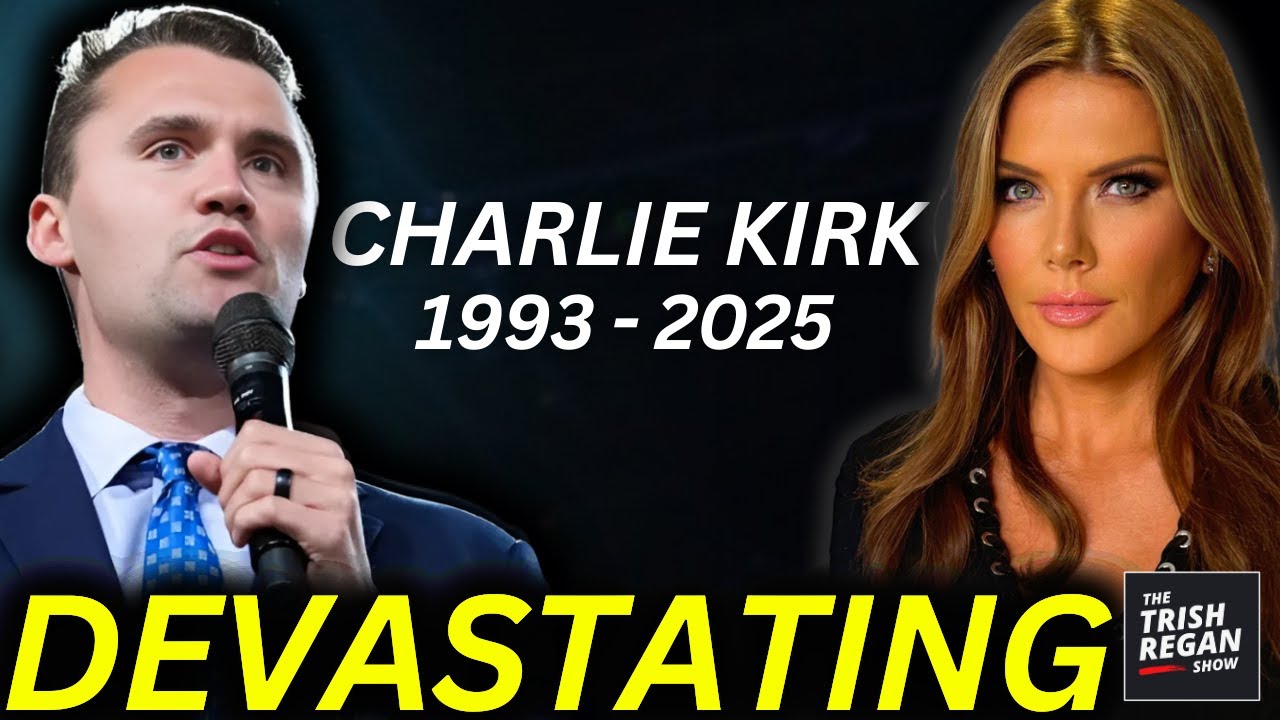
at an event where he was willing to hear out everyone's point of view and take questions and debate topics in a civil and political way as he demonstrated better than anybody for years at this point. The president has confirmed Charlie's death. He tweeted out, "The great and even legendary Charlie Kirk is dead. No one understood or had the heart of the youth in the United States better than Charlie. He was loved and admired by all, especially me. And now he is no longer with us. Melania and my sympathies go out to his beautiful wife Erica and family. Charlie, we love you. Obviously, President Trump has a long-standing relationship with Charlie. Charlie was a big part of how President Trump was elected in 2024 and how he was elected in 2016 for that matter. uh a a generational voice, the generational voice uh in in politics. And it's on that point that uh as we're all processing this awful news, the the first thing that comes to my mind beyond the the sadness for his family, for his wife, his young kids, his millions and millions of admirers, and his many, many friends, is that Charlie Kirk would have been president. Charlie Kirk would have been president. His friends knew it. His many, many admirers knew it. and his enemies to whom he was always so gracious, they knew it, too. Everybody knew it. I remember from actually I think even before I first met Charlie, so now we're talking many, many years ago, people would joke, they'd say, "Well, we're all going to be working for Charlie Kirk someday." The first time I met Charlie was in a green room of a cable news outlet. I think we were in LA. It was for a morning show. So, this was 4:00 or 5:00 in the morning. I'm I lived in LA at the time. I was slumped over, half asleep. Charlie, I don't know where he was living. Charlie lived on airplanes. And he shows up bouncing off the walls, full of energy, just wanted to talk about everything. uh and uh he he of course was able to reach the very heights of media, of politics, of activism, of of of American public life. And and so then I think, all right, why did we all have such confidence that Charlie would be president? Well, he looked apart, very very tall. Uh very I I used to joke with him that he was descended from the Nephilim. Uh very tall, good-looking guy, extraordinarily articulate. That's part of it. Uh very very sharp. So sharp that he dropped out of college. That's that's how you know that someone's very intelligent these days. Uh self-educated largely, but so unbelievably curious. So he would he would do fellowship programs. He would read book. He would ask for books to read. he would and and I think a lot of people think that when you when you look at someone in politics, especially at the height that Charlie was at, that all they ever want to do is talk about politics and when they see, you know, we would see each other, he'd see his other friends around the country. And that isn't true. He was much more interested in talking about the thing that you were interested in. And he was interested in it because he just wanted to get as much knowledge as he could from all of these experts around him and from all of the people who weren't expert but just had a special interest. and Charlie's interests were were so varied but but at at their core they were not merely political in the quotidian sense they were deeply philosophical and the fact that he had no formal philosophical training is probably why he was so good at it and interested in it and then ultimately it was religious so I think why why did we all think Charlie would be president he looked the part he was extremely effective at political organizing he could raise money like nobody's business for a very good cause. He could persuade people through his extraordinary uh ability to articulate ideas. But I think really what it comes down to is his virtue. And I think this is why everyone knew his friends, his admirers, and even the enemies that a life in public will engender. They all kind of knew it because he he exemplified virtue. the the four cardinal virtues, prudence, temperance, justice, and fortitude. Extremely prudent. He was just the most skilled political person of his generation, of our generation. Temperance. Nobody was more temperate. I'm not sure the guy ever had a drink. I I certainly never saw him have a drink. Was so disciplined, so temperate, where he got so much of his energy from. Justice, extremely fair to people. In fact, more than fair to people. uh always always uh willing to give people what they deserve and and more than they deserve. And fortitude, which is the prerequisite of all of the other virtues, the fact that this guy would go into very hostile territory all the time, not worry about it at all. in events that were open in the air as this event where he was fatally shot at a university in Utah. No big fences, no big just crowds of people, most of them adoring fans, some curious people willing to be persuaded and unfortunately a handful of of enemies and some very very wicked people. Beyond the cardinal virtues, I think that if you know Charlie at all, even if you don't know him personally, if you just followed him, as as most Americans have over the years, you'll see the the three theological virtues. That's what he cared about. That's all he and I ever talked about. That is sometimes on camera, often off camera. That's all he wanted to talk about. The in fact the last text that he sent to me concerned that deeply deeply religious, deeply curious. I mean, you could get a zinger in here or there, but but uh for for an effect because he really wanted to know God and he really loved God. And I think you just see in his demeanor, in the way he approached people, his friends and his enemies and everyone in between, you saw an abundant faith. you saw an extraordinary degree of hope, political hope for the country, for helping to improve people's lives here on earth and and a hope that's grounded on a fact which is the fact of the resurrection. A hope that derives from his confidence that his redeemer lives and then of course charity. And this this I think uh inspired Charlie's friends and admirers so much and really scared his enemies is that in everything Charlie did there was charity. He wasn't afraid. There was no survile fear whatsoever. So sometimes he he could seem almost politically reckless the way he was willing to debate any idea but no fear whatsoever. Just charity. He was always willing to talk to people about anything. That was what this tour was about where some of his friends were were scheduled to join him along the way. Faith, hope, and charity, very very scary virtues in a in a materialist world, in a modern world. And so we of course pray for him uh and and for his family. It's it it it seemed impossible when the news broke. Such a force of nature did he seem? And and so confident were we all for his future m maybe more than he was in as much as Charlie had such profound faith, lively faith that of course I'm I'm sure he knows and knew that that uh every day is a gift and we're not promised anything and all we can do is the good that we have with the energy that we have in the day that we have because we might not have tomorrow. With that, I would like to bring on uh another one of our friends, Kabat Phillips, with updates about what exactly happened and what what investigators are learning now. Kat, >> thanks, Michael. That was um really powerful stuff there. Um I know everyone at home watching is feeling exactly what we're feeling right here, just devastated. Um, but we're going to try our best to get through the news, get as much of the story out there as we can. For people just tuning in, Charlie Kirk, um, is dead at 31 years old. Um, we're still piecing the story together right now, the details as they come in. But here's what we know. For people just tuning in, Charlie was speaking at Utah Valley University. He was holding one of his Prove Me Wrong events. For those who aren't familiar, these are the sort of debate style open mic events where thousands of students and and others are coming out. And Charlie made a point to give the microphone to anyone who disagreed with him. That was Charlie's thing. He would talk to anybody. He was willing to debate anybody. And one of those events was taking place. One shot rang out. Um right now the university says that shot came from an adjacent building from about 200 yards away. It was one single shot. Um he was struck in the neck. Um he was immediately rushed away um but ultimately did die a short time after. Um initially there were reports that a shooter had been detained. There was video going around of a single man being carried away by police. The university is now saying that was not the shooter and that that person was not responsible and that right now the shooter is at large. So, we are still waiting to see who was responsible for this heinous crime. At the moment, though, right now, there are a number of police and law enforcement vehicles conducting sweeps all around the campus. As you can imagine, this is an extensive operation. You're going to have hundreds, if not thousands of law enforcement right now combing through. Uh, FBI Director Cass Patel has said that his uh people are already on the ground, that they are investigating this, obviously, because of the political nature. Um, so there are FBI resources pulling in. The White House has said that they are deploying any resources possible to try and get to the bottom of who is responsible for this. But again, as of the latest reporting, the shooter is still at large. Police say university says that the shooter fired from about 200 yards away perched up on top of a building. Uh, President Trump confirmed the news on social media, writing on Truth Social, quote, "The great and even legendary Charlie Kirk is dead. No one understood or had the heart of the youth in the United States of America better than Charlie. He was loved and admired by all, especially me. And now he is no longer with us. Melania and my sympathy go out to his beautiful wife Erica and family. Charlie, we love you. Uh Charlie and his wife Erica do have two young children as well. I know Michael, you alluded to it. That was uh his just pride and joy. That's what he wanted to talk about. every time um every time you're with him. That's that's what he was that's what he was bringing up. Um and President Trump making sure to mention that fact. Um but again, for those just tuning in, the shooter reportedly still on the loose. Um people are uh there's a lot of conflicting reports coming in. So, we're trying to sift through all of this and I'm sure our audience will bear with us there. Um our editor, Ben Shapiro, also just recently issued a statement um on Twitter. This is from Ben. Like all of you, I'm utterly stunned and heartbroken and sick to my soul today. It is unimaginable to write these words. I met Charlie Kirk when he was 18 years old, a young man so eager and determined that I immediately turned to a friend and said, "That kid is going to be the head of the RNC one day." Charlie became even bigger and more important than that. It was a privilege to watch this principled man stand up for his beliefs and create the single most important conservative political organization in America. But more importantly, Charlie was a good man. A man who believed in right and wrong, who stood by his biblical values. All of us will miss him. And I cannot imagine the pain of his beautiful young family. And we must all pray for them. And we must pick up the baton where Charlie left it. Fighting for the things he believed in so passionately. We must fight for a better America. An America where good people can speak truth and debate passionately without fear of a bullet. I weep for Charlie's family and I weep for my country today. But most of all, I weep for Charlie. That was the words of our editor Meredus Ben Shapiro. Um again, for those just tuning in, Charlie Kirk speaking at his um Prove Me Wrong series. This is where most people were really introduced to Charlie. Um he was a guy who was willing to go into the lion's den again and again. He was someone who' said, "Hey, if you disagree with me, get to the front of the line, get a microphone there." And that's why so many people loved him so much is because he was willing to talk to anyone. and his entire mantra was based on civil debate, civil discourse. Charlie was a guy who could debate someone who completely disagreed with him and do so with a smile and you could tell that there was love in his heart, love for his country, love for his god, for his family. >> And cabb we should say, we should say he would >> he would debate his friends just as viferously. So, you know, it wasn't even it wasn't even that he just liked to really turn on the rhetoric for for his ideological opponents. In in some ways, I think he went harder after his friends because he was really interested in ideas and he was really interested in getting getting to the truth and and he he had such fortitude. He had such confidence and well-earned confidence. He started, as Ben pointed out, the the preeminent uh conservative activist organization in America at the age of 18, skipping out of school, learning everything on his own. So, he had good reason to be confident. But he he loved it because he he could be persuaded otherwise, you know, and you could change his mind and he could and and so it it really it wasn't even a a performance so much for him. It's just it's just who he was. A man who joyfully uh and and doggedly wanted to pursue the truth. >> That's absolutely true. And Michael, when you talk about um how strong he was, maybe this is uh not of interest to people, but it's one of the things I'm going to remember about him. Uh he was also very physically strong. >> We used to play basketball together. And uh I remember I met Charlie back in 2015 and um this was right when Turning Point was getting off the ground and he found out that I like to play pickup basketball and said, "Hey, I'm in DC a lot. I'm always looking for some people to to play basketball with. We should play." And then before we actually got the chance to play together, Charlie said, "You know what? We should do a one-on-one basketball uh game where I was with a different organization at the time. He was a Turning Point. We'll say it's Turning Point versus your group and we're going to live stream it." And I thought, this Charlie Kirk guy, how good could he actually be at basketball? I'm going to mop the floor with him. This will make me look amazing. And I showed up to play Charlie and he beat me handily. Was just draining three-pointers, was backing me down in the post. And uh he caught me off guard. He took me by surprise. And I think he did that not just on the basketball court. He did that >> constantly >> in so many ways. If you would have said 10 years ago that Turning Point USA would be truly influencing presidential elections, I think there's a case to be made that those battleground states where they had a massive turnout to vote operation. You could say that that changed the course of American history what Charlie did. >> And I think of this video on the on the night of the election. I think of the video of Charlie found finding out and breaking down in tears when Donald Trump won the election. >> Yes. >> Yes. >> And he had every right to do so because you could say he played a bigger role than anyone. It's it's not even just that he helped out in an election or two elections or the rise of the president or or anything like that. Charlie Kirk was the preeminent political talent of our generation. Full stop. No ifs, ands, or buts about it. And what is that is I think for a lot of people what is so shocking about this. Uh what is even more astounding is that he was a great guy. He was a great guy. And people in politics, even people that you sometimes like to work with or, you know, you do an event with or you campaign with, you know, they're they're good on the stage, but they're not the most moral, virtuous people. You don't you don't really want to hang out with them after the political event. Charlie was just a great guy who who really as talented as he was at politics is as good-hearted a guy as he was off camera and you just almost never see that. You almost never see it. It's it's uh he he was singular. I mean there's really no you you have to ask for the the American right who who's the leader now. He he created an unbelievable movement through the strength of his character and personality and his talents. Uh and and there's really no number two. It it really was just him. And and so, you know, people will make the comparison between him and the president. I think that's an apt comparison. It would seem to me that the president obviously saw a lot of himself in Charlie. Uh and uh and as you were just describing the way that the the shooting took place, it was not as was initially being reported on social media uh up close. It was not just a member of the crowd. The shooter reportedly was hundreds of yards away. Uh I I think people are having echoes to to Butler, Pennsylvania. Is there any more information that's come out? No, there's still all we know the university just released a statement just a few moments ago saying that the entire campus was still on lockdown because they're not sure where the shooter is. Police are reportedly going through the campus library, all sorts of different dorm uh buildings and other facilities on campus. Um so again, that is the that's the big fear here. This shooter is still on the loose. Um in the last few minutes, we've gotten a number of statements, everyone chiming in. Um President Biden just issued a statement. There's no place in our country for this kind of violence. It must end now. Jill and I are praying for Charlie Kirk's family and loved ones. And we also got a statement from TurningPoint USA. Uh they're going to be closing their offices for uh the next week. They said um they wrote to their staff, "It is with a heavy heart that we, the Turning Point USA leadership team, write to notify you that early this afternoon, Charlie went to his eternal reward with Jesus Christ in heaven." Um, and Michael, I'm so glad that you're bringing up the very real faith that he had. Um, I was just talking with our hair and makeup team about how um, some of the comfort that I find knowing that Charlie as a friend really did have a faith in Jesus Christ and he was not a performative Christian. Um, >> I don't have a doubt in my mind. >> He really believed it. I do not have a doubt in my mind. And you and I both know people, we all know people who might say one thing and live a different way. Charlie's life bore fruit. Charlie was real in his faith. And I I saw a tweet of his from earlier this week where he just wrote, "Jesus defeated death so you can live." >> I saw it. I saw it when he posted it. >> Yeah. And as heartbreaking as his physical death here on earth is, Charlie is now alive in Jesus Christ. And for all of us here at Daily Wire, for the people watching at home right now, there is comfort in knowing that Charlie is um reaping his eternal reward right now because of that fact. And um I know that's a comfort to me. I'm I'm just processing all this right now. I know that's a comfort to me. I know it is to you as well. And I hope it is to our audience as well that there is peace that we can have knowing that in Jesus. >> Well, thank you, Kitt. Uh please let us know, you know, as more information comes out. Uh appreciate you being here. Appreciate appreciate >> your your perspective and your uh close knowledge of Charlie and I know everyone else appreciates that too. We're turning now to another friend of Charlie's and a friend of ours, uh Daily Wire's very own Isabelle Brown. Isabelle, uh, for for the audience that doesn't know, Isabelle's spent a lot of time around TPUSA. Uh, that's where we all first were introduced to Isabelle. Uh, your thoughts. >> Yeah. Uh, Michael, truthfully, and I hope I can get through this with you all, but I hope you share my heartbreak actively as we continue to process this information as it comes out in real time. Uh, you know, in truth, Michael, I was so incredibly privileged over the past eight years or so, not just to know Charlie as the influential figure that he was and the voice that he was for the conservative movement, the change maker that he was for our country, but to have an incredibly intimate behind-the-scenes relationship with Charlie and to see the impact that he made on people's individual lives in such powerful ways. Uh, I met Charlie for the first time in 2017 at the Young Women's Leadership Summit with Turning Point USA. My first introduction to the conservative movement, to this fight that he was so passionate about and dedicated his entire life to, every fiber of his being to every day, day in and day out, and uh was very closely mentored by Charlie over the years that followed. One of his uh first major speaking events was while I was a student activist at Colorado State University in which he visited our campus and we got right in there with the riffraff and ruckus of the protests with the rise of Antifa, the backlash that he often got from the left. But he had a smile on his face through every single second even in the midst of what can only be described as insane mindaltering controversy from the heart of America's college campuses. and over the years have been so unbelievably privileged to learn from Charlie as a content creator. He gave me really my first start as a creator and helped foster me in that regard uh in traditional media. I had the privilege of co-hosting his radio show with him for a few months there and uh doing some live stream coverage of the 2020 election for weeks on end up till 3:00 4 in the morning and even just as recently as last Tuesday getting to share the stage with Charlie who undoubtedly is the most rooted in moral clarity voice I can imagine for this young generation where we addressed some of the pro-life supporters uh of that movement in California, central California urging for a return to morality as our society and the basis of our common shared humanity. But what people don't see about Charlie when they see his radio show or they see him on TV or they see his speeches to the masses on college campuses is the Charlie that you and I have been so privileged to know over the past few years. The guy I spent an hour and a half with last week debating the ins and outs of theological conversations and talking about heaven and purgatory and the mother of our Lord Mary. You know, we had such a powerful conversation just about a week ago together and uh to share the stage and to be encouraging this next generation to embrace our cross, to pick it up and carry it and to know that there are eternal rewards for this fight that we're fighting. Charlie really believed with every fiber of his being that this wasn't a political race. This wasn't about installing the next president of the United States that shared your personal policy prescriptions for how to save America. This was uh a spiritual battle. This was our obligation to pick up our cross for our society and for our generation to reinstate what is good and true and beautiful. Consequences be damned. And I will forever be inspired by him. I truly owe my life to Charlie. I met my husband at a Turning Point USA conference because we were both working at TPUSA. My daughter exists because of that chance encounter with my now husband. Uh, and truly my entire worldview has been shaped more by Charlie Kirk than any other voice in the world. We are hurting desperately for the loss of our great friend. And I ask that everyone watching this today pray for his beautiful family, his wife, and his children. Pray for the loss that we will experience as a movement because of this. Uh but also pray in thanksgiving because I truly do believe especially based on the very theological conversation we just had the other day that Charlie is indeed more alive than you and I are today. Uh and I I thank God for that. I thank God for the fact that he is rejoicing in heaven in unity with our God and our savior. And to know that he will continue inspiring so many more people and the direction of this great country for for generations to come. You know, I I love that you mentioned that you were going back and forth on theology with Charlie because o over the years, I mean, this is going back many many years at this point, we would talk about all sorts of things privately and in public uh politics or what you know, whatever the conservative movement, but mostly what he wanted to talk about was religion and politics. And you know, often we would really kind of give it to each other on camera. you know, you kind of uh, you know, raz each other a little bit. And some people, I think, get this impression that that uh the way he was thinking about religion or would would talk about religion was um I don't know, to uh full of slogans or something, you know, he'd just be because because he would have fun with his friends about this. But to those people, I say, and I know you can attest to this, if you thought he was good talking about religion on camera, you should have heard him off camera. You should have heard how he would talk about religion off camera. It was even more impressive. It was even it was even uh well yes it does it does inspire confidence for for people the many many many people who are grieving today. Uh Isabelle thank you so much. We're going to have Ben coming on uh and and Isabelle I'm sure as more comes out. You know we'll be seeing you and chatting with you in the coming days. Thank you again. >> Uh we're going to have Ben coming on uh later on. He'll be coming on shortly. Uh for those who are just tuning in, I know this is a live stream and a lot of information's been flying around all day. Uh Charlie Kirk is dead. uh the the generational political talent uh the most important young voice in American politics was shot at a campus event at one of the many campus events that he does where he was always willing to hear out the other side graciously debate ideas. Uh we have basically no information about the shooter. Uh the federal government is um obviously actively investigating the president of the United States. For those who missed it, it says the great and even legendary Charlie Kirk is dead. No one understood or had the heart of the youth of the United States better than Charlie. He was loved and admired by all, especially me. And now he is no longer with us. Melania and my and my sympathies go out to his beautiful wife Erica and his family. Charlie, we love you. Joining us now is the Daily Wire's very own Megan Bash. And Megan, your thoughts? >> You know, I'm struggling, Michael, between feeling angry and feeling a lot of rage about what happened today. But, um, also looking at Charlie's model of what he showed us, that what changes hearts and minds is conversation, is debate, is not violence. And that's what Charlie was about. A and as I look at the legacy he left particularly with TPUSA faith, you know, that's how I really came to know him and um came to be involved with the TPUSA organization. I um I was speaking to him just a couple of days ago. Uh we were talking about um the violent outbreak in Charlotte and the violence that we've seen here. And you know, he just always encouraged more and more conversation. And a friend immediately texted me today as soon as it was confirmed that we had lost him. And she said, she's a pastor's wife and you know, her pastor with her both texted me and said, "Charlie died a murder." And we should be encouraged and inspired by his boldness and by the courage that he showed. And it brought to mind, you know, that famous maxim that the blood of the martyrs is the seed of the church. and the church had become so important to him in recent years and that's why he would debate it so much with friends. Um, now Charlie and I were on the same page, Protestant evangelical, so we were obviously in the right, but but I I look at what he clearly came to understand in a in a depth that you maybe wouldn't have guessed at when he first burst onto the scene as, you know, this 18-year-old fiery, you know, political demagogue. And then he would go on to show this spiritual depth that as he grew realized there was more to the political conversations that we were having than simply free markets. There was a spiritual battle happening and that to really recover the greatness of America, we had to recover our biblical values. We had to recover um the the moral grounding, the Christian biblical grounding that we started with. And that's what TPOSA faith was so much about. And when you heard him speak, what absolutely fired me up was not just his fearlessness, but his graciousness. You never heard Charlie talk about the left the way they talk about him. >> Never. >> You would never hear him >> celebrating someone else's >> pain or violence inflicted upon them. And as I look at some of the commentary that's already swirling, like again, I you know, you're tempted to just want to indulge a fury that is not the answer right now. And I I'm really looking to what he did, which was continue discussion and debate fearlessly. And look, he certainly was someone who knew that every time he went out and spoke publicly that he was at risk. And he did it anyway because that's how important the truth was to him. And so when I look at that, that can't help but inspire me to keep speaking, to keep talking, to keep carrying that message of the biblical values that our nation needs. Even for those who hated him, who hate him now, they still need that message. And that's why it's important that we keep talking. >> You know, I I keep coming back to this happens whenever anyone dies. You you have this grief not only for the person but for the future that you had imagined for that person. You say, "Well, so and so can't have died because we were going to go skiing next week. It can't." But you weren't weren't really. You just you had that idea, but that you know, you you don't you're not promised tomorrow. And with Charlie, people were just so confident in his future. The man was just going to be president. He just was. And I I I remember some years ago now uh I had completed the the Lincoln Fellowship at the Claremont Institute which is one of these conservative fellowships very interesting. It offers you an an education that usually you don't get these days on college campuses and I had was talking to some friends and I said you know Charlie would be good for this. Char at the time, I don't know, he was still young. Uh, obviously started his political career at what's 18. And someone said, "Oh, would Charlie be interested in that?" You know, I don't know. I mean, he's like, uh, he dropped out of school and I don't know if he's really I said, "No, no, what are you talking about?" Said, "This guy has the the most impressive political skill of anyone of his generation. He's got the most impressive political drive of anyone of his generation. He didn't go to college because college is generally usually often a waste of time and money these days. But you I said you got this unbelievably talented skill-driven person. He's the perfect candidate. What you you know of course cuz that's that was one of the you one of the few things that he was missing some book learning and then he dives in and of course you know he he goes in deeper than than virtually everybody. Uh you know he just he was just would devour knowledge, devour skill. He was so unbelievably enthusiastic. I'm not that much older than than Charlie was. You Charlie Charlie was 31 years old and I he started, you know, uh running Republican politics about age three, I think. But he really launched at at age 18, launched TPUSA and it just grew and grew and grew. I remember the la the last time I saw I was supposed to see him in in 12 days and the the last time that I saw him wasn't that long ago TPSA event and and I said every time I go to one of these it started out there were 500 people then there were a thousand people then there were 2,000 people then there were 7,000 people it just seemed like the sky was the limit and and one of the feelings of injustice that that one feels I think is that we don't even know what what what would Charlie have looked like a year from now 2 years from three years from you. His his rise and I don't just mean his popularity. I mean his personal development, his personal maturity, his growth in virtue, his growth in knowledge was so rapid. You just think, man, you just robbed us of what that guy could have been 5 years from now. Already so impressive what he could have been 5 years, 10 years from now. Uh but of course, you know, >> $10,000, Michael. I mean, he started with $10,000 at 18 years old and we now have what, 3,500 chapters of TPUSA all over the country on college campuses, on high school campuses. That was, you know, a little over 10 years he accomplished that much. So, absolutely, what would he have done with 20, 30 more years, 40 more years, 50 more years? Um, so I I think that is probably a lot where the anger comes from that you go there was so much that Charlie could have done and yet we know that the Lord in his providence allowed him to do how much he did in that short time that he enabled him and gifted him with these incredible talents that he had to be able to persuade people to be able to inspire people and to do that much inspiring in such a short period of time. Yes, there is a sense, you know, you you only see the story in reverse. You only see the story in the rearview mirror. Things sometimes don't feel as though they make sense at the moment. It's only when you look back at the narrative of a life that you see them all start to start to make sense. And and one of Charlie's many many accolades, of course, he had many many, but but one of them that I know was very dear to him was that he he was parodyied on South Park. And I remember the minute I saw it and not it was the main the great character on South Park was Charlie, you know, had Charlie's haircut and everything. I remember the second I saw it, I said, "Man, that kid has transcended. He has he has made it now. He is truly the generational political figure." And no one of course could have predicted. No one no one no one did predict uh that that anything like this could have could have happened. And I I I suppose providence of it all is is a great consolation and I feel that and I I trust God in everything and uh I I am reminded to ask myself where were you when I laid the foundations of the earth. But there there is something that I recoil against and I know we're going to hear a lot of it in coming days which is you know well we should actually be happy because you know Charlie had religion and living faith and he's with his redeemer now so we should really be happy. We shouldn't be sad. No, we should be sad. We should be sad. This is a very sad thing. Death is a very bad thing. And Jesus wept when his friend died before he raised his friend from the dead. >> This is this is bad. This is bad and evil and just terrible. And and that's not the end of the story. That's obviously that's that's not the end of the story. But, you know, on the Catholic side of things, which I'm sure uh we're shortly here, we'd have a great great deal of fun talking about, there was a a a canonization of the first millennial saint. Amazing timing. A few days ago, Bless Carlo Audus, St. Carlo Audis, and his because he was so young, his parents were there. So, it's kind of strange. Your parents could be there at the canonization. And and they looked kind of sad. And people say, "Why are they sad? Their kids being named a saint?" you. So, I don't know if they're sad or not, but I'll tell you one thing. It would be perfectly fine for them to be sad because death is bad. Death is bad. And the the the religion that we all have, the the religion that Charlie felt very very deeply and believed very very deeply is is a religion that doesn't contradict the world, doesn't contradict reason, doesn't contradict nature, that it actually acknowledges reality, and that that uh prays for grace and looks toward the God who perfects nature. uh you know that that the the grace that lifts us above nature. Not and and so it's okay it's okay to to to mourn and to grieve and to be sad even as one can have and even as one feels a theological confidence that uh all all will be well and all will work out in the long run. >> Yeah. And what I'm really sad for is not just the loss of Charlie but what it means for the nation that he fought so hard for. >> Yes. Because as I look at the landscape and I look at the rhetoric and what it contributed to this um you know two days ago CNN had a panel in which they were um extremely dishonestly framing him as a racist for correctly delineating what happened here in Charlotte. And so, you know, there's a moment here, even as a Christian, where you sit here and go, "This is violence compounded upon violence, Lord." And it's jarring to see what's happening to political opponents who at one point we would at least go, "Look, we see the world the same. We at least have the same general value system, even if we don't agree with how that should work itself out." And I think it's really hard for me right now. I I actually had to log off because some of the uh responses already being thrown around on MSNBC coming in the wake of what was said on CNN about Charlie um was just so dispiriting doesn't even begin to capture the feeling. But it it makes me hurt for my nation that this is their response and that they couldn't appreciate that half of the country at least was not appreciating the the patriotism, the love of country, the the spiritual grounding of someone like a Charlie Kirk. Like it's a it's appalling that you have people who are at the pinnacle of our media platforms not recognizing what he contributed to this nation. And so that's the part that's maybe most hurtful to me is that I look at this and go, this is a very bad place for our nation. And what I really do hope is that it does represent a turning point. That um that maybe I should have more faith in the left right now than I do that they stop and take a look at the kind of rhetoric they're using and how they're describing people who have different views than they do and how they react to the violence done to people who have different views than they do. because we saw this with President Trump and we see it now with Charlie Kirk. And I really hope that it will cause some reflection deep in the soul of some of the people who have said untrue and really deeply irresponsible things about him in the last few days and even today. >> I wouldn't hold your breath, Megan. I hate to I hate to be that guy, but I I wouldn't hold your breath given the the reaction that we've seen. as you say, I don't I don't even want to give it attention, but the reaction after Charlie was shot by mainstream left-wing outlets is so unconscionable. I'm not even going to say what what they said. Uh I I share your sense of um dispiritedness by by by that fact because it it's it reminds me of the John Dunn poem, you know, no no man is an island entire unto himself. You know, each man's death diminishes me because I'm a man. And and the one would hope that our countrymen, people who are in our political community, would feel that about basically anyone, certainly any innocent person who was killed and especially about a figure as important as as significant as as such a wonderful force in the culture as as Charlie Kirk. And the the the fact that pe some people on the left don't don't feel that way and have already articulated that they don't feel that way. I guess there's a kind of a dual sadness that sets in. On the one hand because of the injustice to Charlie and to his family and to his friends and on the other hand because of what it says about our political community or or lack thereof. I guess it leaves open a question. Do do we still have a political community? I hope we do. >> And he was building that. And I think that's what we need to remember about Charlie is that he changed a lot of minds. And that's why um he was, let's say, feared by some on the left because he was somebody who had the talent and the persuasiveness and the intellect and most importantly the wisdom, the spiritual wisdom to communicate the truth in such a way that it changed hearts and minds. And that is what earned him some of those political enemies that he had was because he was a force to be reckoned with. And so, you know, that's something that I also take comfort in that I I'm going to look at his legacy and go, how do I emulate what Charlie Kirk was accomplishing there? And I think he accomplished it um better than anyone else in his generation. Certainly. >> What happens now to that movement? I mean, you as you mentioned, he was building this movement that was it it was certainly a conservative movement. It was a right-wing movement, but to some degree it transcended a traditional left right in as much as he was building a new coalition, a broader coalition. He was extraordinarily influential in President Trump's re-election. And President Trump won the popular vote as a Republican for the first time in 20 years. So, I I think there's no overstatement at all to say that Charlie was was really building something broader than than the old kind of desiccated rightwing. Uh, and he was the guy. He was the guy for that. And And so I guess my my question is where does it go from here? >> Well, you know, you you can't replace a talent like Charlie Kirk. I I I think there's a reason that we don't often see figures arise on the scene the way that he did because we don't typically see people with that level of skill and ability. But what he did do was impart those skills and abilities and that talent to some degree to so many people who loved him and followed him. And so I think that what we're going to see is a continuation of that because look, the people who came into TPUSA faith, who came into TPUSA, that energy, that love of country is still there and they're going to want to carry out that mission. And in fact, what I think is that you're going to see a redoubling of that mission. And I I hope and pray actually that this incident and I know that Charlie would hope and pray this opens some eyes to what the reality of our political and spiritual battle is. And I think that it will. I think there will be a lot of people who will suddenly hopefully be arrested and realize this is what the rhetoric of the left does. This is what this man was fighting against. He wanted a unified country, a peaceful country where people like him, other people with, you know, families and young children could thrive, where they could pursue their dreams. And I think that you're going to see a young generation now that looks to him as the model of that. So, you know, in that bizarre way, I'm also hopeful that I think maybe I'm a more hopeful than you are, Michael. But I I do hope and pray that this opens up some eyes, and I think it will. And I think those who were already in the TPUSA family, who already went to the conferences, I think they're going to continue to redouble their efforts. And I really do believe that this is going to convince some people that gosh, I don't want to be a part of a movement or a political party or an ideology that doesn't recognize the goodness of someone who was a patriot who loved the Lord and was working hard to ensure that we all had access to the kind of success that he achieved. >> Yes. And I I want to be clear what we're discussing is the the reaction in some quarters from people who didn't like Charlie and and you know that as being particularly dispiriting. But what remains an open question is how this happened because I know there was a lot of misinformation flying around social media. Last I checked, authorities have still not apprehended the shooter. The shooter is still at large. The shooter was not in the immediate vicinity of the event, but was reportedly some 200 yards away. Are you hearing any new information about about him, any potential arrests or any explanation? >> No, not yet. Um, and you know, in the time that we've been here on the air, I haven't had a chance to check, but the last I heard was the gentleman that we saw arrested who was down on the ground, um, an older gentleman looked maybe about 60, uh, balding with white hair, that he was is is not currently the suspect. And so, we don't know who did this. Um, so all I can look to is, as I said, some of the rhetoric that I've heard in the last few days. Um, and I I'm actually praying for people like Van Jones and people at MSNBC who have been saying these things that that was not a factor because I wouldn't want that on my conscience if it was. Um, but I I think at the very least we can say that kind of irresponsible rhetoric needs to be dealt with. They need to look in the mirror and realize that what Charlie Kirk stood for was vigorous debate and discussion and certainly not um dishonestly tagging his political opponents with labels that they did not deserve and certainly had never earned. >> Yes. >> So, you know, that's all I can hope for at this point is that it causes some self-reflection. >> Meg, thanks so much for coming on. Uh wonderful to hear your thoughts on this. We are going to turn back now to Kat who has some updates on the situation. Kat, do we have Kat yet? We don't have Kat yet. For th for those of you who are just tuning in, uh you've probably heard the news already. Our friend Charlie Kirk has died. He was shot at a campus event at University A University in Utah. He his shooter is still on the run. Last we checked, uh, the president has confirmed his death, he wrote. The great and even legendary Charlie Kirk is dead. No one understood or had the heart of the youth of the United States better than Charlie. He was loved and admired by all, especially me. And now he is no longer with us. Melania, and my sympathies go out to his beautiful wife, Erica, and family. Charlie, we love you. We turn now to Kat. Kitt, any updates? I don't have you, Kat. see your mouth moving, but I don't hear you. I still don't hear you. They'll work on the technical side and hopefully be able to bring cabb in with a an evolving situation. The reports first came out some hours ago that uh Charlie had been shot at a campus event. You know, he he uh regularly holds these events on campus campuses, ironically, to have an open discussion and to hear out people's ideas. And uh there is where someone wanted to sh silence Charlie and has silenced Charlie for now. Uh the the the part of this that I think is is really jarring to a lot of us and is is causing a an unyielding anger is that there are a lot of huers in politics. There are a lot of people who take cheap shots. There are a lot of people who uh treat politics merely as a game of points to be scored and there's always point scoring in politics. But Charlie consistently from the beginning on down was so gracious to his opponents, was so generous to his opponents. Didn't didn't try to get the cheap shot. Didn't try to misrepresent what the other person said. Charlie would win debates on campuses and beyond all around the United States by clarifying what the other person would say, by trying to drill down to the heart of what his opponents really believed and to to win a debate with the truth. Uh, another another aspect of Charlie's public life is that he he wasn't just a talking head and he wasn't just a politician. And he wasn't just a scholar or an academic or something. He had a little bit of all of that. He was he was intellectually very curious. He was a voracious reader. Uh he uh was quite articulate and had a massive mainstream media appeal and access. But he was a fighter. He was a real fighter. He wanted to get things done. He understood that prudence is the chief political virtue and you got to do stuff that politics is a practical science and a practical art. And when it comes to practical sciences and arts, you you can measure it, you can test it. Uh in the the last election cycle, Charlie was given a lot of responsibility to get out the vote. And there were plenty of people who doubted that he can do it just as he's faced doubters for his entire career going back to the time that he was a teenager. And what happened? The same thing that happened at every other point when people doubted him in his career. He delivered. He overd delivered. He practically speaking proved his vision correct and his abilities in politics. He was just so more than any other political figure I can think of certainly from this generation and even in the country other than I suppose the president himself. He was so lively. He was so politically lively in person, in the flesh, moving, doing, shaping, building. We are joined now, I believe, with uh technical proficiency by Cabbat Phillips. Kabitt, any updates? >> Yeah, we're still combing through all the latest reports from the university. Um, like you'd mentioned earlier, initially it appeared that the shooter was apprehended. We now know the shooter is at large. Police say they have not recovered the weapon that was used. They still do not know who the shooter is, but right now we are getting footage posted online that appears to show the shooter on the roof of an adjacent building. The university had said this is the building where it happened. We have not confirmed the veracity of this video, but you can see for yourself right there on the screen. There does appear to be a figure up on that roof. Again, we have not confirmed the authenticity of this video, but it is being widely circulated right now online. There is a separate video that has been posted. I don't know if we have access to that one right now. It's only about 3 or 4 seconds long, but it's filmed looking from Charlie's vantage point out into the crowd. Right as you see a bullet ring out, you see the crowd begin to scatter. And off in the distance on that same building, you can see a figure running along the roof. That's this video right here. Right at the top there. I don't know if we can slow it down in any way, but in that video, you can see what appears to be a shooter or an individual running on the roof. Again, we are still working to confirm uh those videos and their authenticity, but that is what we're seeing right now. Again, you can't help but think of Butler, Pennsylvania, where you see an individual on a roof uh overlooking an event like this. Uh you can see the similarities there. Right now, police are still issuing warnings to students, reminding them that the shooter is not in fact in custody. I think a lot of people there were relieved initially to think that they had the suspect. They do not. The suspect is very much at large. The university issued a statement warning students to stay where they are, but if they had not yet evacuated campus and they were trying to get out of campus, quote, "Police will come and escort you out of the building." So, they are clearly very concerned wanting to make sure that students are not walking around campus. there could still be a threat very present right there. Um we're getting reports now that there are hundreds if not thousands of law enforcement combing through buildings on campus um combing through streets and nearby areas there. But this is, as you can imagine, going to be a nationwide manhunt. President Trump recently also uh just issued a statement ordering all American flags flown at half mast in honor of Charlie. So, President Trump continuing to weigh in there as well. But again, the big news right now, searching for this shooter. It looks like we have video of them. Have not verified it, but it looks like we have video of where they were. Where are they now, though? >> To look at that video, first of all, one one asks, assuming the video is is legitimate, one one has to ask, okay, was it was the video taken before or after the shooting? If it was taken before, one has to wonder why some security measure wasn't. If someone sees a guy lying prone on a roof, why wouldn't u someone report this? Was it reported? What what occurred? Uh if if it was taken afterward, uh what was that person doing there? When did he run off? I I know Kat, you're saying this is potentially still a dangerous situation for the students, for the attendees, and obviously it must be treated as such. But I I don't think anyone believes that that shooter on the roof poses a threat to anyone. It was it it seems clear enough to me that the person was aiming for Charlie. This wasn't a mass shooting event. This wasn't this this was extraordinarily targeted. Uh it's it's even more chilling than than uh the assassination of Charlie Kirk would be in any case. Uh it raises so so many questions about what was behind this, how how this could happen. You mentioned Kat that the president has just issued uh a proclamation honoring the memory of Charlie Kirk. I have it here. As a mark of respect, this is this is obviously from the White House. As a mark of respect for the memory of Charlie Kirk, by the authority vested in me as president of the United States by the Constitution and the laws of the United States of America, I hereby order that the flag of the United States shall be flown at half staff at the White House and upon all public buildings and grounds, at all military posts and naval stations, and on all naval vessels of the federal government, in the District of Columbia, and throughout the United States, and its territories, until sunset, September 14th, 2025. I also direct that the flag shall be flown at half staff for the same length of time at all United States embassies, legations, consular offices, and other facilities abroad, including all military facilities and naval vessels and stations. In witness hereof, I have here unto set my hand this 10th day of September, in the period in the year of our Lord, 2025, and of the independence of the United States of America, the 250th. Uh this is of course in the im im immeasurable grief that uh Charlie's family and friends and admirers are feeling. This is an amazing honor that uh every federal United States flag on planet earth will be flown at half staff in his memory and and in his honor. And it's a a due honor indeed. >> It absolutely is. Um, we also saw a statement from President Biden come in, President Obama also issuing a statement offering his condolences, saying that, you know, we're still not sure yet what the motivation was for this crime, but we, you know, offer our support. I I I just lost the the full statement, but uh, President Obama chiming in as well. Um, as you can imagine, we have also seen a number of Democratic lawmakers and Democratic folks in the media beginning to weigh in on the the gun control side of this. Um, I'll let other people look at that. We're not even going to dignify that right now. But people are getting that angle in as well. But Michael, I I think it's I've loved listening to what you're saying as someone who was also a friend of Charlie. The the fact that you talk about his optimism, his just insatiable drive to build what he did. I I think a lot of people, especially young people right now, college students, um, and you spoke to many Turning Point chapters. I've spoken in many turning point chapters. The way that the students looked up to him, >> a lot of them said, "Yeah, I've been following Charlie since I was in high school and he's just always been there." >> But we know Charlie, it wasn't always that way. 10 years ago, he was grinding to build this organization. He was fighting tooth and nail to provide young conservatives with a voice to embolden them. I can't tell you how many college students I met who told me, "Yeah, the reason I'm involved in all of this, the reason I even feel secure in speaking out about being conservative is because of Charlie Kirk making it feel socially acceptable." >> And the number of young people >> who got to campus and thought, are is there anyone else who agrees with me? Can I even be bold enough to speak out? And the number of those young people who looked around, they saw a turning point chapter on their campus or Charlie came to their campus and spoke and then those students said, "I can do this. there's other young people like me. I'm going to have the courage to do it. I think that is a legacy that Charlie is going to leave. And I think of some of the early years now. I I went to virtually every single Turning Point, their big annual conference every year since 2015. The 2015 event was in a little tiny ballroom at a Sherin. There were maybe 100 students there. >> And I went up to Charlie and I said, "This is so cool. You filled up a whole room with students. What an amazing accomplishment." >> And he said, you know, >> we're just getting started. >> Yes. Yes. I the the last time Yeah. >> The last time I saw him, I said, "Wow, how how many people is this this time?" And and you just think the sky in in everyone's mind, the sky was the limit. Kat, thank you very much. We have our friend Ben Shapiro, another friend of Charlie's on now. Uh so Kat, we'll catch back up with you as there are updates that come in. Ben, your thoughts on a terrible day? Yeah, I I can't I mean there's legit nothing to say. I mean it's it's rare that that you know there's nothing to say, but there's truly nothing to say. I mean unthinkable. Absolutely unthinkable. I mean I I've known Charlie Kirk since Charlie was 18 years old. I met Charlie when I was a significantly younger man. I was 13 years ago. So I was in my late 20s and I was working at the David Horwood Freedom Center. I met Charlie Kirk when he was a fresh-faced bushy tailed youngster who started Turning Point USA legitimately right out of high school and he'd already found a couple of seed founders but he was kind of walking around the the David Horses Freedom Center event looking for for donors and I started introducing him around to donors and I remember turning to Jeremy Boring co-founder here at Daily Wire and turning to him at the time because we both worked there and saying that kid is going to be the head of the RNC. >> Yeah. >> And I was wrong. He wasn't the head of the RNC. He created his own organization that was significantly more important than the RNC, the most important conservative organization in the country. And and Charlie was unendingly energetic, uh, optimistic, a coalition builder, somebody who got better at everything that he did. Yeah. >> Truly, I mean, I watched him from his youngest days. He got better at speaking. He got better at debating. He he got better at fundraising. He was he was great at all of these things. But the thing that that there's so many, you know, kind of layers of of horror here. So many layers of horror. obviously just as a human being child. He's a 31-year-old man who believed in God as a Christian. He believed in Christ. He's with God now. He he he had a wife and two children, two very very young children who will now grow up without a father. Um and when was a young single guy, right? I mean, now he's a full-g grown adult man with family preaching in favor of marriage and family and religion and all the things that actually matter to all of us. And what does it mean for for our country? Truly, what does it mean for our country? When for the crime of speaking freely, having normal debates in public, Charlie lost his life. Charlie was an unending well of energy. Just endless energy. Bundle of energy. Like exhausting levels of energy, actually. And yet you and what stopped Charlie Kirk is a murderer's bullet. Is an assassin's bullet. We don't know who the assassin is yet. We don't know what the cause of the assassin was yet. I'm sure it will be political because it would be unthinkable for it not to be. But something has happened in our country that is so massively and unbelievably horrifying and dangerous. The the the murder of a young beautiful person for the crime of speaking freely and passionately about the topics that matter is just it's beyond it's beyond me. It's beyond I think all of us. And it's it's a symptom of a broader ill in American society. An ill that says that politics are blood sport. That the that if you challenge ideas that that you're challenging somebody's existence and therefore you you are fair game to be murdered in cold blood in public in front of everyone. >> Uh and we've seen so many instances of violence being excused and and looked away particularly by the political left these days. And it is >> it I fear that it's not going to end. I fear that it only gets worse from here. That that's that's my fear. It's it's a moment for for I think where we could as a country say no more of this. We've had periods in American history like this before. The 1960s and 70s being one. And at a certain point Americans said no, we're not doing this anymore. But I wonder if the American body politic has the immune response necessary to stop this this massive evil from from ever happening again in our country. But, you know, then after I have all those sort of political thoughts and and all that and kind of meander my way around, what I come back to is poor Charlie. That's really what I come back to. And I understand he's with God now. And I understand that that for for Christians, that's a cause for celebration. But but I I just have to say that in my own view of Charlie Kirk is a person who who deserved 90 more years of life. He deserved to make a difference on this planet in favor of the country that he loved for for decades more. He deserved to sit and raise his family. He deserved to be able to bounce his children on his knee and hug them and kiss them good night. And whoever is responsible for this, there are no words for the evil that this person has just inflicted on not only Charlie's family but on the country and and made he made the world a significantly worse place today. You know, he Charlie, as you point out, was very good at many things and kept getting better and better and better at all of those things. At organizing, at getting out the vote, at fundraising, at messaging, at persuading, at at reading, at every just at everything, at understanding faith, at everything, everything. And and the thing one of the things that he had had absolutely been dominating on had become synonymous with was open debate with your ideological opponents. Gracious, charitable, open debate anywhere with your ideological opponents. He a lot of people have done that over the years, but he was the man for that in this moment in in our time. And one has this sinking feeling If he did that and he did it so well and they killed that guy, what comes next? >> Yeah. I mean, I I've had this thought myself a lot. Obviously, you know, some of us have been doing that on campuses for a very long time, right? And um and I've been in a lot of situations that that felt, you know, not particularly safe. I mean, when I spoke at Berkeley years ago, they they required something like 500 police officers to quoteunquote ensure my safety. And I always thought it was overkill. I really did. I mean, I I I had been wearing bulletproof vests at these events for years, specifically because security told me that it wasn't overkill, but I always thought it was overkill. I always thought, you know, this is a great country. This is not a country where people get murdered for just speaking freely about political issues of the day. I I had faith in in America that I grew up in that didn't do this sort of thing, that would never tolerate this. Certainly would never celebrate this sort of thing, certainly would never go on TV and talk about the justification, the emotional justification for for this sort of thing or go on TV as we're actually seeing hosts today do and try to or make excuses or suggest that that because Charlie had the wrong views that somehow he had he had contributed to this or this sort of monstrous response. And that that's not the country that I grew up in. And so, you know, Michael, you've done it, too. Every time you go to a college campus, you'll have friends and family who will say things like, "Well, don't you feel unsafe?" And my answer was always, "No, I never felt unsafe." >> Yeah. >> Even if I had someone said, "I'm the safest guy in the building. I've got security. I've got a vest." Like, "Okay, >> and even when people would, you know, there have been a few instances where someone throws a an explosive or when someone busts open a door, something like that." And and even then there I guess there's this sense of well, look, it could never really go south. It couldn't come on, you know, we're just debating ideas. Come on, we're just giving a a college lecture or something. I mean, it's why I even at this moment I I'm having trouble uh accepting >> processing this. It's impossible to process. It's impossible to process. Tha








Comments
Be the first to comment on this video.