Ernst Roets Exposes Euphoric Violence and Target Privilege Following Charlie Kirk Assassination in South Africa
Enjoying this? Share it with someone who needs to see it.
Up Next
Cam Higby Street Interviews Reveal Bipartisan Condemnation of Political Violence Following Assassination
1:16
South Africa's Collapse From Apartheid to Equity: A Warning to the Western World
25:43
Serpent ZA Reveals South Africa's Shocking Decline from First World to Decolonization Disaster in Just Ten Years
28:35
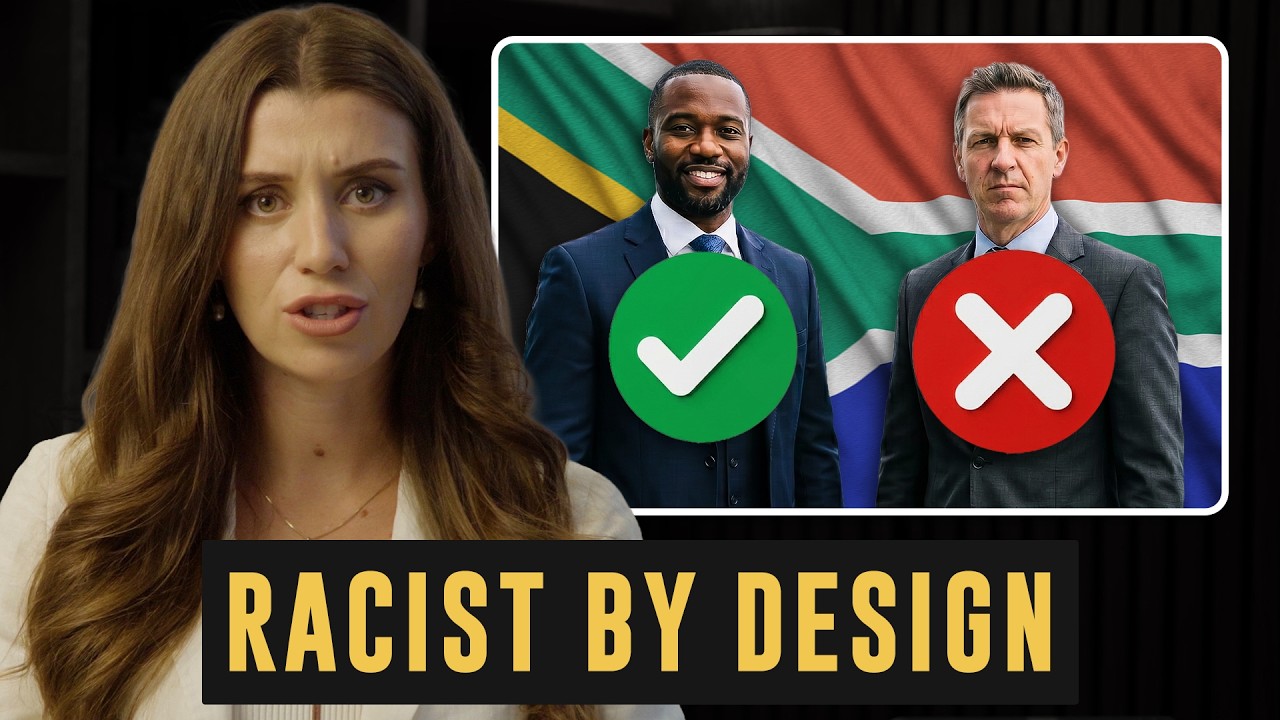
Ernst Roets Exposes Euphoric Violence and Target Privilege Following Charlie Kirk Assassination in South Africa
Following the assassination of American conservative activist Charlie Kirk on September 10, 2025, Ernst Roets discovered a disturbing reality in South Africa: scores of people celebrating his death online, with many calling for more killings of those sharing Kirk's views. What emerged wasn't just internet trolls, but real people with verifiable platforms, including government employees, openly inciting violence against white, Christian, and conservative South Africans. Despite receiving countless death threats himself, Ernst Roets found no mainstream outcry about this rising tide of hatred. Instead, when they suggested employers should know if their staff incite murder on social media, the media attacked them for threatening free speech while ignoring the actual calls for bloodshed and extermination targeting South Africa's white minority.
The Assassination That Exposed a Nation's Dark Reality
Imagine a man, 31 years old, a father of two, answering a question at a university campus event and in full view of his loved ones, killed by a single shot to the neck. This was the horrific reality of the assassination of American conservative activist Charlie Kirk on September 10, 2025. But the story shared here isn't just about an American tragedy. This is about what happened thousands of kilometers away in South Africa while the blood of Charlie Kirk was still wet.
When Lex Libertas issued a statement and hosted a wreath laying ceremony immediately after Kirk's murder, they soon discovered that scores of people online thought this was a fantastic development. Not only were people celebrating the brutal death of a Christian man because they disagreed with his political conclusions, but people used this as a springboard to say more of it was needed—that more people with the same views as Charlie Kirk needed to be killed.
Lex Libertas soon realized this wasn't just a bunch of internet trolls. Much of it was real people with real verifiable social media platforms. Many people online, including the narrator, received multiple death threats in the aftermath of what happened to Charlie. The narrator personally received so many death threats that tracking them became impossible, so counting simply stopped.
The Deafening Silence of Mainstream Media
What proved worse than the threats themselves was that these remarks went unchecked. There was no outcry. Not a single news report, not a single comment in the mainstream by an analyst, academic, or media leader expressing concern about the rise of anti-white, anti-Afrikaans, anti-Christian, or simply anti-conservative hate speech emerged. This wasn't about people saying offensive things—this was about people who actively, openly, and proudly encouraged death, murder, and torture of a certain section of society, preferably in front of their loved ones.
Back in September, shortly after these events, Lex Libertas issued a press statement saying that employers have a right to know if people who work for them incite murder on social media. Suddenly the media was all over it. Lex Libertas was attacked in piece after piece by people in the mainstream claiming they wanted to prosecute people who merely used their freedom of speech—which was, of course, nonsense. Still, no concern was expressed about people openly calling for the bloodthirsty murder and extermination of the white minority in South Africa.
The media was too busy expressing concern about those who wanted the murders and tortures to stop, about the narrative that there was a problem. Too busy setting up straw men that they enthusiastically shot down. "But surely you should agree that this is not a genocide," they said—not just sometimes, but every single day. The narrator guarantees finding some mainstream journalist or commentator who cried that there is no genocide in South Africa within the last hour on X, with enthusiastic applause for the stunning and brave stance taken.
The Hypocrisy of Genocide Denial
This response is ridiculous, shameful, and disgraceful as far as Lex Libertas is concerned. Imagine for a moment if anyone were to respond to someone discussing the atrocities of apartheid by saying, "Yes, but surely you have to agree that it wasn't a genocide." There are people who say apartheid was a genocide—some of the most influential politicians and journalists in the country say this despite the fact that the black population doubled during the first two decades of apartheid and then doubled again during the two decades that followed.
Never has a single journalist, commentator, analyst, or mainstream politician tried to counter that narrative by saying it wasn't genocide. One TV host even said during a television interview that to be a black person in a township in South Africa today is worse than being a Jew in a Nazi concentration camp. Have we lost all sense of truth and honesty? Have we lost all sense of dignity?
Understanding Target Privilege
This is happening because of a phenomenon called target privilege. Target privilege means you can say whatever you want—you can lie, you can call for violence, you can call for torture, you can call for large-scale extermination and explain in detail what that should look like—as long as you pick the right target.
If you use a derogatory word directed at black people like Vicky Momberg, you will go to prison. If you work for the South African government and openly say that we need to do to white people what Adolf Hitler did to the Jews like Velaphi Khumalo, nothing happens—just a slap on the wrist. In fact, last checked, he still works for the government.
But not just that—do you remember a media outcry about Khumalo? Do you remember News24 or Daily Maverick writing editorial pieces about the scourge of black racism? About how black people need to stand up and say, "We are not all like that?" No, of course you can't, because it didn't happen.
But do you remember Penny Sparrow? Of course you do. The most famous racist in South Africa who posted something offensive on social media. Yes, it was extremely offensive. The issue here is not that Penny Sparrow was vilified for her remarks as much as it is that people say things every day in South Africa that are much worse than saying that other races remind you of animals. But the difference is they have target privilege. They can say whatever they want, including calls for brutal extermination, because their targets are white.
The Zeitgeist of Euphoric Violence Report
Lex Libertas encouraged people to send information when they saw such content online. Today they are releasing a report on the zeitgeist of euphoric violence in South Africa—a spirit of the times in which people are so caught up in their hatred and contempt for white people in South Africa, for conservatives, for Christians even to a large extent, that they have lost all sense of morality and reality.
From the 150 submissions received in the weeks following Kirk's assassination, the findings were disturbing:
62% were celebratory of Kirk's death, including comments like "He got what he deserved" and related memes
26% of responses involved criticisms of Kirk using slurs such as racist or bigot
12% of responses were explicit cases of incitement of violence, including calls for public figures like Erika Kirk and several other public figures in South Africa to be murdered, preferably in a brutal way and preferably in front of their families
The worst part is that many of these aren't anonymous people hiding behind fake profiles. These are cases of social acceptance of murder by people who work for the South African government—not just Khumalo, but new cases. The evaluation found such persons working for the Department of Education, the Department of Health, the Department of Labor, and even someone in the police openly celebrating death or in some cases inciting violence and murder. One employee from the Gauteng Department of Education literally posted an image with the words, "Kill all Charlie Kirks."
A Blatant Double Standard on Race
How does a society get to a point where this is acceptable? This is a blatant, grotesque double standard on race. In fact, it's so bad that calling it a double standard just doesn't cut it anymore. It's like saying that Joseph Stalin had double standards when the problem was much deeper than that. Double standards is just the tip of the iceberg—a consequence, a symptom of a much deeper crisis, a zeitgeist of euphoric violence directed at minority communities in South Africa.
This is flagrant persecution. When members of the South African government openly call for the extermination of a racial minority, when their words are celebrated by their colleagues, and when there are no consequences for their actions—how is this not persecution?
The genocide debate gets us nowhere. In fact, the only people going on about genocide in South Africa are those who desperately want others to say there is a genocide so they can respond with, "No, there isn't." As the Hutus were running down the streets of Kigali with machetes and pitchforks slaughtering the Tutsis by the hundreds of thousands in 1994, commentators and analysts were still saying, "Well, surely we should agree that this isn't a genocide."
A Pattern of Ignored Violence
The report also highlights that this isn't a new phenomenon. Yes, there was a spike in online incitement of violence in the aftermath of Charlie Kirk's assassination, but this has happened before—unfortunately, more than the commentariat would like to admit. It happened, for example, during the 2017 Knysna fires when media outlets only focused on white perpetrators of hate speech while completely ignoring black social media users who celebrated the disaster because they presumed that the victims were white.
Interestingly, while 76% of the users celebrating Kirk's death were black, 14% were white progressives—an overrepresentation of the white community, showing that this hatred is also heavily driven by ideological division. But the fact that the people inciting violence and death are also white doesn't matter to the powers that be. They don't care about the fact that there are white people calling for death and murder on social media. Why? Because those white people are calling for death and murder of other white people.
The moral of the story is this: You can say whatever you want in South Africa, even if you are white, even if you are male, as long as you choose the right target.
A Profound Threat to Stability
This is not just noise—it's a profound threat to stability. The American president is indeed right when he says that bad things are happening in South Africa. And if you are angry with him for saying that, but you remain quiet while your friends are calling for ethnic cleansing, then you are a hypocrite and you are part of the problem.
When the celebration of murder on a racial basis is normalized, real world violence is inevitably legitimized. This erodes trust in public institutions and destroys social cohesion. If two wolves and a lamb vote on what's for dinner, you should not blame the lamb for concluding that the system is rigged. This is not because the lamb rejects democracy, but because the lamb, unlike the wolves, understands that there is a difference between democracy and majoritarianism, between a system that is decentralized and contains checks and balances, and one that facilitates the tyranny of the majority.
Lex Libertas's Four-Point Action Plan
Lex Libertas is refusing to let this stand. Here is what they will do:
Make the names of these people public and inform the employers of people who openly encourage violence online
They have already submitted a formal request to the parliamentary portfolio committee on police to initiate a public hearing on the rise of online incitement. They need to state their case on an official public platform, and if anyone wishes to counter their conclusions, they can bring their own statistics
Continue to collect information on this matter. They have created a campaigns page on Lex Libertas's website called Fight Incitement. If you're aware of such cases, bring this to their attention through the website. You can also send them an email at veldtog (the Afrikaans word for campaigns) at lexlibertas.org.za
Continue to issue public reports on this matter. This is just the beginning. The world needs to know what is happening. They need to make this dark reality of political life in South Africa undeniable because the problem cannot be addressed if it is swept under the carpet. They will do so with follow-up papers to be published within South Africa and abroad
A Call to Action
Lex Libertas encourages people to support this work. They are not funded by billionaires nor the South African government. They are able to do what they do thanks to the continued support of ordinary people who make small monthly contributions to their work. Support their work by going to their website at lexlibertas.org.za, clicking on contribute, and signing up as a monthly contributor.
The ultimate warning of this report is a question we all have to ask ourselves: If we accept a society where we can openly celebrate the murder of those we politically disagree with, who could reasonably be next?