Up Next
Riley Gaines Reflects on Charlie Kirk's Legacy, Gender Ideology, and the Pro-Life Movement at Amfest
18:32
Nicki Minaj at AmericaFest Defends Christians, President Trump, and the Right to Think Freely
32:04
Vivek Ramaswamy Defines What It Means to Be American in 2026 Against Woke Left and Groyper Right
17:49
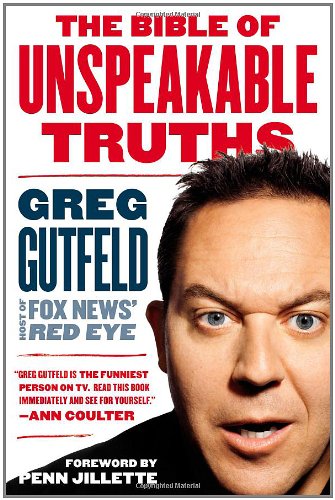
Greg Gutfeld Reveals Why Trump Derangement Syndrome Is Actually an Addiction and How Comedy Saved America
Greg Gutfeld sits down with Benny Johnson to dissect the complete cultural flip that made Donald Trump the rebel and left-wing institutions the establishment. The number one comedian in America explains why late night hosts lost their relevance, how personal resentment fuels never-Trumpers, and why he had to confront his own ego before understanding Trump's appeal. Gutfeld shares his bulletproof theory on the hierarchy of smears, why the left abandoned comedy when they abandoned free speech, and reveals his all-time favorite Trump comedic moment. From exposing Jimmy Kimmel's meltdown over Charlie Kirk to explaining why Saturday Night Live lost all credibility covering for Biden, Gutfeld offers a masterclass in observing rather than indulging the cultural chaos.
The Cultural Flip That Changed Everything
Greg Gutfeld opens with a striking observation about how American culture has completely inverted. When he was younger, the bad guys in every movie were old, crotchety white Republicans while the cool kids were hippies. He uses Animal House as the perfect analogy—the young fun lovers versus the evil conservative dean. But now it's flipped. The teachers and administrators are the liberals, the woke, and the left-wing because they got high on their own farts with no opposition to their ideas. They became the man.
Now you have Donald Trump, a billionaire real estate developer, as the rebel. He's literally the head of the Hell's Angels. Gutfeld borrows an analogy from Scott Adams: the Trump administration is a pirate ship. They don't have to get along. There could be rough edges. Maybe a few did time. There might be a body or two buried under a floorboard here and there, but they're all rowing in the same direction. If you have a sorted past, if you're quirky, eccentric, dangerous, but you believe in what they believe, you can get on that pirate ship. You have all these interesting people going in one direction. The key is they're interesting—not technocrats, not bureaucrats, not rent-seeking politicians.
Gutfeld points to Trump bringing Tulsi Gabbard into the White House as an example. A reporter asks if she's still a fascist, and Trump responds, "You can call me a fascist. Just call me a fascist." Trump is hilarious, and he used to appear on late night shows all the time. Jimmy Fallon tussled his hair, and Trump was beloved. Then suddenly, everything changed.
The Psychology Behind Trump Resentment
Gutfeld offers a powerful psychological framework for understanding why people resent Donald Trump. When you're really mad at somebody and you don't know why, it often has to do with the fact that it's exposing something about you. When Trump came up, all these people who were friends with him had something exposed about themselves that they didn't want to know.
The never-Trumper conservatives were the most extreme in their dislike because Trump exposed that they actually weren't the voice of conservatism. They thought sitting in their leather armchair, smoking a cigar, quoting William F. Buckley meant they were in charge. Yet it was this guy. Gutfeld admits he had to confront this in himself—he was pissed off at Trump because for years he was going after the politically correct, saying all these things, and Trump came in and just blew it up. "That should have been me," he confesses.
This resentment exists throughout the entertainment industry and politics. Gutfeld recalls being on a show where the host said after a Trump segment, "Why didn't I run for president?" In many people's minds, they were resentful that Trump did it and they didn't. Why wasn't it them?
The Collapse of Late Night's Cool Table
Gutfeld describes late night talk shows using a high school metaphor. Imagine an amazing high school with tens of thousands of people, and there's one cool table off to the side with four or five people holding court—the coolest people on the planet. Trump comes in, they invite him to that table, and he says, "I'm good. I'm going out with these people." That created a crisis of confidence when they suddenly realized their views aren't held by everybody else. They were just talking to themselves, and nobody cares.
The ratings prove it. Greg Gutfeld has triple the ratings of Stephen Colbert and quadruple the ratings of Jimmy Kimmel. When entering late night, Gutfeld didn't look at himself as competing against them. He went for bigger fish, thinking he could get the same number as all of them combined. He focused on Monday Night Football, actual things people watch. There are nights when he's number one in all of cable, beating professional football games.
Jimmy Kimmel's Meltdown and the Impostor Syndrome
Gutfeld analyzes Jimmy Kimmel's on-air attack against Charlie Kirk. When somebody is upset about something, it's more about themselves. What is it about Charlie Kirk that made Kimmel so upset? Clearly a lack of impact. Kimmel saw somebody have an impact that he thought he wanted. His lashing out was basically saying, "Wait a second, I truly am irrelevant." Behind every resentment is self-doubt and impostor syndrome. Kimmel saw the world change and was left behind. Imagine being in a movie where you find out in the final act that you're the bad guy—that's how you deal with it.
Why the Left Can't Do Comedy Anymore
The left used to say the right was bad at comedy, but if you look at comedians from the 70s, they weren't liberal. The left priced themselves out of comedy by putting a price on what is considered hurtful. They always say Gutfeld "punches down," to which he responds, "What am I punching? I'm pretty short. There's not a lot of things I can punch down on. Maybe Dana, but I don't hit women."
The idea that making fun of the trans movement is punching down is completely wrong. When you go after a sacred cow, you're punching up because they have preferential treatment that nobody else has. Gutfeld goes after people they say are off limits because he won't be compelled to behave in a way they say is appropriate. The moment you obey, it's over.
It drives Gutfeld crazy to watch people strive for the strange new respect of liberals. When he was anti-Trump, he got love from the other side. Liberal comedians praised him, and it felt good. Then he realized this was wrong—it was feeding his ego. He wasn't speaking the truth; he was trying to build himself up.
From Trump Skeptic to Trump Defender
What made Gutfeld change on Trump was asking himself what Trump was saying and doing that upset him. Trump hadn't done anything yet—he wasn't president. Gutfeld focused on deeds, not words. Once he dialed his ego back down, Trump became hilarious again. A lot of never-Trumpism is all about ego. They can't admit the sunk cost of their beliefs. If they hated Trump for so long and stop hating him, what did they just do for the last 10 years? It's like being in a terrible relationship and not wanting to get out because you were in it so long.
There are cracks appearing. People say they're not going to talk about Trump anymore—that's their way of saying they're a loser.
Trump Derangement Addiction
Gutfeld offers a brilliant reframing: it's not Trump Derangement Syndrome, it's Trump Derangement Addiction. They call things a syndrome when there's no origin, like chronic fatigue syndrome—a collection of symptoms with unknown cause. But with Trump derangement, it's an addiction because you can't control it. When an addiction is out of your control, it has power over you and creates a filter.
If you were addicted to drugs, you see everything through the filter of drugs—how can I carve out enough time to buy drugs, where's my dealer? With Trump, every story is seen through the filter of what does it have to do with Trump. That is an addiction. If they treated TDA like any other substance, people's lives would change for the better.
Next time you run into somebody vehemently anti-Trump, ask them if they might have a problem. Invite them to a movie, then walk them into a room with all their friends holding letters: "Dear Steve, we've noticed all you do is talk about Donald Trump from morning till night. We're worried about you. We think you need help."
The Path to Peace: Observe, Don't Indulge
There's a flaw in human beings—we're drawn toward negativity over positivity because we're always trying to improve. That's why we like negative tweets over positive tweets. The Trump thing is a big "what's wrong with me" for never-Trumpers. When dealing with never-Trumpers or heavy antagonism, observe, don't indulge. At a workplace, who's the coolest person? The person observing and not indulging. The person who listens to gossip but doesn't spread it.
Gutfeld has good friends who are incredible never-Trumpers, and it rolls right off him. It bothers them more because they're trying to figure out why he's not the way they are. Why isn't he evil despite being relatively successful with a happy family? You're causing them to think differently about their own resentment. Underneath every resentment is self-doubt.
Saturday Night Live's Credibility Crisis
This resentment is killing comedy. Saturday Night Live used to be a comedic institution. People remember Gerald Ford falling down the stairs, the famous Chevy Chase bit. But just months ago, there was a president falling backwards across stages, down stairs, over the Resolute desk. They never made fun of Biden. That's a crisis—when there are untouchable things.
The media, late night shows, and SNL have no credibility because for four years they deliberately covered up for a brain-dead president. You don't take financial advice from Jim Cramer or fitness advice from Whoopi Goldberg. The same principle applies.
The Hierarchy of Smears
People ask Gutfeld why he always makes fun of somebody's weight or looks. He has a theory that's 100% bulletproof: the hierarchy of smears. Everybody he makes fun of for their weight, hair loss, or whatever has once compared him to a Nazi or fascist. In the hierarchy of smears, you can fit a lot below Nazi. The moment somebody calls you a Nazi, you can call them anything.
When somebody calls you a Nazi, that's an amplified narrative putting a target on your back. But when Gutfeld calls Brian Stelter fat, he's not painting a target on it, even though it could be a big one. Nobody's going to kill somebody because they're fat, but they will kill you if they've been told through repetitive demonizing narrative that you are a Nazi.
How Comedy Was Saved
The Dave Chappelle-Netflix moment was a watershed. Netflix employees walked out because he told a transgender joke. Chappelle said no, he wasn't cutting it from his set, and Netflix backed him. That's when the fever started to break.
It was free money on the table for conservatives. The moment the left abdicated their dedication to free speech became the right's win. It just so happens Trump uses speech like a giant paintball gun, and all the stars aligned. Gutfeld doesn't care about getting cancelled because he lives in a world where he'll always land on his feet—they share the risk. If one of your friends gets cancelled, you step up for people. The left learned they can't even depend on each other. They throw one of their own to the wolves hoping the wolves will eat them last, but they always get eaten.
Trump's All-Time Greatest Comedic Moment
Asked for his single favorite Donald Trump comedic moment, Gutfeld goes with the all-time classic: "To be fair, it was Rosie O'Donnell." Trump saw the question coming. A pure Republican response would have been apologetic—"that was in the past, I don't think like that anymore, it was for entertainment purposes." But that's not what Trump did. He said, "To be fair, it was Rosie O'Donnell."
Gutfeld is sure it wasn't just him. Millions of people got up from their chairs and said, "That's the guy. That's the guy."
Video Transcript
learning to question the actual words
they use. Because we are sharing the
risk and being able to say what we want,
the language changes. The best thing you
can do when you're in conflict with
anyone is to have fun. Why is [music] it
so important that I should agree with
you? If you're looking for reassurance
that you're [music] right, I'm the wrong
person. Do you ever wonder why I would
risk this? Do you ever think to
yourself, I'm [music] outnumbered by
you? Do you ever ask yourself why would
this person do this? The reason why I
think the government and [music] the
media don't like somebody who's widening
the lanes of free speech is because
[music] they defined disagreeableness as
hate speech and hate speech as crime.
Please welcome Greg Gut. Yeah.
[music]
Heat. [music]
[music]
>> [music]
[music]
>> Well, uh, thanks for coming out. Got to
go.
Let me, uh, do this properly, ladies and
gentlemen. My name is Benny Johnson.
>> Yeah. [cheering]
Benny. And this is the undisputed king
of comedy in the world, Greg Gutfeld.
THE NUMBER ONE COMEDY SHOW ON EARTH.
The great Greg Gutfeld.
>> Thank you. [cheering]
[applause]
>> I got to say, you're the first adult
male I've ever met named Benny.
>> Uh,
it's very strange. Is it is it uh so so
this happens constantly. There's a guy
named Benny Thompson
>> who's a Democrat
>> who ran like the January 6 committee.
>> That's right.
>> And Donald Trump's like, "F that Benny
Johnson." Like every once in a while he
mixes up my name. You know, I think I
accidentally sent you a pipe bomb.
>> Don't you hate that?
>> It's not a cake, KATE. IT'S A BOMB. IT'S
FROM GREG GUTFELD. I'LL EXPLAIN LATER.
>> It's a cake that looks like a pipe bomb.
It's a little prank.
>> Okay, you know Brett Bear, he's like the
best. And Brett Bearer is like straight
up straight up and down news and he's
like delivering this news about January
6th and the pipe bomb and he and he does
he did the same thing. He goes he goes
and that's a problem for Benny Johnson
lying about destroying America. I'M
LIKE, "NO, PLEASE GET HOW DO I GET my
reparations?"
>> Well, you know, who would have thought
that Brett Bearer's real talent is
rapping? Is this uh Have you seen him
rap?
Yeah, it's pretty bad.
Donald Trump was the number one most
named dropped
uh American in all rap songs according
to the Huffington Post. They did a full
analysis and they found that President
Trump's name was used something like
5,000 times in rap songs because Trump
was culture
>> and Trump was funny. Trump is funny and
that's what made him so viable in these
elections. That's what makes him such a
powerful force. And Vince, he's been on
your show and since that was a massive
show, I wanted to sort of like may Why
don't we start there? Like, well, here's
an unspeakable truth. If you were to ask
a hip-hop artist,
who would you rather be, Donald Trump,
arrogant, obnoxious, driven,
uh, whatever, or Barack Obama?
All of them would say Donald Trump.
It's because
[applause]
it's because wherever he goes, there he
is. Life follows you and it and you're
having fun. I always talk about how um
we're living in the era of the flip.
When I was when I was your age, we
didn't have Turning Point. I'm so old.
when I was your age.
Uh, and um, the bad guys in every movie
were the old crotchety white Republican
and the cool kids were like the hippies.
I always use animal house as kind of the
analogy. The the animal house where the
young fun lovers and the and the dean
was the evil conservative. It's flipped.
It's now the teachers and the
administrators
uh who are the liberals, the woke and
the left-wing because they got high on
their own farts. They had no they had no
opposition to their ideas and now they
became they became the man. And then
what happens is you have somebody like
Donald Trump who's a billionaire real
estate contractor who is now the rebel.
He literally is the head of the Hell's
Angels.
I um I borrowed this I often borrow this
analogy from Scott Adams, but the why
the reason why the Trump administration
is so interesting is that it's a pirate
ship. It's like they don't have to get
along. Uh there could be a few rough
edges in there. Maybe a few of them did
time. There might be a b a body or two
buried under, you know, under a
floorboard here and there, but they're
all rowing in the same direction. That
if you want, if you have a sorted past,
if you're a bit quirky, eccentric,
dangerous, but you believe in what they
believe, you can get on that pirate
ship. So, you have all these interesting
people going in one direction. And the
key is they're interesting. They're not
technocrats. They're not bureaucrats.
They're not rent seeking politicians.
They're just kind of like They remind me
I'm old. They remind me of the Oakland
Raiders from the 1970s. Just dangerous.
President Trump has dirty communist
Dorhan Mandami in the White House and a
reporter goes, "Hey, Mandami, like is he
still a fascist?" And Trump's like, "You
can call me a fascist. Just call me a
fascist. It's funny, right?" Trump's
hilarious and he's been on your show and
he used to go on he used to go on late
night shows all the time. You remember
Jimmy Fallon? He like tussled his hair.
He like mess You guys remember that?
Jimmy Fallon like mess up Trump's hair
and he was beloved on late night. Yeah.
>> And then suddenly like what the hell
happened? These guys balls fall off.
Like they they can't like do an
interview with Donald Trump anymore. Uh
like well they I I would say the balls
fell off except for the view. [laughter]
Um,
too easy. That's too easy. People, don't
indulge me. It'll just get worse. You
know what I think it is? Is
um if you look at why people resent
Donald Trump and I've talked I I I I've
been thinking about this for a long time
because I had the same issues in 2016,
2015, and I knew Trump. Why do people
res resent anything?
It's because they play a role somehow in
the resentment and they have yet to
confront themselves over it. So, you
know, when you're really mad at somebody
and you don't know why, a lot of times
it has to do with it's exposing
something about you. And I think when
Donald Trump came up and you had all
these people that were friends with him,
he exposed something about them that
they didn't want to know that they like
and I and I'm going to use let's say the
I'm going to use the never Trumper
conservatives.
Why were they the most extreme in their
dislike for Trump? Because he exposed to
them that they actually weren't the
voice of conservatism and that upset
them.
It's like, wait a minute.
Sitting in my leather armchair, smoking
a cigar, quoting William F.Buckley, I'm
in charge.
And yet, it's this guy. If they had
actually said, "Okay, why is this?"
Because I had to do this with myself.
Why is it Why is his success bothering
me? Because you can honestly, you can do
this with every person in your life on a
personal level. What What kind of
resentment do you hold and what's your
role in it? And I'm going like, I know
I'm pissed off at Trump because for
years I was going after the politically
correct and I was saying all these
things and he came in and just blew it
up. And that should have been me.
I'm telling you that is behind all of
the resentment about Trump in the
entertainment industry, in the world of
politics. Uh, I won't say who this was
and his name does not rhyme with
Schmemell O'Reilly, but
we I was I was on this show and
afterward it was they had done a segment
on Trump. This is probably 2016, 2015
maybe earlier and the host said, "Huh,
why did I run for president?" And I
think in the in a lot in in a lot of
people's minds, they were resentful that
he did it and they didn't and why wasn't
it them? And then you go to the late
night talk show. So here's the way I
look at late night talk shows. Imagine
this amazing high school with tens of
thousands of people and there's one cool
table off on the side and there's four
or five people holding court there and
they're the coolest people on the
planet. you come in and they invite you
to that table and you go, "I'm good. I'm
going out with these people." That
created a crisis in in confidence in
those people when they suddenly realized
that their views are not held by
everybody else. They realized that
sitting in that table, they were just
talking to themselves and nobody cares.
[applause]
Nobody cares.
Nobody cares. You I checked the ratings
before coming out here. Greg Gutfeld has
triple the ratings of Steven Colbear.
Greg Gutfeld has quadruple the ratings
of Jimmy Kimmel
even when he's crying. That son of a
you know. Um, he lied. That that bastard
lied. That bastard lied. He was ripped
off air. He threw a temper tantrum. He
was put in timeout because he lied about
Charlie Kirk.
>> Yeah. Two two things about that. Remind
me about the Kimmel thing because it's
important. Um the first thing about
competition.
So when we were entering the late night
sphere, I really didn't want to do it,
but I did it. I didn't look at myself as
competing against them. I said I thought
to myself, "No, I'm going for bigger
fish." Like I I bet I could get the same
number of all of them combined. So I
did. I didn't even think about them.
What I was thinking about was like
Monday Night Football, like actual
things that people watch.
And there are nights when we beat when
I'm number one in all of cable beating
um professional football games sometimes
every week. So, it it was all about like
I'm not that this is not even in my
universe cuz I think if I had focused on
them, it would have been at the
detriment of a wider audience. So now
you look at like something like Kimmel
and you go back to what I was talking
about that when somebody is upset about
something, it's more about themselves.
What kind of what is it about Kimmel
that makes them so upset about Charlie
Kirk's death? It was clearly lack of
impact.
He saw somebody have an impact that he
kind of thought he wanted. And I and I
feel like a lot of people feel that way
when some when something big happens and
it's not them and they are so ego driven
it hurts them and his lashing out was
basically saying wait a second I truly
am irrelevant behind every resentment is
self-doubt
and you hear the imposttor syndrome
that's it's kind of more. Maybe I'm not
all that I cracked up to be and it
sucks. And I think that's why he lashed
out at Kirk. He saw all he saw the world
change and he was left behind. But
imagine being in a movie in which if you
find out in the final act that you're
the bad guy, how do you deal with it?
That's how you deal with it. Wow.
[applause and cheering]
Why is the left so bad at comedy? You
know, it's interesting. They always used
to say that about the right. Why is the
right so bad at comedy? But if you look
at the comedians from the 70s, they
weren't liberal. Uh it just so happened
that um the left kind of like priced
themselves out of comedy by putting a
price on what is considered hurtful.
They always say to me, "Uh, I Gutfeld
just punches down." And I go, "What am I
punching?" I'm pretty short. There's not
a lot of things I can punch down on.
Maybe Dana, but I don't hit women.
I just want to make that clear. Uh but
um
the idea that
making fun of the trans movement is
punching down that is the ex that is so
completely wrong. When you go after a
sacred cow or is it a sacred bull
sacred cow if you're talking about the
view?
See, I'm already having an impact on
culture.
But they would say, "Oh, you're if
you're if you're going after specific
identity groups, you're punching down
like trans." No, you're punching up
because they are sacred cows. They have
preferential treatment that nobody else
has. So I thought I'm going after the
people they say is off limits because
number one I am not going to be
compelled to behave in a way that they
say is appropriate and number two yeah
you can clap.
[applause]
The moment you obey it's over. You know
they don't like you. Drives me crazy to
watch people strive for this strange new
respect of liberals. Like, oh, I'm so
excited when a liberal comedian agrees
with me. This is one of the things that
I remember when I was anti-Trump. Man,
did I get love. I got love from the
other side. And I remember this is like,
you know, Twitter was still pretty big
in 2014. And I'm getting all this love.
And I won't say the comedian's names,
but they were like, "Ah, Greg, you know,
it's great what you're doing on the
five." And I got to say, it felt good,
you know, to get these accolades from
people who normally call me a
right-winger. And then I realized this
was wrong. It's like, what am I doing?
This is feeding my ego. And that was one
of the things when I realized, okay,
this is I'm not actually speaking the
truth. I'm trying to build myself up.
And that's when I said, okay, enough.
And what made me change on Trump was I
had to ask myself, what is it that he's
saying that's upsetting me? And what is
he doing that's upsetting me? He hadn't
done anything yet. He wasn't president.
So I put pay attention to his deeds. I
focused on deeds and not words. And once
I basically dialed my ego back down
where you know what, it's not about me.
He suddenly became hilarious again. So,
I think that a lot of the never Trumpism
is all about ego. They can't admit the
sunk cost of their beliefs. If I hated
Trump for so long, if I stop hating
Trump, what did I just do for the last
10 years? It's like being in a terrible
relationship and you don't want to get
out of it because you were in it for so
long. uh you know it's it's it's that
it's um
what's the other there's an opportunity
cost that you start thinking about all
the things you could have devoted your
time to but it was to this I do think
you're seeing cracks in it people are
like you hear people you know what I'm
not going to talk about Trump anymore
that's their way of saying I'm a loser
the other thing too is
one of the interesting things about
Trump derangement syndrome is that they
call things a syndrome when there's no
origin like chronic fatigue syndrome.
Those are things that they say we don't
know what causes it so we call it a
syndrome which is a collection of
symptoms. It's not trump derangement
syndrome. It's trump derangement
addiction. And the reason why it's an
addiction and I and I use that phrase
now is because you can't control it. And
when an addiction is out of your
control, it has a power over you. And it
and it creates a filter. Like if you
were addicted to drugs, you have no
control over it. And you see everything
through the filter of drugs. It's like
how can how can I carve out enough time
to buy drugs? Where's my dealer? With
Trump, it's like every story is seen
through the filter of what does it have
to do with Trump? That is an addiction.
And I honestly believe that if they
treated TDA like any other kind of
substance, people's lives would change
for the better. I'm serious. [applause]
You should next time you run into
somebody who's vehemently anti-Trump,
you should ask them, "I think you might
have a problem."
And they go, "Hey, do you want to go?
You want to go to a movie?" And then you
go, "Sure." You go to a movie and you
walk them into a room with all of their
friends
and they all have letters.
Dear Steve, we've noticed all you do is
talk about Donald Trump from morning
till night and and and and and we're
we're worried about you. We think you
need help. I think that that is like if
you look at it through that framework,
it makes so much sense.
>> Should we open TDS asylums?
>> Say again.
>> Asylums like mental health institutions.
>> I think we should. Yes. One of the
things too is
understand that
it's a flaw in human beings. We are we
are drawn towards negativity over
positivity because we're always trying
to improve. So we like negative tweets
over positive tweets. What's wrong with
me is what everybody thinks. The Trump
thing is a big what's wrong with me for
never Trumpers. You kind of have to
understand that. That's why I always say
when you're dealing with never Trumpers
or heavy deep antagonism,
observe, don't indulge. Observe. Like
you'll notice when you're at a
workplace, who's the coolest person at
work? It's the person that's observing
and not indulging. The person that
listens to gossip but doesn't spread it.
That's the person you want to be. And
with and and you're going to find a much
bigger a greater peace of mind. And
you're going to see that the people that
disagree with you are going to be
wondering what do you have that they
don't have? What is this thing? It's
like I I have good friends who are
incredible never Trumpers and I just it
rolls right off me and it bothers them
more because they're trying to figure
out well why why am I this way and he's
not? He's got he's he's got he's
relatively successful. He's got, you
know, a happy family. Why is he not
evil? And then you and you're you're
causing them to think differently about
their own resentment. Underneath every
resentment is self-doubt. This
resentment is killing comedy. We have a
comedic institution in our country
called Saturday Night Live.
>> Yeah. If some of you are old enough,
maybe raise your hands. Some of you
might be old enough. Do you remember
Gerald Ford falling down the stairs?
This is a famous Chevy Chase bit. These
people weren't even born,
>> right? So, okay, some of the people are
born. There was a there's a president
who we had just a couple of uh I don't
know months ago who was falling ass
backwards across stages, down the
stairs, over the Resolute desk in the
White House. But enough about Obama.
Let's focus on Biden. They never made
fun of him. And I think that like that's
a crisis actually when you can't when
there are untouchable things like why
did Saturday Night Live do that? Well,
this is the other thing that's great
about whenever you're in a conversation,
whether it is with the media, especially
the media, is that they don't have any
credibility. And SNL has no credibility.
The late night shows have no
credibility. The media has no
credibility. But because for 4 years
they deliberately covered up for a
president that was brain dead. There is
no reason for you. It's kind of like
It's like you don't take financial
advice from Jim Kramer, you know.
You don't take uh
>> fitness advice from Whoopy Goldberg.
>> Yes, exactly.
See, that was better. I I'm having an
impact on culture every one fat joke at
a time. By the way,
>> I forgot what I was talking about, but I
want to I I I don't have much time.
People have asked me like, "Why do you
always make fun of somebody's weight or
looks?" And I have a theory which is
100%
bulletproof. I call it the hierarchy of
smears. Everybody that I make fun of for
their weight or their hair loss or their
whatever has once compared me to a Nazi
or a fascist. And in the hierarchy of
smears, you can fit a lot of stuff below
Nazi. The moment somebody calls you a
Nazi, you can call them anything.
And here's why. [applause]
Here's why.
[applause]
When somebody calls you a Nazi, that's
an amplified narrative that puts a
target on your back. But when I call
Brian Stelter fat, I'm not painting a
target on it, even though it could be a
big one.
But nobody's going to kill somebody
because they're fat.
But they will kill you if they've been
told through repetitive demonizing
narrative that you are a Nazi. They will
come for you. As we know,
[applause]
uh, I want to wrap up just very quickly
here. How do we save comedy? There
seemed to be like this incredible
watershed moment where Dave Chappelle,
Netflix was trying to cancel Dave
Chappelle. They did this big walk out
cuz he told a transgender joke, right?
And Netflix said like, "No, Dave
Chappelle said, "No, I'm not cutting
that for my set." And that seemed like
there was like this fever that started
to break there. Well, it's a And now,
like, how do we save comedy? I'm telling
you, it was a it this was free money on
the table for us. The moment the left
abdicated their dedication to free
speech became our win. It just so
happens we got the President Trump who
uses speech like, you know, a giant
paintball gun, you know,
and I mean, all the stars aligned. I
don't care
about I mean I I don't care if I'm going
to get cancelled because I live in a
world where I will always land on my
feet because we we prot we share the
risk.
If one of your friends gets cancelled,
you share the risk. You step up for
people. The left, they learned that they
can't even depend on each other. They
will throw one of their own to the
wolves with the hopes that the wolves
will eat them last, but they always get
eaten. Hence the size of the view. Okay.
Well, uh,
we did a lot of picking. Uh, we done a
lot of rightfully picking on libs in
your industry. You are destroying them.
And it's so great to finally have comedy
back in America. What is your single
favorite Donald Trump? Last question.
single favorite Donald Trump comedic
moment either behind the scenes maybe
you witnessed or something that was on
stage. But as the most successful
comedian in the industry, what's your
favorite Trump comedy moment?
You know what? I got to go with the
all-time classic. You know, there's so
many, but the all-time classic that got
me out of my chair and go, "THAT'S THE
MAN WAS WHEN he said, to be fair, it was
Rosie O'Donnell."
That that was that was pure comic
timing.
He was seeing the question coming.
He could have he he a pure Republican
response would be of course that was in
the past. I don't think like that
anymore. I've you know there are times
when I you know it was for entertainment
purposes but that's not what he did. He
said to be fair it was Rosie O'Donnell
and I I'm sure that it wasn't just me.
I'm sure millions of people got up from
the chair and go, "That's the guy.
>> That's the guy." WHO WANTS GREG Gutfeld
to do standup for the next hour? Is
Danny right there. Listen to this. The
king of comedy, ladies and gentlemen.
>> Oh, thank you.
>> THE GREAT GREG GUTMAN.
>> THANK [screaming] YOU EVERYBODY.
Thank you.
[music]
[music]
Heat.
>> [music]
Comments
Be the first to comment on this video.