House Democrats Split as 58 Vote Against Resolution Honoring Charlie Kirk After Assassination
Enjoying this? Share it with someone who needs to see it.
Up Next
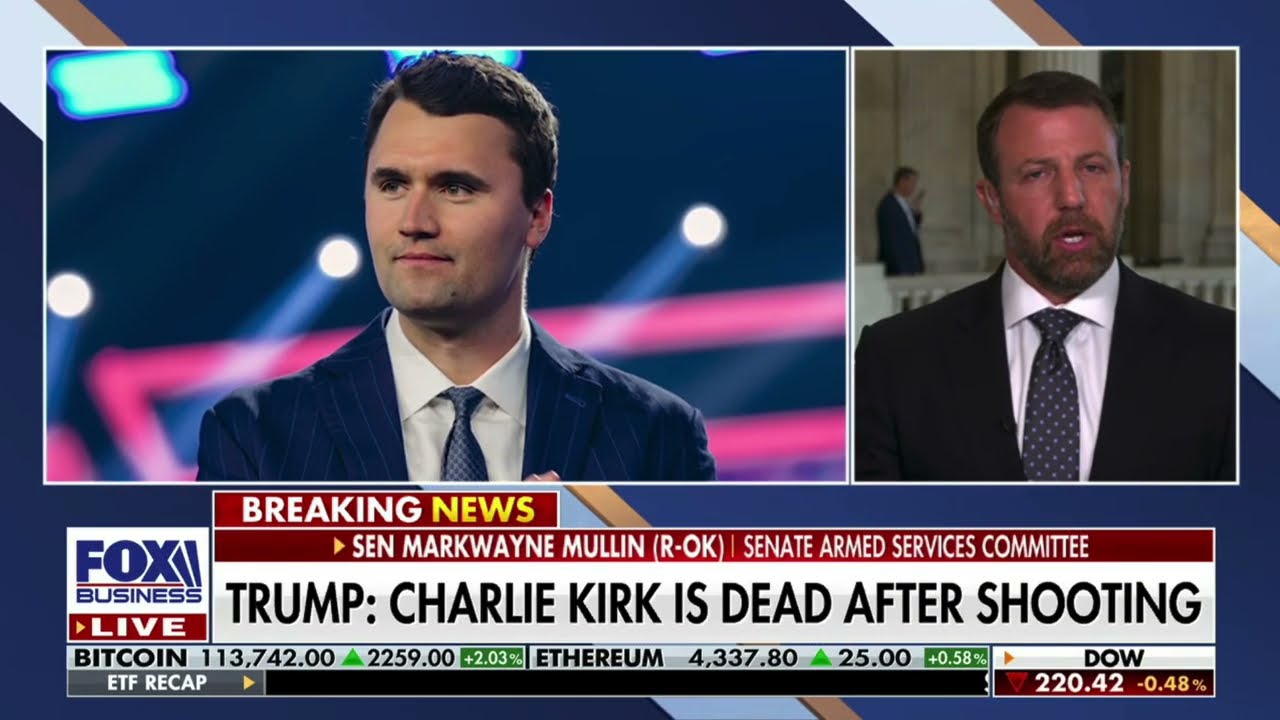
Senator Mark Wayne Mullen Reflects on Charlie Kirk's Assassination and Calls for National Unity
8:02
Jason Chaffetz Witnessed Charlie Kirk Assassination Yards Away: Patrick Murphy and C.J. Pearson on Political Violence
8:32
Eric Trump Remembers Charlie Kirk: The Visionary Who Built Turning Point USA From Nothing
9:26
House Democrats Split as 58 Vote Against Resolution Honoring Charlie Kirk After Assassination
The House passed a resolution to honor Charlie Kirk, but 58 Democrats voted against it, exposing deep divisions within their party. House Majority Leader Steve Scalise and Shannon Bream weighed in on this controversial vote, which came after Kirk was assassinated on camera. While some Democrats like Hakeem Jeffries voted yes, prominent progressives including AOC voted no, refusing to honor a man whose campus conversations they viewed as controversial. The split reveals how differently the two parties view Kirk's legacy—Republicans see him as a martyr for free speech and civil debate, while some Democrats characterize him as divisive and hateful, despite video evidence of his respectful, if challenging, conversations with students.
Breaking news emerged from Capitol Hill as the House voted on a resolution to honor Charlie Kirk following his assassination. The final tally showed a stark partisan divide: while the resolution passed, 58 Democrats voted against it, with others voting present. House Democratic leader Hakeem Jeffries voted yes, but Alexandria Ocasio-Cortez voted no, highlighting the fracture within the Democratic party on this seemingly straightforward measure.
The vote came as a shock to many observers who expected a unanimous show of respect for someone who was killed in such a public and tragic manner. As the final count was announced—"the resolution is adopted"—it became clear that honoring Kirk's life had become unexpectedly controversial along partisan lines.
Shannon Bream Analyzes the Democratic Divide
Fox News anchor Shannon Bream provided analysis on the vote, explaining that several Democrats have publicly stated they view Kirk's legacy very differently than Republicans do. She referenced comments from Congresswoman Ilhan Omar, who has accused Republicans of trying to rewrite Kirk's legacy and called him a hateful person.
Bream noted that Republicans counter these characterizations by pointing to Kirk's actual conversations and debates. "Go watch his clips," they say. "The things he's being accused of—racism and bigotry and these other things—you'll see that melt away if you watch the conversations he had with people." Republicans argue that while Kirk's conversations were uncomfortable and difficult, he was engaging in civil discourse, often laughing and hugging people he disagreed with.
The vote reveals a deeper question facing the Democratic party as it looks toward future elections: "Is it more progressive? Is it more moderate? Is it establishment?" Bream asked. "This vote would suggest that there's really not a lot of common ground."
The Simplicity of the Resolution
The resolution itself was straightforward—simply honoring the life of a man who was assassinated on camera in front of the entire country. There were no policy strings attached, no political agenda hidden in the language. Yet 58 Democrats couldn't bring themselves to vote yes.
Bream explained the reasoning: Democrats who voted no don't want Kirk "to be honored, viewed as a martyr, viewed as somebody whose conversations were even worthy of basic respect." They view his voice as "vitriolic" and "negative," and don't want to lend any support or credence to who he was as a person or to the mission of Turning Point USA.
However, Bream pointed out that many people who have gone back to actually watch Kirk's exchanges on issues of race, sexuality, and other controversial topics have expressed surprise that "it is not the Charlie Kirk they were told it was." Still, for some, their perception of him won't change, and that led to their no votes.
House Majority Leader Steve Scalise Speaks Out
House Majority Leader Steve Scalise, who himself survived an assassination attempt, weighed in on the vote with strong words. "It's a shame that that's where their party has moved. It's not where America is," Scalise said. He pointed to the outpouring of love for Kirk and what he represented—the idea that Americans should be able to debate freely, even when they disagree, and do it in a civil way.
"That's what Charlie did and it's what he represented. It's why you're seeing millions of people that maybe never heard of him thinking about things differently," Scalise explained. He called the no votes "disgraceful," emphasizing that this was simply about paying tribute to a life taken by an assassin. "Those members who voted no, I thought it was disgraceful. That's something they've got to answer, not me."
A Stark Contrast to Previous Votes
The divide became even more apparent when compared to a previous House vote. Back in June, the House voted unanimously to condemn the murders of Melissa and Mark Hortman in Minnesota. Republicans were on board for that vote, everyone was on the same page in condemning those killings. But when it came to Charlie Kirk, 58 Democrats wouldn't extend the same courtesy.
Scalise didn't hold back his criticism of those who voted present either: "Let alone the ones that voted present. I mean, what a profile in courage that is." He emphasized that the vote should have been unanimous, noting that at least many Democrats did vote yes. But for those who voted no, he had a simple message: "Open up your heart and just think about Erika and those kids and the millions of people who are heartbroken over Charlie's loss."
A Movement That Won't Go Away
Despite the political divisions on display, Scalise was optimistic about the future of the movement Kirk started. "This movement's not going to go away. Charlie started a movement, but this movement's only going to grow," he declared. As evidence, he pointed to the wave of interest from young people: over 50,000 have reached out to Turning Point USA saying they want to start their own chapters on college or high school campuses.
"That's a sign that they have woken a sleeping giant," Scalise concluded, suggesting that the attempt to diminish Kirk's legacy may have the opposite effect of what his critics intended.
What This Means for the Future
The vote on this resolution does more than just honor or refuse to honor one man—it reveals the state of American politics and the deep divisions that exist not just between parties, but within them. The fact that Democratic leadership split on this vote, with Jeffries saying yes and AOC saying no, shows a party grappling with its identity and future direction.
For Republicans and Kirk's supporters, the vote validates their view that the left is unwilling to extend basic human decency across political lines. For the Democrats who voted no, they see it as taking a stand against what they view as a harmful influence on American discourse. The truth, as always, likely lies somewhere in the nuanced reality of who Kirk was—a polarizing figure who engaged in difficult conversations that some found valuable and others found offensive.
What's undeniable is that Kirk's assassination and the subsequent political response to it have become another flashpoint in America's ongoing culture wars, with both sides convinced they're on the right side of history.