Incitement of Violence in South Africa: Confronting Persecution and Hate Speech in Post-Apartheid Reality
Enjoying this? Share it with someone who needs to see it.
Up Next
The Real Statistics Behind South Africa's Farm Attack Crisis and Why They're Worse Than You Think
14:05
Rob Hersov Exposes South Africa's Anti-White Persecution and the ANC's Catastrophic State Capture
55:33
South African Christian Defends Charlie Kirk Against Media Hit Piece by Rebecca Davis
13:42
Incitement of Violence in South Africa: Confronting Persecution and Hate Speech in Post-Apartheid Reality
South Africa faces a deeply troubling crisis of racial incitement and violence directed at white farmers and Afrikaners. This documentary extract exposes chants like "Kill the Boer" sung at massive political rallies, inflammatory speeches by political figures including Julius Malema calling for land invasions, and violent rhetoric targeting white citizens. Despite clear hate speech violations, courts and the Human Rights Commission have repeatedly failed to enforce equal protection under the law, instead adopting a racialized approach that treats speech differently based on the speaker's race. Advocacy organization Lex Libertas documents this systematic failure to uphold constitutional equality, revealing how critical race theory principles have infiltrated South African legal institutions, creating a two-tiered justice system where Afrikaners are denied the same protections afforded to other citizens.
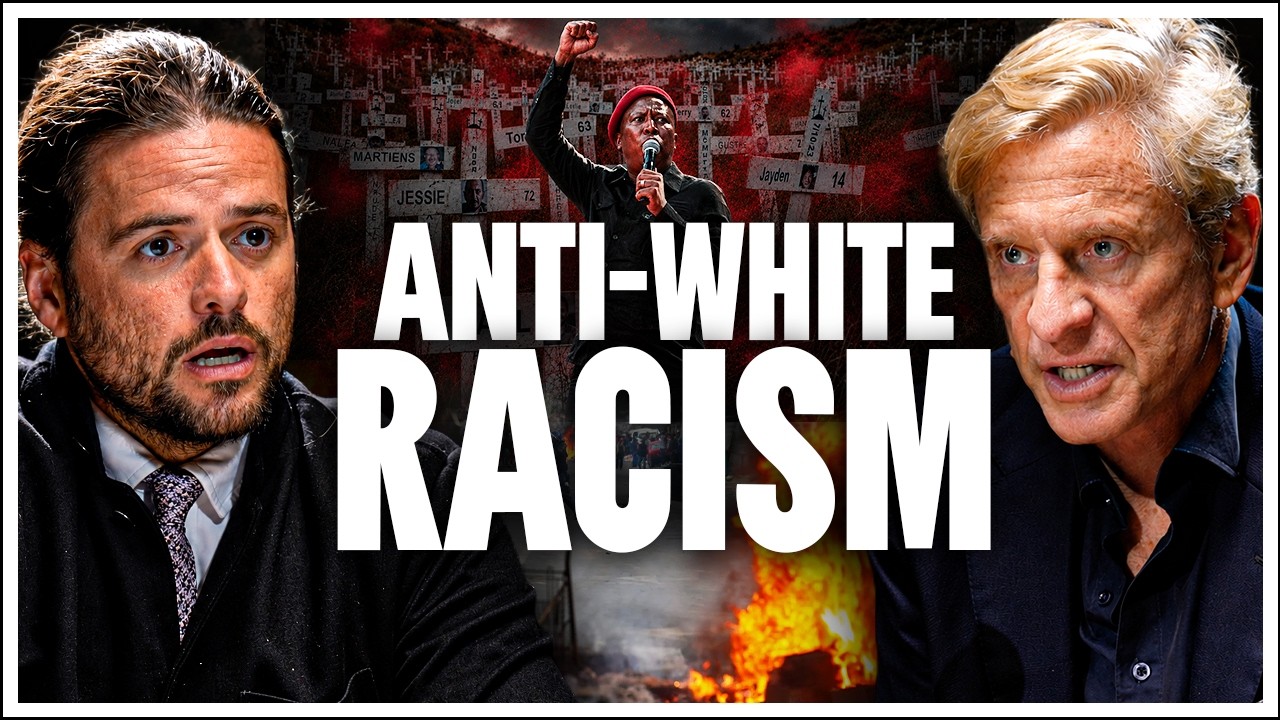
South Africa faces an escalating crisis of racially motivated hate speech and violence directed specifically at white farmers and the Afrikaner community. The documentary "Crossed Out: Confronting Persecution in South Africa" exposes the systematic nature of this incitement, beginning with chants heard at political rallies and public gatherings. Crowds numbering in the tens of thousands have been recorded chanting explicit threats: "We are cutting the throat of whiteness," "With this fire, white people, we'll kill their children, we'll kill their women, we'll kill anything that we find on our way," and "White man, you must die like a snake in our country."
These are not isolated incidents occurring on the fringes of society. These chants happen at mainstream political events, often with the implicit or explicit endorsement of political leaders. The most notorious example is the "Kill the Boer" song, which has been sung at stadiums filled with 90,000 people, creating an atmosphere where violent rhetoric against a specific racial group becomes normalized and even celebrated.
Political Leadership and Revolutionary Rhetoric
Political figures have contributed directly to this climate of intimidation. Julius Malema, a prominent South African politician, made statements that walk a careful line between direct incitement and plausible deniability. In one widely publicized speech, he stated: "I'm saying to you we have not called for the killing of white people, at least for now." The qualifier "at least for now" transforms what might have been a disavowal into an implicit threat, suggesting that restraint is temporary and conditional.
Malema also embraced explicitly revolutionary language that normalizes violence as a political tool: "You must never be scared to kill. A revolution demands that at some point there must be killing because the killing is part of a revolutionary act." This framing presents violence not as a criminal act but as a legitimate political strategy, creating ideological justification for those who might act on such rhetoric.
The Human Cost: Farm Murders and Targeted Violence
The consequences of this incitement are not merely theoretical. South Africa has experienced what many describe as an epidemic of farm murders, with white farmers experiencing violence at rates disproportionate to their population. Survivors recount terrifying experiences where attackers explicitly connected their violence to the political rhetoric they had heard. One victim recalled an attacker grabbing them and saying "kill the boer" during the assault, directly echoing the chant sung at political rallies.
The documentary emphasizes that farm murders in South Africa occur in a unique context compared to other violent crimes in the country: "In the rest of the murder cases in South Africa, you do not have people calling for it. Kill the farmer, kill the boer. You do not have this setting of a scene whereby it feels normal." This distinction is crucial—the violence occurs within an environment where political leaders, courts, and institutions have normalized rhetoric that dehumanizes the victims.
Legal System Failure and Unequal Protection
Perhaps most disturbing is the systematic failure of South African legal institutions to enforce hate speech laws equally. The documentary details how courts have "bent over backwards to try and find justifications for why this clear act of hate speech isn't hate speech." This represents a fundamental breakdown in the rule of law, where constitutional protections are selectively applied based on the racial identity of both speaker and target.
A particularly egregious example involved Julius Malema's speech outside a magistrate's court, where he was facing charges for inciting land invasions. At that very location, he gave another speech calling for further land invasions and engaged in what observers described as "extreme vilification of people on the grounds of race." In that speech, he stated: "They found the peaceful Africans here. They killed them. They slaughtered them like animals. We are not calling for the slaughtering of white people, at least for now. What we are calling for is for peaceful occupation of the land, and we don't owe anyone apology about that."
The Human Rights Commission's Racialized Approach to Justice
The advocacy organization AfriForum brought a formal complaint about Malema's speech to the South African Human Rights Commission. The Commission's response reveals how deeply critical race theory has penetrated South African legal institutions. After a two-year investigation, the Commission concluded that the speech did not constitute hate speech. More significantly, the Commission explicitly stated that "there should be different rules for different races" and that "you should treat speech uttered by black people towards white people differently to speech uttered by white people towards black people."
This approach represents a fundamental rejection of equality before the law. As the documentary explains, this "critical racial theory approach to the law, this idea that you should basically consult some kind of inverted pyramid, is anathema to a just legal system, and is certainly anathema to our constitutional order, where everyone is equal before the law."
The Creation of a Two-Tiered Justice System
The practical effect of these institutional failures is the creation of a society where Afrikaners are explicitly told they do not deserve equal protection under the law. The documentary states: "The grave concern is not just that it's being sung, but the reactions from the press and from other politicians. The idea is this group has it coming. We will not protect them and we will not enforce our hate speech laws against people who tell the Afrikaners that there are different rules for different groups."
This represents a departure from the principles of a free democratic society. As the documentary emphasizes: "If you live in a free democratic society, all citizens must be provided with equal rights. And if Afrikaners are told that you are a subhuman group that is not deserving of protection, you no longer live in a free democratic place."
The Work of Lex Libertas
The advocacy organization Lex Libertas created this documentary to make the crisis "unignorable." The footage was presented at the White Cross Project Conference in Washington, D.C. in September 2026, bringing international attention to what many consider a human rights crisis that has been largely ignored by global media and human rights organizations. By documenting the incitement, the violence, and the institutional failures that enable both, Lex Libertas aims to create pressure for systemic reform and equal protection under South African law.