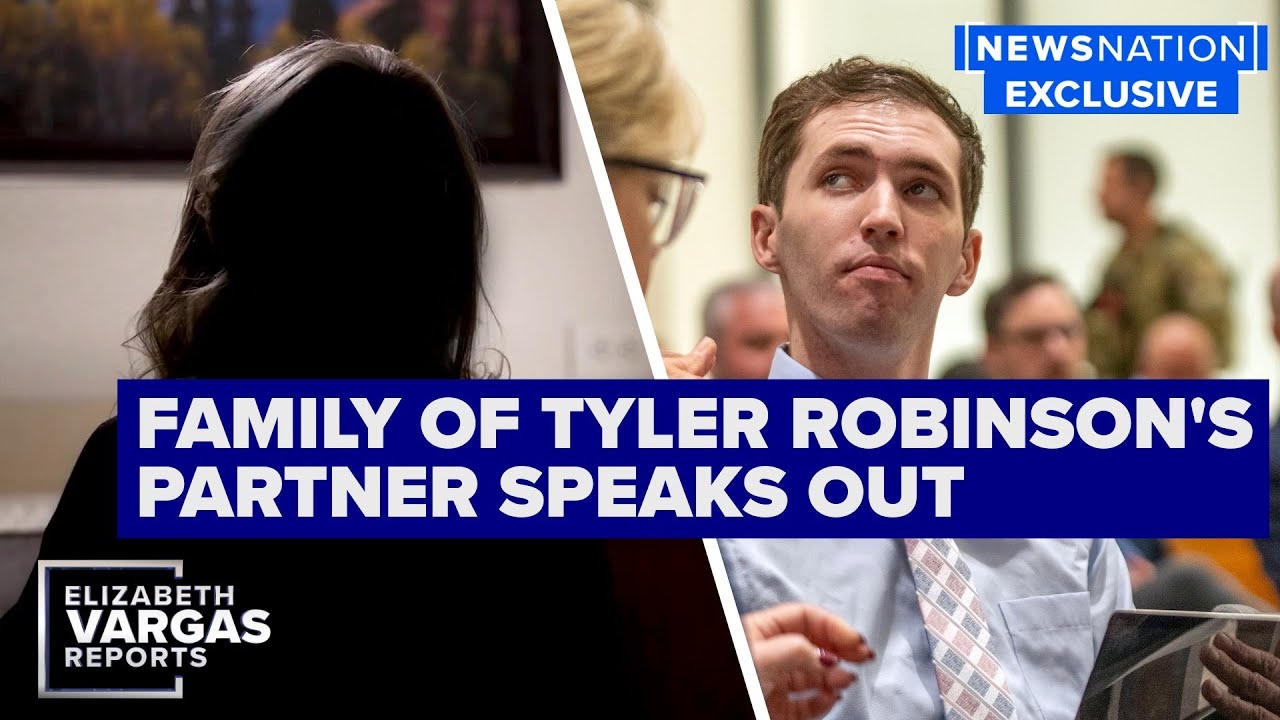
Hey guys, uh thanks so much for checking out my show. I really really appreciate it. Uh please click to subscribe. I appreciate all of your support. In this episode, I'm continuing to dig into uh accused Charlie Kirk assassin Tyler Robinson's uh romantic lover and roommate, uh a man named Lance Twigs. Uh if you look back a couple weeks ago, I broke the story talking to Lance Twigs's family member. Um, and there's still a lot of mystery that surrounds Lance, his relationship with Tyler, and a lot of questions about what he did or did not know before uh Charlie Kirk was shot and killed. Um, one thing that I've thought a lot about is Lance's family member told me, and if you want to watch that interview, you can go back to my previous episode. I'll link it below. Um, but Lance's family member told me, um, that at one point Lance had FBI protection. Uh, I I think it was for like a about a month and a half after the shooting, but then he got a lawyer and he no longer has FBI protection and has moved out of state. Um, I wanted to understand that better, like why would he have had FBI protection? How common is that? Is that something that's routine? Is it like part of the witness protection program? Is it bec is it because he was going to be a witness? And then why would that FBI protection go away after a month and a half? So, in this episode coming up, I'm going to talk to a retired FBI agent uh in depth about that uh about what may have been going on behind the scenes about why the FBI protection may have ended. Uh so, that's coming up. The other thing I'm going to do is I'm going to dive back into the text messages. And remember, there were there was this whole text message exchange, according to investigators, between Tyler Robinson and Lance Twigs after investigators say Tyler Robinson shot and killed uh Charlie Kirk. Uh, and there's been a lot of questions about the legitimacy of those text messages. Um, people thinking that they're very, very strange. So, I'm gonna go through them in a in a detailed way that I haven't before with this retired FBI agent, Steve Moore, who you guys have seen on my show before. He's he's just super smart guy and has worked a ton of investigations over the years. Um, and I'm going to go through them in a way that I never have before because I have more context now after my interview with Lance Twigs's family member. Um, which by the way, like I know I got a ton of reaction to that and I expected it because there's a lot of interest in the Charlie Kirk assassination and a lot of different theories going around and a lot of people questioning like some people even said like, "Oh, you're like a federal," they thought that I was like a federal plant and that I made the whole thing up and that it's not really Tyler Robinson's family member. And for those of you who've been following me for a long time, you know um how seriously I take this job and how um ethical and honest I uh try to be with you guys. Um, so I can promise you there is no way that I would put someone uh on TV or in my show uh that I didn't like, you know, check in every way possible to make sure that that person is who they say they are and that they know what they're talking about. Um, so some people are like, "Oh, it's all fake and it's not really one of Lance Twigs's family members." Like, I can promise you I did every check possible to make sure that that person is who they said they were. Um, and the other thing I wanted to say is for those of you who don't believe what she was saying or like that part I it's not up to me to tell you um what to believe. And I just want to give you guys the information that I find and then everybody can make up their own mind. Like there's plenty of other people and shows out there that like are telling people what they should think. And I'm not telling you who to believe. I'm not telling you whether to believe that Tyler Robinson is the shooter. I'm just giving you the evidence that I found. um uh you know going through all the police reports and then you guys can make up your own mind. But what I do want to make clear is that I checked heavily into making sure that that person was actually Lance Twigs's family member and I wouldn't have reported and put someone out there that I didn't um feel confident about at least, you know, who they really were. So anyway, I wanted to kind of get that off my chest because there were a lot of like comments about that and I expected it and it's just part of the job. So, um, but I just wanted to say that. So, anyway, let me go through and I'm going to do this again with, um, Steve Moore, the retired FBI agent, in more detail, but I just want to read you guys the text messages again just to kind of refresh all of our memories. Again, this is Tyler Robinson texting with his romantic lover, Lance Twigs, after the shooting. Um, and he starts off, and this was September 10th, saying, "Drop what you're doing. Look under my keyboard." And then reportedly Lance Twigs looked under the keyboard and found the note that stated, "I had the opportunity to take out Charlie Kirk and I'm going to take it." And then Lance Twigs writes, "What? You're joking, right?" And Tyler Robinson writes, "I I am still okay, my love, but am stuck in Orum for a little while longer yet. Shouldn't be long until I can come home, but I got to grab my rifle still. To be honest, I had hoped to keep this secret till I died of old age. I am sorry to involve you." And then um Lance says, "You weren't the one who did it, right?" And he says, "I am. I'm sorry." And Lance says, "I thought they caught the person." And Tyler writes, "No, they grabbed some crazy old dude, then interrogated someone in similar clothing. I had planned to grab my rifle from my drop point shortly after, but most of that side of town got locked down. It's quiet almost enough to get out, but there's one vehicle lingering." And then Lance Twigs writes, allegedly, according to investigators, writes, "Why?" And he writes, and then Tyler says, "Why did I do it?" And Lance says, "Yeah." And he says, "I had enough of his hatred. Some hate can't be negotiated out. If I am to grab my rifle unseen, I will have left no evidence. Going to attempt to retrieve it again. Hopefully, they have moved on. I haven't seen anything about them finding it." And then Lance writes, "How long have you been planning this?" He writes, "A bit over a week, I believe. I can I can get close to it, but there's a squad car parked right by it. I think they already swept that spot, but I don't want to chance it. I'm wishing I had circled back and grabbed it as soon as I got to my vehicle. I'm worried what my old man would do if I didn't bring back grandpa's rifle. Um, I don't know if it had a serial number, but it wouldn't trace to me. I worry about Prince I had to leave in a bush where I changed outfits. Didn't have the ability or time to bring it with. I might have to abandon it and hope they don't find Prince. How the f will I explain losing it to my old man? Only thing I left was the rifle wrapped in a towel. Remember how I was engraving bullets? The effing messages are mostly a big meme. If I see notice bulgew on Fox News, I might have a stroke. All right, I'm gonna have to leave it. That really effing sucks. Judging from today, I'd say grandpa's gun does just fine. I don't know. I think that was a 2K scope. Delete this exchange. My dad wants photos of the rifle. He says grandpa wants to know who has what. The feds released a photo of the rifle and it's very unique. He's calling me right now, not answering. Since Trump got into office, my dad has been pretty diehard MAGA. I'm gonna turn myself in willingly. We don't know the time stamps, by the way. I'm gonna turn myself in willingly. One of my neighbors here is a deputy for the sheriff. You are all I worry about, love. And then Lance writes, I'm much more worried about you. Don't talk to the media, please. Don't take any interviews or make any comments. If police ask you questions, ask for a lawyer and stay silent. So, that was the text exchange. Again, um there's no timestamps, which would be really helpful. sort of knowing the exact timeline. >> I'm joined now by Steve Moore, a retired FBI agent, uh, who's been going over the text messages and some of our other new reporting on the case. Thanks for for talking with me again, Steve. It's always a pleasure, uh, to talk with you. The first thing I wanted to ask you about was uh, we interviewed this family friend of I'm sorry, let me start that over. The first thing I wanted to ask you about is we interviewed this family member of Lance Twigs uh who said that um he had FBI protection uh initially uh right after Tyler Robinson was arrested for about a month and a half, but um him and his family then obtained a lawyer and they no longer have uh the FBI protection and they've since actually moved out of state from um from Utah. I just want to back up a little though in terms of them getting FBI protection. Uh is is that common and what does that mean to you? >> Yeah, it's not common at all. Um the only people I remember protecting were uh potential victims of a crime that we were investigating like an attack or something like that or uh commonly it's what we call CWS, cooperating witnesses. um you don't protect people unless something bad happen. I mean the FBI is not free private security. We're an invest they are an investigative agency and so to protect somebody there has to be something in it for us either ethically or morally. And um the only thing I ever saw that used for at least in my experience was cooperating witnesses. And to be a cooperating witness, you have to number one be cooperating and number two be willing to be a witness. Which means that if in my opinion, if the FBI was protecting him, he had agreed to provide information against uh Robinson. Hey guys, if you watch my videos, you know how much I work. I just don't have a ton of time for cooking. And to be honest, I'm just not that good of a chef. Uh, but if you're like me and you want to eat better, but you don't have the time or energy to make it happen, you have to check out the sponsor of today's video, Factor. Factor doesn't ask you to meal prep because they have literally done the work for you. And the best part is it's real food. Uh, Factor is made by chefs and designed by dieticians and it comes right to your door. Uh, you heat it literally for just 2 minutes and it's ready. That is it. lean proteins, fresh veggies, whole food ingredients, no refined sugars, and no artificial sweeteners, the chicken, the shrimp, the salmon. So good. Uh those are my favorites. I love it, and I think you will, too. Uh there are 100 rotating meals every week, and you can customize them like the new muscle pro collection, which is just for strength and recovery. Uh, so head to factormeals.com/entin50 off and use code entin50 off to get 50% off your first factor box. Plus, you get free breakfast for an entire year. Offer only valid for new factor customers with code and qualifying autorenewing subscription purchase. Make healthier eating easy with factor. And so do you think something changed? Is that the reason they would have stopped protecting him? >> Yes. uh a lawyer was discovered and um a lawyer came in and said uh you know this is not in your best interest. I mean if a lawyer suddenly became attached to Twig and he uh immediately left uh uh protection FBI protection. Um there's there's not a lot else you can you can uh suggest that would indicate why the FBI just released him so quickly uh from protection or why he was you know just why he bailed. Uh to me it sounds like the lawyer talked him out of cooperating. But what was he doing for the month and a half he was with the FBI? U the FBI doesn't sit here for a month and a half and wait saying one of these days you'll tell me. Uh it it either was a belief by the FBI that he was not cooperating and they kicked him out and he got a lawyer or uh the lawyer said, "We're not going to cooperate anymore." Either way, I think it's very likely that the FBI got some pretty good information on it. >> Right. At least during that first month and a half. >> Yes. >> And I there were a lot of threats obviously for everyone involved. Could it be too that they he was cooperating and they were concerned about his safety and said, "Okay, we'll put a couple of guys outside the house for the time being." >> Yeah, that's Well, that's usually not how it works. We don't want to We don't want to defend Fort Knox there. What we want to do is get him out of a position where people know he is. Uh he might not have even I'd be surprised if he was in the state of Utah. Uh you send them a long way away usually. Um, but again, this is that would be speculation on my part, and I don't want to just uh um wing it on here, but uh it is possible that they thought the threat had subsided. It's possible some witnesses have said, "I'm tired of this. I can't live this way. I don't care what happens. I'm going back." If he suddenly um you know, one of the reasons PE witnesses cooperate is the FBI says, "Here's your choices. you can cooperate or we've got a nice place for you to stay for the next 15 20 years. And so if he specifically was found not to be cooperating, not to be truthful uh and he then uh left uh their their uh protection, it would be free. I I think more often than not, you would just take him into custody and say, you know, that was your mulligan. You know, you had a chance. you had a chance to uh provide evidence and not be charged, uh we're going to charge you. Um so the fact that he hasn't been charged uh would indicate uh something to me that either they don't have enough to charge him yet or it's not in their best interest or he might have left on on good terms cuz [clears throat] they seem to have a lot of evidence against Tyler Robinson in terms of DNA. Um you know, his gun was found there. There's surveillance video. I mean, in many ways it seems like they have all the goods. Why would why would Lance Twigs be so important to them then? >> Um, because the FBI, you know, they're not going to make this massive deal where he doesn't, you know, where he gets the keys keys to the jail and never has to go in or anything like that. Um what he can tell them uh is things about people that uh Robin people that Robinson talked to. Uh any organizational things any any of these uh people that he met or may have facilitated [clears throat] uh him on the internet and on these websites that he went to. Do you know anything? Because we were able to confirm uh through sources that they were part of and I had never really heard of this like this furry culture. It's called furry. Have you heard of this? Like what do you know about it? >> I know very little about it except it's >> um deviant, you know, in in the way they handled their lives. It's not the norm. And uh I had never heard that it was politically oriented, but uh you you can make your own uh make your own um inferences there. >> I guess they dress up like animal almost like stuffed animals or something. >> My understanding is that they're uh that their clothing is is uh they put a lot of money and time into it. It's tailored to them. Uh they create kind of a persona. uh they create their own avatar and um that is how they uh that is how they function with like-minded [clears throat] people. >> Interesting. Yeah, it's just kind of another weird element to this whole thing. I I Yeah, really weird. I want to read you some of these text messages. Um because after we spoke with the family member and and I knew about these um these text messages obviously since the indictment first came out, but uh they came they kind of came back to the surface in light of everything we're learning about him possibly no longer cooperating, getting a lawyer, not having FBI protection. So basically what happened is um according to the investigators, Tyler Robinson left behind a note, texted Lance Twigs, go find this note under the keyboard where he explained and admitted to what he was doing according to investigators. And then Twigs writes, "What? You're joking, right?" And then Robinson responds, "Uh, I am still okay, my love, but I am stuck in Orm for a little while longer. Shouldn't be long until I can come home, but I got to grab my rifle still. To be honest, I had hoped to keep this secret till I died of old age. I am sorry to involve you. What is What stands out to you there? Doesn't it seem like Lance doesn't seem that surprised by the whole thing? And also that he has to go grab this rifle. Like it seems kind of like a random thing to just say after you admitted that you killed Charlie Kirk. >> Yeah, that sounds like uh bad establishing dialogue in a superheroes movie. You know, it it's there's too much being there's too much expo exposition in that thing. You know, it's not like boom boom boom. Wait, what did you do? You wait, you have a rifle, you can shoot a, you know, all these questions that that weren't asked. Uh, you know, those how they how they do in this, you know, they start these uh dialogues early in a movie where the guy says, "Hey, um, you know, I'm not afraid of your father-in-law." Oh, yeah. Well, he's a, you know, he's a big mobster and a hitman and he's he's out to get you. Oh, I'm not afraid of him. You know, this kind of stuff. You establish everything as you go along. So, it seems contrived. Um, maybe they were just not good communicators, but it seems contrived. And it seems that uh there was not extreme surprise that one of the two uh in a in a loving relationship had just gone out and murdered a a public uh figure. So I I'm just uh you know there was no there was no stunned silence. There was no uh there was no wait, stop talking. I need to you know stop kidding me. You know this kind of stuff. >> Yeah. It just almost seems so like casual. Um, let me read you the next part. It says, um, "How long have you been planning this?" So, Lance actually asked Robinson that, "How long have you been planning this?" And he says, "A bit over a week, I believe. I can get close to it, but there is a I I can get close to it, but there's a squad car parked right by it. I think they already swept that spot, but I don't want to chance it." And again, it's he's apparently talking about going back and trying to get the gun that he left behind. Um, he doesn't explain where his car actually is. Does it almost seem to you like Lance sort of already might have known the plan based on some of these texts? >> Well, to me it does. It it to me it it seems to to me that he has a good overall knowledge of the plan. Now, uh I haven't seen the note that was allegedly left under the keyboard, which might have said, "This is what I'm going to do. travel to ORM in this car with this rifle that I got from where and this is where I'm gonna he may have laid it all out but absent that uh Lance's questions seem to be really lacking and really uh uncurious about what his uh what his lover has just done. >> Yeah, for for sure. Um, it it goes on here uh to say um Twig says you text you weren't the one who did it, right? And Robinson writes, "I am. I'm sorry." And Twig says, "I thought they caught the person." And Robin says says, "No, they grabbed some crazy old dude, then interrogated someone in similar clothing. I had planned to grab my rifle from my drop point shortly after, but most of that side of town got locked down. It's quiet almost enough to get out, but there's one vehicle lingering. Something that stood out to me here there is is um he said Twig says, "I thought they caught the person." You remember initially they had that old person? So So Lance is apparently like in the know on this like he's watching the coverage, I guess. >> Yeah. And and what what what I'm more curious about is that uh that Robinson knows all about it. I mean, think about this. He's just shot somebody. He's dumped his rifle. He's changed. Now he's he left the area. Now he's trying to come back. How has he been keeping up with the fact that um the media is putting out that uh they caught a guy, but it doesn't look like him. What was he watching TV? I mean, where did he have time to watch TV and do all this kind of stuff? So somewhere he was getting getting um fed the news. The other thing is I would want to time take the timestamps on all these texts and find out whether the information he's talking about had been released yet. Uh it's just it sounds like somebody's clocked a phone or something like that. >> Yeah, they don't um they don't give us the timestamps which would be really really interesting. Uh so it goes on um why Twigs asks and Robinson responds why did I do it? Mark and Twig says, "Yeah." And Robinson says, "I had enough of his hatred. Some hate can't be negotiated out. If I am able to grab my rifle unseen, I will have left no evidence. Going to attempt to retrieve it again. Hopefully, they have moved on. I haven't seen anything about them finding it." Um, is this tailored to provide like like a motive for the police? And also, these are again, we've interviewed the family. They're they're described as really smart kids, Lance and Tyler. Like, wouldn't they know that these texts could could later come into evidence? Like, something just doesn't make sense here to me. Well, you know, you can look at it two ways. Um, one is where, uh, Robinson says, "Hey, um, uh, I had expected to take this secret to the grave with me." So, he probably didn't think, you know, if that's the case, he probably didn't think that anybody would ever look at these texts. But if he thought that there was any possibility of of it at all, he certainly wouldn't be giving uh uh culpable uh information on culpability in these texts. Um, so it it just doesn't it doesn't match up right for me. >> And it goes on, um, Robinson, I'm wishing I had circled back and grabbed it as soon as I got my vehicle. I'm worried what my old man would do if I didn't bring back my grandpa's rifle. Uh, I don't know if if it had a a serial number, but it wouldn't trace to me. I'm I worry about Prince. I had to leave it in a bush where I changed outfits. Didn't have the ability or time to bring it with. I just want to stop there. I mean, the fact that he's talking about his grandpa there, um, and just again, we don't we don't know these guys. They could it could just they could just be odd, but I don't know. That that seems strange to me. >> Yeah. Well, there's there's a couple things. First of all, if that was authentic conversation, it indicates to me kind of a sociopathic uh sociopathic nature because look what he's done. He's just shocked the entire country. shocked the entire United States. He's he's killed a man with small children. He's widowed a woman. He regardless of what your feelings on on his politics were, he's done all these horrible things. And his thought is, "Grandpa's going to be mad at me. This this seems extremely sociopathic." And uh that actually kind of lends leans me back towards this was authentic. He's showing what a complete sociopath he is. Um and then you know going back to earlier when when he says did you do it and uh he and then he asks why. Well listen if if somebody close to me went out and said they went out and I learned that they had just shot somebody um you know a high ranking public official. My thought if if I didn't know immediately why they did it, you know. I I mean, you did that. Why would you do that? You know, obviously he knew that that uh Robinson hated this guy. Why did Robinson have to explain it? I mean, it's just I I don't buy that uh that um Lance didn't know this or or that Twigs didn't know this. I think that this was their way of keeping in touch after it happened. You know, I'm going to go up there and do it. Well, how will I know if you're okay or if you need help or whatever? Here's how we'll do it. We'll pretend like I'm telling you. >> Interesting. And that was kind of their way of being able to communicate without saying that other one knew. Yeah. Um, let me keep reading here. Um, I might have to abandon it. They don't find Prince. Uh, how the [ __ ] will I explain losing it to my old man? Only thing I left was the rifle wrapped in a towel. Again, you know, you like you said, you just killed somebody. You're trying to get away. You might be getting arrested or going, you know what I mean? And you're worried about how you're going to explain to your dad losing your grandma's rifle. >> And he's and if he's that smart, he knows that I mean, look, you just shot somebody with a rifle. Somebody's going to find that rifle, you know, within hours and it's going to be wrapped in a blanket. You don't think they're going to test it to see if it's the murder weapon. It's going to lead right to his grandpa and he's caused himself caused his grandpa huge amounts of grief. And you don't think that it's going to come back to him. This guy was either delusional um or a combination of delusional and sociopathic. Um I think he was a little bit of of all three. I think he was devious but not clever enough to be devious. I think he was sociopathic and uh I think he just really didn't understand the reality of what he had done. >> And then he says, "Remember how I was engraving bullets?" This is Robinson. Uh the [ __ ] messages are mostly a big meme. I see. Notice bulgew on Fox News. I might have a stroke. All right, I'm going to have to leave it. This really [ __ ] that really [ __ ] sucks. Judging from today, I'd say my grandpa's gun just does just fine. And I don't know. I think uh that was a a 2K scope. It's almost like when he's now saying that he's the one who engraved the bullets, like he's putting all the evidence out there, like he's helping the police in a way. >> Yeah. And he's really hurting uh Twigs because he's just in told the police that Twigs knew that he was engraving bullets. Listen, if somebody in my family started engraving bullets, um, I would have some concern. >> Yeah. I mean, why would he be talking about engraving the bullets when it's clear Lance was there when when he did it? Like, what what what do you think he's trying to do there? >> That I can't find a possible motive for him to do that. I can't find a possible motive for him to get a tailored fursuit and become a a creature, right, either. So, I'm not expecting to see real rational behavior in everything he does. But, um, you know, the other thing here is that everything he's told Twigs at this point makes Twigs an accessory after the fact. um if he conceals uh Robinson's location from the police and doesn't come forward saying I know where this guy is and he may be armed if he can get his rifle. >> So he wasn't helping Lance at all in in a lot of ways. It doesn't seem like >> No, no, I I don't think he was. >> Um then Lance says, "How long have you been planning this?" "A bit over a week, I believe. I can get close to it, but there's a squad." Okay. Yeah, I got I already got to that part. Um, and then he says, "I'm going to turn myself in willingly. One of my neighbors here is a deputy for the sheriff. You are all I worry about, love." And then Twig says, "I'm much more worried about you." Um, if he was really worried about him, why would he be sending him all this information that in a way seems to involve him? >> I have no I he, you know, it he's either smart or he's not. And this is not smart. Um, what he did is just lay lay twigs out as an accessory after the fact at least. But then he also said, you know, you saw me engraving bullets. Well, that to me begs the question of how much he really did know. And so he really set him up like a bowling pin there. And um I I can't imagine uh what he was thinking. And the other thing that surprises me about that is early on he said, "I had hoped to take this to my grave." Or however he he phrased it. And now by the end of a text conversation, he's decided he's going to turn himself in. And the means of doing it, this just sounds I don't know. This this is strange. So I overall, what do you make of it? I mean, do you think And again, we don't know. I mean, Lance Twigs, let's be clear, Lance Twigs hasn't been charged with anything. Um, but do you think that he knew? Do you think Lance Twigs knew something was going to happen but maybe didn't know enough that it could substantiate charges or like what do you think is going on behind the scenes here? >> Well, first first thing as an FBI agent, I'd want to see who texted who first. Did Twigs text him uh and say, "Hey, did you hear about I I can't believe he didn't text him and say that unless he knew something because I am sure that they both had had real hatred towards Charlie Kirk." So that that would be something I'd look at. I don't want to say publicly that that uh uh Lance Twigs is guilty of anything involved in this case, but as an FBI agent, I'm going to tell you that my suspicion is very high and and is right now and would be then that he was an accessory either before and or after the fact. And um that would be how I would proceed with the investigation on this. >> His family member also told us that cuz cuz initially it was almost portrayed like he just immediately started cooperating with police. Uh but it sounds like the FBI had to bring him in first to get any information from him. >> Yeah, that's how that's how it works. You have to bring the person in and explain to them what's ahead of them if they don't cooperate. And that's that's really an enjoyable few minutes sometimes, you know, if the person's really done something horrible. Um, and so you explain this to them and then they decide that they don't want to do what you've just described. And uh, then they go forward and cooperate. And so I assume that that's what happened here. Um, but the I think he's I think he's kind of sunk right now. What makes it actually rise legally to being an accessory versus if they just talked about hating Charlie Kirk and oh god, I'd love to kill that guy, but didn't actually if Lance didn't actually help with the actual planning and didn't know that it was going to be a real event, >> right? >> What's the line? >> Um, you know, I would have to sit down with a prosecutor and and find out what it is. if he in any way, shape, or form had culpable knowledge of a murder coming up and didn't stop it, or if he knew that there was an armed man out there who he knew might kill another person, who knows? Or that law enforcement might be killed uh trying to arrest this person. Uh I think there's a lot uh to say that he was an accessory either before and after the fact. And um the other thing is remember what the family member said. I have no doubt it was it was uh Robinson who killed Charlie Kirk. I just know how violent he was and how his how he thought about things. I have no doubt it's him. You don't think this guy's lover who lived with him had the same knowledge? I mean, come on. Uh I just think the uh the texts themselves kind of defy reality. Do you think that these are all the text messages? I mean, I would imagine they wouldn't leave out any major >> Yes, they would. >> They would leave out major parts of this because remember, all they want to do is to get this person in custody, get them held and uh get a high bail or a no bail uh so that they can proceed with um making their case. You do not want at the coin toss of a football game to hand the other team your your playbook. So, they are going to hold on to the to the really devastating uh texts, the really devastating evidence until they are forced uh in discovery to provide them to the defense, but they're not going to do it uh early on in an arraignment or or a uh an arrest warrant document. >> So, there could be even more. There could be more texts that we don't have. I would suspect that there are because these things seem to be, you know, a matter of of reasonable uh reasonable suspicion that these things made other people aware of of uh the situation beforehand or at least evidence of that. Um the stuff that would be really devastating, you know, the mic drop stuff, those things you keep until you have to divulge them. As always, I really appreciate Steve Moore uh for for talking with me, for helping me analyze all of this. Um I appreciate you guys for watching. There's going to be another Tyler Robinson hearing in Utah that I'm going to go to next week. Trying to really go to all of them to stay on top of everything. Uh next week, the judge is going to continue to hear from both sides. Remember, the defense is trying to get the prosecutors thrown off the case because one of the prosecutor's kids was at the Charlie Kirk event, and the defense is saying that it's a conflict of interest. So, they're going to continue testimony on that and we may also find more about whether or not cameras are going to be allowed long term. There's been so much drama back and forth with the cameras if you guys have been following the case. In my opinion, and I don't give my opinion on a lot of things, but I think just as a journalist, it, you know, I have to be honest about this, like I obviously want cameras. I think cameras are important in American courtrooms, really in any courtroom, and especially in this case where there's already so mistrust, so much mistrust in some of the ways that it was handled. So, I'll be back in Utah next week. I'll keep you guys posted with what happens. Um, and I really appreciate you guys for for watching and following, and I'll talk to you guys later.