Jack Posobiec and Stephen Gardner Investigate Charlie Kirk Murder Scene at Utah Valley University Campus
Enjoying this? Share it with someone who needs to see it.
Up Next
Angenette Levy Breaks Down Tyler Robinson's Arrest in the Assassination of Charlie Kirk
22:06
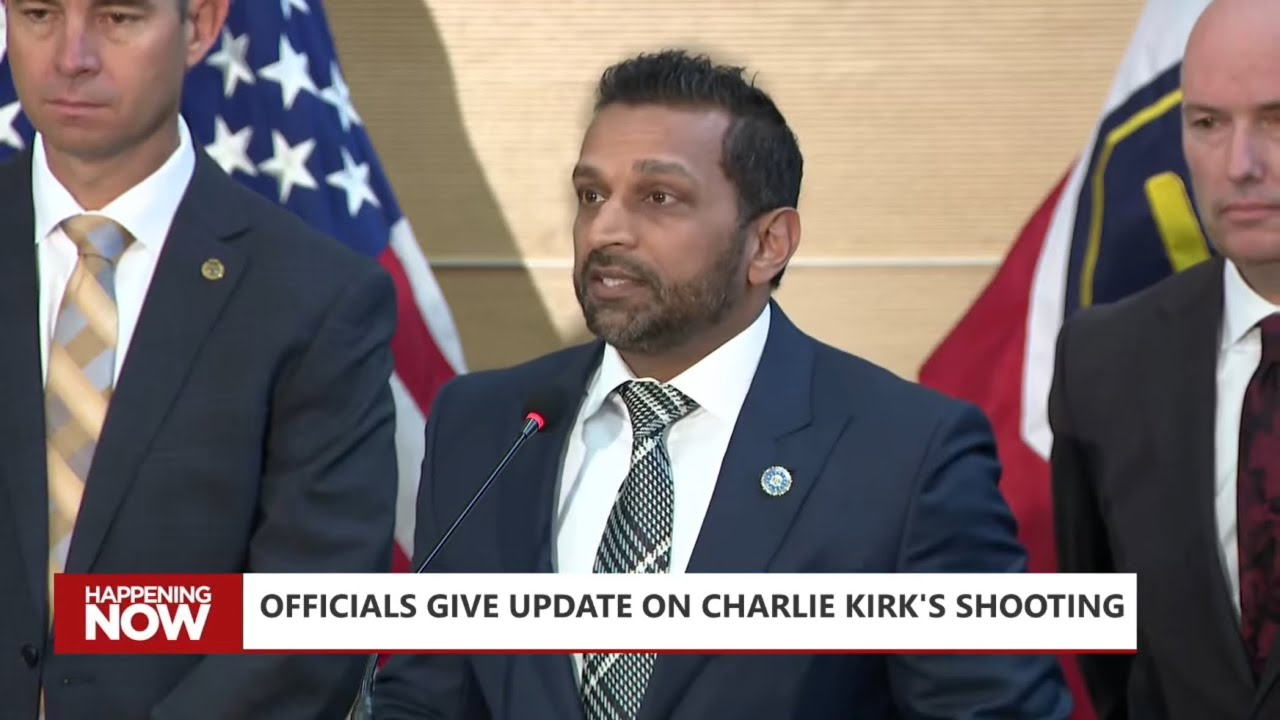
FBI Director Kash Patel and Utah Governor Announce Arrest in Charlie Kirk Assassination at Utah Valley University
4:31:53
The Assassination of Charlie Kirk: How a 22-Year-Old Gunman Cut Short the American Comeback Tour in Utah
9:04
Jack Posobiec and Stephen Gardner Investigate Charlie Kirk Murder Scene at Utah Valley University Campus
Jack Posobiec sits down with investigative journalist Stephen Gardner to discuss Gardner's on-the-ground investigation at Utah Valley University, where Charlie Kirk was murdered. Gardner traveled to the campus to examine physical evidence, including fingerprints and markings on the Losee building roof where Tyler Robinson allegedly positioned himself before taking the fatal shot. Through forensic analysis, sound mapping, and cell phone tracking data, Gardner pieces together the events of that day while questioning whether the FBI's narrative holds up under scrutiny. From the amphitheater's deceptive topography to the critical role of geo-fencing data, this conversation explores how modern investigative techniques are being used to pursue justice for Charlie Kirk.
Investigating the Crime Scene at Utah Valley University
Stephen Gardner, host of the Stephen Gardner Show, joined Jack Posobiec on Human Events Daily to share findings from his on-the-ground investigation at Utah Valley University, where Charlie Kirk was murdered. Gardner traveled to the campus to examine physical evidence and verify the FBI's account of what happened that day.
During his investigation, Gardner worked with Gray Hughes, another investigator who used an extension camera to examine the roof of the Losee building where Tyler Robinson allegedly positioned himself before shooting Charlie Kirk. What they discovered were fingerprint marks dragging off the edge of the roof, still visible in thick dust weeks after the incident.
"When you put it up right where he came down, there's actually four fingerprints that drag off and then another spot where maybe there's a towel or something," Gardner explained. "There's three marks in a really thick dust and it's still there."
Physical Evidence on the Losee building Roof
The markings on the roof appear consistent with the FBI footage showing an individual running across the Losee building, getting down on his legs while holding onto the roof, then jumping off toward a wooded area. Gardner measured scrapes in the dust that were approximately 36 to 40 inches long, roughly matching the length of a .30-06 rifle barrel.
"You also see a handprint where he's trying to let himself down gradually and then he ends up jumping off and running into that wooded area," Gardner noted. The location of these marks aligns precisely with the video footage, confirmed by a yellow measuring tape the FBI had placed on the cement wall and a split in the window pane just below the frame.
Gardner emphasized his skepticism given past government deceptions: "I want to trust the FBI and I believe in Kash Patel, but the American people were skeptical with government lies and cover up. I mean, look at January 6th. It took almost 5 years to find out that there was over 270 FBI agents in plain clothes in the crowd."
Sound Analysis and Ballistic Evidence
Gardner consulted with a YouTuber named Matt who specializes in sound and noise analysis. By analyzing audio from multiple cell phones at the scene, investigators created a map using mathematical formulas to pinpoint where the gunshot originated.
"There were three big rings that went out and wouldn't you know it all three the only time that they cross over is right on the Losee building where we know somebody was laying in a prone position with a rifle and took a shot," Gardner explained.
The sound analysis confirmed the direction of the bullet that struck Charlie Kirk from the front, destroying his neck and lodging in his T1 thoracic vertebrae. The shooter's elevated position on the Losee building, combined with firing down into the amphitheater bowl, created echo effects that some initially mistook for multiple shots.
The Critical Role of Cell Phone Tracking Data
According to forensic expert Joseph Scott Morgan, whom Gardner consulted, cell phone data will be the second most important piece of evidence after the gun itself. Modern cell phones can track individuals to within a couple of inches of their location.
"Next to the gun and the bullet, the most important piece of evidence against Tyler Robinson will be his cell phone data," Gardner explained. This geo-fencing technology, the same method used to track January 6th participants, will reveal whether Robinson was in the Orem area, whether he sent the text messages to Lance Twiggs, and whether he had previously visited the campus to plan the attack.
The FBI tracked Robinson from 800 Street through the tunnel, around the Losee building, up the stairs onto the roof, to the shooting position, then jumping off and running into the woods. Conspiracy theories questioning how Robinson could be sitting in his car at a cafe 20 minutes after the murder were addressed by the fact that FBI investigators knew his exact location because they had tracked his cell phone to that spot.
"The next morning, 7:15 a.m. Cedar City Maverick Gas Station. How do they know it's him? He swipes a credit card and they follow his phone. They know when he goes home. They know if he goes to visit Lance. When he goes over to his parents, they've got all of it," Gardner said.
Understanding the Campus Topography
One of Gardner's key discoveries was how deceptive the campus layout appears on Google Maps versus the actual terrain. The amphitheater where Charlie Kirk was sitting is much deeper than it appears in aerial views, with the Losee building positioned three stories higher than the amphitheater, creating a total elevation difference of approximately four to four and a half stories.
"Until you go to the actual campus, you don't really understand because this particular campus from an aerial point of view on Google Maps, they have these like red square sidewalks and they all seem like they're on the same level, but some of them might be two stories up, some of them might be two stories down," Gardner explained.
The bullet came down at an angle from high to low and from the side at about 10 degrees, crashing into Kirk's neck. The shooting position on the Losee building roof provided the shooter with a clear line of sight to Charlie Kirk while offering coverage from the cafeteria building in front.
Posobiec drew parallels to his own investigation of the assassination attempt on President Trump in Butler, noting how physical locations appear much smaller in person than they do on camera or satellite imagery. "You realize it's so much smaller than it just looks on camera. It's so much smaller. You could run the distance in just a couple of seconds."
Pursuing Justice for Charlie Kirk
Gardner emphasized that his investigation aims to hold authorities accountable while ensuring justice for Charlie Kirk. "I'm just trying to use my own brain, my own journalism skills to go and look for cameras, look for evidence clues to try to back up the narrative that we're being told, but also to make sure that I can hold them accountable with truth."
Posobiec stressed the importance of ensuring the investigation is conducted properly: "I want to make sure they got the right guy. And if they got the right guy, I want to make sure that this trial goes forward and everything's done by the book and everything's done properly."
The case shares similarities with the Bryan Kohberger case involving the murders of sorority girls, where cell phone data tracking showed the suspect casing the house repeatedly before the attack, establishing a pattern of life. In Robinson's case, the cell phone data will reveal whether he visited the campus beforehand to plan the attack, as the complex terrain would have been difficult to navigate using only Google Maps.
Gardner's video investigation is available on his YouTube channel, where he continues to examine evidence and question the official narrative while seeking truth and accountability in Charlie Kirk's murder.