Retired Colonel Tony Shaffer Breaks Down FBI Investigation Into Charlie Kirk Assassination and Radical Leftist Networks
Enjoying this? Share it with someone who needs to see it.
Up Next
Kash Patel Testifies on Charlie Kirk Assassination Attempt and Clinton Campaign Investigation
5:22
The Assassination of Charlie Kirk: How a 22-Year-Old Gunman Cut Short the American Comeback Tour in Utah
9:04
Brian Entin Investigates Tyler Robinson Arrest: Charging Documents Reveal Details Behind Charlie Kirk Assassination at Utah Valley University
29:44
Retired Colonel Tony Shaffer Breaks Down FBI Investigation Into Charlie Kirk Assassination and Radical Leftist Networks
Retired Colonel Tony Shaffer, who tracked al Qaeda cells before 9/11, examines the FBI investigation into Tyler Robinson and the premeditated assassination of Charlie Kirk. Shaffer raises critical questions about missing surveillance footage, the sophistication of the shooting, and potential connections to organized leftist groups. With Dan Bongino, Kash Patel, and President Trump calling for investigations into radical networks across the nation, Shaffer provides unique insight into what law enforcement should be doing—and what they're apparently not doing. Stephen Miller vows to dismantle domestic terror networks in Charlie's name, while questions mount about drone surveillance, ballistics expertise, and who Robinson contacted minutes before the shooting.
New details continue emerging from the FBI about Tyler Robinson and what he was doing before the premeditated assassination of Charlie Kirk. Leftist groups in Utah and around the nation are now being investigated according to Dan Bongino, Kash Patel, and President Trump. Retired Colonel Tony Shaffer, who has extensive experience tracking terrorist cells, joins to break down what law enforcement should be investigating and the troubling gaps in the current investigation.
Colonel Shaffer and his team tracked down al Qaeda cells in the United States before 9/11. They sensed something was coming and reported this to both the Clinton administration and the Bush administration. Now, as the Charlie Kirk assassination appears connected to far-left groups and trans activist networks, critical questions emerge about whether the FBI will dig deep into Facebook groups, Discord channels, and Telegram chats to identify all players and determine if there was foreknowledge.
Critical Questions About Surveillance and Investigation
Colonel Shaffer, who currently serves as Homeland Security adviser to Sheriff David Decar in Stafford County, Virginia, raises several troubling questions about the investigation. Sheriff Decar runs a modern department with a sophisticated three-tier drone system operated by about eight people. These drones can track people in vehicles from standoff positions and even enter buildings without jeopardizing officers. The technology is inexpensive and proven effective.
So why wasn't there a drone at the Charlie Kirk event? As Shaffer points out, his 18-year-old son could have been doing overwatch with such equipment. This represents a basic predicate for most homeland security and law enforcement operations—yet it was apparently absent.
Another glaring issue involves video evidence. While the nation was overwhelmed with horrific footage of Charlie being shot, where is the video of the suspect carrying the rifle either to or from the shooting position? With the amount of surveillance that exists in modern society, these blind spots raise serious questions. Shaffer clarifies he doesn't want to get ahead and claim evidence doesn't exist or that authorities are lying, but these are obvious questions any rational person would ask.
The Ballistics and Expertise Required
The weapon allegedly used was a Mauser Model 98. Shaffer, drawing on his military and law enforcement experience, explains that the shot that killed Charlie required significant skill and understanding of ballistics. At 200 yards, numerous factors come into play with this particular rifle and the 30-06 round it fires.
The rifle was scoped for a cold shot, meaning whoever pulled the trigger had to understand the ballistics of a cold rifle barrel versus a warm one. This took considerable thinking and skill—not something someone could accomplish by simply grabbing a rifle and scope from a store and assembling them.
To make a rifle effective, the scope must be zeroed in. This process takes time and practice. Shaffer's question: Where did Robinson learn this? Where did he zero his rifle? Did he have help? Who was his instructor? These legitimate questions demand answers.
This wasn't a Seal Team Six-level operation, but it required a B+ to A-minus level of skill—far beyond what an untrained person could accomplish. Yet there's little public discussion about the expertise required or where Robinson acquired it.
Questions About the Ammunition
Shaffer raises another technical concern about the ammunition used. Based on videos showing what happens when a 30-06 round hits a person, he's not convinced a standard round was used. A 30-06 would typically pass through at that range and keep going, yet authorities haven't stated where the round ended up.
From law enforcement contacts, Shaffer learned that Charlie died instantly on stage. Medical professionals he consulted explained that when the round hit, Charlie's arms went up in an involuntary response, and after that initial second of impact, it was over. His body froze in that position. A standard 30-06 round would likely have behaved differently—it would have gone through. The wound characteristics raise questions about what type of ammunition was actually used.
Breaking News: Phone Records and Group Chats
Breaking information from Steven Crowder reveals that Utah County Sheriff's Office internal documents show Tyler Robinson used his cell phone at 11:53—about 20 minutes before the shooting. Who was he talking to? What were they communicating about?
Additionally, one of the group chats mentioned a rifle drop-off and pickup. This might explain why there's no video of Robinson carrying a rifle onto the roof. The video released shows him coming off the roof without a gun—no rifle wrapped in a towel, no box, nothing. Yet on the roof, they found a screwdriver with his DNA and a towel covering the gun, also with his DNA.
The official narrative states Robinson arrived and parked in the parking garage, changed clothes, went out to a neighborhood, returned limping, then got up on the roof. But there's no video showing how the gun got there. He allegedly took the shot, then jumped off without the gun, which somehow ended up disassembled, then reassembled and covered with a towel.
Can law enforcement track down who the phone call went to? According to Shaffer, absolutely. The NYPD uses algorithms that link phone calls together, integrate location data and tower data. Towers can even provide hints about where cameras are located in the area. This is how NYPD reconstructs criminal and terrorist activities after events—tracing everything back using camera footage.
The question becomes one of technical expertise and political will. Are they going to do it? This is similar to how Luigi Mangione was tracked after assassinating the CEO of United Healthcare—camera by camera, building a complete picture. That's why it's frustrating that authorities are only releasing two photos of Robinson and withholding the rest of the video evidence.
Kash Patel on the Investigation
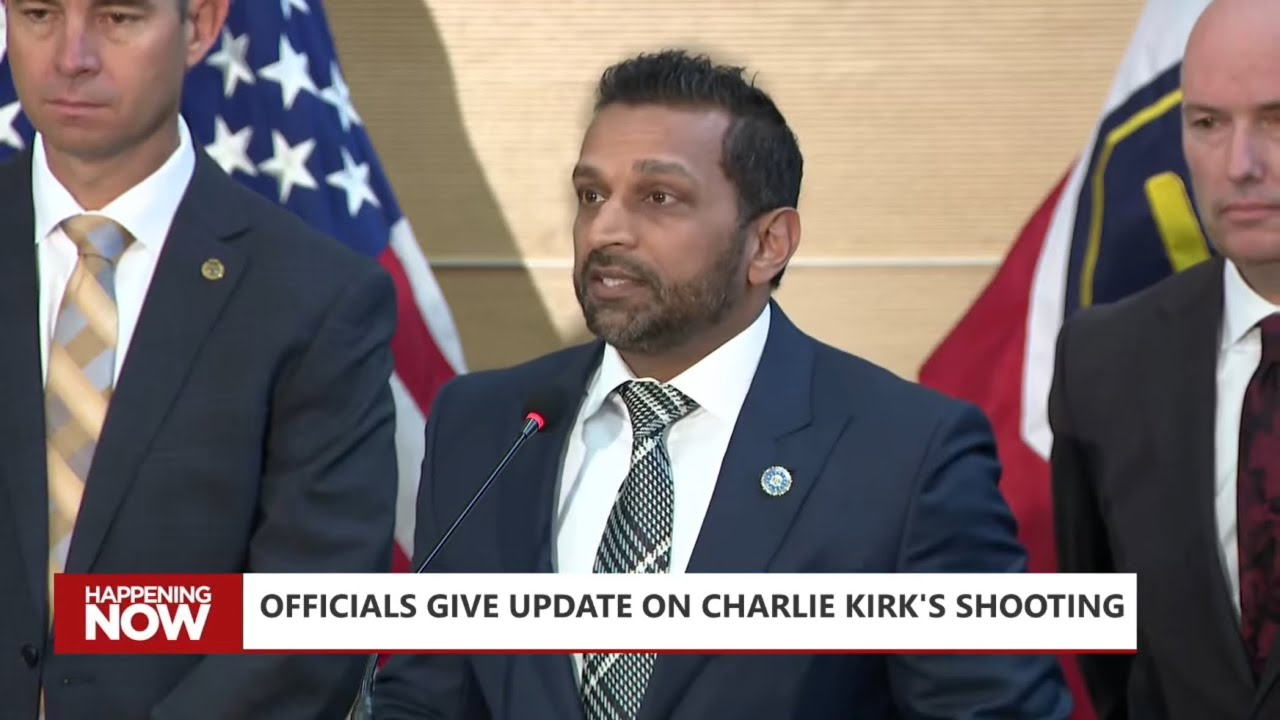
Kash Patel revealed that at least 20 people have been linked to the case and will be questioned. He emphasized that no one should assume guilt before they're interviewed. Regarding the Discord group chats, Patel explained there are more than 20 individuals involved, but the FBI must follow proper legal procedures.
The FBI serves as the investigatory body supporting multiple prosecutions and ongoing investigations. They can't simply access group chats immediately—they must effectuate legal process with search warrants so that prosecutors can later use evidence without it being tainted by illegal collection methods.
The FBI is running the investigation jointly on the Discord chat group. Scores of individuals will be spoken to, and many family members and friends have already been interviewed. In record time, the FBI obtained the text message chain between the suspect and his living partner, as well as critical cellular information. Their cell tower analysis team pinpointed locations of the suspect and other individuals he was communicating with—critical information processed and delivered to prosecutors for lawful use in court.
Legal Process and Public Frustration
Patel addressed public frustration about the pace of the investigation, noting that people expect instant results based on crime shows they watch on TV. However, there are many legal requirements to ensure evidence can be properly used in court.
Shaffer appreciates these challenges as a retired special agent who understands legal predicates and probable cause. However, he points out that state and local law enforcement don't have the same restrictions as federal officers. In fact, NYPD can do things that federal officers cannot. Local partnerships provide advantages—local law enforcement can access certain information without warrants that federal agents require legal process to obtain.
It sounds like authorities are working this out. However, Shaffer believes the FBI made initial comments in the first 48 hours that turned out to be completely wrong. They lost credibility, which is why questions continue mounting. It's better to be accurate and diligent rather than first and wrong.
Shaffer isn't convinced everything being examined will be exploited rapidly enough to catch all perpetrators. Drawing on his counter-drug and counterterrorism experience, he knows these networks anticipate and exploit the lethargy of the federal system. Federal investigators can only move so fast, even with state help, and evidence can be lost if authorities don't move quickly enough.
There's a distinction: investigators need to move fast on the investigative side without necessarily telling the public everything they're doing. Some of what Patel said in his interview may come back to cause problems.
Concerns About Copycat Violence
At a vigil in Arizona for Charlie Kirk, a young man around 20 years old walked through kicking and screaming, knocking over letters and flowers. A man in a BYU shirt grabbed him and threw him out, and the group moved him away. Police arrested him, and a photo was released showing he was wearing the same t-shirt as the alleged shooter.
This raises concerns about copycat murders and threats to other conservative podcasters. Shaffer has talked to several high-profile celebrities—names everyone would recognize—and at least one is reconsidering campus appearances later this month. This person isn't fundamentally conservative, just someone who speaks the truth.
Any public figure must now consider the risks of appearing in public. Shaffer admits he hates being in public and avoids public events more than necessary because there are dangerous people out there.
Part of the problem involves what Shaffer directly identifies as the transgender culture. He points to ample evidence that individuals within the transgender culture tend to be very reactive and violent. He notes there's currently a divorce happening between LGB and TQ communities. Many of his friends are openly saying they're not part of that group and don't want to be associated with them under the rainbow banner.
Shaffer plans to have some of his friends from the rock and roll world who may play for both teams on his media platforms to discuss this. This also includes the Gays Against Groomers organization. People are fed up with the idea that the trans community tends to recruit and advocate for their lifestyle in schools and other places. Shaffer's sense tells him there will be more coming out about this as more information about the case emerges.
Stephen Miller Vows to Dismantle Terror Networks
Stephen Miller appeared on The Charlie Kirk Show with Vice President JD Vance hosting on Charlie's behalf. Miller discussed how one of the last text messages from Charlie Kirk expressed worry about radicalized groups. Now Miller is openly discussing his plans to address this threat.
Miller revealed that the last message Charlie sent him—just the day before they lost him—was that they need an organized strategy to go after leftwing organizations promoting violence in this country. Miller vowed to write those words onto his heart and carry them out.
When asked about his emotions, Miller spoke of incredible sadness but also incredible anger. He distinguished between unfocused anger or blind rage, which isn't productive, and focused, righteous anger directed for a just cause—one of the most important agents of change in human history.
Miller vowed to channel all the anger over the organized campaign that led to this assassination to uproot and dismantle these terrorist networks. He described organized doxing campaigns, organized riots, organized street violence, organized campaigns of dehumanization and vilification, posting people's addresses combined with messaging designed to trigger and incite violence, and actual organized cells that carry out and facilitate violence. According to Miller, this constitutes a vast domestic terror movement.
Miller pledged to use every resource at the Department of Justice, Homeland Security, and throughout the government to identify, disrupt, dismantle, and destroy these networks and make America safe again. He vowed this will happen in Charlie's name.
Investigating Funding and Organization
Shaffer believes there are existing laws that have been ignored by the last three administrations—including the Trump administration, not because President Trump ignored them, but because Attorney General Bill Barr did. There's adequate evidence regarding Antifa and BLM that should be investigated. One BLM founder was just convicted of fraud, and criminal activities within these organizations are phenomenal.
Yet those calling this out are somehow portrayed as the bad ones, told to get over it and be forgiving. Shaffer insists accountability is necessary. In the past, whenever something like this happens, the other side says sorry and calls for unity. This time, sorry isn't good enough. They need to go after the funding, which has already begun with USAID.
Shaffer is waiting for an investigation into where all the USAID money was going and how it was coming back through NGOs—non-governmental organizations—and think tanks. He knows it was funding source organizations. Dozens of organizations traffic in hate.
One issue Shaffer wants to get to the bottom of is paid protesters. Some of these people make $80,000 to $100,000 per year. During the first Trump term, pallets of rocks and bricks showed up at protests. Who paid for that? Nobody ever investigated. Now it's time to investigate.
This week, Trump called for George Soros and the Open Society to be investigated, stating that Soros has done tremendous damage and that he believes there's a RICO case. In one example of the ugliness, someone spray-painted "Rest in Peace Charlie Kirk" as a tribute, and within 24 hours, it was destroyed and defaced with "Free Palestine," "Nazi," "No Empathy," and other horrible things. The tribute didn't even last 24 hours before it went from something beautiful to something horrifying that had to be painted over.
The mental illness and ugliness on display have been shocking. While there's also a lot of beauty out there, and attempts to remain optimistic and focus on that, the threat from organized radical networks remains real and demands investigation and accountability.