Michael Knowles Reveals How Chester Arthur Transformed From Political Boss to Reform President
Enjoying this? Share it with someone who needs to see it.
Up Next
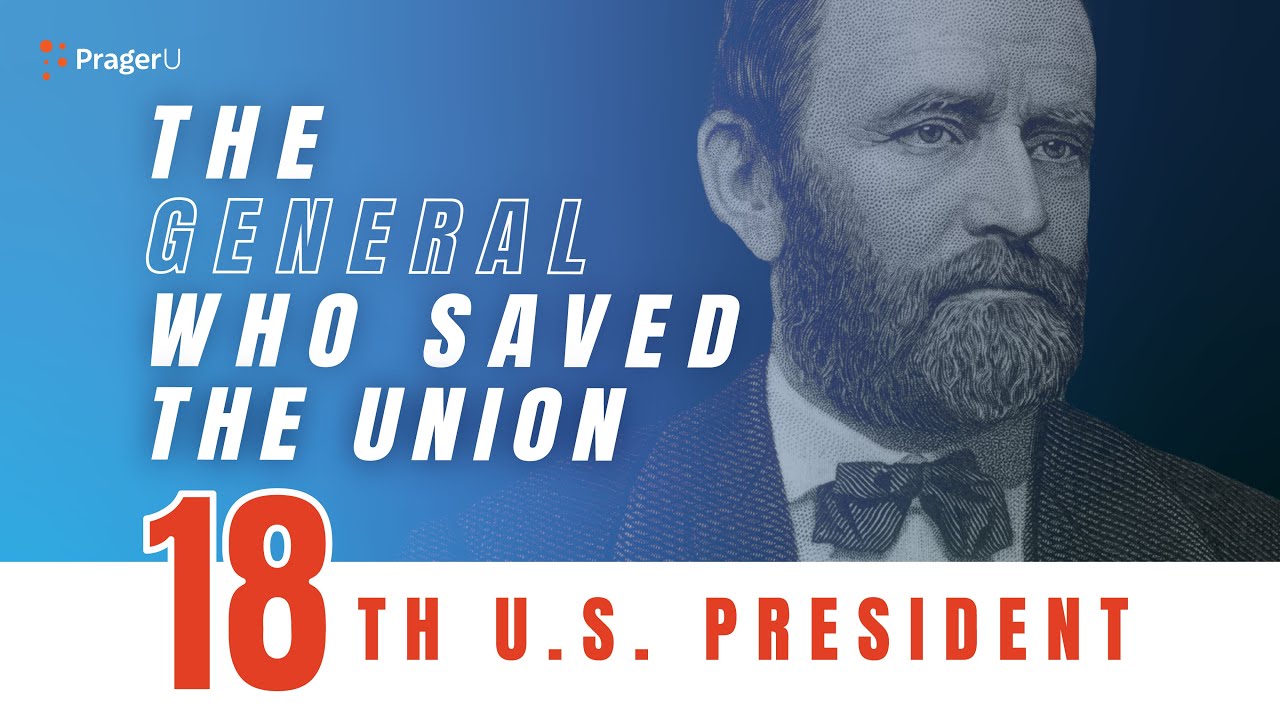
How General Ulysses S Grant Rose From Humble Beginnings to Save the Union and Win the Civil War
4:44
John Yoo Reveals How Dwight Eisenhower Kept America Great Through Strategic Peace and Pragmatic Leadership
5:56
Allen Guelzo Reveals Abraham Lincoln's Mastery of War, Government, and the End of Slavery
5:52
Michael Knowles Reveals How Chester Arthur Transformed From Political Boss to Reform President
Chester Arthur wanted to be vice president, not president, a position with all the privileges and none of the responsibilities. When President James Garfield's assassination thrust Arthur into the White House, few expected anything from the notorious machine politician who had built his career on patronage and party loyalty. What followed became one of the most remarkable transformations in presidential history. Arthur, who once bragged about vote buying, became the champion of sweeping civil service reform, rebuilt the American Navy, and protected the rights of immigrants and African Americans. Guided in part by mysterious letters from a Manhattan invalid named Julia Sand, Arthur proved that great emergencies can awaken dormant nobility.
The Vice President Who Didn't Want to Be President
When a New York Times reporter sought out Vice President Chester Allen Arthur to get a statement following the death of President James Garfield, Arthur's valet turned the reporter away. "He is sitting alone in his room," the valet explained, "sobbing like a child."
To be president of the United States was the last thing Arthur wanted. Vice president—a position with limitless privileges and almost no responsibilities—that was the job for him, and he was having a grand time of it until an assassin's bullet changed everything.
Garfield did not die immediately. There were days when it looked like he would recover, but then he would fade again. It didn't help that his doctors used their unwashed hands to try to recover bullet fragments. When Garfield finally succumbed on September 19th, 1881, Arthur had to face the music. He was now the 21st president of the United States.
A Man Who Looked the Part
At least Arthur looked the part. A fastidious dresser, he was known to try on 20 pairs of pants before choosing one. He cut an imposing figure—heavy set with a thick mustache and mutton-chopped sideburns.
Born in Fairfield, Vermont on October 5th, 1829, he was the fifth of nine children. His father was a preacher and committed abolitionist whose strong views on this subject forced him to move the family from town to town. Despite never being in one place for long, Arthur made friends easily. A conscientious student, he attended Union College, became president of the debate society, and pursued a law degree.
From Civil Rights Lawyer to Political Machine Boss
As a lawyer, Arthur took a lead role in major civil rights cases, including one that led to the desegregation of the New York City street car lines. After the Civil War, where he rose to the rank of Brigadier General and distinguished himself as a quartermaster—the person responsible for getting supplies to the troops—he abandoned the law for politics.
This pulled him into the orbit of notorious political boss New York Senator Roscoe Conkling. Arthur's loyalty to Conkling paid off when he was awarded the post of collector at the New York customs house, a position that paid over $50,000 per year—more money than any federal office holder, including the president.
Becoming vice president was, from a financial point of view, a step down, but it was a step up in prestige. He couldn't resist the temptation. Access to federal patronage—the chance to give cushy government jobs to his political friends—didn't hurt either.
The Transformation That Shocked America
But suddenly Arthur wasn't vice president anymore. He had the top job now, and the job changed him. In one of the least expected and most remarkable turnarounds in presidential history, the quintessential machine politician—a man who once bragged about vote buying—became the president who enacted the most sweeping civil service reform in 50 years, much to the chagrin of his friends, most especially Conkling.
He became an apostle of clean government and set the tone for future reforms that occurred after he left office. The weight of the office had a deep effect on Arthur, but so did a remarkable correspondence he had with a young Manhattan invalid by the name of Julia Sand.
The Mysterious Letters That Changed a Presidency
For reasons that aren't entirely clear, Julia Sand assiduously tracked Arthur's every move. Even more amazing, Arthur read her letters and took her advice to heart. "Great emergencies awaken generous traits which have lain dormant," she wrote him in one letter. "If there is a spark of true nobility in you, now is the occasion to let it shine."
And it did. But civil service reform was only one of Arthur's achievements.
Rebuilding America's Navy and Protecting Civil Rights
Another was his passion to rebuild the American Navy, which had been woefully neglected since the Civil War. If the nation wanted to be a major player on the world stage, it needed a modern Navy. Arthur asked for 11 new state-of-the-art steel ships. Congress gave him four. It was a start.
Arthur also worked to protect the rights of Chinese immigrants and, true to his abolitionist upbringing, his policy toward blacks—he appointed a number of them to important government posts—was among the best of the post-Civil War presidents.
The Party President and His Lavish White House
One aspect of Arthur's personality that did not change was his love of entertaining. The White House, which he insisted on redecorating (it was too drab), was Party Central. The menus were specially prepared by an imported French chef. Wine and spirits flowed freely. Nobody outranked or out-ate the host.
A Life Cut Short
Perhaps because of his lavish lifestyle, Arthur's health failed at the end of his term. In hindsight, it appears he suffered from Bright's disease, a terminal disease of the kidneys. Still, Arthur considered the idea of running for a second term. As a practical matter, his illness made this impossible. He would be a one-term president. He died two years after leaving office in November 1886 at age 57.
Arthur's contemporary and publisher Alexander McClure summed up Arthur's tenure well: "No man ever entered the presidency so profoundly and widely distrusted, and no one ever retired more generally respected."