Up Next
Riley Gaines Tells Senate Committee About Being Held Hostage for Three and a Half Hours at San Francisco State University
6:51
Ana Kasparian Exposes the Pro-Israel Media Blackout on Epstein Files and America's Weakened Military
23:48
Charlie Kirk Confronts Gender Ideology on College Campuses With Bold Truth and Unexpected Compassion
11:42
Naomi Reacts to Candace Owens Interview with Trans Woman Briana Ivy on Bottom Surgery Complications
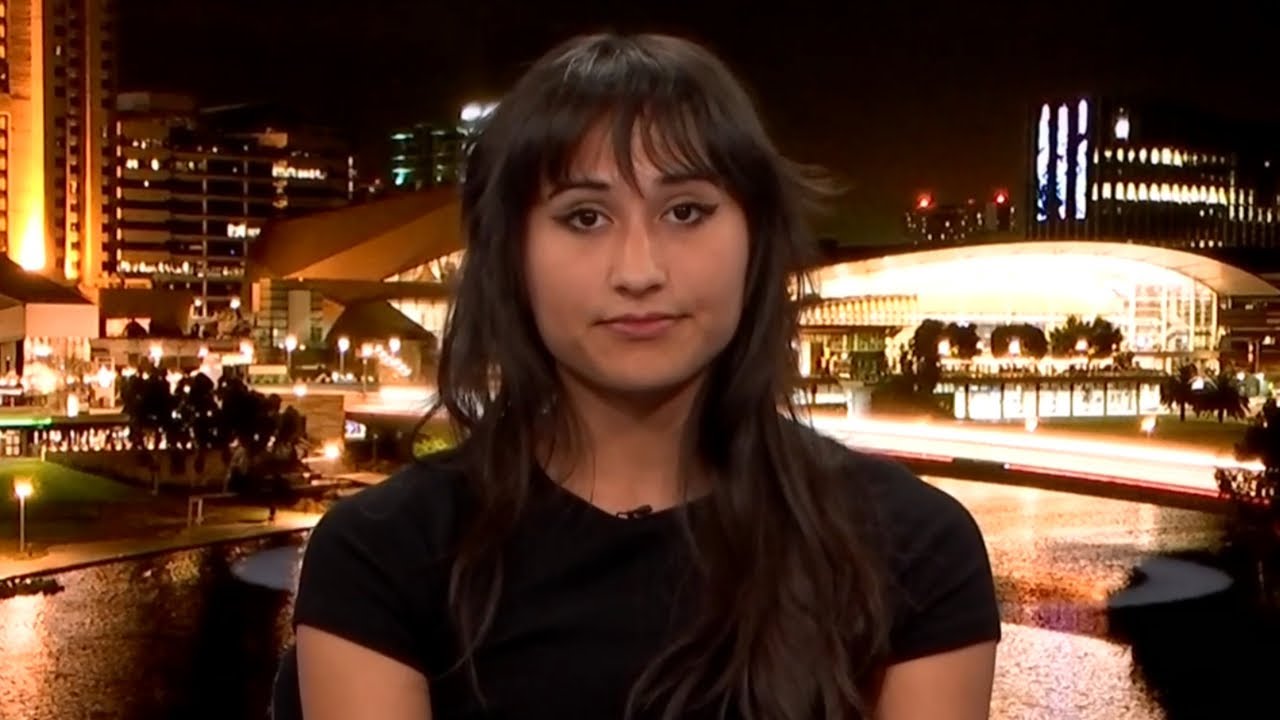
Naomi examines an interview between Candace Owens and Briana Ivy, a biological male who began hormone blockers at 14 and underwent bottom surgery at 20. Brianna speaks candidly about internalized homophobia, depression, and the severe medical complications following gender reassignment surgery performed by Dr. Joshua Roth in Indianapolis. The discussion explores how media influence, including Jazz Jennings' TLC appearances, shaped Brianna's identity at age 12-13. Naomi connects this to broader concerns about gender clinics, the Healthcare Equality Index (HEI) scorecard funded by Pfizer, and how LGBTQ identification rates have doubled with each generation. Brianna's experience reveals alarming details: a 30-minute consultation before receiving hormone prescriptions, severe post-surgical complications including blood clots and chronic pain, and a surgeon who dismissed ongoing medical issues.
Cultural Influence on Gender Identity
Naomi introduces her reaction to an interview Candace Owens conducted with Briana Ivy, a biological male who began hormone blockers at age 14 and underwent feminization surgery at 18, followed by bottom surgery at 20. In the interview, Brianna discusses internalized homophobia, depression, and the negative consequences of transitioning at such a young age.
Candace reflects on her own childhood, remembering boys who were more feminine and how they turned out to be gay men rather than transgender. When asked when Brianna first thought about being trans rather than just gay, Brianna explains it happened around age 12-13. Brianna had no idea what being transgender was until seeing it online and on TV, particularly watching interviews with Jazz Jennings and her family on TLC.
Naomi emphasizes that what we're talking about is culture, and culture matters tremendously. What young people consume through media has an impact on their thoughts and behaviors. She gives an example from her own life growing up in the suburbs where middle-class and upper-middle-class kids acted like gangsters despite not living in the hood. They learned this behavior not from their environment but from culture consumed through media.
Naomi argues it's not hard to see how children can be influenced by TikTok, TV, or their peer group to believe they are trans, especially when considering how with each generation the number of people who identify as LGBTQ doubles. According to a recent Gallup poll, less than 1% of Americans born before 1946 identify that way, 2.6% of Boomers, 4.2% of Gen X, 10.5% of Millennials, and 20.8% of Gen Z.
Childhood Trauma and Internalized Homophobia
Candace probes whether something happened to Brianna during childhood, noting that when speaking with detransitioners, there are often stories of childhood trauma. She references shows like My 600-lb Life where people reveal they were molested or had bad experiences that made them want to escape their identity.
Brianna explains that shame was the biggest theme throughout childhood. While with girls there was safety, other boys were cruel and would touch Brianna inappropriately. There was a culture where being feminine as a boy was very wrong. Brianna remembers hearing a biological father make comments about gay people, which stuck even though Brianna was so young. Brianna felt disgusted by the thought of growing up as a feminine man and couldn't envision being an adult gay male.
Naomi finds it ironic that people who emphatically support the trans movement don't see the ways it perpetuates homophobia. A young boy who likes to play with Barbies, rather than being acknowledged as perhaps gay, will be told by teachers, parents, and doctors that he's born in the wrong body. Naomi argues that transitioning gay children is just another form of conversion therapy—now this gay boy can pass as a heterosexual girl while simultaneously becoming a medical patient for life.
Naomi points out that while Brianna doesn't say this specifically, she has heard other trans women on YouTube say they transitioned because they are not attracted to gay men. They were interested in heterosexual men because they find them more masculine and desirable. Their goal is to successfully pass as women and date heterosexual men rather than being a gay man dating other gay men. This specific motivation is rooted in homophobia—it's a form of internalized homophobia that doesn't get discussed enough.
The Gender Clinic Experience
Brianna describes going to a gender clinic at age 14. A gender clinic is full of doctors, nurses, various specialists like psychiatrists, social workers, endocrinologists, and surgeons—all within a network or hospital focused on gender-related care or gender-affirming care.
The first person Brianna spoke to was a clinical social worker for about 30 minutes. It wasn't comprehensive—just questions about how Brianna identified and what made Brianna feel this way. After only half an hour, Brianna had a prescription for hormones including estrogen, a testosterone blocker, and a blocker injection administered once every 3 months. There was no requirement to speak to therapists or come in every week to unpack childhood experiences. It was just a social worker for 30 minutes checking a box, then a doctor writing a prescription.
Naomi emphasizes there is no standardized way to test for gender dysphoria. Doctors have sophisticated statistical manuals to test for conditions like bipolar disorder, post-traumatic stress disorder, and histrionic personality disorder. They can even detect when someone is malingering—being dishonest about a condition they claim to have. But they do not have a standardized assessment to test for gender dysphoria. Gender dysphoria is basically the one condition where you diagnose yourself, the doctor affirms you, and then writes you a prescription.
The Healthcare Equality Index Scorecard
Naomi explains that these doctors are writing prescriptions for puberty blockers for children—the same drug given to sex offenders to chemically castrate them. Many of these doctors are ethically compromised.
She discusses the ESG score created by BlackRock, a scoring system that rates companies on how woke they are. Companies get better scores by doing things that are environmentally or socially responsible. This is why companies like Hershey's put a transwoman on chocolate bars to celebrate International Women's Day, and why Bud Light hired Dylan Mulvaney for partnerships.
There is an identical scoring system in healthcare called the Healthcare Equality Index (HEI), funded by Pfizer and Pharma. Healthcare systems earn points for pushing the woke agenda—wearing a trans pin, putting pronouns on hospital patient doors regardless of whether they are trans, and affirming children and giving them puberty blockers no questions asked. If a healthcare practitioner questions a child who says they are experiencing gender dysphoria, the mere act of questioning will be deemed discrimination and the hospital could lose points. A low HEI score opens hospitals or clinics up to discrimination lawsuits.
These healthcare professionals are being forced to push this agenda, and it's all being funded by Pfizer and Pharma—two companies who stand to gain financially from the trans movement. Naomi references an article from a former nurse who quit working in healthcare and became a whistleblower, which she links in her description box.
School Isolation and Continued Mental Health Struggles
At Brianna's new school, people understood Brianna was a trans student. Brianna was asked questions about genitals on the first day, which became a big debate within the school. Brianna was completely alone for most of the time and didn't speak to anybody for the first 3 years.
Brianna thought transitioning would bring a brand new feeling, but mental health did not get any better. The promise was that once you go down this path everything's going to get better, but there was still bullying. Brianna thought this was going to result in becoming a biological female and experiencing what all friends were experiencing, but there were a lot of things Brianna was completely blind to.
Naomi points out two important things Brianna said. First, transitioning didn't make life any better. Parents are often told they need to affirm their children otherwise the child may take their own life. Some parents go along with transition because they think they're doing what's best, but the most realistic outcome is the child will likely face more bullying and isolation at school rather than less. On top of that, medical intervention will prevent the child from fully going through puberty and maturing into an adult who realizes they are simply a gay adult that doesn't require medical intervention.
Second, Brianna believed gender transition treatment could turn him into a female. This speaks to the delusion being pushed by gender ideologues. It is impossible to change your gender—only your gender presentation can be changed. You can pass as a woman but that doesn't make you a woman. Brianna mentions not fully being one of the girls because of being unable to experience all the same things. Being on puberty blockers and hormone replacement therapy diminished interest in boys and removed sexual feelings that most teenagers go through during puberty. Brianna still had low self-esteem and low self-worth, and what Brianna thought would fix that was bottom surgery.
Bottom Surgery and Severe Complications
Brianna saw Dr. Joshua Roth based out of Indianapolis. At the consultation, they handed Brianna a blue piece of paper like taking an order, showing three different ways to do the surgery. The most common and longest-practiced is penile inversion, where the inside of the organ is composed of penile tissue that is inverted internally. Another option is the sigmoid colon graft, where they take a graft of the sigmoid portion of the colon to use for the internal organ. This has lots of complications including typically having a colostomy bag and smell associated with it, plus risk of infection.
What Brianna had was something never heard of until going to Dr. Roth—the peritoneal pull-through vaginoplasty. They went in laparoscopically into the stomach and took out the inner lining of the skin called the peritoneum, using that graft to create the internal organ.
Brianna had severe pain all over the body and actually had an epidural because of the pain. Brianna could not use the restroom, and just a few days later had blood clots in the legs—a DVT (deep vein thrombosis), a large clot in the leg. They only discovered it because of a fever. From there, Brianna had to be on blood thinners for 3 months with daily injections and was in the hospital for about 2 weeks. During that time, there was intense fascination with what was being done.
Naomi explains that bottom surgery is still a relatively new procedure increasing in popularity. It's estimated that 9,000 people undergo gender reassignment surgery every year in the US. As these procedures grow in popularity, it's becoming increasingly taboo to discuss possible downsides. According to research done by PubMed, 55% of trans women who have bottom surgery are in so much pain they need medical care a year later, and up to a third struggle to use the toilet or have sex.
When researching for a previous video, Naomi learned of class action lawsuits filed and settled in the last 6 years against the company that makes Androderm testosterone patches and AndroGel. These testosterone treatments are used to treat medical conditions in men but are also prescribed to trans men as part of gender-affirming care. The lawsuits were filed because the testosterone treatment unnecessarily increased risks of strokes, heart attack, and death.
Medical Negligence and Ongoing Pain
Brianna would try calling the doctor saying this feels wrong, that there's no way this is what it's supposed to be like. It looked horrific on the outside—it didn't and still doesn't look like any kind of genital, but something in between. Even when going in for checkups, Dr. Roth kept saying things were fine. Brianna would ask questions about the pain, still bleeding, still having discharge, still in so much pain even two months later. Walking felt like there was a brick—non-stop pain. He said it's fine, it'll go away.
A few months later, Brianna called saying the pain is not going away but getting worse by the day. There was no infection. What was happening was scar tissue all internally from the new organ that was collapsing and causing pelvic floor trauma. Dr. Roth told Brianna there's no recovering this.
Candace tells Brianna that Dr. Roth sounds like an absolute monster who should be put into prison for what he did. She apologizes for what happened to Brianna, calling it horrific and something that should happen to no one, especially when entrusting your life to people who are supposed to be professionals. Candace mentions realizing Brianna was used like a science project—people gawking during surgery, the doctor bringing people to look at his work, then being a coward and hiding from the consequences. She views it as the worst kind of assault. Brianna was only 20, just beginning life, really believing this was going to make life better, and cannot even contact the surgeon.
The Importance of These Stories
Naomi emphasizes it's important that more people like Brianna share their stories, especially because Brianna is not a detransitioner. Many trans activists are very dismissive of detransitioners because they view them as a threat to their ideology, but these are people simply warning others so they don't have the same negative outcomes.
Naomi encourages viewers to watch the entire video and links the full interview in the description box. She asks viewers to like, share, and subscribe as these actions help her channel. She also mentions her Patreon account for those who want to support her channel monetarily and provides links to her social media.
Video Transcript
well I just want to say that he sounds
like an absolute monster and in my view
he should be put into prison for what he
did to you and because he's never going
to have the spine to say it I want you
to know that I am so sorry for what
happened to
you that is horrific this should happen
to no one especially when you're
entrusting your life to people that are
supposed to be professionals yeah
realizing that you were used like you
were a science project to
somebody
hello everyone if you are a new viewer
welcome if you're a returning viewer
welcome back if this is your second
third fourth time watching one of my
videos and you are not yet subscribed we
already go together okay make it
official and hit that subscribe button
today I'm going to be reacting to an
interview that Candace Owens did with a
transom Woman by the name of bana Ivy
ban Ivy is a biological male who began
hormone blockers at age 14 years old and
began having feminization surgery at age
18 and at the age of 20 years old
Brianna had bottom surgery which is
surgery where male genitalia is
surgically removed and it is sometimes
used to create a Neo vagina in the
interview Brianna speaks very candidly
about dealing with internalized
homophobia depression and the negative
ramifications of transitioning at such a
young age you know it's really
interesting because now that this lgbtq
IA the conversation has gotten so big in
the country I go back to my own
childhood and I think do I remember any
boys that were more feminine and the
answer is absolutely I remember
particularly one boy who was always
playing with the dolls never cared to
play with the girls at I mean never
cared to play with the boys at all he
was always with us and today that
individual is a married gay man so what
do you think in your mind made you think
I don't just maybe I'm not just gay but
maybe I'm trans when did you first have
that sort of a thought I was 12 um it
was between 12 and 13 and I didn't
really know cuz a lot of people just
called me gay throughout school so it
just kind of made sense and so I did go
along with that but I had no idea even
what being transgender was what a trans
person was until I saw it online and I
saw it on
TV and when I was 12 13 years old that
was when the show the TLC show wasn't
out but Jazz Jennings was doing
interviews and her family was doing
interviews the show hadn't premiered
until a few years later but there were a
lot of interviews online and it was a
story that was picking up at the time
and I also was exposed to a lot of
transgender people online so what you're
talking about is is culture um and
culture matters culture matters a lot
what young people consume through media
has an impact on their thoughts and
behaviors and I will give you an example
from my own personal life so I grew up
in the suburbs the area that I lived in
had middle class and upper middle class
families and at the time the town was
predominantly white although there was
still a decent amount of ethnic
diversity but despite the fact that the
kids from my school did not live in the
hood many of them acted like it
gangsters what's up guys their parents
could afford to buy them whatever they
wanted yet these kids were robbing each
other they were skipping school to smoke
weed wearing their pants under their ass
and this was in the suburbs I didn't
live in the hood I'm not a ghetto
I didn't live in the ghetto but they
learned this Behavior not from their
environment but from culture so it's not
hard to see how children can be
influenced by Tik Tok TV or their peer
group to believe that they are trans
especially when you consider how with
each generation the number of people who
identify as
lgbtq doubles broken down over time the
LGB BT population of America seems to be
roughly doubling every generation
according to a recent Gallop poll less
than 1% of Americans born before 1946
that's Joe Biden's generation identify
that way 2.6% of Boomers do 4.2% of Gen
X 10.5% of Millennials and 20.8% of gen
Z which means if we follow this
trajectory we will all be gay in
2054 the reason why I'm prodding is
because a lot of times when we dialogue
with people who consider themselves D
transitioners which I want to be very
clear to my audience you are not a D
transitioner um but when you speak to a
lot of people in that Community you'll
hear stories of something that happened
to them when they were a child and you
see this all by the way all across the
board on TLC if you've ever watched my
500b life yes once they get into their
stories there's always this thing where
well when I was four I was molested or I
had a bad Rel and I wanted to get rid of
my identity I wanted to just be somebody
else and you're saying this didn't
happen to you this was just you felt
like you know I know I don't fit in with
the guys nothing happened in your
background that could have made you feel
like you didn't like who you were there
were a few things had so much shame
throughout throughout my entire
childhood and even up till now recently
that's been the biggest theme that I've
lived with shame yeah I remember being
in school and I had safety with the
girls but with other boys I wasn't they
would taught me they were cruel um I had
instances where they would touch me
inappropriately and I didn't know how to
speak to any about anybody about that
there was just a culture there where
being feminine as a boy was very wrong
and none of the other boys liked it
luckily the girls were always like a
safe place for me but I
remember distaste from the community
around me I remember and I and I truly
don't believe he meant it in t but I do
remember being little and I did hear my
biological father make comments a couple
times about gay people I remember it and
it stuck with me even though I was so
young and I don't think that he meant it
to like antagonize me but I I still have
that memory today I remember feeling
disgusted by the thought of me growing
up as a feminine
man I could not envision myself as an
adult gay male like I just it just felt
gross to me and I just didn't like
anything really about me I have to say
that I just find it very ironic that
people who emphatically support the
trans movement don't see the ways in
which it perpetuates homophobia a young
boy likes to play with Barbies and
rather than acknowledging that perhaps
he's gay teachers parents and doctors
will say that that's a sign that he's
born in the wrong body back in the day
conversion therapy was seen as
homophobic and rightfully so but in a
way isn't transitioning gay children
just another form of conversion therapy
now this gay boy can pass as a
heterosexual girl while simultaneously
becoming a medical patient for life it's
kind of counterintuitive to the message
that the alphabet Mafia likes to
perpetuate you know the message about
love and acceptance one of the most
important things you can do is accept
yourself but I see the opposite
happening and one that I have heard some
trans women say now Brianna doesn't say
this in the interview but I have heard
other trans women say this on YouTube
and what they say is that they
transitioned because they are not
attracted to gay men so these are people
who prior to transition were gay men but
they were interested in heterosexual men
because they find heterosexual men more
masculine and more desirable and so
their goal is to be able to successfully
pass as women and date heterosexual men
rather than having to be a gay man and
date other gay men that specific
motivation is rooted in homophobia it's
a form of internalized homophobia and I
don't think it gets discussed enough how
there are people who are transitioning
because they think it's better to pass
as a heterosexual person than to live as
a gay person you now go to your family
you write this letter you say I I want
to transition and you immediately go to
a gender Clinic yes what is is a gender
Clinic what happens when you walk
through the door a gender Clinic is
basically full of doctors nurses various
Specialists like psychiatrists social
workers
endocrinologist surgeons um all within a
network or hospital but they are all
focused on gender related care or gender
affirming care is typically what they
refer to it as now and just to remind
the audience how old are you at this
time
14 yeah about 14 MH okay so you get
there on the first day and you must be
excited yeah I thought that this was
like finally the first time I would feel
like a normal person and who's the first
person that you speak to when you when
you get there yeah um I believe it was a
clinical social worker I do not remember
her name um because that was sort of
like the preliminary before any
prescriptions or any sort of like
diagnosis is you had to sit with a
social worker and it was very brief was
about 30 minutes um it wasn't really
that comprehensive it kind of just asked
me oh like how do you identify what
makes you feel like this is this
something you think you'd really want to
do um but yeah like I said about only
half an hour then I I had a prescription
um for hormones and then I also received
well wait a minute well you're telling
me 30 minutes somebody sits down with
you and 30 minutes mhm and then you meet
with like the doctor who becomes your
primary care and so I had that assigned
to me and she's the one that then writes
the prescription that easy yeah you get
a prescription M what did you get a
prescription for yeah so I received
hormones um the estrogen I received a t
testosterone blocker and then only twice
did I have the blocker injection because
I was 14 at the time so puberty was
going to start um and the injection I'm
not sure if a lot of people are amiliar
with it actually lasts an extended
amount of time okay so it's only I
believe once every 3 to 4 months is
typically um it's varying times that's
that it's administered but mine was
about I had it twice over that I had
once every 3 months and then I began
hormone replacement so you didn't have
to speak to therapists you didn't have
to come in every week let's unpack your
childhood let's it was social worker 30
minutes here's a doctor and now you can
start blocking your puberty yes you just
have to do it one time they kind of it's
kind of just like a preliminary and then
like they're checking a box like we
talked and here you are I have spoken
about this many times on my channel and
I'm going to continue to bring it up
because I think it's important for
people to know this that there is no
standardized way to test for gender
dysphoria doctors have these statistical
manuals that are very sophisticated and
they can test for things like bipolar
disorder post-traumatic stress disorder
histrionic personality disorder they
have these assessments that are so
sophisticated that they can detect when
someone is mingering so when they are
being dishonest about about the
condition that they claim to have for
various reasons they have very
sophisticated ways to test people for
these different health conditions but
they do not have a standardized
assessment to test someone for gender
dysphoria gender dysphoria is basically
the one condition where you diagnose
yourself the doctor affirms you and then
writes you a prescription for medication
and these doctors are writing
prescriptions for puberty blockers for
children and this is the same drug that
is also given to sex offenders to
chemically castrate them it is so
important for people to know that many
of these doctors are ethically
compromised and I have spoken about this
on my channel before in another video
and I'm going to bring it up again here
because it is very important for people
to know this many of us are familiar
with the ESG score the scoring system
created by Black Rock companies are
rated on how woke they are of course
that is an oversimplification but
essentially that's what it is companies
get a better score by doing things that
are environmentally or socially
responsible this is why you see
companies like Hershey's put a
transwoman on the chocolate bar to
celebrate things like International
women's day this is why you see
companies like budlight hire people like
Dyan Mulaney to do Partnerships these
businesses are looking to improve their
ESG score so that they are deemed
investable there is an identical scoring
system in healthcare and it is being
funded by fizer and Pharma the scorecard
is called the healthcare equality index
or HEI and Healthcare Systems earn
points for pushing the woke agenda so
that means doing things like wearing a
trans pin um putting pronouns on the
door of a hospital patient regardless of
whether or not they are trans it also
means affirming children and giving them
puberty blockers no questions asked
because if the healthcare practitioner
questions a child who says they are
experiencing gender dysphoria the mere
Act of questioning the child will be
deemed as discrimination and the
hospital could lose points and if a
hospital or clinic has a low Hai score
it opens them up to discrimination
lawsuits so these Healthcare
professionals are being forced to push
this agenda and it's all being funded by
fizer and Pharma two companies who stand
to gain a lot financially from the trans
move M and I just think it's so
important that people know that I read a
great article from a former nurse who
quit working in healthcare and became a
whistleblower and I will link the
article in the description box down
below so that you can learn more about
the hii scorecard knowledge is power and
hopefully the more people are aware of
this the more motivated people will be
to push back against this you're
starting at this at this new school and
people understand that you are a trans
student so that's known where you bully
at all where you were I was completely
alone at school for most of the time I
remember people asking me questions
about my genitals like the first day and
that was a big debate within the school
um it was a big conversation I pretty
much didn't speak to anybody for like
the first 3 years so still quite lonely
yeah yeah I thought that it would be I
would feel brand new and my mental
health did not get any better so that
was kind of the promise once you go down
this path everything's going to get
better it wasn't so much because it it
still you were still being bullied yeah
one way or the other like I thought I
was going that this was just going to
make me into a biological female and I
was going to experience what all of my
friends were but there was a lot of a
lot of things I was completely blind to
right and that was one of them there are
two things that Brianna said that really
stood out to me and the first was that
transitioning didn't make life any
better often times parents are told that
they need to affirm their children
otherwise the child may take their own
life and some parents will go along with
the transition because they think they
are doing what's best for their child
but the most realistic outcome is that
the child will likely face more bullying
and isolation at school rather than less
and on top of that the medical
intervention will now prevent the child
from being able to fully go through
puberty mature into an adult and realize
that they are simply a gay adult that
doesn't require any medical intervention
the second thing that Brianna said that
stood out to me was the belief that
gender transition treatment could turn
him into a female I've seen a couple of
people say this they believe that
surgery could make them a female and
this really speaks to the delusion that
is being pushed by the gender ideologues
it is impossible to change your gender
only your gender presentation can be
changed you can pass as a woman but that
doesn't make you a woman you can pass as
a man but that doesn't make you a man in
the interview Brianna mentions not fully
being one of the girls because Brianna
was unable to experience all of the same
things as the other girls Brianna
mentioned that being on puberty blockers
and hormone replacement therapy
diminished um Brianna's interest in boys
and removed sexual feelings you know
that's something that most teenagers
will go through when going through
puberty and Brianna was unable to
experience that so Brianna mentioned
still having low self-esteem and low
self-worth and what Brianna thought at
the time would be a way to fix that
would be to have bottom surgery okay so
you are seeing Dr Joshua Roth based out
of Indianapolis yes and how does your
consultation go they handed me a blue
piece of paper and it was like taking an
order like oh how do you want us to do
the surgery here's three different ways
we can do it so the most common and the
most long practiced is referred to as
penile inversion okay that is when the
inside of the organ is composed of the
penal tissue and it it is exactly how it
stated it's inverted almost internally
that's been the longest form of the
surgery um there is another one that is
also practiced it's called the sigmoid
colon graft um that's where they take a
graft of the sigmoid portion of your
colon and they use that for the internal
organ there's a lot of complications
with that you typically have a colostomy
bag um there's also smell associated
with that um risk of infection it is
possible although a lot of Surgeons
don't prefer it and then what I had was
something I had never heard of until I
went to Dr Roth and it was called the
paranal pull through vagin blasty okay
so this they went in laparoscopically
into my stomach took out the inner
lining of the skin um and it's called
the parium and they use that graft to
create the internal organ I had severe
pain all over my body I actually had an
epidural in because of the pain I could
not use the restroom and just a few days
later I had blood clots in my legs I had
a DVT that it's a DVT it's a deep vein
thrombosis it's a large clot that was in
my leg um and they only discovered it
because I had a fever so from there I
had to be on blood thinners for 3 months
and I had to do injections every day I
was in the hospital for about maybe 2
weeks and during my time there
I
remember there was an intense
fascination with what was being done to
me bottom surgery is still a relatively
new procedure that is increasing in
popularity it is estimated that 9,000
people undergo gender reassignment
surgery every year in the US and as
these procedures grow in popularity it's
becoming increasingly taboo to discuss
the possible downsides that come with
gender affirming care according to
research done by PubMed 55% % of trans
women who have bottom surgery are in so
much pain they need medical care a years
later and up to a third struggle to use
the toilet or have sex when doing
research for one of my previous videos I
learned of class action lawsuits that
have been filed and settled in the last
6 years against the company that makes
the Androderm testosterone patches and
andrel which is testosterone in gel form
the testosterone patches and gel are
used to treat medical conditions in men
but they are also prescribed to trans
men as a part of gender affirming care
the lawsuits were filed because the
testosterone treatment unnecessarily
increased the risks of Strokes heart
attack and death I would try and call
the doctor I would say this feels wrong
like there's just no way that this is
what it's supposed to be like I look it
looked horrific on the outside like I
mean it didn't and it still doesn't
really look like any kind of
genital it looks like something in
between and even when we went in for
checkups he just kept saying things were
fine he was like oh things are fine my
mom would be there he was like oh this
is fine and I would ask questions I'm
like what about this pain like I'm still
bleeding like I'm still having like
discharge coming out like I'm still in
so much pain like even two months later
I would walk and it would feel like
there was a brick right here like it was
just non-stop pain and he said oh it's
fine it'll go away just a few months
later I got to a point where I called
him and I said this pain is not going
away it's getting worse by the day there
was no infection what was happening
was I had Scar Tissue all internally
from the new organ and it was collapsing
and causing my pelvic floor
trauma and he told me there's no
recovering this
well I just want to say that he sounds
like an absolute monster and in my view
he should be put into prison for what he
did to you and because he's never going
to have the spine to say it I want you
to know that I am so sorry for what
happened to
you that is horrific this should happen
to no one especially when you're
entrusting your life to people that are
supposed to be professionals yeah
gawking at you as you come out of
surgery bringing people to come look at
his work and then being a a coward and
hiding from the consequences of what he
did in my view he should be in prison
for what he did to
you it is the worst kind of assault in
my view and I was only 20 you were 20
just beginning your life really
believing that this was going to make
your life better and you cannot even
contact him it's important that more
people like Brianna share their stories
especially because Brianna is not a d
transitioner many trans activists are
very dismissive of D transitioners
because
they view them as a threat to their
ideology but these are people who are
just simply warning others so that they
don't have the same negative outcomes
that they experienced I really encourage
you to watch the entire video like I
mentioned I will have the whole
interview Linked In the description box
down below if you liked this video
please don't forget to hit the like
button if you learned anything that you
want to share with other people please
don't forget to share this video doing
things like sharing liking subscribing
are all things that really help my
channel out and they are free um if you
would like to support my channel
monetarily I do have a patreon account I
will have a link to that in the
description box down below as well I
will also have a link to my social media
you can find me at N.O on Instagram
thank you guys for watching I will see
you in the next one take care
[Music]
bye
Comments
Be the first to comment on this video.