Charlie Kirk Confronts College Students on Constitutional Literacy, Gender Ideology, and the Definition of Woman
Enjoying this? Share it with someone who needs to see it.
Up Next
Charlie Kirk Defends Christian Values and Death Penalty at Florida State University Campus Event
19:50
Charlie Kirk Confronts Students on DEI, Illegal Immigration, Abortion, and Gender Identity at Texas A&M
58:38
Charlie Kirk Faces Off With Washington State Students on Trump Deportations, NATO Spending, and Campus Free Speech
2:12:31
Charlie Kirk Confronts College Students on Constitutional Literacy, Gender Ideology, and the Definition of Woman
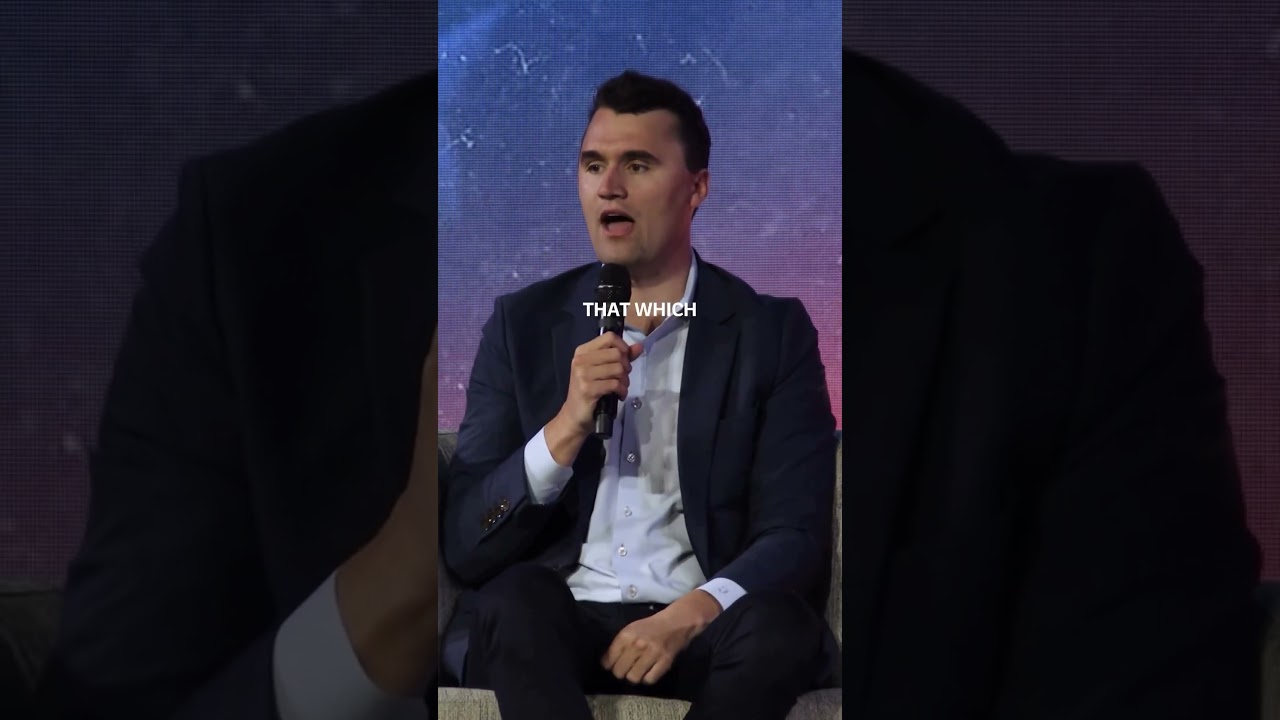
Charlie Kirk engages in a series of heated exchanges with college students and activists on campus, exposing gaps in constitutional knowledge while challenging contemporary ideologies. The confrontations cover fundamental questions about American civics, gender definitions, and political positions. From testing students on basic constitutional amendments to pressing for coherent definitions of womanhood, Kirk demonstrates the disconnect between confidence and actual knowledge among young people. The exchanges reveal broader cultural tensions around gender-affirming care for minors, abortion rights, DEI policies, and political candidates, with Kirk consistently pushing back against what he views as circular reasoning and ideological indoctrination on college campuses.
Charlie Kirk confronted students with a simple challenge: if they believed his pocket Constitution was propaganda for people who couldn't read, they should be able to demonstrate superior constitutional knowledge themselves. The results were telling.
When one student criticized the pocket Constitution for having explanations, suggesting it underestimated readers' intelligence, Kirk revealed the document was designed for third graders. The student protested that handing it to college students was insulting. Kirk's response cut to the heart of the issue: "The constitutional literacy of college students is the constitutional literacy of third graders."
To prove his point, Kirk tested the critic's knowledge without allowing them to open the document. The student failed to correctly identify the Fourth Amendment, confusing it with the Third Amendment's prohibition on quartering soldiers. They incorrectly stated there were eight articles in the Constitution instead of seven, and got the ratification date of the Bill of Rights wrong by two years, answering 1789 instead of 1791.
Kirk's conclusion was direct: "You came here gun to blazing. You do not know more than a third grader about the US Constitution, which is exactly what these are." The pocket Constitutions include explanatory notes precisely because many college students lack basic civic knowledge about their own country.
The Gender-Affirming Care Debate
Kirk challenged students on whether 14-year-olds should receive gender-affirming care, including irreversible medical interventions. One student defended the practice, citing the Society of Pediatric Endocrinologists and the American Medical Association as supporting such treatments.
Kirk countered that professional credentials don't prevent someone from recognizing harmful medical practices: "Just because you don't have the title doctor does not mean that you can't see which doctor practices from afar." He characterized gender-affirming care for minors as giving "a 14-year-old girl who might be going through a phase who's probably going through puberty anxiety irreversible drugs and breast removal surgery."
The student claimed no one under 16 gets breast reduction surgery but acknowledged minors have access to hormones, arguing the medical benefits include decreased anxiety and suicidality. Kirk dismissed this claim, referencing the Cass Report which contradicts these assertions.
What Is a Woman?
Throughout multiple exchanges, Kirk repeatedly asked what should be a simple question: "What is a woman?" The answers he received revealed the circular reasoning at the heart of gender ideology.
The most common response was some variation of "anyone who identifies as a woman" or "a person who believes they're a woman." Kirk pointed out the logical fallacy: "That's like saying a tree is a thing that is a tree. That's circular reasoning."
One student insisted the definition didn't need to be complicated, but couldn't provide one without using the word "woman" in the definition itself. Kirk offered what he considered the obvious answer: "An adult female with XX chromosomes, right? Not tough, not difficult, not over complicated. My 2-year-old actually could say woman, man, woman, man, man, woman."
When challenged on why it matters, Kirk explained: "Because we are being forced to lie on a daily basis and affirm people's mental delusions and we refuse to lie."
Gender as Social Construct
One teacher attempted a more sophisticated defense, distinguishing between "woman" as a social construct and "biological female" as a material reality. According to this view, gender represents "a set of preferences" that society has agreed upon.
The teacher explained: "If I tell you that I'm a man, it's because I want you to know that I like these set of preferences. If I tell you I'm a woman, it's because I want you to know that I agree with these set of preferences."
When Kirk asked if men can give birth, the teacher tried to split hairs: "Can men or can males? Because males can't." Kirk used this exchange to make a broader point about education policy: "I want to thank you for proving a great point. You are why we should eliminate the Department of Education."
Hormones and Biology
One student who identified as transgender claimed to experience periods through hormone therapy. Kirk pressed further: "Can you give birth?" The answer was no.
The student argued that hormones can be actively changed through HRT (hormone replacement therapy) and that testosterone suppressors can be stopped. Kirk countered that people are more than their hormones, joking that "men with low testosterone" are "called white dudes for Harris."
He posed a cultural analogy: "If I wear a disguise or a costume, do I become that thing? For example, if I dress with a sombrero and start talking with a Mexican accent, do I then become that culture?" The student rejected this comparison as different because race is involved, but couldn't explain why self-identification works for gender but not for race when both arguments rely on the same logic that presentation determines identity.
Deportation and Due Process
One activist attempted to challenge Kirk on immigration policy, claiming 200 people were deported without due process to El Salvador, including a United States citizen. Kirk immediately corrected the record: "It was not a US citizen. It was actually someone that was living here."
Kirk explained the person in question was a member of MS-13, a violent transnational gang. He posed a direct question: "Should members of a terrorist organization be able to stay in the United States after they've and gone after?" The deportations targeted gang members who had been identified and processed, not American citizens as the activist claimed.
The Kamala Harris Question
Kirk encountered a voter planning to support Kamala Harris and asked a straightforward question about her qualifications: "What is Kamala's greatest accomplishment?"
The student struggled to articulate an answer: "I mean, I would say her great her greatest accomplishments would probably be when she was um when she was um she went she she broke up..." After multiple false starts, the student finally settled on her work as district attorney breaking up transnational criminal organizations.
The student then tried to redirect the conversation to Trump University, but Kirk kept the focus on the original question. "I asked you like the most simple question. I asked who you were voting for and why." The student, uncomfortable with the scrutiny, tried to leave: "I don't want to have like a whole 30-minute debate with you. I was just asking a question."
Kirk's parting observation: "You embodied white beauty for Harris energy perfectly."
Rights and Abortion
When confronted about "taking away people's choices" and "hurting people," Kirk turned the question around on his accuser: "Why do you care so much about what I have to say?" The response was that Kirk was "affecting other people's rights."
Kirk then explored the foundational question: "Do you agree life is a right?" The student hedged: "I feel like if it's a clump of cells, then it's not like..."
Kirk pressed: "Do you think every human being has a right to life?" The answer revealed the contradiction: "Depending on how many weeks, but like..."
Kirk highlighted the irony: "Who's trying to take the rights away? I want to protect the rights of all human beings. You call them a clump of cells."
DEI and Institutional Excellence
Kirk challenged the widespread assumption that diversity, equity, and inclusion initiatives improve institutions. One person argued: "I think DEI is for excellence."
Kirk issued a challenge: "Show me one institution that got better the more it embraced DEI." He specified the criteria: "That got smarter, more competitive, leaner, more productive, and that was better than it was 10 years ago."
He ran through a list of sectors: "Are our airports more efficient? Are we landing planes better? Are our airlines better? Is our government better? Is our schools better? Is our universities better?"
His assessment was blunt: "Show me one institution that's embraced DEI that has become better, more excellent than it was 20 years ago. It doesn't exist. DEI will destroy an institution from within."
When his challenger claimed DEI opponents support racial quotas while DEI advocates support "excellence quotas," Kirk corrected the record: "We don't believe in racial quotas. We want excellence quotas and the best and the ones that earned it to be able to get in those positions."
Federal Spending and Critical Thinking
One teacher criticized standardized testing and federal education spending, arguing that the focus on tests "hurts people because then we don't get the money going to critical thinking which your misinformation machine succeeds on."
Kirk accepted the label without flinching and immediately tested the teacher's critical thinking with the same question he'd been asking all day: "What is a woman?"
The response demonstrated exactly the kind of thinking Kirk sees as problematic in education: elaborate theoretical frameworks that can't answer simple, fundamental questions about biological reality.