Up Next

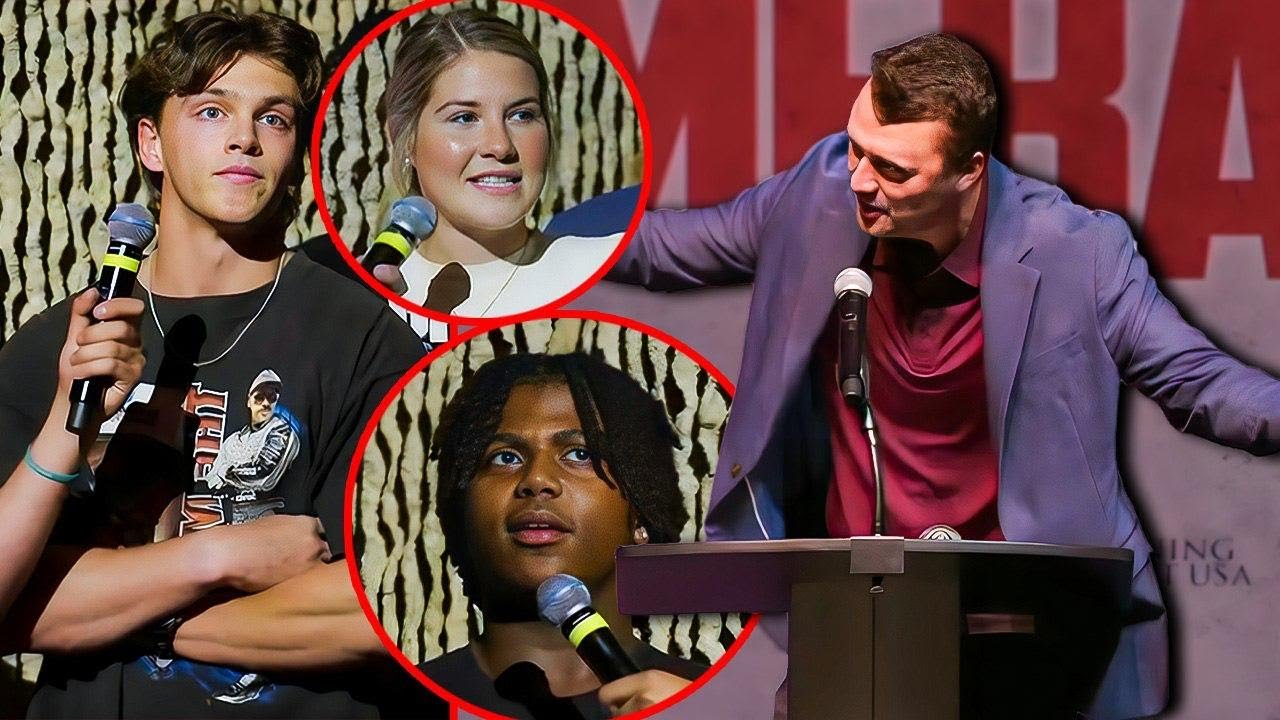
Charlie Kirk Debates Abortion, Rape Exceptions, and Personal Responsibility With College Student on Campus
13:04
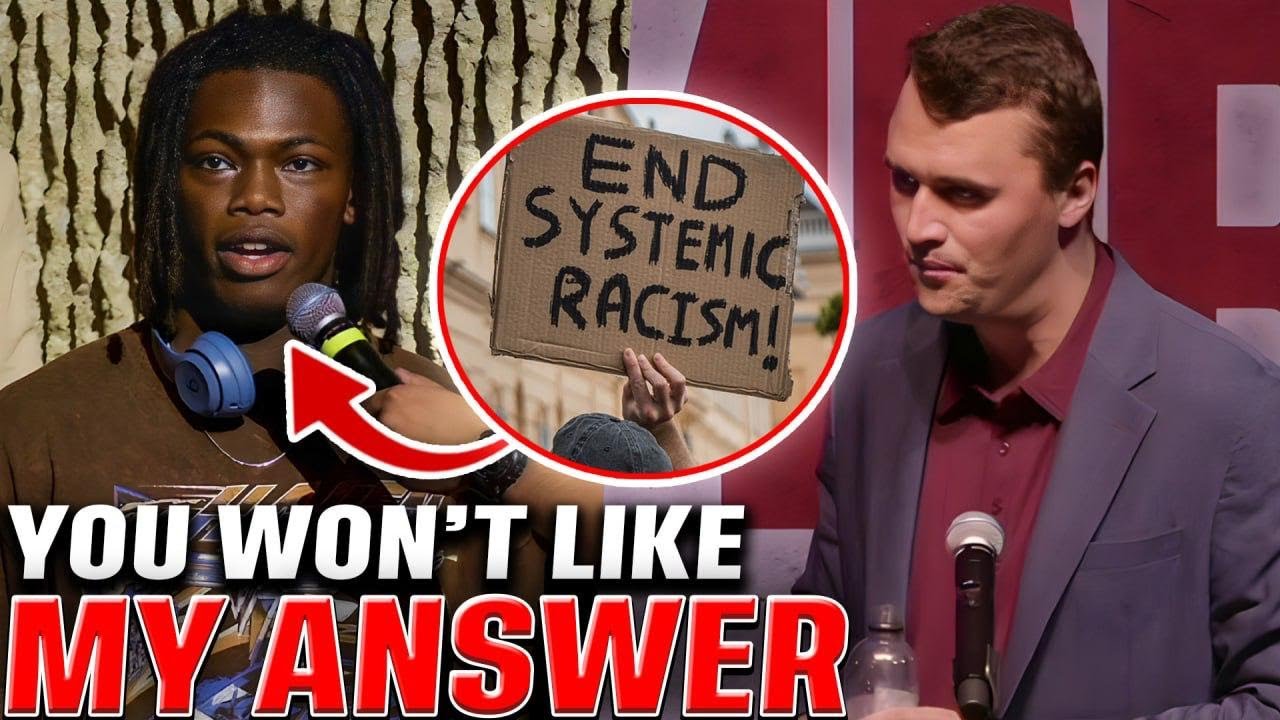
Charlie Kirk Debates Texas Student Malcolm on Systemic Racism, DEI, and the Victim Mentality Holding Black America Back
10:31

Charlie Kirk Debates Progressive Students on Border Security, Trump's Accomplishments, and Affirmative Action Policies
11:27
Charlie Kirk Confronts Students on DEI, Illegal Immigration, Abortion, and Gender Identity at Texas A&M
Charlie Kirk faces off with students at Texas A&M University in a series of intense exchanges covering some of the most divisive issues in America today. From a black student questioning whether DEI assumptions diminish his qualifications, to debates over systemic racism, illegal immigration's impact on American workers, the morality of abortion, and the reality of biological sex versus gender identity, Kirk challenges students to defend their positions with logic rather than emotion. The conversations reveal deep philosophical divides over personal responsibility, victimhood, merit versus identity, and what it means to prioritize American citizens in policy decisions.
The DEI Debate and Personal Merit
The exchange begins when a black student at Texas A&M challenges Charlie Kirk on DEI (Diversity, Equity, and Inclusion), expressing concern that Kirk's public statements about DEI make him feel as though his presence at the university is being questioned based on race rather than merit. Kirk responds by clarifying his position: people should never be in positions solely because of their skin color, and he has made no assumptions about this particular student's qualifications.
When pressed to explain his stance on DEI, Kirk points to the Students for Fair Admission v. Harvard Supreme Court case, where black students could have SAT scores 300 points lower than Asian equivalents and still gain admission. He argues this represents DEI in practice—outcome-based equity that prioritizes race over merit. Kirk emphasizes that hiring and admissions should focus on merit and character, with race being irrelevant.
Systemic Racism and Historical Impact
The student argues that black Americans have only been able to legally profit fully for about 60 years since segregation ended in 1965, suggesting this historical context impacts current circumstances. Kirk challenges this by asking how events from 60 years ago specifically impact the student's life, noting that the student is succeeding at Texas A&M. The student responds that the impact is visible in impoverished neighborhoods in Chicago and St. Louis where black communities lack adequate education.
Kirk presents a provocative question: Why has the black community gotten poorer since the passage of the Civil Rights Act? He notes that black families were wealthier and had higher rates of two-parent households during segregation than they do today. Currently, 70% of black youth don't have fathers in the home, compared to 80% having fathers present in 1960. Kirk attributes this to cultural collapse rather than systemic racism.
Comparative Outcomes Among Different Groups
Kirk challenges the systemic racism narrative by comparing outcomes across different ethnic groups. He asks why Jews, who suffered the Holocaust 80 years ago where half the global Jewish population was killed, are now thriving economically. He similarly questions why Asian Americans, many of whom arrived with little money in the 1950s and 60s, are now the wealthiest minority group in America. Kirk argues that if historical oppression determines current outcomes, these groups should not have defied the pattern.
The student attempts to explain these differences through culture and opportunities provided to different groups, but Kirk presses the point that black Americans have had the same opportunities. The conversation turns to crime statistics, with Kirk asking directly whether black people commit more crimes than white people. When the student acknowledges the statistics but attributes them to perpetuated culture, Kirk agrees but identifies this as internal black culture—specifically pointing to rap music and role models who don't glorify marriage, family, and financial responsibility.
The Culture Argument
Kirk and the student find common ground in acknowledging that culture plays a significant role, but they disagree on the source. The student views it as culture perpetuated through 200 years of slavery and 100 years of Jim Crow laws. Kirk counters that the internal black culture has collapsed over the last 60 years, no longer elevating family values, monogamous relationships, and church attendance.
Kirk declares that systemic racism is not real in modern America, challenging the student to name anything Kirk can do that the student cannot. The student mentions receiving suspicious looks at grocery stores, to which Kirk responds that he would receive similar looks walking through a black neighborhood. Kirk argues that America has gone to extraordinary lengths to prove it's not racist, pointing to hundreds of millions of dollars given to Black Lives Matter during the George Floyd protests in 2020.
Kirk concludes this segment by asserting that the student at Texas A&M is a living example that there is no systemic racism holding black people back. He argues that the poorest Americans are in the top 2-5% of wealth globally, and that black Americans are the richest black people on earth. His final message: stop acting like a victim and start making better choices.
Immigration and National Identity
Another student challenges Kirk on immigration, arguing that his anti-immigration rhetoric is nothing new and comparing it to historical xenophobia like the Chinese Exclusion Act despite Chinese immigrants building the Western Railroad. Kirk responds by noting that immigration has occurred in waves throughout American history, with the U.S. essentially turning off immigration for nearly 15 years in the 1940s and 50s.
Kirk questions whether 40 years of mass immigration has actually worked, asking whether America is more connected, whether middle-class wages have kept up, and whether immigration has enriched the well-being of the United States. He argues the answer is no—the country is more divided and fractious. He frames his position not as xenophobic but as patriotic, stating it's about loving citizens first, not hating foreigners.
Diversity Versus Unity
Kirk challenges the notion that diversity is inherently a strength, asking what country has ever grown stronger the more divided it's been. He points out that advocates never say "unity is our strength"—they always emphasize diversity. Kirk argues there's nothing racist about wanting your children to be around people who speak English, or not wanting to import people from distant lands who don't share Western values, don't treat women the same, and don't respect freedom of speech.
When the student argues that the United States has always been a mix of cultures, Kirk counters with historical facts: from the 1920s to 1960s, there was very little immigration—nearly 40 years of limited immigration that coincided with America becoming a world superpower in the 1950s. He emphasizes that a politician's first loyalty must be to their own citizens, not to citizens of other countries.
American Responsibility for Global Instability
The conversation shifts when the student argues that the United States has created mass violence, instability, and poverty around the world, suggesting America has an obligation to people who must flee those circumstances. The student lists Latin America, Africa, the Philippines, and Puerto Rico as examples of American intervention causing harm.
Kirk grants that Iraq was a disaster but challenges the notion that America is responsible for every country's problems. He questions why it's America's fault that Nicaragua or other countries can't get their act together. He points to the paradox that when America doesn't help, it's called evil, but when it does help (like making Puerto Rico a territory), it's accused of colonization.
Kirk rejects the premise that countries are poor solely because of American intervention. He argues that countries must take responsibility for their own futures, pointing to Israel as an example of a successful nation surrounded by struggling countries. He suggests that some people hate Israel's success because it challenges the narrative that external forces determine outcomes. Kirk maintains that most poor countries are poor by choice due to bad decisions, not American interference.
The Path to National Prosperity
Kirk concludes the immigration discussion by highlighting El Salvador as a positive example. Under President Nayib Bukele, El Salvador became safer than America by going after MS-13 and cleaning up the streets, resulting in billions of dollars flowing into the country. Kirk also cites Singapore as an example of how countries can become wealthy by embracing Western market ideas, private property rights, and maintaining low crime rates. His fundamental position: he views America as a force for good, while the student looks at problems and assumes America must be the cause.
Gender Identity and Biological Reality
A student approaches Kirk about sex and gender, noting they agree on biological sex (male, female, and in rare cases intersex) but disagree on gender. Kirk immediately states that gender is a made-up concept created by John Money in the 1960s. He distinguishes between sex (which is observed through XX and XY chromosomes) and gender (which is creating something new out of thin air).
Kirk's position: there are zero genders, two sexes, and infinite personalities. He argues that people have different personalities that should be recognized, but this shouldn't result in different definitions on forms or in how people are treated. When the student asks about societal implications of gender expression, Kirk compares it to wearing blackface—you can disguise yourself to look like something you're not, but that doesn't change what you are.
Practical Implications of Gender Ideology
Kirk presses the student on practical applications: Should biological men who identify as women compete in female sports? The student answers no. Should biological men who identify as women use women's locker rooms? Again, the student says no, mentioning all-gender restrooms on campus. Kirk expresses concern about women undressing next to fully unclothed men in locker rooms, which the student agrees would be problematic.
Kirk then asks whether a 15-year-old boy who thinks he's a girl should be allowed to undergo gender reassignment surgery. The student deflects, saying it's a conversation for the individual, their family, and their doctor. Kirk compares this to tattoos—if 15-year-olds can't get tattoos because they're too young to make permanent decisions, why should they be allowed to make far more consequential irreversible medical decisions?
Defining Womanhood
Kirk poses the central question: What is a woman? The student struggles to answer, eventually saying "you know it when you see it" based on how someone expresses themselves and presents. Kirk challenges this by noting that if womanhood is simply a costume one can wear by adopting the right appearance and attire, then it's just appropriation of womanhood.
When asked if Caitlyn Jenner is a woman, the student says yes. Kirk asks about Jenner's chromosomes, and the student responds that chromosomes don't determine gender. Kirk maintains this plays into the narrative that gender exists as a separate concept from sex, which he completely rejects. He argues that this paradigm has led to the belief that personal self-expression matters to core identity, which he views as meaningless. His framework: infinite personalities, no genders, two sexes, and society must live in reality rather than accommodate the fantasies of those who want their delusions validated.
The Abortion Debate
A female student confronts Kirk about abortion, suggesting he doesn't understand the female reproductive system. Kirk responds with a pop quiz, asking when heartbeats begin for babies in utero. The student deflects with an analogy about eating scrambled eggs versus chickens, prompting Kirk to clarify that fertilization is the key difference—just as with human development.
Kirk asserts that everyone knows deep down that murdering a baby is wrong, as it's written on every human heart. The student objects that an embryo is not a baby. Kirk asks when it becomes a baby, and the student responds "when it is born." Kirk immediately challenges this by asking why she doesn't support full-term abortions if embryos aren't babies until birth. The student clarifies she doesn't support full-term abortions but struggles to articulate where the line should be drawn.
When Does Life Begin?
Kirk explains that life begins at conception because that's when an individual's unique DNA is formed—determining everything from skin color to eye color, temperament, and all characteristics. He emphasizes that every DNA cell is coded XX or XY with all the unique attributes that will define a person for their entire life. This doesn't happen at 8 weeks or 10 weeks, but at the moment of conception when egg meets sperm.
The student raises medical necessity—what if the mother will die without an abortion? Kirk responds that before 20 weeks, medical intervention might be necessary, but at 27 weeks, a C-section could be performed to save both lives. He argues that C-sections are actually safer and quicker than abortions and save both the mother and baby. When the student asks about situations where the baby is already dead, Kirk clarifies that removing a deceased baby is not an abortion by definition—it's removal of remains, a completely different medical procedure.
The Reality of Abortion Procedures
Kirk describes the abortion process in graphic detail: the baby's spinal fluid is injected with cyanide poison while the baby squirms, trying to find its mother and gasping for air. He states he has watched abortion procedures and encourages everyone to do the same to understand what they're fighting for or against. Kirk characterizes abortion as the massacre of 1.5 million babies annually under the guise of women's reproductive health, using dehumanizing language like "embryo" to justify discarding human life simply because it's smaller.
After Birth and Adoption
The student asks what happens to children born into bad households. Kirk notes there are twice as many people on adoption waiting lists as there are abortions each year. When the student suggests this means sending children to orphanages, Kirk advocates for making adoption easier and insists there's no such thing as an unwanted child. He argues it's never right to justify mass elimination of people by claiming they're unwanted—comparing this logic to the Holocaust.
When the student objects to comparing abortion to the Holocaust, Kirk doubles down, stating abortion is actually worse—45 million babies versus 6 million Jews, making it nearly eight times worse. He asks what the moral difference is between a small baby in the womb and a grown Jew killed at Auschwitz. The student says one is a person while the other is not. Kirk establishes that the baby is of human species, therefore deserving human rights. The student disagrees, prompting Kirk to note the inconsistency: small humans get no human rights, but grown humans do.
Illegal Immigration Economics
Another student presents a series of prepared points about illegal immigration, arguing that illegal immigrants power the economy as 50% of US farm workers and 70% of construction workers in states like Texas, paying $13 billion annually in taxes including $2 billion to Social Security they can't claim. The student argues deportation would slash agricultural output by $60 billion and raise food prices by 6%.
Kirk's first question after this presentation: What should the penalty be for breaking into America? The student suggests a merit-based system where people become legal citizens. Kirk presses the question repeatedly—what should the penalty actually be? The student struggles to answer directly, eventually acknowledging that typically penalties involve fines, public service, or deportation. Kirk agrees with deportation.
Crime Statistics and Illegal Immigration
The student argues that illegal immigrants commit crimes at lower rates than native-born citizens, citing Texas statistics showing undocumented immigrants have 26% lower homicide conviction rates. Kirk challenges this by noting that every illegal immigrant is by definition a criminal—they broke the law by entering illegally and continue breaking it every day by remaining here in violation of 8 USC 1312, a federal felony statute.
Kirk argues that even if the crime rate statistics were accurate (which he disputes), the rate is irrelevant—what matters is the number. There should be zero illegal aliens and therefore zero Americans killed by illegal aliens. He lists additional problems: illegal aliens steal Social Security numbers, depress wages, and many are involved in smuggling girls, weapons, and drugs across the southern border, creating the largest slavery operation in American history.
Americans Killed by Illegal Aliens
Kirk asks if the student knows the names Laken Riley or Rachel Morin. The student doesn't recognize either name. Kirk explains that Laken Riley was a University of Georgia student who was hunted down, raped, sodomized, and murdered on a hiking trail by an illegal alien who had been deported five times prior but kept being allowed back in during the Biden administration. Kirk emphasizes that every American killed by an illegal alien represents a death that should never have happened.
Immigrants Versus Settlers
The student invokes the common argument that America was built by immigrants, citing political leaders who have made this claim. Kirk challenges this fundamentally, asking whether America was founded by immigrants or settlers. When the student concedes "settlers," Kirk explains the critical difference: immigrants come to a country already built, while settlers come to a barren place and build something new. He describes how California during the 1840s Gold Rush was not industrialized—those who came west were not immigrants but settlers building a new society around Western values.
Language and Assimilation
Kirk raises concerns about cultural cohesion, noting that a majority of young people in California now speak Spanish rather than English. He asks if there's anything troubling about this lack of common language. The student doesn't see it as a major problem, suggesting people should simply be taught English. Kirk responds that schools don't effectively do this, and proposes a better solution: don't import large numbers of people who don't speak English in the first place.
The student argues that illegal immigrants grow the economy, but Kirk rejects the premise entirely, stating he doesn't care as much about economic growth. He declares, "We're one nation under God, not one nation under GDP." When social cohesion is lost and people are imported who don't share American values and don't necessarily assimilate, that's a serious problem. Kirk emphasizes that America is fundamentally a people with a creed, and that creed is falling apart. Mass immigration has not helped preserve that creed.
Wages and Working Americans
Kirk argues that mass immigration depresses wages for working-class Americans. If you're a plumber, electrician, or welder competing against someone from Nicaragua willing to work for five dollars less per hour, that drives down the wages of American citizens. He notes that despite mass migration over the past 20 years with 30 million people entering America, wages have actually gone down dramatically.
When the student cites studies suggesting otherwise, Kirk encourages using reason over studies, noting that statistics can be misleading. He gives the example of seat belt statistics: 600 people die annually because of seat belts, but over 100,000 lives are saved—the first statistic alone would be incomplete and misleading.
Merit-Based Solutions
In the final exchange, Kirk asks one last time what should happen to someone who broke into the country and cut in line. The student suggests ideally there would be a merit-based system where these people become legal citizens. Kirk states his position clearly: deport them all back to their country of origin and put Americans first. The student objects that this isn't an appropriate solution, but Kirk notes that the American people voted for exactly this approach, and it absolutely is appropriate.
Throughout all these exchanges, Kirk's consistent framework emerges: prioritize merit over identity, personal responsibility over victimhood, biological reality over subjective feelings, the sanctity of life over personal convenience, and American citizens over foreign nationals. He challenges students to defend their positions with logic and evidence rather than emotion and popular narratives, creating intense but substantive debates on the most divisive issues facing America.
Video Transcript
give me your perspective on DEI and because based on what I heard earlier, I feel like you don't think I belong here because really >> how I am a black man and because of the I didn't I'm not qualified enough to be here. Yes, I am. >> Okay, great. Then you belong. >> But why do I have to prove that to you? >> You brought it up. I didn't. >> Okay, but can you >> can you explain to me your position on DEI? >> Yes. People should not be in positions just because of the color of their skin. Hard stop. Okay. But Okay. But do you feel like I'm here because >> I'm not I'm not feeling anything towards you. Actually, I'm not prejudicing you. I'm not stereotyping you. I'm saying it's a material. >> You're not saying you are. I'm not saying you are. >> No, you are. You said I don't feel comfortable being here. You started with >> I didn't say I wasn't comfortable being here. I said I feel like you made it to where I got here through DEI. >> So, let's examine that. What have I said that makes you feel that way? when you mentioned how DEI is only just putting people of color and marginalized groups in spaces even if they're not so and so >> correct that's exactly what DEI does >> but that's not that's not all that it does you're categorizing it as something it isn't >> no that's exact that is that is the charter missions >> that's not all >> okay so diversity equity so equity is outcome based is about making people who are of different skin colors have the same outcome regardless whether or not they are qualified the Best example we have of this is the Students for Fair Admission Harvard Supreme Court case where black students they did not literally they could have a SAT score 300 points lesser than the Asian equivalent and still get into Harvard. That is DEI in practice. I believe when you're hiring for an organization or for a company or for whatever you are doing, you should prioritize merit and character and race should mean nothing. We should build around things that matter and not things that don't matter. [applause] You have to also you have to also take into the fact that black people have only been able to completely and completely legally be able to make profit for themselves for around 60 years. And this is no no since segregation ended in 1965 and the um E equal rights act in 1965. So what were you tell there's not >> how does that So let's talk about you. How did that impact you? How did something that happened 60 years ago impact your life? >> It impacts me all the time. What do you Okay, >> you're at Texas&M. You're doing great. >> Okay. Yes, sure. Yeah. >> So, aren't you a living example that all that's a bunch of nonsense and you could just act good and, you know, behave well and >> succeed. But there's but there's also living examples of the exact opposite. If you look in the impoverished neighborhoods in certain parts of Chicago or St. Louis, there's black communities being thrown aside because they're not getting education. Okay. So, I think we can get somewhere. Why have black the black community gotten poorer >> since the passage of the Civil Rights Act? Tell me that. >> Because of the way the culture has been perpetuated through the years. >> Think about it. So, they were richer when we were segregated and more racist. America's become less racist. >> What about Tulsa? >> Yeah. No one's going to defend what happened in Tulsa again. But let's talk >> We're talking about a lot of different cities. We're talking about Chicago, Tulsa. But let's let's again this is a very important point. Do you think the fact that 70% of black youth don't have a data around is probably pretty important? >> That's because of the culture that I >> So let respectfully allow me to interject. How does the white culture impact the fact whether or not a black dad stays around when he impregnates a woman? >> I'm not saying it's the white culture. I'm saying what is it? the culture that has been perpetuated through the 200 years of slavery, the hundred years of segregation and Jim Crow laws, >> the marriage. So, I got to interject again. I'm sorry. I don't mean to interrupt too much, but the the in 1960 before the Civil Rights Act, 20% of black youth had a dad around. Now, it's I'm sorry. 20 20% were single fathers, 80% had a dad around. It's been inverted. So, we actually have seen black dads run away from their kids the last 60 years. Why is that? because of the raised incarceration rates, because of the perpetuated culture. >> So, how does one go to jail? >> That's obvious. I'm not answering that question. >> Yeah. So, maybe it's because they committed crimes. >> Okay. But the when you're forced for you're it's not just a Oh, it's it's this is old. This is in the past. This doesn't affect you anymore. >> Okay. So, actually, let's take a different group. How did the Holocaust impact Jews? They're doing pretty well. >> Well, because they got reparations. We did this. >> How what reparations the Jews do? acknowledgement through money, through we acknowledge slavery happened. >> Okay, but but you're sitting here and acting like it plays no role. >> No, no, no. But to your argument, the Holocaust was 80 years ago. Half of all the Jews on the planet were killed. Everything they earned was taken. Jews are doing great. If all of a sudden something that happened 80 years ago impacts your material prosperity, how did Jews defy the curve? How did poor Asians do so well? Why is it that Asians are now the wealthiest minority in America, many of whom came with no money in the 1950s or 60s? >> Because of the culture and opportunities that were provided to them. >> But no, but you're you're not hearing me out. Black Americans have had the same opportunities. However, >> people still look at us like criminals every day. >> Hold on. But like I don't look at you like a criminal. >> I'm not saying you do. I'm saying some people do. >> But I mean, can I Do you want me to be brutally honest with you or do you want me to be politically correct? >> Brutally honest with you. >> Okay. Do black people commit more crimes than white people? It's not even close. >> Okay. But >> but you al you have to take into account the culture that has been perpetuated. >> Okay. Got it. So I we can agree on this. Do you mean internal black culture? >> Um it's it's not it's deeper than that. Like >> do you think let's take time out. Do you think the average rap artist that a black kid in the hood is listening to is glorifying marriage and family and saving your money? >> That's what sells because it's a culture thing. It's not just within the black community. No, but hold on. Everyone listens to it. It's not just isolated. >> It's it's it's bad for everyone who listens to it. The point being is that black youth as they are being raised, >> their role models are largely not glorifying staying with one woman, getting married, going to church. And if if you're wrong, show me the black role models that are doing that. There might be a couple I could think of, maybe. But if it's about culture, you're right. The internal black culture has collapsed the last 60 years. We're no longer elevating the family. We're no longer elevating staying with the person that you're with. So, our contention here as conservatives is that the systemic racism stuff is a bunch of rubbish. Instead, it's systemic bad choices. >> Do you feel that systemic racism isn't real? >> Of course not. What can you What can I do that you can't do? Name it. >> Okay. >> No. No. Seriously, what what what can I do that you can't do? >> Fallacy. That's a slippery slope. I don't know why. Cuz if back in 1940, you would have been able to answer that question. Well, Charlie, there's a bathroom over there that I can't go to. There's a major league team. >> I can't I can't walk into the grocery store and get the same looks that you do. I walked into Brookshshire Brothers a couple weeks ago and I was looked at insanely hyper paranoid way of living life. That's not evidence, right? >> It's a real, >> by the way, if I walk into a black neighborhood, I get bad looks, too. Okay? So I don't know what the contention is >> because of the way you treat our culture and the way you perpetuate >> Wait, hold on. Hold on. The the way we treat your culture. We have we have gone to such great calisthetics and ridiculous gymnastics to prove that we're not racist. In fact, it's the worst thing that you could be called in America. We had during, you know, George Floyd 2020, we had hundreds of millions of dollars given to Black Lives Matter. I don't know where that money went. Did it improve material uh worth of black America? So I mean go and we actually do know where it went actually. And so but going back to your main contention when you are when you practice DEI because that was your main point right you are rewarding bad culture. You even acknowledge it. You are saying that someone should be there based on the color of their skin. We say skin color doesn't matter. If you want that position work harder, study harder and then you'll be you might be able to get that position. We're forced into underfunded communities where schools are based off of property value. We can't >> Well, actually, school choice is now the law of the land here in Texas. So, that's not correct. >> Do you just expect a single parent home to pick up and move into some rich neighborhood? >> Well, again, so let's go back to why are they the single parent home and the hundreds of >> not do you believe in the maxim or the belief that you should be you should take responsibility for your decisions? It's not just one person's decisions. It's so much deeper than that. >> Why are you trying to you're >> that that's where you and I have a different belief. You believe in >> it's not it's a fact. >> No, it's a it's a belief. Again, you have to tell me then why do Jews do do so well? Holocaust didn't impact their material worth? How did Asians do so well? And by the way, even more so, why are Hispanics getting so much wealthier? If we were so racist, why are Hispanics all of a sudden gaining income the last [cheering] 20 years? There's some there's something >> difference in culture. I don't know why y'all are clapping, [cheering] >> but >> it's a difference in culture. The way that the way that each culture is treated is so vastly different in America. >> But again, you have to tell me, other than bad looks at the grocery store, how else is your future, you as a man in America, not a black man, how is your future somehow restricted by racism? My natural hair is seemed as unprofessional. When I go into an office or workplace, when I walk around in certain places, people just assume, like I've said earlier, the dirty looks. When people think you are automatically the worst of the worst solely because we don't think that you think interrupted me like 10 times because you think you know what white people think and you don't. >> I don't know what white people think. >> Then why do you keep on saying you know what white people think? >> I've seen it. I'M NOT SAYING YOU'VE SEEN OUR THOUGHTS. I've seen what people have done to me and people who look like me around the world and around in America. >> How again you you are let's just make an example. You are here in the wealthiest country ever. >> Yes. >> At an amazing university with all the opportunity imaginable in front of you and all you want to do is look backwards at everything that prevented you when you are a glaring example that there is no systemic racism and you can actually achieve your wildest dreams. >> Whoa. Whoa. I never said that. Hey, I'm not the only black person who exists out there. There's so many people who this culture is affecting to this day. >> Do you know black Americans are the richest black people on earth? You cannot find a a black majority country or any country where black people have significant representation where they are as wealthy cuz even the poorest people in America are in the top 5% the top 2% of wealth around the world. And so my whole belief is stop acting like you're a victim and start making better choices. >> Acting like a victim. Whoa. [cheering] respect. >> It's not it's this is not a victim mentality. >> No, it it it fundamentally is because white people are not out to get you. There's nothing there is nothing holding black people back. >> There is Let me say that again. There is nothing holding black people back. In fact, the opposite. You can get into colleges with lower test scores. >> But you could say things that white people can't say and not be fired for it. >> Black people are wildly disrepresentation. People say that to me all the time and they just walk around like it doesn't mean anything around you. >> Say what? Say the what? >> The n word. I'm not going to say it on this public platform, but people say it to me all the time. >> Derogatorily? >> Yes. >> No, I think you're lying. >> I Why would I be lying? >> So you're trying to tell me at this campus, did you report it to student services? >> I'm not I have too much on my plate to worry about this. >> So Oh. So So you're going to say at this campus, you're going to indict the moral character of Texas A&M? >> I'm not indicting the moral charact. You're saying that >> I'm only guiding the moral character of one person or a few people. >> Oh, now it's one. So, you heard it all the time and now it's one. Got it. So, >> it's not Okay, you're saying this is the point is that I don't believe you because now you resort back to a race hoax to make it seem as if the white kids on this campus are like racist and terrible >> kids. >> Oh, so was was it a black guy that said it to you? >> There. I'm not. >> It matters a lot because this is how lies are able to grow. Just Smilelette, we see this. You have to challenge them. >> Do you think I'm lying when I'm I say that people say the n word around here and just >> if I think a white person comes up to you derogatorily and says shut up n word. I absolutely >> I'm not saying they said it. >> But I asked I said are they saying it derogatory? >> But that doesn't mean it's word for word like that. >> But okay. So then it's not an insult then. So then don't bring it up as if it's evidence of racism. >> Because you brought the nword up first. I didn't you No, no, no. You specifically said, name me an instance of >> I said I said black people can say things that white people can't say. Of course that's true. >> But that's automatically implying that one word. >> It's more it's more than that. But but but let me just kind of build this out. >> What is it then? >> There's a lot of things black people can say. >> Explain it to me. >> You want You want me to give you more examples of things? Yes. Black people are allowed to talk about black culture in a way that white culture cannot. For example, black people can come up and say that there's a baby mama problem in black America. And white people are not allowed to say that. Oh, I just did. So, what are you going to do? Cancel me. Black people are allowed to say Black people are allowed to say, >> "I'm a grown man. I got way." >> Black people are allowed to say that there is a systemic fraud issue within the PP loan application of black America. Black people are much easier to able to say that black individuals, despite being 13% of the American population, commit 55% of the murders. If most white people say that at a job, they would get fired for being a racist. I don't care cuz I say whatever I want. So, black individuals have much more intellectual public freedom than white people do. If a white person were to come up and say, you know, black America really needs to get its act together and stop sleeping around all the time and needs to actually have because it's true. Because why would you just walk up to someone and talk and attack their culture from the outside? Hold on. You were Let's look at Let's look at the evidence. You said to myself, you said there's all these people suffering in Chicago. There's all these people that are terrible. I'm telling you why. It's because there's been bad decisions that have been institutionalized. Let me finish. And rap artists and athletes and people to top a level of black society that refuse to ever challenge the core rot in black America, which is that they are allowing degeneracy and hedonism to eat the soul of what once was a beautiful black culture. And instead, they go around saying it's the boogeyman of racism. The white man is out to get you. And the result is black America is doing worse than it was in the 1960s. That is the contention. Period. It's not just that. It's a cultural. It's so much deeper than the present day we are in. I don't know why you're pretending like it just doesn't matter. >> I I What doesn't matter. You mean things that happen. Again, I've I've been through this multiple times. Let me Let me just ask you one. >> You're not You're not listening to understand. You're listening to reply. >> No, I I I I'm doing both actually. And so, but let me just like ask one final question, right? Which is that like you have your entire future ahead of you. When you are hired for a job, would you rather be hired because of your race or because of how qualified you are? >> It doesn't boil down to just that. >> That's what DEI is, man. >> No, it's not. >> Yes, it is. It is definitionally the hiring. >> They're just going to They're not just going to immediately see. They're going to >> You get extra points if you're black with DEI. That's how it works. Racial quotas elevate people based on the color of their skin. >> So, do you think I got extra points to come here? >> I don't know. You said you were qualified, but affirmative action was institutionalized in Harvard and in Texas and a lot of other places. There is nothing that is preventing black people from prospering. Nothing. The only thing is that you guys have been hypnotized to be victims of your own mind. To think as if there's a white person out to get you. I walk in the grocery store, they look at me differently. All that stuff is complete rubbish. You want the thing that is >> life experiences. You're just denying my experience. I just shared to you in front of all these people. >> If you think that, okay, let me just be clear. I know >> America has come really far. If your best example of racism is getting bad looks in a grocery store, we have made incredible moral my experience. There are so many other people. >> I'm happy to hear every example that they have. It boils down to this. We are not just a racist country. We are the least racist country ever to exist. We go out of our way not to be called the rword, to demonstrate that we aren't racist, to show to people that I actually have compassion for others and that I want to try to help, you know, people of different skin color. But at at its fundamental core, I have to go back to this. I don't actually think skin color matters that much. I don't I want a country that aims towards MLK's dream of one based on content of character and one on competency. I think the hyper racial obsession of this country is really bad. It's really bad for everybody involved, including black America. And I would just ask you, what would you do to improve the material well-being of black America? What is your solution? >> Education. >> Okay, we've we've spent trillions of dollars on education. Trillions. you need to like fundamentally change the system ed education because there's not enough funding. There's not teachers are not paid enough anywhere. Let's be honest. Like we need to like seriously fix our education, especially in when public school education comes from property taxes. When you're in a lowincome neighborhood, you're not going to get high income teachers. If if you had to choose more money for education or more dads for black kids, what would you say? >> That goes hand in hand. Education goes a family. That's why if we get more dads into homes, it starts solving the problem. >> No, education is what solves the problem. >> But hold on. But we we again, if you're just educating and there's not a dad at home reinforcing it, we've seen this play out. We see this in Chicago. In Baltimore, we've spent hundreds of billions of dollars in Baltimore, Chicago, Detroit. We have entire classes of kids that can't read at grade level. We have a we have incredible examples of this and it goes back to this. If you want to have a privileged life in America, very simple. Start acting a certain way. Our belief system is that you come down to the most foundational family unit and when that breaks down so severely, don't be shocked if that group when it acts that way stays in poverty over a longer period of time. Asians are incredibly loyally married. It's one of the reasons why Asian-Americans do so well in this country. Hispanics do very well. White Americans increasingly are not doing >> also came here by choice, too. >> We I my my ancestors did not come here by choice. But >> okay, so >> we don't have to go too far into that. >> We don't have to go into that. I want to get the next question again. >> You should be kissing the ground because you're right. You didn't come here by choice. >> But the other I'm telling you right now, you should be kissing the ground with gratitude because you're right. You are not in Africa and you should be thankful you're not in Africa. That you're in the United States of America. That's my end. Thank you very much. I think that the anti-immigration rhetoric you have is not new. I think that you try to paint a picture of it being this current phenomenon that we're facing, but there's been rhetoric from uh you know, your side from for a long time throughout the entirety of history. I mean, if we look at the immigration policies in the US, even though Chinese immigrants built the entire Western Railroad, there was still the Chinese Exclusion Act because they were providing insane value to the United States, but we still had these exclusion acts because of xenophobic attitudes. And so, this is not this is not a novel idea that, you know, immigrants are bad for the country. So, I'm I'm interested in why you think that all of a sudden we need to change the way the United States works. Well, first of all, immigration has gone in great influxes. We basically turned off all immigration in the 1940s and 50s. We had like net zero immigration for almost 15 years. Most people don't even know that. So, we had Ellis Island in the early 1900s and then we turned on the guzzle of immigration. But let's be honest, for 40 years, we have tried this mass immigration project for the last 40 years. Has it worked? Are we are we a more connected country? Have middle class wages kept up? are are look look at the material data. Has immigration enriched the well-being of the United States of America, especially the last five or six years? I would say of course not actually. We're more divided. We're more fascious. And we see this in almost every European country as well. When you import a bunch of people that don't speak your language that are from the third world, all of a sudden you have mass destabilization happening in your country. It's not a matter of being xenophobic. Instead, it's a matter of being patriotic to your own country and your own citizens. It's not about hating the foreigner. It's about loving the citizen. And your obligation is always to citizens first, not foreigners. [applause] >> Okay. So, you don't think that the MAGA movement has led to xenophobic attitudes at all? >> I don't even know how to answer that. I mean, like, >> why not? >> Well, because you have to first define what you mean by xenophobic attitudes. >> Uh, I mean, just like you said, you you said I mean, we're living in a a divided world. You don't think that comes from people being anti-immigration? Not >> No, I think it's the opposite. I think when you allow a bunch of people that aren't nativeorn Americans too quickly with no checks, no background, no idea who they are and flood them into your towns. Definitionally, diversity is not a strength when it comes to local community ties. >> If you don't use it, if you don't use it, I don't know that you're committed to finding its strength. >> Hold on. No, explain this to me. This is a good question. >> Yeah. >> What country has ever grown stronger the more divided it's been? >> None. But I'm not saying that you have to get more divided. >> No, no, but but diversity definitionally will divide you. Unity unifies you. You notice they never say unity is our strength. They say diversity is our strength. >> In fact, just so we are clear, there is nothing racist or xenophobic to say that you want your kids to be around people that speak English. There's nothing racist to say that. It actually means that you want to be able to communicate with your neighbor. There's nothing racist and xenophobic to say, for example, we don't want to import people from a far-off distant land that don't share Western values, that don't treat women the same, that don't have the same respect for freedom of speech. So, what we see is the unraveling of the United States of America because a country is is is again just like undoubtedly a it is the people that inhabit it. So, you have to be very careful what people allow into your country. >> Sure. And I but I think that what you're talking about this like mass shift in American culture is like not happening. I think you're fear-mongering. And also I I think that the United States forever has been a mix of culture. I don't really know like where you can point to a time in the US history that hasn't included immigrants in its culture. >> Again, from the 20s to the 1920s and 1960s, we had very little immigration in this country. Nearly 40 years. In fact, that is what largely led to us becoming a world superpower in the 1950s is we felt >> we had we had the brasero program back then where we brought in tons of laborers from the United from Mexico to the United States to work in agricultural and that's how we fed the United States. So I was such it was very limited in scope versus what we see today. But again I will ask a more moral question. Does a politician have first loyalty to its own citizens or to another country's citizens? >> Absolutely. I'm I'm glad you brought this because I wanted to circle back to my original question about the United States creating instability in the rest of the world. I do think that every single politician like let's say I'm the prime minister of South Africa, you know, my my >> which is an incredibly anti-white country. Like oh my goodness. >> Okay. Anyway, >> dangerously anti-white. >> Okay. Anyway, >> do you know about that by the way? You should. >> Apartheid. Yes. >> Oh, no. No, no, no. It's like they're killing white people in the streets in South Africa, >> stealing farmland. >> They're stealing farmland. And do if you don't know about that, that shows how the media is lying to all of you. It is literally a mini white genocide happening in South Africa right now. >> But I I don't think that we should >> No, it's fine. You brought up South Africa, not me. But yes, >> that was just an example. Anyway, let's stay on topic. Um, so let's say I'm the prime minister for a country. I do agree with you that my first job is that country for sure. That's who I'm leading. But considering the United States has created mass violence, instability, and poverty around the world, you don't think that we have some sort of obligation to the people who then have to flee from that? >> No. >> Why not? >> Wait, hold on. I I Well, why not? Define your terms. Where where where have we created mass stability? I I'll grant you Iraq. That was a disaster. Where else? in all of Latin America, in different countries in in Africa, places that like the Philippines that we colonize, Puerto Rico. >> Yeah. I mean, of course, I I'm always so interested in this as if it's like you can never blame those countries for not having their act together. It's somehow America's fault. Like, oh, it's America's fault that Nicaragua can't get its act together. It's America's fault. Even though we welcome Puerto Rico to become US citizens, like we've colonized them. So, here's the paradox. You don't think that Puerto Rico is colonized? >> No, no, no, no. I'm saying though, so if we don't help Puerto Rico, we're evil. When they become a territory, we colonize them and we haven't done enough. It's like, which one is it exactly? >> So, the Puerto Rico was taken from the Spanish as a colony and used as a sugar farm for years where the workers were paid less than a dollar per day to create sugar for the United States. And it's not really about statehood or independence. It's about letting Puerto Rico decide that for themselves. And anyway, this isn't about Puerto Rico. >> No, it's fine. But as more broadly, and I'll get to the final qu couple final questions here, >> I can sense that your problem is that like America's super successful and these other countries aren't. And foundationally, it's rooted in envy, bitterness, and resentment because we are the world's superpower. It's not because we've held anybody back. It's because we've had incredible people, really good ideas. >> You think the US has intervened in a negative way in other countries? At times, yes, at times we've intervened very favorably. We've Can you at least acknowledge at times that? >> Sure. There has been aid, but there's also been terror. >> No, no, not just aid. South Korea exists because of American involvement. Kuwait exists because of American involvement. >> But it's not it's not >> so but but but to to to look at American accountability, you have to look at the whole of that accountability. and and to say that certain countries are less developed purely on their own fault is to ignore history. >> I so that that's where we disagree. >> Countries have to take responsibility for their own future which again this is one of the reasons why so many people hate Israel. Every other country around there is like a third world country and Israel is super successful and super agentic and they're able to be like one of the wealthiest countries on the planet. You got to wonder what is it that they're doing? Oh, it's the Jews because they're stealing all this money. actually they like work super hard and they don't believe in Islam and they >> and like wow and the one place that >> have you ever been to those countries? >> Yeah, actually I have been to Israel and I've been to the Palestinian Authority. I've been to that. I've been to the West Bank. I've actually visited it. Even if I had, that doesn't mean what I'm saying is wrong. Just for the record. By the way, I encourage you to try to go to Lebanon or Syria. Not exactly the Four Seasons, right? So, >> and you think that US intervention has anything to do with that? partially, but again to blame the evil US intervention uh for every single problem is at its core intellectually sloppy. >> I don't think so because the United States has two times the military of the rest of the world. It has been in our DNA to intervene in a military way in other countries. So to say I mean you I know you believe >> so I I want to try to square this all together. I got to get another question just to make sure I'm clear. So you're mad at America for getting involved in other people's countries, right? So America's bad for that. But then you want everyone to come to America. I thought America's bad. >> I'm saying that the United States needs to be held accountable. You can't meddle in. >> So we're held accountable by inviting the entire world here. >> If if you are going to mess up that country, you have to do something about it. >> Oh, do something. Invite them here. >> Maybe if you're the reason that they have to leave. No. >> All right. Then that that that at its core, I'm glad you articulated it, is neoconservatism, which is invade the world, invite the world, which is that you don't support the invasion part of it, but somehow we have to invite the world as some sort of like mass penance. >> So, but that's like you invade and then say, "Oh, >> no, I don't I don't support the invasions. I'm just I think you are overly ascribing fault to the United States of America when in reality it's it's these own broken countries that cannot get their own act together." A great example is this, and I'll close with this. El Salvador is become is actually safer than America. It has billions of dollars flowing into El Salvador. Why? Because they elected Boullle who decided to go after MS-13 and clean up the streets of El Salvador. Which again, it wasn't it was because they decided to do good things with massive action. Countries can be wealthy. Singapore is wealthy. You could be a very wealthy country if you embrace western market ideas, private property with low crime. And it's not always >> I mean in the case of El Salvador, the United States was the reason that the country broke down into gang warfare. And now if you look at the way they were able to turn around, they had to declare a state of emergency just to be able to turn things around. >> It's just like this is where we're different and then I'll close next then we have to get get going. >> I look at America as a force for good. You look at everything wrong and you say it must be America. >> No sir. I'm I'm looking at bad things that they have done and calling for accountability. >> Okay. Like I I again I >> I mean maybe we disagree. I don't know. >> I I guess I think we're a wonderful country and I think if a country is poor, they're poor by choice and they have to be able to get their act together, make better decisions, and stop acting like victims all the time. Thank you very much. >> Yeah. >> Hey Charlie, how's it going? >> Um so I wanted to speak to you about sex and gender. I think we have a disagreement there. Um I feel like we can agree on sex. there are male, female, you're either born male, female, or in some cases some instances um there's a case of interex persons, but I think our disagreement lays with um your interpretation or your take on gender and how it's directly linked to sex. And I just kind of want to see where um what what are your what what's like what's your thoughts on gender or what are your um what's your take because I'm not quite sure. I'm not really caught up on what you've >> Sure. So, uh gender is a madeup concept. Do you know who made it up? Who made it up? >> Guy by the name of John Money in the 1960s. And >> why did he make it up? >> No, I was going to say, wouldn't technically anything be a madeup concept? >> No, sex is not made up. You can look at sex. XX and XY chromosomes are not made up. >> Are not made up? >> Yeah, I I agree with that. I think we're on the same page about sex. >> So, sex is observing. >> Gender is creating something new. Totally different. We observe nature. Gender is creating a new thing out of thin air that has no applicability to our discourse or dialogue. So there are zero genders, two sexes, infinite personalities. We recognize that people have different personalities. We don't think you should get a different definition on the forms you fill out or how people talk to you, recognize you, or how you are treated. >> So when it comes to look when it comes to defining or looking at and seeing what or who is a man or a woman, it only refers to sex like if they have a sort of is that >> correct. Correct. And it's worked really well for all humanity. We decided to screw it up the last 20 years. >> But what about with like societal implications with the way what's it called? Gender um with the way with the with the way gender is expressed. Um you could for example um you could have a um you could be a trans if let me take this for example. So, if I was transgender, um, say I was born female, but with the way I present myself, um, if I shave my mustache, um, I I shave my mustache, I dress like a male. When I'm walking down the street, you would think I'm a What would you think I am? >> What I think is irrelevant. You can disguise yourself to look something you are not. I can I can wear blackface. Do I become black? >> No. No, of course not. >> Oh, so wait, hold on. If a then a man dresses like a woman, why does he become a woman? >> It's not that he becomes a woman. It's he's he's seen and he's in he's >> want to be recognized as something that he's not. >> It's not that he needs to It's not that they need to be recognized. >> Oh, no. That's what it's all about. It's about recognizing a delusion. You can dress however you wish. You can act however you wish, but I'm not going to recognize your lie. In fact, you could get in trouble for misprononing in the state of California. We're teaching our kids you must pronoun correct pronoun correctly. And you actually have to certify the delusion. So again, I say if I wear black face and I don't become black, why does a man who wear a dress become a woman? >> Um, it's it's not it I feel like it's not up for someone I don't I feel it's not up for you to decide. I think it's up for the individual. And I think the way they the way they express themselves through, you know, >> through >> the way they express themselves through their what's it called? Through their their through their appeal, through their attire. I think that's more indicative of how >> Okay, then let's play let's play this out. If everyone can just choose however they want, should biological men who are born as a man be able to compete in female sports? [cheering] >> I'm asking >> um no, I don't believe that biological men should be in women's sports. >> And God bless you for saying that cuz that's at So here's another question. Should biological men who identify as women be able to go into women's locker rooms? Can you repeat that one more time? >> Biological man, so he has a >> Okay. >> And he says he's a woman. Should he be allowed to go into female locker rooms? >> I mean, >> no, we have on campus we have all we have all gender restrooms on campus where males and females are. >> Yeah. I think that's a terrible idea, right? So because because ma male female distinctions are critically important. It's how society is structured. >> Yeah. we have these shared spaces and there hasn't been any sort of issues or I don't think I think the major consensus surrounding it is that people are actually enjoy the what's it called the the all gender bathrooms >> let's talk about locker rooms though do you think women would enjoy undressing next to a a fully unclothed man >> no I don't I don't think so I don't >> okay so then we should prohibit that so we agree so and then finally do you think that a young 15year-old here in California a young boy who thinks he is a girl should he be allowed to chop chop his off. >> Can you Can you say that again from the start? Real close. >> 15year-old boy in California. He thinks he's transgender. Should he be allowed to go chop his parts off? >> No. >> Um, should he be allowed? I think I think that's a conversation for him and his medical and his doctor and his family. I mean, I'm not It's not It's not my It's not my job to >> Should uh Should 15y olds be allowed to get tattoos? >> Should 15-year-olds be allowed to get tattoos? I no. >> So you could your but you can't get a tattoo. >> I mean [laughter] I mean with I mean I think that's I don't think that's really that comparative. >> Well, they're both irreversible, right? Actually, one matters a lot more for human flourishing than the other. >> No, I would I would definitely agree. That's it's a very what's it called? It's a very lifealtering process and I think it requires a lot of time and um it requires a lot of time and it shouldn't be something that should be just jumped into. Um I just think that's something for an individual and their their family and their doctors to decide and not for um society or the state the state. >> Last question. Most important question. What is a woman? [cheering] Um, a woman, you know it. You know it when you see it. You know, it's like if I look, she looks like a woman, she looks like a woman, she looks like a woman, she looks like a woman. It's the way it's the way you express yourself. So all these It's the way you express yourself. >> So if you if you if you basically womanhood is a costume. >> I'm not saying that. No. >> No, it is. Yeah. If you're able to wear the right stuff and [snorts] just assume the identity, you can appropriate womanhood. Is that correct? >> No. >> Okay. Is uh Caitlyn Jenner a woman? >> Yes. >> Why? >> Why is she a woman? >> What chromosomes does Caitlyn Jenner have? >> Um I mean I don't I think her chromosomes don't have to deal with her gender. Like I think that's where the disagreement lies is that I >> Yeah. again. So this is where you are playing into this narrative that gender exists. We reject that paradigm completely because gender has led us to this place that your own personal self-expression matters to your core identity. And again, that means nothing. Infinite personalities, no genders, two sexes, and we must live in reality, not in the delusions of the heads of people that want us to accommodate their fantasy. Thank you very much for your time. >> It's all right if you have an opinion. I'm saying it's not all right if you don't understand how the female reproductive >> Okay, so let pop quiz. When does heartbeats begin for babies in uterero? >> Have you ever eaten an egg before? >> Um, that's I'm yes or no. Have you ever eaten an egg before? >> Uh, scrambled. Yeah. >> Okay. So, would that be you scrambled a full chicken? >> Well, hold on. Oh, you understand it takes an egg to be fertilized, >> right? Uh-huh. >> Yeah. Uhhuh. [laughter] your point, the whole point you're making. >> Hold on. So, no, since we're doing pop quiz on like human development. So, when exactly do heart waves begin in uterero, >> you know that, but you don't know the force. >> Hold on. No, no, tell me when. Tell me when I don't know. >> Okay. You don't know? No. So, wait, hold on. So, you're trying to say I know more about the woman reproductive system than you do. >> I am a woman. So, yes. >> Yes. Okay. Well, but the point being is we could both go back and forth of like independent trivial facts when it comes to the woman's reproductive system. But here's something we all know because God wrote this on the human heart of every individual as it says in the book of Romans. We know deep down it's wrong to murder a baby. >> You're not murdering a baby. It's not a baby. >> Okay. Well, let's let's play this out. What is it then? >> It is an embryo, which is not a baby. >> Well Well, okay. So, it's a fertilized embryo, >> correct? Which is not a baby. So, at what point does it become a baby? >> When it is born. >> Oh, [cheering] >> I don't agree with abortions up to full term abortions. >> Hold on. But, but you said it becomes a baby when it's born. Then why would you have abortion limits before it's born? I thought it's just an embryo. So, embryo rights. >> No, embryo rights aren't a thing. >> But then, where would you draw a line for abortion then? And why? And under what moral standard? >> There are medical reasons, not the question. That's not the question. You just asked me why would I not have an abortion full term for medical reasons. >> Okay. So, at 29 weeks, the baby is nearly fully developed, can recognize the mother's voice, has a heartbeat, has brain waves. Is it okay to abort that baby? >> I don't like it's not okay. But you're going to say it's okay to have an abortion then? Like, I don't understand what you're trying to say. It's not okay to have an abortion ever. How about like 3 weeks in? >> Correct. No abortion. Correct. >> Why? >> Well, because your life started at conception. It did not though. It did not. >> Well, hold on. So, let's play this out. So, who are you as an individual? From your skin color to your eye color to your likes, your dislikes, from your temperament to your everything. >> I am not an embryo. I'm a person. >> Hold on a second. But it started with something called deoxoribbo nucleic acid. And your own individual DNA started at the point of egg and sperm meeting. That's where your journey started. And so from that point in particular, life begins. Not not at birth, not at first words, not at first steps, but when your DNA, which is who you actually are. Your you are your DNA. Every one of your DNA cells is coded XX or XY. It's coded with all of your unique characteristics and attributes that God we believe God individually curated for the rest of your life. That doesn't happen at 8 weeks or 10 weeks. It happens at conception. >> What happens if you need a medical abortion? If the mother will die if she does not get an abortion, what's your stance on that? >> The only the only place where medical abortion is necessary is before 20 weeks, which is incredibly >> she will die. What if the mother >> So let's take they for example like this is a very important question. Let's say it's 27 weeks, okay? And the mother will die. Why shouldn't you could agree why don't we just have the baby delivered by cacaian section? You know what a cescareian section is, right? >> Yes. >> What is a cescareian section? >> A C-section. >> Yeah. Wh why wouldn't we just put the baby up by C-section instead of terminating it >> because if the mother will die, it's not safe to do that. >> You remove the baby. >> I understand. I know what a C-section is, >> but it's actually safer than an abortion. So, every time they say, "This is for you guys." They say, "Oh, you need to have abortion for medical reasons." Respond, "Then have a C-section." >> What if you're not able to have a C-section? What if you are on your deathbed? You need to have an abortion right now. >> Again, >> and it's illegal. You can't. So, you have to die >> first. First and foremost, C-section is safer. C-section is quicker and a C-section saves both lives. A C-section >> the baby is already dead. You just said >> no, but even No, no, no. Hold on a second. You're saying if the baby's already dead, then it doesn't have an abortion, right? Then you're talking about a removal of a carcass, which is a completely different medical operation. >> So, you're saying that's okay. If you're having >> if you're rem Hold on. If you're removing a carcass of a baby, that is not an abortion by definition. >> The same process. >> No, it it it's completely different. During an abortion, they actually inject the spinal fluid with cyanide poisoning as the baby squirms and tries to find its mother and it is gasping for air of life. Have you ever watched an abortion? It is one of the Yeah, actually I have and I encourage every human being to watch one to know what you are fighting against because when you see abortion, you will have your your life will be changed that we allow the massacre of a million and a half babies a year under the guise of woman reproductive health. We are allowing babies every single year to just say, you know, we're going to discard them. Why? Oh, they're smaller. They're not humans. You're using dehumanizing language saying, oh, it's an embryo. No, that's a baby made in the image of God deserving of protection. [applause and cheering] >> What do you do with those children once they're born into a bad household? >> So, now we've transition to like what do you do with the kids? Glad we're past the other part of the argument. Okay. What do you do with them? You know, there's twice as many people on the adoption waiting list than there are abortions every single year that >> And they're still on the list. So, you want to send a child into an orphanage. >> Is that what you want for a child? Is that a good life for a child? No, I'm not advocating that. In fact, I'm advocating for to make it easier to be able to adopt. Number one. Number two, there's no such thing as an unwanted child. Number three, it is never right to justify the mass elimination or termination of people under the guise of saying they're unwanted. That's how we get Oshvitz. That's how we get the greatest horrors of the 20th century. Those people are unwanted. >> So, you're comparing abortion to the Holocaust? >> Absolutely, I am. In fact, it's worse. It's worse. >> It's [cheering] really not. I don't think >> it's 45 million babies. It's nearly eight times worse than the Holocaust. What's the moral difference between a small baby in the womb and a grown Jew who was killed at Oshvitz? What's the moral difference? >> One is older >> is a person. >> What species is the baby in the womb? >> It's a human. But >> therefore, they should have human rights. >> No, >> they should have human rights. >> I do not agree. Oh, so so small humans no human rights. Grown humans human rights. >> It's not a small human. It's an embryo. >> You just said it was a human species. >> It's not a living human child. >> Wait, it's not a what? >> It's not a child. It's not a living child. >> It's very It has a heartbeat. It has brain waves. >> Make it a child. >> But tell me when it becomes a child then. >> When it I already told you when it is born >> again. So under every other objective definition, you see guys how quickly the proabortion arguments fall apart with just the slightest questioning and but it our position is one rooted not in feelings, not in personal autonomy, but one in biological consistency and reality that your life had an agreed upon starting point. That that starting point should be protected and preserved. And the excuses given for abortion is dehumanization. Oh, it's just an embryo. Guys, that's just using different language to justify the massacre of something smaller than you. That's all that it is. >> I have um I have a couple points that I want to talk about in illegal immigration. Um is it okay if I write if I say all of them with no interruption? Okay, cool. So, first, illegal immigrants power our economy. They are 50% of US farm workers harvesting the food on our tables and fill 70% of construction jobs in states like Texas. They pay 13 billion annually in taxes, including 2 billion to social security that they can't claim. Deporting them would slash agricultural output by 60 billion and raise food prices by 6%. Why gut our farms and wallets when these workers fuel our prosperity? That's my first point. Second point, they strengthen our communities with lower crime rates. So in Texas, undocumented undocumented immigrants have a 26 lower percent homicide conviction rates. So which is 2.2 per 100,000 versus three for native born citizens. Nationally immigrants are incarcerated at half the rate of native born where it's 85% versus 1.7 1%. Uh that's according to Bureau of Justice Statistics from 2019. So if safety is your goal, why deport people who make our streets safer? This is my third point. Uh mass deportation tears apart American families. Over 4.4 4 million US cit citizens uh children have an undocumented parent and in Texas one in seven kids lives in a mixed status household. Um okay this is my fourth point. Deportation is a fiscal nightmare. Removing 11 million people would cost 315 to 400 billion more than the entire homeland security budget and shrink our GDP by 1.7 trillion over 10 years. And um this is my last point. Our immigration system is broken, pushing people to cross illegally. Visa waits. Mexicans can exceed 20 years and the asylum blockage is 1.3 million cases with hearings four to six years out. Uh okay. >> You done? >> That's pretty much it. Yeah. Yeah. >> All right. So without looking at the phone, look at me. What should the penalty be for breaking into America? >> I think there should be a system where it's more merit-based. So if this person >> penalty So what is the penalty? So what what what should happen? >> It's a fel it's it's not a felony. It's a misdemean that's not true. It's 8 USC 1312. You can look it up right now. >> It's a felony if it's done twice if you try to go. That is correct. That is not correct. I googled it. Dude to illegally go across the southern border with the well intent to come into harbor yourself into the interior of the United States to violation of 8 USC 1312 which is a felony in the federal criminal code. Now it can be enforced as a misdemeanor or it can be upwards to 5 years in prison. Now I want to know since it's a felony law on the books 8 USC1 1312 what should the penalty be? Um well, in my opinion, these kinds of like um laws are not are are usually they're they're um what do you call it? They're um sorry. >> Usually the the the like the the sorry >> um wait, sorry. Can I can I choke my phone real quick? I apologize. Can you can you repeat the the question? Sorry. >> What should the penalty be? >> Penalty be >> for someone that breaks or comes into America illegally, what should the penalty be? >> I think there should be a a merit system where the people Okay, the penalty. All right, let's >> that's not the answer. It's a very simple moral and legal question. What should the penalty be if you come into America illegally? Okay. So, since it's a misdemeanor, not a felony, misdemeanor. >> I just I just told you it's not eight. You can look up on your chat GPT. What is 8 USC? Look up. What is 8 USC 1312? >> No, I I know. I've already looked it up. >> Yes. It's which is >> when it's your second time crossing the border illegally, then it becomes a felony. It can it can be and it is enforced as a felony and it usually is done as a misdemeanor citation because no one has the stones to do 20 million felony you know uh applications. >> Okay. >> So I just want to ask >> what should the penalty be then >> for someone that comes into this country illegally? >> Usually there's there's three ways that go about this. is when there's a penalty. It's there's either like a fine or there is some kind of like uh public service that this person does. Um or you send them back. But but >> I'll send it back. I agree. That's what we should do. >> Okay. Okay. So, [cheering] okay. So, this is this is interesting. So, one of the stats, one of the statistics that I read said that illegal immigrants don't cause as much as much like they don't break the law as often as people who are native born. That is statistic. But every single one of them are criminals. They're all criminals. >> They're okay. Sure. By law. By law. No. By law. Of course. Of course they are. Wait. So if they if they if they commit less crime and they're all criminals. >> Wait a second. By definition, >> they they all have broken the law by being here. And they break the law every day by staying here cuz you're actually not allowed to stay here either. Do you know that? So every day you're here, you're actually continually breaking the law. You can't break in or harbor. That's what the federal law says. So by breaking in, it's not just the only law they broke. every second you remain here, you're also breaking the law. So that statistic is invalidated by just them breathing here, they're breaking the law. >> No, of course not. Of course not. So of course it makes sense for them when they're here, they're breaking the law because they're illegal immigrants, obviously. Obviously, but once they're Okay. Yeah. Of course. So once they're here, once they are here, what kind of harm are they actually doing when we look at the numbers statistically? No. No, that's not true. Okay. >> Black wages have gone up. Okay. In Texas, >> DUI have gone up dramatic dramatically. >> Try not to interrupt, bro. >> Hold on. I I I'm I'm interjecting and I let you go uninterrupted with your whole siloquy, right? So >> So let me just let me ask you a question. No. >> Okay. >> So if it is correct >> Yeah. >> that illegal aliens commit less crimes, which of course it's not correct. >> That is correct. Look it up. In Texas, they made a study in 2019% or lower. >> If it's any crime, it's just not correct. But I'm not going to debate that. It's it's it's I just I just proved it at its face because they commit a crime by being here every day. That is a crime. >> Okay. Once they are here, what kind of crimes are they committing? Just >> Okay. Well, >> there they're 26%. >> Do you know the name Lake and Riley? >> No. Educate me. >> Oh, you don't? >> No. No. No. >> Do you know Wow. Do you know the name Rachel Morren? >> No, I don't. >> Wow. >> Educate me. What? What? >> So Lake and Riley was a girl at the University of Georgia. Okay. >> There was a peeping Tommy illegal alien that was deported five times prior and Biden kept on letting him back in. He hunted her down, raped her, sodomized her, and murdered her on a hiking trail University of Georgia. So, one person doesn't represent alligants. Every person who is killed by an illegal alien is one that should not happen. Every single one, >> of course. And also the ones that are born, >> everyone. And so, that's the pointative is that it's not a matter of the rate. >> The the rate, even if I accept your premise, which is incorrect, the rate is irrelevant. The number is what's relevant. There should be zero illegal aliens. There should be zero Americans being killed by illegals. Not to mention, there's six other problems with illegal aliens. They steal social security numbers. They depress wages. They are heavily involved. By the way, not to mention a lot of people that cross on the southern border are also smuggling girls, weapons, and drugs alongside the southern border when they come. It's the largest slavering operate slavery operation in American history that many illegal aliens help make possible on the southern border. And I guess the final question I'll have is, should a government serve its citizens first and foremost? >> Yeah, of course. Of course. Well, okay. There's many there's been many people who are like very political leaders who have said that this place is built off of immigrants. >> Oh, is it? Well, hold on. Let's think about that. Was was first of all, it's legal, not illegal. But was America founded by immigrants or settlers? >> Settlers. >> That's not an immigrant. >> Yeah. Yeah. Okay. Not my point. My point is that >> you brought up the the nation built by immigrants. >> Yeah. Because the political leaders have said that this place is built >> Yeah. And they're they're wrong. >> They're wrong. Political leaders are wrong. George W. Bush is wrong. All these political leaders who have built America, >> By the way, the first person to say that was >> how is that wrong when illegal immigrants make they grow the economy statistically? >> Allow me again. Allow me to build it out for you. >> Immigrants have helped at times in American history, but we are first and foremost a nation founded by settlers. Immigrants come to a country already built. Settlers come to a barren place and build something new. This land was barren when people came >> in the 1840s gold rush. This was not an easy place to live. California was not exactly industrialized. There was not immigrants coming west to California. Those were settlers building a new place around, you know, western western values. Finally, I would just ask the question, >> do you see a moral distinction between a legal immigrant and an illegal immigrant? >> Well, the argument is that they're cutting in line. Like the argument is that they're cutting in line in the 20ear process that it would take for someone to be to cross. >> It's not 20, but >> at most it's 20. At most it's 20. Right now, there's around like 1.2 two million people who are currently waiting. That would take six to seven years for a hearing. >> And by the way, no one has a right to come to this country. Just to be clear, >> let me stay on track of what I was going to say. Okay. So, so people people who come here usually almost all the time when they come here, it's they benefit society. They benefit society. There's studies that have done this. >> Not necessarily. >> Okay. Not necessarily. But overall, in general, when you look over disagree with that, >> you can't disagree with a fact. >> Hold on a sec. Do you think Elon Omar has enriched the United States of America? >> I I don't know who. >> Do you think Rashida Talib? >> Uh-huh. >> I mean, I could go through person by person by person. >> So, I don't know these people. Are these people who have like are illegal immigrants that have caused harm? >> Yeah. Again, I if you don't know, I don't mean to pick on you. It's fine. But I I guess the the final question is >> do you have any concern that there are too many people coming into this country and we're a nation of strangers, not a nation of neighbors? If the people who are coming are creating America, making it more growing, like the economy is growing, then what harm is that doing? Especially if the people are coming an economy though, aren't we? We're a culture. We're a language. >> Okay, so let's talk about that front. When they come here, they don't have any kind of they're not committing as more more crimes than the people who are already here. That is we already dispelled that, but you can't do you think there's anything wrong that a majority of young people in California speak Spanish, not English? >> Is there Wait, sorry. Okay. >> Do you think there's anything wrong or troubling to the fact that a majority of people under the age of 30 here in the state speak Spanish, not English? >> Um, >> is there a problem with that? >> Well, yeah. Everyone should be able to have a ability to communicate with the rest of the crowd. >> So, I I guess I don't know what the big issue of that. >> See, I think it's a huge problem when we have a nation where you can't communicate with your >> fellow. Simple solution. Teach them how to speak English. What is your >> Yeah. And that our schools don't do that actually. And also, have a better solution. Don't import a bunch of people that don't speak English. You mean importing people who actually grow the economy? >> Reject I reject your premise. An >> that's not a premise. That's a study that's been done. >> Do you know what a premise is? I don't actually care as much about economic growth cuz we're one nation under we're one nation under GD. We're not one nation under GDP. We're a nation under God. And when we lose social cohesion and you import a bunch of people that don't share our values, that don't necessarily always assimilate, that's a major and serious problem. And we are a we are a people first and foremost with a creed. And that creed is falling apart. Massigration has not helped that creed. Yes, they might buy more trinkets. They might help depress wages. Massigration of course can help. >> All good things. All great things for America. >> Well, they help major corporations, but you know what they also do? They keep down the wages of working people. If you are a plumber, yes, of course. If you think about it, if you're a plumber, electrician, or a welder, and you have to compete against someone from Nicaragua who's willing to do it for five bucks less an hour, that depresses the wages of the American citizen, >> right? Yeah. So, there's been studies I've done that also like counteract that. illegal immigrants. I use our studies. Let's use our statistics. >> How about our reason? So, we've had mass migration for 20 years. Have wages gone up? >> I I don't know. >> No, they haven't actually. So, forget your studies. For 10 years, we've had for 10 years, we've had 30 million people come into America. >> Wages have gone down dramatically. Maybe there's a reason why. >> Okay. Okay. >> So, what I encourage you to do just because there's a study that confirms you should use your reason and look actually at self-evident truths. Be like, "Huh, does that make sense? Can you name >> statistics are self-evident truth?" >> Well, not always. Statistics are very misleading. Yes. you like for example I could say did you know that 600 people a year die because of seat belts well that's a misleading statistic because over 100 thousand lives are saved by seat belts that's an incomplete statistic >> wait okay so where where is the so that's a gray area so where's the gray area where people are talking about where 26% of illegal immigrants who come here commit less crimes than native born >> okay we have how many times have we been over this that's just not correct >> that is correct that is correct >> every single crime it doesn't >> this is a study that was done in Texas the most diverse second most diverse Every crime an illegal commits is one that should never have happened. It is a period. They should not be here. So I don't care about the rate. The rate is irrelevant. So let me just ask one final question. >> It is relevant. >> Someone broke into the country and cut in line. What should happen to them? >> Well, they get they're given ideally there's a system. Ideally there's a system that's merit based where these people then become part of the part of the the citizen like they become a legal citizen. >> Yeah. I mean we have clarity but not agreement. I say deport them all back to their country of origin and put Americans first. >> That's not that's not an appropriate solution when >> the American people voted for it and it is appropriate. >> It isn't appropriate because most of the people
Related Books
Browse Conservative Books