There Is No Such Thing as a Transgender Child: Chris Elston On Five Years Fighting Gender Ideology
Enjoying this? Share it with someone who needs to see it.
Up Next
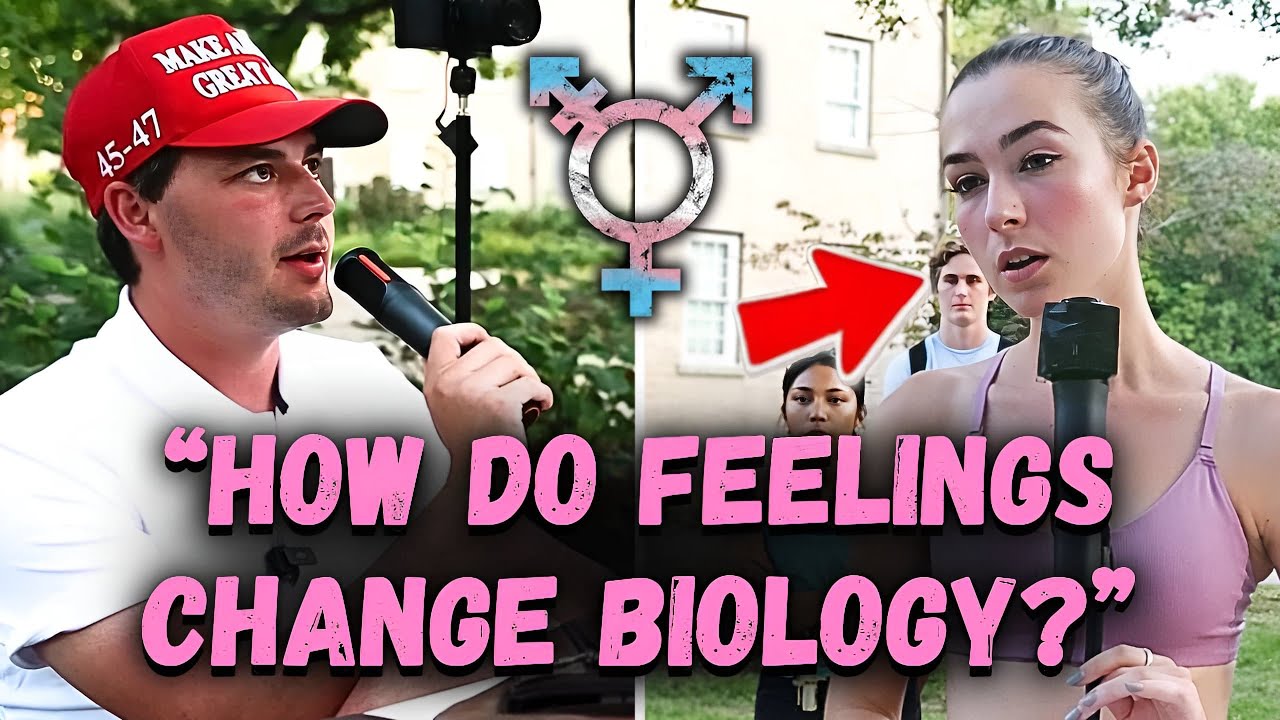
Matt Walsh Challenges Transgender Questioner on Defining Womanhood in New Mexico Event Exchange
8:26
Riley Gaines Tells Senate Committee About Being Held Hostage for Three and a Half Hours at San Francisco State University
6:51
Michael Knowles Debates 20 LGBTQ Activists on Marriage, Transgenderism, and Social Contagion in Heated Surrounded Episode
1:40:23
There Is No Such Thing as a Transgender Child: Chris Elston On Five Years Fighting Gender Ideology
After thousands of conversations on university campuses, with medical professionals, and at conferences worldwide, one activist stands firm on a controversial claim: transgender children do not exist. Chris Elston's examination of what has been called the greatest child abuse scandal in modern medicine challenges the practice of gender-affirming care, which uses puberty blockers, cross-sex hormones, and surgeries on minors. Through analysis of materials from gender clinics, including Boston Children's Hospital, this exploration questions whether normal childhood behavior, like playing with certain toys or refusing haircuts, has been medicalized into evidence of being "born in the wrong body." The core argument: children are being taught to hate themselves rather than accepting that there's no wrong way to be a boy or girl.
The Mission Against Modern Medicine's Biggest Scandal
For over five years, one individual has dedicated their life to raising awareness about what they describe as the greatest child abuse scandal in modern medicine. The practice known as gender-affirming care involves attempting to change the sex of children through puberty blocking drugs, opposite-sex hormones, and surgeries—all based on the concept that these children are transgender.
The central claim is bold and controversial: there is no such thing as a transgender child. Despite thousands of conversations on university campuses worldwide, at conferences, and with psychologists, psychiatrists, doctors, and major conservative organizations across the West, not one person has been able to provide a satisfactory answer to a simple question: What does it mean to be transgender? What does it mean to have a gender identity?
The Message We're Sending Our Children
The positive message society should send children is that they're beautiful just as they are. Instead, the current cultural narrative tells them they were born wrong and need to change their bodies. The only thing being affirmed in children, according to this perspective, is self-hatred.
Understanding which children are identifying as transgender and what type of children are going to gender clinics—and what's being done to them there—requires examining the foundational concepts of gender ideology itself.
The Genderbread Person: Defining Gender Ideology
One of the most widely used resources in the world for defining terms surrounding gender ideology is called the Genderbread Person, produced by an activist. This educational tool presents a framework where everyone exists on a scale of "womanness" or "manness," with gender identity based on personality, job, hobbies, likes, and dislikes.
Critics argue this represents a regressive and sexist way to understand gender. What does someone's job have to do with their gender? What do hobbies have to do with gender? Should little boys who enjoy baking with their mothers in the kitchen be told this places them on the female spectrum of gender? Should girls who don't want to wear dresses, prefer short hair, and enjoy playing sports with boys be told this makes them boys?
More than half of girls growing up in North America are what would traditionally be called tomboys. Many simply find it more fun. The reality is that girls don't have to wear dresses to be girls. The positive message children should receive is that there's no right or wrong way to be a boy or a girl. If a boy is more feminine, he's not trans—he's just a boy.
Teaching Children to Hate Their Bodies
Gender ideology has emerged and taught children that if they don't conform to stereotypes, they might be transgender. They might have been born in the wrong body. The proposed solution is to place them on drugs that have never been approved for this purpose.
Children are being given chemical castration drugs—the same medications used on sex offenders. These drugs are given to pedophiles and, in certain states and even in Canada, have been required for pedophiles to be eligible for parole. The same drug is now called a puberty blocker.
What Are Puberty Blockers?
These medications are gonadotropin-releasing hormone analogues. They stop the pituitary gland from releasing luteinizing hormone and follicle-stimulating hormone, which are responsible for the generation of sex hormones at the onset of puberty. Girls naturally develop estrogen, while boys produce testosterone. These hormones cause the development of secondary sex characteristics—all the changes that happen during puberty.
Boys get stronger, develop deeper voices, and grow facial and body hair. Girls develop breasts and their hips widen. While children are on these drugs, none of these secondary sex characteristics develop.
The rationale is that children need to be kept looking neutral because if they develop into men or women, it will make it harder for them to pass as the opposite sex when they're adults.
Evidence From Gender Clinics: Boston Children's Hospital
Dr. Jeremi Carswell serves as director of the Gender Multispecialty Service at Boston Children's Hospital, the first gender clinic that opened in the United States in 2007. In videos produced by the clinic, Dr. Carswell explains what it means to be transgender from their clinical perspective.
According to Dr. Carswell, a child will often know they are transgender from the moment they have any ability to express themselves. Parents frequently report they knew from the minute their child was born. The signs cited include:
Refusing to get a haircut
Trying to stand to urinate or refusing to stand to urinate
Trying on siblings' clothing
Playing with "opposite gender" toys
Dr. Carswell also describes an increasingly common group of adolescents who realize they might be trans or gender diverse later in life. These young people report they always knew something was "off" but didn't have the understanding to know they might be trans or have a different gender identity than the one they were assigned at birth. This growing population is now being recognized as trans and eligible for treatment.
Normal Childhood Behavior Medicalized
The implications are striking. If a child plays with opposite-gender toys, they might be trans and eligible for treatment. If a little girl tries to pee standing up or a boy tries to pee sitting down, they might be transgender.
Consider the reality of childhood development: If a little girl has three big brothers, she's naturally going to try to pee standing up because that's what she sees them doing, and it might look fun. They're children exploring their world. If children try on siblings' clothing, this is also presented as a potential sign of being transgender. Yet a little boy with three big sisters will inevitably be included when they play dress-up with their baby brother.
When doctors who have adopted this ideology encounter these normal childhood behaviors, they teach parents that this natural play is a sign their child is transgender and can be treated. Gender clinics are seeing patients as young as three years old, where they begin socially transitioning them with new names and pronouns.
The Greatest Lie Ever Told
This represents what some consider one of the greatest lies ever told in human history. Normal childhood behavior—curiosity, play, and exploration—is being reinterpreted through an ideological lens that pathologizes non-conformity to gender stereotypes. Rather than celebrating that children can express themselves in diverse ways while remaining secure in their biological sex, the current approach suggests their bodies are wrong and need medical intervention.
The fundamental question remains unanswered after thousands of conversations: What is a transgender child? Without a clear definition that doesn't rely on sexist stereotypes about what boys and girls should like or how they should behave, the entire framework collapses. Children deserve better than being taught to hate their healthy bodies. They deserve to be told they're perfect exactly as they are.