Agent Davis Details Tyler Robinson's Arrest, Evidence Collection, and Search Warrant Execution in Utah Investigation
Enjoying this? Share it with someone who needs to see it.
Up Next
Court Hearing Addresses Media Access, Publicity Orders, and Preliminary Hearing in State of Utah versus Tyler James Robinson
1:16:14
Court Hearing on Conflict of Interest in Charlie Kirk Assassination Case Involving Tyler Robinson
25:40
Defense Questions DNA Evidence in Tyler Robinson Murder Case at Utah Valley University
2:26
Agent Davis Details Tyler Robinson's Arrest, Evidence Collection, and Search Warrant Execution in Utah Investigation
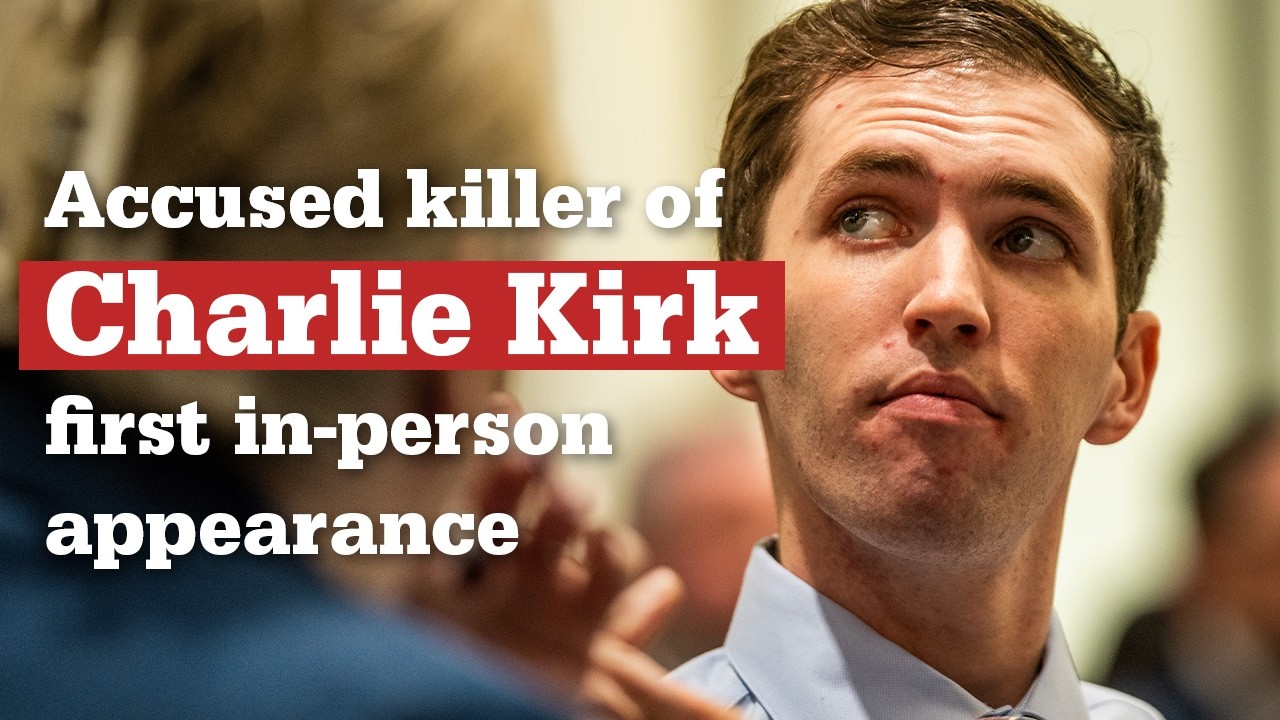
Agent Davis provides detailed testimony about Tyler Robinson's arrest in Washington County on September 12th and subsequent transport to Utah County Jail. The testimony covers the timeline of Robinson's booking at 8 a.m., the seizure of his cell phone and clothing as evidence, and the execution of search warrants at two residences in southern Utah, Robinson's own home and his parents' residence. Davis also describes how family friend Mike Mitchell facilitated Robinson's surrender and later provided a handwritten statement to prosecutors and law enforcement in March at the St. George courthouse, clarifying that Mitchell wrote his account independently without direction from authorities.
Agent Davis testified about observing Tyler Robinson on video surveillance, identifying his distinctive clothing: a dark-colored baseball cap with what appeared to be a white Herie symbol, a burgundy short-sleeve shirt without graphics, blue jeans, and gray and white Converse-style tennis shoes. Robinson was arrested in the early hours of September 12th by the Washington County Sheriff's Office.
Rather than remaining in Washington County custody, Robinson was transported to the Utah County Jail. The transport occurred in the early morning hours, with the group arriving at approximately 7 a.m. on September 12th. Robinson was formally booked into the facility at 8 a.m. that same morning, with Agent Davis serving as the booking officer.
Evidence Seizure and Collection Process
Prior to Robinson's arrival at the Washington County Sheriff's Office, law enforcement had already seized his cell phone. This was the only personal item taken from him at that initial location. However, after his transport to Utah County Jail and following the issuance of a search warrant, additional evidence was collected from Robinson's person.
The items collected included all of Robinson's clothing, buccal swabs for DNA collection, and what Agent Davis described as "major case prints"—comprehensive fingerprint documentation that includes not just fingerprints but palm prints and essentially prints of the entire hand. As booking officer, Agent Davis was responsible for completing all necessary paperwork, which included the individual's personal identification information, the charges being filed, and the probable cause statement, all of which was signed and submitted into the system.
Search Warrant Execution at Two Residences
Agent Davis confirmed that search warrants were obtained for two locations in southern Utah: Tyler Robinson's personal residence and his parents' residence. Both warrants were executed on September 12th, though at different times and by different investigative teams.
The search of Tyler Robinson's residence began at approximately 8 a.m. and was led by Sergeant Faumuina with the State Bureau of Investigation (SBI), working in conjunction with the Utah State Crime Lab. Robinson's residence was shared with another individual named Lance Twiggs at the time of the search.
The search of Robinson's parents' residence commenced later that same day, beginning around 4 p.m. This warrant was executed by an FBI Evidence Response Team. Agent Davis was not physically present at either location during the execution of these warrants, but he received information from officers involved about what had been discovered. The specific details of those findings were reserved for testimony from Sergeant Faumuina.
Mike Mitchell's Role and Statement Collection
Agent Davis identified Mike Mitchell as a close family friend of the Robinsons who played a facilitation role in the investigation. Mitchell helped coordinate between Tyler Robinson, his parents, and the sheriff's department to arrange for Robinson's surrender to authorities.
Law enforcement conducted an initial interview with Mitchell in the early morning hours of September 12th at the Washington County Sheriff's Department. This interview was conducted by Agent Terry with SBI and Agent Smith with the FBI. Agent Davis was not present for this initial interview.
A second interaction with Mitchell occurred several months later on March 31st of the following year. This meeting took place at the St. George courthouse and involved Ryan McBride, Chad Grunander, and Kimberly Derler from the Utah County Attorney's Office, along with Agent Chris Terry from SBI. Agent Davis was again not present but communicated with Agent Terry about what transpired.
Collection of Mitchell's Written Statement
During the March 31st meeting at the St. George courthouse, Mike Mitchell was provided with an official 1102 form—a type of statement form that includes a printed admonition warning that the information provided must be true and accurate to the best of the person's knowledge. The form also warns that any false statement could be punishable as a class A misdemeanor.
Ryan McBride from the Utah County Attorney's Office verbally provided this admonition to Mitchell before he completed the form. After a brief general discussion about the situation, Mitchell was given the handwritten 1102 statement form and went into a separate office by himself. He spent approximately one hour alone in that office writing his statement.
When Mitchell completed his statement, he returned to the room where the prosecutors and Agent Terry were waiting and provided them with the completed form. Agent Davis emphasized, based on his conversation with Agent Chris Terry and review of Terry's report, that no one—neither prosecutors nor law enforcement—directed Mitchell about what to say or what to include in his statement. Mitchell composed his account independently during his time alone in the separate office.