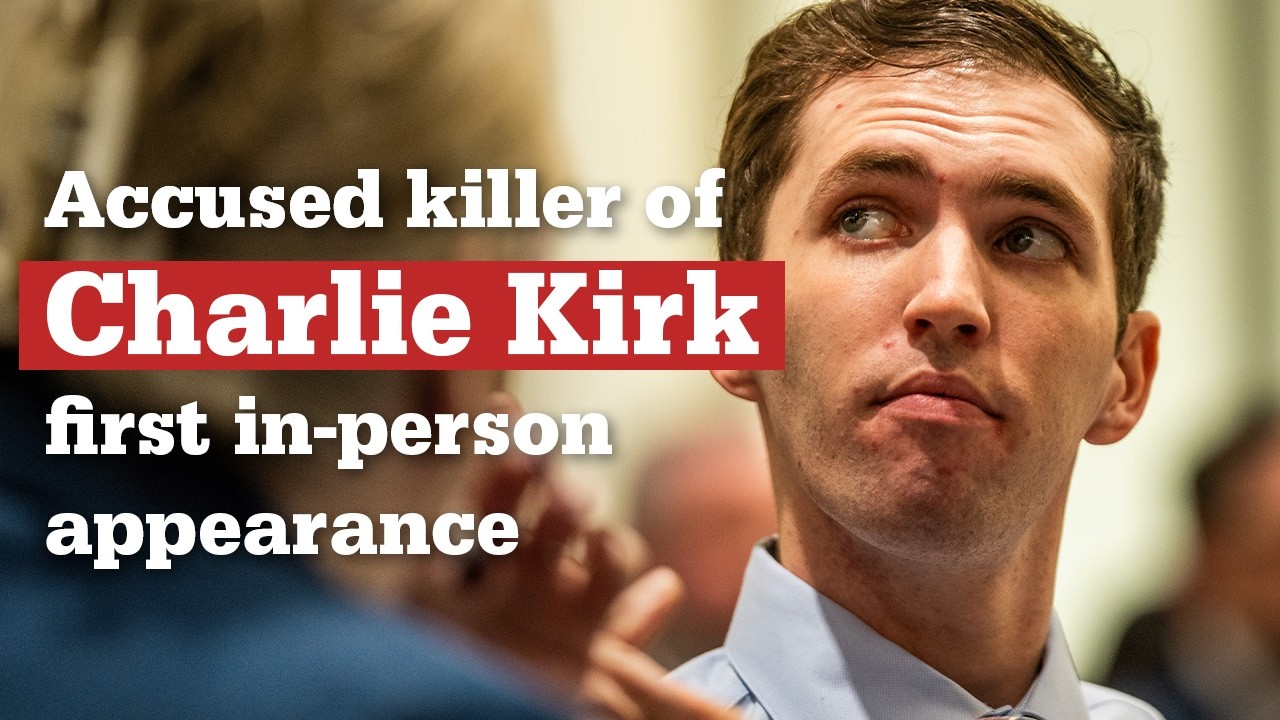
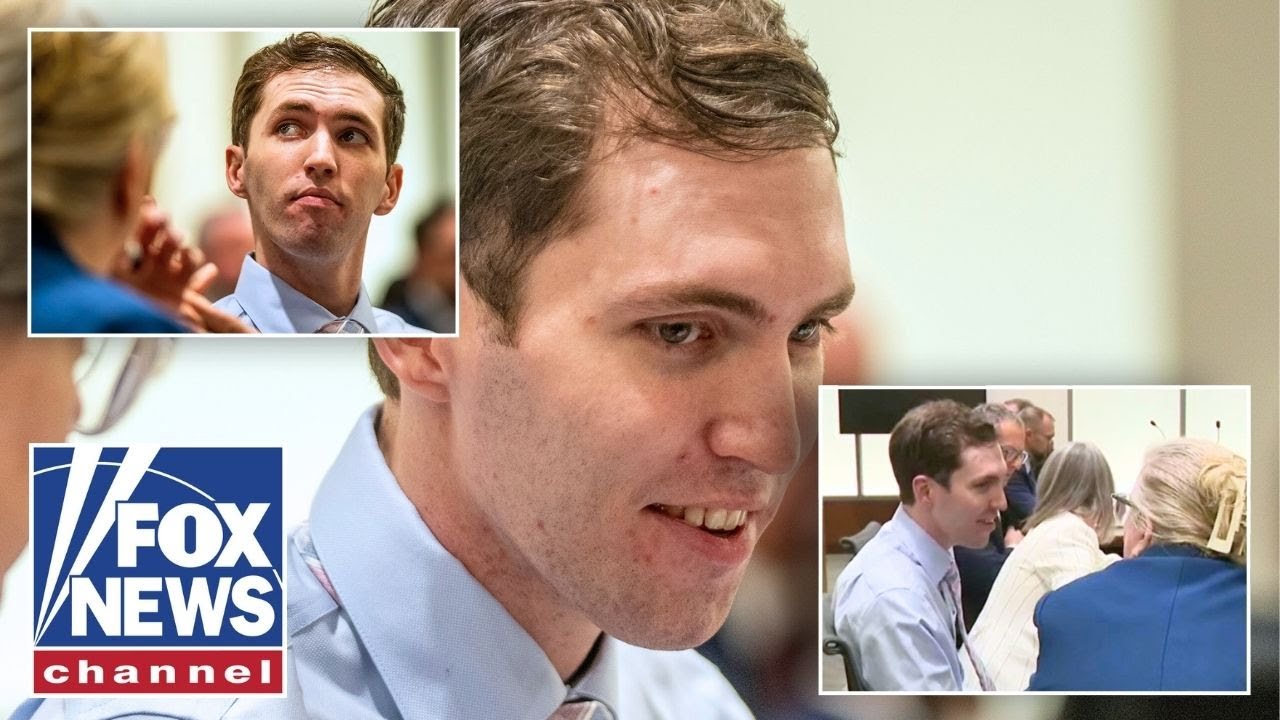
Court Hearing on Conflict of Interest in Charlie Kirk Assassination Case Involving Tyler Robinson
Enjoying this? Share it with someone who needs to see it.
Up Next
Defense Questions DNA Evidence in Tyler Robinson Murder Case at Utah Valley University
2:26
Utah Court Holds Closed Hearing on Sealed Records in State Versus Tyler James Robinson Case
5:12
Brian Entin Reports From Inside First Court Appearance of Tyler Robinson Accused of Assassinating Charlie Kirk
26:32
Court Hearing on Conflict of Interest in Charlie Kirk Assassination Case Involving Tyler Robinson
A court hearing unfolds examining whether the Utah County Attorney's Office faces a conflict of interest in prosecuting Tyler Robinson for the alleged assassination of Charlie Kirk. The defense argues that a prosecutor's family member witnessed the shooting at a Turning Point USA event while standing just five feet from Kirk, creating an inherent conflict. The judge must determine whether this relationship warrants transferring the case to the Attorney General's office or if the prosecution can proceed as planned.
Court Examines Prosecutor Conflict in Kirk Assassination Trial
The courtroom proceedings resumed in the case against Tyler Robinson, accused of assassinating Charlie Kirk during a Turning Point USA event. At the center of the hearing was a critical question: does the Utah County Attorney's Office have a conflict of interest that prevents them from prosecuting the case?
According to court documents and arguments, a family member of one of the prosecutors was present among 3,000 attendees at the Turning Point USA event when Charlie Kirk was shot and killed. The prosecutor disclosed that this family member texted almost immediately after the incident, stating they heard the gunshot and ran with the crowd. Further investigation by the prosecutor determined the family member was positioned just five feet away from Charlie Kirk when he was shot.
Defense Arguments for Disqualification
The defense team argued that the proximity of the prosecutor's family member to the shooting creates a significant conflict of interest under Rule 1.7. Defense counsel emphasized that the issue extends beyond the mere transactional event of witnessing the shooting. They highlighted the emotional impact such an experience would have on any parent, drawing a parallel to a recent shooting incident at Brown University and the natural family response to ensure loved ones are safe.
The defense attorney explained that the family member was caught up in the ensuing chaos, heard shots fired, had to leave belongings behind, and witnessed the trauma of other people. The defense argued that families naturally discuss such traumatic events, and that the limited text message evidence provided by the prosecution likely doesn't capture the full extent of communications between the prosecutor and their family member about the incident.
Defense counsel emphasized this was not a frivolous motion filed for tactical purposes or delay, but rather a real potential conflict that warrants careful consideration given the serious nature of the case and its consequences for Robinson, the people of Utah, and the victim's family.
Prosecution's Response
The prosecution countered that the defense must first make a threshold showing of a conflict before the court can consider transferring the matter to another entity like the Attorney General's office. They argued that without requiring such a showing, anyone could claim a conflict exists without credible evidence, leading to unnecessary hearings.
The state maintained that they don't believe any conflict exists that would require the case to be transferred out of the Utah County Attorney's Office. They argued that until a conflict has been formally found by the court, the County Attorney's Office should be able to litigate the conflict issue itself without conflicting out.
The prosecution suggested the court should be able to make the threshold determination based on the affidavits and facts already presented in the briefing, rather than requiring witness testimony at this preliminary stage.
The Court's Threshold Question
The judge focused on a critical preliminary issue: whether the defense had made a sufficient showing based on the briefing alone to warrant either transferring the conflict determination to the Attorney General's office or proceeding to an evidentiary hearing. The judge explained that before taking further steps, there must be a showing that a conflict of interest actually exists.
The court sought to understand whether the parties believed witness testimony was necessary to make this threshold determination, or whether the written submissions were sufficient. The defense indicated they had witnesses under subpoena, including both the prosecutor and their family member, prepared to testify if the court deemed it necessary.
Evidentiary Hearing Considerations
Significant discussion centered on whether an evidentiary hearing was necessary and at what stage. The defense argued that if the court didn't believe the papers themselves sufficiently demonstrated the need for different representation on the motion, then testimony should be heard. Defense counsel expressed concern about having the Utah County Attorney's Office represent the state while simultaneously having two members of their prosecution team serve as witnesses in the same hearing.
The defense emphasized they only have access to the limited information provided by the prosecution—primarily a memo and some text messages. To fully develop the factual record regarding the scope and impact of the conflict, they argued that witness testimony was necessary. They wanted to explore additional non-recorded communications between family members that may not have been disclosed, as well as the emotional and professional impact of having a family member witness such a traumatic event.
The state countered that requiring two separate hearings—one to determine who handles the conflict allegation, and another to determine if a conflict actually exists—would be inefficient and unnecessary if the defense hasn't first made a sufficient showing in their briefing.
The Judge's Ruling on the Threshold Issue
After hearing extensive arguments from both sides, the judge issued a preliminary ruling on the threshold question. The court stated: 'I don't believe a sufficient showing has been made for the court relying on the briefing itself. So I can't make that finding based off of—well, I would find that threshold showing hasn't been met based off the briefing.'
Following this ruling, the defense indicated their position that if the briefing doesn't yet rise to the level of proof needed for the court to make a referral to the Attorney General, then the court should begin taking evidence. Defense counsel suggested there might be a point during testimony where the court determines it has heard enough to make a referral, at which point proceedings could pause to await Attorney General engagement.
The defense emphasized their desire to avoid conducting the evidentiary hearing twice—once with the County Attorney's Office representing the state, and potentially again if it's later determined they should have been conflicted out from the beginning.
Witness Plans and Court Inquiry
When the judge inquired whether the threshold showing could be accomplished by proffer rather than live testimony, defense counsel stated they could not, as they didn't know what the witnesses would say. They noted that witnesses had only provided very limited information, and that much of what the state asserted in their briefing was not sworn by affidavit or declaration.
Defense counsel explained they had numerous questions that weren't addressed in the briefing and affidavits. The first witness they intended to call was the prosecutor whose family member witnessed the shooting. As the defense was about to elaborate on their witness plans, counsel requested to approach the bench, at which point the transcript ended.