Angenette Levy and Dr. Daniel Bober Explore What Drove Tyler Robinson to Kill Charlie Kirk
Enjoying this? Share it with someone who needs to see it.
Up Next
Charlie Kirk Assassination Sparks National Crisis: NewsNation Reports From Utah Valley University Crime Scene
38:28
Brandon Tatum on Charlie Kirk's Murder: The Radical Left's Indoctrination Has Gone Too Far
22:38
Angenette Levy Investigates the Assassination of Charlie Kirk and Suspect Tyler Robinson's Radicalization
25:29
Angenette Levy and Dr. Daniel Bober Explore What Drove Tyler Robinson to Kill Charlie Kirk
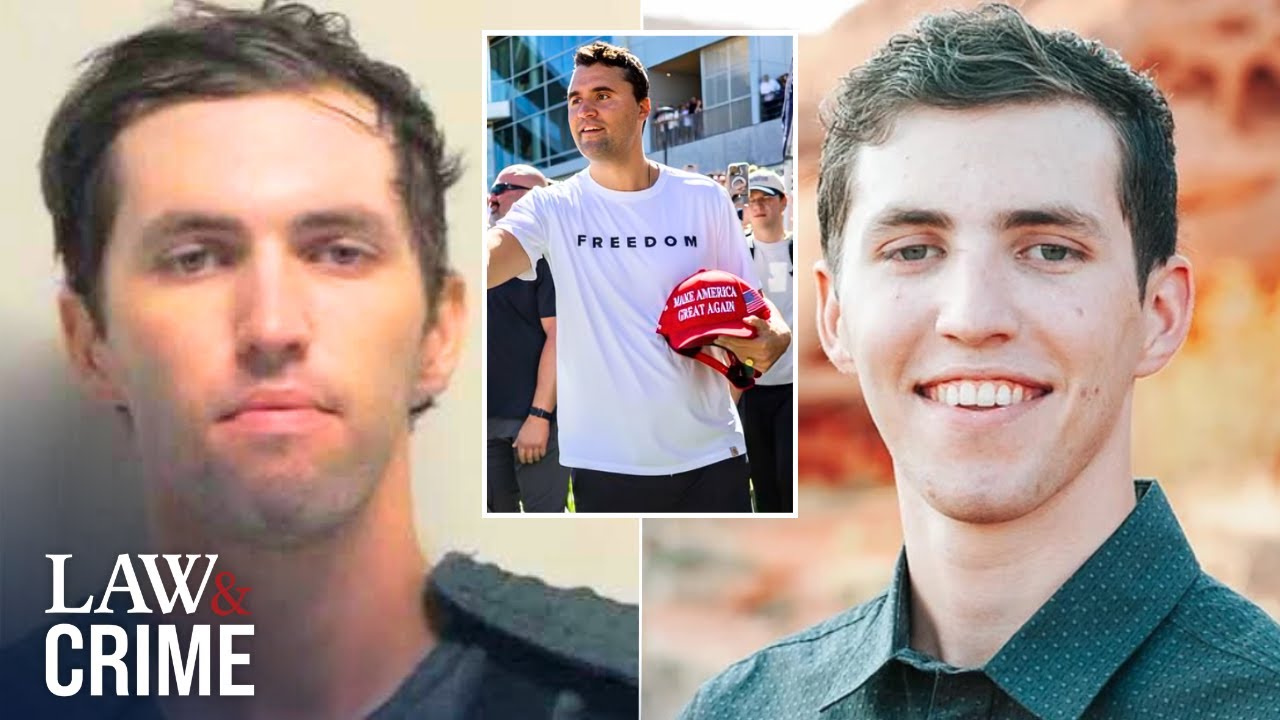
Crime Fix host Angenette Levy revisits an old recording of Tyler Robinson reading aloud a $32,000 college scholarship letter to his mother years before he was charged with the aggravated murder of Charlie Kirk, using it as a starting point to ask what happened in between. Retired FBI agent Ed Jacobson walks through how the 33-hour manhunt unfolded, from the all-hands-on-deck scramble to gather video and witness statements to the deeper forensic work that began only after Robinson's arrest. Forensic psychiatrist Dr. Daniel Bober offers a clinical framework for understanding how someone moves from holding extreme political views to committing actual violence, arguing that radicalization alone rarely explains an act like this and that personal stressors, isolation, or a private crisis likely played a role. The conversation also digs into the anti-fascist and internet-meme inscriptions found on the recovered ammunition, Robinson's unexplained leave of absence from Utah State University after one semester as a pre-engineering student, and competing online theories about whether his politics actually leaned left or right.
A Scholarship Recording Resurfaces After Tyler Robinson's Arrest
Angenette Levy opens with an old recording of Tyler Robinson reading a scholarship acceptance letter aloud to his mother years earlier.
"Congratulations. You have been selected to receive the resident presidential scholarship from Utah State University," Robinson says in the clip, describing a roughly $32,000 award covering four years of tuition. Levy contrasts that moment with the 22-year-old now facing an aggravated murder charge in Charlie Kirk's assassination at Utah Valley University in Orem.
How the 33-Hour Manhunt Unfolded
Retired FBI agent Ed Jacobson describes the scale of the response once Kirk was shot in front of a crowd of thousands.
"When it's all hands on deck, it is exactly that, the full resources of not just the FBI... anybody, any of the federal agencies out there, all jump in as much as they can," Jacobson says, describing teams gathering surveillance footage and witness interviews simultaneously with teams reviewing that material to build toward probable cause for an arrest.
Now Is When You've Got to Start Really Digging
Jacobson explains that an arrest is only the beginning of the deeper investigative work.
"Now is when you've got to start really digging into every bit of evidence out there," Jacobson says, noting investigators will scrutinize Robinson's electronics, history, and movements, not necessarily to understand motive in a psychological sense, but to prove the case beyond a reasonable doubt. "You may never know the full details of what's going on in his mind... we just need to be able to put forth enough evidence to get a conviction."
The Shell Casing Inscriptions
Levy details the messages investigators say were engraved on ammunition recovered with a Mauser Model 98 bolt-action rifle, chambered in .30-06 and fitted with a scope, found wrapped in a towel near campus. One fired casing read, "Notices bulges, oh, what's this?" Unfired casings read, "Hey, fascist, catch," a reference to the Italian anti-fascist song "Bella Ciao," and a crude joke reading, "If you read this, you are gay, LMAO."
A Straight-A Student Who Took a Leave of Absence
Levy notes that Robinson was once a standout student, with a 4.0 GPA in high school and a 34 out of 36 on the ACT, placing him in the 99th percentile. He attended Utah State University as a pre-engineering student for one semester in the fall of 2021 before taking a leave of absence the university could not explain due to federal privacy law.
"There's the missing piece, right? Something happened there that we don't know," Levy says.
Dr. Daniel Bober on the Psychology of Radicalization
Forensic psychiatrist Dr. Daniel Bober offers a clinical framework for evaluating cases like this, pointing to predisposing factors such as narcissistic or antisocial traits and family mental health history, precipitating factors like political radicalization or acute personal stressors, and perpetuating factors like social media echo chambers and isolation.
"Anger is the beginning. Violence doesn't start with anger. It starts where grievance meets justification," Bober says, cautioning that most people exposed to extreme political content never become violent. "In my clinical experience, the people that spread the most hate are often the ones that love themselves the least."
Comparisons to Bryan Kohberger and Luigi Mangione
Levy draws parallels between Robinson's case and those of Bryan Kohberger and Luigi Mangione, pointing to the apparent premeditation, attempts to disguise his appearance by changing clothes, and the use of Discord, where Robinson allegedly discussed the plan with his roommate. "This is not something that he woke up one morning and decided to do," Levy says.
Competing Theories About Robinson's Politics
Levy and Bober discuss conflicting accounts of Robinson's political leanings, noting his family's conservative, LDS, pro-Trump background, alongside online speculation that he may have associated with the far-right "groyper" movement, even though the released affidavit points toward leftist motivations. Bober raises the possibility that the political framing could be a red herring.
"Maybe all of this is a distractor... maybe it's something very simple, the loss of a job, some kind of personal rejection, and he was looking for some kind of toxic outlet for his feelings, and he adopted this ideology to feel empowered," Bober says.
What's Missing From the Picture
Levy closes by returning to the unanswered question of what happened during Robinson's unexplained departure from Utah State University, calling it central to understanding his shift from a high-achieving student to a murder suspect.
"It just seems like we've got a major difference in where he is... why this social drift? Something doesn't make sense," Levy says.








Comments
Be the first to comment on this video.