Bill O'Reilly Analyzes Public Reactions Following Charlie Kirk Assassination in Utah
Enjoying this? Share it with someone who needs to see it.
Up Next
Winston Marshall on the Assassination of Charlie Kirk and What It Reveals About America
8:23
Bill O'Reilly Confronts Rising Evil in America After Charlie Kirk Assassination and Putin's Global Threat
24:46
Nick Shirley Reveals He Was Charlie Kirk's Last Guest Before Assassination in Utah
9:11
Bill O'Reilly Analyzes Public Reactions Following Charlie Kirk Assassination in Utah
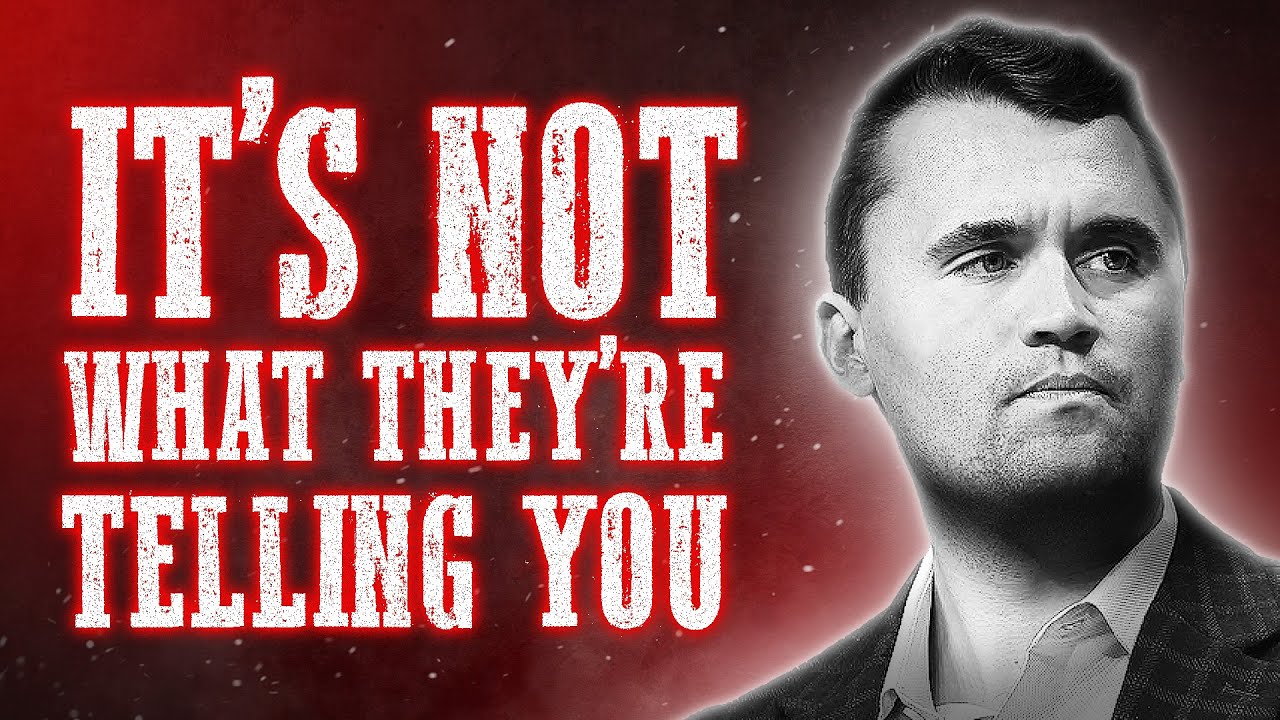
Bill O'Reilly examines the troubling reactions from prominent figures following the assassination of Charlie Kirk in Utah. He dissects false claims spread by Harvard Law Professor Lawrence Tribe, author Stephen King, and NBA writer Gerald Borquet, highlighting how ideological bubbles led to spreading misinformation and inappropriate responses. O'Reilly explores how evil spreads beyond the immediate victim, devastating both Kirk's family and the assassin's own family in St. George, Utah. He argues that celebrating political violence or justifying murder crosses fundamental lines of human decency, regardless of political beliefs. O'Reilly emphasizes the importance of waiting for facts before making public statements and criticizes those who live in ideological echo chambers that prevent them from responding appropriately to tragedy.
Bill O'Reilly opens his analysis of the Charlie Kirk assassination by addressing the broader impact of this violent act. While the justice system will handle the alleged assassin, who O'Reilly believes Utah will eventually execute, the ripple effects of this evil extend far beyond the immediate crime. Kirk's assassination destroyed not only his own family—leaving behind a young widow and two small children—but also devastated the assassin's family. The killer's parents and two brothers, living in the small community of St. George, Utah near the Grand Canyon, will never be the same.
President Trump mentioned the traditional family unit of the assassin's family and how their lives have taken a dramatic turn for the worse. This illustrates O'Reilly's central point: evil always spreads unless confronted. The tentacles of this violent act reach into multiple families and communities, forever altering countless lives.
Living in Ideological Bubbles
O'Reilly notes that most Americans live in comfortable bubbles, surrounding themselves with people who agree with them and consuming content that reinforces their existing beliefs. He positions himself as an exception—someone who must see what everyone is doing and saying. As a registered independent and self-described problem solver rather than an ideological figure, O'Reilly instructs his staff to send him a wide array of opinion and analysis from all sides.
This bubble mentality, he argues, is what led to the troubling reactions from prominent figures following Kirk's assassination. O'Reilly wrote his new book, "Confronting Evil," specifically to burst these bubbles and address what happens when people refuse to step outside their ideological comfort zones.
Harvard Law Professor's False Claims
O'Reilly highlights Lawrence Tribe, a Harvard Law professor with a master's degree from the same institution, as a prime example of bubble thinking gone wrong. Tribe, described as a very anti-Trump liberal who has been at Harvard forever with tenure, made a shocking statement on social media immediately following Kirk's assassination. He claimed that "Kirk's apparent assassin seems to have been ultra MAGA, exploiting the GOP MAGA attempt to pin the blame for this tragedy on liberals."
This statement from a Harvard law professor proved to be 100% inaccurate and wrong. Tribe eventually deleted it and apologized, though O'Reilly dismisses the apology as gibberish. The fundamental problem, O'Reilly explains, is that everyone in journalism, law, or related fields knows you must wait until facts emerge before making public statements. You don't engage in knee-jerk reactions based on unverified internet information. But Tribe won't pay a price for his false statement because he wanted to believe it was true, which is why he put it out there in the first place.
Stephen King's Misinformation
Author Stephen King, described by O'Reilly as a brilliant writer who has made a fortune through capitalism with his horror novels, represents another case of ideological bubble thinking. King is positioned as way out on the left flank, which is his perfect right as an American. However, he inserted himself into the Kirk situation by claiming that Charlie Kirk advocated stoning gay people—a statement that is not true.
King picked up this false information from some website and later apologized after being called out. O'Reilly argues that King should know better, but like Tribe, he lives in an ideological bubble where he feels comfortable with other far-left people and wants to feed that monster. King doesn't need the money anymore given his wealth, but he has hurt himself dramatically among the American people, even among moderate liberals. As O'Reilly puts it, when a man gets killed and his family is devastated, making false claims that he wanted to stone gays won't be supported by anyone except the real lunatics who will accept anything that makes the other side look bad.
NBA Writer Fired for Vile Response
Gerald Borquet, an NBA writer for the Phoenix Suns who O'Reilly had never heard of before, threw out what O'Reilly considers the most vile response. Borquet wrote: "If you're saddened by today's political violence, horrified by the video, repulsed by my response. Ask yourself why your reaction was different when it came to school shootings, mass deportations, or hundreds of videos of horrific murders in Gaza, which Kirk cheered on."
O'Reilly points out that Kirk did not cheer on murders in Gaza, and that such claims would need to be specific to be taken seriously. Borquet, another bubble person, did not apologize. The Phoenix Suns and the NBA fired him because such statements are unacceptable, particularly right after someone loses their life. The statement essentially justified a violent murder, which O'Reilly identifies as the core problem with all three cases: justifying the assassination of a fellow human being.
Standards for Celebrating Death
O'Reilly establishes clear boundaries for when celebrating a death might be acceptable: only in cases of figures like Hitler, Stalin, or Mao—mass murderers whose removal from the world represents an objective good. But celebrating the murder of a 31-year-old with a family crosses every line of human decency. O'Reilly believes that anybody trafficking in this kind of behavior is emotionally ill.
He emphasizes that he doesn't know anyone who would celebrate an assassination like this. While he knows many people with various political beliefs, his high standards about who he associates with cut down on the lunatic fringe in his life. Among the thousands of people he knows, not one would celebrate such a tragedy.
A Call for Facts and Common Sense
O'Reilly concludes by reiterating that he is not ideological, despite left-wing press attempts to brand him as such for 30 years. He positions himself as focused on giving people facts and common sense, trying to do what's best for the country. His coverage on billoreilly.com aims to provide the best analysis without ideological bias, offering viewers a perspective grounded in problem-solving rather than partisan loyalty.
The Charlie Kirk assassination serves as a case study in how ideological bubbles prevent people from responding to tragedy with basic human decency and factual accuracy. When prominent figures at the highest levels—Harvard law professors, bestselling authors, professional sports writers—can immediately spread false information or justify violence because it fits their preferred narrative, society faces a fundamental problem that transcends normal political disagreement.