The Troubling Reality of Celebrating Political Violence: Reflections on Dehumanization and Society's Moral Compass
Enjoying this? Share it with someone who needs to see it.
Up Next
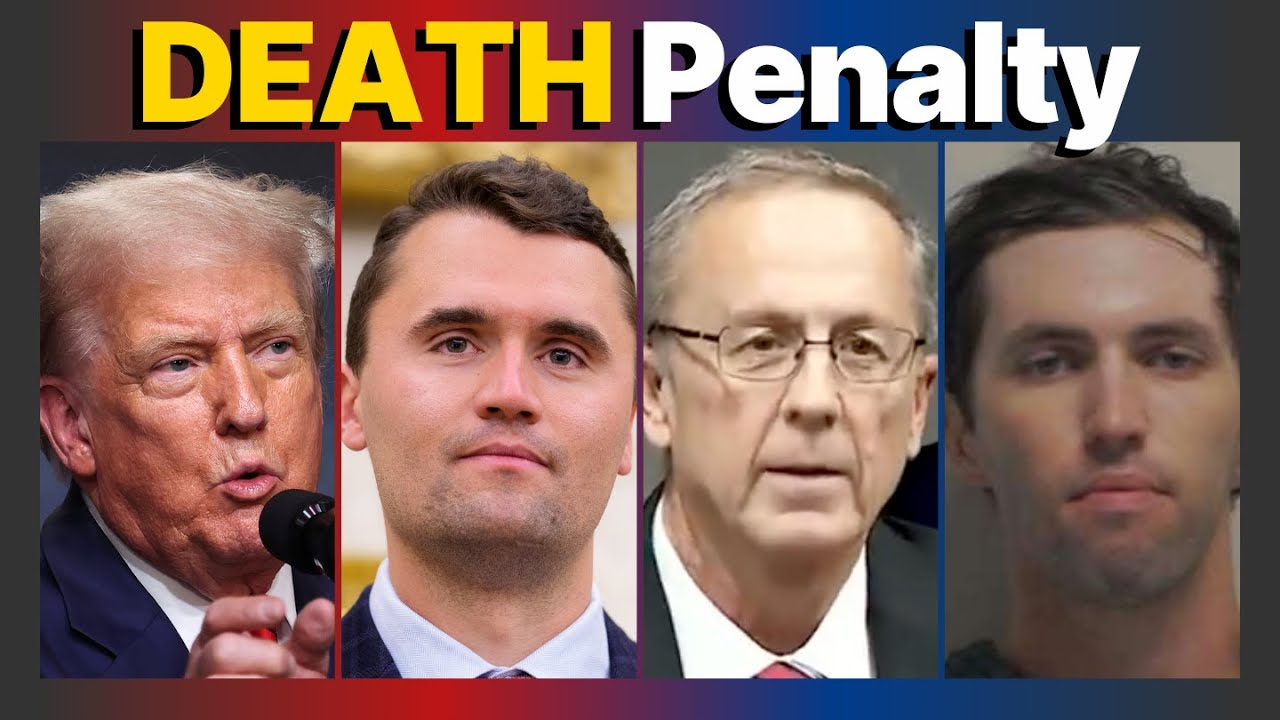
Dave Rubin Confronts Those Who Justified Charlie Kirk's Murder and the Profiteers of His Death
6:17
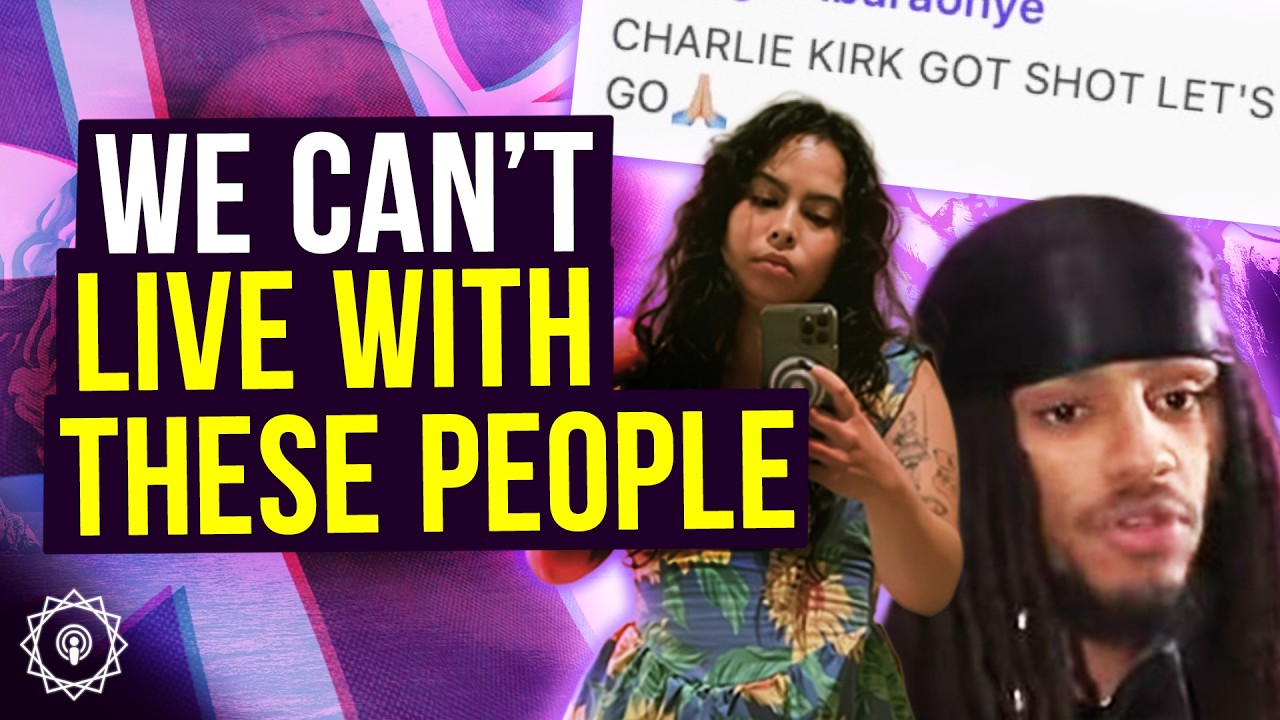
British Commentators Lotus Eaters React to Charlie Kirk Assassination and the Disturbing Celebration of Political Violence
27:10
That Star Wars Girl Speaks Out on the Assassination of Charlie Kirk and Murder Celebration Culture
14:36
The Troubling Reality of Celebrating Political Violence: Reflections on Dehumanization and Society's Moral Compass
Mike Ritland and Julian Dorey examine the public response to a politically motivated shooting, exploring how celebration of violence reveals a dangerous dehumanization across political divides. Drawing parallels between combat veterans' attitudes toward enemy casualties and civilians cheering political opponents' deaths, the discussion unpacks what it means when Americans begin viewing each other as mortal enemies. The exchange also contrasts social media hostility with real-world civility, questioning how society arrived at this moment and what kind of leadership could restore emotional stability to a fractured nation.
What bothered me the most about it was the reflection of our society that I saw in the fact that it happened and more importantly the response to it happening, where people are laughing and celebrating it and cheering that happened. And so in my same fashion, I kind of always plinko game my emotions down to finding the root cause of, you know, okay, well, this is what I'm feeling. It's because of this. Well, okay, but why? Because of that, you know, and I find myself kind of funneling it down to trying to come up with the most basic premise of where that emotion's coming from.
What I kept realizing is that, you know, because you've had a number of the same guests that I've had on that are combat veterans. And I would ask you, have there been stories where, you know, decorated combat veterans sitting in this chair have shared a story about operations that were successful where they're taking enemy combatant lives and they were kind of laughing and celebrating the fact that they did that. Did you ever?
I don't think I've ever encountered that. No. Were they celebrated? No. Never. I have. You know, and I will say that not not in a way where like what I'd seen, you know, on social media where it's like a mockery of it, but where it's being essentially celebrated as, you know, we did this, we killed these four guys and, you know, and it's like, yeah, we got them, you know, kind of like a victorious type of walk down memory lane with it where it's like we're proud that we were victorious on the battlefield and there's a celebration of that victory.
When Political Opponents Become Mortal Enemies
The only time I've ever experienced that is when you're doing that with people who you consider your mortal enemy or people who are also trying to take your life where you're celebrating being the one to come out on top in that environment. So what I found is the most striking was that now there are pockets of our society who are acting in that same way, which tells me again, Plinko gaming it down to the root cause, is that almost by deductive reasoning what that tells me is that there are a subset of our population that views political opponents as mortal enemies.
And to me that was by far the most worrisome aspect of the whole thing is that it made me realize as soon as you dehumanize people, there's really no lower form than that. And if we're at a point in our society where on both sides of the aisle in a lot of ways we're considering our political opponents mortal enemies where we're cheering someone's death because of the things that they say that we disagree with, the reflection of our society that that has is catastrophic. Um and that's what made me worry the most about it.
The Problem With Celebration
I'm with you. I think the celebration was gross. And by the way, when you asked me about, you know, have I had the guys in here celebrating killing terrorists, like celebrate's a strong word, and we saw that with the Charlie Kirk thing where there were people like, "Oh, I'm glad he's dead." And saying it just like that. I really haven't had that. But do I have people sit in here in those situations who talk about like, "Yeah, we neutralized that guy. Yeah." And it was awesome. And like say in a very matter of fact way, "Yeah, and I understand that.
And I also completely agree that when you are starting to now see people make no distinction between that type of situation and one of their own citizens simply opening their mouth and saying things that maybe they disagree with, that's an issue. And I saw that right away on social media and that really pained me to see. And then also I did see that formulate an anger on the Charlie Kirk side. Like those people to where then you had people going on social media who would say something and I'm paraphrasing here for example like obviously no one should ever be killed. That's horrible and I'm very sad that happened for his family but I'm not going to sit here and pretend that I agreed with any of his ideas. And then they would list off things they disagreed with.
And you would have people on the right side trying to call up their employers to say he disagreed with Charlie Kirk so fire him from his job. Like two wrongs do not make a right here. You know what I mean? So we have to, people even in a situation like that which is highly charged and emotional and people saw it. It was awful. I mean as a combat veteran like you've seen stuff like that before. The average person is lucky enough to never have to see something like that. People saw that from four different angles.
Moving Beyond the Political Circus
So it is more charged, but I wish people could have been way more reasonable about it. And I wish, you know, unfortunately, it is just the nature of it. He's a political commentator who was gunned down, but I wish we didn't have a situation where it was someone like that because then it makes it, it takes the political aspect of it and exacerbates it and I understand this to a degree of 10 or 100. And that's what we've seen. And sometimes it feels like I don't know now we're 7 weeks, 8 weeks past it, whatever it is. It feels like a lifetime ago, which is crazy.
And you know, I'm like, no disrespect to him at all, but I'm sick of the back and forth on it. It's like we need to have more constructive conversations here. I would like to see more people on the left and right make a priority out of going to debate themselves together civilly, especially on college campuses and stuff like that and lead by example rather than tweeting at each other and hating each other. But I also think we the audience, all of us, we have incentivized the extreme people to say the things that rile us up based on our beliefs and hit the like button on that or comment on it if we dislike it, which pushes all those people into the algorithm and less the people who are like, "Hey, let's cool it." You know?
The Double-Edged Sword of Social Media
Yeah. I think again, I mean, not to always go back to social media being such a double-edged sword, but I think this is a classic example because if you think about the magnitude in terms of the impact, the emotional impact that Charlie being shot had, it seems reminiscent of JFK, you know, kind of a similar heaviness to it happening. I'd be curious. I don't know if there's a way to Google or chat GPT. Did you, you know, was there or did we see any celebratory media responses after JFK was assassinated?
Yeah, we could Google it. I can't think of... My guess is no because I think you'd have seen replays of them over the years. And so to me, that's the thing is that, you know, there were obviously people who didn't vote for him, who didn't like the guy, who disagreed with everything he stood for and thought he was taking the country in the wrong direction. You know, you can dislike somebody and disagree with everything they stand for and think that they're harming the country even with the direction politically they're taking it in and still feel very emotionally sorrowful for them for their lives being taken.
Yes. And to me that's that huge paradigm shift where it's like this dehumanization that we've seen even you know for the last 10 years really. I mean, I would say leading up to the first Trump presidency on both sides is where, at least from my recollection is where you really started to see that. You know, Hillary saying the things that she did, Trump saying the things that he did, and followers of both parties falling in line with that and now doing the same thing.
The Need for a Thermostat Leader
And I think it further highlights the need for a very stoic, very emotionally stable, reserved and emotionally competent leader for the country. Like you need somebody who, and one of my favorite pieces of advice for, and this is for parenting I'll pass along for you when that day comes, is don't be the thermometer, be the thermostat in the room. Like you need a leader who is the thermostat, you know, not reflecting the temperature, who's setting it, you know, and if you don't have that, this is why you have this ridiculous swing on both sides that just, you know, roller coasters or pendulums back and forth and it just keeps upping the ante and getting worse and worse as every year transpires.
Twitter Is Not the Real World
100%. That's great advice. And you know, I've seen people come up to me. I used to talk about this Wawa theory where I would go to the Wawa and I'd see the dude in the MAGA hat have the door held for him by the girl with purple hair and a nose ring. And I know that if the two of them were on Twitter, they'd be fighting each other. But they smile and there's no weird look, no nothing. People getting along because they're touching grass and they're in the real world. And that does give me some hope sometimes when I look outside and I see the world is not Twitter. I remind myself that every day.
It's not necessarily that Twitter and things like that and what gets attention on social media does not help the collective conscience, but it does not have to be that far. Seeing that play out in the real world, I did find myself, we were on air when Charlie got shot and it was, you know, it was very, I mean we were all shook. And when we finished recording and the guys left, you know, I stood at my window out there and I watched people during rush hour coming home from the train. And these are all people who, you know, they represent every end of the political spectrum. And ironically, I didn't see anyone really even buried in their phone or anything like that. I saw people walking along talking to each other.
And I was like, you know what? It can be like that out there. It can be a little better than just everyone yelling at each other. But I do hope that something like this is certainly not a precedent in any way. And you know all political violence should be condemned in the harshest of form. Not just political violence but any violence whatsoever against speaking including speaking that you hate. And I'm thinking of some of the things that I hate in my head right now. The other side of that is far worse.
Processing the News in a Disconnected Bubble
I agree. And it's interesting. I was recording that day also. And you know being in a show is a strange microcosm of silence that rarely exists outside of a recording studio. I mean, really, the only other thing I can think of is either when you're asleep at night or if you're on a plane with no Wi-Fi and you're disconnected because we are so connected second by second, day in day out of news flashes and, you know, alerts on your phone and people calling or texting saying, "Dude, this just happened. Turn on the news or whatever, right?"
And so the first break that we took, it was right after it happened. I mean, it was like two minutes after it happened. So it was just he'd been shot. There's no other details where I was like, "Man, that's wild. I wonder what happened." Then we sat back down and went for almost 3 hours before we took another break. And then by that time, of course, you know, the video was out and it was just such a weird feeling getting it broken to us in two pieces or phases with several hours apart. And I had, you know, a guy who'd been an undercover cop and a SWAT guy and, you know, decades of drug deals gone bad where he'd almost been killed and, you know, lots of things gone wrong in these undercover operations and lots of wild stories from a guy who understands evil and knows violence and has lived kind of by the sword for a long time.
It was really heavy. Yeah, just like this unspoken, like he and I weren't really saying anything. We were just kind of looking at each other weirdly. And it reminded me of course not the same, but there was a similar feel or vibe to the morning 9/11 happened when I was at SEAL Team 3 and we were all just kind of stunned and shocked and almost didn't know what to think. There was an element of that that same day which I was not expecting again and I think again it boils down to what it reflects and symbolizes and you know where he was shot and how and just all of the different kind of intangibles or parameters that complete the story to symbolize what the taking of his life actually meant with all of those things kind of woven into it that were really earthshattering.
The Fear of What Comes Next
Yep. Yeah, it was definitely, I agree with you, was more heavy than I thought it would be. Just, you know, what I would add to that is it's not even so much like you know 9/11 and Charlie are two very different events with wildly different reasons. It's the fear of precedent setting. You know, when you're watching 9/11, you're like, "Someone did this. The whole world's about to change, right?" When you watch something like this which you know the case is a whole other thing but you know this has now happened, the whole world and particularly our country could change now in a very wrong way if we're not careful and I think that that fear is something that's palpable.
Yeah I think the not knowing, you know, it's the fear of what's coming now because of this and there being such an overwhelming feeling of uncertainty wrapped around it that yeah it was palpable for sure.









Comments
Be the first to comment on this video.