Billboard Chris Confronts Gender Clinic Practices and the Reality of Intersex Conditions at Campus Event
Enjoying this? Share it with someone who needs to see it.
Up Next
Cam Higby Presses a College Student Who Isn't Sad Charlie Kirk Was Killed Over ICE
6:41
Candace Owens and Ray J Debate Transgenderism with Trans Woman Danielle Alexis
1:21:10
Riley Gaines Tells Senate Committee About Being Held Hostage for Three and a Half Hours at San Francisco State University
6:51
Billboard Chris Confronts Gender Clinic Practices and the Reality of Intersex Conditions at Campus Event
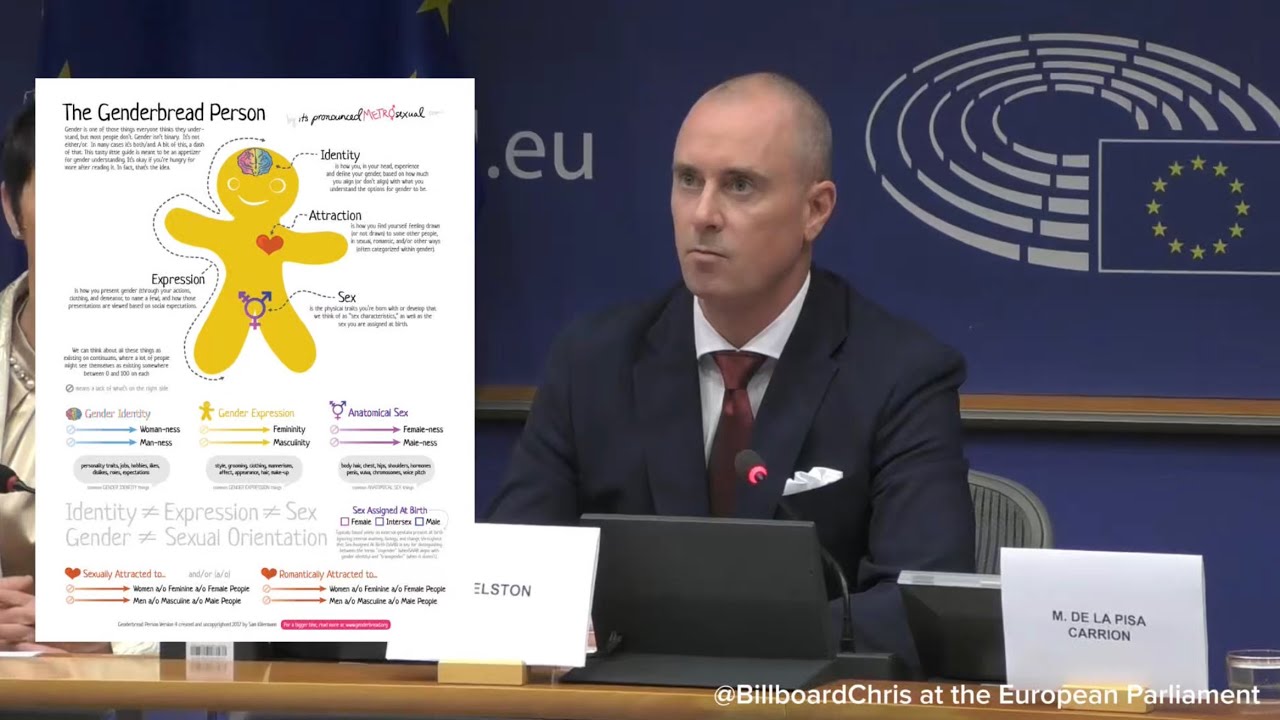
Billboard Chris engages in a candid campus conversation about puberty blockers, gender dysphoria in children, and intersex conditions. The discussion begins with a confrontation over misidentifying someone's gender, then shifts to a surprisingly civil dialogue with Chris, who has partial androgen insensitivity syndrome. Chris shares firsthand experience visiting gender clinics that offer puberty blockers to children after minimal evaluation, raising concerns about easy access to hormones without proper medical oversight.
The exchange begins with tension as someone accuses another person of misidentifying a woman as "a man identifying as a woman." The confrontation highlights the irony that those quick to defend gender identity often struggle themselves to accurately identify someone's biological sex. After the heated opening, the conversation transitions when someone agrees to have a recorded discussion about the issues at hand.
Rejecting the Concept of Trans Kids
Billboard Chris makes his position clear from the start: he rejects the notion that there are "trans kids." When asked to clarify, he agrees to discuss children with gender dysphoria or kids who think they have gender dysphoria. Chris states he is fully against puberty blockers, though he acknowledges they are sometimes used in cases of precocious puberty.
The Intersex Question
The conversation partner, who identifies as having partial androgen insensitivity syndrome (PCOS), raises the question of intersex children. They ask about cases where someone has elevated androgens and wants to delay puberty or add feminizing hormones to achieve normal female hormone levels. This leads to a discussion about what intersex actually means.
Billboard Chris explains that intersex is an umbrella term for various disorders of sexual development. He considers it somewhat of a misnomer because nobody is truly "in between sexes" or a "third sex." These disorders, he explains, affect males or females specifically. There are approximately 30 different disorders of sexual development, each requiring different treatments, and these are medical conditions requiring appropriate medical care.
Understanding Androgen Insensitivity Syndrome
The conversation partner shares they have partial androgen insensitivity syndrome and explains complete androgen insensitivity syndrome as an example. In complete androgen insensitivity syndrome, someone is biologically male but has immunity to testosterone. They generally look externally female and have testicles that never descended, developing externally female-looking genitalia. However, they don't have a functioning reproductive system because they lack a womb or uterus.
The person argues that someone with complete androgen insensitivity syndrome should still be treated as a woman even if genetically male, because they wouldn't even know they're intersex until around age 10 when they don't get a period.
The Imane Khelif Case
Billboard Chris brings up Imane Khelif, who won a women's gold medal. He describes Khelif as male with one of these conditions. At birth, the testicles may have been internalized and the genitalia might have appeared more female, but at puberty, Khelif started producing testosterone and is fully male. Chris emphasizes these are unfortunate situations, but society should still acknowledge the reality that people are either male or female.
Disturbing Gender Clinic Experience
The conversation takes a concerning turn when Chris shares a personal experience visiting a gender clinic for progesterone, a chemical their body doesn't produce enough of. At the clinic, they were offered a stuffed animal. When they asked why the clinic had stuffed animals, staff explained they mostly prescribe puberty blockers to kids. This revelation happened after just one visit.
Chris discusses how progesterone is usually used for breast development and confirms they chose not to take testosterone because people assumed they were female at birth due to their body's problem processing testosterone. While Chris prefers not to share too many personal details, they emphasize the ease of access to these medications.
The Alarming Accessibility Problem
Both participants find common ground on a critical issue: the accessibility of puberty blockers and hormones. Chris reveals you don't even need a prescription to get these drugs—they're available online. People are obtaining estrogen and testosterone with minimal barriers. Both agree this is wrong and problematic, particularly when it involves children receiving life-altering medications after minimal evaluation.
The conversation ends on a respectful note, with Billboard Chris thanking the person for the discussion and identifying himself as "Billboard Chris" on social media.