Briahna Joy-Gray Exposes Charlie Kirk's Debate Tactics and the Left's Moral Failures in Defending Him
Enjoying this? Share it with someone who needs to see it.
Up Next
Kai Bevan Dismantles Charlie Kirk's Pro-Life Arguments Using Medical Facts and Utilitarian Ethics
1:03:43
Due Dissidence Hosts Question Whether Charlie Kirk's Killing Ties to His Break With Israel Allies
11:43
David Pakman Breaks Down Why Charlie Kirk's Viral NBA Diversity Argument Falls Apart Under Scrutiny
9:03
Briahna Joy-Gray Exposes Charlie Kirk's Debate Tactics and the Left's Moral Failures in Defending Him
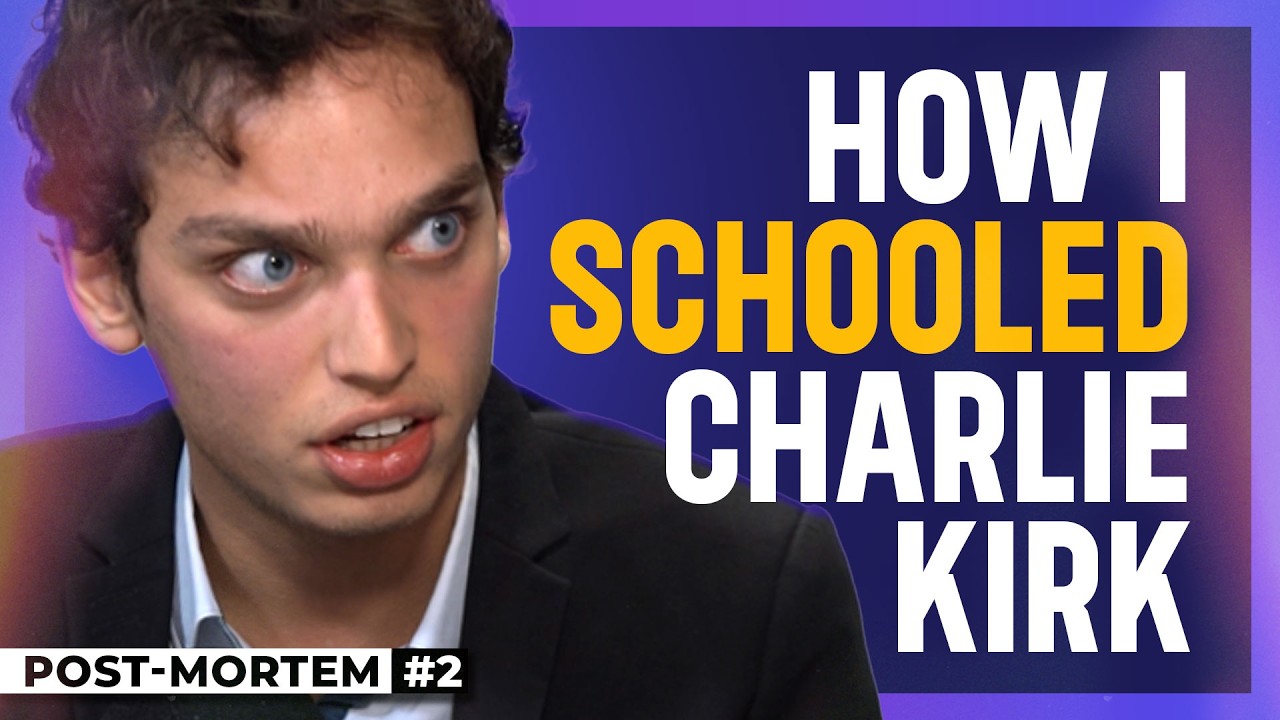
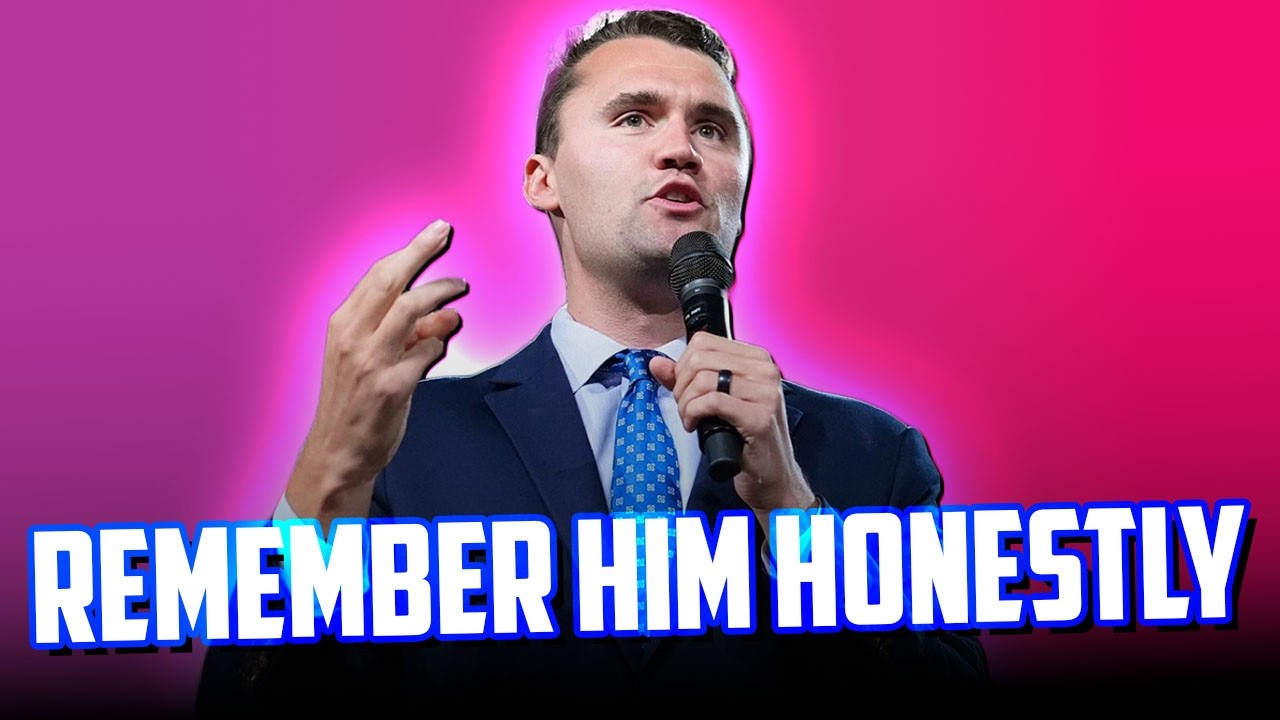
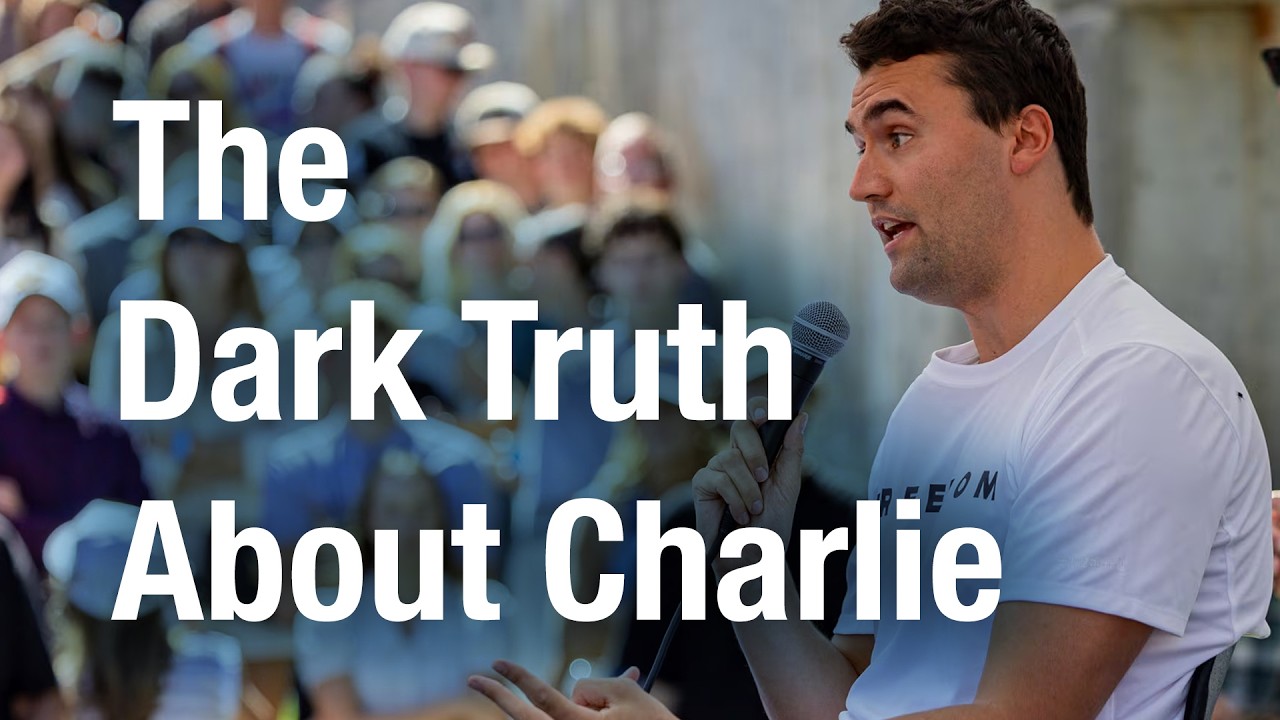
Briahna Joy-Gray reflects on her contentious debate with Charlie Kirk at Turning Point USA headquarters in Arizona, dissecting his logical fallacies and rhetorical strategies around institutional racism. Gray challenges those on the left who defend Kirk based on personal interactions, arguing that prioritizing civility over substance reveals a willingness to dismiss the harm caused by his ideas. She breaks down how Kirk's arguments about redlining, black banks, and her own Harvard admission exemplify intellectual dishonesty designed to obscure systemic racism rather than engage with it honestly.
Briahna Joy-Gray describes how she came to debate Charlie Kirk at the Turning Point USA headquarters in Arizona. At the time, she had just started at Rising and was in what she describes as a liminal career moment, likely after the Force the Vote controversy when portions of the left had turned against her. Without the billionaire backing that conservatives like Kirk enjoy, Gray found herself accepting opportunities to gain visibility.
She was assured the debate would be civil and substantive, not an insult fest. The topic—whether institutional racism was real—was not her choice but Kirk's selection. As Gray notes, race is not her primary beat; she prefers discussing economic populism. Yet Kirk invited her specifically to debate racism, which she found revealing about his own priorities.
The debate took place at the well-funded TPUSA compound with multiple buildings, staff, sets, and even a makeup artist. Gray was flown out and put up in a nearby hotel. What she expected to be a good-faith discussion quickly devolved into something else entirely.
Redlining, the GI Bill, and Logical Fallacies
During the debate, Gray attempted to explain how redlining and the GI Bill worked together to systematically exclude Black Americans from wealth-building opportunities after World War II. She explained that the GI Bill provided low-interest, federally-backed loans to veterans to purchase homes—the foundation of middle-class wealth in America. However, banks engaged in redlining, only issuing loans for homes in certain neighborhoods.
Restrictive covenants attached to land deeds in many neighborhoods explicitly barred Black people from purchasing property there. This meant that even though Black veterans were entitled to GI Bill benefits, they were systematically prevented from using them in the same way white veterans could. The overwhelming majority of banks were white-owned, and they controlled access to these wealth-building loans.
Kirk's response was to ask about Black banks—specifically, whether Black banks also discriminated against Black people. Gray identifies this as a transparent logical fallacy. Even if one Black bank had existed that discriminated against Black people (which she notes is simply a lie Kirk made up), it would not absolve the 99.999% of white-controlled banks with white wealth from their discriminatory practices.
She compares this to other bad-faith arguments conservatives make, like claiming Irish people were also enslaved or that other groups faced discrimination too. Gray's point is clear: other people experiencing discrimination does not erase or excuse the specific harm done to Black Americans, nor does it eliminate the moral debt owed for that harm.
The Harvard Argument and Personal Exceptionalism
Another revealing moment came when Kirk argued that Gray's own admission to Harvard University in 2003 proved there was no systemic racism—or perhaps that racism had never existed at all. This argument treated her individual achievement as evidence that systemic barriers don't exist.
Gray countered brilliantly by pointing out that Black people attended Harvard during Reconstruction, within decades of slavery ending. She got Kirk to first acknowledge that racism obviously existed in the immediate aftermath of slavery, then hit him with the fact that W.E.B. Du Bois and other Black scholars attended Harvard during that period. If one Black person attending Harvard proves racism doesn't exist, then by Kirk's own logic, racism never existed even during Reconstruction.
Gray describes these arguments as beneath the intelligence of a fifth grader, yet they're central to how Kirk operates in debate settings. The goal isn't genuine intellectual engagement but creating soundbites and moments designed to obscure rather than illuminate.
Why Personal Civility Doesn't Absolve Substantive Harm
Gray reserves particular criticism for people on the left who have whitewashed Kirk's record based on personal interactions with him. She references an article by Ben Burgess in Jacobin where he discussed his own debate with Kirk around the same time. While Burgess didn't completely whitewash Kirk's record, he emphasized that Kirk was personally nice to him.
Gray finds this emphasis deeply problematic and even insulting. She had her own personal experience with Kirk and felt his contempt for her during their debate, particularly in the early contentious moments before he "simmered down" (notably after he had inadvertently admitted to systemic racism within the first fifteen minutes without seeming to realize it).
But more importantly, she questions why anyone would prioritize personal civility over substantive evil. She offers a provocative analogy: if she had dinner with a famous anti-Semite who happened to be polite to her and served good food, would it be appropriate for her to emphasize his hospitality over his hatred of Jewish people? Wouldn't that reveal her willingness to prioritize catering over respect for others' humanity?
Gray argues that you can find something good to say about almost anyone, even if it's superficial. But choosing to emphasize those superficial positives while downplaying someone's core harm reflects your own values and your willingness to dismiss what makes that person objectionable.
The Broader Pattern of Intellectual Dishonesty
Throughout her reflection, Gray emphasizes that Kirk's debate tactics represent a pattern of intellectual dishonesty. Whether it's the fake concern about Black banks, the absurd claim that one person's success disproves systemic racism, or the constant interruptions and accusations of "dodging and dancing," the strategy is consistent: prevent substantive engagement with difficult truths.
Kirk assured Gray before the debate that it wouldn't be pugilistic, yet he immediately made it contentious. When she tried to provide thorough explanations of complex historical processes like redlining, he interrupted and demanded she answer narrow, often irrelevant questions designed to derail rather than advance understanding.
For Gray, this experience crystallizes why it's embarrassing when someone like Ezra Klein credits Kirk as having genuine intellectual capacity or argumentative skill. The tactics on display are not those of someone engaging ideas in good faith but of someone skilled at rhetorical manipulation and obfuscation.
The debate, Gray notes, was essentially over within fifteen minutes when Kirk inadvertently conceded that systemic racism existed. But the performance continued because the point was never honest inquiry—it was content creation and the appearance of owning the libs.