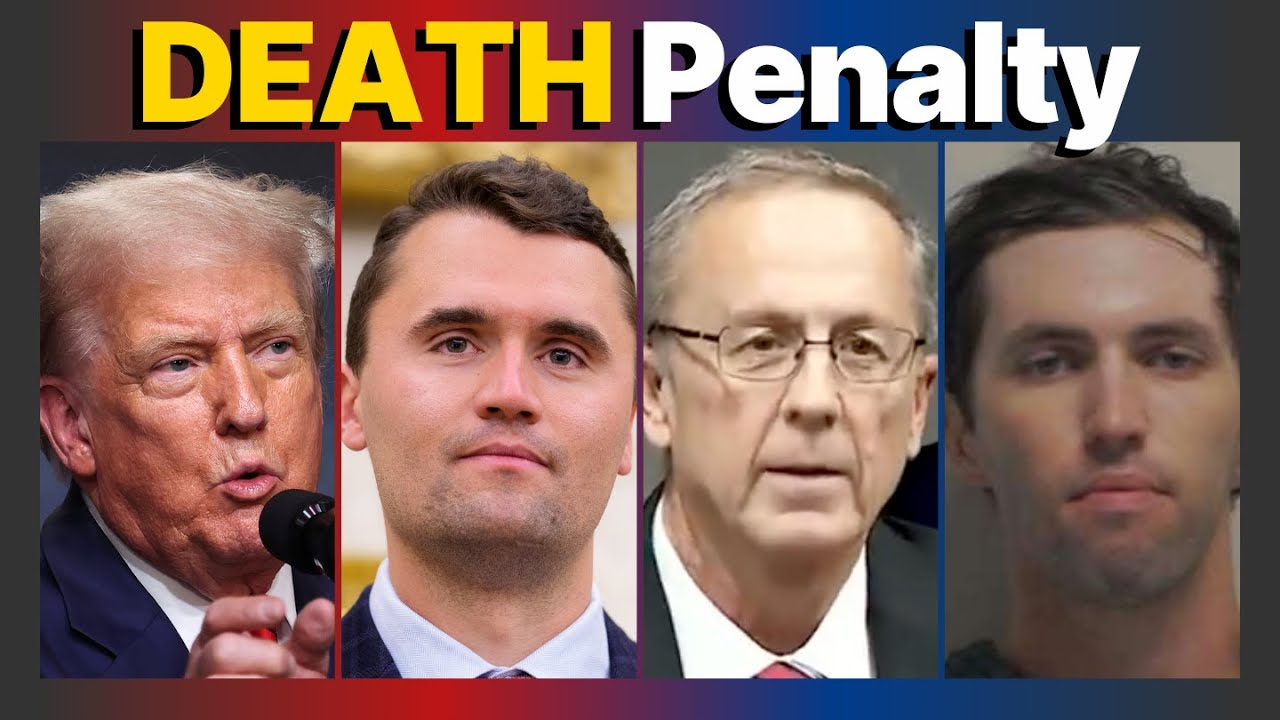
Hey guys, thanks so much for checking out my channel. I really appreciate it. Please click to subscribe. A ton of new information on Charlie Kirk's alleged assassin. Uh first of all, we've now got all of the text messages between him and his roommate/romantic partner, what they were saying back and forth uh after uh the assassination. Plus, um you guys remember we thought that it was his dad who first turned him in, who spotted him in the surveillance photo. It actually wasn't him. I'll explain all of it coming up in this episode of Brian Anton investigates. Hey guys. All right. I want to give you the latest on the Tyler Robinson investigation. He of course is the man accused of assassinating Charlie Kirk. We got a ton of new information today from authorities. All sorts of details about the investigation. I'm going to go through all of it with you. Then I'm going to bring on a couple of FBI profilers to talk a little bit about what this might mean. Um but let me get you the new information. First of all, the charges. uh aggravated murder, two obstruction of justice charges, one for moving and concealing the rifle, the other for disposing of clothing he wore, witness tampering for directing his roommate to delete texts, which I'm going to get into in a second. Another charge of witness tampering for directing his roommate to stay silent if police questioned him, commission a violence uh offense in the presence of a child because there were kids at the um Charlie Kirk event. Uh and then the uh county attorney also gave notice of intent to seek the death penalty. New today, we found out that there was DNA found on the rifle's trigger. Uh they say he hid his gun, which I knew about. Remember I showed you that wooded area across the street from the campus where he left the gun. Uh he discarded his clothing and told his roommate again to delete text messages and not talk to police. Um, and they confirmed, which we all knew cuz we had the video, that he was when he shot allegedly, um, Charlie Kirk, Charlie Kirk was answering a question about transgender individuals. Um, he walked with the rifle hidden in his pants, which I was sort of the theory that I had. You remember that v that video from the um the Ring camera on the street where it was like he had that really really weird um limp, but then another video he was running. The prosecutor said it's because he had the rifle hidden in his pants. That's why he was walking with the limp. The prosecutor confirmed that today and that he ended up going to the Washington County Sheriff's Office with family and a family friend to turn himself in. So, that part we knew. Here's some new details, though. Um, so Robinson's mother said on September 11th, the day after the shooting, she saw the photo of the shooter on the news and she thought that it looked like her son. So, it was the mom who first thought that. She called her son, asked where he was, uh, and he said that he had been home sick, and said he was sick on September 10th, the day of the shooting. Uh, and then she, even after hearing her son that, she still expressed concern to her husband that the photo that had been released by, uh, police from the shooting, that it looked like her son Tyler. Uh, she told police that he had become more political, started to lean toward the left, became more progay and trans rightoriented. uh and that he had started dating his roommate who was a biological male who was transitioning. Um and this apparently resulted in conversations with his father uh back, you know, this is before the shooting. They were kind of jumping around a little. He had said that um UVU, which is where the shooting was, was a stupid venue for the event and Kirk spread hate. Um so the rifle also, interestingly, that he used matched a rifle that the dad had given to him as a gift. Robinson's father contacted um his son Tyler and asked him to send a photo of the rifle. So basically after the mom was concerned like you know this looks like our son, the dad gets involved, texts the son and says send me a picture of the rifle to basically prove that you know that you have the rifle and that this wasn't you. And Tyler did not respond. And then they get on the phone after texting. And on the phone, according to prosecutors, Tyler Robinson said he was going to take his own life. Um, and the dad convinced him to come to the parents house, to come to his parents house and have a meeting at the house. And that's when, according to prosecutors, he stated he was the shooter. Um, and did not want to go to jail and just wanted to end it. That's the way the prosecutors described it. When asked why he did it, he said there is too much evil and the guy spreads too much hate. Uh so the family convinced Robinson, his parents to speak with a family friend who's a retired sheriff. Uh and then the parents and the family friend, this part we had reported basically convinced Robinson to turn himself into police. And that's when they went to the Washington County Sheriff's Office. Uh police interviewed Robin's roommate, Robinson's roommate, uh who um was involved in a relationship with with Robinson. So, the roommate, remember we first her roommate. Now, we know that they are um you know, um how did the governor describe it? Romantic partners. Um the roommate told police he received text messages from Robinson uh about the shooting. And I'm actually going to play this is now the um the county attorney who will describe and go through the text messages are new, by the way, so you'll want to listen to this. uh and quite eye-opening um the conversation and the back and forth between Tyler Robinson and the you can either call him the roommate or the uh romantic partner as the governor described him. Uh but this is this is the uh county attorney describing the text messages back and forth. >> Police interviewed Robinson's roommate, a biological male who is was involved in a romantic relationship with Robinson. The roommate told police that the roommate received messages from Robinson about the shooting and pro and he did provide those messages to police. On September 10th, 2025, the roommate received a text message from Robinson which said, "Drop what you're doing. Look under my keyboard." The roommate looked under the keyboard and found a note that stated, quote, "I had the opportunity to take out Charlie Kirk and I'm going to take it." Police found a photograph of this note. The following exchange, text exchange then took place. After reading the note, the roommate responded, "What? You're joking, right?" Robinson. I am still okay, my love, but I'm stuck in Oram for a little while longer yet. Shouldn't be long until I can come home. But I got to grab my rifle still. To be honest, I had hoped to keep this secret till I died of old age. I am sorry to involve you. Roommate, you weren't the one who did it, right, Robinson? I am I am I'm sorry. roommate. I thought they caught the person. Robinson. No, they grabbed some crazy old dude, then interrogated someone in similar clothing. I had planned to grab my rifle from my drop point shortly after, but most of that side of town got locked down. It's quiet, almost enough to get out, but there's one vehicle lingering. Roommate, why? Robinson, why did I do it? Roommate. Yeah, Robinson. I had enough of his hatred. Some hate can't be negotiated out. If I am able to grab my rifle unseen, I will have left no evidence. Going to attempt to retrieve it again. Hopefully, they have moved on. I haven't seen anything about them finding it. Roommate, how long have you been planning this? Robinson. A bit over a week, I believe. I can get close to it, but there is a squad car parked right by it. I think they already swept that spot, but I don't want to chance it. Robinson again. I'm wishing I had circled back and grabbed it as soon as I got to my vehicle. I'm worried what my old man would do if I didn't bring back Grandpa's rifle. ID EK if it's had a serial number but it wouldn't trace to me. I worry about Prince I had to leave it in a bush where I changed outfits. Didn't have the ability or time to bring it with I might have to abandon it and hope they don't find Prince. How the f will I explain losing it to my old man? Only thing I left was the rapple was the rifle wrapped in a towel. Remember how I was engraving bullets? The effing messages are mostly a big meme. If I see notice bulge UWU on Fox Newing sucks. Judging from today, I'd say Grandpa's Gun does just fine. IDK. I think that was a two thou a 2K dollar scope. Wink wink. Um, Robinson. Robinson again. Delete this exchange again. Robinson. My dad wants photos of the rifle. He says grandpa wants to know who has what. The feds released a photo of the rifle and it is very unique. He's calling me. RN not answering. Robinson, since Trump got into office, my dad has been pretty diehard MAGA. Robinson, I'm going to turn myself in willingly. One of my neighbors here is a deputy for the sheriff. Again, you are all I worry about, love. That came from Robinson. Roommate, I'm much more worried about you, Robinson. Don't talk to the media. Please don't take any interviews or make any comments. If any police ask you questions, ask for a lawyer and stay silent. >> So, something else interesting, um the uh county attorney was asked about other suspects. Could anyone else be involved? Because there's been all sorts of questions about Discord and this whole group chat and did other people know about it. and the county attorney said, "No information right now about other suspects, but investigators continue to follow leads." Uh, and he sort of emphasized that investigators will follow leads. So, that was the latest from the prosecutor today, the latest on the investigation. There's also been some interesting reporting from the Washington Post that says the 22-year-old suspect um in Charlie Kirk's killing, of course, uh Tyler Robinson appears to have confessed to friends in an online chat shortly before turning himself into law enforcement, according to people familiar with the chat and screenshots. So, the prosecutor didn't bring this up, only talked about the text messages with the roommate. But Washington Post is saying that he also confessed to friends and said, "Hey guys, I have bad news for you all. Um it was me at UVU yesterday. I'm sorry for all this. Apparently sent these messages out on Thursday night about two two hours before officials said he was taken into custody. Um and uh some of these people turned over these screenshots to the Washington Post. Um so and then there's some other messages too. Um yeah, that's pretty much that. I was just making sure I wasn't missing anything. And then before I talk to the um the profilers, something else new today which I was interested in. You guys remember right after Charlie Kirk was shot, the first person brought into custody was the like older man. Remember there was all those videos. I saw a bunch on TikTok and everybody thought they had the shooter in custody right away because they you could see videos of them taking this older guy away in handcuffs and it turns out that was not the shooter. But we are getting more information about who that person was and it's kind of bizarre. Um the Utah County Sheriff's Office put out this release about arresting and booking him. His name is George Zinn and he's been arrested for obstruction of justice and possession of child sex abuse material. And they say at Utah Valley University on on September 10th, which is the day of the shooting, Zinn was attending an event where a shooting occurred shortly after the shooting occurred. And while people were fleeing the area, Zinn was seen yelling that he had shot Charlie Kirk. So he was yelling that he shot Charlie Kirk. UVU police took Zinn into custody and transported him to the police department. At that time, Zinn was not cooperative with law enforcement and did not want to speak with investigators. Zinn began to have a medical issue and was transported to a local hospital. And why at the while at the hospital, he did freely freely state that he was not the shooter, but yelled he but yelled he was to hinder law enforcement response. So, he was trying to hinder the law enforcement response apparently. Uh while Zinn was at the hospital, an FBI agent and an agent from Utah Utah State Bureau of Investigations met with Zinn, who agreed to speak with them concerning the matter. Zinn admitted that he had yelled that he was the shooter to allow the actual suspect to flee and to hinder law enforcement. During the interview, the agents asked to look at Zinn's phone, and Zinn agreed to let them. and told agents that he uses his phone to view and abuse that he said that he use that he uses his phone to view and abuse child sex abuse material and there may be some images on his phone. Those agents did not did see several images on the phone of prepubescent girls scantily dressed at that time. Utah County Special Victims Unit detectives were asked to take the matter over as the other agents were needed to help with the UVU incident. Um, so that sort of took a strange turn. He's now being charged with felony obstruction of justice and felony sexual exploitation of a minor. At this time, there's no information that Z George Zinn actually colluded with the shooter. But it certainly caused a lot of confusion. Um, because you remember that video, first he was taken into custody. people thought he was the shooter. Then there was another person they were interviewing and that's when the FBI director initially put out a a tweet saying they had a subject in custody that turned out to be wrong. So this only added uh to all that confusion. I'm joined right now by former uh FBI profilers uh Ray Carr and Jim Fitzgerald. Uh Jim is also um a forensic linguistic expert. Uh thank you both um for being here. I really appreciate it. Uh Jim, I want to start with you. Um, what do you think these these text messages, the full text conversation that just came out between Tyler Robinson and the um romantic partner, what do what do they tell you as a profiler? >> Brian, with recent history, the within minutes of Charlie being shot, I texted my little text group, and Ry knows this too. I said, "This is probably going to be trans or transreated, trans Antifa, something like that." And of course it was uh and we all know what Charlie you know would sometimes say so it's not that much of a reach but nonetheless um and and when it comes to these messages which are all um they're not legally protected. It's not like a Miranda issue at all. any lawyers will tell you that uh this guy uh these were uh prior to and after the shooting uh some of the messaging anyway and uh and and and and he basically confessed to his uh to his partner the shooter. I don't say names by the way of these people. I don't want to give them the honor of of us ever mentioning our name. I know Ray has the same policy on Cold Red. So uh the killer um you know basically confessed uh I think there's some you clearly see some narcissism in there, some egotism. uh someone who was also at the same time confused and um we can get a little bit more into that down the line. But uh it's great evidence for the police, for the for law enforcement, for the investigators. Uh and it's of course defense attorneys will try to, you know, somehow get it uh uh you know, thrown out of court and in pre-trial motions. But I think uh uh I think it's going to stay and as long as they had search warrants or some kind of uh uh orders to get those uh those messages, including the written message that was apparently left under a keyboard, uh um these will be very valuable in court. And I'd be very surprised if uh it doesn't lead to a conviction in this case. >> What did you mean by narcissism? >> Well, we just see that with this guy. The these these and we can get a little bit into this more. They they love themselves. They think they can't do anything wrong. Uh and um they are perhaps on the psycho psychopath um um spread, you know, 0 to 40. I don't know exactly where this guy fits in, meaning the killer, but uh you you have to have some level of of over-the-top and inordinate pride in yourself. And in some levels, you can say that's healthy, but in other ways, uh he thinks he's better than other people. Um he he knows he couldn't ever u beat Charlie if that's even the right word. But you know probably hold a uh a a fair and equal conversation with him on some of these issues. Charlie was so skilled. So what does he have to do? his his his love for himself, his love for his his romantic partner uh uh just told him, "Look, I got to take this guy out because uh uh people like me just uh you know, we we can't live in the same world with people like him." And part of that is, you know, either consciously or subconsciously being so hung up and and and egotistical about who and what they are. Brian, one of the biggest things, one of the biggest things here at I'll add with Jim with this with this narcissism is that there's absolutely no remorse on the part of these offenders. And I'm not just talking in this situation. If you go back into some of these other offenders over the last year, and maybe you're seeing this, but you're seeing more narcissism in these offenders, as Jim was just saying, but the fact is is there's no remorse. Like they're almost happy what they did. they don't care. And uh that's really telling when you talk about narcissism. >> Rey, um one thing that struck me with the text was it just seems so nonchalant. Like the way he was texting the partner. Uh and granted, we can't hear the voice. It's just text. But it was just like, "Oh, I just did this and I'm just waiting to go get the gun and then I'll be home to you, my love." Like, I don't know. It just that that stood out to me. >> Well, sure. since uh to him it was uh all in the course of business. In other words, on my way home I have to make one stop to pick up some bread and milk uh what he's referring to as the gun. But it's not a big deal. Uh he was more concerned about the fact that what if I can't recover this weapon? Doesn't belong to me. It belongs to my grandfather. Uh and there's going to be some problems I'm going to have to answer to. Apparently his father and he even mentioned this in the text that his father was reaching out to him but he would not respond to him because he he knew he was going to ask him about the weapon and he couldn't tell him yeah I have the weapon with me and they mentioned the scope which the scope he says was I don't know all the facts to this but the scope was a very high uh cost scope which makes taking that shot uh less of you have to be a professional with that type of scope depending on the the power of the show. >> Well, and he said, um, Jim, like he said something like, "Oh, and it's grandpa's, you know, gun. How am I ever going to explain this to my dad?" But it's like, you just killed somebody and you're thinking about that it's your grandpa's gun. Like I that just seems like disconnect there. >> It is a a a clear disconnect. And you know, I was going through um some of the memes out there, I guess, on X and some of the um and some of the comments underneath, and it seems like it may have been someone in the same sort of mindset as the killer, but he had a quote. He put he he posted a quote or or maybe someone copied it from from Reddit or uh or or Discord, I don't know. But the quote was, "Boy, uh after all this happened, I I can't even distinguish what's real and what's not anymore." And I'm kind of paraphrasing there, but I think there's an entire lost generation. I used that word on a media hit the other night, like the one hundred years ago, except these aren't artists, they're gamers. And uh and they they just they just surround themselves in these echo chambers, and they do nothing but reinforce each other's bizarre and and and and quite frankly stupid uh mindsets and ideologies. And uh and it's very unfortunate. It's very sad. But um to even worry about something like a father or the grandfather's rifle and not getting it back to him, it it just shows you how displaced, how out of reality these people are. And and again, I I I've said this in the past, what combination of drugs from rolin when they're kids, little kids to, you know, pot smoking to to drinking to to um you know, COVID type things. What what is what toxicological porridge is in their systems that these brains are not connecting to realize there are going to be consequences for this action? Does he realize he may be facing a firing squad and and get a bullet through him, several bullets, just like Charlie did, but I can't imagine he thought of that beforehand? >> Probably not. >> Yeah, it doesn't seem like it. What do you think, Rey, of the um the roommate um the romantic, you know, partner? Um, do you think cuz the the police have said several times and the governor has said that this person is cooperating, extremely cooperative. They seem to be going out of their way to say that. Do you think that this person really knew nothing, Ry? >> No, I do not. Um, I would find it highly unlikely that he did not know anything that was going on. uh you know there had to be some discussion between him and the offender and he's cooperative because he doesn't want to go to jail. He doesn't want to be charged. I'll be shocked if he's not charged in some way uh because of the high stakes of this and and uh the media attention that provided to this. I think anybody that comes within close proximity of this is going to get burned, is going to be arrested. I really believe that. Jim, I was wondering um also back to the text messages and what you know just the nonchalant you said like narcissistic, but the fact that he thought he could text that person that way and that they wouldn't it just made me wonder what that relationship was like and whether that that person did know something or had some kind of inkling. What do you think? >> Yeah. Yeah. Yeah. And I agree with Ray. I have no doubt uh that the the uh the partner uh knew something that was going on. Uh these people, the these mass killers, spree killers, assassins, um and certainly the unprofessional type. There's very few professionals among any of those categories. They exhibit leakage in their pre-offense behavior. And I also put this to the parents and the siblings of our killer here. I'm not sure exactly where he lived. I know there was a dinner the week before or something and some family member came in and was saying about Charlie Kirk and and uh and how you know bad the things he said was. So the bottom line is these there's no doubt there was leakage and it it every single case there's this there's this behavioral if not evidentary or psychological leakage one form or another. uh obsessed with TV, obsessed with the internet, obsessed with getting weapons in line, going out to um you know um uh firing ranges and practicing, stealing someone's weapon, their scope, whatever it is, and and doing that. So, that leakage was there. It's always there. It was with the Minneapolis school shooter of about a month ago. And uh there there's no doubt that others besides this roommate may be looking at criminal charges here. and if not criminal charges, perhaps civil charges down the line uh by um Mrs. Kirk and others who are of course affected by this >> one I'll throw out let me throw out a stat to you Brian uh that we did down the FBI academy with these mass shooters uh or with these shooters in general in 81% of all these shootings at least one other person knew and in 60% at least two or more knew. So that tells you and that leakage. And the other thing here is a lot of people look at this situation and they think and I know in the text message that the roommate said, "How long have you been thinking about this?" He says, "Oh, about a week." He's been thinking about it longer than that. You know, there's a there's a pathway to violence that these people engage in. And it starts out with a grievance. And we know what his grievance is at this point. He didn't agree with what Charlie was talking about. And then he comes up with an idea. I mean, he had to plan this thing and there's the planning of it. There's the research to it. I mean, he goes up to a roof. Who else went up on a roof? The individual that shot at President Trump. And then, you know, you you get to the point where, how does he do this? And and there was a video. I remember watching the news and someone said, "Oh, see, he hurt himself jumping off the roof." And I said, "No, he didn't. But this happened before." I says, "He's got that rifle in his leg. That's why he's has to walk like that with a limp, which makes it look like a limp in that backpack and cuz you saw him jump off the rope afterwards and he was able to run away, right, without any without any issues at all. So, you knew that he was carrying the weapon and that's what he was doing at that point. So, I'm telling you, I I believe uh and I can't say with certainty, but I believe that he had been thinking about this for a long time. And over time, he became more and more radicalized because of things. He became more and more angry. >> And you think Brian >> knew for sure? >> Say again, Brian. >> You think someone knew? You think someone in his life knew he was going to do or was thinking about it? >> I You know what? They may he may not have said directly to them, hey, I'm going out tomorrow to shoot Charlie Kirk, but he probably talked about him and said, "I can't stand that guy. If I have the chance, I'm going to going to kill him." He probably said things in that in that area, but what he exactly said, only the witnesses will be able to tell you that. And that's what the police are doing right now. Since his arrest, they've been interviewing hundreds of people that are around him, family, friends, and things of that nature to find out exactly what he was talking about. >> What were you going to say, Jim? >> Yeah, I just want to say um and I said this last week that I there's no, you know, we've all heard of Trump derangement syndrome. I have no doubt this guy suffered from Kirk derangement syndrome. uh you know when uh onset was we don't exactly know but I'm sure you know well over a week and probably months long where this person was obsessed going to bed at night thinking about him waking up in the morning thinking about him checking online you know internet for schedules he knew he was going to be at that campus in Utah uh on on September 10th and that's when his uh his his intensive part of his plan came together to in fact uh carry out this uh this deed. So, uh, yeah, this guy whether whether he can be clinically diagnosed as suffering from some sort of, um, uh, a mental disorder, you know, we'll see where that goes. Whether he's on the psychopathy scale or not, we'll see where that goes. But, uh, he had a lot of hatred in him. He had a lot of vitriol and, uh, and I'll put it under, you know, that that that derangement syndrome that it seems some people just can't control anymore. And there seems to be no antidote for it except uh, following through on their action or trying to. Well, and I also noticed when he said um to the roommate, partner at the end of the conversation something like, "Well, don't you know, don't don't talk to the media. Don't don't say anything." You know, like that made me think a little more like there was a plan. >> Absolutely. Absolutely. I mean, why would you say that? Why would you why would you instruct him to say that? And one of the things that Jim said, so you know, obsession with other people is one of the pre-behavior indicators of these types of individuals that engage in this type of behavior. So, and he had that plus many other indicators. Absolutely. I agree with that, Brian. 100%. Brian, could I add? Um, we have some friends, Ray Nosam, uh, psychologist, uh, Mallaloy, Muande, Null, and Hoffman, and they put together something called concept of identification a few years ago. And this guy fits all of them. I'll just real quick go through the five-part list here. He's a pseudo commander, which means he assumes appearance and behavior, uh, and a desire for revenge and obliteration. Warrior, uh, mindset. Uh uh he's motivated by uh psychological fantasy to kill unarmed civilians. Uh number three, a close and often secret association with both practical and symbolic weapons and other uh military and or law enforcement paraphernalia. That includes of course even marking the weapons. Uh seeking to be uh to be like or even surmount other historical or contemporary fictional or non-fictional attackers, assassins. And lastly, uh, and this may be the most important one, seeing oneself as an agent or a soldier to advance a belief system or cause. For that last example there would be, uh, taking out uh, Charlie Kirk because he dared to engage with people and answer questions from them. >> Yeah. Um, that's interesting to think about all of those things. Why do you think we're seeing more of this, um, Rey? I mean, obviously the circumstances are always a little different, but it does seem like a lot of the time it's, you know, these young white guys. >> Yeah. You know, I had a a class of doctoral students I was teaching last night and we were talking about just this thing and I think there's a great deal of partisan mistrust. Uh I think it's historically high. uh and many people are clustering into these echo chambers online uh where they rarely engage respectfully with opposing views. It's it's this thing. So you have these cultural war issues where you're talking about race, you're talking about gender, you're talking about guns, religion, education, you know, all these things that Charlie talked about and they provide uh fuel for the movement whether it's on the left or the right. Uh, and there although there's some mainstream debates on this, it kind kind of blurs into extremist rhetoric. So, it lowers a social cost for adopting these hardline positions that these people actually engage in. >> Yeah. And Brian, if I could add to that, I mean, it is also mainstreamed or normalized quite frankly by some in the media and by some of our political leaders. I mean, um, the failed vice presidential candidate just a month ago. Yeah, I woke up and I was, you know, President Trump's still alive, huh? How about that? And we don't have to get into partisan politics here, but that's that's what people like this killer of of uh, Charlie Kirk are hearing and they're reading, and it almost sends them a signal. Their brains are not clearly not fully developed. Who knows what it's been addled by these brains over the years and what kind of you know nature and natural uh uh nature and n nature and uh um upbringing this other person had um nature and nurture is what I'm trying to say. And the point is uh you know this all just came together and and the synapses aren't connected. There's clearly these people. I almost wish one of them, I don't know who it would be and and we do it recorded so they wouldn't they wouldn't try to trick anyone with a live, you know, blurting something out, but get get some guy now who's maybe been in prison for 5 years. The guy that shot up the church 10 years ago in North Carolina, any of these recent assassin or spree shooters and look at they're in prison. and they're like in their late 20s with absolutely zero chance of getting out and maybe do some kind of a behavioral interview with them and maybe some other young people would see, holy, you know what, I I don't want to wind up like that guy. Yeah, I have these beliefs. I really don't like what that guy out there is saying, but I don't want to wind up in prison like him. But then we have these other people the that are fmenting online. Uh it's not just the young people talking among themselves. I'm convinced there are other older people that are that are are purposely trying to propagandize, even pretending they're younger people. I have no doubt there's some outofcountry uh operators doing this, too. And um and they're they're doing everything to fment this this uh undercurrent of um of of evil and and of destruction and of killing where they just can't even see beyond the next day. They don't live in the reality the rest of us live in. >> Yeah. I kind of wonder. I mean, even though even with the death penalty in this case and even if they did hear and see other past, you know, killers who are are incarcerated, like I don't even know if it would really matter. I think all of that just goes out the window, you know. >> Yeah. Yeah. It's I I threw that out there. I I there have been people in the past that have gone on, you know, TV with the right type of interview and said they regret what they did. And and you're right. If you're if you're a true believer, which maybe this killer was from last week, that that may not uh dissuade you from carrying out actions, but maybe the person, you know, four levels down on the true believer, you know, call list. They said, "Geez, that guy's in prison and he's getting he has a black eye. Maybe he was beat up last night by some other guy in prison. I don't think I need that." So, uh, something to consider down the line. >> What do you make, Ry? Um, you know, there were these messages on the casings, on the bullets. Um, and and he talked about them in the text messages almost like he because when I first started reporting on this in Utah, you know, it I was looking at it almost like it was a message that he was leaving to the people who found them. But now based on these text messages today, I almost wonder if he didn't intend for anyone to ever see embarrassment. Now, I don't think he really wanted people to find the weapon and or the ammunition that he left behind. He just didn't have time to be able to retrieve that. But, uh, those messages uh, he remember these individuals uh, he researched, he planned and he researched what he was going to do prior to and we've seen this before. We've seen this several times in other shootings. You know, there's no single pathway here that explains every case, but risks tend to build with several factors when they cluster them together. Like someone that has a grievance or social isol social is isolation. Uh if there's a search for significance where a person wants to be respect, he wants to be respected or even heroic, you may think in this in this instance, hey, this is going to really set me apart from everybody else. I'm going to be a hero here with some people just like the shooter in United Healthcare situation. People think he's a hero. Then you have exposure to extreme narratives. When you look at some of these online forums, these private chat groups, you know, uh in-person networks, they normalize hate and violence. A lot of these things, uh you have personal stressors. You know, I don't have a job. I'm not getting along with my father, my mother. Things at home aren't really, really good. uh and I'm having mental health str uh struggles and then his access to weapons, you know, uh these are all uh behaviors that you look at and if people pay attention to it, which they usually don't, you can usually stop these things before they get started.