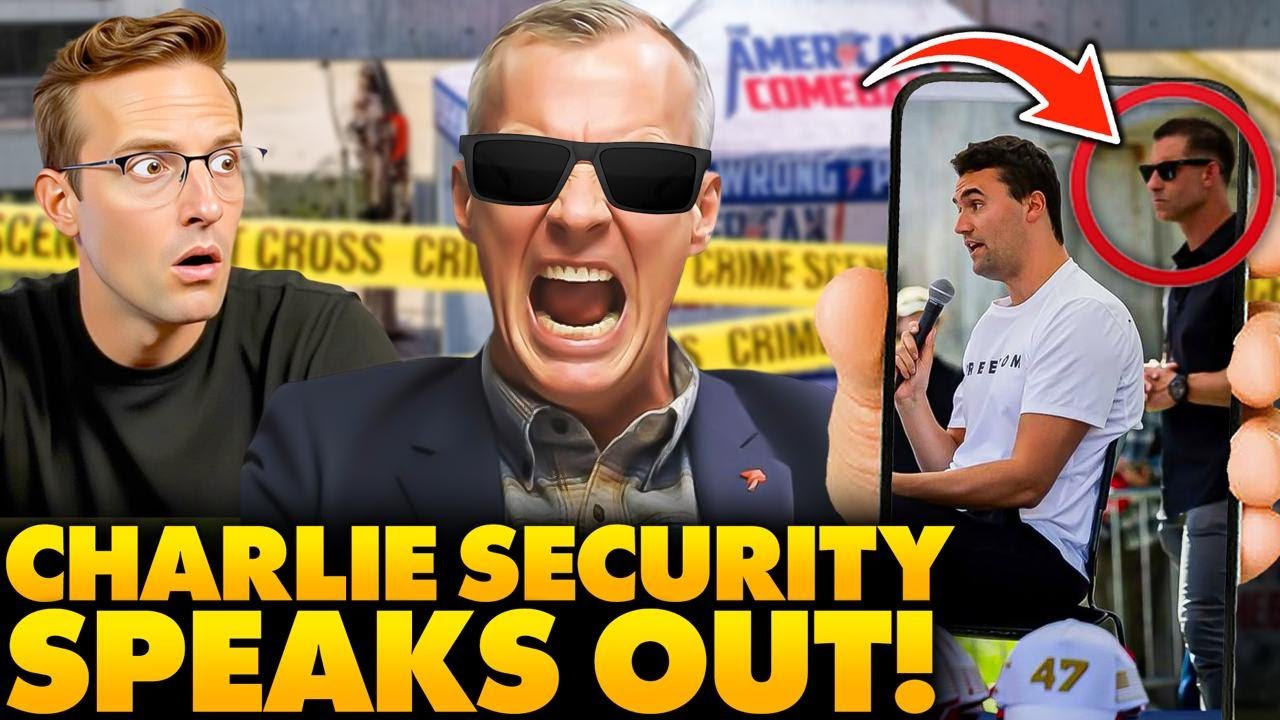
Brian Harpole's Shawn Ryan Interview: Integrity Security Reveals What Happened During Charlie Kirk's Final Moments
Enjoying this? Share it with someone who needs to see it.
Up Next
Keli Rabon and alleytopfiles Expose Chain of Custody Failures in Charlie Kirk Investigation
2:09:30
Candace Owens Reveals Explosive 911 Call Evidence and Utah Medical Examiner's Sudden Resignation in Charlie Kirk Investigation
49:39
Andrew Feraci Breaks Silence on Charlie Kirk Assassination: Sole Photographer Addresses Conspiracy Theories and Death Threats
1:58:19
Brian Harpole's Shawn Ryan Interview: Integrity Security Reveals What Happened During Charlie Kirk's Final Moments
Brian Harpole, head of Integrity Security Solutions and Charlie Kirk's security detail for eight years, sat down with Shawn Ryan to share his account of the incident that took Charlie's life. In this detailed breakdown, many of the community's burning questions get answered, from the medical response to who was responsible for the roof. But serious questions remain about verification failures and who knew what ahead of time. This analysis examines Harpole's emotional testimony, the security breakdown that left a critical gap, and whether his answers hold up under scrutiny.
Brian Harpole has been working with Charlie Kirk since 2018—nearly eight years of service. This wasn't just a professional relationship between a client and security contractor. These men had grown together over almost a decade, building trust and working closely on countless events through Turning Point USA and beyond. While Harpole's company didn't exclusively work for Charlie or TPUSA, their long history together made this a deeply personal loss.
When Harpole recalls that day, his emotions appear genuine. His hands twitch. His voice breaks. His eyes tear up as he describes Charlie's condition after being shot. For someone with extensive military and security training, these human reactions seem legitimate and difficult to fake. Throughout the three-and-a-half-hour interview with Shawn Ryan, Harpole cycles through waves of emotion—anger at conspiracy theories attacking his team, sadness over losing Charlie, and moments of reflection on positive memories.
The Moment Everything Changed
Harpole describes hearing two distinct sounds: the gunfire and then the bullet striking Charlie. This detail has caught the attention of audio forensic analysts who have been examining the sonic signatures of that day. According to Harpole, the second sound wasn't the typical sonic crack from distance—it was the actual impact of the bullet hitting Charlie's body.
When he reached Charlie, Harpole saw what he calls "doll's eyes"—a sign that indicated wounds incompatible with life. Despite this grim assessment, his training kicked in. He focused on bleeding control, ultimately packing approximately 36 feet of medical dressing into the wound. The carotid artery had been hit, making it nearly impossible to stop the bleeding.
Getting Charlie into the vehicle proved challenging. At 6'5", Charlie couldn't fit completely inside the car. Harpole ended up hanging partially out with the door open while another team member held him in place. Even Frank Turek jumped in the back, staying for reasons Harpole explains in the full interview. During the chaotic ride to the hospital, Harpole continued providing medical care while being held by a team member to prevent falling out of the vehicle.
The Critical Roof Question
The most significant issue revealed in this interview centers on roof security. Two weeks before the event, on the 24th of the month prior, Harpole's team arrived to assess and secure the location. Text messages show Harpole expressing concerns about the roof to the Orem Police Department. When asked about roof access, the police responded: "I got you covered."
Harpole accepted this assurance at face value. He never verified that police actually had someone stationed on the roof or had drone coverage in place. This represents a fundamental security failure. For someone who describes himself as "very detail-oriented" operating in a "zero-fail environment," this lack of verification stands out as the most questionable decision of the entire operation.
When pressed by Shawn Ryan about this, Harpole's response reveals the problem: "Do I need to call a grown ass man and say, 'Hey, are you doing your job?' Do I need to do that?" The answer, professionally speaking, is yes. When you outsource a critical security responsibility, verification isn't optional—it's mandatory. Harpole's team had detailed protocols for everything else, coordinating down to 5-second increments as Charlie moved through spaces. Yet somehow the roof—which offered the clearest line of sight to their protectee—was left unconfirmed.
The Precision of the Shot
According to Harpole, Tyler Robinson had an incredibly small window of opportunity—what he calls "the loophole"—with only about 7 meters of workable space on either side. This precision raises troubling questions: Did Robinson know about this location in advance? Did he have time to prepare? Who might have provided him with information?
Harpole mentions that his team uses a shared form and app to coordinate security details. This digital sharing, while convenient for his team, creates potential security vulnerabilities. The information could be hacked or leaked. With two weeks between when the form was created and the event itself, someone with advance knowledge would have had adequate time to plan and prepare.
The question becomes: Was anyone added to the security team who shouldn't have been? Were any of Harpole's people sharing information with outsiders? He addresses concerns about foreign intelligence ties, specifically Mossad, stating emphatically: "We have no ties to Israel or Mossad or any other one. We're Americans, period." However, his assurance is based primarily on the fact that his team members are "in each other's business" and wouldn't have time for such activities. This isn't the same as having verification protocols, background checks, or clearance reviews in place.
Charlie's Concerns and Candace's Texts
An interesting discrepancy emerges regarding Charlie's state of mind before the incident. Harpole states definitively that Charlie expressed no concerns about his safety—not about Israel, not about political organizations, not about any foreign nations. According to Harpole, Charlie never shared worries with his security team of eight years.
However, Candace Owens has shared texts suggesting Charlie was concerned for his safety and believed he wouldn't live to be an old man. He thought he would die young. If these concerns existed, why wouldn't Charlie share them with the people literally responsible for keeping him alive? Either the texts don't accurately represent Charlie's state of mind, or there was a communication breakdown between Charlie and his security team.
Medical Details and the Autopsy
Harpole is adamant about several medical facts. First, there was no exit wound. He checked Charlie's head thoroughly, even rolling it over to look, and found only the entrance wound on the front of the neck. He had to work to keep the wound open while packing it with gauze—a standard trauma response for severe bleeding.
The bullet's path, as described by the medical examiner to Harpole, entered through the side of the neck, struck the vertebrae, and began tumbling. It hit one vertebra, crushed it, turned, hit another, and continued downward—eventually reaching what they believed was C6. The vertebrae stopped the bullet's progress, which explains why there was no exit wound.
This account challenges some theories that the bullet should have exited the body given its caliber. However, medical literature supports that bullets can indeed be stopped by bone, even powerful rifle rounds. Examples range from Martin Luther King Jr.'s assassination to countless hunting scenarios where bullets are found inside animal bodies with no exit wound.
Regarding the autopsy itself, Harpole mentions requesting one and hearing about a body transfer that night involving either the medical examiner's office or a funeral home. However, he never explicitly confirms seeing an autopsy report or being present for the procedure. The information comes secondhand from doctors and investigators.
Debunking the Mic Theory
The interview addresses the theory that Charlie's microphone exploded or contained some kind of device. Harpole and Shawn Ryan discuss this at length. Ryan acknowledges the theory is technically possible but unlikely given the looseness of Charlie's shirt. He suggests that even if there had been an explosion, shrapnel or a shape charge might have caused the neck wound as an unintended side effect.
Harpole dismisses this theory based on several observations from providing medical care: There were no burn marks. There was no charring. Charlie's shirt wasn't destroyed. There were no burns on his chest. Additionally, an explosion would have produced a visible flash of light, which no one reported seeing.
As for the security of the equipment itself, Harpole explains that the audio-visual contractor keeps all equipment in a controlled, non-permeable zone where it's essentially guarded to prevent theft. However, this security only applies to the event itself. As seen with other attacks involving explosive devices like pagers, tampering can occur much earlier in the supply chain, before equipment ever reaches the venue.
The Video Evidence and FBI Control
One of the more controversial aspects of Harpole's testimony involves the security footage. The audio-visual team member—the same person who ran to the camera after the shooting, appeared to remove an SD card, and took that unusual selfie saying "they shot Charlie"—turned over all footage to the FBI.
When asked why this footage hasn't been released publicly, Harpole expresses full support for the FBI maintaining control: "I'm with them on that. Absolutely." He argues that video footage represents the truth or as close as we can get to it. Until a trial occurs and this evidence potentially becomes public, everything else remains speculation.
This footage would presumably show Tyler Robinson getting into position, taking the shot, and everything that followed. The cameras on the roof should have captured clear evidence of what happened. Until this material is released—if it ever is—the full truth remains locked away in FBI evidence lockers.
The Terrible Location
Both Harpole and Candace Owens have mentioned that UVU selected this location, and it proved to be a poor choice. Harpole describes it as horrible during the initial scout and just as bad when they arrived for the event. The team had bad feelings about the venue from the start. The location was essentially wide open—no ticket checks, no metal detectors, difficult to secure. It left Charlie exposed, almost like a sitting duck.
According to Harpole, they weren't given other options. UVU had chosen this venue, and that was that. However, Harpole could have refused to proceed. He could have told Charlie directly: "This location isn't safe. We can't protect you here. We shouldn't do this event." Whether he actually communicated these concerns to Charlie in those terms remains unclear from the interview.
It's possible that at their level of training and experience, Harpole and his team felt confident they could handle any situation. That confidence, however justified by past success, may have led to overlooking the fundamental vulnerability that ultimately proved fatal.
The Team's Response and Credibility
Throughout the interview, Harpole's team members come across as highly trained professionals. He describes an intensive vetting process where new hires must be vouched for by existing team members, then go through months of evaluation before being trusted with deeper team integration. They assess not just tactical skills but character—whether someone is a good father, a good person, a believer in Christian values.
Interestingly, Harpole initially says he "prayed them in," but later contradicts this by explaining the detailed vetting process involving existing team members. This seems like a minor inconsistency, possibly just different ways of expressing how people join the organization.
The team includes former special forces operators, Navy SEALs, world-class athletes, and Brazilian jiu-jitsu experts. These aren't inexperienced security guards—they're elite operators. Yet Harpole trains and directs them with detailed protocols, treating them almost like students who must learn specific methods and behaviors. He "babies them" in his words, ensuring they meet his standards.
This makes his approach to the police department even more puzzling. He applies rigorous standards to his own highly capable team but simply accepted a text message from the police saying "I got you covered" without any verification. The contrast reveals an inconsistency in applying security protocols.
Other Victims and the Response
An interesting detail emerges about what happened immediately after the shooting. While Harpole focused on Charlie and got him into the vehicle, other members of his team remained at the scene searching the crowd for additional victims. This seems unusual given that there was only one shot fired, and that shot hit Charlie.
Harpole knew immediately it was a gunshot. He heard it, heard the impact, and responded. In the chaos and adrenaline of the moment, he may have blocked out his awareness of how many shots were fired. But his team members who stayed behind would have been aware that there was a single shot. Charlie was hit, and there were no other shots fired. So why search for other victims?
This detail doesn't necessarily indicate anything suspicious, but it does seem odd given the circumstances. Either they thought there might be other shooters, they were following protocols for active shooter situations, or something about the situation wasn't clear to them in those immediate moments.
Emotional Impact and Erica's Reaction
One of the most emotional moments in the interview comes when discussing Erica Kirk's reaction to seeing Charlie's body. Harpole, who has done death notifications before and has seen parents learn their children are dead, describes knowing what pain looks and sounds like. He says he sometimes wakes up screaming, thinking about children's faces from those terrible notifications.
When describing the words Erica said and how she said them upon seeing Charlie in that room, Harpole becomes overwhelmed. His voice changes, his breathing changes, he pauses, his eyes tear up. "You don't want to hear that," he says, unable to continue for a moment. This reaction appears genuine and deeply human. Whatever questions exist about other aspects of the case, Harpole's emotion about Erica's grief seems sincere.
Some have questioned Erica's involvement, suggesting various theories about her role. Harpole's response indicates he witnessed authentic devastation from a wife who lost her husband. Even if other complicated factors existed in their relationship, the immediate grief he describes sounds real.
The Verification Failure
Despite Harpole's emotional authenticity and his team's obvious professionalism in many areas, the roof verification failure remains the critical issue. This wasn't a mistake made in the heat of the moment. This was a decision made in the planning phase, carried through the arrival, and maintained right up until the shooting occurred.
Harpole's team operates with extreme attention to detail in most areas. They coordinate movements down to five-second increments. They position vehicles as barricades using crime prevention through environmental design principles. They have plain-clothes operatives in crowds. They maintain constant communication. They assess threats continuously.
Yet somehow, the most obvious threat—an elevated position with clear line of sight to their protectee—was left to an assumption. "The police said they have it, so they must have it." This represents a fundamental break in the chain of professional security protocols. It doesn't matter if Chief Long returned calls or not. It doesn't matter if the police department had a responsibility. Harpole's team had the ultimate responsibility for Charlie's safety, and they failed to verify a critical component of that safety.
This failure is even more glaring given that Harpole admits they felt uncomfortable about the location from the start. If the venue already concerned them, additional verification should have been automatic. Instead, they proceeded with an assumption about the roof.
Questions That Remain
While the Shawn Ryan interview answers many questions that have circulated in the community, several significant questions remain. Did Tyler Robinson have advance knowledge of the location and security setup? How did he identify such a precise shooting position? If Harpole's team used a shared app for coordination, could that have been compromised? Were there any team members who shouldn't have been there or who might have leaked information?
The interview doesn't fully address whether Charlie actually expressed concerns about his safety to anyone. Candace Owens' account suggests he did, but Harpole says he didn't hear any of this. Someone's recollection or interpretation appears to be incorrect, or there was a significant communication breakdown.
The audio forensic analysis question also remains partially answered. Does the "clap" sound that Harpole describes as the bullet impact explain what audio analysts have found? Some have suggested the acoustic signature indicates a much closer shooter—within 50 meters. If the sound was the bullet striking Charlie rather than a sonic boom, does this resolve the distance discrepancy?
Finally, where is the complete security footage? Cameras were positioned to capture the entire scene, including the roof where Robinson allegedly took his position. This footage would definitively show what happened, yet it remains under FBI control with no indication of when or if it will be released to the public.
Final Assessment
After watching the complete interview and analyzing the key points, Brian Harpole appears to be genuine in his account and his emotions. His grief over losing Charlie seems real. His frustration with conspiracy theories attacking his team is understandable. His pride in his team's training and capabilities is evident. The physical signs of stress and emotion—the twitches, the voice changes, the tears—are difficult to fake and appear authentic.
However, authenticity doesn't eliminate professional failure. Harpole and Integrity Security Solutions failed in their fundamental responsibility to verify that all security measures were in place before putting their client in a vulnerable position. No amount of training, good intentions, or emotional sincerity changes this fact. They trusted an outside agency to cover a critical security element and never confirmed it was actually done. In Harpole's own words, they operate in a "zero-fail environment." They failed.
This doesn't necessarily mean conspiracy or intentional wrongdoing. It likely means overconfidence, assumption, and a breakdown in protocols. The police department shares responsibility for saying they had the roof covered when apparently they didn't. UVU shares responsibility for choosing a problematic venue. But at the end of the day, Integrity Security Solutions had the contract and the responsibility to keep Charlie Kirk safe. They didn't fulfill that responsibility, and Charlie died as a result.
The interview provides valuable information and helps answer many questions. It shows Harpole as a human being dealing with trauma and loss. It offers details about what happened in those terrible moments and afterward. But it also reveals that even the best training and the most experienced operators can make fundamental mistakes when they allow assumptions to replace verification. That lesson, unfortunately, came at the ultimate cost.
Video Transcript
They did get a pulse. They did get a pulse. How long have you been working for Charlie? >> Hello and welcome back to Trigger Smart. Many of you have seen the Brian Harpool Harpool interview on Sean Ryan. And if you haven't seen it, I definitely recommend you go check it out. Um, a lot of people did get early access, but the official version came out today for everyone else and I just finished it and it's pretty interesting. I still have a few open questions, but a lot of it was answered. And if you watch the whole thing, many of the things that the community has been talking about like the guy with the SD card or the woman that hands him something or um you know the fact that some of them were in the crowd and across from him and things like that, those are answered in this interview. Also, the medical things like why was there no ambulance there, who was in charge of the roof. So, make sure you go watch and check it out for all those reasons. I'm covering some of the things here that kind of stuck out to me that were still a little strange even after watching the whole interview. So, let's go ahead and jump into those. >> How long have you been working for Charlie? >> Um, since I believe it's 18. >> Since 18. >> 18. Yeah. >> So, seven been seven years. >> Seven years. >> Almost eight years. Yeah. >> So, these guys have been working together for quite a while. Eight years. That's almost a decade that they've been working directly with Charlie. Now, they don't only work with Charlie and they don't only work with TPUSA, but it's important to realize that they knew each other well. They spent a lot of time together and they've kind of grown together, right? >> It's some horrible realities of it, too. That like I told the guys this and I I haven't now look at his movements. Look at his hands, the twitches. So, this stuff is hard to fake to to me. This emotion looks legitimate. >> You uh when I jumped down on him, he his he had dolls eyes. >> And so I was like, man, these are wounds incompatible with life. >> You knew. >> Yeah. >> You want to take a break? >> So when I was watching this, he had a lot of roller coasters, right? In some points he was mad at the social media community and people talking about all the different theories and attacking him and his team. In other parts he was sad because Charlie was gone. In other parts he was happy because there were some good things that came out of it and he was recalling positive memories. So seeing his emotions, his emotions look legitimate. And with what you just saw there, he looks legitimately sad and bothered and he's having the ticks and the eye twitches and the quivering lip and different things that you would expect if someone's recalling something and they're sad. So, a lot of people are saying like he's an agent. Um, he's had a ton of training. If you go watch that interview, he's had extensive training over many, many years. And the people in his company that he hires have to go through some of the training as well. So there's no doubt that he's highly skilled and has probably had some psychological training and things like that. But as far as like his human emotion, to me it looks legitimate. >> Where did you get your guys? Where did you get these people? And um the only response I've ever been able to make sense is I I just tell them and I prayed them in. So what's weird to me about that statement that he prayed them in is he says at a different point that his guys who are already with him have to vouch for this other person that they bring in. They have to bring someone in and he has to vouch for them and then all of them have to vet them together. They have to go through in some cases he said like you know a couple months some cases like 7 8 months before they've earned the right to actually start digging into another level which is where they say like are you a good father? are you a good person? You know, you have to be like Christian. You have to be a believer and those kind of things. So, interesting to me that he just said here, this is kind of how he started the interview was, oh, you know, I pray them in. But then later he kind of contradicts that by saying, well, the guys bring them in and then they have to be vetted. >> I mean, so you are very very detailoriented. >> You have to be um um you're in kind of a a zero fail. So he says there that you're in a zero fail environment, so you don't get a chance to fail. And he says he's very detail- oriented, but that's going to become a problem here with what I'm going to show you here in a few moments. That um is my main question about all of this. So on this part we're about to watch here. Watch his eyes. So when you watch the whole rest of the interview, he's either making eye contact with Shawn Ryan or he's slightly looking around left and right as he's recalling things. Once in a while, he'll look down, but now he asked him this question that you're going to hear in a second. and he'll he kind of looks more down. So, this is the main part of the interview where I noticed his demeanor changed. So, he gets asked this question and he's kind of like looking down almost like he's like trying to hide from Shawn Ryan as he's answering. Kind of interesting. >> I have to ask it. >> Of course. >> Do any of your guys have any ties to any foreign intelligence agencies? More specifically, MSAD? We have no ties to to Israel or MSAD or any other one. We're Americans, period. We We believe in what we're afforded to do here. We're we believe in our our system. And to say that we're MSAD or attached to any type of um foreign entity, it's it's one of those it's crap when it's best. Do you have anybody on your team that you think could be tied to an extreme political party who is planning assassinations? >> No. One, um, uh, we're in each other's business. >> So, it's interesting that he's saying that they they wouldn't have the time to be involved in any of that stuff. So, so really like, yes, he's vouching for his guys. He's saying that they wouldn't do this kind of stuff. they probably had no part in it. Um, they're not part of any foreign agencies or anything that he knows. But he doesn't really know. His answer wasn't, "No, we're on top of that. We have uh, you know, ways to check their clearances and we do background checks every 6 months and you know, whatever it may be." He just says, "No, I feel basically I feel like no, they wouldn't have time to do that." So, he doesn't really know. So, um, he has some very high level guys and when they come in, you have no idea who you're dealing with. And if they were from some other intelligence agency, you would never know. They would come in, they would perform, they would assimilate and do everything you ask of them and perform amazingly, and then they would do whatever they needed to do when the time came. So, for this part, I would say that he probably doesn't know, and his answer was very generic. How many days prior were you guys there? The 24th of the month prior. >> So according to him, they were there on the 24th. So they had like two weeks to scope the place out, get everything organized, and make sure it was locked down. So that's a pretty good amount of time. Now, this also begs a question, and he asked a question as well. When I say he, I'm talking about Brian. With so little room for missing, right, that he calls it the the loophole. Tyler Robinson has such a small area he could use to get a successful shot that it begs the question, did Tyler know ahead of time? Did he have time to prep for this? Who helped him? Who leaked the information? Brian was saying that they have a form that they use and they share amongst all the people in the group in his group, his security company, and they said they can add and remove people and that kind of stuff. So my question is, was anyone added that shouldn't have been? And were any of his guys sharing that information with someone else? Because if they were, then Tyler Robinson would have two weeks basically since they created the form and got everything in place and we're sharing this information. They have an app that they share it on. But that also makes it so it's not secure. So that means that it can get hacked and people can see that. But the fact that Tyler Robinson picked like the only spot that technically would have worked according to them with like 7 m of fudge room on either side begs the question, did Tyler know about this ahead of time? Did someone tell him and the people he's working with? Did they hack into the app or did one of the employees at Integrity leaked this out to someone? Charlie had very specific concerns about Israel and that his his opinions were changing about Israel and that he had expressed concerns about this to various media personalities. You [snorts] know, my question is, is the man that owns the company that's in charge of his security detail and you are the head guy on his security detail? Were there any concerns about that or any other organization, political party, foreign nation? Did he express any of those concerns to you? >> No. >> I gave the short answer which was no. So according to him, [clears throat] there were no concerns from Charlie about any specific people. And the only people that his company had heard anything about, I think the guy's name is Dan at TPUSA that is kind of like his liaison for for this company. Anytime there's any concerns, Dan would let him know. And then obviously when they're on site, these people here are looking for concerns right in front of them. Like people are throwing stuff, knives, guns, um mobs, that kind of thing. Charlie, according to Candace, sounds like he was concerned for his safety and was saying that he didn't think he was going to live to be an older man. He thought he was going to die young. So, if all that stuff was going on, why would he not have shared that with his 8-year long security team? This guy saying that Charlie didn't say anything about that. He had no concerns about it. But the texts from Candace say different. >> I can't break federal and state law to do what we need to accomplish. And so he and he comes back he says you want uh access to the roof and came back and said uh I was told students have access above us. If this is true it would be nice to either have a controlled access or allow one of my guys to be there as well if possible. He comes back and his last correspondence was I got you covered. >> Okay. So now the reference here is that this is a text between the police department and this gentleman here, Brian. And he says basically like we have concerns about the roof. And he asked if the PD officer asked if they want access to the roof. He says um he would like some controlled access or allow one of his guys to be there. And then PD says, "I got you covered." And he says, "Thank you, sir." But this is kind of where it all falls apart because you'll see a lot of times in this interview, Brian throws UVU under the bus and he throws the Oram Police Department under the bus as well. And part of the issue is that I've done security before. So if you are protecting someone and you're in charge of a place or a person, you're going to do everything you can to protect that person. The issue I see here, and I'm sure a lot of other people will agree, is he blames everyone else, but where he dropped the ball, maybe the company dropped the ball, I believe, is in trusting this police department to cover the roof. Now, it shows here, he says, "I got you covered." And he, you know, if you go watch the interview, make sure you go watch it. He gets into very specific details about conversations they had and and even even when they first got there and they're looking around and stuff, they just assumed that they had it right. They're like they said they're going to have the roof, they got it. So that was the first mistake. So, if I have a client, especially an 8-year long friend and client, so I'm not going to let them go in that situation unless I verify that first of all, the roof is covered by the PD, meaning direct communication with the police department, whoever's in charge of it. Do they have drones up? Are they ready to go? Do they have a man on the roof? Is he ready to go? It doesn't sound like any of that was done. In fact, his response was something similar to, uh, he's a grown ass man. How am I going to tell him what to do? I mean, he has this this company of all these people that he trains and he treats them like kids, right? He makes them learn certain things, speak a certain way, learn certain mannerisms, pass certain tests, and then he organizes them and moves them around for these events. So, he does it for his guys, and his guys are hardcore guys, right? These are top military guys, special forces, Navy Seals, you know, world class athletes, Brazilian jiu-jitsu masters, and he's telling them what to do and babying them. Yeah. When it comes to this police department, he's saying that how am I going to tell a grown ass man what to do? Well, it was your responsibility to verify 100%. That they did what they said they were going to do. Period. So, that's a major ball that was dropped. So no matter what else happens with all of this, that was a failure on the part of Integrity Security Group. You should have verified with the police department that the roof was covered when you arrived before Charlie even went out. That should have been verified 100%. So a lot of the blame's being passed to them, but there's blame on your company for not verifying that. What else am I to do when a command level uh person from an [clears throat] accredited police department says I've got this area? >> So what are you supposed to do is you verify that it's done. That's the least you should have done. So did you verify 100% before Charlie was brought out in danger that the roof was clear via the police department? >> We put those vehicles behind Charlie's where he's speaking for a reason that day. It's called SEPTED, crime prevention through environmental design. A worry was that somebody would come down that same driveway and just run us run him over from the back or run us run people over. So you stack those vehicles so that um the vehicles are being used kind of like big hes or something. >> Barricades. Yeah, barricades. And so that people can't get get to him that way. >> So what he's talking about there is the alley behind. So the spot that a lot of people are saying that there was a a car trunk that opened and someone shot out of it and then they closed and all that stuff, that's all their vehicles. Those vehicles belong to the security group and they kind of put a tape around it and that kind of stuff so no one could come in that general area and then they put their vehicles there so no one else could like ram a vehicle through them. So, I mean, the the fact that it's all of their vehicles, I highly doubt that the theory of someone shooting from the vehicle is legit, unless it was one of his security guys. >> And the rooftops were supposed to be covered from the police drones >> and said, "I got you covered. >> I've got you covered." >> Mhm. [clears throat] >> And so that zone was dropped. >> Yes. >> So again, he just took their word for it that it was covered. They never verified it. So that would be like them having the security team set up and going there to protect Charlie and then coordinating with them saying that they're going to have an ambulance or something and when they get there they don't verify there's an ambulance. It'd be the same thing. You drop the ball, right? Because you have a a checklist of things that you should have in place to protect your client and the roof was something you left to someone else. So, if you do out responsibility to someone else and that person fails because you didn't double check on her to make sure it was carried through, then the responsibility is still on you. >> Do I need to call a grown ass man and and and say, "Hey, are you doing your job? Do I need to do that?" >> You shouldn't. So, they're saying he shouldn't have to tell the police department or verify with them. But here, he's making it seem like you're a big boy. You should be doing your job. You dropped the ball. And he also says that this uh Chief Long or whatever it is didn't return his call. The reality is whether Chief Long did his job or not, it was his company's job to verify that the roof was actually covered. Not just his own sub that would cover it, but that it was actually covered. And you'll see in the interview, they're so detailed like we're 10 seconds out, we're 5 seconds out, Charlie's coming through, make sure this is in place, make sure that's in place, watch this guy, watch that guy. So why would they have just let the roof slide? Doesn't make any sense. And so I was watching that and uh um I remember I heard the gunfire and then um I don't know if you've heard this but I heard that bullet slap him and so um so you hear two sounds actually. So if you listen to audio freak and other channels similar doing forensic audio analysis, they all say something similar to like the crack bang, right? The crack bang theory and they're looking at it looking for the waveform. They're looking for the initial crack from the gun and then like a a sonic crack or a boom or something else at the other side. Based on what he's saying, and you guys let me know, Audio Freak and those guys, if you watch this, does this explain what you're seeing? Does this explain why the distance didn't make sense? because some of you said it was within like 50 m is what you were estimating based on the audio forensics. So if what he's saying is true that the clap was actually hitting Charlie, does that make sense? So you hear the shot and then the clap in this case is not the sonic boom but the actual bullet hitting Charlie. >> The body is an amazing thing that can do things even when it's technically, you know, destroyed. And so uh my concern is bleed control. And so I'm just uh Rick's got me. Justin's driving. Um world's coming by. Uh I'm working uh putting I end up putting uh about 36 ft of uh uh dressing in him. >> So this is really interesting. So when they go to put Charlie in the car, obviously Charlie's 6'5 or whatever he is, so very tall. So they actually can't get him all the way in the car. He's saying in his story that they all start to get into the car. Frank Turret jumps in the back. He [snorts] lets Frank stay for a reason that he says in the interview. Go check it out if you want to hear it. And then he is basically door open kind of hanging out of the vehicle is what he's saying. And then another guy is grabbing him and holding him in place so he won't fall out of the car. And while he's being held by this other guy, he's stuffing gas and doing other things medically for Charlie. Crazy. I mean, it's just the stuff that they went through. It sounds like a battle zone. And uh then they race to the hospital and he tells that whole story as well. But the thing that's interesting is why was he the only one giving medical? And then he also says a couple times like he was worried about bleeding but not the pulse. He's the only one giving any kind of medical care, which might make sense, you know, if it's one injury wound and one area to focus on. >> So those guys that were still there, they went back in the crowd searching for other victims. So he says that some of his team was left behind because they were in the crowd. That was the um plain clothes security that were out there and they're looking for people in the crowd causing problems and that kind of stuff. Sort of sort of undercover but not really. They have sunglasses and stuff on. It's kind of obvious that they're agents or that they're security. But he was saying that they were there still looking for victims, which is interesting because he says he knew it was a gunshot right away and there was only one shot. Now, when he's in the adrenaline and that kind of stuff and he's freaking out and he's trying to save Charlie, he may not he might have just shut everything out around him. But there was one shot Charlie got hit and then they left. But the other security guards that were there would have still heard that there were no more shots. So, there's one single shot and no other shots, at least that we've seen on video or anything. So, why would his guys be looking for other victims if there's only one shot and Charlie got hit? Seems kind of strange to me, but um that was his account. >> The O doc released statements regarding, and there has been statements regarding the bullet and the travel. Oh, there should have been a blowout. And that's like there wasn't there wasn't an exit. There wasn't one. I was checking for that in the ride and so I know there was an autopsy done one because um uh we requested it. They were there and the second one was um [clears throat] the local ESO and I believe it was the state police. They did the body transfer that night through the um either Amy's office or funeral home. He says that he was very adamant that an autopsy get done right away. And he also says from this that they did a body transfer that he heard about or knew about or something. In this interview, it's not clear to me that he actually says like yes, there was an autopsy. I saw the report or I was there for the autopsy or anything like that. It was just like hearsay from the doctors, which is interesting. So, one, there wasn't an exit wound cuz I remember rolling his head over and cleaning it so I could see if there was an exit wound. And then I was having to open the wound up some to get more and pack it. Uh, if you've ever done an exit wound, um, it's not that hard. It's a lot bigger. >> Mhm. And so, um, you can feel it when you're you you you know the rule of kind of thumb on that one is you don't want to make it bigger, but you got [clears throat] to get keep packing it in. >> So, he is saying definitively that there was no exit wound. There was just the entrance wound on the front and he was stuffing it and he was having a hard time kind of keeping the hole open to keep stuffing it with gauze, which is the way that you do it. So, it's interesting. Um, if that's true, then that means like the shots from behind theories and stuff where that's an exit wound would be debunked with this information. Um, he also says that it was very impossible to stop the bleeding and he says that it was the corateed artery um, in his account. >> Do you know if his equipment is assessed before it's put on? >> Yeah, it's actually held up there. um that company that is a contract subcontracting company for them, they hold that all up there because you know and and they they're around it almost guarding it because people will steal it. >> Mhm. >> And so and it's inside the uh non-peruh permeable zone. >> Okay. >> So nobody has access to it. It's set up in there. Even the boxes are kept in there. >> So this is in regards to the mic. So a lot of people they they totally discuss the exploding mic theory. Again, another reason to watch this, but they basically debunk it in multiple different ways, but his reasoning for it not being tampered with. Um, actually, in all fairness, Sean Ryan did say that the the theory could happen, but that he didn't think it was because of the looseness of the shirt. He thought that it couldn't like actually hit, you know, that location. But he also brought up the fact that maybe the explosion killed him and the uh shrapnel or maybe a shape charge or something hitting the other side of the neck was a consequence. It was like a side effect that wasn't planned for. But Brian says that um there was no burn marks. There was no charing. The shirt was not destroyed. He had no burn on his chest or anything when he was doing medical and everything on him. And he also says that there would have been a flash of light with an explosion. So this one according to him has been debunked. But the fact that he's saying that, you know, his people have it in that controlled perimeter and everything, sure that's great. But if you look at the previous examples of like pages and things exploding, uh those were in transit and handled by tons of people and secured by tons of people, but they still made that happen to hundreds or thousands of devices. So this could have happened before it got to this event. He's a shot. >> I I couldn't tell you. Uh yeah, he's he's the one that if you see him, he's the one that's running the cameras. >> Okay. >> Yeah, he he's the audiovisisual team guy that's running the cameras. He's also the one that they said that he was hiding footage or whatever that he turned over all that footage to the FBI. [clears throat] So, um he did. So this is the this is also the guy that or was that a security guy. If you look after the event, somebody goes to the camera that was behind Charlie pulls the camera down. Looks like he pulls the SD card out. >> Same guy. >> So according to him, the gentleman that said um they shot Charlie, they shot Charlie, you know, with a weird selfie. Even he agrees. He can't really explain why he acted that way. And he says you have to ask that guy why he acted that way. Um, but he does clearly say that, you know, he pulled the SD card and the cameras and stuff because he was the one in charge of that stuff. Um, he was hired for the video and the photography and that kind of thing for this event. And he also specified that the FBI was handed over that evidence. So, the SD cards went to the FBI. >> Why do you believe that the security footage has not been released publicly? Well, >> I mean, obviously FBI is in control of the >> And I'm I'm I'm with them on that. >> You are? >> Absolutely. Absolutely. I'm with them on that, man. That video footage or or or really good video footage is is the truth or as close as we have. I mean, if the >> So, that's true that whatever that footage is, whatever footage they have, including the cameras on the roof, that should clearly have seen Tyler Robinson get in position, take the shot, and everything, that's the source of truth. And everything else at this point is just guessing really. So, until they go to trial, until we see that footage, if they release it after the trial and everything else, then no one is ever really going to know. I mean, if the bullet hit any bone at all, there is no bullet. It's just fragmentation. >> Great point. >> And and that was discussed already. >> And if there Yeah, there was no exit wound in the all in the auto the in the autopsy though, there should be I mean, if there was no exit wound, then there should be fragmentation of the >> the bullet would have fragmented into into into who knows how many pieces. the doctor and again this is not a non-disclosure violation but the doctor told us came out there and told us and then they also told chief of staff. So the bullet came in and hit the vertebrae and it So it came in and then tore up everything in the wound cavity, hit the vertebra, crushed it, shattered it, turned it, crushed the second one, turned, kept going down all the way. I think they said C6. >> Holy [ __ ] >> Yeah. It's like, why not put that info out? I've seen people >> he praises Paramount Tactical in this video for like holding the line for the FBI narrative and that kind of stuff and getting a bunch of flack for it. But even Paramount Tactical was saying that like bullets don't just like go in and turn. And I think Vajala says something similar. But he's saying in his account, at least what the medical examiner, the doctor said is that it it came in through that side of the neck and it hit the vertebrae. to the vertebrae is what stopped it which if you remember I released a video that actually said like could a 306 actually be stopped in a body and in the video I basically said yes because there's medical literature including Martin Luther King Jr. People say, "Oh, it's a, you know, conspiracy thing or whatever." But him with dozens or hundreds of other X-rays that you can find online where there's bullets stuck in people's bodies, handguns, pistols, shotgun pellets, whatever. And then there's also tons of hunters who have hit deer, including smaller deer. They've hit them in the neck and the vertebrae stop the bullet or just shooting them anywhere in the body. In some cases, they find the bullet inside the body still. It didn't go through. There was no exit wound. And they're probably using, you know, more powerful hunting rounds. They typically just go straight through anything. >> I've seen people say that Erica was involved in it. >> Now, this is interesting. I want you to watch his emotion on this part. So, yes, a lot of people have been attacking Erica. I have not. Um, I still don't know how I feel about that situation yet. Even if there was some corruption or something, there's still going to be emotion there. There's still going to be loss. It was her husband. You know, I assume they made love. They had kids. They spent a lot of time together, so she would have had some kind of connection to him. But just watch his reaction. His wife, I've done a lot of death notifications where I had to tell kids that their parents were dead or their parents that their kids were dead. And I know what pain looks and sounds like. I wake up screaming sometimes, thinking a kid's face. the words that came out of her mouth and how they came out when she walked in that room and saw him. You don't want to hear that. So again, looking at his body movements, his twitches, um the weird little things happening with his hands and his arms and his face and his his eyes tearing up and that kind of stuff. the pausing, the breath change, the voice change. A lot of that stuff to me seems legitimate. So, he's recalling something. He was talking about the kids and stuff he's seen in other stuff. Maybe that's what was making him feel that way. But when he's talking about Erica's reaction to seeing Charlie dead in the room, he gets overwhelmed with the emotion. So, that tells me that he believes it because the way he's reacting seems legitimate. So, one other quick thing I want to talk about is if you watch Candace Owens, she did have a segment where she talks about UVU picked that location and um Brian says the same thing. He says it was a horrible location. It was horrible when they scouted it. It was horrible when they got there. They had bad feelings about it. Uh they felt like it was not secure. Left them kind of a sitting duck. Anyone could get in. They weren't checking tickets or anything. They had no metal detectors. So, it was basically worst case scenario. Now he's saying that they were optioned out of it. Like they basically that's the only choice they had. Now again, he could have said, "I'm not going to do this. I feel like you're not going to be safe." He also didn't verify the roof with the police department. He at any point he could have said, "We're not going to do this." Now money can make you do different things, but you know, did did he did he tell Charlie we shouldn't do this? That'd be my question to him. Like did you actually say this isn't safe? we can't really, you know, this is like the worst case scenario. You shouldn't be here, period. And I'm not going to do this. Charlie seems to be okay. He says he likes it. Let's do it. I don't know. And once you get to that level of training, you might feel like you can handle any situation as well. So, I'd be interested to hear that. So, what are your thoughts? There's a lot going on. And like I said, there's a lot more to this. It was like a three and a half hour interview. So, if you get a chance, go over there, check it out. Obviously, it's going crazy. Everyone's covering this. But in my assessment, it seems like Brian Harpole is being legitimate and sincere and that he believes what he's saying. Where it falls short is in the blaming UVU and the police department for the roof issue. I believe that that was his security company's issue because they didn't verify when they got there that the roof was covered. So, that is something he's always going to have to deal with. And hopefully they learn from that because when they arrive there, the first thing they should have said is, "PD, do you have the roof? Do you have a guy up there? Do you have a drone up there? Are we clear to come in?" And he's going to say that, "Well, UVU was handling that and the PD was handling that." No, you verify. You send your guy to go talk to him and figure out what's going on. You don't just walk in and assume it's taken care of, but based on what he's saying, it seems like they acted in as good a faith as they could. So, let me know your thoughts in the comments. And as always, like, subscribe, and share this around. And we'll see you on the next one.