Jesse ON FIRE Destroys Prosecution's Case Against Tyler Robinson in Charlie Kirk Shooting Investigation
Enjoying this? Share it with someone who needs to see it.
Up Next
Candace Owens Exposes 92-Person Coordinated Attack Group Targeting Her Over Charlie Kirk Investigation
1:03:15
Candace Owens Exposes New Evidence in Charlie Kirk Assassination Investigation: Navy SEAL, FBI Officials Challenge Official Narrative
54:16
Candace Owens Responds to Erika Kirk's Defense of Turning Point USA After Charlie Kirk Assassination
36:09
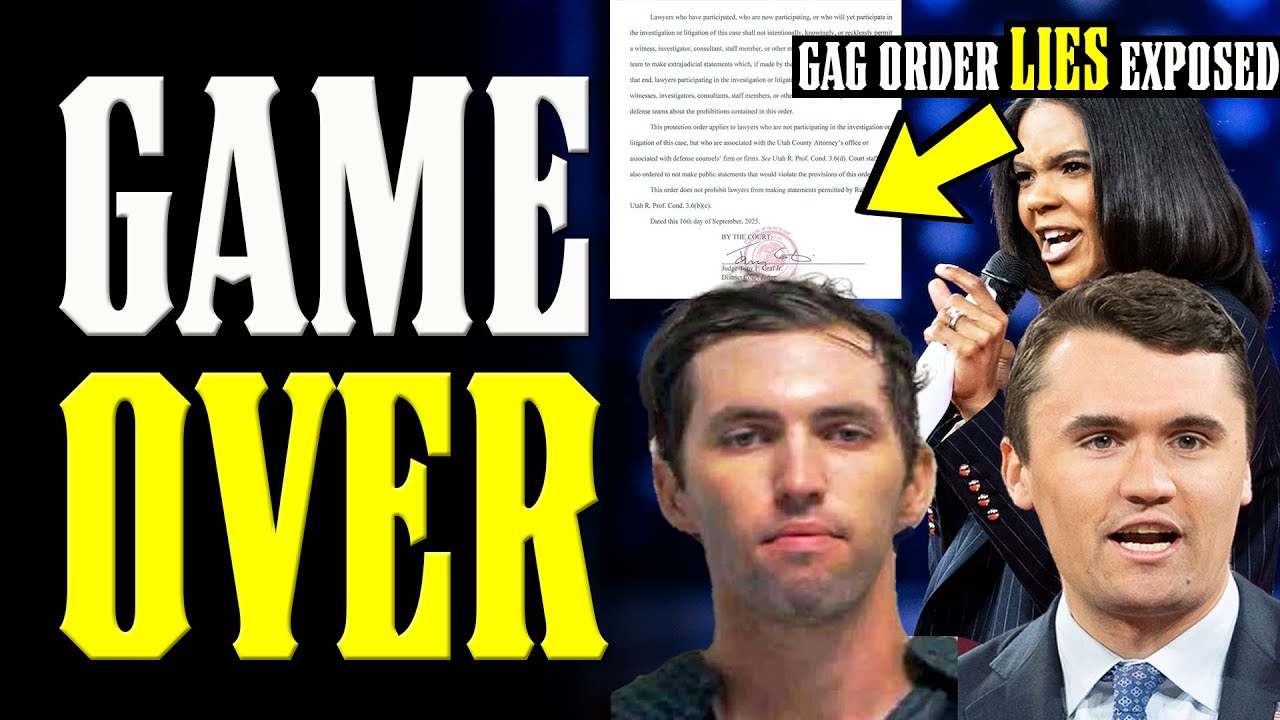
Jesse ON FIRE Destroys Prosecution's Case Against Tyler Robinson in Charlie Kirk Shooting Investigation
Jesse ON FIRE breaks down explosive testimony from Lance Twiggs in the Tyler Robinson trial, revealing massive holes in the prosecution's case surrounding Charlie Kirk's shooting. From DNA evidence contamination to contradictory ballistics testimony, failed witness identification, and suspicious behavior by Turning Point USA security personnel, Jesse ON FIRE demonstrates why the state's case may be falling apart. He challenges Ben Shapiro's public criticism while systematically dismantling each piece of evidence presented in court. This analysis exposes potential multi-agency coordination issues and raises fundamental questions about what really happened that day at UVU campus.
During testimony in the Tyler Robinson trial, key witness Lance Twiggs failed to positively identify Tyler Robinson from video evidence captured on the UVU campus. When shown images of the suspect, Twiggs repeatedly stated "it looks like him" but could not confirm with certainty that the person in the video was Robinson. This testimony came from Robinson's live-in boyfriend, whose DNA appears on every piece of physical evidence in the case.
The testimony revealed additional concerning details about the timeline. Twiggs stated that Robinson typically left home at 7:00 AM and returned by 4:00 or 5:00 PM on normal days. Yet on the day of the shooting, there was no communication between them from morning until approximately 11:30 PM, when the alleged confession text messages began. This pattern contradicts typical relationship behavior, especially for a first serious relationship between young adults.
Witness accounts also place multiple occupants in Robinson's vehicle, including descriptions of a bald driver with three or four passengers, further complicating the prosecution's narrative that Robinson acted alone.
Ballistics Evidence Fails to Confirm Murder Weapon
Agent Brian Davis confirmed during testimony that the bullet fragments recovered from Charlie Kirk's body during autopsy could neither be positively identified nor excluded as having been fired from the rifle allegedly used by Robinson. The forensic report stated there was "agreement of all discernable class characteristics and neither sufficient agreement nor sufficient disagreement of individual characteristics."
This inconclusive ballistics evidence represents a fundamental weakness in the prosecution's case. The .30 caliber class deformed bullet jacket fragment and four lead fragments cannot definitively link the recovered rifle to Kirk's death. When combined with reports of other bullets found on different rooftops, the ballistics testimony creates substantial reasonable doubt about which weapon actually killed Kirk.
The rifle itself presents additional problems for the prosecution. Initially described as a distinctive World War II Mauser that led investigators to Robinson through his father's recognition of the weapon, courtroom photographs revealed a generic-looking rifle nearly indistinguishable from common models like the Ruger American. This contradiction undermines the chain of evidence that supposedly connected Robinson to the crime.
DNA Evidence Points to Multiple Handlers
Every piece of physical evidence in the case contains DNA from both Tyler Robinson and Lance Twiggs. This includes the rifle, a screwdriver, and a towel recovered from the scene. Twiggs had access to all items and demonstrated technical proficiency with multiple electronic devices, as evidenced by social media posts showing him handling five or six cell phones simultaneously.
The DNA contamination raises questions about evidence integrity and chain of custody. Twiggs also had exclusive access to the electronic devices containing Robinson's alleged confessions, including Discord messages and text conversations. These digital confessions, which began near midnight despite no prior communication that day, could potentially have been created by someone other than Robinson.
A handwritten note allegedly from Robinson was destroyed by burning, leaving only photographs as evidence. The combination of shared DNA on physical evidence, exclusive access to electronic devices, and destruction of original handwritten materials creates multiple pathways for reasonable doubt.
Timeline Inconsistencies and Missing Communication
The prosecution's timeline contains unexplained gaps that contradict normal human behavior patterns. Robinson allegedly left home at his usual 7:00 AM time but did not return by his typical 5:00 PM arrival. Despite being in a committed relationship and living together, Twiggs testified that he had no contact with Robinson throughout the entire day until the late-night text messages began.
This absence of communication appears highly unusual for a couple in their first serious relationship. The expected pattern would include check-in messages, especially when Robinson failed to return home at his normal time. Hours passing without any contact or concern contradicts typical relationship dynamics and raises questions about the authenticity of the timeline presented by the prosecution.
Additionally, Twiggs testified that he had never heard Robinson discuss Charlie Kirk before the alleged shooting. This testimony seems inconsistent with the prosecution's theory that Robinson harbored enough animosity toward Kirk to commit premeditated murder.
Security Team Behavior Raises Questions
Analysis of video footage from the shooting reveals unusual behavior by Kirk's security detail. Despite their principal being shot in what appeared to be an active shooter situation, none of the security personnel drew their weapons. They remained exposed to potential additional fire while attending to Kirk without taking defensive positions or scanning for threats.
The security team's hands and shoes showed no visible blood despite their close contact with Kirk immediately after the shooting. No blood trail appears between the shooting location and the vehicle where Kirk was placed. This absence of expected blood evidence seems inconsistent with the nature of the wound described in official reports.
Video analysis also shows what appear to be hand signals exchanged between security personnel and other individuals before the shooting occurred. While these observations cannot be confirmed as fact, they represent anomalies in the official narrative that warrant explanation.
Ben Shapiro Criticism and Response
Ben Shapiro publicly criticized the investigation into inconsistencies in the Kirk shooting case, stating that anyone questioning the official narrative was "spreading conspiratorial poison for cash" and demonstrating "cowardice, stupidity, wickedness, or all three." He announced plans to address these criticisms during a live stream.
The response to Shapiro's criticism focused on the evidentiary standard required for conviction. Criminal trials operate within specific rules of evidence, and the defense need only create reasonable doubt rather than prove an alternative theory. Each piece of prosecution evidence that can be discredited or called into question contributes to reasonable doubt, regardless of whether a complete alternative explanation exists.
The debate highlights tension between those accepting the official narrative and those identifying unexplained inconsistencies in the evidence presented at trial. This division extends beyond the specific case to broader questions about how thoroughly high-profile incidents should be examined before conclusions are accepted.
Electronic Evidence and Technical Capability
Investigators used Cellebrite extraction technology to verify text message exchanges between Robinson and Twiggs. This forensic examination confirmed the messages were present on the devices, but cannot determine who physically typed them. Given Twiggs' demonstrated comfort with multiple electronic devices and his exclusive access to Robinson's phone during the critical time period, questions remain about message authorship.
The Discord messages allegedly containing Robinson's confession similarly existed on devices accessible to Twiggs. Without additional verification of who created these messages beyond their presence on shared devices, the electronic evidence faces credibility challenges when combined with other case weaknesses.
Social media evidence from Twiggs' TikTok account, including videos showing proficiency with multiple phones simultaneously, demonstrates technical capability that complicates the prosecution's narrative of Robinson as the sole author of digital confessions.
Crime Scene Destruction and Evidence Preservation
The shooting location on UVU campus was excavated and cemented over within four days of the incident. This rapid alteration of an active crime scene in a high-profile political assassination investigation appears unusual. Reports suggest the governor and FBI leadership pushed for quick completion of the work, officially described as preparation for a memorial.
The destruction of the crime scene eliminated potential evidence and prevented independent verification of ballistic trajectories, bullet impacts, and other physical evidence that might have contradicted or confirmed the prosecution's theory. This decision represents a significant deviation from standard practice in cases of this magnitude.
Witness Credibility and Background
Lance Twiggs' background includes reported incidents of violence, including an alleged knife attack on a family member that resulted in his removal from a church community. Friends of Robinson have come forward with accounts describing Twiggs as unstable, including notebooks containing disturbing drawings and erratic behavior patterns.
In contrast, Robinson's background before his relationship with Twiggs showed no history of violence or concerning behavior. Associates described him as a good student with no previous incidents suggesting he would commit a violent crime. This divergence in background between the accused and the primary witness creates additional questions about the case narrative.
The physical similarity between Twiggs and Robinson also means that video evidence purporting to show Robinson on campus could potentially depict Twiggs instead, especially given Twiggs' own inability to positively identify Robinson from the footage.
Legal Standard and Burden of Proof
The defense in a criminal trial need not prove innocence or present an alternative theory of the crime. The burden remains entirely on the prosecution to prove guilt beyond a reasonable doubt. Each evidentiary weakness, timeline inconsistency, and credibility question compounds to create the reasonable doubt required for acquittal.
The case against Robinson relies on circumstantial evidence, witness testimony from someone with potential motive and access to evidence, inconclusive forensics, and electronic messages that cannot be definitively attributed to Robinson. When the key witness cannot identify the defendant in video evidence and shares DNA with all physical evidence, the prosecution's case faces substantial challenges meeting the beyond-reasonable-doubt standard.