Up Next

Candace Owens Investigates Charlie Kirk Assassination Theory Involving Rigged Rode Microphone and Explosive Device
1:14:28
Candace Owens Exposes Victor Marx's Suspicious Timeline and Erika Kirk's Will Update Appointment Days Before Assassination
57:26

Candace Owens Uncovers New Evidence in Charlie Kirk Investigation: Mystery Man at UVU Campus Day Before Shooting
54:28
Candace Owens Exposes New Evidence in Charlie Kirk Assassination Investigation: Navy SEAL, FBI Officials Challenge Official Narrative
Candace Owens continues her investigation into the assassination of Charlie Kirk, examining troubling inconsistencies in official accounts. Former Navy SEAL Team Six sniper Robert O'Neal and Air Force Brigadier General Blaine Holt publicly question the ballistics evidence and timeline of events. Owens reveals contradictions in witness testimony, including conflicting statements from Frank Turek and Brian Harpole about CPR performed in the vehicle. She examines the background of key investigators, questions why critical surveillance footage remains unavailable despite Utah's extensive camera network, and explores connections between Mormon institutions, FBI officials, and Turning Point USA staff. The investigation reveals a pattern of newly appointed officials in strategic positions just before the assassination, raising questions about coordination and cover-up.
Military Experts Challenge Official Assassination Narrative
The investigation into Charlie Kirk's assassination took a dramatic turn when former Navy SEAL Team Six sniper Robert O'Neal appeared on Newsmax to publicly challenge the official story. O'Neal, who killed Osama bin Laden, stated unequivocally that the ballistics don't match what authorities claim happened. "I've killed more than a handful of people and this thing looked shady off the bat," O'Neal explained. "I've killed people closer than I saw the camera and I've never seen a shirt move like that. That looks like an explosion to me."
O'Neal raised multiple red flags about the immediate aftermath, noting that first responders seemed more concerned with removing SIM cards from cameras and clearing the scene than providing medical aid to Kirk. He also questioned why the area was paved over within days of the incident. Air Force Brigadier General Blaine Holt joined O'Neal in disputing the official explanation. When asked about the narrative that the bullet hit Kirk's spine, explaining the unusual wound pattern, General Holt responded firmly: "No. No, that's not what happened. Something exploded on him."
General Holt expressed frustration that federal authorities expect millions of veterans with combat experience to accept a narrative that contradicts their professional knowledge. "There are millions of vets with Rob's training," Holt explained. "We have enough training to know better than the garbage that was foisted upon us from the Justice Department that day where they seemingly solved the case in about eight hot seconds."
Contradictory Witness Accounts Raise Serious Questions
Frank Turek attempted to address contradictions between his account and that of Brian Harpole regarding CPR performed in the vehicle transporting Kirk to the hospital. On a recent podcast, Turek acknowledged that Harpole correctly stated that no CPR was performed for most of the journey, but claimed he attempted CPR for 20-30 seconds at the very end. "It's not a contradiction," Turek insisted. "We're just emphasizing different details at different times. Eyewitnesses disagree on details for various reasons. That's the mark of authentic eyewitness testimony."
However, the discrepancy raises significant concerns. Harpole stated definitively that CPR was not performed, while Turek now claims he moved Kirk's body into CPR position and performed chest compressions. Turek suggests Harpole may have been distracted or looking elsewhere during this critical moment, despite Harpole's statement that he was focused entirely on stopping Kirk's bleeding throughout the journey. The contradiction becomes more problematic given reports that Kirk's legs extended out the vehicle door because they were too long to fit inside, making proper CPR positioning difficult if not impossible.
Memory Lapses and Changing Stories Among Key Witnesses
Blake Neff, a Turning Point USA employee, provided conflicting information about where the organization's staff stayed the night of the assassination. Initially, Neff stated they stayed in Orem, but later changed his story to say they stayed in Salt Lake City, approximately 50 miles away from where Kirk was hospitalized in Provo. When pressed about which hotel they stayed at, Neff claimed he couldn't remember. This detail raises questions about why Turning Point USA staff would travel nearly an hour away from Kirk's location to stay overnight, particularly when Provo is a substantial city with numerous hotel options.
The Salt Lake City location becomes more curious given that several Turning Point USA employees flew into Salt Lake City despite not attending Kirk's restaurant event. The decision to make Salt Lake City the operational hub for staff who were supposed to be supporting an event in Provo remains unexplained. Investigators are seeking information from hotel workers who may remember the large group of Turning Point USA employees, Erika Kirk, and security personnel who allegedly stayed in Salt Lake City that night.
Governor Cox and the Clothing Change Narrative That Disappeared
During an official FBI press conference on September 12th, two days after the assassination, Utah Governor Cox made a startling claim that Tyler Robinson changed clothes on the rooftop. "When he's first spotted on campus, he has different clothing on and then he changes clothing on the rooftop and then changed back into that clothing at some point so that when he was apprehended, when he was arrested, the clothing matched the clothing he had on before the shooting," Cox stated. Standing beside the governor were Kash Patel and Bo Mason, neither of whom corrected or questioned this claim.
This narrative has since disappeared entirely from official accounts, with no explanation provided for why it was initially reported or why it was abandoned. The story raised logical questions from the beginning: Why would someone need to change clothes on a rooftop? Why not use a bathroom? What would be the tactical advantage of changing from one shirt to another on an exposed rooftop? The abandoned narrative suggests either significant confusion about basic facts in the immediate aftermath or an intentional misdirection that was later deemed unnecessary or too difficult to maintain.
The Screwdriver Mystery and Dan Bongino's Non-Answer
Authorities claimed that Tyler Robinson used a screwdriver found on the rooftop to disassemble or assemble his rifle. However, experts including Robert O'Neal have pointed out that the screwdriver recovered would not have been the appropriate tool for working on the rifle allegedly used. This discrepancy became more problematic when it was later established that the rifle was found assembled in the woods, not on the rooftop, contradicting the need for the screwdriver entirely.
When pressed about these contradictions, Dan Bongino appeared on Megyn Kelly's show on September 15th and offered only vague explanations about grainy video footage making it difficult to determine what happened. "The video is obviously grainy," Bongino stated, suggesting that investigators were still working to enhance footage. However, this explanation fails to address why surveillance footage in one of the most heavily monitored states in the country would be insufficient to track a suspect's movements, or why basic facts about the screwdriver's purpose and the rifle's location couldn't be clearly established days after the incident.
Utah's Extensive Surveillance Network Fails to Provide Clear Evidence
Utah maintains one of the most comprehensive surveillance camera networks in the United States, with cameras throughout the state tracking vehicles and individuals. Despite this infrastructure, authorities claim they cannot provide clear footage of Tyler Robinson's movements on the day of the assassination. All released footage has been described as too grainy to definitively show what occurred, leading to questions about why such an extensive surveillance system would fail precisely when needed most.
The failure to produce clear footage becomes more suspicious given that authorities were able to quickly identify Robinson, track his movements enough to make an arrest, and develop a detailed narrative about his actions. The selective availability of clear evidence versus grainy, inconclusive footage suggests possible manipulation of what information is released to the public. Robert O'Neal noted that first responders seemed more concerned with removing SIM cards from cameras than providing medical assistance to Kirk, raising questions about whether evidence was being controlled or destroyed in the immediate aftermath.
Strategic Appointments Before the Assassination
A pattern has emerged of key officials being appointed to strategic positions in the months immediately before Kirk's assassination. Andrew Zanger became CEO of Timpanogos Hospital on August 18th, 2025, just weeks before the incident. Judge Tony Graf was appointed in May 2025. Bo Mason was named commissioner of the Utah Department of Public Safety on June 19th, 2025. Perhaps most notably, Robert Bass was installed as head of the FBI's Salt Lake City field office on September 2nd, just eight days before Kirk's assassination.
Bass had a long career with the FBI across various locations but was specifically reassigned to Utah after Kash Patel fired the previous head of the Salt Lake City office. Notably, Bass began his law enforcement career with the Provo Police Department in the early 2000s before joining the military and then the FBI, meaning he was returning to his original jurisdiction. The timing and coordination of these appointments raises questions about whether positions were being filled with specific individuals who would be cooperative with whatever operation was planned.
Jennifer Faumuina: The State Investigator with Interesting Connections
Sergeant Jennifer Faumuina of the Utah State Bureau of Investigations plays a significant role in the investigation, having recovered crucial evidence including a backpack, gloves, and potential tactical gear found along the path the shooter allegedly ran. During testimony, Faumuina claimed she couldn't recall whether she signed off on the FBI's decision not to test this potentially crucial evidence. Her selective memory loss regarding such an important decision raised red flags.
Research into Faumuina's background reveals several interesting details. She was raised in Hawaii and graduated from Weber State University, founded by the Mormon Church, in 2008 with a degree in criminal justice. She appears to have worked with the FBI's joint terrorism task force, as confirmed in her appearance on the Netflix show "Worst Roommate Ever." Public records show a gap in her employment history, with her first confirmed position as a paid officer with the Utah Department of Public Safety beginning in 2018, despite completing police training in 2013.
Faumuina's family history includes tragedy connected to gang violence in Hawaii. Her uncle, Missiona Faumuina, was killed in 1995 during what was described as a gang initiation ritual. Her father spoke publicly about the incident, describing his brother as a devout Mormon who attended church regularly, raising questions about how gang membership and Mormon devotion could coexist. The case involved an organization called Adult Friends for Youth, run by Sid Rosen, a figure with his own interesting international connections.
Bo Mason's Connection to Jennifer Faumuina
Bo Mason, who was appointed commissioner of the Utah Department of Public Safety just months before Kirk's assassination, has a documented history with Jennifer Faumuina. The two appear together in a 2013 photo from police training. A decade later, in 2023, they appear together again when Faumuina was sworn in as a sergeant. The longstanding professional relationship between these two key figures in the investigation adds another layer to questions about coordination and control of the official narrative.
Andrew Kolvet's Brother Enters the Fray
In an unusual development, Andrew Kolvet's brother, a lieutenant colonel in the military, took to social media to defend Andrew against accusations that he worked at Fort Huachuca. The brother stated he is Andrew's only brother, never worked at Fort Huachuca, and only visited once for a three-day training session. The defensive statement addressed an accusation that few people were making, raising questions about why a lieutenant colonel would involve himself in defending his brother on social media over relatively minor allegations.
The protest that neither brother had any connection to Fort Huachuca struck many as suspicious given that the base is a major intelligence and surveillance facility located in Arizona, where the Kolvet family lives. Fort Huachuca serves as headquarters for Army intelligence operations and coordinates significant border security activities. For individuals connected to both military and political operations in Arizona to claim unfamiliarity with this major installation strained credibility.
The Lunch Mystery: Who Was with Ben Shapiro?
Investigators have identified an individual who claimed to be at lunch with Ben Shapiro when Shapiro received the phone call about Kirk's assassination. This information has opened what investigators describe as "a huge door" requiring additional research before the name can be publicly revealed. The investigation into this lunch companion has led researchers toward examining the Franklin coverup scandal from Nebraska, a controversial case involving financial fraud, claims of abuse by high-ranking politicians, and allegations of satanic ritual abuse.
The connection between this unnamed lunch companion and the Franklin scandal suggests deeper networks of influence and control that may have bearing on Kirk's assassination. Nebraska notably appeared on the unusual flight path taken by planes connected to the investigation. The revelation of this individual's identity is expected before the end of the week and may significantly reshape understanding of who had advance knowledge of the assassination and what networks were involved in its planning or execution.
Video Transcript
All right, you guys. Happy Monday and
congratulations are in order for Spain.
You guys, I was very excited that Spain
won. You have no idea. Well, you kind of
have an idea because I told you guys
that after the roughest year of my life,
Spain absolutely healed me. That two
week vacation was so necessary. They
were just perfect. And it seems the
entire world was rooting against
Argentina for different reasons. I for
me personally, not because I hate
Argentinians, uh, but I think the
majority of the world was just looking
at Ben Gavir rooting for them, BB
Netanyahu in general. We hate
psychopathic, genocidal murderers and
having them explicitly come out and say
that they were rooting uh for that team
to win was not helpful. You look, you
can't just root for Satan out of a love
for country, right? That's why even me,
I was off of the US train. It was like
they were the underdogs. But as soon as
the corrupt Howard Lutnik and President
Trump got involved, the 9/11 crew
getting back together, they stuck their
noses in it. I was like,
still love United States, but I I got to
root against naked power and demons.
Same with France. Nothing personal. You
know, I love the French people. They've
been so unbelievable in our
investigations because they believe
exactly what I'm telling them. They know
what Breijgit is and what Breijgit did.
And the players were especially
hilarious. I remember that clip from a
while ago of those French football
players looking at Breijit, giving her
the side eye. But I think just around
the world were so sick of the blatant
corruption of these governments. That
was the feeling. And it so it just felt
like spa Spain deserved it for taking an
unapologetic stance in support of Gaza
in my view and of course selfishly uh
for giving me that twoe reset that I
needed. Anyway, do you know who I think
also might need a twoe reset in Spain?
Frank Churik and Andrew Kovette. I just
don't know what they're doing anymore.
Andrew Kovett's big brother, Lieutenant
Colonel in the military, came to
Andrew's defense on X this weekend. This
is everything's weird. It was very odd.
And Frank Turk want you to know that him
and Brian Harpole sharing different
details about what happened in the car,
that entire CPR bit, well, it's not a
contradiction. He's saying they just
have different memories. But it's not a
contradiction. I'll let him explain.
There's a lot of memories that appear to
be lapsing regarding September 10th.
Let's see if we can help these guys.
Welcome back to Candace.
Okay, let's start with a fun clip. I
watched it so many times. It's just
going to make you happy on this Monday
morning. I mean, or Monday afternoon,
rather. I laughed so hard when I watched
it. Just picturing the crisis at Turning
Point USA. They're probably calling all
of their crisis PR firms. Turning Point
just going, "What? How are we going to
spin this?"
What do we have? It is Robert O'Neal,
the former United States Navy Seal Team
Six Sniper who killed Osama bin Laden.
Well, he went on to Newsmax. And you're
never going to guess he doesn't quite
believe the narrative that the feds are
spinning. He does not believe that
Charlie was shot with a 30 six from a
lossy rooftop. Again, you got to watch
this clip because it's amazing. Take a
listen.
>> Rob, you know what you're talking about.
That's why we had you on. You know about
ballistics. You shot Bin Laden. What
bothers you the most about this
investigation?
>> Thanks for having me, Rob, and good to
see you, General Hull. A lot of things
bother um bothers me about this. Um
nothing in particular, and it's not like
I'm out there saying big lie or
conspiracy or someone did it. I'm just
saying I've been in a lot of shootings.
I've killed more than a handful of
people and this thing looked shady off
the bat. I mean, just I've killed people
closer than I saw the camera and I've
never seen a shirt move like that. That
looks like an explosion to me. the uh
just the fact that no one started doing
uh first aid to Charlie Kirk. They were
more concerned about getting SIM cards
out of cameras, removing cameras, and
then uh getting him off the X somehow.
There didn't seem a lot of concern for
for his life. It seemed like just clean
it up. And then I mean, I've been told
they paved it over a couple days later.
And then you get Erica Kirk uh behind
all the razledazzle and she's really
quick to forgive the alleged shooter
which technically says uh that was him
cuz I forgive him. But that you can't
forgive Candace Owens for having an
opinion or asking questions and they
mock people by saying oh I'm just asking
questions. Yeah, I'm a I'm a SEAL team
six sniper. I'm asking a lot of
questions. No one wants to answer them.
>> I mean I think you said everything
there. It's what everybody's thinking
and what everybody is saying and they
just can't buy enough influencers. What
are they going to do? Call him a
psychopath, a sociopath. They could do
like, you know, the pastor gambit thing.
Um, have them all come out and say he's
demonic and he's possessed. How dare he
attack a widow. We could get bring back
Dana Lash. She could start speaking the
widow to Robert O'Neal. I just don't
know how you respond to that. He doesn't
know what he's talking about. He doesn't
know how bullets work. What do you What
are you going to say there? And it just
keeps getting better, that clip, because
Robert O'Neal was joined by Air Force
Brigadier General Blaine Holt. And here
is what he had to say regarding the
narrative.
>> General, same to you. So this rifle, so
this 30 6, it's a powerful rifle. Um,
what do you make of this narrative that
the bullet might have hit Charlie's
spine, which would explain why the
damage wasn't what you would typically
see with a rifle like that from that
range?
>> No. No, that's not what happened. And
this is the the thing that that hurts
here is and and what bothers me the most
out of it.
>> Wait, did you say, General, you don't
think that's what happened?
>> Absolutely not. I I I I'm with Rob.
something exploded on him. But but but I
don't have to get into the details cuz
I'm not in a court of law having to
prove a darn thing. Here's what bothers
me is there are millions of vets with
Rob's training. Uh training in combat
arms as low as mine is. I'm a pilot. Uh
but we have enough training to know
better than the garbage that was foisted
upon us from the Justice Department that
day where they seemingly solved the case
in about eight hot seconds. Um and and
we know better. You're not going to take
a 306 with a kid who's never killed
anybody up onto a roof. He takes his
first life and does all the things that
Rob says he did. So, what bothers me,
Rob, in all of this is that they know
that we know better and yet they force
this as the narrative and the parable
anyway. Why would you do that? Why would
you do that in a in a circus where
there's so many of us who are already
going to go, "Well, that's not exactly
what happened at all."
I just love the way he says, "No, no,
that's not what happened." It's like
he's dealing with children. Like, no,
I'm not even just let's stop that
narrative alto together. It's not what
happened. It's what we've all been
saying since the very beginning. Uh, but
these people have the street cred to sit
up there and to say this is ridiculous.
And so, what is the response again going
to be to this? You got to bring out the
pastors. I guess lock everybody up for
having common sense when you have people
who are in the these career fields
telling you that this is crap. None of
it makes sense. And he is correct. The
general is correct in saying that. The
most alarming part is everybody knows
they're lying and yet they just keep
lying. It's it's it's beyond that. They
just think they have enough money to
pull this off. Like this is like
everyone knows you're trying to attempt
this h this hat trick and they don't
care. They're just going to run it and
go, "Doesn't matter. We're powerful.
There's nothing that you can do. Bring
on the grieving widow." Anyway, we are
in the process right now of going back.
I was telling you guys this last week,
and trying to remember all of the random
cow manure that we were spoonfed early
on, right? It's actually quite a
difficult task. I'd argue it's actually
a full-time job to keep track of fed
slop, but somebody's got to do it. And
do you remember when we were told by
Governor Cox during an official FBI
press conference, a briefing on
September 12th that the assassin changed
clothes on the rooftop? That that's what
the public was told 2 days after the
assassination after they were able to
pull, review, and release the footage to
the public. Take a listen.
>> One more thing, Governor. Could you just
clarify the clothing issue you mentioned
earlier?
>> Was he changing outfits?
>> Correct. Yes. Yes. So, um, so when he's
first spotted on campus, he has
different clothing on and then he
changes clothing on the rooftop
>> and then changed back into that clothing
at some point so that when when he was
uh when he was apprehended when he when
he was arrested um the clothing matched
the clothing he had on before the
shooting here at UVU.
Next question. Quick, I don't want to
have to follow up on on the BS that I
just said. Now, standing to his side,
obviously on the right hand side of your
screen, that's Cash Patel. On the other
side, that's Bo Mason standing behind
the governor. And you will note that at
no point did those two intervene and
say, "Oh, no, no, that's incorrect." And
don't forget, I must stress this is
after they arrested Tyler Robinson.
Seize the text messages, had the ability
to review them, review the footage
everywhere on campus presumably. Um, so
what happened to that narrative?
There's supposed to be somebody butt
naked on the rooftop. What happened to
that narrative? Did the governor go
rogue like Andrew Kovvat? I hate when
that happens. Or did they just
completely make that part up as they
were trying to make the various decoy
boys make sense? I never understood why
he needed to change at all. Why can you
not wear a maroon shirt? And if you're
going to change, why wouldn't you do
that in the bathroom?
They were trying to tell to us that the
assassin was also an exhibitionist or
something. Literally, what would be the
point of changing from a maroon shirt
into a long sleeve shirt with an
American flag on a rooftop? I mean, it's
amazing that um I'm actually held to a
higher standard than the FBI. Let me get
a time zone calculation incorrect right
after daylight savings time. Let me use
a website and think that it's giving me
local time and share local time as I did
and then turns out it's not local time.
It's UTC, 80 million videos will pop up
overnight from influencers calling me an
idiot. But our nation's top brass can
apparently make up an entire sequence of
events that happened that actually never
happened and the world just moves on.
And we're called the conspiracy
theorists for noticing these
discrepancies and keeping track of them.
And also, like I told you last week, I'm
still very plagued by the screwdriver
question because what was the point of
that narrative entirely? In fact, if we
had played more of Robert O'Neal, he
goes in on the screwdriver. He he says,
"This isn't even the right screwdriver
to take apart the gun that they're
telling you that he took apart. This is
not This wouldn't get the job done.
What's up with this screwdriver?" And as
we now know, the rooftop man neither
assembled or disassembled his rifle on
Loi. So, did something go wrong? They
didn't not think that part through that.
They already plant the evidence that and
they had to just sort of make it work
after that because it had Tyler
Robinson's DNA on it and they were like,
"Oh, I can't let that go because that's
kind of one of the only things that we
have tying him to this rooftop. So,
we're just going to say he took it out
as he was changing. Forget the changing
part." Of course, when these questions
started coming in about how nothing that
the public officials were telling us
made any sense, Dan Bonino
then came out and did a news hit. You
know, he's the tough guy who's going to
beat up Tucker Carlson. Yeah, I can beat
him in a fight. Well, Dan Bonino joined
Megan Kelly. I want you to to understand
this is on September 15th. So, we're now
five days removed from the
assassination. He's working at the FBI
and has every resource at his fingertip.
And here's his excuse for why nothing's
making sense. Take a listen.
>> That's another thing that people are
confused about because if Cash said that
they found his what we presume was his
screwdriver on the top of the building
and they found his DNA on it, leading
many to believe he had disassembled the
gun when he jumped off of the roof. But
then it appears when you guys found it
in the woods, it was assembled. So, can
you provide any clarity on that?
Yeah. And I was a little hesitant in a
media appearance this morning to go into
specifics on uh especially the video and
where the gun was. And there's a reason.
Again, I uh I'm we only we only want to
be transparent here.
>> Yeah. Just tell us what
>> the suspect. Yeah. Now, the suspect not
cooperating is the video is obviously
grainy and and as folks in the video
space know out there, we can we have a
number of really excellent tools in our
lab which is they're doing amazing work
and they've been up and and handling
this for days now. But the video is very
grainy and I want to be very clear and I
don't want oh there was you know I've
already seen some online. Yeah, I can
see it on the screen now. You'll see
it's a grainy video now. Um, I have been
I've been on that roof in that corner
and when you see the camera in the
distance away, it's clearly not the best
video.
>> Not sure you answered the question
there. That's a That's a tricky one.
That's what my kids always say. When
something's confusing, they go, "That's
a tricky one, Mom. That is a tricky
one." So, are we to believe that our
nation's top brass uh couldn't rush to
get some of that 4K HD, 4D chess, super
duper crystal clear, overwhelming
footage that was made available to Benny
Johnson, Graham Allen, and his wife 10
months later, and some other
influencers. Um, and we still don't have
an explanation for the rooftop and why
he had the screwdriver at all. Also,
what could they have possibly seen that
would have led them to believe that he
had changed clothes on the rooftops?
There's still no answer for anything
grainy footage. You know, I actually
have an idea. Let me spin a more
plausible story to you. I think my
source, the person who recorded um the
rooftop guy on Loi is likely telling the
truth about the tactical clothing. I
think it was never even actually a towel
that we saw in the footage. um that the
rooftop jogger, the rooftop sprinter
had. I think it was likely a black
jacket just as the person who recorded
described said he was wearing a black
jacket and tactical gear. All he knows
is he was wearing all black
because there was that blurry image that
we were told was a towel because they
had to then make it fit in with the gun
which was wrapped in a towel. But let's
check that out because I think it's much
more likely that rooftop man was just a
decoy who never fired any gun. He was
tasked with sprinting away at the right
time. And I think it's plausible that
while he was running, he dumped his
tactical gloves. And what's in his hand
there is his black jacket and his
backpack, which was also described by my
eyewitness who was never contacted for
some reason. Um, I think he dropped all
that by the bus stop near Fulton
Library. And those items, as we learned,
were then recovered um by Sergeant
Sergeant Jennifer Fomina of the State
Bureau of Investigations, her office.
And I have to say this, Jennifer Fomina
Fuina rubs me the wrong way. Can't
explain it. It's the vibe to her entire
posture as she randomly blacks out on
what could be a crucial piece of
evidence. I don't recall. I don't
recall. Oh, you don't recall whether you
signed off on the FBI not testing a
backpack, gloves, potential tactical
gear that were abandoned upon the exact
path that the shooter ran. You just
don't recall that. Who are you, Sergeant
Jennifer Fina?
Over the weekend, a lot of people noted
that she appeared, indeed she did, on
season 2, episode one of the ne Netflix
show called Worst Roommate Ever, where
she indicates that she worked with the
FBI's joint terrorism task force. Here's
what she says. Take a listen. I've been
with the State Bureau of Investigation
for 8 years, but I'm also assigned
full-time to the FBI as part of the
joint terrorism task force. And
especially with this case, it was one
where with this type of bacteria in not
knowing this person's intent in
purchasing it, we really had to [music]
act fast.
So, I'll say this. Police officers do
participate in various TV shows,
especially when they're recapping a
crime. It's not completely off the mark,
but it certainly piqued my interest in
her and her background. and she has
spoken about how she was raised, born
and raised in Hawaii, moved to Utah. And
so I decided to just, you know, prod it,
see if it's true. And what we have been
able to confirm about Jennifer Fomina is
she was indeed raised in Hawaii. In
2003, we found her playing basketball at
a private school in Hawaii. From there,
she moved to Ogden, Utah, where she
studi studied criminal justice,
graduating from Weber State University,
uh, which was founded by the Mormon
Church in 2008. In 2013, she completes
what's known as post training um at the
Utah Department of Public Safety. Uh we
then find her, the only mention we could
could find of her in these next years
was in an article in 2016 volunteering
for crowd control at the RNC convention.
I'll show you that the RNC convention
was in Ohio. They needed volunteer
troopers from all around. And you can
see Jennifer Falmina is pictured there
as one of these volunteer troopers. Now,
what I will say is odd about this
particular placement is that it is the
only one that we can find that confirms
that she was a state trooper.
Remember, public records exist for
government salaries and we find none
that lists her as being a paid officer
with the Utah Department of Public
Safety until 2018. We couldn't find an
article that mentions her before 2018
either. Aside from that, instead, she
appears to be working some sort of a
part-time gig at Weber State University.
We are happy to update that information
if more becomes available, but it
appears to us like maybe she was still
in school receiving further
certifications. I'm not entirely sure.
What is known is that in 2018, like I
said, we have her officially working for
the Utah Department of Public Safety and
she is paid very well. Um, hence why I
believe that she had more schooling. And
there's another interesting tidbit now
regarding that FBI press conference that
we showed you earlier. Cash Patel uh is
standing to the right and and he's
standing uh next to the newly appointed
state police commissioner Bo Mason.
That's Bo Mason. You should know that Bo
Mason was appointed to that position of
commissioner of Utah of of the Utah
Department of Public Safety on June 19th
of 2025 by Governor Cox. And this is not
the press conference. The one that we
showed earlier with Cash Patel is the
one that I wanted to show there um that
we showed earlier with Cash Patel
standing there. You know, I'm talking
about the press conference where the
governor says that he was on the uh
changed clothes in the rooftop. Anyway,
it turns out that that guy Bo
was apparently in the same post back in
2013, that training photo uh with
Jennifer Fauina in 2013. So, I can show
you that. That's the two of them
together. It's pretty small post
session, but that's May 20th, 2013. The
two of them are listed together and they
are I don't know how it works and I I
could be ignorant and I'm sure I'll get
emails from people. There's another
photo of them. Fast forward uh Jennifer
Fomina and Bo Mason together 10 years
later in 2023 when she is sworn in as a
sergeant 2023. Okay. Bo Mason's
appointment to police commissioner is
timely. I want to point that out. We
have continually raised this pattern
since early on in this investigation.
There were so many new faces and new
appointments in Utah ahead of Charlie
Kirk's assassination. Everybody was
seemingly new, new new. Remember, we
have the the CEO of Temponos Hospital.
Andrew Zanger, he was appointed just a
couple of weeks before Charles
assassination on August 18th, 2025.
Um, of course, Judge Tony Graph was
appointed in May 2025. We can skip cash
because that makes sense because Trump
just came into office. Uh Bo Mason, as I
just told you, was appointed on June
19th, 2025 to his position as
commissioner. We talked in the past
about the new newer, I should say,
medical examiner from July 2024.
And then this one, which just gets me.
remember special agent Robert BS who had
been serving for the FBI office over in
Virginia. But suddenly and rather
inexplicably uh Cash Patel fires the
person that was heading up the FBI Salt
Lake City office. He fires that person
and installs Robert BS on September 2nd.
Okay, eight days before Charles Crick's
assassination, Robert BS assumes that
position. And I also of the Salt Lake
field office. And I also want to say he
had a very long tenure up until that
moment with the FBI all over the United
States for almost 20 years. But they
first want him in Utah on September 2nd,
just in time for the September 10th
assassination.
But curiously, do you know actually
where he began his policing career
before he went to the military? Of all
places, he began in at the Provo Police
Department back in the early 2000s.
Check out this article from 2004
before he joined the FBI. He was a Provo
Police Department. He was in the Provo
Police Department and then he joins the
military and then he joins the FBI. So,
he really was kind of going back to his
old stomping grounds in a way, just in
the nick of time. Look, I if I didn't
know any better, it would look to me
like they were getting the old gang back
together, to use a phrase. But of
course, I do know better. And our
nation's FBI has never done anything
wrong. They're honorable men. They just,
you know, can't seem to necessarily
always get their stories together.
By the way, speaking of gangs, and back
to Ms. Jennifer Fmuina, she recently
revealed in a podcast, don't tell me why
she's also doing podcasts. Apparently,
she likes the media and cameras. She
revealed that her sister was a social
worker within the state of Utah. And of
course, that allowed me an entry point
to learn all about her family history.
You know, me in genealogy, it's a thing.
I just need to know what everybody's
mamas and great grandmas were doing at
all times. And regarding Jennifer, a
really terrible thing happened in the
Fowlina family down in Hawaii in 1995.
her father, a man named Sapena, spelled
phonetically just as I'm saying it,
Sapena Famuina, was very vocal and in
the news speaking out about it because
it involved the homicide of his brother,
Sergeant Jennifer Fomina's uncle was
killed. Now, apparently, uh, his name,
his name was Missiona Fomina.
Apparently, he was in a gang with his
friends and as a part of a ritual in the
gang, he took a beating. And I'm going
to spare you the details because they
are quite horrific, but it was graphic
and it was brutal. And Missiona survived
the beating, but after being transported
to the hospital, he later on succumbed
to his injuries. And it was this big
case um because there were arguments
that went back and forth. Frankly, the
arguments were bizarre. The defense made
it clear that these guys were all
friends. It's just a part of like
initiation rituals. And they must have
proven their case because the three kids
that were involved got charged with like
secondderee manslaughter. Uh it was just
this was a part of what the these Samoan
guys do as a ritual for gang initiation.
Even more curious I was Jennifer
father's Jennifer's father asserting in
the press that um his brother her uncle
was a devout Mormon. Like I'm just going
a devout Mormon gang member. Uh we we
can take a peek at this together so you
can see here what we're talking about.
Um this is I believe the second page.
Yeah. His older brother, you go to the
first page. I'm just going to read the
the Yeah. His brother, he said, was
soft-spoken, well-mannered, and
articulate. He was also a devoted Mormon
who attended church in Waho every
Sunday. It talks about their ward. So,
uh, the Mackilo ward where the Fuina
family lived and curious, which deserves
an episode by itself, is that the
brother was a member of this or part of
this adult friends for youth, which was
run by Sid Rosen. That's that last
paragraph there. Sid Rosen, who heads
adult friends for youth, um, see is
speaking out. He seemed like an unlikely
candidate to be targeted in such a
violent act. It's a tragedy. Okay, we
have on the next page as well him
speaking about him how he was about to
go onto his Mormon mission. There's just
a lot here. There's a lot here. That's
Sid Rosen character. If I told you he
was connected to Egypt and Israel, you
wouldn't even believe me. So, I'll skip
that portion. The point is is that we
once again have these groups that are
looking for troubled kids. weird things
happen.
In later articles, Jennifer's father uh
would claim that the the gang was upset
because he was going on this Mormon
mission. The ward members would speak
out denying that he was in a gang, which
is rather curious because his older
brother is not denying it, saying he
fell into trouble, whatever. Just the
entire story here, Mormons, gangs. It
got me thinking because a while ago, I
told you guys that I had connected with
Courtney Love and I'm talking a long
time ago back when Charlie was alive and
I had no idea. I told you what she was
talking about when she was describing to
me the Mormon mafia. She kept saying it
is an extension of the Zionist mafia,
the Mormon mafia. I truly at this time
just could not process that information.
And I go back now and I read those
messages and I'm going, she knew exactly
what she was talking about. I think
because now a very interesting picture
is emerging and that's why I'm speaking
to you about this. a picture that I
think is going to shock you, but we have
to unpack it quite slowly. I don't want
to give you information overload today.
So, I just want you to park that in the
back of your mind because I I don't know
about you, but I have not abandoned my
deep sense that Israel was involved in
the assassination of Charlie Kirk.
But that the assassination took place in
Mormon territory makes it curious,
curious perhaps until tomorrow when we
begin to thread some interesting
connections for you. Anyway, we will be
right back after a brief break. All
right, you guys. Our great nation turned
250 this year. We represent two and a
half centuries of possibility, growth,
and some of the greatest minds in human
history. But what is the next 250 years
going to look like? Next generation of
Americans could be the most impactful.
But first, they must be given their
chance at life. That's why I'm making
this critical request today. Give a
special gift of $250 to Preborn to honor
our nation's milestone anniversary and
to celebrate our great future ahead.
Your gift will help provide eight
ultrasounds. Pre-born is helping today's
mothers choose life by providing these
free ultrasounds so that they can meet
their baby for the first time. Help new
mothers realize that they can give their
baby life and that motherhood is
possible. Celebrate America's birthday
with your $250 gift to Preborn today. To
donate, simply dial pound 250 and say
the keyword baby. Again, that's pound250
baby or visit pre-born.com/candis.
Again, that's pre-born.com/candis.
I also want to remind you guys about the
wellness company because you have
probably heard that there is an outbreak
in the United States right now. The CDC
has confirmed the culprit is a new
parasite found in grocery store fruits
and vegetables which has exposed
hundreds of millions of Americans across
30 states. The CDC is investigating a
multi-state outbreak of cycllospora
which is a parasite linked to
contaminated fresh produce. It can cause
severe diarrhea, stomach cramps, nausea,
fatigue, and other debilitating
symptoms. If you get sick, the CDC
recommends Bactrum. That's why the
wellness company created the medical
emergency kit because it comes with
generic Bactrum plus seven additional
prescription medications to help treat
more than 25 common illnesses and
medical emergencies, all prescribed
before you need them. Getting your kit
is simple. Complete a secure online
medical questionnaire. If approved by a
licensed physician, your kit ships
directly to your door. Don't wait until
you're sick to wish that you were
prepared. Visit twwc.althcandis
health/candis and use code candace at
checkout to save up to $45 off plus free
shipping. Again, that's
TWWC.alth/candis.
Kits are available for US residents
only. I also want to remind you guys
about Pure Talk because you do not have
to overpay for your wireless network.
Not when Pure Talk comes in with the
same service for a tiny fraction of the
cost. And now, for the first time ever,
Pure Talk is offering any plan at just
$15 a month for your first three months.
There's never been a better time to take
Pure Talk for a test drive. It's fast,
it's reliable, and you're going to love
it. You can now get any Pure Talk plan,
including their unlimited data plans and
even their top tier $65 plan for just
$15 a month for your first three months.
That's a savings of up to $150. But I
would switch today because this offer is
extremely short-lived. Switch to Pure
Talk and enjoy your first three months
of talk, text, and data for just 15
bucks a month. Head to
puretalk.com/owens
to make the switch to pure talk. Again,
that's puretalk.com
to start saving today.
Let's start with Frank Turk versus Frank
Turk because that's my favorite UFC
matchup. Like Frank gets so mad at the
previous Frank. Later Frank, previous
Frank, they are not friends. And when he
with the current Frank catches the
previous Frank acting up, oh no, he
exercises no humility. He gets caught
telling a different story and then he
kind looks at us and goes, "It's your
fault for even noticing this." Well,
apparently he did this podcast that I
missed responding to all of Candace's
conspiracies, but oddly he sort of just
conceds every point that I told the
truth, but it's still my fault anyways.
It's really weird. Like me noticing the
discrepancies is the problem. He doesn't
deny that there are discrepancies, but
basically wants you to understand that
those discrepancies are not important.
Now, I would say
some would say that Brian Harpole
asserting that CPR was not performed
while Frank Turk says that it was
performed in the car is a major
discrepancy and a major contradiction.
But I want you to listen to Frank Turk
because he owns it and makes it clear
it's not a contradiction. Take a listen.
Brian is correct that most of the ride
we weren't doing any CPR. We couldn't do
CPR. We're trying to stop the bleeding.
So, no CPR was done. It wasn't until the
last say 30 seconds of the ride that I
thought to myself,
we got to be near in like eight or nine
minutes and he's not breathing and
there's no heartbeat. I've got to at
least try. It's probably gonna be
feudal, but I gotta at least try to
start his heart and get some air in him.
So, I tried that for like 20 or 30
seconds at the very end of the ride when
we're pulling into the hospital parking
lot and we're yanking and banking our
way there. Everybody agrees we were in
the car taking Charlie to the hospital
and yeah, we were all trying to stop the
bleeding. I mentioned CPR because I was
the one trying it the last 20 or 30
seconds of the ride. It's not a
contradiction
right now. Maybe as we're yanking and
banking into the
into the uh into the parking lot, Brian
was preoccupied thinking or talking to
somebody else or whatever because it was
a lot of commotion as you could imagine.
He didn't see me trying for 20 or 30
seconds. Maybe he did. I don't know. In
fact, he's got a lawsuit against Candace
Owens right now. So, I don't think he
can even talk about any of this. But
someone could call him and ask him if
they want to. But it's not a
contradiction. We're just emphasizing
different details at different times.
In fact, eyewitnesses disagree on
details for various reasons. That's the
mark of authentic eyewitness testimony.
They all agree on the essentials. They
disagree on the minor details.
In fact, disagreeing with others on
these minor details cannot only be
explained. It is to be expected.
>> I I
I'm just not sure if that didn't sound
like one big contradiction. How do you
start with Brian is telling the truth?
There was no CPR. And then he's like, I
gave CPR. I gave the CPR for 30 seconds.
and Brian was right there, but he was
like talking or something like I think
hopefully I get a jury of my peers
because I feel like that's a
contradiction. I think that that makes
people think that people are lying and
you just keep describing as a minor
detail. Providing life-saving CPR to
someone is not what most would describe
as a minor detail, right? minor detail
would be like you remembered Justin
Davis who was driving as wearing a blue
shirt but it turns out he was wearing a
teal shirt. That's a minor detail. Why
would you be focused on that? CPR.
You're saying that you moved Charlie's
body into the CPR position and provided
30 seconds of CPR and Brian Harpole
didn't notice because he was distracted
by what?
He told us he just got to work the whole
time.
That was his number one focus. What was
he distracted by in the car while he was
trying to perform life-saving measures
that he just completely missed you
having to By the way, I still don't
really understand how you could get
Charlie into the CPR position because we
were told the door was open because
Charlie's legs were too long. You do
have to have someone flat to conduct
CPR. How did he miss you moving the body
into that position, getting on top of
him and providing CPR? I don't I know
you're really passionate,
but I also think you're full of
So, there's that.
I think your definition of it's not a
contradiction
is inaccurate. And I don't think it is a
contradiction, Frank. I think it's a
lie. And you're now conceding that you
lied or Brian lied. I don't know who
lied. And now you're using he has a
lawsuit so he can't speak about it. Why
can't you speak about you just spoke for
three hours on the Shawn Ryan show. Why
Why would the lawsuit prevent you from
speaking out? In fact, you're verifying
my claims in the lawsuit. Frank genius.
Everything's so spotty. You You would
think that that would be a crucial
detail that no one would forget on that
journey. a short journey to the
hospital. Now, um okay, of course,
everyone is forgetting that's kind of
been a point here. Regular fixture is
everybody is somehow, I don't know, uh
developing amnesia. And Blake Nef, man,
this guy
Blake Nef doesn't remember what city. At
first, he says he stayed in Orum. Then
he has another discussion and changes
his mind and says that they stayed in
Salt Lake City. Salt Lake City is the
true event um true version of events.
They the entire Turning Point team
stayed in Salt Lake City. Um but Fle
does not remember what hotel they stayed
in. It's a lot. And I want you to hear
him in his own words. Take a listen.
>> The first time I talked to you, you said
you spent the night in Orum. You stayed
at a hotel. You may have left the hotel
once for food. But now you're now you're
saying you were in Salt Lake. So you're
getting
>> No, I'm not. Now I'm saying my I I don't
know the exact context, but my guess is
someone said like, "Did you stay in Oram
that night?" And I interpret
>> I asked
>> I interpreted as did you stay in Utah
that night as opposed to returning to
Phoenix where I live. And I stayed in
Utah that night. And I stayed basically
in the same place everyone else stayed.
We were all in to my knowledge that
basic the same hotel. And it was I think
in Salt Lake.
What what what hotel was it? Hotel
>> I don't remember.
>> He doesn't remember. He doesn't
remember. By the way, that's quite a
scene. Um to have all of Turning Point
USA employees that were there that day,
plus uh Erica Kirk and I'm assuming a
very large security apparatus. I am
trying to put the pieces together of why
they stayed at Salt Lake at all. Stayed
in Salt Lake at all. um while Charlie
was in in Oram in Provo. I don't
understand why you would make a journey
50 miles out. And that by the way,
that's confirmed on the basis of where
they bought clothes that they that they
were they decided to drive out, stay at
a hotel. Provo is a pretty big city. Um
I I would imagine you would want to stay
close to Charlie. I don't know why they
were flying into Salt Lake for this
event. Full stop. Uh because Blake
didn't go. Uh, but he flew with Charlie,
but we know that he didn't go. And other
Turning Point staffers also flew into
Salt Lake City. People who did not go to
Charlie's restaurant event. Why? Why was
Salt Lake the hub? I'm trying to figure
that out. Why were Why were we stationed
at Salt Lake? There may be a viable
explanation. Maybe it's because they
were anticipating that um the vice
president was going to fly in and maybe
that was nearer to where he was going to
fly in. I don't know. I'd like to know
and I'd like to help Blake. I think that
that's really sad that he can't remember
details and he's so young and he's, you
know, balding and now he can't remember
things. And so if you were working at a
hotel and saw this scene um of all of
these employees, we would love to hear
from you. Please send us something to
more tips at candace oowens.com. We have
We definitely know what hotel the feds
were staying at. We don't know what
hotel Turning Point USA was staying at.
And I have gone out to Turning Point
staffers. They have no idea. So, this
seems to be just the people that were
there who might be able to help uh Blake
out, but I'm I'm sure there had to have
been hotel workers who remember this. I
mean, Erica instantly her face was
everywhere. So, where did she stay that
night? Where did they all stay that
night? I just like to know. It's a
random detail that's now interesting
because Blake has developed amnesia. So,
do do message us about that. Lastly, I I
can't even explain to you if you're not
following Andrew Kovat, who he is like
he's in peak form right now on X. The
mask has just fully slipped. I mean, we
already knew who he was. We knew I told
you he was directing all this behind the
scenes, the lies, the the attacks, and
we got a gift in the form of him firing
the person who worked under him. So, I
was able to confirm even more lies that
Andrew Kovette was telling to the
public. But, I guess that's his job. He
thinks it's his job to lie. But, he's
crashing out in a way that it's
difficult. Well, he's he's almost like a
phase of delusion. He's he's telling me
that his show is doing great. My show's
crashing. My metrics are down. I'm on my
way down. I don't even know what's
happening. But a strange little thing
took place where he his brother came to
his defense over Fort Wuka. Again, they
always pick these obscure things. No one
has ever accused Andrew Kovat as at
being as being at Fort Wuka. No one ever
accused his brother. um to my knowledge,
but they always find an obscure account
that says something and then they
respond to it. And this time a
lieutenant colonel. These men are like
in their 40s and 50s. Like why are we
why is your brother out here defending
you on X? He's a lieutenant colonel.
What are we paying these people to do? I
want a tax refund on the basis of how
people in our government are behaving
over the last year. Anyways, this is
what his brother, Lieutenant Colette,
wrote. Lieutenant Colonel Kovette wrote
on X, he said, "I am his only brother,
and I never worked at Fort Wuka. I only
went there once for a three-day training
day. I don't know what that stands for.
And two of those days were travel days
as I visited my military police unit
training with the base military police
from Wuka. I'm sorry if you've heard
different. You were sadly misinformed.
Tucson seems wonderful. The people were
great. And Tombstone is worth the visit
if you get the chance. having amaz have
an amazingly blessed day. P.S. I wish
they had named it some fort in Tucson.
It would be so much easier to know how
to pronounce and spell it correctly. And
then Andrew chimes in like, "Yeah, I
can't even say it. They can't even like
pronounce it." It's like, "What are you
guys talking about? No one knows about
this sport. I was there for a three-day
training session, but my bro and me
like, "Okay, what are we doing here?"
Tagging the homies in, tagging like I
just I'm an adult woman. I'm not tagging
my big sister into an ex feed to comment
on a non-existent scandal. I I I do
think that Andrew has heard of Fort
Wuka. I do. Just by the nature of where
he lives, by the nature of what Erica's
family does, I what his family does,
he's heard of Fort Wuga. It wasn't some
fort. I think he's lying through his
teeth about that. Oh, some for? Ho ho.
No one No one's heard of this. All of us
are involved in the military and we live
in Arizona, but we just weren't aware of
this massive intel base,
uh, which directs what's going on at the
border, joint task force at the border
since forever. We just didn't know that
that was right there.
Yeah, my cousin's in the military, my
brother's in the military, but we did,
we genuinely had never heard of this
fort. And we do wish it was like guys
from the outside looking in it. We're
kind of thinking that you're a bit
nervous. This does not look like calm
and collected. All right. When you got
to get your big brother to come out here
and defend you on these streets, it
doesn't it doesn't look good. So, I
think this this crash out has been
continuing. Anyway, we're going to take
a brief break and we'll be right back to
read some of your comments. All right,
you guys. It is no secret that
everything is starting to feel a lot
more expensive these days. If those
daily essentials are ending up on a
credit card, then those double-digit
interest rates are quietly draining your
bank account. If that debt is starting
to feel heavy, you should know that
you're not alone. And if you're a
homeowner, you've likely looked at your
mortgage rate and thought, "I don't want
to touch that." But American Financing
offers a smart equity loan so that you
don't have to. It allows you to wipe out
high interest debt and lower your
monthly overhead while keeping your
primary mortgage intact. It's a surgical
strike against debt. Unlike a
fluctuating heliloc, the smart equity
loan is a fixed rate loan, giving you a
predictable monthly payment. At American
Financing, there are never any upfront
fees to find out what you qualify for.
So talk to a salary based consultant
today. These are the experts who are
paid to help you save, not to sell you
more than you need. So call 8007951210.
Again, that's 8007951210
or visit americanfancing.net/owens.
Again, americanfinancing.net/owens.
I also have to tell you guys about Nimi
Skincare. You know I love them. What
makes their skin products so great is
that their tallow comes from grass-fed,
grass-finished cattle raised on a
Montana farm. And in a world where so
many companies hide where their
ingredients come from, that actually
really matters. Everyone seems to be
talking about tallow these days, but not
allow is created equally. Nimi has
focused on sourcing exceptional
ingredients and creating products that
people genuinely love to use. That's why
I've been using Nimi's Sunshine Tallow
Cream and their Buzz and Tallow Balm.
Their sunshine tallow cream has become
one of Nimi's most popular products
because it's rich, nourishing, and made
with tallow, aloe vera, avocado oil,
shea butter to deeply moisturize the
skin while still feeling lightweight,
and comfortable. It leaves your skin
feeling soft, looking soft, hydrated,
and healthy without that greasy feeling.
When my skin needs a little extra
support, I reach for the Buzz and Tallow
Balm because it's a richer formula that
helps lock in moisture and leave skin
feeling deeply nourished and cared for.
What I appreciate most is that these
products are rooted in simplicity, high
quality ingredients, American sourcing,
American manufacturing, and skincare
that simply works. So, if you've been
curious about Tallow Skincare, now is
the perfect time to try it. Visit
neimieskinare.com to save additional 10%
off your order with promo code Candace
10 at checkout. Again, that's neim
skincare.com. Promo code candace 10 at
checkout.
Okay, I've seen a lot of people in the
chat asking me, did we find out who Ben
Shapiro was at lunch with? Um, I can
tell you the answer to that is yes. We
instantly actually found out at least
who went around and told people that he
was at lunch with Ben Shapiro and it
opened [laughter]
a huge door uh which requires a little
bit more research. We will not get out
of this week without me telling you who
that individual is um who was telling
people that he was um out to lunch with
Ben Shapiro when he got that phone call.
Um, I mean I I I'll tell you it's
bringing me to wanting to read the book
about the Franklin coverup. I don't know
if you guys are familiar with that. I
had a lot of people a lot of times
telling me about the Is it called the
Franklin coverup?
Cover up. Is it is that what it's
called? A widely debated conspiracy
theory. Um, Nebraska, one of our
Egyptian plane stops. um the scandal
involving a $40 million financial fraud,
uh claims of abuse by high ranking
politicians, and satanic ritual abuse.
So, that's where that led me. Um, and I
just have to make research. I want to be
slow and methodical and know what I'm
speaking about. As you see, this is a a
heavily researched show. And if we make
one mistake, if I say uh not Omaha,
Nebraska, but I instead say Omaha,
Idaho, and they come out and they know
what you're talking about. And so this
name just kind of made me go, okay,
there's a lot happening here. Just a lot
happening here and I got to slow down.
So, uh, like I said, we will not get out
of this week without me revealing that
information. And the person was willing
to come forward on record and say that.
But um yeah, let's slow so play it
because we also know that Ben is
extremely ligious.
I know more than anybody else that Ben
is extremely latigious. Anyway, uh top
comment from yesterday from last week's
episode. Mike says, "I love when Frank
Turk gets mad at Frank Turk for lying
about what Frank Churk said." I think
you're quoting me on that. It's our It's
a favorite. It's a It's a beat on this
show now. How mad Frank Turk can get at
Frank Turk. Next up, Antarctica wrote,
"Blake Nef acts like he lost his
Squishallow." He does. Uh, he does. And
I am not going to be the one to get up
and return it for him. So Blake Nef,
maybe you got to do a phone phone your
daddy. Like you got to Andrew Kovette's
bringing in his brother big brother. You
got to bring in your dad, I think, to
come out and regulate these streets,
these mean streets of X. From this
episode, we have North America first who
writes, "So Flock could be used to go
after common folk, but not this guy. It
seems like Flock is biased." No, this is
the problem with this surveillance state
program. Not all fair treatment for the
people. It can be as faulty as body
cams. Yeah, it is true that Utah has
cameras all throughout the state and yet
we just can't get a clear shot of Tyler
Robinson for some reason. Everything is
so blurry we can't just follow exactly
the tracks of where the alleged shooter
on the rooftop went. And apparently we
don't have uh we can't even get a video
of him taking the shot. And that's I
believe because he never took it. That
person had one. He was another decoy boy
that day. One job. Do this. Get up. Run.
Fire. No shot. And I agree with Robert
O'Neal. It looks like an explosion went
up happened under his shirt. It sounds
like Robert O'Neal has killed a person
or two and might know what a shot looks
like up close. And he doesn't seem to
think that shirts do those sorts of
activities after people are hit in the
neck. But what would I know? What would
he know? We have, you know, Grant Allen
telling us that that's the case. These
people are the true experts. These
little boys that are on YouTube
all day telling us what to believe. Real
the real tough guys in the military. The
ones that are odd YouTube channels
going after girls. Yeah, we we totally
totally believe you guys. Kendall Brown
writes, "Sniper nudist Tyler. Also, who
are the three TPUSA folk that Tyler met
with before the assassination?
I have an idea. I have a deep sense of
who that person is going to be at
Turning Point USA who is going to say
that they saw Tyler Robinson. I'm
waiting for that person's name to be
dropped because I' I'm waiting for that
drop. That's it. I'm going to leave you
guys at that. If it's who I think it is,
we got a problem. If they drop some
blurry footage and with some person in a
brood shirt and say that was Tyler
Robinson and this is the person that's
the eyewitness we got a problem.
Intuition Jen writes early in the
investigation I said it keeps coming
back to the Mormons in TPUSA. Today I
say it keeps coming back to the Mormons
and the web connected to the Tyler Ber
family who are Mormons. Just pointing
out how many involved are Mormon. Of
course Farnsworth's big Mormon family
taking down the cameras. They go back.
They go way back. How far back?
Generational. It is generational.
got BB, we got Romney. There's a lot of
people in the mix here. It it does
really seem like the scales are falling
from our eyes and this this
assassination is waking up the entire
world. Like none of this is real. Model
City Zen writes, "I love your coverage,
Candace. Wolves in finance discovered
that you qualify as a witness
representative more than Erica Kirk
allegedly in his video trial update.
Erikica Kirk tricked the judge. It's
certainly worth the watch. Go Max. I
would I, as I've said many times, I
would testify for the prosecution or the
defense because the truth is the truth.
Whoever it serves is whoever it serves.
Kendall Brown writes, "Oh, I read that
already." Um, Zamut writes, "Governor
Cox has a grainy truth problem, not just
the video." Yeah, I don't know how they
get away with just pretending that they
never said that it happened. I don't
know how they get away with the
screwdriver that makes no sense. the
screwdriver that apparently can't even
unscrew the weapon that they're saying
was fired.
All right. Now, Gen X writes, "This is
my donation to the potty mouth jar for
Candace today. Go, Max." Did I say a
swear word today? Did I?
Oh, that's not good. Thank you. Thank
you for that [laughter]
donation. I needed that. I'll let people
know that that was already handled. I
really really try not to swear. What?
Who did I What did I swear? Who did I
swear about? I'm really good at not
swearing.
Frank Kovvette, somebody was full of it.
I'm sorry. Um Ali writes, "Have you seen
the clip where Erica says, "We don't
know how Charlie would feel about the
Iran war." Yeah, I saw that. That
deserves way more outrage. Tucker, Brett
Weinstein, Joe Ken have all confirmed
that he was fighting hard behind the
scenes to stop it. What a betrayal. It's
just what Erica is. What she is. She's
reverse course in everything T
everything that uh Charlie believed. I
believe she had more loyalty to the
people that brought her in. Tyler Ber
and the Farnsworths and her mother, they
go back and that's what she was serving
while she was married to Charlie. I I I
think that that's what the evidence
points to. There's no way. There's just
no way that they're going to try to make
us believe that any of the actions, um
the reversals, the 180s, the bringing
the people that he hated, trying to lie
and say they were his friends. There's
no way that any actually grieving widow
would allow that, nor would they even be
back to work or doing all these events.
and immediately in the office after
facing a shocking assassination of their
husband. Like none of it tracks. It's
never going to track, but they're going
to spend a lot of money. And they have
spent a lot of money trying to make it
so. Anyway, you guys, you know, the best
way to support us is by visiting
cannons.com and buying some merch. Also
joining the book club. We had a really
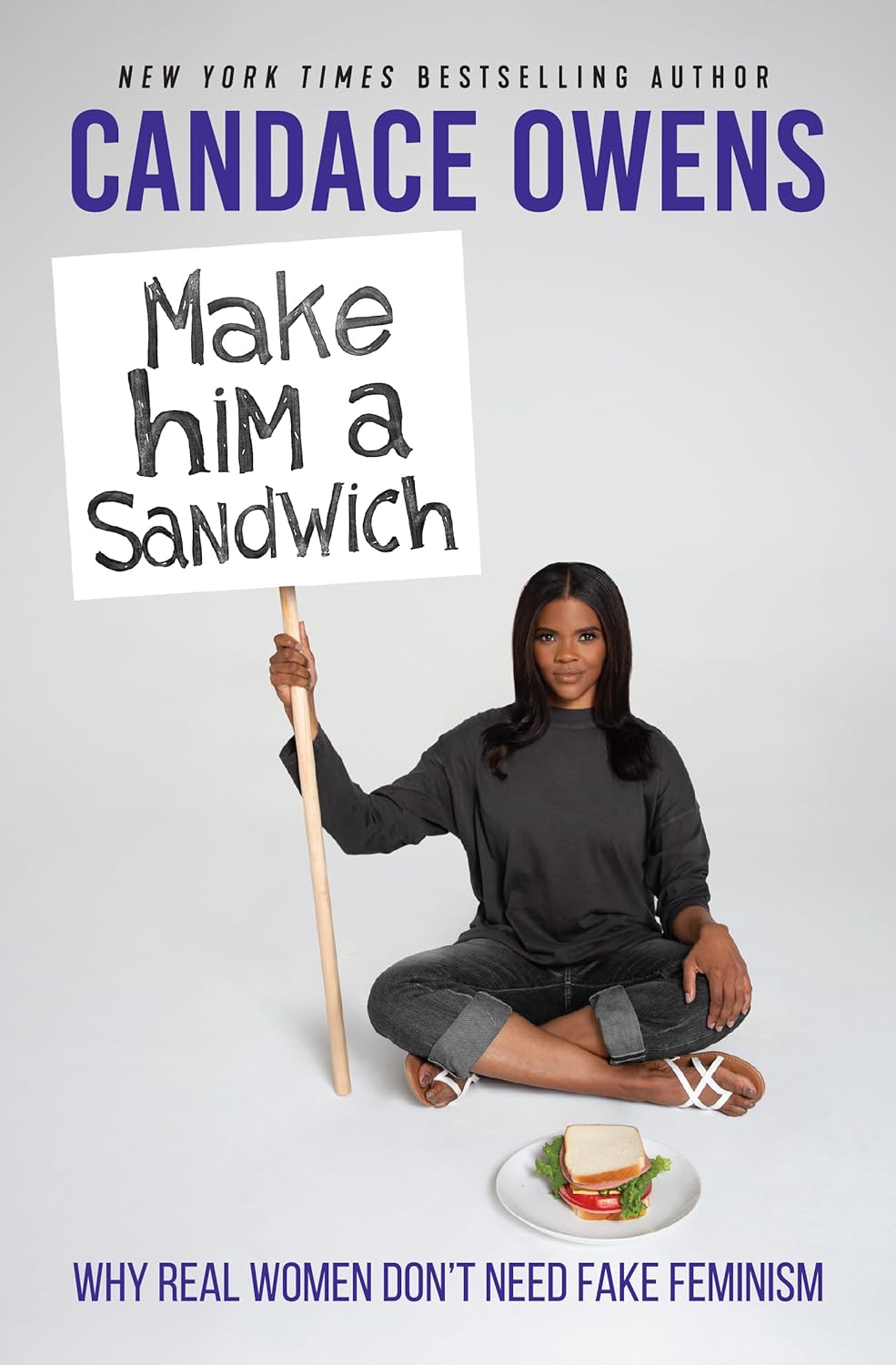
important book club, Make Him a
Sandwich, that chapter for regarding the
Pale of Settlement.
um the people who left the pale of
settlement left Russia after they
coordinated the assassination of the
Zar. Um that was a it was just a
fantastic book club meeting. You can
join the book club and you can still go
back and watch those episodes. And yeah,
you can also buy yourself a stand cup.
Stop anti-andicism. It is spreading
rapidly. We see it all over the
internet. It makes us all uncomfortable.
I don't feel safe. You shouldn't feel
safe with all of this anti-andism. No
one has seen this many influencers
trying to take down one person who does
not employ anybody to go after them at
all. Um, I don't team up behind the
scenes, nothing. I just investigate what
I'm interested in. And right now, it is
the assassination of my friend Charlie
Kirk. So,
anyway, you guys, that's enough for
today. We will see you tomorrow.
[music]
Related Books
Browse Conservative Books