Brian Kilmeade Reveals How Teddy Roosevelt and Booker T Washington Changed America's Racial Future
Enjoying this? Share it with someone who needs to see it.
Up Next
Candace Owens and Cornel West Debate Trump's Impact on Black America with Laura Ingraham
11:50
Tulsi Gabbard Criticizes Joe Biden's New World Order Rhetoric in Interview With Jesse Watters
3:24
Donald Trump Survives Assassination Attempt at Rally, Emerges Defiant With Bloodied Face
4:44
Brian Kilmeade Reveals How Teddy Roosevelt and Booker T Washington Changed America's Racial Future
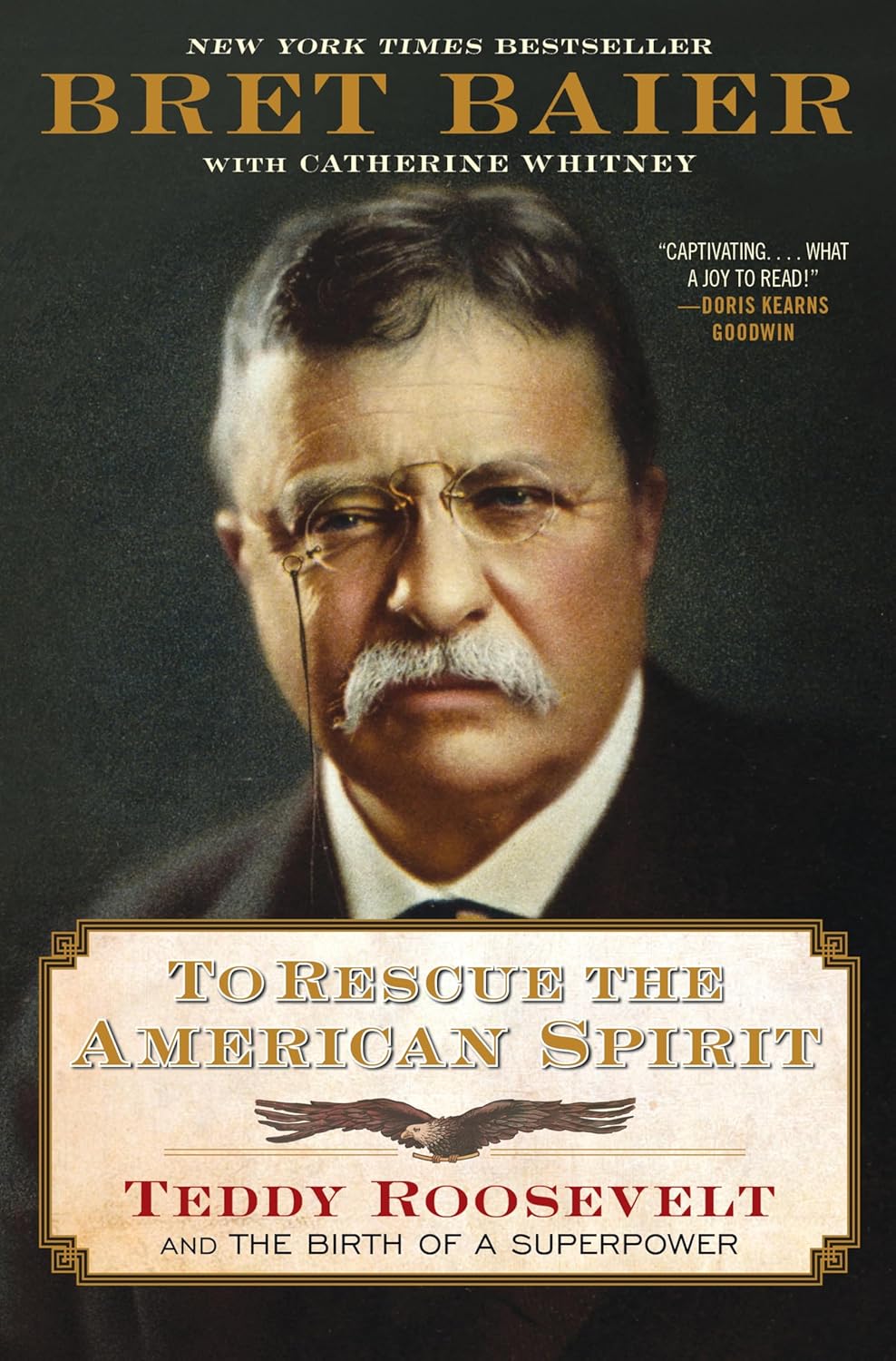
Brian Kilmeade joins Will Cain to discuss his latest book on two unlikely allies who shaped America's path toward racial equality. The Fox & Friends co-host explores why Booker T. Washington's vision of self-empowerment has been overshadowed in modern civil rights narratives, and how Theodore Roosevelt's controversial dinner invitation sparked a national firestorm. Kilmeade unpacks the complicated legacy of both men, Roosevelt's Progressive politics and masculine ideals, and Washington's focus on education and economic independence over grievance. Their friendship reveals a nuanced chapter of American history that challenges modern assumptions about race, progress, and what it means to judge historical figures by the standards of their time.
Brian Kilmeade discovered Booker T. Washington's story while researching his previous book on Frederick Douglass and Abraham Lincoln. Reading "Up From Slavery," Kilmeade was captivated by Washington's firsthand account of being called to the main house on a plantation and told he was free. Washington never had shoes as a child, never remembered sleeping anywhere but the dirt floor, ate the same meal every day, yet rose to become one of the most influential people in America during the 1860s and 1870s.
As Kilmeade researched Washington's life, Theodore Roosevelt kept appearing throughout the story. To verify this wasn't a forced connection, Kilmeade consulted Tweed Roosevelt, Teddy's great-grandson who runs the Roosevelt School at LIU, the same institution Kilmeade graduated from. Tweed confirmed the connection was authentic, though he warned that Teddy had some blind spots that showed he was a man of his times. Nevertheless, Roosevelt was genuinely inspired by Washington as a self-made man who defied all odds.
Kilmeade argues that Booker T. Washington has become somewhat of a forgotten man in the advancement of African-American civil rights. While schools and buildings bear his name everywhere, Washington's vision for black advancement appears to have lost out to W.E.B. Du Bois and the idea of direct conflict over civil rights. Du Bois advocated for direct action and a progressive dynamic of group advancement, whereas Washington championed individual bootstraps advancement and self-empowerment.
However, Kilmeade believes historical figures experience ups and downs in how they're perceived. He points to Ulysses S. Grant as an example—once dismissed as corrupt and an alcoholic, Grant's reputation has been rehabilitated by deeper examination of his life and accomplishments. The people around Grant were corrupt, but he wasn't. He did drink, knew he had a problem, and it occurred in surges that hurt his military career but didn't damage his presidency.
Similarly, Booker T. Washington may not be the hottest name in some quarters of the black community today, but figures like Colonel Allen West and Thomas Sowell interpret his legacy very differently. They appreciate what Washington wanted out of life and where he believed America could go.
Washington's Philosophy of Action Over Grievance
From Kilmeade's perspective, what sets Booker T. Washington apart is that he didn't know the word grievance. He didn't sit and complain—he was a man of action. When someone didn't like him, Washington didn't waste energy on hatred or resentment. He simply moved on to people he could work with.
This mindset gave Washington the courage, strategy, and focus to knock on doors in Massachusetts and New York, introducing himself and explaining his small school in Tuskegee. He sought support to grow the African-American community, teach skills, and provide great education. When doors slammed in his face, he didn't harbor resentment—he just moved on to the next opportunity.
Kilmeade finds this approach profoundly relevant today. When people dislike you, the worst thing you can give them is your hatred because that means giving them your focus. Reading about Washington's focus in the 1880s and 1890s, Kilmeade realized there was much to learn from someone who didn't let others' negativity land on him.
While W.E.B. Du Bois argued it was wrong that people were treated differently, wrong that blacks couldn't get into certain schools, wrong about segregation and prohibitions on interracial marriage, Washington acknowledged these injustices but took a different approach. He recognized the reality he lived in and the region where he operated. He concluded that activism would accomplish little, so he chose to be an educator instead.
Kilmeade loves this focus and believes that even if people don't appreciate Washington's approach in 2023, they might value it in 2027 or 2037. There's a long arc to history, and it doesn't move in a straight line—it has ups and downs.
The Tuskegee Model: Education Through Practical Skills
Booker T. Washington was one of the last great activists born into slavery. His vision centered on creating colleges like what became the Tuskegee Institute, where students would learn technical skills and hands-on application of education. His goal was to build up the black community's capacity by accumulating education and wealth.
Parents of newly freed slaves would come wanting their children educated. Washington promised education, but when he explained the children would also learn skills and work in the fields, some parents objected—they didn't want their children in fields. Washington clarified that students would build the school itself. In a style reminiscent of "The Karate Kid," students got the fence painted while learning defense—they constructed the school while learning valuable skills and trades.
Students attended classroom sessions in night school and day school, divided by schedule, and each chose a trade: carpentry, agriculture, brick-making, brick-laying. Women had jobs as teachers, seamstresses, or in farming and food production. Everyone developed a skill.
Washington's reasoning was practical: upon graduation, there would be reluctance among white employers to hire black workers. Therefore, students needed to make themselves indispensable. Washington didn't hate America as it existed—he recognized reality and was willing to compete within it.
Washington essentially told his students that there was no doubt it would be harder for a Negro young man or woman to succeed in America. But by clearing obstacles and overcoming difficulties, they would be far more prepared for the success they would eventually achieve. The hardships they faced in getting there would make them stronger as parents, in their careers, and as role models.
Kilmeade often got chills reading Washington's words. Washington acknowledged the difficulty ahead but assured people they would get there, and when they arrived, they would be thoroughly prepared. As a parent reviewing these ideas, Kilmeade sometimes felt bad for someone born on third base because Washington's philosophy suggested that those who overcome greater obstacles develop greater strength.
Washington wrote about seventeen books. Teddy Roosevelt endorsed and wrote the forward to what Kilmeade believes was Washington's last book. Roosevelt loved reading it, and along with his wife, they received a pre-release copy. In April 1901, Edith Roosevelt told Teddy, who was vice president at the time, that he needed to meet Washington—this was his ticket to understanding the South. They met and pledged to work together.
Theodore Roosevelt: The Complicated Progressive
Theodore Roosevelt presents a complicated figure for modern conservatives. On one hand, there's much to admire: his overt embrace of masculinity, his love of the West, his desire to be a cowboy and cattle rancher in the Dakotas, and his philosophy of living a strenuous life. He took up jujitsu at various points and believed in constant physical and mental challenge.
On the other hand, Roosevelt was either the father or an early adopter of the Progressive Movement. He left the Republican Party to found the Bull Moose Party, also known as the Progressive Party, and ran for president under that banner. He advocated trust-busting and an eight-hour workday during the rough-and-tumble times of the Industrial Revolution.
Kilmeade acknowledges people can look back at what Roosevelt stood for and decide for themselves, but emphasizes that Roosevelt was willing to take on the establishment in every way. As police commissioner, he went out with a journalist and photographer to document illegal immigrants making cigars in small, dilapidated, unregistered apartments where they were being exploited. He was willing to get his hands dirty and go into rough areas of the city.
Roosevelt took on law enforcement reform, setting up an academy, establishing rules, providing uniforms, setting hours, and creating structure. He also accepted a job to break up bureaucracy under either Hayes or Grover Cleveland. A Republican hired him, but Cleveland kept him because he was efficient at breaking up bureaucracy, establishing accountability and timeframes for accomplishment, and creating his own meritocracy.
Roosevelt was an environmentalist in the sense of setting up state parks across the country and preserving territories. But he was also a pull-yourself-up-by-your-bootstraps individual who emphasized accountability, integrity, and honesty. He asserted himself in various places to make the country better. While he had a healthy ego, he also had a remarkable intellect—he was a speed reader with an apparently photographic memory who read a book a day.
Roosevelt's views were somewhat diverse compared to how Republicans are viewed now, but the party itself has changed. Ten years ago, Republicans had a different perception than they do now. Since Trump, the party has become more of a blue-collar, working-man party.
According to Tweed Roosevelt, there was going to be another chapter in Teddy's political career. After he lost and divided the Republican Party—taking more votes than Taft and giving the election to Woodrow Wilson—the Republicans agreed to let him back in. They were queuing up Teddy to run in the next election, but he died at 59 or 60 years old.
Roosevelt's Blind Spots and Growth on Race
Judging Roosevelt requires understanding him as a man of his times. He thought whites were superior to blacks in some ways, yet simultaneously pushed for equality. He appointed people to judge positions and postmaster positions, including Minnie Cox and William Crum, and pushed back against anyone who said they couldn't do the same job as a white man.
Roosevelt told Booker T. Washington he would use him as an advisor and asked Washington not to tell him someone's color or gender—he just wanted the best person for the job. At the same time, when speaking to Southern audiences, Roosevelt sometimes said things he believed they needed to hear to win their votes.
Despite these contradictions, Roosevelt's actions spoke volumes. He served on Tuskegee's board, did great work there, and delivered an incredible commencement address that had to overcome his own preconceptions. Kilmeade notes that Lincoln said things suggesting everyone deserves to be free but that not all were equal. Lincoln later evolved, though he never explicitly said he had changed—you just see it in reading his later speeches.
Benjamin Franklin owned slaves but died as an abolitionist. Early in life, he believed whites were smarter than blacks, but when he saw African-Americans getting educated, he admitted he was wrong. If the smartest and most versatile man to ever live could admit he needed to grow, then Roosevelt's evolution becomes more understandable.
Roosevelt couldn't help who he was born to or the environment he grew up in. His mother was with him constantly while his father worked. She likely said many things about growing up with slaves. The Civil War wasn't something Roosevelt had to read about—he was six years old when Lincoln was assassinated. He could simply talk to his mother and family to hear about it firsthand.
If Roosevelt said racially insensitive things, Kilmeade understands why, given that context. But as Roosevelt evolved and grew, he demonstrated real progress. He spoke at Booker T. Washington's funeral and said Washington was a credit to his race—the human race. And Booker T. Washington never said anything but great things about Roosevelt.
The Dinner That Shocked America
The most consequential moment in the Roosevelt-Washington relationship was the dinner invitation to the White House in the early 1900s. Neither man realized it would become such a big deal. Washington had more sense it might be problematic, but Roosevelt seemed genuinely oblivious.
When Roosevelt was governor of New York, blacks slept over at the governor's mansion all the time. He didn't think it was a big deal. He had served with the Buffalo Soldiers, a black unit in Cuba, and didn't think that was a big deal either. When he heard Booker T. Washington was in Washington D.C., he wrote him a letter—which still exists and is included in Kilmeade's book—asking Washington to come over for dinner.
Washington worried about any negativity that could affect Tuskegee and felt he shouldn't accept, but wondered how he could turn down the president. If not for one person asking to see the guest book, discovering Washington's name, and realizing a black man had dined with the President of the United States and his family, it might have passed without notice.
The revelation created a huge firestorm because it had never been done before. Kilmeade admits that in researching this, he often had to remind himself why it was such a problem—the answer wasn't instinctual to a modern researcher. For people at that time, particularly in the South, this was a bad message. Segregationists wanted to ensure blacks did not become equal with whites and were willing to segregate schools, businesses, and prohibit interracial marriage to maintain that separation.
When the most famous black man in America had dinner with the most powerful man in America, segregationists feared this could create a ripple effect leading to actual equality. The horrible headlines that resulted—which Kilmeade includes in both his book and Fox Nation special—made both men decide to continue their relationship but be more discreet about it.
The ongoing relationship meant no more dinners at the White House, but they continued to meet and consult. Some criticized them for giving in to the pressure, but Kilmeade sees it differently. Two weeks or possibly two months later, both men were invited to speak at Yale, where Washington would become the first to receive an honorary degree from that institution. They stayed away from each other at the event.
Mark Twain, who never liked Teddy Roosevelt and thought he was a showman and show horse, loved Booker T. Washington. At the Yale event, Roosevelt approached Twain and asked if he thought Roosevelt had made a mistake. Twain responded that the way Roosevelt did it and the timing could have been better thought out, but he wasn't necessarily wrong. Twain seemed to think Roosevelt made things harder for Washington, not necessarily for himself, and should have thought it through more carefully. However, nothing Kilmeade read suggested either man anticipated the firestorm at all.
Kilmeade includes in his special a clip of John McCain's concession speech after losing to Barack Obama. McCain said there was a time when Booker T. Washington being invited to the White House was controversial—a black man eating with a white family. Now a black man would be hosting that dinner. That's how far America has come.
The Relationship's Impact and Limits
What was the impact of Booker T. Washington on Teddy Roosevelt? Kilmeade believes Roosevelt simply saw what a black man was capable of if given the opportunity to learn. To understand what Roosevelt thought, Kilmeade suggests reading his commencement address at Tuskegee. The beginning appears to be ad-libbed because Roosevelt looked out after taking a tour and saw these men and women—teachers and students—so industrious, innovative, and productive. They learned basics of hygiene, how to present themselves, how to make eye contact, and academics. Roosevelt seemed overwhelmed by what this man had accomplished.
Both men understood their relationship wasn't about them—it was about their causes. Roosevelt wanted to make America better, and Washington wanted to make the experience of black men and women better in America. That was more important than their personal relationship, and they demonstrated this on a couple of occasions.
When the Buffalo Soldiers got involved in a controversy, Booker T. Washington told the president he was wrong, that it wasn't the soldiers' fault, that the charges were trumped up, and that Roosevelt should not punish the whole unit. Roosevelt disagreed—he said they were involved, and they were all court-martialed.
Another instance occurred when Roosevelt, running against Taft and Woodrow Wilson, asked Washington for an endorsement. Washington asked himself what was better for his cause. If he endorsed Roosevelt and Roosevelt lost, it would hurt Tuskegee. He told Roosevelt he couldn't endorse him and hoped he would understand. Roosevelt said he did understand, because it was all about the cause, not about them.
Kilmeade acknowledges Roosevelt needed a big ego to accomplish what he did, but also believes the man bled red, white, and blue.
Lessons for Modern America
The impact of Booker T. Washington on Teddy Roosevelt demonstrates the power of a single individual—seeing a man as a man and recognizing what one can accomplish regardless of affiliation, group, or race. It shows the unlimited potential of the individual.
Regarding where America is now, Kilmeade hopes that black and white relationships are at a high point. Outside of perhaps the historical blip of the last five years, he believes that on an individual basis, this is the case. Looking at human behavior, Americans are more integrated—not completely, but more than ever before. They are intermarried and work together as co-workers at levels never before achieved in American history.
Yet there's also this activist moment of embracing racial essentialism. What can be learned from Teddy Roosevelt and Booker T. Washington for modern America?
Kilmeade suggests that everyone has certain preconditions in life—the parents they have, the schools they attended, the town they grew up in. Most people had nothing to do with these circumstances. They didn't make decisions at six, seven, or eight years old about where to live, unless they were from a military family or their parents moved.
If Roosevelt and Washington could overcome the circumstances of their birth—slavery for Washington and Roosevelt's severe health problems that almost killed him from asthma—then everyone has something they can overcome. You can make life a university, or you can resign yourself to your circumstances. All great people evolve, and people shouldn't be hard on themselves if they felt one way in 2004 and differently in 2010.
Kilmeade points to examples like Ken Griffey Jr., who stood up during a celebration of a great Seattle Mariners team and pointed out Jay Buhner was a white guy. Griffey said that despite their completely different backgrounds, they had become so close that if anything happened to Griffey and his wife, he had made it clear Jay Buhner would raise his children. Why isn't that example rippling throughout the country?
Sports led the way with integration in baseball and football, making people think differently in the stands and the locker room. How many times do you see moments like Aaron Rodgers talking to Davante Adams with the Raiders, hugging each other and talking about what they mean to each other? Why isn't that held up as an example? Do they care about black or white? They don't even think about it.
But America seems to go out of its way to make people think about race. Kilmeade believes we should be aware we're being manipulated and not let it happen. Be racially sensitive—Tim Scott once said President Trump is not racist, sometimes just racially insensitive. Being told something wasn't the best thing to say doesn't mean someone is racist.
Everyone walks around on eggshells, not wanting to offend. Kilmeade thinks we have to start realizing there's nothing separating us. Most people don't look at anybody differently. If you can help my team, my company, my neighborhood, they'd love to have you. They don't care what color you are, what gender you are, whether you're gay or straight—they care what kind of person you are. Most people agree with that, and Kilmeade believes some go out of their way to make it seem like we don't.
The moment between Ken Griffey Jr. and Jay Buhner should be a model for all of us as individuals. Teddy Roosevelt and Booker T. Washington provide a great model of an individual relationship that helped move the country forward.
Video Transcript
Brian kilme co-host of fox and friends my friend and the author of a new book Teddy and Booker T two American I icons who blazed a path for racial equality another entry in your Pantheon of books about American history why did you focus on these two characters kilme why Booker T and why Teddy Roosevelt I actually read Booker T before doing the Frederick Douglas Lincoln book the president Freedom Fighter because Up From Slavery I love the firsthand perspective of what was like being called to uh to the central house and a plantation and being told you're free he brings us there never had shoes never remembers uh sleeping on any place but the W but the dirt floor having the same meal every day and then to see that story arc all the way to be one of the most influential people in America as a black man in 18 you know in 1860s 1870s you got my attention and then as you research Booker you watch you saw T Roosevelt all over it and I thought let me find out if I'm forcing this so I went over to Tweed Roosevelt who's at Liu the school I graduated from runs a Roosevelt School and he said absolutely not he goes you're not forcing it at all just know that Teddy said some things that shows he had he was a man of his times he that was his great-grandfather and he said he had some blind spots but for the most part he was just so inspired by the self-made man that just defied the odds he just loved them so I want to talk about the intersection of these two characters your book focuses on that but it also gives great history into each of them as individuals so I want to start with them as individuals let's start with Booker T Washington he seems to be Brian a little bit The Forgotten man in the advancement of African-American civil rights in American history of course there's schools and buildings named after Booker T Washington everywhere you go but as the African-American civil rights movement progressed through the 20th century it's almost as though Booker T's vision for the advancement of black people lost it lost to web dewa and the idea of a direct conflict over civil rights direct action and sort of the progressive um Dynamic of the group pushing forward as opposed to Booker T sort of pull yourself up by your bootstraps individualism to to advancement for black Americans yeah why do you think he's been why do you think he lost Lo Booker T that that sort of fight for the vision for the future of black Americans well a couple of things I don't think in history anyone loses his ups and downs for example people say that if you look at a figure in history if you would if you were betting put money on Grant because now looking at his life they used to say that guy was corrupt and he drank too much but if you really look at his life and what he did uh the the more you appreciate who he was and what he accomplished there were people around him that were corrupt he wasn't and he did drink but he was he knew he had a problem he would do it in surges and uh it hurt his military career but didn't hurt his presidency so right now maybe bger T Washington isn't the hottest name in the black community but don't tell that to Colonel Allen West don't tell that to Thomas Soul you know don't tell that to other people that interpret things differently about what they want out of life and where America is and if you look at what I think from my perspective why is because bger Washington doesn't know what the word grievance means he doesn't G he doesn't sit there and complain he's just a guy of action this guy doesn't like me okay I don't hate you I'm not I can't waste energy on hating and resenting I'm gonna move to people I can work with so that gave him the guts and the guile and the focus to go knocking on doors in Massachusetts and New York and say hi I'm booger T was I got this small Su in Tuskegee I'm looking to grow the African-American community and teach them skills uh and give them a great education can you help and he began to win people over when that door slammed in his face he didn't hate he moved on tell me how that could not help everybody when people dislike you which in our business will believe it or not not in your case but in mine it happens the thing that you could give them most is your hatred that means you give them your focus I'm reading Booker T Washington and his focus in life in 1880 and 1890 and going wow I could learn so much from that is when people dislike you he doesn't let it land and you had web de boys and saying it's wrong it's wrong that people are treated differently it's wrong that we can't get into these gools it's wrong in the South for people to write like this for integrated marriage to be a problem and he says yeah I know but this is the life we're in and this is the area I live in it does no good to be an activist I'm going to be an educator and I just love that focus and if you don't like that in 2023 maybe you'll like it in 2027 with 2037 yeah I like that there's a long Arc to history and it's not direct it has its ups and downs and I I agree I love the message of Booker T it's such one of of self-empowerment you know help us understand that Brian because he um I think he was one of the last great activists that were born into slavery but his vision was hey let's create these colleges like you mentioned uh what we now call the tus Tuskegee Institute this Tuskegee College let's learn um Tech technical skills talking to his fellow uh blacks let's let's learn technical skills Hands-On application of Education let's build up our ability as a community by accumulating education and wealth yes so you came to these schools and the m and the parents of of newly freed slaves would be like my kids's going to be educated and he said yes and they're gonna learn a skill no I don't want them in the fields no they'll be in the fields they're going to build up our school I almost think it's Karate Kid style you know the guy got his fence painted but he also learned defense so he's getting a school built by the students who are learning a skill and a trade and they go to the classroom night school day school they broke it up and would pick a pick a trade carpentry fine agriculture fine uh I want to be brick brick layer brick maker fine women had jobs and were teachers you're all going to be whether it's you know traditional roles seamstress or things like that or at traditional roles what's with with farming or or just growing food so everyone had a skill and one of his reasons was because the original point was when you get out of here there's going to be reluctance to hire you so you have to be indispensable I don't hate the America we're in I recognize it and I'm willing to compete for it and and I'm just going to paraphrase something I always I I usually carry around with me and basically he says there's no doubt about it and they use the word not black Negro it's harder for a negro Young man or women to make it in in this country but by the obstacles that you clear by the things that you overcome you are going to be so much more prepared for the success you will have in life because of the difficulties you had in getting there so wow I almost felt bad for someone born on third base because he's saying don't worry about it we're gonna get there you're gonna get there and it's GNA be hard and I told you it's going to be hard but when you arrive man are you going to be ready as a parent as with your career uh as a role model and man I just a lot of times I would get chills reading his words he's got about 17 books out there Teddy Roosevelt endorsed I think it was his last book was the forward to his book and he loved it too you know he loved reading it and him and his wife I think it was April 1901 they met but they read the book they had a they had a pre-release copy and she said to uh to Teddy who was vice president at the time you got to meet this Guy this is your ticket to understanding the South and they did and they pledged to work together yeah and it's not that de was wrong you did have to fight on the Civil Rights front you did have to fight against all those horrific things in society you talked about um and in fact Booker T did sort of behind the scenes he did advocate for changing American laws I want to move to Teddy Roosevelt I'm curious your take on Roosevelt he's a complicated figure for me and we'll get to race relations and we'll get to Booker T and Teddy Roosevelt in just a moment but you said you got to judge a man in his time and I think I have to do that when I think about Teddy Roosevelt as well on one hand I love his overt Embrace of masculinity I love his love of the West he wanted to be a a cowboy and a cattle rancher in the dtas you know I love his idea of you need to be um what is it a strenuous life you need to you know physically and mentally and be challenged throughout your life taking up Jiu-Jitsu at points in his life but on the other hand Brian he's sort of like if not the father he was certainly an early adopter of the Progressive Movement and and this is where I have my struggle you know in fact he left the Republican party to found the Bull Moose Party also known as the Progressive Party and run for president and he was trust busting and advocating for an eight- hour workday so the the times were different you were in the Rough and Tumble times of the Industrial Revolution but you know I do have I do struggle a little bit with who was this guy in American politics and was that a was that a beneficial force in push pushing progress policies at that time early 20th century I mean yeah I mean you could look back at what he stood for and what he did and you could decide what you think but I will say one thing he was willing to take on the establishment in every way whe whether was police chief going out with a journalist a photographer and taking pictures of illegal immigrants who would making cigars in small dilapitated apartments not even registered as immigrants they were being taken advantage of so he was willing to get his hands dirty and go into areas of the city into looking to to take on law enforcement set up an academy set up rules give them uniforms give them hours set up a structure he also took a job to break up the bureaucracy I think it was uh under um I don't know if it was Hayes or Grover Cleveland uh ended up keeping him there he got hired by a republican Grover Cleveland kept him there because he was just in there breaking up bureaucracy you guys will be more efficient you got to get a sense of time a sense of accomplishment he sets up his own meritocracy in there then then took a step back got out of politics for a while but overall he was somebody an environmentalist you could say setting up the state parks across the country trying to preserve a lot of territories but at the other other way he was a self-made to pick up your pick yourself up by your bootstrap Sky he was about accountability about integrity and about honesty and he was about asserting himself in places in the country to make the country better I know he had must had a healthy ego but he man he had a healthy intellect too read a book a day speed reader photographic memory it seems so yeah it was somewhat of a diverse to from a republican as we view them now but will would you also say it's the case that 10 years ago Republicans had a different perception than they do now more of a blue collar party now the The Working Man sees more since Trump came in with uh the Republicans so and I would say this this I did not know uh Tweed told me that they were queuing up Teddy he made a ends with the Republican party to run for the next election after he lost and divided the Republican Party taking more votes than Taft for giving wood woodro Wilson the job he was all set to run again and he died at at 59 60 years old so there was going to be another chapter and the Republicans have agreed to let him back in yeah I I I uh I like I think you're absolutely right to kind of bring Teddy Roosevelt into modern times because we have moved in a more populist and bluecollar Direction with the Republican party and I think it's hard to look back you know historical figures Ryan are are kind of turned into to lions and and and Devils there there there's very little understanding of historical figures as nuanced we celebrate or we revile historical figures and for example Wilson I I have a pretty negative view of Wilson across the board um but we're talking about a time in American history prior to World War II where everything we know of today from the economy to the military industrial complex did not exist I mean the government was Tiny and so it's hard for me to say was Teddy Roosevelt right or was he wrong to be this Progressive in 19 what was it he ran for that was it in that was in like 1910 right it was the 1912 election yeah he broke off and formed the Bull Moose Party so I I don't know I don't know what my judgment I don't think I should turn him into a lion or a devil but I don't know my judgment on Teddy Roosevelt so I would say this I loved the strong defense willing to take on all comers he saw greatness in America and he wanted to spread it around he had the ruggedness a rich guy with seven generations of wealth who was not afraid to become a Rancher and sleep on the floor or or grind it out and take the mocking of ranchers because he was wearing glasses and he was a little bit shorter than the other guys but they ended up winning their respect that takes a lot of guts to be able to do that and especially when a kid that grew up with asthma never really engaged if anything was not involved in physical activity he would be bullied of anything else and then said okay now that I grew out of asthma now that I'm finally healthy I'm GNA build up my body his dad actually bought him weights and you know what he did the rest of his life he's talked about it and what he did in war quit as his secretary quit his assistant Secretary of the Navy to go into the military and be a colonel they said okay you'll be a general he goes I can't be a general I don't know anything so he wanted to train recruited all the guys got him in there nicknamed him sent them over made sure they wern't gotten the war so there's so much to respect and analyze um and yeah I'm not saying that some of the things he said about blacks were were the most racially sensitive things you ever heard they weren't blind spots but he also had a mom who grew up in the South whose two brothers fought for the Confederacy and they was and they was refused to really take another uh uh a Loy loyalty oath back to the country and they stayed in England the rest of their lives but they were his inspiration to write his book on the War of 1812 so I look at him as somebody I can't judge but to analyze um because he did what he wanted to do and he had this Vision so you you no you you've brought us now to the point where these two men intersect and that and that is um at least in part on on race relations so you mentioned this blind spot several times what what did before we even get to this historic invitation for dinner of Booker T Washington at the White House once Teddy Roosevelt as president what was Roosevelt's view on race relations I mean he thought uh that the that whites were Superior in some ways some blacks but yet at the same time he would push for equality he would put people in judge positions in postmaster positions like Minnie Cox and William crumb and push back on anyone that says that they couldn't do the same job as a white man and what he would say to Booker T Washington is I'm G to use you as my advisor don't tell me uh the color of someone's skin or their gender I just want the best person at the same time when he would with with some Southern audiences maybe to win them over he would say things that he thinks they needed to get to say in order to get maybe get the uh win their vote so you see some things that go wow Teddy Roosevelt man he was out of it but at the same time his actions and his statements and serving on tusk's board and the great work he did there and the unbelievable Commencement Address does had to overcome it I mean you have some things that Lincoln said I read every every speech that Lincoln said I I read and there was some things that Lincoln said that said everybody deserves to be free but I'm not saying we're all equal uh I'm not saying we're all equal really okay a little bit later he evolved he doesn't say I evolved you just read the stuff a little bit later and he evolved Benjamin Franklin he was had slaves he ends up dying as an abolitionist he believed early on in his life well whites are smarter than blacks then when he sees African-Americans blacks getting educated he goes wow I was wrong so wait a second so the smartest man maybe to ever live certainly the most versatile diverse impactful he admits that he had the grow in his life Teddy Roosevelt had to grow in his life because you can't help who you're born into probably in his life his mom with him all the time his dad working his mom was probably saying a lot of things like I grew up with slaves you know the Civil War he was six when the Civil War end when uh when um Lincoln gets assassinated he's six years old so Civil War is not something he had to read about he all he do is talk to his mom and his uh his family so if he said some things were racially insensitive I understand it but as he evolved and grew and he said some things he spoke at booger T Washington's funeral and he basically said you know he's a credit to his race and that's the human race and Bugatti Wason never said anything but great things about him you know your your point is well taken that even even Lincoln's history is not pure and all of these men all men for that matter are imperfect and also a product of their time so with that in mind again this moment in time you're talking about the very early 1900s why was it so consequential for Roosevelt to invite bookery Washington to dinner at The White House how come uh they didn't realize it was going to be a big deal they both didn't maybe Booker T had more of a sense of it because you know what when when he it turns out Teddy Roosevelt was governor of New York blacks would sleep over the at the governor's bch you all the time didn't think it was a big deal serve with the Buffalo Soldiers black unit in uh Cuba didn't think it was a big deal he heard Booker T Washington was in Washington and he said wrote him a letter the letter exists it's in the book and it says would you come over dinner and he said how can I reject the president but there was part of him so worried about Tuskegee and any type of negativity that could be brought on him that said he shouldn't but he goes how could I turn down the president and if it wasn't for one guy to say can I see the guest book and boogery Weston's name was there and he realized he had dinner then it ends up being this huge Firestorm because no it's never been done before for a black man to eat with President United States and his family evidently that was a big deal believe me there was nothing instinc instinctual about this research I go and a lot of times I said and what's the problem but they said for then at that time it was a bad message because there was people in the South that wanted to make sure that blacks did not become equal with whites and they were willing to segregate schools and segregate business business and make sure that there was no interracial marriage to do it and then when you go show up the most famous black men in America having dinner with the most powerful man in America they were afraid this could Ripple and we might actually have equality so the horrible headlines existed and that are still that I put in the book that I talk about in the Fox Nation special they're rolled out that made both men say let's continue this relationship but let's me sparter about it right and let that's the ongoing that's the ongoing relationship between Booker T Wasington and Teddy Roosevelt and and you know I guess the ongoing relationship was no more dinners at the White House but they continued to meet and they continued to consult right yeah a lot of people say well why did you give in to that you know so insulting not really you know there was Mark Twain never liked Teddy Roosevelt thought he was a big showman like a show horse that where he loved Mark Twain loved Boer T Washington and I think it was two weeks later could have been two months they were both asked to speak at Yale and he was and buger Washington would become the first honorary degree uh from Yale he'd get it you know who would think and Teddy Roosevelt was also invited there and they stayed away from each other and at one point Teddy Roosevelt went up to Mark Twain and said you know you think I made a mistake and he said probably the way you did it and the timing could have been better thought out but I'm not saying you were wrong but he thinks that Mark Twain thought you made things harder for Booker T not necessarily for you and you think you should have thought about it but I think both there's nobody that there's nothing I read that saw that they anticipated this fire storm at all but what I did put in the special will is a cut of John McCain after he lost he said in his concession speech losing Barack Obama he said there was a time in which when bogerty Washington was invited to the White House it was controversial now a black a black man coming eating with a white family now uh a black man will be hosting that uh hosting that dinner and that's how far America Has Come and that's why I want people to understand this is my old goal if these people can put so much on the line and segregated the segregated South and America that needed to come together still 50 years after the Civil War to look at 2023 and take a knee during the Women's World Cup game or during a San Francisco 49er football game and say America's imperfect or there's endemic racism is an insult to the men and women like Douglas and Lincoln and uh and Booker T and Teddy who did so much to push us as far as we've come and I still say and not many people can argue the most successful Multicultural country in the history of the world not perfect but we're trying to be thanks to unexpected people like this I think it's a historical fact that we're the most successful Multicultural country in the history of human civilization not just in modern times but in the history of human civilization United States of America one more historical question so what do you think was the impact of Booker T Washington on Teddy Roosevelt he just saw what a black man was capable of if maybe he learned as a Young Man the something different and I think that if you want to know what he thought read his commencement address that he gave a Tuskegee it looks like the beginning part he ad lived because he looked out he took a tour he saw these men and women teachers and students so industrious so Innovative so productive they learned basics of hygiene they learned how to hold it how to present yourself how to make eye contact learn the books and I think he was overwhelmed almost by the time he got to the text of his speech and I think he was in all of what this man accomplished and I think they also knew this it wasn't about them it was about their cost Ted Roosevelt to make America better and Booker T Washington to make uh make the experience of black men and women better in America and that was more important than their relationship and they demonstrated a couple of times one with the Buffalo Soldiers got themselves involved in controversy Booker T Washington said uh Mr President you're wrong on this it was not their fault do not punish the whole unit that these are trumped up charges and in the end he said nope uh they were involved they all uh they were all Court Marshal and the other time when Teddy Roosevelt asked Booker T for an endorsement when he was running against Taft and woodro Wilson Booker T says what's better for my if you if I endorse you and you lose it's going to hurt Tuskegee can't endorse you I hope you understand he said I understand because it was all about the cause it's not about them you know as I know we needed a big ego Ted Roosevelt to do what he did but I also thought man this guy just bled red white and blue yeah you know what I like about what you had to say as well is Booker's impression on Teddy Roosevelt is also the impact of a single individual of what one of seeing a man as a man and what you can accomplish as a man regardless of your affiliation your group your race or whatever it may be to show the the unlimited potential of the individual of of the man you know you talked about you know where we are now and you know you talked about kneeling and and and I guess the idea of original sin for America that so many are you know excited to display and highlight but um we also live in a Time Brian where I mean um black and white relationships I mean outside of maybe the historical blip on the radar that has been the last five years I would say black and white relationships are at at a high point meaning you know you've got I hope so I think so I think on an individual basis that happens to be the case outside of sort of the activist realm you know if you look at human behavior we're we're integrated not completely but we're we're we're more integrated we're we're intermarried we are we are co-workers in in in in a way that we would never have arrived at that level throughout American history so with seeing where we are today but also with this sort of activist moment of embracing sort of the essentialism of your race what is it that we can learn from from Teddy Roosevelt in book to Washington how can we apply that to modern day America I would say look you have certain preconditions in your life uh by the parents you have by the schools you went to by the town you were brought up in probably had nothing to do with you you probably didn't make the decision at six seven eight years old where you're going to live military family parents grew up got it but if they could overcome the circumstances of their birth uh and in one case when Tay Roosevelt that the leveler but doesn't make equal slavery I'm not saying equal was his health the guy almost died he was his parents would sit at him look at him choking on asthma could not breathe they didn't know what to do doctors would say we have nothing I don't think he's going to live so when you have those type of circumstances everyone's got something you could make life a university or you could say this is my life and this is what I'm in all great people evolve and don't be hard on yourself if you felt one way in 2004 and you feel differently in 201 10 and that's what I think life is great people evolve they don't just you know you always hear people emotional growth stops at whatever age when you get married or your parents die everyone has a theory now that's a choice that's a choice and I think there are so many examples I was watching uh Ken Griffey Jr and he is standing up and they were celebrating one of those great Seattle Mariner teams and he said I gotta point out Jay buer is a white guy and he said uh what this hick had to do with me and where I came from where he came from but we have become so close that if something was happening to me and my wife I made it clear that Jay buer would would raise my children why is that not an example that's Rippling throughout the country you know why is that two people that get to know each other I mean Sports again led the way with integration when it came to baseball and football and everything made people think differently in the stands okay maybe even in that locker room and at the same time how many how many times do you see I'm watching um Aaron Rogers uh go talk to I think it was Devonte Adams um in with the Raiders and they're hugging each other talking about what they mean to each other like why is that not an example well would you think that they care black or white they don't even think about but it's like America is going out of their way to make you think about it and I think we should be aware we're being manipulated and don't let it happen be racially sensitive I remember Tim Scott said president Trump is not racist sometimes you can be RAC and sensitive and I would go in and just tell them yeah by the way not probably not the best thing to say got it understood but it doesn't mean you're racist so everyone walks around on eggshells doesn't want to bother I think that we we have to start I we have to start realizing there's nothing there to separate us most people don't look at anybody any different if I if you could help my team help my company help my neighborhood love to have you I don't care what color you are don't care what gender you are I don't care if you're gay or straight kind of person are you most people agree with that and I just think people go out of the way to to make it seem like we don't that is awesome I love that movie that moment between King Griffey junr and Jay buer you're exactly right and it should be a model it should be a model for all of us as individuals um it's awesome uh Teddy Roosevelt and Booker T Washington a great model of an individual relationship that helps move into country forward and it's a it's a great once again historical page Turner read from Brian kill me man I appreciate you being with us today um everybody go pick up the book I think it's a great Christmas present and a great model uh and Brian you've done it once again congratulations thanks will and again thank you for the pow bars at the Patriot Awards I was literally hading eaten since 2:00 in the afternoon I only saw the Mountain Dew but you came back with food as if you were reading my mind and we feasted on those Power Bars that brought us at least to the end of the show that's not exactly forever a survivalist Instinct that's survivalist Instinct in you you could you could you could live out in the fields it's a charitable description that is not entirely true so set the record straight because I'm I'm nothing if not entirely true with my audience kill me we were at the Patriot Awards we had to probably do about a four or five hour stretch with no dinner and it was way past Kil me's bedtime way past and we were sitting at the same table and he went backstage for a moment and came back with a Mountain Dew which blew my mind because Brian kill me does not eat or drink anything unhealthy and I was blown away that here he was at 8:00 at night drinking a Mountain Dew we were all hungry so I went backstage later grabbed myself a Mountain Dew and thought I need some food I saw a bunch of power bars and granola bars and I brought them back to the table yes because you know I like to give back and you didn't partake you know you could look at it as I was this survivalist Instinct that was there to help or you could say I saw a crack in your armor that you were ready to fill with Mountain Dew and I was ready to swim through with all types of junk food and turn you into Pete Heth but you declined and you would not you gave up one little weakness Mountain Dew but you did not turn that into a cliff bar you're right uh but it was a great Gest on your part and number two I'm there for the caffeine baby I mean you're up at 2:30 in the morning like uh when when you do these shows and then you're doing a to award show at 9 o'clock at night and I'm thinking I still got to go on stage so I went to Mountain Dew I don't recommend kids watching this who have to go to an award show and give a presentation the like the nine and 11 year olds that watch your uh podcast don't go Mountain Dew it's not the answer to everything it was my answer and and I'm G to go to the doctor and I'm going to take a blood test and see if I am on the path the healthy path Teddy and Booker T how two American icons Blaze the path for racial equality Brian kill me thanks man all right stay within yourself will hey it's Will Kane click here to subscribe to the Fox News Channel on YouTube it's the best way to get our latest interviews and highlights and click to subscribe to the will cane podcast for full episodes right now