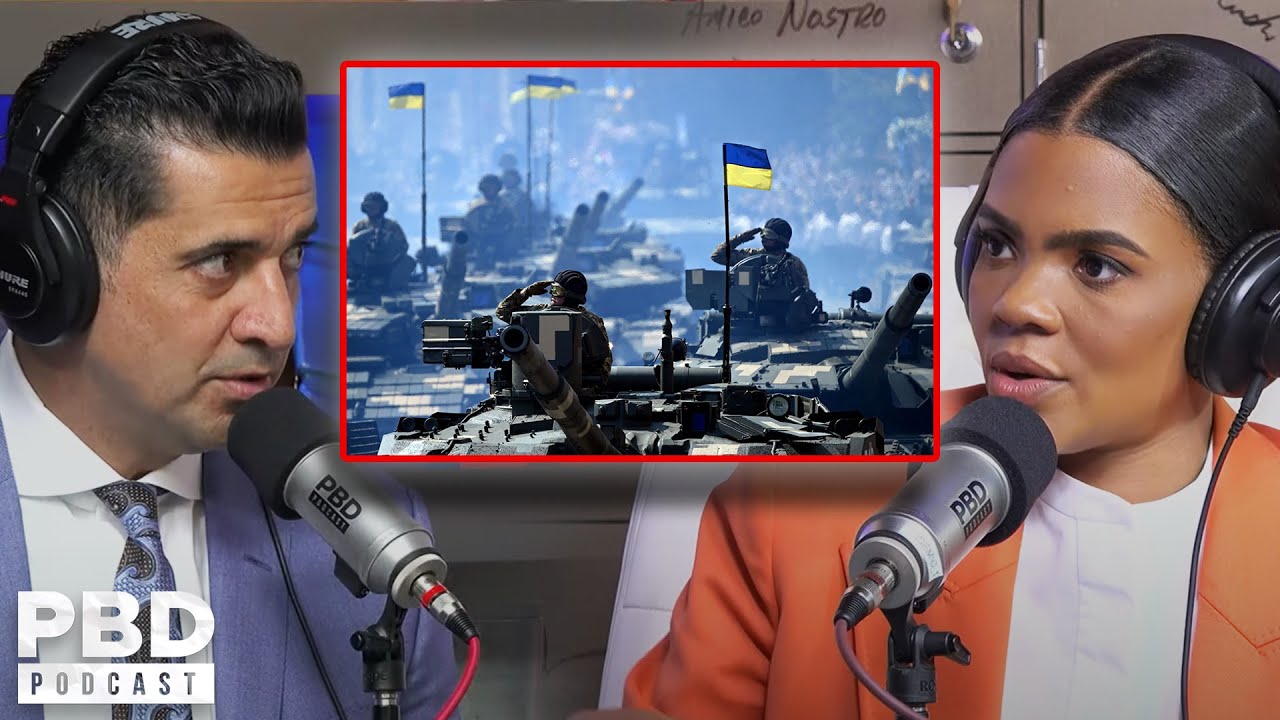
Candace Owens and Chris Cuomo Clash Over Putin Intelligence, Biden Leadership, and American Propaganda
Enjoying this? Share it with someone who needs to see it.
Up Next
John Stossel Interviews Robert F. Kennedy Jr. on Vaccines, War, Debt, and Why He Ran for President
55:36
Niall Ferguson Explores Two Competing Historical Narratives of Donald Trump's Political Legacy and Impact
6:40
Laura Loomer Claims Responsibility for Sending Tucker Carlson Clips to Trump Amid Foreign Policy Tensions
5:21
Candace Owens and Chris Cuomo Clash Over Putin Intelligence, Biden Leadership, and American Propaganda
Candace Owens and Chris Cuomo engage in a heated debate about Vladimir Putin's intelligence, Joe Biden's competence, and the state of American leadership. Owens argues that Putin's coherent communication in the Tucker Carlson interview highlights Biden's inability to lead effectively, while Cuomo pushes back against using an authoritarian leader as any kind of positive comparison. The debate touches on propaganda, political persecution of January 6th attendees, Congressional approval ratings versus reelection rates, and whether America's current leaders can stand up to foreign adversaries. The exchange reveals deep frustration with performative politics and questions about who really holds power in America.
The conversation centers on the Tucker Carlson interview with Vladimir Putin and what it revealed about American leadership. Owens contends that Putin did not provide an accurate recitation of Russian history starting in the 8th century, but rather a KGB-doctored perspective designed to justify reestablishing Soviet influence. The debate quickly escalates as both participants defend their positions on what the interview really demonstrated.
The fundamental disagreement lies in whether Putin's coherence should be used as a comparison point for evaluating American leadership. One side argues that observing Putin's ability to complete sentences and communicate clearly stands in stark contrast to Biden's performance, while the other insists this comparison is dangerous and inappropriate given Putin's authoritarian record.
Russia's Economic Position and Military Actions
The discussion acknowledges that Russia has a smaller GDP than California, yet this economic reality doesn't diminish concerns about the country's current military aggression. The invasion of Ukraine is cited as evidence that Russia remains a genuine threat, not merely Cold War propaganda as some suggest.
However, Owens pushes back against what she characterizes as outdated Cold War thinking, arguing that Americans need to move beyond viewing Russia as the primary existential threat. The debate touches on press freedoms in Russia, where Putin maintains over 75% approval ratings in polls that critics suggest are unreliable because people fear consequences for answering differently.
Comparing American and Russian Freedoms
A controversial turn in the debate comes when parallels are drawn between restrictions in Russia and recent developments in America. The conversation addresses January 6th defendants who remain incarcerated, with specific examples of FBI agents visiting Americans who merely attended the rally without entering the Capitol building.
Owens shares that three of her friends had FBI agents show up at their doors simply for attending the rally to hear Trump speak. She argues this represents an attempt by the establishment to threaten anyone who supported Donald Trump, creating a climate of intimidation that mirrors the authoritarian tactics America criticizes in other countries.
The discussion of Gonzalo Lira, allegedly killed by Zelenskyy, further complicates the narrative about which leaders pose threats to dissent and free speech. This leads to questions about whether America should continue supporting Ukraine financially.
The Intelligence Versus Morality Question
A key point of contention emerges around whether Putin's intelligence matters when it isn't guided by morality. The argument is made that Putin can complete sentences and likely murder his opponents, with both capabilities being functions of his intelligence operating without moral constraints.
Owens maintains her position that she simply described Putin as coherent and intelligent, not as a model leader. She draws a comparison to sitting across from intelligent serial killers, acknowledging their intelligence while obviously not wanting them making policy decisions. The distinction between recognizing someone's capabilities and endorsing their leadership becomes a central theme.
Biden's Physical and Mental State
The conversation turns to concerns about President Biden's current condition, with suggestions that he might have been given adrenaline or other substances before public appearances. Historical comparisons are made to JFK's use of drugs, though the discussion acknowledges these claims need substantiation.
Cuomo warns that creating unsupported narratives about Biden being "shot up" with substances enables similar attacks on Trump, where clips of him not speaking fluidly could be used to suggest drug use. He advocates for sticking with observable truth rather than speculation that can be weaponized by opponents.
Congressional Approval and the Rigged System
A striking statistic emerges: Congress has approximately 14% popularity but maintains a 94% reelection rate. This disconnect between public approval and electoral outcomes is presented as evidence that the political system is rigged to favor incumbents regardless of their performance.
The question of how such low popularity translates to such high reelection rates cuts to the heart of frustrations with American democracy. It suggests that the mechanisms of power operate independently of public sentiment, rendering voter dissatisfaction largely ineffective at producing change.
Negotiating With Foreign Leaders
The practical implications of leadership competence come into focus when considering negotiations with foreign adversaries. The concern is raised that if Putin and Biden sit at a negotiation table, America will lose because of the vast difference in their capabilities to communicate and strategize.
A four-year comparison is drawn between the Trump and Biden administrations. During Trump's presidency, despite having access to nuclear weapons, no major conflicts erupted. No wars in Ukraine, no Afghanistan crisis, no Israel-Hamas conflict characterized those years. The argument is made that Trump knew how to sit across from other strong leaders and establish boundaries.
In contrast, the current situation includes the Afghanistan withdrawal where Taliban fighters now wear American uniforms, ongoing conflict in Ukraine, and the Israel-Hamas war. The suggestion is that Biden lacks the ability to conduct effective negotiations with adversaries, particularly behind closed doors where performance theatrics cannot substitute for genuine capability.
Putin's Perspective on American Leadership
One of the most significant revelations from the Tucker Carlson interview, according to the discussion, was Putin's clear indication that he doesn't view American elected officials as the true leaders of the country. He characterized them as puppets, suggesting that power in America resides elsewhere.
This perspective on American governance raises uncomfortable questions about who actually makes decisions and whether the democratic process reflects reality. The performative nature of Biden's State of the Union address becomes particularly insulting when viewed through this lens, presenting someone as a leader when foreign adversaries don't even regard him as holding real power.
The Standard for Evaluating Leadership
The debate concludes with fundamental disagreement about what standards should be used to evaluate leadership. Is intelligence alone a sufficient metric? Should moral character weigh more heavily than capability? Can authoritarian leaders ever serve as useful comparison points for democratic leadership?
The argument for using Putin as a comparison rests on the practical need to understand what America faces in international negotiations and conflicts. Knowing how formidable an adversary's leader is helps determine whether American leadership can effectively counter their moves. This isn't about admiring Putin's system but about honestly assessing relative capabilities.
The counterargument warns against normalizing comparisons with authoritarian leaders, even when discussing their intelligence or communication skills. Setting up any aspect of Putin's leadership as superior creates a dangerous framework that could undermine democratic values and expectations for moral governance.