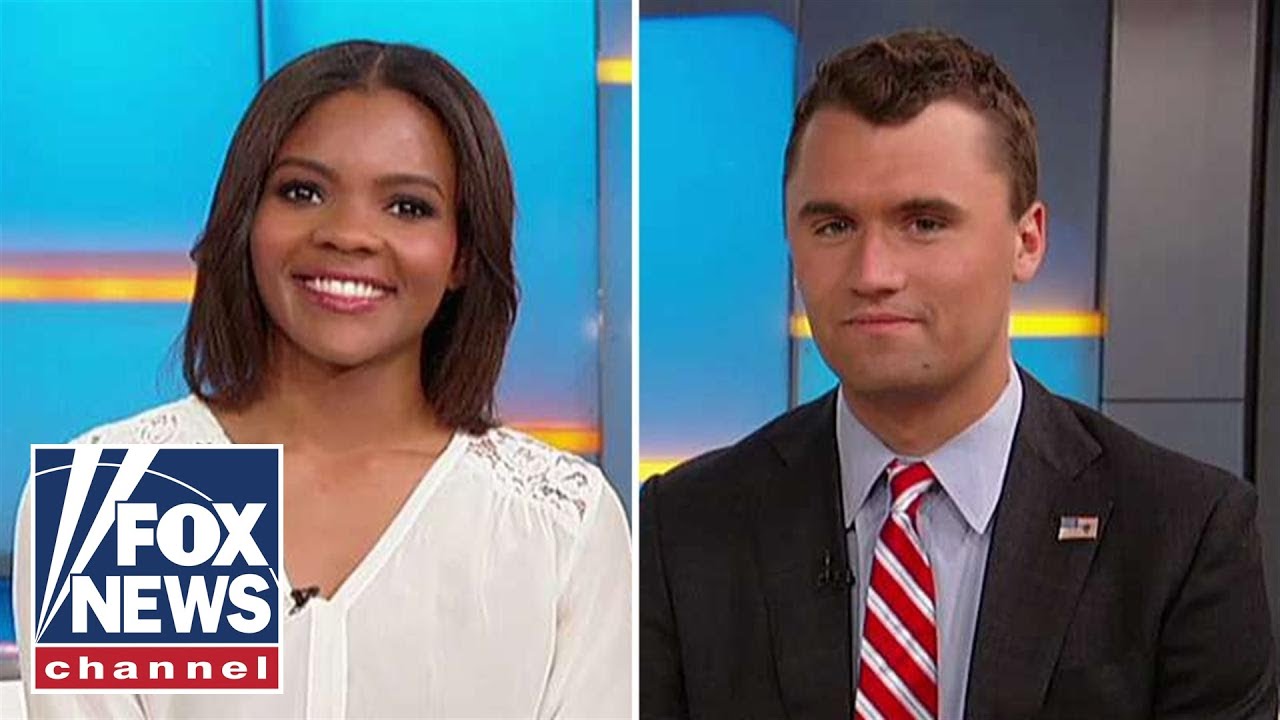
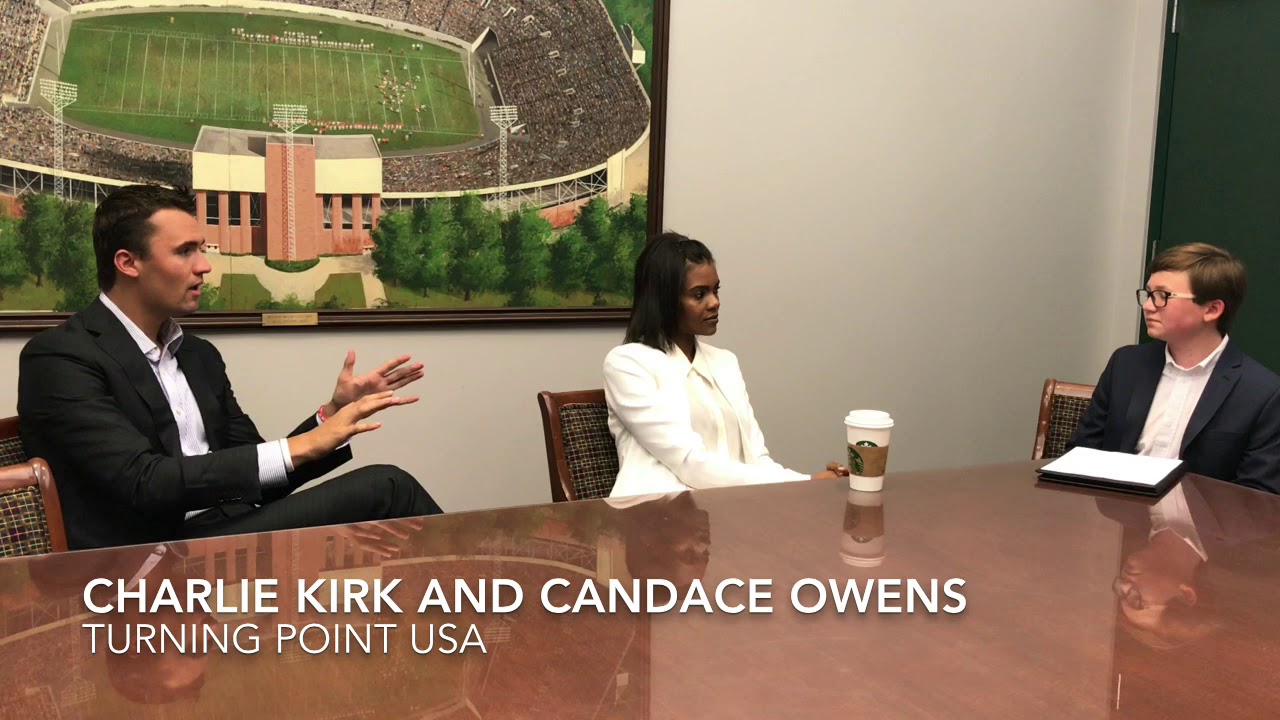
Candace Owens & Charlie Kirk Breaks Down Media Manipulation and the Real Statistics Behind Police Shootings in America
Enjoying this? Share it with someone who needs to see it.
Up Next
Charlie Kirk and Candace Owens Launch New Turning Point USA Headquarters in Arizona
16:58
Charlie Kirk and Candace Owens Ambushed by Antifa Mob During Breakfast in Philadelphia
6:43
Charlie Kirk and Candace Owens on Breaking the Liberal Matrix and Empowering Black Americans
35:59
Candace Owens & Charlie Kirk Breaks Down Media Manipulation and the Real Statistics Behind Police Shootings in America
Candace Owens and Charlie Kirk examine the media narrative surrounding police shootings and presents statistical evidence that challenges widespread perceptions. He discusses the Philando Castile case, reveals that only 16 unarmed black men were shot by police in 2016, and argues that emotional manipulation has been used to control voting patterns. Kirk compares the risk of being struck by lightning to being shot unarmed by police, explores the consequences of the war on cops, and draws parallels to medical malpractice statistics. This analysis questions how media coverage shapes public perception and policy despite statistical realities.
Charlie Kirk addresses a critical question about how emotional narratives can manipulate public perception and voting behavior. He clarifies his position on tragic events like the Philando Castile shooting, emphasizing that acknowledging a horrific event doesn't mean accepting emotional manipulation as a political tool.
Kirk explains his approach: removing feelings and emotional aspects from the narrative allows for a clearer examination of what media outlets present to the public. He states unequivocally that he would never say it was okay that Philando Castile died or deny that it was a horrific event. However, he challenges what he sees as the media's attempt to use such tragedies to control how people vote and view the world.
The Statistical Reality of Police Shootings
During an interview with Mike.com, Kirk received a statistic that became central to his argument: in 2016, 990 black men were shot and killed by police. However, only 16 of them were unarmed. Kirk argues that this distinction is essential because police officers have the right to shoot back to defend themselves against someone coming at them with a gun.
According to Kirk, the total number of people who died is irrelevant without context. The meaningful statistic is how many unarmed black men were shot and killed by police officers in 2016. That number—16—represents 0.0004% of the black community. Despite this small percentage, Kirk notes that the coverage was so extensive that viewers might believe police officers were targeting people based on the amount of melanin in their skin.
Kirk contends that the media made people believe this was a real and imminent threat to the black community. In reality, he states, you have a higher chance of getting struck by lightning than being gunned down unarmed by a police officer.
The War on Police Officers
Kirk argues that a war on police officers was launched as an effort to control the black vote. He adds another statistic to support his position: a police officer is 18 and a half times more likely to be shot by a black man than a black man is to be shot by a police officer. This, Kirk asserts, demonstrates that there is a war on cops happening in America.
The consequences of this narrative, according to Kirk, were severe and disproportionate. Police officers became hesitant to do their jobs because they didn't want to be called racist for trying to perform their duties. As a result, the black homicide rate jumped 17% after these violent protests.
Comparing Risk and Accountability Across Professions
Kirk poses a provocative question: Why is nobody boycotting doctors? He points out that 250,000 people died from medical errors in 2015, yet there are no boycotts of doctors. His answer: because doctors save lives. Police officers also save lives, Kirk argues, making it foolish to boycott people who protect communities.
Kirk acknowledges that awful things happen and sometimes things go wrong in policing. However, he maintains that these incidents should be viewed in context rather than used to paint an entire profession as systemically racist or dangerous to specific communities.
Media Narrative and Political Control
Throughout his analysis, Kirk returns to his central thesis: the media narrative surrounding police shootings has been used as a tool for political control. By creating the perception of widespread danger through constant coverage of tragic but statistically rare events, the media has influenced how people vote and view law enforcement.
Kirk's position is that acknowledging tragedy and demanding accountability is appropriate, but allowing emotional manipulation to drive policy and political decisions based on statistical anomalies is dangerous. He calls for a more rational, data-driven approach to understanding police interactions and community safety.