Candace Owens Highlights Shifting Eyewitness Accounts and a Contested Ruling in Tyler Robinson's Case
Enjoying this? Share it with someone who needs to see it.
Up Next
Candace Owens Exposes Overwhelming Evidence Manipulation in Charlie Kirk Assassination Trial
1:23:19
Candace Owens Reveals Exclusive Footage of Tactical Military Crawl on Losee Center Rooftop During Charlie Kirk Assassination
56:12
Candace Owens Exposes the Deception Behind Charlie Kirk Case: Enhanced Evidence Reveals Nothing But Pixels
19:50
Candace Owens Highlights Shifting Eyewitness Accounts and a Contested Ruling in Tyler Robinson's Case
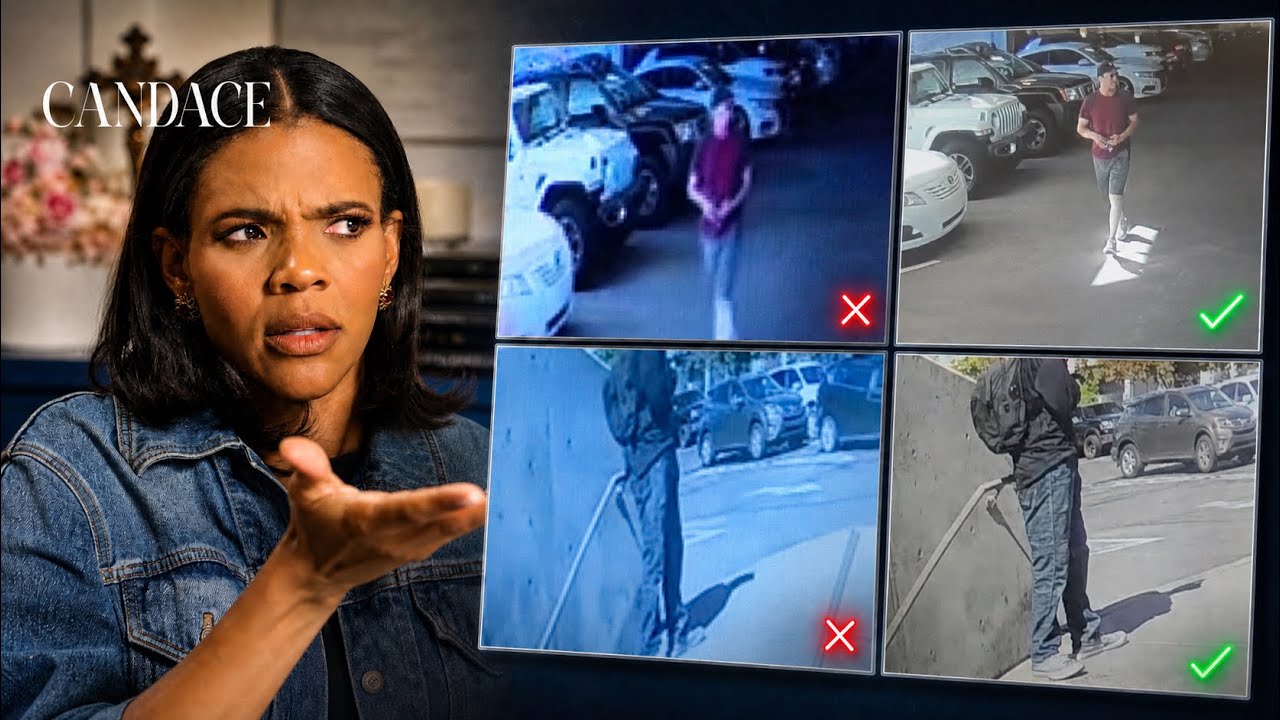
Candace Owens examines what she describes as a dramatic shift in eyewitness testimony from a student named Sara Tewell, who initially told Fox 13 that she watched Charlie Kirk get shot directly in the chest with blood gushing from his heart, only to give a second interview roughly 50 minutes later describing the wound as being in his neck, and a later interview to ABC News in which she additionally claimed to know the shooter's approximate distance. Owens argues these shifting accounts fit into her broader exploding microphone theory, tying them to a running list of details she says remain unexplained, including the condition of the crime scene, the handling of Kirk's necklace, and the lack of a standard gunshot residue test on suspect Tyler Robinson. She also reports on a Utah judge's ruling allowing prosecutors to introduce a recorded statement from Lance Twiggs at Robinson's preliminary hearing without permitting the defense to cross-examine him.
Candace Owens replays an interview given by a student identified as Sara Tewell shortly after the shooting, in which Tulley describes hearing a loud bang and watching the shot hit Charlie Kirk directly in the chest, with blood gushing from where his heart would be, before he slumped over. Tulley states she believed Kirk was dead on impact and describes the shot as coming from her right side.
A Changed Account 50 Minutes Later
Owens plays a second interview given by Tulley roughly 50 minutes later, in which her description shifts to describing Kirk as having been shot in the neck rather than the chest, while still describing blood spurting from his body as he fell.
A Third, More Detailed Account
Owens highlights a subsequent interview Tulley gave to ABC News, in which she further refines her account, now specifying that the shot struck the left side of Kirk's neck and estimating the shooter's distance at approximately 200 yards, a detail Owens argues closely matches the distance to the Losi Center building. Owens questions how Tulley's account became more specific and changed in its core details across three separate interviews.
Connecting the Accounts to the Exploding Mic Theory
Owens presents an updated list of details she argues are explained by her exploding microphone theory, including the absence of bomb-sniffing dogs at the scene, the paving over and excavation of the crime scene, the search for Kirk's necklace, shattered material found on the SUV, the absence of a standard gunshot residue test on Tyler Robinson, the removal of footage by an individual she names as Terrell Farnsworth, the absence of an ambulance on standby, Erika Kirk's quick public forgiveness of Robinson, a disputed account from a hospital staffer regarding cutting off Kirk's shirt, and the shifting eyewitness testimony just described.
Speculation About Lance Twiggs
Owens argues that if her broader theory holds, it suggests Tyler Robinson may have been set up by someone close to him with access to his belongings, namely his roommate, Lance Twiggs. She explicitly frames as her own speculation the idea that Twiggs could be a protected federal asset, citing his absence from FBI questioning as suspicious.
A Court Ruling on Hearsay Evidence
Owens reports that a Utah judge denied a defense request to compel Lance Twiggs to testify in person at Tyler Robinson's preliminary hearing, instead allowing prosecutors to present a recorded statement from Twiggs without cross-examination. She argues this allows the prosecution to introduce unverified evidence, including printouts of text messages and a handwritten note Robinson's defense has not been permitted to examine directly, and calls the proceeding a show trial. She notes the judge clarified the hearing's purpose is only to determine whether enough evidence exists to proceed to trial, not to determine guilt.
Comparing the Case to JFK
Owens closes by comparing the unfolding case to long-running controversies surrounding the assassination of John F. Kennedy, saying the preliminary hearing is scheduled for the week of July 6th and that she hopes to cover it live despite being on vacation at the time.