
Up Next

Sean Feucht and Charlie Kirk on Bringing Revival to America's Darkest Places During Lockdowns
1:19:50

Tucker Carlson and Charlie Kirk Expose the Real Battle for America's Soul and Future
1:41:42

Charlie Kirk Unveils Freedom Square Movement to Restore Biblical Values Across American Churches
1:35:57
Related Books
Browse Conservative Books








Charlie Kirk and Chris Buskirk on Why Conservatives Must Stop Saying No and Start Thinking Big
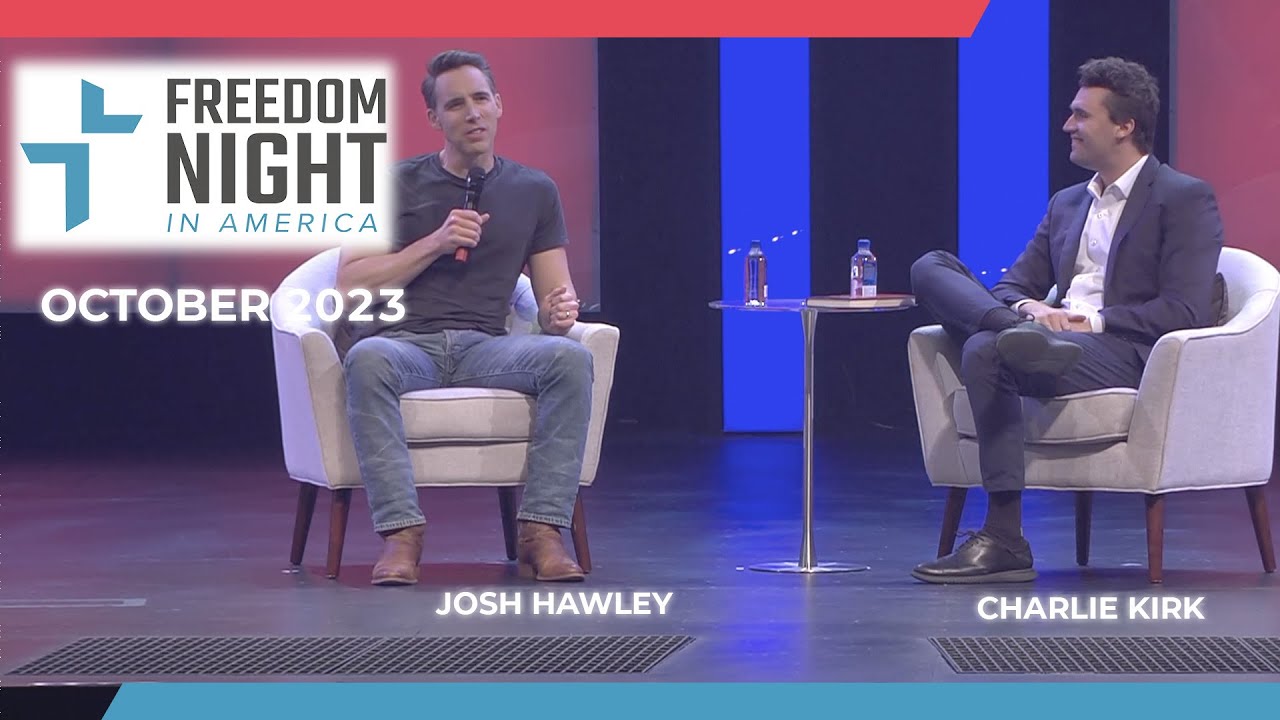
Charlie Kirk sits down with Eric Metaxas and Chris Buskirk to examine why the conservative movement has become stuck in a defensive posture of perpetual opposition rather than bold vision. The conversation examines how America went from founding fathers who built a nation and Greatest Generation engineers who constructed the Golden Gate Bridge to a pathologically risk-averse society that can't build a mile of road in under 15 years. Buskirk, who runs American Greatness, challenges conservatives to move beyond William F. Buckley's famous stance of "standing athwart history yelling stop" and instead articulate a concrete vision for how Americans want to live. Metaxas brings his perspective as author of the Bonhoeffer biography to explore how biblical faith enables true freedom and risk-taking in pursuit of virtue rather than license.
Reframing Conservative Principles Beyond Resistance
Charlie Kirk opens the conversation by addressing a fundamental problem: the conservative movement has been plagued by constantly saying no without offering an exciting vision that energizes followers and expands thinking beyond normal parameters. While saying no has its place, Kirk argues the movement needs to think bigger and more concretely about what it wants to achieve.
Chris Buskirk, who runs American Greatness, frames the challenge around two fundamental questions: What do we want the world around us to look like, and how do we want to live? He points to two historical touchstones that conservatives generally embrace - the founding of the republic and 1955, when National Review launched and became the voice of American conservatism for decades.
The contrast between these two moments reveals the problem. The founders self-consciously decided to do the biggest thing humans can do outside of families and churches - they started a country. That was an ambitious undertaking. Fast forward nearly 200 years to National Review's first edition, which famously declared they were "standing athwart history yelling stop," with a picture of a train coming at them.
Buskirk notes this is not something he would advise his children to do. At the wrong time, saying stop does not stop the train - it's just the predicate to getting flattened. His basic viewpoint is that there's no neutral ground. You're either going forward or going back. Conservatives should take their cues from what the founders were doing, think concretely about how they want the country to be, and then talk about how to get from where we are to there.
Growing the Pie Versus Dividing It
Eric Metaxas points out that William F. Buckley was trying to be funny with the train image, noting that wit and intelligence are characteristics of conservatism. The ability to laugh at things and at yourself is emotionally healthy and not immaterial when discussing what it means to be a conservative.
On the fundamentals, Metaxas explains that conservatives believe you can grow the pie and create wealth. These ideas are antithetical to the socialist left, which says the pie is one size and must be divided up. Understanding how economics works reveals that such thinking shrinks the pie. Conservatives understand this principle is reality-based.
Metaxas references earlier panel discussion about math being racist, illustrating how the left increasingly embraces gnostic ideas that are anti-reality. Their anti-reality stance will soon lead them to declare carpentry and engineering racist. Reality says you can grow wealth, so if you care about poor people, you want to grow wealth.
At some point, Metaxas suggests, conservatives need to step away from the idea that they're conserving something in a limiting sense. What they're really conserving is fidelity to reality, because the left has become unmoored from reality. They have ideas that have been proved not to work over decades - that wealth can be divided up and everyone will be blessed and live in utopia. That never happens. Conservative ideas are fundamentally reality-based, focused on how to bless the most people and give everyone opportunity. It's a wildly different thing. At this point, it's actually the left trying to conserve the pie, and they can't do it.
America's Lost Capacity for Ambitious Building
Kirk asks what it looks like for a movement to start demanding this new era of risk-taking and doing things. It seems the only risks society takes anymore are trying to roll out experimental vaccines or invading sovereign countries halfway around the world. Never would there be consideration of actually trying an ambitious project to get middle-income workers to invest in the country - not in some sound bite way, but substantively and concretely. In the 1950s, America built the interstate highway system in a fraction of the time it would take now, for a fraction of the cost, and it wasn't even considered that daring at the time because they had just won a major war.
Buskirk provides examples of things America used to build. In San Francisco, there's Treasure Island, a roughly four square mile island in the middle of San Francisco Bay. It's a manmade island built during the Depression in about 12 months, and a few thousand people now live on it. By contrast, it took almost 15 years to build about a mile of access road to the Golden Gate Bridge in the early 2000s, and it cost more in real dollars than it cost to build Treasure Island.
The key word is risk. America has become a pathologically risk-averse nation and society. The irony is that as the country becomes more risk-averse, it has actually raised the risk level. This is something people don't appreciate. Consider the past year around COVID and the things done to the country, families, individuals, businesses, and the social and political fabric of the nation in the name of reducing risk. In actuality, what has been done is raise the risk of failure of all those things and in fact cause the failure of many things. Suicide rates have risen, as have other deaths of despair related to alcoholism and drug abuse.
While doing all this "for safety" to avoid risk, tremendous damage has been inflicted. One thing conservatives need to do is reframe how they think about what they're doing - recognize that risk is part of life, and if they want to do big things, they're going to have to embrace risk.
Concrete Proposals: Charter Cities and New Frontiers
Buskirk always tries to concretize big principles rather than just talking about them. One thing he's proposed in different forums is taking a cue from the current governor of Nevada, a Democrat who proposed to the legislature taking a large tract of land in Nevada and basically turning it over to create a charter city. Build something new. Allow people to go out and have the experience of conquering a frontier, even on a small scale, and build a city as an experiment.
Give them latitude inside the confines of federal law, but from the state's perspective, give them a place where people could go and create something absolutely new. They could bring their families. There's no requirement to go there, but it allows people to start building something really tangible. The governor got immediately shut down by the Democrats in his legislature, but it represents the kind of ambitious thinking conservatives should embrace.
The Challenge of Risk in a Fear-Based Culture
Kirk raises the practical problem of managing risk, sharing a conversation with Dan Bongino. Bongino said that when he grew up, he was able to take all kinds of risks. He went on a mattress on a skateboard down a hill, and his mom was more worried about whether he dented a car than whether he was hurt - asking first if there was any liability issue, then if he was okay.
But when Kirk asked if Bongino lets his kids do that, he said absolutely not. Bongino acknowledged this as the problem. He doesn't even let his daughter run down the street alone because of what might happen. This exemplifies a risk-averse society. Maybe the mattress on the skateboard in the 1950s was wrong, or maybe it was totally right. The question is how to establish that middle ground, because parents like Bongino want to protect their children. How do we find that balance?
Metaxas says ultimately this all comes down to how you define freedom. We need to understand what we mean by freedom and liberty. He's not a libertarian. He believes in God and the Scriptures, and really believes that apart from a biblical worldview, you can't have freedom. If you really want people to be free, you have to define all this.
The desire for safety and guarantees is nothing more or less than fear of death. In his faith, Metaxas believes his God defeated death on the cross. If he actually believes that and knows it's true, he will live utterly differently - free without fear. The Democrats and the left are fundamentally fear-based. They say things like they're doing all this weird stuff because they want to save lives, but they don't even know why they want to be alive or what the point is. They just use this as a boogeyman to scare people. They're fundamentally fear-based.
If you know who you are, you can really live freely and will live differently. Even those who say they're conservatives or Christians have bought into the zeitgeist enough that even people like Bongino have bought into this a little bit because it's not modeled in the culture. When Metaxas was growing up watching John Wayne movies, people got in fist fights and cracked chairs over each other's heads, and that's what it looked like to be a man. Today if you actually did that in a bar, you'd be arrested and have to do community training because such wildness is now considered toxic masculinity. But that wildness is at the heart of reality.
Defining True Liberty Versus License
You can go wrong in two ways, Metaxas explains. You can say let's just ride that thing and be free, but that's really license, not liberty. There is a balance, and you have to define these things. In today's culture, you get a choice between license on one hand - which doesn't believe in social conservatism and is really just anarchy called conservatism - and on the other hand an inability to be free, being bound up and fear-based, saying you can never grow wealth so you'll just have to divide it up and get your piece. These are so fundamentally different that you have to go there and make those distinctions.
Good Risk Versus Bad Risk in Pursuit of Virtue
Kirk emphasizes that from a public policy standpoint, there's good risk and bad risk. Bad risk would be trying to risk something in pursuit of licentiousness or pleasure. That's why the American founding was a great example - it was risk in pursuit of virtue. Our orientation is really important when talking about risk. Conservatives aren't telling you to interrupt traffic to say you're fighting climate change. But they are saying it might be worth it to try to go to the airport as far as you can without wearing a mask - risk in the pursuit of a good thing. We have to make sure we're oriented correctly.
Buskirk responds to Metaxas's point about people who identify with the political left or live in opposition to the God of the Bible. They know they don't want to die. They don't know how they want to live or why. They have no idea why dying is bad or why life is good, except maybe for brunch on Sunday on the seventh day of the week. Not wanting to die isn't sufficient. The question is why do you want to live, and that defines what is a good risk versus a foolish risk.
Risk in the service of something worthwhile and virtuous - those risks are at least on the table. There could be ones that prudentially you would say are worth it or not within that universe, but that's the starting point.
Republican Failures on Family Policy
Kirk asks where Buskirk has been disappointed that conservatives in public office are not willing to take risks or embrace new ideas. They seem to live in a permanent loss aversion state. Buskirk jokes that's a long list that would cancel the rest of the speakers for the afternoon.
He identifies one big area where Republican office holders have consistently disappointed. Over the past 30 or 40 years, in every even-numbered year - every election year - Republican candidates and office holders realize that many of their volunteers and voters are people of faith, Christians, Catholics, Protestants, observant Jews. This is the base, the core of the Republican coalition. There are other groups and people with different priorities, but office holders say they're against abortion, for the family, for faith, and then on November 10th it's "what's your name again, you voted for me right, okay next." Then they don't really deliver on any of those things.
Families have gotten tremendous lip service for the past couple of generations and no action. Families are under more pressure today than 10, 20, or 30 years ago. The total fertility rate in this country is well below replacement. There are fewer marriages taking place as a percentage of the population. People who are getting married are having fewer children. A recent figure shows the total fertility rate is 1.65 births per female in this country - the lowest it has ever been in the United States. The replacement rate is 2.1.
You cannot support a family of four on a single median wage in this country. That was possible as late as 1989 or 1990, within the living memory of almost everyone in the room. That fundamentally changes things. If you have to have two people working to support a family of four, that makes it harder to have kids - it just raises the bar. This is a place where there has been a conscious or maybe subconscious decision to say they'd rather chase a free trade deal with China and don't care what happens to families. If American families pay the price, it's justified as free markets. That is something the country will have to reckon with because it has a direct material and cultural impact on the future, which we're starting to feel now.
Kirk notes a family-first agenda has not been on the forefront for quite some time. It's always given in slogans and meetings, but what has been the big policy accomplishment for the pro-family agenda since 1980? Maybe a couple tax credits here and there. The reason is that most families don't have lobbyists in Washington, DC.
The Paradox of Following God in a Secular Age
In closing, Kirk asks what people individually can do as they listen to take those risks and pursue virtue. Metaxas's book on Bonhoeffer, translated into dozens of languages, was about a risk taker. What does that look like?
Metaxas explains there's an irony at the heart of reality. If you know that God is real, then you're a fool not to trust Him. When you trust God, it looks to people who don't know God is real like you're being a wild man - how can you do that, that's crazy, don't you understand you need to be careful, you need to have more fear, don't you understand what you're doing? But if you're following God who looks invisible to many people, you just look like a wild risk taker. You know it's exactly the opposite. There is nothing safer than following God.
Think of that irony. To an atheist or others, they look at you like it's crazy. But you know that not fearing God and following God is crazy, scary, dangerous, and stupid. When talking about something like trade with China - nice idea, what if China is using slave labor or using the money that comes into their economy to oppress human beings and destroy religious liberty? You then have a choice. If you honor God in your decisions and say you will not trade with China unless they change specific things and you will not compromise, you trust God to say He will bless you far more than if you prostituted yourself and did anything for the bottom line for your company like Nike or Apple.
If you don't have that kind of virtue at the heart of capitalism, if you don't have that kind of virtue at the heart of liberty, the whole thing falls apart. That's the strange irony. Somebody like Bonhoeffer was doing the only safe and good thing, but the people who didn't see why looked at him like a crazy wild man. That's the risk we have to take in this thing we call reality.
Kirk concludes by noting they'll continue the conversation backstage on the podcast later in the day, and they'll be back with Secretary of State Mike Pompeo.
Video Transcript
[00:00] we got a great conversation in store
[00:02] here
[00:05] and hello to everyone watching on the
[00:07] live stream and
[00:08] all other places we are my name's
[00:10] misspelled
[00:12] it's not matt taxes eric
[00:16] yeah the way my father spells it and
[00:18] really he's the one i go by
[00:20] uh it's m-e-t-a-x-a-s but i just feel
[00:24] like not having kirk in my surname
[00:26] i just feel like that's good enough you
[00:28] know who i am that disqualifies you from
[00:30] being on the stage here
[00:31] and then of course chris buskirk a great
[00:33] friend of mine who runs american
[00:34] greatness
[00:35] uh which is finale it's amgreatness.com
[00:38] is that right it is
[00:39] yeah so i really wanted to have this
[00:40] conversation about thinking big
[00:43] and why the conservative movement had
[00:45] how the conservative movement has been
[00:46] plagued by just saying
[00:48] no all the time and saying no is very
[00:50] helpful in fact there's a lot of things
[00:51] we should say no to
[00:52] but also we should be a movement that
[00:54] excites our followers and tries to get
[00:56] people to be
[00:58] thinking outside of just um kind of the
[01:01] normal parameters so chris i want to
[01:02] start with you you're
[01:03] you're kind of writing a book around
[01:04] these ideas um
[01:06] what do we have to do to try to expand
[01:10] our horizons and
[01:12] concretely think big in the conservative
[01:14] movement i guess let me let me start
[01:16] with
[01:16] uh with this is it's a matter of
[01:19] thinking
[01:19] we have to reframe our fundamental
[01:21] questions about what it is we're trying
[01:23] to achieve both in politics and
[01:25] in culture and i the way i think about
[01:28] it
[01:28] is it i guess two ways one is uh
[01:31] what is it that we want the world around
[01:34] us
[01:34] to look like how is it that we want to
[01:37] live like francis schaefer says how then
[01:38] shall we live
[01:39] that's the fundamental question and we
[01:41] can look back at our own history in this
[01:42] country and maybe take two
[01:44] um i think touchstones historically that
[01:47] i think
[01:48] that conservatives would generally agree
[01:49] are important to how we think about
[01:51] ourselves
[01:52] as americans one of course is the
[01:53] founding of the republic
[01:55] and then the other one is 1955 kind of
[01:59] the
[01:59] founding of the modern post-war american
[02:01] conservative movement which is the
[02:03] launch of national review which kind of
[02:05] became the
[02:06] the voice of american conservatism for
[02:09] you know 25 30 years
[02:12] in the fount with the founders they
[02:14] self-consciously made a decision to
[02:17] do the biggest thing that humans can do
[02:19] outside of their families or their
[02:21] churches which
[02:22] is they started a country right that's a
[02:24] pretty ambitious undertaking
[02:27] fast forward 200 almost 200 years
[02:30] and national review on the cover of
[02:32] their first
[02:34] edition of the magazine they famously
[02:36] say uh we're standing a thwart history
[02:39] yelling stop and there's a picture of a
[02:41] train coming at them
[02:44] they're standing in front of a train i
[02:48] mean that
[02:48] was not something i would advise my
[02:50] children to do in general and i you know
[02:52] that's
[02:53] i think that's at the wrong time staying
[02:55] stop
[02:56] does not stop the train it doesn't stop
[02:58] the train it's just as the predicate to
[03:00] you getting flattened and so
[03:01] there's you know my basic viewpoint on
[03:03] how we think about life is there's no
[03:05] neutral
[03:06] you're either if you're either going
[03:07] forward or you're going back let's take
[03:09] our cues from what the founders were
[03:10] doing and think about the way we want
[03:12] this country to be let's make it very
[03:15] concrete
[03:16] and then talk about how do we get from
[03:18] where we are right now to there
[03:20] so eric you and i were talking about
[03:22] this backstage nice pink shirt by the
[03:24] way that is thinking big
[03:25] any time man you know it's always some
[03:28] very it used to be white i threw it in
[03:30] with some red stuff and i said you know
[03:31] what
[03:32] life is short let's go with it and you
[03:34] got the you got the blue socks you are
[03:35] just suited up
[03:36] it's very good white and blue brother
[03:38] it's yeah it's it's the it's the summer
[03:40] wardrobe
[03:41] eric why is it not enough just to say no
[03:44] well first of all i want to point out
[03:46] that uh
[03:47] william f buckley was trying to be funny
[03:51] when he had you know standing in front
[03:53] of the train
[03:54] and so that is a
[03:57] characteristic of conservatism
[04:01] a wink wit intelligence
[04:05] so that's an important thing we don't
[04:07] need really to unpack that but
[04:09] but it is not uh immaterial
[04:12] when you're talking about what does it
[04:13] mean to be a conservative
[04:15] to be able to laugh at things to laugh
[04:17] at yourself that's called being
[04:19] emotionally
[04:20] healthy but
[04:23] if you want to just talk about the
[04:25] basics
[04:26] conservatism we believe that you can
[04:30] grow
[04:31] the pie we can create wealth
[04:35] those ideas are antithetical to the
[04:38] socialist left which says
[04:39] the pie is one size and we have to
[04:43] divide it up
[04:44] and then of course we know if you
[04:45] understand how economics works
[04:47] if you think that way you're going to be
[04:49] shrinking
[04:50] the pie and so we have to understand
[04:53] that this principle
[04:55] is reality-based earlier in the panel
[04:57] you were talking about
[04:58] math and how math is racist the left
[05:02] increasingly goes into this gnostic
[05:05] idea that is anti-reality
[05:08] think about what we're talking about
[05:09] we're at that point now their
[05:11] anti-reality
[05:12] pretty soon they're going to say
[05:13] carpentry and engineering are racist
[05:15] right
[05:16] so reality says that
[05:19] uh you can grow
[05:23] wealth so if you care about poor people
[05:25] you want to grow
[05:26] wealth so the idea that we're conserving
[05:29] something at some point i think you have
[05:32] to step away from that
[05:33] because it's sort of um i mean of course
[05:36] we're conserving something but what
[05:37] we're conserving really
[05:39] is fidelity to reality
[05:42] because the left is unmoored from
[05:45] reality
[05:46] they have these ideas which we have seen
[05:49] in the decades
[05:50] be proved to not work that we can
[05:54] we can divide up a certain amount of
[05:56] wealth and everybody will be blessed and
[05:57] will live in utopia
[05:59] that never happens the ideas of
[06:01] conservatism
[06:02] are fundamentally reality based there
[06:04] are a lot of people how can we bless
[06:06] the most people how can we give
[06:08] everybody opportunity
[06:10] so it's it's a wildly different thing
[06:13] than we're at a point in a sense where
[06:16] it is the left
[06:17] that is trying to conserve the pie
[06:20] and they they can't do it so so chris
[06:24] what does that look like
[06:26] what does it look like for a movement to
[06:28] start to demand
[06:30] kind of this new era of of risk-taking
[06:33] and doing things
[06:35] because it seems as if the only risks
[06:37] that we take anymore in society
[06:39] or trying to like to roll out an
[06:40] experimental vaccine or
[06:42] invading some other sovereign country
[06:44] halfway around the world
[06:46] like never would we think about actually
[06:47] trying hey we should do an ambitious
[06:50] you know project to try and get
[06:52] middle-inc
[06:53] income workers to actually invest in the
[06:55] country or you know something like that
[06:57] of course
[06:57] that's done in some sort of like sound
[06:59] bite way but not actually substantively
[07:01] or concretely in the 1950s
[07:04] neil ferguson would say that we built
[07:06] the interstate highway system
[07:08] in a fraction of the time it would take
[07:09] us now for a fraction of the cost
[07:11] and it wasn't even considered to be that
[07:13] daring at the time because they had just
[07:15] won a major war
[07:16] yeah no there's so many of these great
[07:18] examples of things that america used to
[07:20] build like if you've been to san
[07:21] francisco and crossed the golden gate
[07:23] bridge
[07:23] uh you know about you go across uh and
[07:26] you see treasure island
[07:27] there so it's about a four square mile
[07:30] island in the middle of san francisco
[07:32] bay it was
[07:32] um it was built during the depression
[07:35] like it is a manmade island
[07:36] it was built during the depression in
[07:38] like 12 months uh and a few thousand
[07:40] people
[07:40] now live on that island like it has it
[07:44] took almost 15 years to build about a
[07:46] mile
[07:47] of access road to the golden gate in the
[07:49] early 2000s
[07:50] and cost more in real dollars than it
[07:52] cost to build
[07:54] treasure island and you you brought up
[07:57] uh i think what i think is one of the
[07:59] key words
[07:59] which is risk um and so we have become
[08:03] a pathologically risk-averse nation
[08:06] uh and society and the irony here is is
[08:09] that as we become more risk averse
[08:12] it has actually raised the risk level in
[08:14] the country
[08:17] and that's something that we just don't
[08:18] appreciate i mean this is you think
[08:20] about the last year or so
[08:21] around covid think about the things that
[08:23] we have done to this country to families
[08:25] to individuals to businesses to the
[08:26] social
[08:27] and political fabric of the nation in
[08:29] the names of reducing risk when in
[08:31] actuality what we've done is raised
[08:33] the risk of failure of all of those
[08:36] things and in fact caused the failure
[08:38] of a lot of things i mean we've seen
[08:39] suicide rates rise in this country we've
[08:42] seen deaths uh other types of deaths of
[08:44] despair
[08:44] uh related to alcoholism and drug abuse
[08:47] rise over the past year
[08:49] you know and so while we're talking
[08:51] about while we're doing this for safety
[08:53] we don't want the risk actually what
[08:55] we've done is inflict a lot of damage
[08:57] and so one of the things we need i think
[08:59] to do is reframe the way
[09:00] we think about what we're doing and just
[09:02] saying risk is a part of life
[09:04] and that if we want to do big things
[09:06] we're going to have to embrace
[09:08] risk and
[09:10] [Music]
[09:12] let me suggest one one thing here that
[09:15] i've been thinking about like what are
[09:16] the because i always think you know we
[09:17] always talk about these big
[09:18] principles and that's good but that's
[09:20] only can be a starting point let's
[09:21] always like try and concretize these
[09:23] things
[09:24] one of the things that uh that i've uh
[09:26] proposed in a couple of different forums
[09:28] uh which i think would be interesting
[09:30] and actually the current
[09:31] governor of uh of nevada proposes to the
[09:34] legislature he's a
[09:35] he's a democrat he yes this leg yeah he
[09:38] he got immediately shut down by the
[09:40] democrats in the in his
[09:41] in his legislature but he proposed uh
[09:44] taking a large
[09:45] i think it was about a hundred bro i
[09:48] don't quote me this but a very large
[09:49] tract of land in nevada
[09:51] and basically turning it over to create
[09:52] a charter city
[09:54] build something new build a you know
[09:57] allow the
[09:58] allow people to go out and have that
[10:00] experience of of conquering a frontier
[10:02] even if it's only on a small scale
[10:04] and build a city experiment give them a
[10:06] lot of latitude
[10:08] inside the confines obviously of federal
[10:10] law but
[10:11] from the states um from the from the
[10:13] state's perspective they could give them
[10:15] a place where people could go and create
[10:18] something absolutely new they could
[10:19] bring their families
[10:21] there's no requirement to go there but
[10:22] it allows people to start to
[10:24] build something that's really tangible
[10:26] so eric how do we manage that risk
[10:29] there's the problem and i was just
[10:31] actually talking to dan bongino about
[10:33] this
[10:34] where he said and it was a wonderful
[10:36] conversation that we're going to air
[10:38] soon it was done uh in the podcast area
[10:41] where he said look the problem is when i
[10:43] grew up
[10:44] i was able to kind of take all these
[10:45] risks and my parents didn't let me
[10:47] and i went on like a mattress on a
[10:49] skateboard down a hill and my mom
[10:51] was more worried about whether you know
[10:53] i dented a car than if i was you know
[10:55] hurt she's like you know
[10:56] is there any liability issue here by the
[10:58] way are you okay you know um
[11:00] but then i asked him and he was so
[11:02] amazingly honest
[11:04] i said so do you let your kids do that
[11:07] he's like oh no never
[11:08] and he said this is the problem i have
[11:10] and this is
[11:11] just kind of an example of a risk-averse
[11:13] society said i don't even let my
[11:14] daughter run down the street alone
[11:16] because i'm afraid of what's going to
[11:17] happen and so we
[11:19] how do we establish that that middle
[11:22] ground right because maybe it was wrong
[11:23] to have the mattress on the skateboard
[11:25] in the 18 you know 1950s maybe not
[11:27] oh that was totally right yeah but you
[11:30] see what i'm saying eric because i think
[11:31] yeah but the reason dan says that though
[11:33] is because he's like i want to protect
[11:35] my children how do we find that balance
[11:37] i ultimately for me all of this comes
[11:39] down to how do you define
[11:40] freedom we have to redefine
[11:44] uh freedom i don't mean redefine it but
[11:46] i mean we have to understand what do we
[11:48] mean by freedom
[11:49] and liberty i'm not a libertarian
[11:53] i believe in god i believe in the
[11:56] scriptures
[11:57] and i really believe that apart from
[12:01] the biblical worldview you can't have
[12:04] freedom and so if you really want people
[12:07] to be free
[12:08] you you really have to define all this
[12:10] stuff and the the idea of
[12:11] i mean i would actually say that what
[12:13] has happened
[12:15] this desire for safety
[12:18] for guarantees uh is fear of death
[12:22] it's it's nothing more or less it is
[12:24] fear
[12:25] of death in my crazy religion i believe
[12:29] that my god defeated death
[12:33] on the cross and i think to myself
[12:37] if i actually believe that if i know
[12:39] that that is true
[12:40] i will live utterly differently i will
[12:42] live free without fear
[12:45] the the democrats and the left are
[12:48] fundamentally
[12:49] fear based and they will say things like
[12:52] we're doing all this weird stuff because
[12:53] we want to save lives
[12:54] they don't even know why they want to be
[12:57] alive or what the point is they just
[12:59] talk they just use this as a boogeyman
[13:01] to scare people we want to save lives
[13:02] they are fundamentally fear-based
[13:04] if you know who you are and who's
[13:07] capital w
[13:08] you are you can really live freely
[13:12] and you will live differently and i
[13:14] honestly think that
[13:15] you know even those of us who say we're
[13:17] conservatives or christians
[13:18] we've bought into you know we're we're
[13:21] we're breathing
[13:22] the zeitgeist enough that even folks
[13:24] like dan bongino and i
[13:26] we we have bought into this a little bit
[13:29] because
[13:29] we don't model this in our culture i
[13:31] mean you know when i was growing up i'm
[13:33] watching john wayne movies and
[13:35] you know people are getting in fist
[13:36] fights and cracking chairs over each
[13:37] other's heads and stuff and you think
[13:38] that's what it is to be a man that looks
[13:40] like fun today
[13:42] if you actually did that in a in a bar
[13:45] you know you would you'd be arrested and
[13:47] you'd have to do community
[13:48] uh training or something like that
[13:49] because we don't behave that's toxic
[13:51] masculinity
[13:52] the wildness that is at the heart of
[13:55] of reality um you know you can go wrong
[13:59] in
[13:59] in two ways right you can say let's
[14:02] let's just
[14:02] ride that thing and and be we're going
[14:05] to be free but we're really going to be
[14:06] people
[14:07] who are living life it's licensed it's
[14:10] not
[14:10] liberty and so there is that balance and
[14:13] you really have to define these things
[14:14] and it's our culture today
[14:16] you really get a choice between you know
[14:18] i'm a christian conservative porn star
[14:20] isn't that great
[14:22] on the one hand not that i'm judging
[14:25] as long as it's christian porn i'm good
[14:27] with it i just want to be very very
[14:28] clear
[14:29] right but the point is that you've got
[14:31] that on the one hand which is
[14:34] obviously is saying that uh i don't
[14:36] believe in social conservatism so i want
[14:39] to say to that person
[14:40] how are you defining anything at this
[14:42] point you did you just want anarchy but
[14:44] you're calling it
[14:44] conservatism and then on the other hand
[14:47] you have this
[14:48] inability to be free and so you
[14:51] you're you're bound up uh and and and
[14:54] fear-based you say look we've only got
[14:55] this
[14:56] we can never grow wealth that's a crazy
[14:58] idea and so we're just going to have to
[15:00] divide it up and i just want to i just
[15:01] want to get my peace i mean
[15:03] these are so fundamentally different
[15:05] that we really kind of have to go there
[15:07] so so chris then from a public policy
[15:09] standpoint
[15:10] and how these ideas kind of come into
[15:12] reality we have to realize there's good
[15:14] risk and bad risk for example
[15:16] uh bad risk would be trying to um
[15:19] risk something in the pursuit of
[15:23] licentiousness or in the pursuit of
[15:26] pleasure
[15:26] that's why the american founding was a
[15:28] great example because it was risk in the
[15:30] pursuit of virtue
[15:32] right so we have to also we have to
[15:33] understand that our orientation is
[15:35] really important
[15:36] when we're talking about risk we're not
[15:38] telling you to just go and you know
[15:40] interrupt traffic to try to say that i'm
[15:42] fighting climate change right that's
[15:44] but we are saying hey it might be worth
[15:46] it to try to go to the airport as far as
[15:48] you can without wearing a mask
[15:50] that's crazy talk shut him down that's
[15:53] risk in the pursuit of
[15:55] a good thing so how so we have to make
[15:57] sure we're oriented correctly
[15:58] and then also can you give some examples
[16:00] chris of where you've been disappointed
[16:02] that conservatives in public office are
[16:05] not
[16:06] willing to take risks willing to embrace
[16:08] new ideas
[16:10] for whatever reason it's almost like
[16:11] they live in this permanent loss
[16:13] aversion state
[16:15] i didn't realize we were canceling the
[16:16] rest of the speakers for the afternoon
[16:18] because that's a long list
[16:21] i i want to just respond quickly to
[16:22] something um that that eric said
[16:25] that sort of leads leads into this uh
[16:27] and that is
[16:28] when you think about the people who sort
[16:30] of identify with the
[16:31] political left uh or people who live in
[16:35] opposition to the god of the bible
[16:37] atheists
[16:38] however you want to define them they
[16:39] know they don't want to die
[16:41] they don't know how they want to live or
[16:43] why it's just dying's bad
[16:44] for sure they don't they have no idea
[16:46] why dying is bad
[16:48] or why life is good because you don't
[16:50] have brunch on sunday
[16:51] i feel like that's like this right the
[16:53] secular right uh that happens on the
[16:55] seventh day of the week
[16:56] the the so that i think it goes back to
[17:00] like how do we think about it which is
[17:01] uh not wanting to die isn't sufficient
[17:04] it's why do you
[17:05] want to live and that defines to your
[17:07] point like what is a good risk to take
[17:09] what is a foolish risk
[17:10] to take so risk in the service of
[17:12] something that is worthwhile
[17:14] virtuous those are
[17:17] those risks are at least on the table
[17:19] now there could be ones that prudential
[17:20] you would say are worth it or not worth
[17:22] it within
[17:23] that universe but that's got to be your
[17:25] starting point and this is a place where
[17:27] to
[17:27] to the question you asked you know where
[17:29] people
[17:30] uh elect like a republican office holder
[17:33] sort of disappointed
[17:35] on this and there's i would say there's
[17:37] one big
[17:38] area on this front where republican
[17:41] office holders have consistently
[17:42] disappointed and what we've seen
[17:44] over the past 30 or 40 years is that in
[17:47] every even numbered year meaning every
[17:49] election
[17:50] year republican candidates and office
[17:52] holders
[17:53] realize that a lot of their volunteers a
[17:56] lot of their voters
[17:57] are our people of faith our christians
[18:01] uh catholic protestant whatever our
[18:03] observant jews
[18:05] this is the base of the people who
[18:08] forms the core of the republican
[18:10] coalition now there's
[18:12] obviously other groups and people view
[18:13] themselves differently as they have
[18:15] different
[18:16] priorities and whatnot but office
[18:18] holders go and say
[18:20] i'm against abortion for the family for
[18:22] faith blah blah blah blah
[18:24] and oh by the way it's november 10th
[18:26] what's your name again
[18:28] uh i don't remember you voted for me
[18:30] right okay next
[18:31] and then they don't really deliver on
[18:32] any of those things and what happened
[18:34] what has happened
[18:35] is our families uh have gotten a lot of
[18:38] lip service for the past couple of
[18:40] uh generations and no action
[18:43] families are under more pressure today
[18:46] than they were
[18:47] 10 years ago 20 years ago 30 years ago
[18:49] the total fertility rate in this country
[18:51] is
[18:52] well below the replacement rate in this
[18:53] country why
[18:55] because there are a few fewer marriages
[18:56] taking place as a percentage of the
[18:58] population the people who are getting
[19:00] married or having fewer children
[19:01] you know the with the number just came
[19:03] out a week or two ago
[19:05] the total fertility rate is 1.65 births
[19:08] per
[19:09] female in this country the which is the
[19:11] lowest it has ever been
[19:13] in the united states 2.1 is uh is the
[19:16] replacement rate
[19:17] and you cannot uh support a family of
[19:20] four
[19:20] on a single median wage in this country
[19:24] that was possible as late as 1989 or
[19:27] 1990 so within
[19:28] the living memory of almost everybody uh
[19:31] in the
[19:31] in this room that fundamentally changes
[19:34] things like if
[19:35] you have to it says nothing about desire
[19:38] but if you
[19:38] have to have two people working to
[19:41] support a family of four that makes it
[19:42] harder to have kids just raises the bar
[19:45] and this is a place where there has been
[19:49] a conscious decision maybe with
[19:51] subconscious decision for some people
[19:53] to say well we would rather
[19:56] chase a free trade deal with china
[19:59] and we don't care what happens to our
[20:01] families and if american families pay
[20:03] the price
[20:04] hey free markets uh and that is
[20:07] something that we're going to have to
[20:08] reckon with because it has a direct
[20:10] material and cultural impact on the
[20:13] future of the country we're starting to
[20:14] feel that now yeah a family first agenda
[20:17] has been one that has not been put on
[20:18] the forefront
[20:19] for quite honestly some time but it's
[20:22] always
[20:22] given in slogans and in meetings
[20:26] but what has been the big policy
[20:28] accomplishment for the pro family agenda
[20:30] since 1980
[20:32] i mean maybe a couple tax credits here
[20:34] and there maybe
[20:35] right when you look at and the reason is
[20:37] because most families don't have
[20:38] lobbyists in washington dc
[20:40] so we're going to continue this
[20:41] conversation backstage on the podcast
[20:44] uh later in the day but eric in closing
[20:47] what can people individually do as they
[20:49] listen to this rebroadcast throughout
[20:51] to actually be able to take those risks
[20:54] and pursue the virtue your book that was
[20:56] translated in dozens of languages
[20:58] the bonhoeffer book was about a risk
[21:01] taker
[21:02] i mean that's that's not the only
[21:04] description of him but i think that's a
[21:05] fair way right
[21:07] and if you guys don't know the story of
[21:08] bonhoeffer it's incredible and eric has
[21:10] wrote the magnum opus on it
[21:12] and so eric what does that look like
[21:14] well i think
[21:15] this is the there's an irony at the
[21:17] heart of
[21:18] reality um if you
[21:22] know that god is real
[21:26] then you're a fool not to trust him
[21:30] and when you trust god it looks
[21:34] to people who don't know that god is
[21:37] real
[21:38] like you're being a wild man
[21:41] like how can you do that that is crazy
[21:45] don't you understand you need to be
[21:47] careful you need to have more fear don't
[21:49] you understand what
[21:50] what you're doing but if you're
[21:52] following god who
[21:54] looks invisible to many people you just
[21:57] look like a
[21:58] wild risk taker but you know
[22:02] that it is exactly the opposite
[22:06] there is nothing safer
[22:10] than following god so if you trust
[22:14] if god's but i mean think of that irony
[22:17] so to an atheist or somebody
[22:19] they look at you like you're that's
[22:21] crazy but you know
[22:22] no actually not fearing god and
[22:25] following
[22:26] god is crazy and scary and dangerous and
[22:29] stupid
[22:30] so when you're talking about something
[22:32] like you say hey we're americans and we
[22:34] want to trade and we want to grow our
[22:36] economy
[22:36] so let's trade with china right nice
[22:39] idea
[22:40] what if china is using slave
[22:44] labor or what if china is using
[22:48] the money that comes into their economy
[22:50] to oppress
[22:51] human beings to destroy religious
[22:53] liberty you then
[22:54] have a choice and you have to say if i
[22:57] honor god in my decisions
[23:01] and say we will not trade with you china
[23:04] unless you change this
[23:05] and this and this and this and we will
[23:07] not compromise
[23:09] you trust god to say i will honor you
[23:13] in that commitment and i will bless you
[23:17] far more than i would have
[23:20] if you would have prostituted yourself
[23:22] and said
[23:23] i will do anything for the bottom
[23:26] line for my company nike or apple if you
[23:30] don't have that kind of virtue
[23:31] at the heart of capitalism if you don't
[23:35] have that kind of virtue at the heart of
[23:36] liberty
[23:37] the whole thing falls apart so that's
[23:40] the strange irony
[23:41] somebody like bonhoeffer was doing the
[23:44] only
[23:45] safe and good thing but the people who
[23:48] didn't see
[23:49] why he looked like a crazy
[23:53] wild man and that's the risk we have to
[23:55] take in this thing we call reality
[23:58] well we're unfortunately short on time
[24:00] and so we're going to keep this
[24:00] conversation going as i keep mentioning
[24:02] if you guys want to check those out
[24:04] you guys can subscribe to our podcast um
[24:06] and then later today
[24:07] we're back with secretary of state mike
[24:09] pompeo but let's give it up for our
[24:11] amazing panelists here
[24:12] and uh thank you guys so much thank you
[24:16] charlie
[24:20] you




Comments
Be the first to comment on this video.