Charlie Kirk and Dr. Ben Carson on Higher Education Indoctrination and Faith in America's Future
Enjoying this? Share it with someone who needs to see it.
Up Next
Charlie Kirk Exposes Five False Religions Replacing Christianity and Fighting For America's Future
1:50:19
Charlie Kirk Reveals the Five Fake Religions Seeking to Replace Christianity in America
1:01:45
Charlie Kirk and Luke Barnett Share Vision for Biblical Citizenship and the Great Citizen Movement of 2021
1:15:00
Charlie Kirk and Dr. Ben Carson on Higher Education Indoctrination and Faith in America's Future
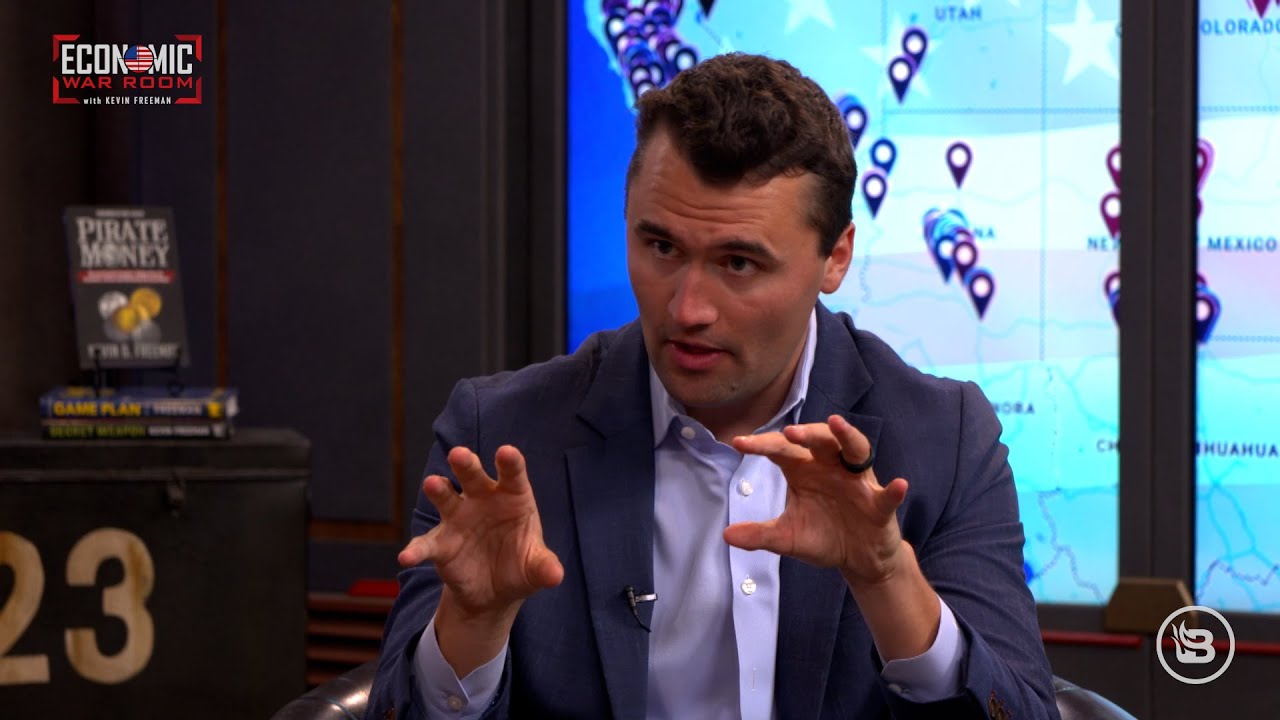
Charlie Kirk joins Dr. Ben Carson to discuss the state of higher education, the importance of faith in preserving freedom, and why young Americans are increasingly rejecting traditional values. Kirk shares his journey from high school activist to founder of Turning Point USA, reveals what happens during his confrontational campus debates, and explains why he believes the Cold War may not truly be over. The conversation explores identity politics, the push toward oligarchy, and what gives Kirk hope for the next generation despite unprecedented challenges to Western civilization.
Dr. Ben Carson welcomes Charlie Kirk to discuss the state of American society, beginning with a critical examination of higher education. Kirk describes how most universities have abandoned true education—which means "to lead forth" toward truth—in favor of indoctrination. Outside of institutions like Hillsdale College, Liberty University, and a few others, Kirk argues that colleges create an atmosphere of ingratitude and resentment rather than enlightenment.
Kirk explains that universities train students to look for flaws where they don't exist and overemphasize alleged injustices, creating what he calls the unhappiest generation in recorded history—the most suicidal, anxious, depressed, medicated, and drug-addicted. At the root of this crisis is a postmodern secular worldview that treats God as mythology and denies any higher purpose to human existence.
Having experienced classes at Hillsdale College taught by professors like Dr. Larry Arnn, Kirk contrasts genuine education—the development of the soul toward the good, true, and beautiful—with the activist factory model prevalent at institutions like Harvard, where anti-Semitic rallies demonstrate how far education has fallen from its classical ideals.
From West Point Rejection to National Movement
Kirk shares his personal journey, revealing that he wanted to attend West Point but didn't get in—something he now sees as providential. While in high school, he founded Turning Point USA because he worried the millennial generation was moving too far in a progressive direction. What many don't realize is that millennials have actually moved 30 to 40 points in their worldview over the last decade, becoming far less liberal than they were ten years ago.
The organization grew from a high school student's concern into a national movement fighting for virtue, Western civilization, free speech, free markets, private property rights, and the Constitution. Kirk notes the irony that positions considered common sense just twenty years ago—like acknowledging there are two sexes—are now labeled controversial on college campuses.
Kirk emphasizes that Turning Point USA operates on the belief that the university system is the incubator of bad ideas that eventually infiltrate corporate America, Congress, and our laws. By addressing the problem at its source, the organization aims to prevent these ideas from spreading throughout society.
Is College Really Necessary?
When Carson asks whether college is necessary, Kirk offers a nuanced response. For fields like brain surgery, obviously yes. But for what most parents think their children will gain from college, the answer is increasingly no. Kirk outlines three common reasons parents give for sending kids to college, and why each fails:
Developing a worldview: Universities are terrible places to develop a functioning worldview that leads to a meaningful life
Exposure to different ideas: Only a small collection of schools actually provide this; most are assembly lines of ideological conformity
Getting a job: This is increasingly untrue as more employers look for specific skill sets rather than degrees
Kirk argues that America has abandoned the classical model of education in favor of the Woodrow Wilsonian and Prussian bureaucrat model that treats students as nothing more than desk workers. Classical education focused on developing good citizens and people of character—individuals who understand good versus evil, holy versus profane, and the distinction between God and man. Students with this foundation can easily learn technical skills later through specialty programs.
The tragedy is that parents have been sold the idea that education is primarily about acquiring skills to get a job, rather than creating a society that knows the Ten Commandments and believes God is watching their actions and that there's an eternal component to their existence.
Choosing the Right College
For parents and grandparents facing the college decision, Kirk offers practical advice. Beyond institutions like Hillsdale College, Liberty University, Grand Canyon University, and College of the Ozarks, there are other good options. For students attending mainstream universities like the University of Illinois or University of Iowa, Kirk recommends finding the local Turning Point group, as community provides a hedge against indoctrination.
He also advises ensuring students attend for the right reasons. If someone wants to become a nurse and chooses a good nursing school, they can usually maintain their values. The danger comes when students attend without clear purpose, planning to "find themselves" and choose a major along the way—this creates the raw material for radical activists.
Kirk shares that Dr. Carson has been drawing packed crowds at Turning Point events at Auburn, North Carolina, and other campuses, demonstrating the hunger for alternative viewpoints among students.
Campus Confrontations and Changing Minds
Carson asks about the contrarian students featured in Kirk's widely-viewed campus debate videos. Kirk explains that while some contrariness is natural—the excitement of being away from parents and rejecting everything you were raised to believe—there's also a spiritual sickness at play. He notes that he has never had a nasty encounter with a religious student of any faith, whether Judaism, Christianity, or Hinduism. Students with ethical monotheistic worldviews approach disagreement differently.
Secular students tend to be the most brazen, prideful, and opinionated. Their approach to shutting down speech they dislike is, as Carson observes, a precursor to totalitarianism—the attitude that only they possess the truth.
Has anyone ever changed Kirk's opinion? Not fundamentally, but students have made him more nuanced in his responses. Looking back at campus videos from five or six years ago, Kirk sometimes thinks he could have been softer in his replies or acknowledged when students made good points.
Now 30 years old, Kirk recognizes the courage it takes for 19 or 20-year-old students to approach the microphone. He tries to offer them grace, though he pushes back when students come in aggressively insulting. He credits the Holy Spirit for the self-control to maintain an even temperament, modeling the steady, loving, graceful yet truthful approach he sees in Dr. Carson.
Kirk conducts two formats of campus engagement: traditional arena events where students ask questions for 90 minutes to two hours, and untraditional sessions where he sits at a card table on campus for hours and anyone can approach. These card table sessions produce the most interesting conversations. While some result in viral videos of angry students, many feature young people genuinely wrestling with ideas and experiencing their only exposure to a conservative viewpoint. Kirk feels obligated to represent conservatives well, knowing that for many students, especially young women who think conservatives are evil and Christians are the problem, he may be their only exposure. He wants to honor that opportunity while not compromising truth.
Where Minds Change Most Successfully
Kirk finds his greatest success in challenging the excesses of wokeism. In 5 to 10 minutes of conversation, he can get people to retreat and backpedal on issues like black-only dormitories, men giving birth, or restricting free speech. These positions have no intellectual depth—they're shallow ideological positions that cannot withstand sustained questioning.
Even if students don't become conservative, getting them to identify as classical liberals who believe in free speech is a major accomplishment. If the American left oriented itself more around classical liberal values like those held by Alan Dershowitz—defending free speech, due process, and rule of law—the country would be in a much better place.
Kirk admits that abortion is the issue where he doesn't waver but struggles most to convince students. His job would be easier if he took a cop-out position, but he feels a moral obligation to speak clearly about defending those who can't defend themselves. Every person is made in the image of God, loved by God, created with purpose and plan.
Another area where Kirk succeeds is turning down the temperature on radical anti-Americanism. Students may initially claim to hate America, but through dialogue Kirk can usually get even the most forceful anti-American activist to acknowledge that this country isn't that bad and has some redeeming qualities.
The Danger of Identity Politics
When Carson asks why race-based identity politics is so important to the progressive movement, Kirk explains that it deemphasizes merit. Identity politics is essentially an American caste system where your melanin content dictates your tribe, and agency or personal choices don't matter. You're predestined to a certain outcome regardless of how hard you study, work, or the personal choices you make.
This approach is disempowering by definition, treating people as part of an immovable collective block rather than as individuals made in the image of God who can be held accountable for their actions. From a cultural Marxist or economic Marxist perspective, human agency doesn't exist. Karl Marx and Rousseau famously said man is born free and spends the rest of his life in chains—they don't believe you have the capacity to choose.
This stands in direct opposition to Christianity, which teaches that a human being can change their life in an instant by accepting Jesus Christ as Lord and Savior—the most hopeful message that can be delivered to society. Identity politics, by contrast, is almost a death sentence: you're black, Hispanic, a person of color, or white and an oppressor who must feel perpetual guilt. There's no course of action to improve your life or make yourself better—you're predestined for this path.
Kirk contrasts the two visions: conservatives want a society built on merit, character, and agency focused on beautiful things, not inconsequential things. Race is critical to the radical left because if we stopped talking about race, we might start discussing fathers, the nuclear family, saving money, and passing down values. Values, Kirk argues, is a much more important conversation than race.
The Role of Declining Faith
Carson raises the cultural shift from Judeo-Christian philosophy to secularism and asks what role the lack of faith plays in America's decline. Kirk identifies it as a significant contributor, quoting G.K. Chesterton: "When people stop believing in God, they don't believe in nothing—they'll believe in anything." This explains the rise of insane ideas like men becoming women, men giving birth, or teaching pornographic elements to nine and ten-year-olds.
America was founded on Christian values and an ethical monotheistic worldview: there is a God, you are not Him, there's a certain way He wants you to live, and you're a soul first and foremost in the material world. The West can be summarized through the Ten Commandments.
Kirk notes that the Ten Commandments actually begins with a statement of history: "I am the Lord your God who delivered you from Egypt." This teaches that if you don't know your history, you can't have morality. Before listing commandments, God reminds people to remember His grace in prior generations.
The commandment to honor your mother and father is the only one with a promise: "so that you may live long in the land." This involves your country and nation—you cannot have a country if you don't honor your parents.
The modern secular regime—which unfortunately many conservatives fall into—lacks intellectual honesty about the necessity of transcendent morality. You don't necessarily have to be Christian, Kirk argues, but you must recognize that without an ethical monotheistic worldview, you cannot have Western civilization. He points to Vivek Ramaswamy, a practicing Hindu, who acknowledges that belief in a transcendent God is necessary for Western civilization.
The current secular world has not even begun to taste how bad things will get without this foundation.
Science, Intelligence, and God
Carson addresses how the intellectual class wants to disassociate intelligence from God, claiming that anyone who knows science cannot believe in God. Yet these same people claim a Big Bang created everything in perfect organization, contradicting the Second Law of Thermodynamics, which states that things tend toward disorganization (entropy).
Carson has asked Nobel Prize-winning physicists to explain this contradiction. They admit they don't understand everything, to which Carson responds that he's not sure they understand anything because they've left out the most important element—God.
The Global Push Away from Democracy
Young people increasingly say they no longer believe in democracy, and this appears to be a global phenomenon. Carson asks if there's someone behind this or a philosophy spreading worldwide.
Kirk confirms there is a push toward oligarchy—not dictatorship by one ruler, but rule by a small collection of elites and well-connected families. He points to families like the Soroses, McKenzie Bezos, and Laurene Powell Jobs—a few hundred families that want to run society and believe they're doing good.
This connects to Plato's concept of the "philosopher king" from the Platonic dialogues. Plato argued that democracy is unsustainable and what's really needed is a group of super-smart, untouchable philosophers who will be kings over society because they're enlightened and know what's best. Kirk calls this the "Anthony Fauci model."
There are ancient elements of gnosticism and hermeticism at play—the belief in secret knowledge (gnosis means "mind" in Greek). These elites believe they have secret knowledge that qualifies them to run society. This manifests in the constant refrain to "trust the experts"—the Harvard graduates who supposedly understand things so much better than a plumber in Ohio that citizens must surrender all political power to them.
Representative government is only possible with good citizens and a nourished population. This is why American Cornerstone Institute, Turning Point USA, and their podcast efforts are so important—they bypass regular educational channels. An educated, wise, curious population can sustain representative government.
The Founders cautioned that you cannot have a republic without a moral and religious people. The provocative question becomes: when America ceases to be moral and religious, can you still have the same form of government?
Kirk finds the push toward oligarchy repulsive, anti-Christian, anti-Western, anti-citizen, and a death sentence for freedom, liberty, and virtue.
America as the Last Stand
Carson notes that what stands in the way of oligarchy is the United States of America and the values and principles upon which it was founded—which is why attacks are so vicious. Kirk agrees that the best way to undo American influence is from within, and the best way to destroy from within is to attack faith and family.
Kirk acknowledges that earlier in his career, while always Christian, he temporarily believed the lie that you can have liberty and freedom without the bedrock of faith or at least while deemphasizing it. He now rejects this completely: you will not find a free society that is secular—it is impossible.
Did We Really Win the Cold War?
Carson raises a provocative question: Americans like to say we won the Cold War, but what if we didn't? What if Khrushchev was right when he told Eisenhower that "your grandchildren's children will live under our system"?
Kirk responds that depending on how deep you want to go, McCarthy was onto something. While McCarthy probably overreached in certain places, there were legitimate communists in cultural institutions and government. The Soviets sent spies to infiltrate the Soviet regime, but they also sent spies to infiltrate America—outright card-carrying Marxist commissars.
This raises the most provocative question of the 21st century: who actually won the Cold War?
Reaching Young People with Conservative Values
Kirk shares that he was always conservative, though he briefly fell for Obama in 2008 as an eighth grader in Chicago. He describes it as more like cheering for the local sports team than an actual political affiliation. He was essentially a one-issue voter wanting the wars to end, which he still supports.
The good news: young men are the most conservative they've been in 50 years. Young women, Kirk says diplomatically, "present a great opportunity."
Conservatives face a tough task because they must push back against utopian promises from people who will never accomplish what they claim. The left builds on lower impulses of humanity: take from this person because you deserve it, you don't have to produce or toil or work—vote for me and I'll give you something for nothing. The current left-wing regime promises that if you give them political power, they'll allow you to do whatever you want without moral guardrails.
The fact that conservatives are doing as well as they are is remarkable. Kirk emphasizes how difficult the intellectual and philosophical terrain is for conservatives. His job would be easy if he showed up at Arizona State University and said he'd forgive all student loan debt, make every drug legal, allow sex with whoever you want, and take homes from rich people in Scottsdale to give students money. He'd be very popular—but he wouldn't be saying anything true or articulating a worldview that would preserve civilization for the next generation. That's the conservative job: to protect and conserve civilization from forces that want to ruin it.
The Absurdity of Modern Identity Politics
Carson reflects on the recent Christmas season when the mayor of Boston held a party to which no white people were invited. He wishes white people had attended anyway and claimed to identify as black, since that's the same as identifying as a different gender than you are.
Kirk agrees and notes it makes perfect sense this happened in Boston—the city with the most universities and colleges of any major city in the country. Massachusetts is the most college-educated state in the country, so of course the mayor would want segregation at Christmas parties. It's perfectly consistent with the worldview being taught in those institutions.
What Gives Hope for the Future
In closing, Carson asks what gives Kirk hope. Kirk's first answer is Jesus Christ. Beyond that, he sees something happening below the surface post-COVID: an appetite, thirsting, and demand for truth unlike anything he's experienced in 11 years. People are willing to consider different arguments, dive deeper, and do their own research.
Americans were lied to repeatedly and aggressively during COVID on things people knew were not true: closure of churches, kids not going to school, three-year-olds forced to wear masks, the gene-altering shot called the vaccine forced on people who were discharged from the military. The response has been a whole movement of people reconsidering whether they actually believe what they've been told, checking their sources, and recognizing the media is bought and paid for.
Kirk doesn't know how this will manifest politically, but he sees people engaged with Turning Point USA and his audiences displaying a desire to dig deeper unlike anything he's ever seen. Only good things can come from this because the truth will set you free.
To finish where they started—with education—previously everyone was living in the allegory of the cave, looking at a simulation, nothing more than a projection of puppets on a wall. People are now making the courageous step to break out and pursue the light and pursue the truth.
Kirk believes the entire situation comes down to John 10:10: "The enemy has come to lie, steal, cheat, and destroy. I, Jesus, have come to give life and life more abundantly." That's the whole game, and that's what gives him hope.
Dr. Carson thanks Kirk for being a voice of common sense—which isn't common anymore. He reflects on Kirk's impact at just 30 years old, noting that God put him here for a reason and amazing things lie ahead. Carson appreciates that Kirk has been willing to get out there, take the fire, and give other people the courage to do the same, serving as an inspiration to so many.
Video Transcript
[Music] [Applause] [Music] hello everyone and welcome to another episode of common sense with Dr Ben Carson I'm your host Ben Carson and today we want to welcome a friend who has his own podcast we all know him as one of the hardest working Grassroots activists who has mobilized hundreds of thousands of high school and college students across the country for conservative and freedom loving causes of course you know that I'm talking about Charlie Kirk a name that uh is a household name these days he's a husband a father a patriot and a friend so welcome Charle thank you Dr Carson it's an honor and uh I continue to look up to you and I've looked up to you for a very long time and uh really thankful to be in the trenches with you to save this country well thank you and you know turning point is just an amazing organization and uh we've been privileged at American Cornerstone to partner with the turning point and go to a number of universities in the last few months and we'll continue that in this coming year uh it's fascinating talking to these students on their college campuses and seeing how effective uh the program has been but uh what do you think about higher education these days well outside of Hillsdale College which is a wonderful place and Liberty and a couple others uh higher education is hardly education and you know the education in Latin means to lead forth so to lead forth towards truth um it actually the word originated from the allegory of the cave that you try to go from you being in darkness and looking at a simulation towards Enlightenment or towards the light uh that is not what you get at most universities and college campuses now there are some exceptions but a vast majority of them um have an emphasis on indoctrination and more importantly ingratitude and they they create a sense of bitterness and dare I say resentment amongst uh the rank and file where they don't study the classics of Western Civilization or understand um how incredible this country is and what we are blessed to live in instead uh they train an entire generation to look for Flaws where they don't exist to overemphasize alleged injustices as if the entire story is around that and it it creates an unhappy generation we know know that it's the unhappiest generation uh in recorded history the most suicidal the most anxious the most depressed the most medicated the most alcohol and drug addicted and I'm not going to say college is only to blame for that but they're certainly not helping um because the philosophical cancer that we find in these universities is yes wokeism but at the root of wokeism is this postmodern secular idea that God is nothing more than a man-created mythology that you're not here for any sort of purpose you might as well just feel good and just pursue your own um immediate hedonistic self-interest and it's a tragedy because having spent time at Hillsdale College and not having gone to college myself but having you know sat through some of the very rigorous classes taught by Dr Larry a and many others I see a glimmer of what education could be and what it once was uh which is the development of the soul of the good the true and the Beautiful and as you saw exhibited during the terrible and the repulsive anti-semitic rallies at Harvard um education is far from that it's closer to creating activists than nurturing good citizens well a lot of this uh seems to be fermented at the University level but uh I'm seeing a lot of it in high school students even middle school students and I'm not so sure that it doesn't even start in kindergarten this uh indoctrination that's going on uh but when did when did you get started with your activism I mean I think you were in high school weren't you yeah I was in uh junior or senior in high school and I wanted to go to West Point uh at the time I did not get in which ended up being a great thing um and I decided to start this organization Turning Point USA because I was very worried at the time um that the millennial generation was going too far to the progressive Direction um one of the untold success stories is actually how Millennials uh have moved 30 or 40 points uh in their worldview in the last decade they're far less liberal than they were 10 years ago it's an underreported win actually uh because you remember Millennials were supposed to be the most Progressive generation the most liberal generation uh that's right around the time I became aware of you with your wonderful speech at the National Prayer Breakfast um and I've been an admirer ever since and now honored to call you a friend um and then we started turning point and it's just become this movement on high school and college campuses and it's grown where we fight for virtue and Western Civilization free speech and markets and private property rights and the Constitution and you know things that shouldn't be wildly controversial and I love when you said common sense because I believe God gives us common sense because we're made in the image of God and I believe God has common sense and you know it's very funny Dr Carson I I go on campus and I'm they they call me controversial because I say that there are two Sexes and I get you know they say that how dare you you know say this and I just 20 years ago you would say that and people would kind of look at you funny as if okay well why why is this necessary for you to repeat and so I I one of the um one of the guiding beliefs we have Turning Point USA is that the university system is the originator is the incubator of many of the bad ideas that are now in Corporate America in Congress and in our laws so started our activism 11 years ago and it's grown beyond anything we could have imagined glory be to God yeah it is God God is INS it's God inspired and uh you know I'm just delighted to see the impact that it's having but you know you are much more articulate and successful than most college graduates is college necessary well I I would have you answer that question if someone wants to be a brain surgeon um so probably uh so for some Fields yes but it's not necessary for what the vast majority of parents think they're going to get and I'll name a couple off number one it's not necessary to develop a a working worldview in fact if you want a work worldview don't go to college uh that that that is a bad bad place to get a worldview that is based in anything that is functioning or that is going to deliver um a meaningful life it it's not necessary and some you know some parents will say you know I really want my kids to um be aware of all the different ideas and to nurture their soul okay again if you go to maybe a collection of schools you'll get that otherwise it's just a m it's just an assembly line of trash to be honest and I don't say that lightly um I could go through some of the details and I write this in my book The College scam you know and then other parents will say but my kid needs to go to college to get a job that is increasingly not true um there is still some truth to that um I will acknowledge that but more and more employers are actually looking um for students that did not go to college or they might have a specific skill set and the tragedy is that and this is when we started to embrace the woodro will sonian model of Education we went away from the classical model of Education towards this Prussian bureaucrat idea that you're nothing more than a desk worker the classical version of Education which we have completely deviated which I know you're doing at the American Cornerstone Institute is we are the most interested in developing good citizens and good people and people of character and the skills can be layered on later in life um meaning that the technical side of things can can be done in a couple months of a specialty program we're much more interested in a student that knows good versus evil holy versus profane the distinction between God and man uh who can Define mercy and Justice compassion and courage we're a student that can do that is someone who then can easily learn how to code or to become a nurse practitioner instead what we've done and a lot of parents have fallen for this Dr Carson is they say well I just want my Stu my uh kid to get a bunch of skills and then get out of college that that's fine it's probably if you can get that without the indoctrination not the worst thing but that doesn't create a good Society uh that doesn't create a society that knows the Ten Commandments and believes that a God is watching their actions and knows that there's an eternal component to their existence so is college necessary for most people it is not it is not well I bet there are a lot of people who are listening right now who are who have children who are about to go to college and they would be very interested in knowing from Charlie Kirk what college they should send their kids to how should they make that decision well uh at risk of turning this into a Hillsdale College commercial I will say that there's other great ones too um there is Liberty uh Grand Canyon is doing a much better job they I I I will say that they've really uh done great in the last couple of years um and I have a list of like College of the Ozarks yeah College of the Ozarks is great and again when I list this I always get angry emails Charlie what about this school and this school it's not an exhaustive list there are some good ones out there I I don't want to uh misrepresent it but let's say that you're sending your kid or your grandkid uh to the UN University of Illinois or uh University of Iowa what are you to do well first of all find your local Turning Point group because Community can be a good hedge against indoctrination um to find like-minded people and Dr Carson you've been selling out these AR Aras that we send you I saw this picture we we brought you to Auburn and you packed the room and we brought you to North Carolina and you packed the room so you can speak to the power of Turning Point on campus um but also if you're sending uh a loved one a young loved one to a university just make sure that they're going for the right reasons um if they're going for a very specific hey I want to become a nurse and this is a good nursing school then that that they usually can survive with the values they were raised with the the danger and the caution that I would share is when a student goes to uh a university and they say I'm I'm not really sure why I'm going and I'm going to kind of choose my major along the way and can't wait to you know to find myself uh that that is usually a recipe for disaster uh and I would say that if you are a grandparent or parent um you should you should involve yourself early because those those people are the raw material for the [Music] activists I've noticed on a lot of these very widely viewed videos that you do with your encounters on the colleges that there are some students who are very contrarian and they want to argue with you uh they don't seem to have a lot of facts to back up their arguments and you always come loaded with a truckload of facts makes a big difference but uh these angry kids um are they just being naturally contrarian or is there something behind this that's a really great question um I I think some of it is naturally contrarian look at me I'm at College away from my parents you know everything that I was raised to believe is a lie you know that sort of stuff can kind of be rather um it can be really tempting honestly and it can make you feel good as if you've you know discovered the truth part of it also though is a spiritual sickness very few I would say I have never had a student who was nasty to me who was um uh let's say just what what would be considered to be um awful on one of these videos who was religious of any religion if someone I mean that Judaism you know or whatever Hinduism Christianity true I I I find that the students that have some form in a belief of the Eternal obviously I believe Jesus is the only way the truth and the life but even if you have an ethical monotheistic worldview you tend to approach disagreement differently and you tend to approach just you know a guy on campus who might have some strong opinions um with a greater heaviness I find the secular student to be the most brazen dare I say the most prideful um and definitely the most opinionated yeah I I think that's true that they not only have strong opinions but in many cases they don't want to hear another opinion they're very happy to shut down speech that they don't like and be very disruptive and uh interestingly um I think that is a precursor to totalitarianism yes and that's that's the way they always start out nah we don't want to hear what you have to say that's right because only we have the truth and it really is very dangerous but have any of these contrarians ever changed your opinion that's a great question um changed no made me have some more Nuance at times absolutely um you know I I look back at some of the campus videos from five or six years ago and I think to myself you know I could have been a little bit softer in my reply of maybe they make a good point and so what I'm trying to do at times is look if I think a student makes a good point especially if they come after it in good faith you know I'm 30 years old now some of these students are 19 or 20 that's a decade difference you know they're coming up to the microphone uh and that takes a lot of Courage I do this for a living they're still new to this I want to try to offer them Grace now if they come 10 out of 10 Dr Carson and they're insulting me and you know then it's like okay I mean I'm I'm going to uh push back a little bit and I think people have seen those videos right but generally I I've been pretty happy and honestly thanks to the Holy Spirit of the self-control that only the Holy Spirit can give me that I've kind of kept an even Keel um but yes I will say that at certain universities where I do so there's a couple different formats I do this I'll do it the traditional way that Dr Carson we bring you to these campuses where you know it's an arena and they'll come up and ask questions and that's about an hour and a half two hours and then I'll do it in an untraditional way where I'll I'll just sit at a card table on campus for a couple hours and anybody can come up and anybody can ask a question those are actually the most interesting um and at times you get the very viral video of the kid flip you know just like you know really angry at you and that that's fine and that exists and that needs to be you know you know drawn attention to because it's outrageous but there there's there's students that are really wrestling with these ideas and to be honest they've never heard or had an had an opportunity to engage with the opposition point of view and I I I also I feel a sense of obligation because for a lot of these students this will be their only um their only exposure to a conservative and St they'll probably remember the style even more than the substance and you know you do such a beautiful job of this Dr Carson of just being you know so steady and so loving and graceful Yet full of Truth and I I want to try to embody that because you know for a 20-year-old young lady who thinks conservatives are evil and thinks that Christians are the problem I might be the one the only few you know exposures that she might get and I hope I honor that while not compromising the truth absolutely and what what are the issues that that you're most successful in changing Minds around yeah that's a great question um in changing Minds um I would definitely say I'm successful in challenging the excesses of wokeism and of this left-wing nonsense I think that if I can talk to anybody for more than 5 to 10 minutes I can get them to r Treat and backpedal on a series of things for example black only dormitories or uh the idea that men can give birth or the idea that um you know we should not have free speech I will find that very few people they might initially say they believe it but they cannot defend what we consider to be wokeism for more than 5 to 10 minutes there is no depth there there there it is a shallow um like almost a patkin intellectual V Village so that's one of my great successes I think is they might not become a conservative but they might say well I I'm not one of the woke people I'm a classical liberal and I believe in free speech I actually consider that to be a great accomplishment um because I think that having the American left Orient itself more around classical liberal values then this woke stuff would be a major accomplishment and really good for the civilization um you know I think of Alan dtz if the left was much more like Alan dtz who would defend our right to free speech and Believe In Due Process and the rule of law I think our country would be in a much better place um and you know the issues I'll be honest Dr Carson one of the issues I don't waver on that we struggle with that is not a winning issue is abortion and but I I feel a moral obligation to speak clearly on this issue um to not back down on it my job would be a lot easier if I just kind of did the cop out on the abortion issue but I mean I I think there there's no more important issue of how we defend those who can't defend themselves and to to continue to talk about imod day we're all made in the image of God he loves all of us he has a purpose and a plan for all of us um and so just being perfectly transparent and candid um that's an issue that is definitely I'm in the intellectual minority on um on these campuses but then the other final issue that I think I can win people people over is kind of just uh turning down the temperature on the the radical anti-americanism and creating some like they might say they hate the country but just kind of questioning it like come on you really hate it so much what other country is better is there anything we do right and through a couple question you know a couple points of dialogue I can usually get even the most Force forceful anti-American activist to acknowledge that this place isn't that bad yes well you know on the abortion issue I like to say to people you think it's okay to to kill the baby because it's not really a human being so can you explain to me why when somebody murders a pregnant woman they get charged with two counts of murder that's right I think people don't think about that why is identity politics particularly race based identity politics so important to the Progressive Movement that is a really important question it's because it deemphasizes Merit if if you believe in sectarianism or tribal race-based identity politics you you basically believe in an American cast system that you're in the tribe you are always in the tribe your melanin content dictates your tribe and that agency or your choices really don't matter and identity politics is basically just a veneer to say that you are predestined to a certain outcome regardless of how hard you study how hard you work how early you wake up or the personal choices that you make this is one of the reasons why why I find identity politics so repulsive because it treats people as part of an IM immovable massive Collective block not as individuals made in the image of the Divine where we all could be held accountable for what we do or what we don't do it's by it's by definition disempowering so if you look at it from the left or from a a cultural Marxist or from an economically Marxist perspective they don't believe in human agency uh Carl Marx and rouso both would famously say um you know a man is Born Free and he spends the rest of his life In Chains they don't believe that uh you have this capacity to choose that you can wake up one day and say I'm not happy with who I am and it's anti-christian when you think about it right so in Christianity we believe that a human being can change their life in an instant thanks to the accepting Jesus Christ as our Lord and savior that's the most hopeful message that we can deliver to a societ iy identity politics is almost a death sentence it's that you're black or you're Hispanic or you're a person of color or you're white and you're an oppressor and you must feel sorry for it right which in some ways is also really bad and there's really nothing you can do there's there's no course of action you could take that can improve your life or can make you better you're just you're predestined for this path and if I were to contrast the struggle in front of us you know We believe We want a society that's built on uh Merit on character on Agency on the beautiful things not on the inconsequential things and and they they that that's why race is so critical to the the radical left because if we stop talking about race well then all of a sudden we might talk about fathers and the nuclear family and talk about whether or not you're saving money or if you passing down values I think values is a much more important conversation than race absolutely no question about it and you also mentioned uh you know the changing power of God in our lives you know I can testify to that because I used to have a terrible temper and uh and God changed me and people don't believe me they say I can't believe that you had a bad temper but that's what the power of God can do in a person's life and that brings me to my next question about the cultural changes going on in our society right now which is basically moving from a Christian judeo-christian philosophy to secularism and as we move further down that road it seems like we're spiraling downward uh what what role does the lack of faith play in what's happening to our country it's a significant contribution as to why we're losing the country uh GK Chesterton famously said that when people stop believing in God they don't believe in nothing they'll believe in anything and that's where you get the rise of the most insane right where that men can become women or men can give birth or that children should be taught pornographic elements at age nine or 10 and so one of we don't teach our history correctly America was founded on Christian values it was also founded on an ethical monotheist IC worldview that there is a God you are not him that there's a certain way he wants you to live that you're a soul first and foremost that's in the material world and that if you were to summarize what does the West Believe In The Ten Commandments is a great place to start it's a great place to start it starts with of course it's really the 10 statements and it's more than that but that's a little theologically wonky but I am the Lord your God who delivered you from Egypt that's a statement of History meaning that if you don't know your history you can't have morality and that's a very important truth that before the Ten Commandments begins God repeats remember I am the Lord your God who delivered you from Egypt if you don't remember God's grace in the generations prior you can't have a cogent morality and what what I not to mention the ones that we forget today honor your mother and father so that you may live long in the land of which you are in it's the only ten commandment with a promise and it involves your country it involves your nation you cannot have a country if you don't honor your parents um so I I could I could go on around that idea but the modern secular regime that unfortunately far too many conservatives fall into and I'm not saying you must be a Christian but you must you at least must be intellectually honest that absent a Transcendent morality whatever that might be absent an ethical monotheistic type Telos as the Greeks would say you don't have a country and again it doesn't have to you don't have to be a Christian to believe this I'll give you you an example uh V ramas Swami who's a practicing Hindu will say that if you do not believe in a Transcendent belief in God you cannot have Western Civilization so obviously we as Christians believe that is the ultimate way but you must at least be you know you must at least have some intellectual honesty that the a component in a Eternal is something external of us that is beyond just our own reason is necessary and and the current secular World we're living in um it it's we have not even begun to to taste how bad it's going to get and well the the intellectual class wants to disassociate intelligence with God they say if you know anything about science then obviously you can't believe in God and uh but I I find it fascinating because they claim intellectualism and science but they also say there was a big bang and everything came into being and it was perfectly organized and that this just occurred now science second law of Thermodynamics entropy says things tend to move toward a state of disorganization so there's a big bang and everything becomes organized and I've asked some Nobel prizewinning physicists to explain this to me and of course they can't uh they say we don't understand everything and I say I'm not sure you understand anything because you've left out the most important thing but uh that'll be a conversation that will continue for a long time but uh you know a lot of the young people they said they no longer believe in in in democracy and um this is not only not only here in the US but it seems to be a global phenomenon is is there somebody behind all of this do you think is is there some philosophy that's GL going around the globe here yeah I I I think that's a great question the answer is yes I I think that there is a push towards oligarchy and I I think that sometimes we mislabel this as a dictatorship of the rule of the one I think oligarchy much better description where it's going to be a small collection of Elites or families and well-connected individuals that run our entire society and we're almost living through that in some ways I'm talking about the soros's McKenzie Bezos Loren pal jobs where it's a couple hundred families that are very well connected and they want to run the society and you have to understand they think they're doing good and there is this um idea that that is put forward in one of the platonic dialogues called the philosopher king and uh Plato argues you know in one of the dialogues with Socrates that you know look this democracy thing not a good idea it's kind of unsustainable what you really need is this kind of group of super smart Untouchable philosophers and they're going to be Kings over all of society and they'll call the shots because they're the enlightened people and they know what's best and it it really is kind of this Anthony fouchy model that we're the oligarch you're not and we're going to make decisions for you because we've gone through the secret society now without getting too abstract here there are some very ancient elements of this of gnosticism and hermeticism that they believe they have the secr nosis means mind in Greek that they have the secret mind secret knowledge that they're the ones that actually know how to run society and if you think if you really read into it Dr Carson I'm not reaching too much how often do you hear on TV trust the experts we're the ones that know you're too stupid we went to Harvard and they kind of believe that because we we're members of the secret society that we have a PhD from Harvard and you guys are a plumber in Ohio that we're so much we we understand things so much better than you that you have to give us all your political power and that we're going to design Society so what we're getting with this question you're asking is that is representative government going to be the direction of the future I certainly hope so that's only possible though if you have good citizens right and and that you have a nourished population this is why the American Cornerstone Institute and turning point USA and our Collective efforts on podcasting is so important because I think we're bypassing the regular channels of how people are educated if you have an educated wise curious population you can have representative government government and without getting too negative our Founders cautioned us that you cannot have a republic which is our current form of government if you don't have a moral and religious people and kind of the most provocative question that one can ask is when America seeks to be moral and religious can you still have the same form of government and there is a push towards oligarchy I find that push to be repulsive I think it's anti-christian it's anti-western it's anticitizen I think it's a death sentence for Freedom Liberty and virtue absolutely and the thing that stands in the way of it right now is the United States of America that's right and the values and principles that we were founded upon and that's why the attacks are so vicious in this country yes and and the best way to undo the American influence is from within and the best way to destroy it from within is to attack Faith and family that's it that's exactly what we're seeing that's going on and I I will just reiterate it really quick Dr Carson earlier in my career I was always a Christian but I I I temporarily fed into a lie that you can have Liberty and freedom without the Bedrock of Faith or at least deemphasizing it it is a it is a lie everyone should reject it you will not find a free society that is secular it is impossible yes well do you think um that maybe you know we kind of gloat sometimes and we say we won the Cold War maybe we didn't win the Cold War maybe that's what uh kof was talking about when he said to Eisenhower your grandchildren's children will live under our system well depending on how deep you want to get into this Dr Carson McCarthy was on to something he probably overreached in certain places but there were legit communists in cultural institutions in the government and the Soviets you know it's very funny we we talk about how we Americans would send spies to the Soviets and try to infiltrate the Soviet regime don't we they they did it to us too and we're talking about outright car outright card carrying commissar marxists and that is the great most provocative question of the 21st century who actually won the Cold War yes absolutely well let me ask you this have have you always been conservative uh growing up and uh what is keeping the conservative message from reaching so many of our young people yes I was always conservative admittedly I fell for the Obama thing very temporarily in 2008 I was an eighth grader in Chicago it was hard not to kind of get swept up in that but I it was just kind of more of like cheering for the local sports team than it was an actual political affiliation and honestly I was was a one-issue voter I wanted the wars to end which I still stand for by the way and you remember Obama that was kind of his whole thing uh there one of the you know jet propulsions behind his candidacy look we as conservatives first of all I want to say some good news young men are the most conservative they've been in the last 50 years young ladies um present a great opportunity I'm putting it nicely uh they're not as conservative look we as conservatives have have a tough have a tough task because we have to basically push back against the utopian promis and projections of people that will never accomplish what they say they also build on they build on the the lower impulses of humanity let's take from this person because you deserve it you don't have to produce you don't have to toil you don't have to work vote for me and I'll give you something for nothing and in the current left-wing regime uh they they largely say that um if you give us political power and we're going to allow you to do whatever you want to do regardless of any sort of moral guardrails around you and so we the fact that we as conservatives are doing as well as we are is remarkable and we can always do better I just want everyone to understand how difficult the intellectual and philosophical terrain it is for a conservative to enter my job would be so easy Dr Carson if I showed up at Arizona State University and I said hey I'm going to forgive all your student loan debt I'm going to make every drug legal you can have sex with whoever you want and I'm going to go to the super rich people in Scottdale and take all their homes and give you money thank you very much I'll see you next week you would be very popular that's right but I wouldn't be saying anything that's true and I definitely wouldn't be articulating a worldview that would pass down a society to be conserved right and that's our job is to try to protect and conserve the civilization from forces that want to ruin it well I thank you for being a a voice of Common Sense we don't have a whole lot of that out there it's not common anymore and uh you know I I think about uh we just passed the Christmas season and the mayor of Boston had a party to which no white people were invited how crazy is that and I just wish wish a bunch of white people had gone anyway and say we identify as black because isn't that the same is identifying as a male or female when that's not what you are I agree and that is a perfect example so just as a side note here it makes sense that it happened in Boston Boston has the most universities of colleges of any major city in the country and Massachusetts is the most college educated state in the country it makes sense that the most college educated state in the country that the mayor would want segregation and Christmas parties it's perfectly consistent well in closing what gives you hope well Jesus Christ gives me hope um I also will say that postco uh happening below the surface there is a appetite a thirsting a demand for truth that I have not lived through in 11 years there are people that are willing to consider different arguments dive deeper and do their own research um we were outright lied to during covid so repeatedly so aggressively on things that we knew that were not true such as the closure of churches kids not going to school three-year-olds having to wear masks um the forcing of the gene altering shot called the vaccine on people that were discharged from the military that the the response to that was a whole movement now of people reconsidering do I ask actually believe this maybe I should check my sources maybe the media is bought and paid for I don't know how that is going to manifest politically Dr Carson but what I know is that from our audience and from the people I engage with um there is a desire to dig deeper unlike anything I've ever seen and I think only good things can come out of that because the truth will set you free and to kind of finish how we started that is education previously we were all living in the allegory of the cave looking at a simulation of nothing more than a projection of Puppets on a wall and people are now making the courageous step to break out of that and to pursue the light and pursue the truth I believe the entire ball game is John 1010 the enemy has come to lie steal cheat and Destroy I Jesus have come to give life and life more abundantly that's the whole ball game and that's what gives me hope well I'll tell you you have certainly done your part and uh you know God put you here for a reason and you're only 30 years old so I could say some amazing things in the future for you and just appreciate the fact that you've been willing to get out there take the fire and uh give other people the courage to get out there too so thank you for being such an inspiration to so many people thank you Dr Carson you know what a fascinating conversation that was with Charlie Kirk his life shows you that one individual with strong convictions can have an incredible impact every one of us has a sphere of influence and we need to be willing to stand up for what we believe in just like Charlie Kirk did but but make sure you do it with love and respect for other people that's the prescription stand up for your beliefs with love and respect for other people and that's it for this week we will see you again next week make sure you get what you need on Spotify or Stitcher or apple podcast you can go back and review the m ludus other episodes make sure you rate US review us tell your friends and your family about us because we all have a duty to spread Common Sense make Common Sense common once again and remember the Cornerstone principles Faith Liberty Community and life see you next [Music] week