Up Next
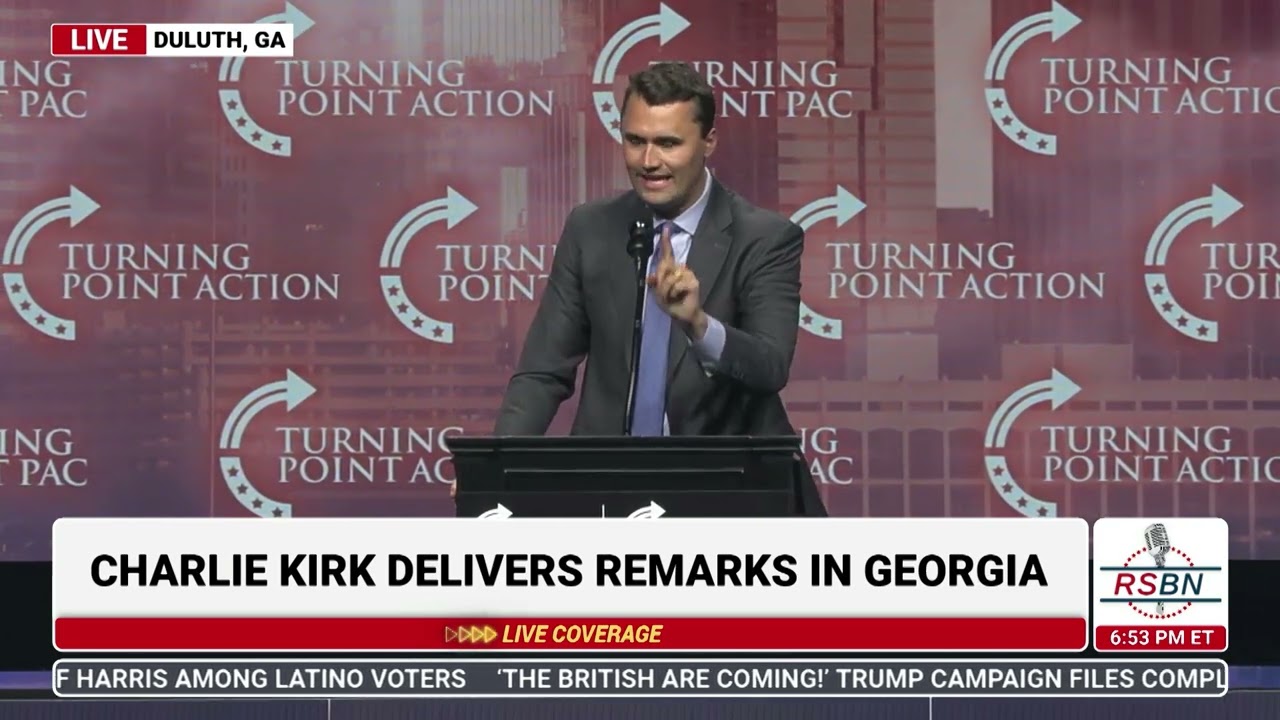
Charlie Kirk Rallies Georgia Voters: Twelve Days to Define the Future of American Republic
14:44

Charlie Kirk Built the World's Largest Conservative Youth Organization from a Card Table and Conviction
1:35:50

Charlie Kirk on the Republican Party After Trump and What It Means to Be Conservative
7:57
Ben Shapiro and Charlie Kirk Debate Trump's Conservative Legacy and the Bernie Sanders Threat
Charlie Kirk sits down with Ben Shapiro to discuss the explosive growth of Turning Point USA, President Trump's disruption of conservative orthodoxy, and why Bernie Sanders terrifies him despite wanting Trump to face him. Kirk defends his relationship with Trump while Shapiro pushes back on conflating anti-leftism with conservatism. From immigration and spending to accusations of being too socially liberal, Kirk addresses his critics head-on. The two also dissect Trump's instincts versus planning, the populist-conservative tension, and whether the president can win against a legitimate Marxist in 2020.
Building Turning Point USA From Nothing
Charlie Kirk started Turning Point USA at 18 years old with no money, no connections, and no idea what he was doing. After failing to get into West Point, Kirk convinced his parents to let him take a gap year before college. That gap year turned into eight years as he built one of the largest student organizations in America, now present on over 1,500 campuses throughout the nation. The great irony, as Kirk points out, is that he runs an organization focused on college campus outreach without ever having attended college himself.
Kirk grew up in the suburbs of Chicago with a passion for politics and saving the country. He recognized that conservatism and conservatives had few places to turn on college campuses, leaving young conservative students without support or organization. In 2012, Kirk took it upon himself to answer that question by founding Turning Point USA, an organization whose mission is to educate, train, and organize students through campus chapters and yearly events.
The Trump Relationship and Campaign Origins
Kirk's relationship with President Trump began in the summer of 2016 after he spoke at the Republican National Convention. Originally a Ted Cruz supporter, Kirk endorsed Trump as the nominee, joining many others including Mike Pence who followed the same path from Cruz to Trump. Kirk approached Donald Trump Jr. with a proposal to do something with students and youth infrastructure, offering to travel across the country and organize student events.
Trump Jr.'s willingness to engage was unusual in politics, as there wasn't much hierarchy in the Trump campaign during those early days of July and August 2016. The surprising election result led to Kirk developing a close relationship with the president and his family. Kirk describes Trump as extraordinary to him personally, noting that the president has been very good to him and his family has been really good to him as well.
Kirk argues that President Trump has delivered results for the country that he wouldn't have even predicted for the conservative agenda and the American revitalization agenda. He points to economic success, record low Black unemployment, Hispanic unemployment, Asian unemployment, energy independence, and other achievements as evidence of Trump's effectiveness.
Navigating Trump's Unpopularity on Campus
Ben Shapiro raises a critical challenge: according to polls, President Trump is wildly unpopular with young people, particularly those on campus. This creates a unique tension for Kirk, who runs a major campus organization while being closely associated with a president who is probably most unpopular with the 18 to 21 demographic. While conservatism has never been supremely popular with young people, Trump seems to have raised particularly strong opposition among this group.
Kirk acknowledges both positives and negatives to Trump's presidency when it comes to college campus outreach. On the positive side, Trump's election opened a huge amount of enthusiasm and interest on college campuses. Turning Point USA's campus activism doubled, tripled, and quadrupled almost overnight. The Trump presidency emboldened college conservatives to stand for conservative principles even more than before.
Kirk argues that under a Mitt Romney-style Republican Party, students wouldn't be doing what they're doing today, such as starting Students for Trump groups at UC Berkeley or University of California Irvine. Trump taught conservatives they can punch back twice as hard and that they have to recognize the left as a destructive force. Kirk credits Trump with teaching that you don't have to be afraid to stand with conviction and say what you believe.
The MAGA Doctrine: Anti-Leftism Meets Conservatism
Kirk attempts to define the Trump presidency's ideology in his book, calling it the MAGA Doctrine. He argues it's a blend of conservatism, populism, common sense, and a pro-American approach. Kirk looks back to the Reagan era, noting that Reagan had eight years of conservative wins, but HW Bush undid many of those achievements by growing the size of government and putting back bureaucrats that Reagan had fired.
The doctrine Kirk describes involves analyzing every decision and deeply held belief in Washington DC by the ruling class and asking objectively whether it has been serving the country well. If not, what is the proper approach? By using this common-sense approach, Trump has organically arrived at conservative positions that other people who ran on conservative positions wouldn't have had the backbone to implement, such as standing for life, canceling the Iran deal, getting out of TPP, and withdrawing from the Paris climate accord.
Kirk makes the argument that Trump is trying to recover and renew a country that was almost managed to decline by a bipartisan big government consensus and globalist consensus under the Bush-Clinton-Obama years. This period featured George W. Bush with corporate tax cuts while keeping borders open and being hawkish on foreign policy, and Obama doing the exact opposite by sending billions to Iran while still keeping borders open with anemic economic growth.
Shapiro's Challenge: Anti-Leftism vs. Conservatism
Ben Shapiro raises an important distinction that creates tension in their conversation. While he agrees that President Trump is the most anti-left president of the modern American era, Shapiro argues there's a critical difference between being anti-left and being conservative. The reward of anti-leftism is that it makes very clear who the opposition is, something Republicans and conservatives traditionally have not done well.
However, Shapiro warns of the risks: anti-left is broader than conservative, and suddenly you may be associating with people who oppose the left but who are also not only not conservative but opposed to many ideals of conservatism. In the binary battle, there's a willingness to overlook activity that is not conservative in the name of anti-leftism. This leads to Trump's heresies, bad things he has said and done in the past, and the fact that nobody in the Republican Party seems to care about spending anymore.
Shapiro is old enough to remember when Republicans cared about spending, but now the spending is being blown out to an extraordinary extent. When someone criticizes this, they're accused of being an aid to the left because opposing spending increases is opposing a principle of the left, but because Trump is anti-left, it becomes an enemy of my enemy is my friend situation.
Kirk's Defense and the Gatekeeper Problem
Kirk attempts to address where the line falls between what is appropriate behavior in fighting the left and what is inappropriate. He points to morals and conservative values as the boundaries. Kirk and Shapiro both denounce white nationalists and those who believe one race is better than another. Kirk firmly rejects the idea that America should be any sort of racial majoritarian experiment, noting that the phrase e pluribus unum is part of the American Trinity along with In God We Trust and Liberty.
President Trump has denounced hatred and the vile insidious elements that exist, though they are a minority of a minority. Kirk recounts getting horrible questions on college campuses about Jewish individuals and immediately denouncing and fighting back against such sentiments. He argues there's a moral obligation as conservatives to kick out the demons in their own ranks, something the left never does as they embrace their extremists.
Kirk has faced criticism from certain groups for being too socially liberal, particularly regarding having gay staff members and sharing stages with gay conservatives like Dave Rubin, Peter Thiel, and Tammy Bruce. Kirk defends this position, stating he believes in biblical marriage as one man and one woman, but he also believes gay people have a place in the conservative movement. He refuses to apologize for having gay people on his staff or sharing stages with gay veterans who have served the country.
Immigration and the Unfair Accusations
Kirk addresses accusations that he's too soft on immigration, calling the charge that he's some sort of open borders advocate "nonsense." He admits he said something he should have articulated more stringently but clarifies that he believes in less legal and illegal immigration. Kirk supports Senator Tom Cotton's act to limit green cards to 500,000 per year and has consistently defended ICE facilities, supported building the wall, advocated for deporting illegal aliens, and pushed for making English the official language of the United States.
Kirk draws a distinction between immigration policy rooted in hatred of another group or racial supremacy versus policy based on the reality that the country is being taken advantage of and can't afford a million green cards every year. The former is wrong; the latter is a conversation he can have and sympathizes with. He believes the accusation against him is unfair given his consistent stance on immigration issues.
The Bernie Sanders Threat
Kirk describes Bernie Sanders as terrifying despite believing Trump would prefer to face him. Sanders is wildly popular on campus, and Kirk attributes this to the ease of being generous with other people's money and resources. If students have never been taught that America is a gift or blessing, why would they want to conserve that blessing? If they've been taught the country is racist, bigoted, homophobic, and backwards, why not have a revolution against it?
Kirk calls Sanders a legitimate Marxist who honeymooned in the Soviet Union. He points to Shapiro's critique as one of the best, asking the simple question: do you believe private property is a right, Senator Sanders? Kirk argues Sanders is a property confiscationist who doesn't believe individuals have a right given by God to own property. Sanders believes state first, human being second, and is a Marxist through and through.
Kirk's approach to Sanders supporters involves asking if they trust the government. Almost always they say no, claiming the government is bought by lobbyists, corporations, and the war machine. Kirk then asks why they would want to make that government bigger, and they have no response. This encapsulates Kirk's critique of Sanders and his supporters: the whole position is getting more people, more bureaucrats, and more power to the very government they claim to distrust.
Why Sanders Could Win
Kirk believes Sanders could beat Trump, arguing it's hard to run against "free" and that the media would go all out for Sanders, especially younger Marxist activist journalists who would be more excited than ever to paint him as America's salvation. While Kirk would philosophically prefer to run against Bernie because he embodies what the Democrat Party is trying to do, it terrifies him because any major party nominee could conceivably become president.
The race starts from a baseline of basically 40 to 42 percent locked in for each side. Sanders could become President of the United States, which should horrify everyone. He's a true committed Marxist who doesn't love America and is on a mission to radically redefine and deconstruct the country from within. Kirk references the school of deconstructionism, which creates cultural chaos everywhere to give rise to an authoritarian Marxist who can create a failed communist communal state.
Kirk believes Sanders will win states like California and Texas in the primary and will probably be the nominee. He thinks it's more likely Sanders gets the nomination than that the establishment steals it from him, as long as he wins a plurality of delegates. If Sanders walks out of a contested convention, he'll tell his supporters he'll campaign for the nominee, but they'll all stay home. Kirk agrees with Shapiro that it's almost impossible to take it away from Sanders if he has the plurality.
Trump's Attack Dog Advantage
Kirk praises Trump as one of the best attack dogs in American political history, calling him relentless and a monster in a good way when it comes to beating people up. Trump has the advantage that every piece of dirt that could ever be thrown at him has already been thrown. Shapiro describes Trump as a mud monster where no matter how much mud you throw on him, he just looks like mud because he's already made of mud.
In contrast, Bernie Sanders has never actually been vetted by the media despite being a useless octogenarian communist for 60 years. When Michael Bloomberg asked Sanders about his lake house during a debate, it was perfectly obvious no one had ever asked him straight to his face about being a millionaire with a lake house. Sanders didn't have an answer, and Kirk predicts Trump will drive to Sanders's lake house, pry up a floorboard, and figuratively beat him to death with it on live television.
Kirk imagines Trump will mock the lake house by saying it's not even that nice, that he would have built it better, cheaper, and quicker. By mocking it that way, it would get ten times more visibility and be on the front page of the New York Times, with more people learning about Sanders's wealth through Trump's ridicule.
The Electoral College and Second Term Questions
Kirk admits he thinks Trump might lose the popular vote worse in 2020 than in 2016, but he thanks goodness for the Electoral College, calling it a brilliant and important safeguard of the republic. America is not a democracy but a republic, a huge difference. Kirk argues that coastal elite cities dominated by Malibu and Manhattan shouldn't dictate elections, and the Electoral College forces candidates to go to more diverse parts of the country.
Kirk believes Trump shouldn't try to win the popular vote and should put all resources into Wisconsin, Pennsylvania, Michigan, and similar states, focusing on five or six counties. He thinks the Black vote could have a huge impact, crediting Jared Kushner and his team for delivering results for Black America through criminal justice reform, Opportunity Zones, and record low Black unemployment. While Kirk doesn't think Trump will win 50 percent of the Black vote, he believes 15 or 20 percent is conceivable.
Shapiro raises the question of what a second Trump term would look like, noting there have been basically no plans beyond making tax cuts permanent and filling judicial vacancies. The Republican agenda has become extraordinarily short, with spending cuts very unpopular and Trump pledging not to cut Social Security, Medicare, or Medicaid. The conversation ends with this unresolved question hanging in the air.
Video Transcript
so I always ask the question to Bernie Sanders supporters do you trust the government and almost always they say no no the government's bought by lobbyists and corporations and by the war machine say why that earth would you wanna make that government bigger it goes without saying conservatism and more importantly conservatives have had few places to turn on college campus so where does that leave young conservative students in 2012 a determined 18 year old kid named Charlie Kirk took it upon himself to answer that question his answer Turning Point USA an organization whose mission is to educate train and organize students through their campus chapters in yearly event over the past eight years Charlie has grown TP USA's reach to over fifteen hundred campuses throughout the nation in 2016 Charlie joined then candidate Donald Trump's campaign and he's been a steadfast supporter of the president ever since his newest book is the Magna Doctrine the only ideas that will win the future in our conversation Charlie and I dive headfirst into whether President Trump has been good for the conservative movement what it will take for Republicans to hold the White House as well as why the same Democratic candidate he hopes will face President Trump in 2020 is also the one it terrifies him most [Music] welcome this is the Ben Shapiro show Sunday special Charley Kirk is joining us today now just a reminder we'll be doing some bonus questions with Charlie the only way to get access to that part of the conversation is to become a member head on over to daily wear DICOM become a member you'll have access to all of the full conversations with every one of our awesome guests Charlie thanks so much for joining us and I just wanna make it clear from the very outset that it appears the Charlie and I are an equal I level there is an Apple box for president trunk there's there's an Apple box there's a ladder and I'm on stilts that's the only way or if you aren't able to actually yes we see eye to eye here yeah now we're on the same we'll see if we see eye to eye throughout the whole conversation I think we might okay so why don't we start with your background for people who only know you from the memes and know this will be meme above like just make them clear you're free to use this however you want in terms of memes people okay now we've opened the gate so Charlie I met you when you were but an even younger whippersnapper you're only 26 now but I think I met you and you were maybe 18 years older like a horowitz freedom retreat retreat and you were just starting Turning Point USA so at 18 years old you you didn't go to college so how did you how did you decide number one not going to college number two gonna do student activism and number three gonna start one of the largest student organizations in the country well thank you Ben it's an honor to be here I appreciate it all very much started it I had no money no connections no idea what I was doing I always had a passion for politics and for saving the country and I was I grew up in the suburbs of Chicago I originally wanted to go to West Point didn't get in ended up being the best thing that never happened to me I convinced my parents to allow me to take a gap year before entering college and one gap year has now turned into eight gap years and the great irony the whole thing is I run an organization that's focused on college campus outreach that actually go into college myself but it's now you know on 2,000 high school and college campuses you spoke at our last event which was down in Palm Beach at the end of last year and and look you know this you visit a lot of campuses across the country it's it there's a crisis happening right now in higher education where students are being taught to hate our country where anti Americanism is on the rise and I think conservative values and conservative ideas are being given an opportunity to really have a revival and a renaissance and you know we see that a turning point USA we see that the work that we're doing in the speeches that I give and the visits that you know I partake in and it's been a great journey over the last eight years and it's been fun seeing of course you when I first met you you were you know working and writing and doing radio and then of course that was before the Daily wire and not seeing that kind of take off so it's been fun kind of you know throughout the last couple years you know kind of see them both both entities grow so what is your relationship like with President Trump my mother personal and a business like that's what that's what people kind of want to know sure because that the picture of you in public because I've knew you before Trump was Trump I mean he was Trump but he just wasn't in the political mix nearly as much as obviously he is now I knew you as conservative college campus guy most people now know you as kind of Trump guy online who does Trump e things so how did you what is your relationship whatever and that that's fair I wouldn't say that's the extent of everything I do but that's definitely how you know people will stop and say hey you know the president don't you like yeah yeah I do look he's been extraordinary to me and you know I'm very candid and upfront with it he's been very good to me personally his family's been really good to me I met Don jr. in the summer 2016 after I spoke at the Republican National Convention I felt you know our country was you get to go in a horrible direction of Hillary Clinton got elected president originally I was a Ted Cruz supporter and then you know then endorsed Trump as you know he was the nominee because that was what a lot of people did including Mike Pence who as a Cruz than Trump guy and I went I went up the Donald Trump jr. and I said look we need to do something with students and youth infrastructure I have a couple years of experience under my belt I would love to travel with you across the country and maybe organize some student events and he was his willingness to do that was unusual in politics usually you have to go through a hierarchy and there really wasn't much of a hierarchy in the Trump campaign in those days back in July and August 2:16 obviously the surprising election happened and kind of it was stunning for a lot of different people and you know the president you know I developed a pretty good relationship with him and he's been he's been extraordinary in a lot of different ways he's delivered results for our country the likes of which I wouldn't have even predicted you know for the conservative agenda and for you know the the American revitalization agenda and you know spending time with him has been a real thrill for someone that you know never went to college and started this organization on a whim to be able to you know meet with the president at States and be able to you know inform oh the other things we're doing on college campuses has been you know really exciting and an immense blessing in many different ways so how do you bridge the gap between sort of what you do on college campuses and your activity with President Trump what I mean by that is that by looking at polls president Trump's wildly unpopular with young people right this is the one area where he is probably most unpopular just in terms of the polling data now conservatism is never supremely popular with with young people particularly people on campus a president Trump seems to have raised a particularly loved ire with people 18 to 21 at the same time you're running this major campus organization he has people who love Mon campus no question yes there are people who just adore him I know man where the maggots Tibet right shower in the class no matter what then there's a fervent base for him a hundred percent so what do you think the mission of TP USA is and how does that combined with sort of what President Trump does and where it puts you guys in the position of maximizing the conservative movement when on the one hand it gets ya sort of super passion on the other hand Trump is such an alienating name for people who are young on get it's a it's a great question and look so there's positive and negatives in any you know presidency when it comes to college campus outreach and the positives has been it's opened a huge amount of enthusiasm and interest on college campuses where we have thousands of students attending our events lots of opposition that comes and you know that that makes the events far more you know exciting and you know with a lot more energy than it otherwise would have been I I have a I have an seven eight year window I can say from the moment that President Trump got elected college campus activism from Turning Point USA side doubled tripled quadrupled almost overnight and it emboldened college conservatives to stand for conservative principles even more so pre Trump and now mind you I've been doing this for a couple decades so my reference point it's only about eight years but I could tell you that the MIT Romney Republican Party we would not have kids that were doing what they are today where they're starting students for Trump groups at UC Berkeley or University of California Irvine and I think that's one of the positives of the Trump presidency is that conservatives are less afraid than ever before to say what they believe in the stand with conviction and you know the president has definitely I think taught us that you can punch back twice as hard to use a Barack Obama expression that you know you use quite often and I think that's one of the great positives of the Trump presidency and him as an individual is that you have to recognize that the left is a destructive force in our country and I think new which says it best if president Trump's ideology can be best summed up he's an anti leftist presidency right and I agreed them and I think that though if you recognize the left in media culture Hollywood and academia as a corrosive force to our culture in our country and you'd make them the enemy and we're going to put them as in opposition I think there that's been very very helpful to us as an organization fighting on the ground in college campuses so what do you do with the folks who are in the middle and convinced of also as I say the Trump is phenomenal in firing up mame you see it is rallies you see it up didn't you see it online I mean the the his base is fired up and this is because as you say Trump is uniquely aggressive he is as I said during the campaign in 2016 a hammer in search of a nail it's extraordinarily satisfying when he hits a nail it is not as satisfying when he hits a kitten but with that said when when it comes to you know what's happening on college campuses how do you reach out and have you had any success reaching out to people who are wavering or is it more along the lines of emboldened in people who are quiet before yeah come forward there's a lot of that I'd love to get you know your feedback because you go to these campuses too and you get a lot of you know different questions and from from people and there are people that come to the front of the line and ask questions you'll say charlie I like what you say I like the ideas just I'm not there yet on Trump and my perspective on that is look I believe it I believe you know I'm gonna defend the president and his agenda and what he's done for our country and more times than not students will say okay I might not agree with all that but I appreciate the fervency that you support him with and you explain it better than most people would and and that's that's the position that we take and I think the moveable middle if you will has become more winnable than ever before because of the Marxist insurgency in the Democrat Party and I think that it's presenting a huge opportunity for people like you and people like me to make convincing arguments for conservative ideas now I will say though that the traditional conservative outreach on college campuses let's say the last 40 or 50 years we're just talking about corporate tax cuts and just talking about the same sort of macroeconomic issues it wasn't always there wasn't always doing the job on campuses what Trump has liberated though is more cultural issues as well where he's saying you know maybe English should be the official language of the United States we're gonna talk about immigration we're going to talk about culture and there are a lot of young people that are deeply passionate about these issues just outside of you know the discussions about GDP growth which I care about a lot I mean of course I want a robust free market economy but I think the Trump presidency and Trump in general him weighing into different cultural issues I think has also opened the door for us to win over a lot of young people otherwise might not be registered and not haven't been voting at all in the first place because you spend so much time and kind of defending from do you ever feel the necessity on campus do you separate yourself off from things that maybe does wrong because obviously he's a human being like anybody else he's got his foibles some may say more than others at least in public life so when you're on campus yeah and and somebody asks you a question about something that Trump has done that you know of what you don't approve do you ever feel the necessity to defend it look I don't agree with everything he's done no person would we always would agree that everything anyone ever does right but I don't go out of my way to criticize him and I'm very I'm very upfront about that and I I don't consider that to be my role and I don't consider that to be helpful at all to the threat that we're facing up against dominant Marxism and leftism in our country in our culture and you know I might disagree on this where I think my particular role right now is that there are not enough people doing a full-throated defense of the trump presidency an administration especially on college campuses where it is so unusual for someone to come and say no president Trump might be one of the most successful presidents in modern American history and in students will say they're so puzzled and flummoxed if somebody says that and then I'll start to recite some some facts and some statistics that they might not have heard and economic success Louis ever black unemployment Hispanic unemployment Asian unemployment energy-independent the things that you know you and I know just offed off-the-cuff that students might not hear but look I don't agree with everything that he's done from a policy perspective or position I agreed almost all of it though because a lot of it and you've talked about this is traditional conservative stuff his stuff that we've talked about you know in the conservative circles for the last couple decades things that people have promised and never delivered upon like energy independence like moving the embassy to Jerusalem like deregulating the economy like cutting taxes these sorts of things are traditional conservative free market ideas that have been you know tossed around for quite some time but I make the argument in the book as well why did it take Trump to actually do this like why did george w bush ever speak at the march for life why didn't Joe HW Bush ever moved the Embassy of Jerusalem why didn't your job you Bush recognized the Golan Heights why was it Trump the billionaire businessman from New York who was a recent you know conservative who at one point in his life held a pro-choice position why would Keigo and defund Planned Parenthood funding and I make the argument it's because this is the populism at its best it's because the conservative movement and the America the people in America have supported him hold these positions and he promised to fulfill what he said he was gonna run on and actually for doing that as a president I think is so is so in my opinion unusual and something that deserves praise I mean there's no question then that his willingness to violate long-held conventional wisdom it definitely has his ups eyes I mean people tend to focus a lot on the downsides you know the Twitter account and the and the insults and all that kind of stuff but the truth is in policy terms very often he will he will stumble upon a conventional wisdom it'll say this makes no sense it'll just completely overturn it and turns out the conventional wisdom was absolutely wrong and that definitely is one of the strengths of his presidency when he has done that yeah and look I'll give like three examples China is one of them you know from from a pure theoretical position I'm not a fan of tariffs if we just talk about macroeconomics tariffs or taxes however from a national security position I'm a huge fan of tariffs on China because I think China's our greatest enemy geopolitically and otherwise I and you look at what China has done building islands in the South China Sea hacking our cyber grid basically sending spies from the CCP on Confucius Institute college campuses president Trump basically threw up the entire chessboard on China and said no this entire way we've been viewing China has been incorrect immigration is another example two Republican and Democrat presidents both alike from HW Bush on have just kind of had this Agreement not really solidify the southern border and just to allow unlimited amounts of green cards to be issued he had an unorthodox position on that and also culture as well Republican presidents have passed they did not challenge the media like President Trump has and I think that's been a very positive of this presidency because the media right now is worse than I was as I've ever seen it I mean they're an activist Network for the Democrat Party they really are and they go out of their way to misrepresent positions and to attack conservative values so one of the things that I've objected to is the conflation of anti leftism with conservatism and I think that you're rightly distinguishing the two but I think that we should be even clearer about the distinction so it's true that President Trump is I agree the most anti left president of the modern American era there there's I mean this is what he campaigned on I mean it there's a reason that Rush Limbaugh in the middle of the 2016 campaign rechristened the advanced the the Institute for Advanced conservative studies to the Institute for Advanced anti left his studies really sort of as an homage to President Trump that comes along with some some rewards and it comes along with some risks the the roared is that it makes very clear who the opposition is which is something that Republicans conservatives traditionally have not done I'm all for it I think that clarification grew necessary the the risk is that anti left is broader than conservative and suddenly you may be associating with people who oppose the left but who also are not only not conservative but opposed a lot of the ideals of conservatism or you may be willing to overlook in the in the simple binary battle you may be over willing to overlook activity that you that is not conservative in the name of anti leftism so this is where you get into president Trump's heresies bad things that he has said in the past bad things that he is that he has done the the fact that nobody in the Republican Party seems to give a damn about spending anymore I'm old enough to remember when we all cared about spending but this entire completely on this yeah and now obviously we are blowing out the spending to an extraordinary extent and so and if you criticize that then you are accused of being an aid to the left because you are opposing a principle that is a principle of the left but because Trump is anti left then it's the the enemy of my enemy is my friends sort of thing so where do you draw the line between forward and conservatism and forwarding anti leftist it's a great question I try to answer that question in the book where I said what is the doctrine of the Trump presidency you know the Munroe had the doctor dr. Monroe Doctrine I call it the Magid doctrine which the argument I make is that it's a blend of conservatism populism common sense and a pro-american approach and I look back to the Reagan era and we had eight years of awesome conservative wins under Ronald Reagan and HW Bush undid a lot of those HW Bush grew the size of government he put back bureaucrats that Ronald Reagan fired and all of a sudden we kind of saw a descent away from Ronald Reagan conservatism and really remember Reagan was a populist - I mean Reagan was both a conservative and a populist and I think there's dangers to populism and it's for this extent but I don't think that we as conservatives should be afraid of it I I think that there's a lot of positives when it comes to listening to the people and actually bringing dignity back to forgotten America and so what is the doctrine of the Trump presidency I make the argument that it's analyzing every decision and every deeply held belief in Washington DC by the rule class so the wise men of Washington and asking the question objectively has this been serving our country well and then if no what is the proper approach to it and by using that kind of common-sense approach he's actually come organically to conservative positions that other people that ran on conservative positions would not have organically come to such as standing for life we've we've been to the list canceling the Iran deal getting out of the getting out of TPP getting out of the Paris climate Accord these are things that traditional conservatives might not have actually had the backbone to do that and it's a question I get a lot like what is he Act what is the actual belief system what is the philosophy well what he's trying to do is really hard which is to try to recover and renew a country that was almost and managed to climb by a bipartisan big government consensus and a globalist consensus under kind of the bush Clinton Obama years which was alright you know Georgia Abbey Bush would be more will get corporate tax cuts would kind of keep the borders open and we're going to be more hawkish on foreign policy Obama exact opposite were going to send billions of dollars to the evil Iranian 's still keep the borders open we're gonna have any Indian become an economic growth I make the argument the the doctrine that he espouses and that he believes in is when we can learn from we should advance for the next you know couple decades and hopefully the next century which is are we actually seeing that are we actually seeing results for the people that he ran to represent and it seems as if we had a ruling class party sent you know post Reagan and Donald Trump I believe has positively disrupted that one of the questions that I have about ideas like the Maginot Rijn is are we trying to in flesh a skeleton that can be in flesh in a number of different ways meaning what we're trying to well yeah President Trump has as I've said this before so this is no great secret I think that he has excellent political instincts I think that he also has spasms of thought I don't think he has a comprehensive worldview in any serious way I mean this is not someone who sits around he is a businessman he doesn't sit around reading Milton Friedman he's openly brag about having read written more books than his read and so trying to sort of graft a broad ideological agenda on to that as opposed to I think common sense is a fairly good description of how he sees his own agenda but trying to graft on an ideology I mean Tucker's tried Tucker Carlson has tried to graft on one particular ideology you've seen I think Jared Kushner try to graft on a different ideology I think it seemed Penn's tried I found a different ideology and it seems like there's this constant exercise going on in which there is sort of a skeleton of feelings and instincts that is good and then everybody tries to put a stress put flesh on it and sometimes it looks like a line and sometimes it looks like a chicken and it's not super clear so what exactly it is I see you're coming here I'll disagree slightly I think his doctrine first and foremost is from the first time he announced for the presidency he said through instinctual observance to where the country was going is we're not winning anymore and there's something deeply wrong with who's been running our country and how they've been running our country and his agenda his doctrine and those people you mentioned have all placed more I would say political philosophy behind it but let's take a step before that is how are we going to renew and revitalize the country how are we gonna bring this back to a place of excellence and it goes back to a phrase that you and I believe and the left does not believe Bernie Sanders does not believe this Nancy Pelosi does not believe this that were the greatest country ever to exist in the history of the world it's the idea of American exceptionalism I know he believes that that for sure and that's why I picked that picture he's lugging a flag right and and that's his agenda it's like I care about this like I care about my son or I care about a beloved and and sometimes he's going to you know engage in braggadocio or he's gonna you know do things that are off the wall and atypical and we've there's been unlimited coverage of all that however he goes back to a default position of I've been elected by forgotten America because a lot of people showed up for the first time in a long time people switched parties and people and I think there's something to that to bring dignity to those parts of the country that have been disenfranchised by the ruling class because our country was taken advantage of for so long and it's a it's a blend of nationalism populism conservatism and that weren't those two words common sense I think make I think that frames it up really well and it's also it's challenging the ruling class consensus and I think there's some I think there's a lot of there's a lot of truth to that which is have these people been right about what they've been feeding us the last 30 or 40 years maybe got certain things and by other things maybe not and especially when it comes to these these positions such as oh why we should never challenge China like really that's that's it seems like both parties have just been kind of okay with allowing the rise to China with a couple senators here and there that have been speaking out President Trump has opened and has given oxygen now to a an American America first agenda towards China that I think will benefit you know our generation for generations to come so to answer your question I think the doctrine if you will is that I love my country so much I believe it's a gift that's been given to us I'm gonna do whatever it takes to try to save it and revitalize it I can't say that about Bernie Sanders his agenda is this place's this mistake it's a racist country it's bigoted it's backwards and I want to revolutionize it and turn it in this some sort of Marxist Western European failed nanny state so in a second I want to ask you about one of the biggest questions I often get on college campuses I'm sure you get it a lot to which is how much of this is just Trump doing stuff and how much of it is for DHS we'll get to that in just one second but first let's talk about a sad reality you're bad at predicting the future not just you like all the humans because if people were great at predicting the future you just go to Vegas and you'd be rich and then you wouldn't need life insurance but here's the thing you do need life insurance unpredictability keeps life interesting and makes it nerve-racking one way to worry less about the future is to get the rifle life insurance policy this is where policy genius can help policy genius makes finding the right life insurance a breeze in minutes you can compare quotes from the top insurers and find the best price you can save 1,500 bucks or more a year by using policy genius to compare life insurance policies once you apply the policy genius team handles all the paperwork and the red tape for free and policy genius doesn't just make life insurance easy they can also help you find the right home auto insurance disability insurance they can help you do the bundling the whole deal so if you haven't found a play-by-play a breakdown of your future inside a crystal ball or a fortune cookie that's okay be prepared for anything with life insurance in just a few minutes you can find your best price and apply over at policy genius.com also just be a responsible human being god forbid something should happen to your family will be without your income you don't need that but you do need his life insurance policy genius will always get the future wrong better to get life insurance right okay so let's talk about how President Trump is perceived so I think one of the critiques that some people make view particularly is that is that maybe you're giving the president too much credit on on his sort of how much of this is plan so I for example love a lot of the policies that you just talked about I also happen to think the politics is much more veep than house of cards and I think that everyone is basically a and so when the president says things that appear to me to be not brilliant I won't say that appears to me to be brilliant that I think that's kind of dumb uh you've been criticized for sort of the 40 chest model of thinking of President Trump that President Trump is thinking three steps ahead that when he says a thing about Colin Kaepernick kneeling for the national anthem he's not doing that because it's just a gut instinct that he's tweeting out but because he's actually thought through the ramifications of whatever it is he said that may not be a fair characterization of you but how do you think about I I don't necessarily think it's a fair characterization but it's fair to say I get that actor yeah exactly let's say that I will say from from my time spending a time around him and seeing him be able to predict things correctly for example he said I'm being spied on people laughed at it remember he said that tweet out during transition actually turned out that there was a lot of nonsense and the whole FISA process that he was being spied on I think his instincts are terrific and one of the in the book and otherwise is that he does have 40 years of built-up experience in a wide variety of different endeavors from pop culture to television to building buildings to the woman rank that does make him a very unique individual to be able to be to address this multitude of problems and these issues and so I asked myself the question so is it in people's trash themselves question to like is it instinct or is it just kind of flying blind as he just you know hitting things in the dark I believe it's instinct because if it was just flying by in the dark why was it that other Republican presidents that we've seen the last 30 years were able to do what he's been able to do and have the courage and the conviction to be able to do this I'll give you some examples of this why did it take President Trump to renegotiate and after the USMC a which is great for our country bipartisan consensus big credit to Jared Kushner and his team that worked really hard on it why did it take president Trump to be able to get you know to get the VA accountability act on or get right to try and I make the argument that he's not afraid to push boundaries of kind of the bureaucratic consensus in DC where they'll they'll give him no for an answer and a traditional politician that was born in bread and politics in the US Senate will probably take that more seriously and he's he's unafraid because of his experience and because of where he's been and how and who he is to say what do you see what he's saying no what do you mean by that and he's not afraid to push those boundaries I think that's a healthy thing for our country and one of the things that frustrates me the most about critics of President Trump and and you in no way you know it embodied us at all but people on the Left do this they think everything he does comes from a sinister Machiavellian perspective said this directly to Bill Maher Bill Maher was saying this to me and I was like well which is it is he is he an idiot or is he an evil genius you're gonna have to pay you stood up for it wonderfully now I have to give you credit for that because it's nonsense it's like wait so he gets some sort of weird pleasure for kids being locked up in cages even though that was under Barack Obama right it's like it's either you have to you have to can't just alternate it's either that he's playing for DHS and he's you know a Bond villain or he's just has no idea what he's doing because you can't you can't be one one day in one the other I come from the perspective that his motives are pure and his motives are good that he does deeply care about this country he really does and he gets when he gets the most upset he gets the most angry is when our country gets taken advantage of when he sees bad deals being brokered or he sees us going in a direction that will make us less competitive for future generations to come and I talk about quite often you look at the rallies these rallies that we've seen him do they're an act they're a political phenomenon we've never seen presidents a year and a half from election be able to draw 35,000 40,000 people when you go to these rallies and I encourage people to do it there's something really unusual that happens that very few people are on their phones texting they're locked into him and it kind of struck me after the fourth or fifth or sixth rally I went to I said they look at him as their vessel back to representative government and it might it might not be as you know as let's just say as pure and simple as that but I think it works because there's a lot of people millions tens of millions people in this country that have felt disenfranchised by just the traditional political class and they see in him in the most unusual way you couldn't have predicted it or wrote it a brash billionaire from New York City that has given more voice to the working class in this country then you know then I would say just a traditional u.s. senator from some of these Midwestern states and some of the states that I think have quite honestly at the expense of the ruling class agenda have seen their lives not not necessarily progress in a way that they saw fit so going into the 2020 cycle I've seen a couple of different sort of defenses and possible defenses of the trump presidency pushed forward in terms of advertising there's one that I think is less successful and one that I think is more successful I'd like to get a take on them you know one that I think is less successful is the tack the president is a magnificent trait who knows exactly what he's doing he's fully in control of everything and everything is swell because of all those things the other one is the ad that his campaign cut which i think is an excellent dad where he said you may not like him you may not like its labels you may not like all the things he tweets but do you like your wallet how do I go in for you and I think that that is a more successful approach to Trump so I wonder how you feel about that because do you think that it's it's off-putting to people the overt defense of somebody who I mean people make their own decisions about Trump it's not like when you say Trump's a wonderful guy I know him personally we get along great we go fishing together the people all of a sudden you don't know I can't see president from fishing to be honest with you but it but with that said yeah I wonder you know when you make the character defense yes of Trump that seems like a much harder defensive Trump because people have their own it might be I make it because it's truth is I'd make it because it's true I don't make it because it might be easier or harder I will say though the easier argument to make is to say kasam Soleimani would be alive if it did I ain't that guy the United States is right like that I mean you like Gorsuch and Cavanaugh because they wouldn't be on the Supreme Court if you had a Democrat or even a different type of Republican and I think the ad that the campaign cut to your excellent point he might be the tough guy but he's a tough guy we need he's rough around there basically the ad and I'm not putting words in their mouth it was he might be rough around the edges but we need that fighter now I think making the street brawler argument can resonate with a lot of people because what you're doing it's an old salesman trick right you take the criticism off the table immediately right so people might they look at the ad they're like oh yeah I kind of agree at that because that is a deep that's a belief that people have or they're like I like what he does I might not like his style and you hear it a lot and I hear it a lot and but if you take that off from branding his presidency or branding his his message and you say wait a second you look at what he's done maybe there's maybe all those things that you consider a negative the the brawler the street fighter maybe our country's needed a street fighter for some time I think that is a an effective effective way to brand it but also saying the left has gone so off the rails especially when it comes to just things that should stop at the water's edge I mean a Soloman anything really bothers me because this guy's a maniac and he deserved to die he was a terrorist and if Pete Buddha judges the nominee low likelihood that happens right he basically said yeah Salah money would still be alive that I mean fur for a family Florida that's wondering who to vote for that's a pretty stark contrast that like Kasim Salamone would be alive or not alive a guy that killed you know better than I five hundred six hundred Americans you know in the Iraq war and so I think there I think that kind of binary choice does it does a lot and I think the president is gonna be really hard to run up against because I think he gets more popular more binary the race becomes because politics is a binary choice it's not a referendum ideas it's not do you want this water reclamation district or not right it's it's do you want Bernie Sanders or do you want President Trump or do you want Bloomberg do what President Trump and I think of some of those matchups all of a sudden President Trump becomes a lot more appealing to a lot more people so there's maybe a moot point because President Trump has not been supremely malleable to criticisms of his excesses but they're kind of two perspectives about about dealing with with President Trump that we've seen inside the administration and outside one is the let Trump be Trump view well just let him free unchain the man let him let him run through the the china store he's bullying trying to shop but we need the ball and then there is the the perspective well let's critique him where it's possible let's try to convince him let's try to talk him down obviously look I've been of the the second view this has been perfectly obvious I think that he's been hemmed in by his advisors on a wide variety of occasions in which has been quite good for him to listen to his advisers yeah where do you come down on the Twitter is a good example like I'm of the view and I think a lot of people in and out of the administration of the view would be wonderful they have one person read his tweets before he had said just like one guy it doesn't matter just like the secretary down the hall just let the janitor like somebody read the tweets before he hit Send and then there were people who say no no I would inhibit him that would that would stop him we've seen this break into the open well relatively recently with regards to Attorney General bar who's like can you just stop tweeting about the cases I'm handling here you're undercutting me in terms like well I know I'm undercutting you but whatever man like I got man's gotta be who demands gotta be your though so so look I'm gonna make an argument that will be a little kind of atypical so which is there are people in this country when you go to these mega rallies you go to i/o you go to Ohio they love the tweets they do for sure and there is a population out there and I don't interface with them every single day I interface with them you know more than most and they love it and there is a point to this no and a common criticism I get and part of the rise of Bernie Sanders is the authenticity argument oh yeah that Marxism stuff I'm not really a fan of it you know like the fact that our country he's gonna burn but he really seems like he knows what he is who he is I would make the argument that if President Trump became too political became to DC and became too vanilla he would lose a lot of his visits overestimated maybe I'm overcompensating at mei'm him over had handicapping it but there are people that are pleased that he's the same person that he was on the escalator today he's turned down like a spinal tap 11 down to like a - but like 11 28.5 Hey look none of us will know the balance of how much you get and how much you lose I will say this though that he does command the news cycle better than any other president we've ever seen and and there there have been high-level quality social media tweets and trolling of the left the likes of which is gonna be legendary in the halls of internet culture seriously though and if he's going up against the left or that kind of fervency and sometimes say oh maybe you shouldn't have tweeted this I say no no no he recognizes the threat to this country that goes back to the anti leftist thing right and Dennis Prager makes this argument quite often which is if you run and you recognize it of course they will not be stopped unless they come up against someone willing to punch them back twice as hard and I think President Trump is that man for the moment and you know I get a common criticism from people they say well Charlie you're a Christian how could you support this right how could you do this I say and you might appreciate this well then we got to take Samson out of the Hall of faith I mean Samson was a man who in a prostitute's bed God came to him and revealed to say basically you got what I need you to go fight the Philistines and with a java donkey he you know killed a thousand Philistines I can't teach that in Sunday school right that's pretty brutal I would make the argument that Trump for lack of a better term was called for a moment like this to be that brutal street fighter that we really need it and if if if it's if it's indelicate and if it's not you know right down the fairway so be it because there's an enemy there's not position to a blessing that God gave us that is this country that is in need of that kind of street fighter I mean my only critique of that would be it would still be better if Samson and up and shtupping the prostitute no I'm not I'm not defending it I'm not trust me but you can't dismiss the argument I mean in Hebrews 14 for he's in the Hall of faith right Coenen court hall of fame yeah right and he had his own moral indiscretions we all do right there's different extremes they're different variations Lila I mean let's I'm you're saying there's different but you know in the Bible you and I both you know consider it to be the Holy Word of God right and Sam I'm not ripping on Sam's no I'm not I'm not accusing you that right I'm just saying that's an instance of someone who was flawed multiple times right and we see that but he was called for a specific fights a specific fight to bring God's people against an opposition which the Philistines and to fight pretty brutally and now that's I'm using that more metaphorically a president Trump's gonna take up donkey you know Java donkey in for Media Matters Charlie's not calling for President Trump to slay a thousand no National Committee staff right I'm not I'm not sure I'm not saying that at all but you honor the the analogy is that sometimes God calls impure unusual people to go fight for righteous causes so let's let's talk about one more thing with regard to the anti-life things so again anti left all for it left is tears we love them I love that is it but one thing that that worries me about the the anti left attitude as opposed to the conservative attitude and I think that you need both right conservatism is anti left because it's conservative not just because anti left is anti left is something that you've come up against and that is a a gatekeeper problem so there are a lot of people who consider themselves anti left who also happen to believe it's Rochas leo things yeah and you and I have both denounced them publicly and events and all that right so where does the why where's the line from between what is appropriate behavior infighting left and what is inappropriate behavior in in fighting the left great question that's where morals come in right that's where we have to say we don't believe you don't believe this and I don't believe this one race is better than the other I don't believe that America should be by any means a any sort of exercise in a racial majoritarian experiment that's not who we are it never has been I mean the phrase a pluribus unum is part of the American Trinity e pluribus unum In God We Trust and liberty and so here's where I make the argument in the mega doctrine and so you have conservative values incorporated anti leftism and populism right but let's take it to a further extent which is we and president Trump has denounced the hatred he has denounced the vile you know insidious nonsense that is out there and he has and he's he's gotten more forceful and he's gotten or ahead of it as time has gone on because unfortunately their their minority of a minority but they're out there and they have real hatred for certain individuals and I'm not gonna say any names but that's just how it is and I go on college campus sometimes I get questions that are horrible about Jewish individuals you know and horrible horrible things and I denounce them and I fight back against it however that's where it comes in to our moral position and our conservative position of the belief in the American Trinity but if you take it to a further extent right if we're nothing but just conservatism on a chalkboard right and we're nothing but just always saying we're in a free trade if everyone always well what's the extent of that right so the the inverse would be what what if we take the other too far and we make we allow the rise of China to be too much and I can make the argument that HW Bush and Clinton so on and so forth allowed that other extreme that happened and so that's where I think President Trump has balanced it I really do we have the healthy dose of anti leftism populism and conservatism however when that hatred comes up and it rears its ugly head we have a moral obligation as conservatives to kick out the demons in our own ranks and it's something the left will never do they never ever exercise the demons in their own ranks in fact they embrace them one of the areas where you've obviously come under a lot of criticism on campus is from this specific group that we're talking about this has become ya headline where the issue when they tried to do the same thing to Donald from jr. and kimberly guilfoyle and they've been approaching on campus and these specific criticisms aside from the sort of just plain racism of it seem to be that you're too socially liberal so what is your what is your perspective on well look I mean I I believe merit is one man one woman I believe in biblical marriage I always have and I also have people that are gay on my staff and I'm not afraid to share the stage with people that are gay other individuals think and they have said this that gay people do not have a position in the conservative movement I believe that is wrong I believe that Dave Rubin and Peter teal and Tammy Bruce have a place in the conservative movement I absolutely do and I think that I I think it's so backwards that they would believe that we should somehow grow the influence the conservative movement by the process of subtraction of people that are turned off by the left turn up I woke culture of the left somehow they believe that the conservative that should be closing its doors to people that all of a sudden might be I'll be interested in your podcast or your your position or your speeches I March at the March for Life I am very very pro-life against Planned Parenthood it's an unfair accusation against me it justice but I'm also I won't apologize for happening having people that are gay on my staff sharing the stage of people that are gay that have served our country and that our veterans it's not something I'm going to apologize for a second for and it doesn't compromise my Christianity my moral positions on marriage or my conservative beliefs okay the other critique they've been hitting you with is that you're supposedly too soft on immigration so on and give you a chance to response respond to their charge that you are some sort of open borders guys again I appreciate you actually bringing it up because I can clear the air on it it's nonsense I said something let's just say I said a position that I wreak Lera fide where I should have said it more stringently but I believe in less legal and illegal immigration I support Senator Tom Cotton's act where essentially he wants to limit the amount of green cards to 500,000 a year I mean I have been defending ice facilities up against ice protesters building the wall deporting illegal aliens making English the official language of the United States again it's an unfair accusation and I will agree with the with the fervency that I think immigration is one of the top issues in America I really do however if your drive for that immigration policy is bit rooted in hatred of another group in position or in racial supremacy that's wrong if it's from a position that well our country's being taken advantage of and it's and it's we can't afford or take a million green cards every single year that's a cuts of conversation I can have that's what I actually sympathize with and I agree with and I think we should have less legal and illegal immigration but again the accusation is unfair through through okay so in one second I want to ask you about the other side of the island and talk about the left and Bernie Sanders but first let's talk about why you should protect your data on the internet so you wouldn't like go home open up your safe open up your front door and then just think to yourself that humanity is filled with wonderful people so why would you unlock your internet activity did you know that your internet service provider knows every single website you visit which is super creepy and of course they can then sell that information to tech giant's expressvpn puts a stop to all of this it creates a secure in to tunnel between your device and the internet so that your online activity can't be seen by anyone expressvpn works on everything phones laptops routers everyone who shares your Wi-Fi can still be protected even if they don't even have express VPN and the best part is using Express VPN is as easy as closing the bathroom door you install it on your computer it runs in the background of your computer and now you don't have to worry about it ever again if you don't use a VPN and your data and browsing history are taken from you that's sort of on you considering how easy it is to get expressvpn so just go do it be responsible take care of your own data if you're like me and you believe your online activity is your business secure yourself today by visiting expressvpn comm /ban use my exclusive link expr ESS @ VPN comm slash man and you can get next for three months for free that's expressvpn comm slash been ok so let's talk about the other movement that you've been dealing with on campus and that of course is the bernie sanders movement you know young people particularly are resonating to Bernie Sanders almost as a council reaction to trump in some ways but kind of separate and apart from so bernie is wildly popular on campus - what do you attribute the vast bout of insanity happening on our cup yeah it's a great question I mean look it's very easy to be generous other people's money it's very easy to want to spend other people's resources and look from a very basic position if you've never been taught that our country's a gift or a blessing why would you want to conserve that blessing I mean if you've been taught hatred of our country that were racist bigoted homophobic backwards then why not have a revolution against it and Bernie Sanders he embodies the same college professor that's been screaming at them since they first got this college he's a legitimate Marxist the honeymoon in the Soviet Union and your your critique of Bernie Sanders is one of the best in the entire movement and you ask the very simple question do you believe private properties are right senator Sanders and that's a question that any honest journalist should ask him he's a legitimate property confiscated that's what he is he believes he does not believe that individuals have a right given them by God to own property he does not believe that he believed its state first human being second he's a Rizzo and Marxist is what he is and so look young students and young people they some of them truly believe that garbage they really do not all the Bernie Sanders people do they actually think that he's on the side of freedom or Liberty and some sort of distorted bizarre concoction they think that he's actually the fighter and the crusader for liberty and nothing could be further from the truth so I always asked question to Bernie Sanders supporters do you trust the government and almost always they say no no the government's bought by lobbyists and corporations and by the war machine you know all this stuff I say why that earth would you wanna make that government bigger and they had no response of course but that's the whole kind of summation of how I think you approached senator sanders marks it you know marxist that our support senator sanders which is his whole position his whole worldview is getting more people more bureaucrats and more power to the very government you say you distrust it seems pretty obvious that president Trump would prefer senator Sanders as the nominee of the Democratic may be against him the reason I say that is because he obviously has been sort of trying to via his Twitter account stir up chaos inside the Democratic Party which is quite good at by targeting everybody except for Sanders and suggesting to Sanders supporters that they're going to be robbed of the nomination but apparently by the Democratic upper echelon it seems that the number ones you agreed that characterization that that's what Trump wants maybe I don't know I wouldn't I wouldn't say it full-throated though because I've seen President Trump you know in interviews and time I spent with him have a good amount of hesitancy by saying oh yeah all in let's run against Bernie I think Bernie could beat Trump I think it's really hard to run against free and I think the media would go all out for him especially the younger journalists Marxist activists class they'd be more excited than ever to try to paint him as the salvation that America needs Bloomberg or Bernie who would Hollywood go all-in more for I think Bernie for sure I think I don't know how much currency that has in Wisconsin but it could make some impact probably from a philosophical choice I would much rather run against Bernie because I think he embodies actually with the Democrat parties trying to do but it terrifies me it terrifies me because anyone could win right and I you and I agree that this any major party nominee could could conceivably be the president learned that the hard way and 2016 after I lost $10,000 betting against the president so there you have it well yeah and so in you because you start from it you start from a baseline basically forty to forty two percent right I mean that's just that's just the way it is locked were college you're not running for president in LA County so it's not gonna happen are you not running for president Manhattan and so Bernie Sanders could become president United States that should horrify everyone listening to this or watching this he's a true committed Marxist he does not love our country he just doesn't he is on a mission to radically redefine and deconstruct our country from within you know the school of deconstructionism it basically is the whole whole school of thought is create cultural chaos everywhere and that will give rise to an authoritarian Marxist to allow them to create something that will eventually not work at all but give a lot of power to the ruling class to try to create some failed come you know communist communal state I mean it does seem like Sanders should be the one that Trump is rooting for in the sense that President Trump is a wrecking ball man and that is his that is a specialty I've always said about about politics the politics is the art of making it very difficult to vote for your opponent and making it very easy to vote for you and president Trump may not be really popular at the ladder but he's phenomenal at the former making it very difficult for people to vote for his opponents that is that man special well and I have to say you know in a Super Bowl interview with Sean Hannity president Trump comes right out of the gate and says why did he you in honeymoon in Russia I was like yes he's already on that I mean that's a great critique though I mean why did he honeymoon in the Soviet Union it would take on a traditional Republican like months of work shopping and poll testing a president Trump this comes right at it yeah Bernie Sanders honeymoon in the Soviet Union and and I agree with you me he's one of the best attack dogs in American political history I wouldn't want to run against him no one would I mean he would be he's relentless he's a monster and and not only is he in a good way no well when it comes to beating people up he is he's incredible at it he also has the advantage of every piece of dirt that could ever be thrown and somebody has been thrown at him I've described him as a mud monster in the sense that no matter how much mud you throw on him he just looks like mud I mean like he's already made of mud at this point so nothing that you throw on him is actually gonna make a difference where's Bernie's never actually been vetted by the media which is unbelievable he's been useless octogenarian communists for 60 years I mean who's 80 when he was 20 he wasn't just a useless communist when he was 20 was an octogenarian when he was 20 and now he's running for president and nobody has asked him a simple question hey the other night when when Michael Bloomberg finally asked him a question about his lake house and Bernie had never been asked a question that's right as lake house him is perfectly obvious that no one had ever just asked him straight to his face about the fact that he's a millionaire with a lake house and nobody else on the stage had on it and he didn't have an answer for it and I just thought to myself Donald Trump is going to drive to Bernie Sanders his lake house pry up a floorboard and figuratively beat him to death with it that's right on a public City you know what he'll do he'll say this is not even that nice of a house he'll say he said it Batman Bernardino say like I'm playing he's like wait a second fat this is this is news not even that good he's like I would have built it better cheaper and quicker and better on television even and by the way by mocking it that way it would get 10 times more visibility be the front page of the New York Times president President Trump says Bernie Sanders third home is not well built by doing that more people would actually know about his lake house and and and look I I have to say that Sanders I think he's actually in a position he didn't think he would be in III can be I he's more focused on his revolution and his movement than becoming president I don't think eight nine months ago he thought he'd be in this position it just so happens Elizabeth Warren is so unbelievably bad at politics like really really bad I mean she lies about everything about her heritage about her father being a janitor or something working-class everything and she's part of the ruling class professor and she's just seems like she's always scolding people and it was kind of the default position of the angry Marxist in the Democrat Party like yeah I guess we still got Bernie he's still screaming about it right you know sure and because of that he's he has a great grass roots rump you know he's a great grassroots base he's going to win I think he's gonna win states like California and Texas I just do and he probably will be the nominee and people say well you know they're gonna try to steal it from him I think that's a harder bet I think it's actually more it's more likely he's gonna be the nominee than they try to steal it from him that's my perspective yeah I agree I think that as long as he wins a plurality of the delegates it's almost impossible to stake it away for that's right because he's gonna walk out of that convention and he'll just say to his people listen I'll campaign for the nominee but they're all gonna stay home I mean they're all gonna stay home and and Michael Bloomberg's bizarre bet that if they gets the convention and he has the second most delegates that he's gonna be able to walk in with his giant bag of cash plopping on Tom Perez his desk and say I'll spend five billion dollars on the selection of just throw Bernie out I can't see Tom Perez taking that deal because the the press is just too bad well well yeah again if you look at the numbers and this is very a this is a flawed way to look at primaries like oh yeah this person drops out and all their votes is gonna go somewhere else it doesn't work that way it could work a little bit that way the best the best fit though is Warren and Bernie like if Warren drops out they're not going to Michael Bloomberg anything right like to her whole shtick that 10% that she has is billionaires are bad Marxism but a little bit lighter touch than Bernie Sanders and her decay a fuel and her decline will fuel the rise of Bernie Sanders and I mean maybe there might be a Bloomberg go to judge reliance that could be formed but they're not angry enough to be the nominee I mean they want Kathy Griffin Colin Kaepernick's style anger that's who they are I mean they want tear it all down Donald Trump is the worst president American history this country is horrible and we're gonna take it back okay great get 80% of the votes in LA County and have fun losing Wisconsin do you think the president has a good shot of winning in the popular vote this time last time yeah so that that would be the question right and I admit it as a trump supporter yeah I think he might lose the popular vote worse this time than in 2016 and thank goodness for the electoral college we and the electoral college is brilliant it's important to safeguard of our Republic we're not a democracy we are a republic huge difference and I don't think that the coastal elite cities dominated by Malibu in Manhattan should dictate our elections in fact I can make an argument you have to go to a more diverse pocket to the country to win the presidency on the electoral system so I don't think he'll win the popular vote nor should you try so basically all resources into Wisconsin Pennsylvania Michigan's him Ellie that like all resources into five or six counties in those states I mean you're talking about West Milwaukee I think the black vote could have a huge impact I really do and especially if they nominate you know Bloomberg or Budaj edge which again I think is unlikely but I still think against senator Bernie Sanders I think that I think black Americans and Jared Kushner and his team deserve a lot of credit for this have delivered a lot of results for black America that otherwise would not have been delivered criminal justice reform Opportunity Zones low sever black unemployment do I think he'll win 50% that's probably unlikely but 15 or 20 percent I think is conceivable okay so let's look at the second term of Trump administration so what does that look like because we've seen basically no plans I mean he guy he got the the tax cuts done presumably he moves to make those permanent and he's done the judges and presumably there will be more there there'll be more vacancies and he'll fill the vacancies but we haven't really seen from president Trump what are his plans for a second term because that Republican agenda unfortunately has become extraordinarily short right because it's spending cuts are very unpopular yeah the president has basically pledged that there will be done he's pledged that for a long time is that he's not going to cut Social Security or Medicare or Medicaid the budget that he proposed proposed some future cuts to futures to future increases what what is the agenda really look what's it it's a phenomenal question it really is b
Related Books
Browse Conservative Books