Up Next
Charlie Kirk on Faith, Family, and Living a Life That Honors Jesus Christ Above All
12:04
Why Christianity Is True: Examining the Resurrection and the Power of Faith Through Reason and Revelation
6:39
Charlie Kirk Faces Hostile Crowd at Cambridge Union Debate Without Single Applause
4:26
Charlie Kirk and Frank Turek Dismantle Bill Maher's Claims About Jesus Christ's Historical Existence and Christianity
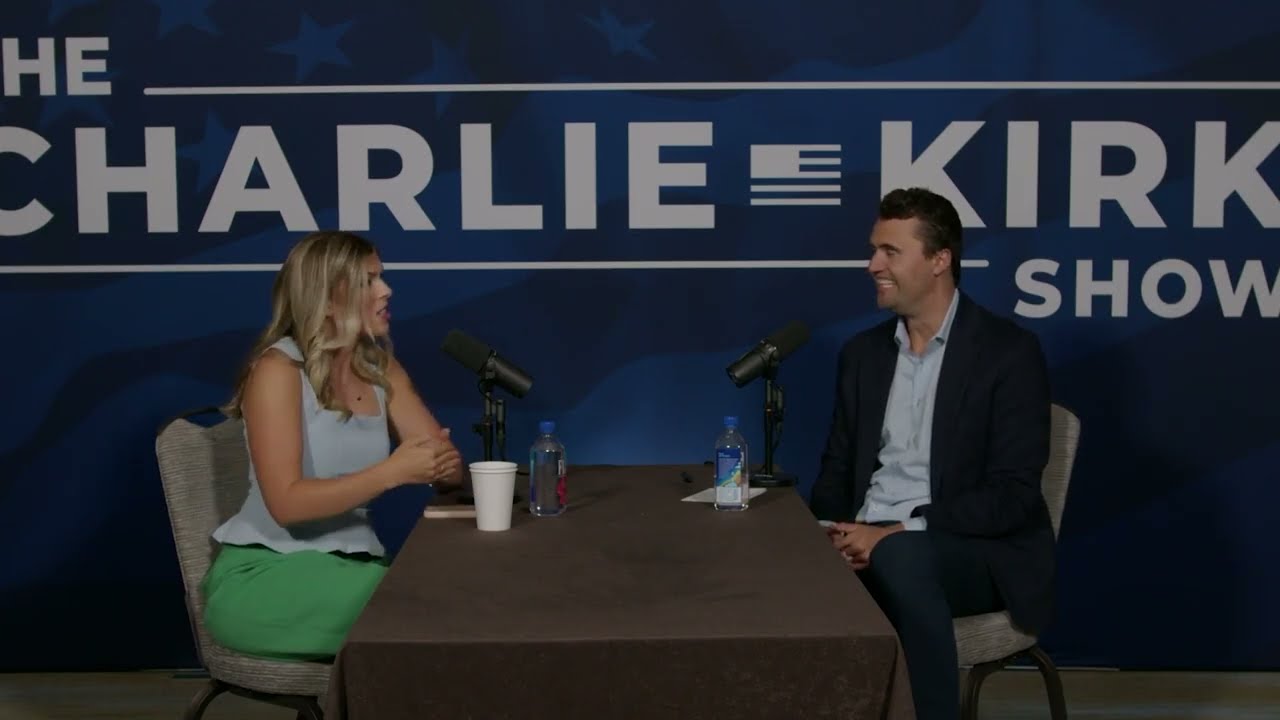
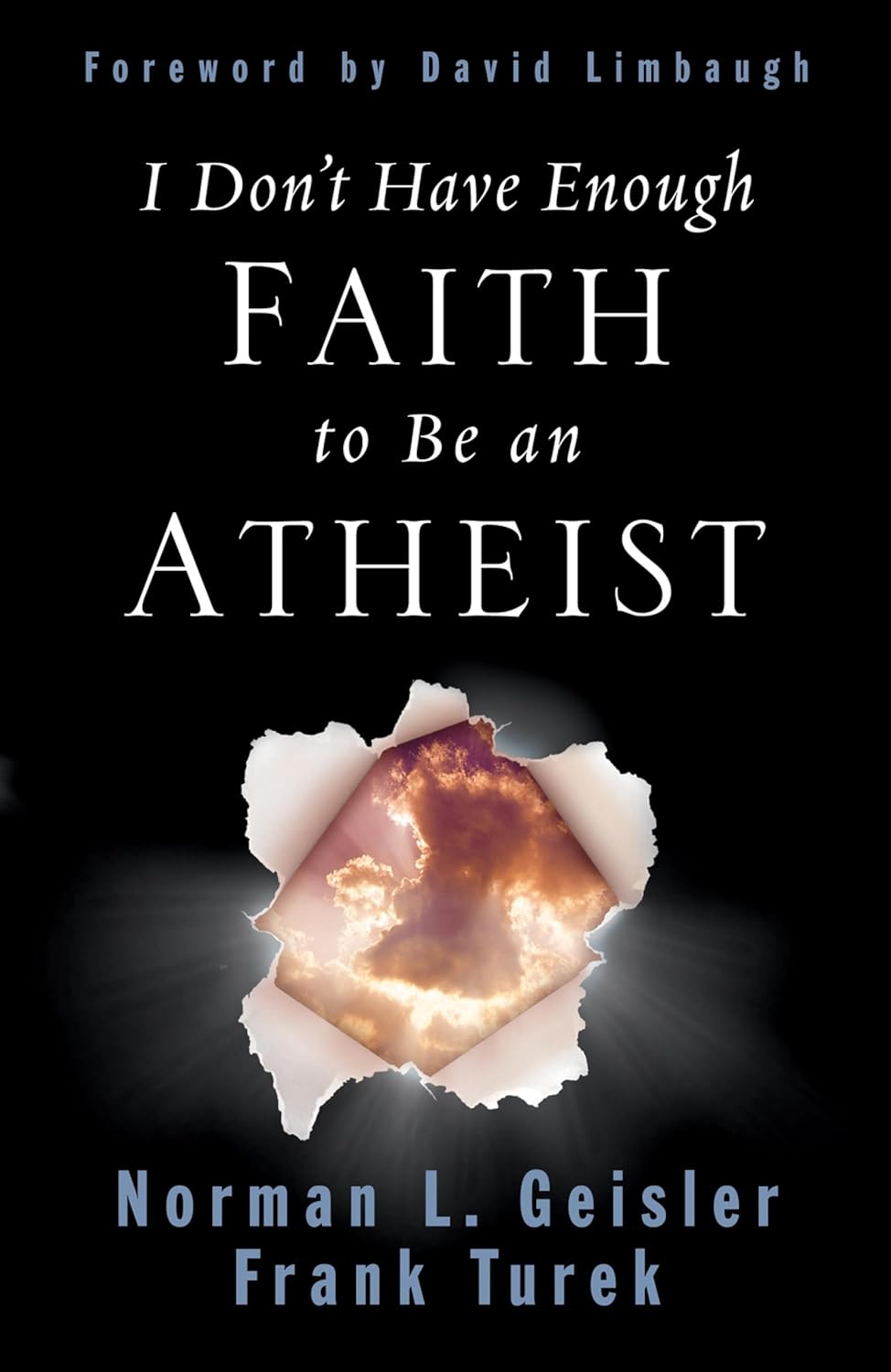
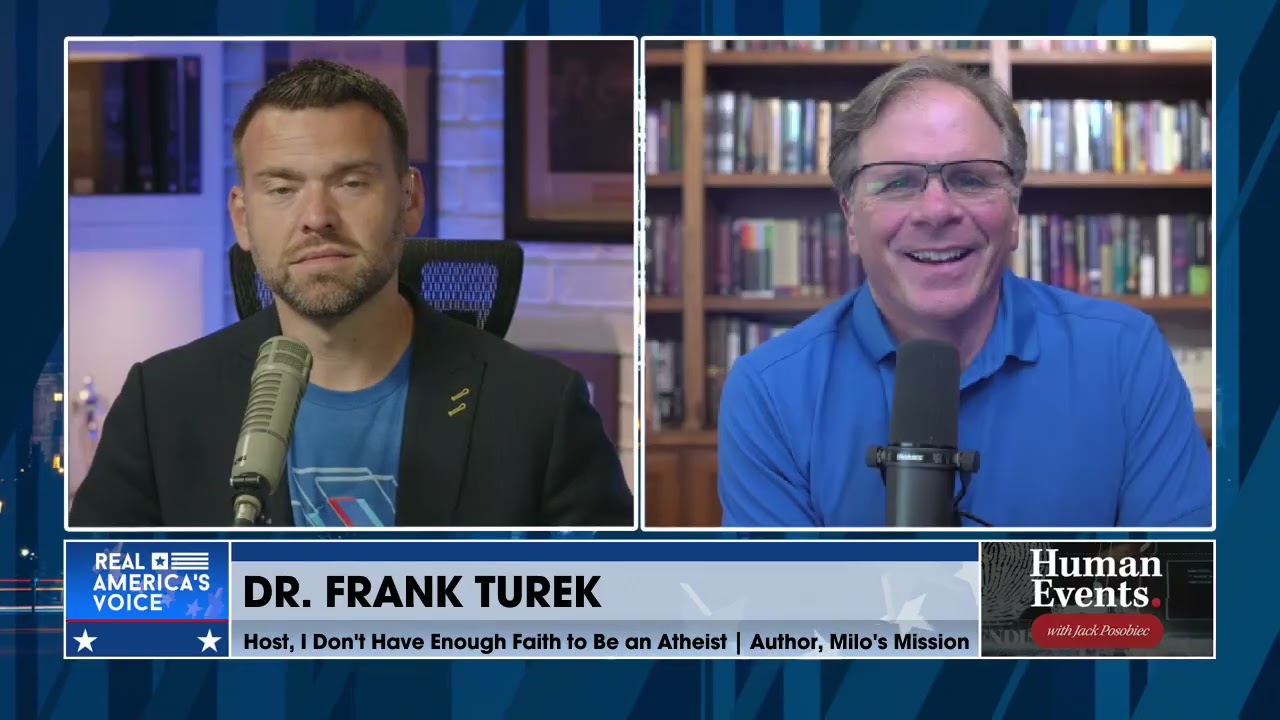
Charlie Kirk sits down with apologist Frank Turek to discuss his appearance on Bill Maher's program, where questions about the historical existence of Jesus Christ and Christianity's intellectual foundations were debated. Turek, author of "I Don't Have Enough Faith to Be an Atheist," provides detailed responses to Maher's contentions that Christianity copied from pagan religions, that Jesus may not have existed, and that the Holy Spirit was a later invention. Kirk and Turek explore the evidence for Christ's existence from non-Christian sources like Josephus, the archaeological accuracy of the Book of Acts, and why the resurrection must have been physical rather than spiritual. The conversation offers a master class in defending Christian faith with reason, evidence, and grace.
The Biblical Case for Intellectual Christianity
Charlie Kirk opens the discussion by addressing Bill Maher's suggestion that faith is anti-intellectual. Kirk counters by pointing to some of history's greatest minds who were captivated by Scripture, including Isaac Newton, who wrote more about biblical prophecy than physics, and Thomas Aquinas. Kirk argues that the scriptures are accessible to everyone while also being infinitely nourishing for intellectual exploration.
Frank Turek strongly agrees that the scriptures are not anti-intellectual. He points out that the Bible continually tells believers to give reasons for what they believe, and that even Yahweh in the Old Testament says, "Come, let us reason together." Turek then turns the tables on atheists, arguing that they cannot justify reason itself. If humans are just "molecules in motion" or "moist robots" as materialists claim, then every thought is merely a reaction to the laws of physics, not actual thinking. Turek references CS Lewis, who brilliantly demonstrated that if materialism is true, there's no way to justify thinking or reason itself.
Did Christianity Copy From Pagan Religions?
Kirk raises one of Maher's key contentions: that Christianity is simply a counterfeit of other Middle Eastern religions like the Osiris myth, with similar stories of virgin births and resurrections. Turek directly refutes this claim, stating that just because something appears on the internet doesn't make it true.
According to Turek, the only dying and rising god prior to Christianity was Osiris from Egypt, and that wasn't a resurrection into a new body but rather an ethereal resurrection into the underworld—fundamentally different from what the New Testament describes. He emphasizes that almost all of these supposed dying and rising gods actually come after Christianity, not before. If anyone is copying, it's the pagan myths copying from Christianity, not the other way around.
Turek further illustrates that parallels between stories don't necessarily prove copying. He provides the example of a novel from 1898 called "The Futility," which told the story of a ship making its maiden voyage from the UK that hit an iceberg, causing many deaths. This story predated the Titanic disaster by chance, yet nobody would claim the Titanic story was copied from this novel. The same principle applies to alleged parallels between Christianity and pagan myths.
Kirk adds that many religions with overlapping elements with Christianity show that the overlap aligns with Christianity's rise, suggesting they copied from Christianity. For example, in Norse mythology, the god Balder dies and comes back, creating a paradise after an apocalypse. However, this part of the myth was almost certainly influenced by the spread of Christianity and was only written down in the Middle Ages.
The Historical Existence of Jesus Christ
Kirk admits he was surprised that Maher questioned whether Jesus Christ actually existed, thinking this was a fringe view limited to Reddit or Discord channels rather than accepted scholarly thinking. Turek confirms that if there are one or two scholars out of thousands in academia who study this material—including atheist New Testament scholars—who say Jesus never existed, that would be a lot.
Turek makes a compelling logical argument: Jesus is inarguably the most influential human being to ever walk the earth. How could he possibly have never existed? It would be like someone 2,000 years from now claiming Luke Skywalker was the most influential human being to ever walk the earth. Nobody in the future would take a fictitious character and attribute such influence to them.
Beyond logic, Turek points to hard evidence: there are at least 10 ancient non-Christian sources within 150 years of Jesus's life that mention Jesus and/or the apostles. These include historians like Josephus, Suetonius, Thallus, Pliny, and Tacitus.
Josephus and Extra-Biblical Evidence
Kirk acknowledges he briefly stumbled over the name during his conversation with Maher, confusing Herodotus and Josephus. Turek explains that Josephus lived from 37 AD to about 100 AD and wrote several books related to the Jews, including "Antiquities" and a work about the Jewish war. Josephus mentions Jesus, John the Baptist, and records that James, the half-brother of Jesus and pastor of the church in Jerusalem, was killed as a martyr in 62 AD when the Sanhedrin threw him off the temple mount and stoned him to death.
This is particularly significant because James wrote the book of James in the New Testament and was the same person who did not believe his brother was God before the resurrection. James converted after Jesus appeared to him following the resurrection, which led to his eventual execution by the Jews.
Turek emphasizes that while these extra-biblical sources are valuable, the best evidence for Jesus comes from the New Testament documents themselves. You don't have to assume they are inspired to get good historical information from them. Even atheist scholars like Bart Ehrman, who teaches at UNC Chapel Hill, admit that Jesus existed and that the crucifixion of Jesus is probably one of the most attested facts from ancient history.
Was Paul Talking About a Spiritual Jesus?
Kirk addresses another fringe theory that Paul was talking about a spiritual Jesus rather than a physical, resurrected Christ. He references First Corinthians where Paul explicitly states that Jesus rose from the dead and appeared to 500 believers. Turek firmly rejects any merit to the argument that Paul thought Jesus was merely a spiritual or celestial being.
Paul makes it crystal clear that he's talking about a resurrected body that came out of the tomb. If Jesus had only resurrected spiritually, his body could still be in the tomb, and that claim could have been made. But that wasn't the case—Jesus's tomb was empty. It would have been easy to squash Christianity if the tomb wasn't empty, because both the Romans and the Jews, who didn't want Christianity to succeed, would have gone to the right tomb and produced the body. They didn't do it because his body wasn't there.
This was a physical resurrection, which is precisely what made it so controversial to the Greeks. When Paul spoke on Mars Hill as recorded in Acts 17 and brought up a physical resurrection, the Greeks were incredulous. They didn't want bodily resurrection; they wanted to be liberated from the body. Christianity only makes sense if the resurrection was physical.
The Holy Spirit: A Later Invention?
Maher claimed during the interview that the Holy Spirit was not mentioned until 300 years later. Kirk believes he did a good job interjecting and correcting this false claim, noting that the Spirit is mentioned throughout the Old Testament and prominently at the baptism of Christ, where the Spirit came upon Jesus and God the Father declared, "This is my son in whom I am pleased."
Turek confirms there is no truth to Maher's claim. The Holy Spirit is throughout the New Testament and the Old Testament. The Holy Spirit comes upon believers at Pentecost, which is recorded in the Book of Acts, one of the most verifiable books in the New Testament. Both the Gospel of Luke and Acts were written by Luke, who was a historian of the first rank—a fact admitted even by archaeologist Sir William Ramsay, who initially was skeptical of Luke 100 years ago but spent 20 years studying his work and concluded Luke was a historian of the first rank.
In the Book of Acts alone, there are 84 historically and eyewitness-confirmable details that only an eyewitness or someone who knew an eyewitness would know. Turek and his co-author list all of these in their book "I Don't Have Enough Faith to Be an Atheist."
The Importance of Eyewitness Testimony
Kirk had addressed this in his response video, but Turek elaborates on why the date of the documents is important, though what's more important are the sources for the documents. If Kirk or Turek were to write a book about 9/11 right now—about 23 years after the event—what's most important is that they would be interviewing people who saw it. The same principle applies to the New Testament.
The dates these books were written during the lifetime of the eyewitnesses, by eyewitnesses or people who knew eyewitnesses, is proven by the data in the text that only an eyewitness would know. If they weren't eyewitnesses themselves, like Luke, they were interviewing people who were there and were still alive when the books were being written. This is eyewitness testimony telling us what really happened.
Furthermore, these witnesses had no motive to make it up. They didn't get sex, money, or power. As former believers in Yahweh who were simply Jewish believers, all they got for their testimony was being kicked out of synagogues, beaten, tortured, and killed. Turek praises Kirk's question to Maher about why the apostles would fake the resurrection as brilliant, noting that Maher had no response because there is no answer. They wouldn't fake it to get themselves abused.
How Christians Should Share the Gospel
In closing, Kirk asks Turek about the approach Christians should take when sharing the gospel. Kirk notes he tried to take a gentler touch with Maher, wanting to develop a relationship rather than going all in with heavy apologetics or finger-wagging. He asks Turek, as someone who does this for a living, about the different approaches believers should bring to unusual circumstances when pointing toward Jesus.
Turek responds that both he and Kirk try to avoid "owning" people. Instead, they want to gently correct and ask lots of questions so that people walk away wanting to know more, not hating the interaction. When someone asks a question, you're not just answering a question—you're answering a person. You want to provide an opening for the next conversation.
Turek's approach includes asking, "If Christianity were true, would you become a Christian?" He's had atheists stand at microphones in front of hundreds of people on college campuses and say no because they don't want it to be true. This clears the deck of all their objections and reveals the real issue. Kirk asked a similar question to Maher: "Do you hope you were wrong?"
Christians should ask questions, make points, and highlight grace above all, because grace is what people are looking for. There are only two things anyone will receive in the afterlife: justice or grace. There is no other category.
Cross Examined Ministry
Kirk encourages the audience to support Frank Turek's work and mentions wanting to get a signed copy of "I Don't Have Enough Faith to Be an Atheist" for Bill Maher, with an obligation to read it. Turek explains that Cross Examined goes to college campuses presenting evidence that Christianity is true, then taking questions. They have a YouTube channel called "Cross Examined" and a podcast with the same name as the book. They've posted over 2,500 videos on their YouTube channel, most of them Q&A videos from college campuses.
Kirk shares that he first became aware of Frank Turek on public access television in Spokane after speaking at Washington State University in spring 2018. Seven years later, Turek has become a wonderful friend whose impact continues to grow.
Video Transcript
I knew that this school of thought
existed, but I thought it was only on
Reddit or Discord channels, not in
agreed upon high scholarly thinking. Did
Jesus Christ actually exist? Frank
[Music]
Turk, as you know, I joined the Bill
Maher program last week and it aired
yesterday and our full annotated version
will be out tomorrow. and my very good
friend Frank Turk took a lot of time
about two hours out of probably three
hours out of his schedule to re to watch
the entire thing and give his feedback
on things that we could add on top of it
on how we can best defend our faith.
Frank, great to see you. Uh, and thank
you for taking the time and happy
belated Easter. Yeah, Charlie, you took
the right approach with Bill. You were
very kind to him. You could have said a
lot more, but as you say, when you're on
a podcast, somebody else's podcast, you
want to give them the benefit of the
doubt. you just you want to get a few
points in, but you don't want to make it
a monologue as to why the guy's wrong.
Well, thank you. And uh it was it was
not an interesting environment to be in
to say the least. So, let's let's go to
this one. Let let me see
here. Let's go to um I don't know if we
actually have Okay, let's play cut 127.
I'd love your reaction, Frank.
I'm going to take something that is so
anti-intellectual even though I can
argue like an intellect. However, but
you have to acknowledge even the
greatest minds of history have been
mesmerized by the scriptures. Isaac
Newton, Thomas Aquinus. Well, Isaac
Newton wrote more about biblical
prophecy than even physics. And so
there's something about the scriptures
that are intellectual that does push
your limits. And that's what I think is
so beautiful about our faith is it can
be accessible to everyone but also
infinitely nourishing and exploration.
Frank, are the scriptures
anti-intellectual?
No, not at all. In fact, the Bible
continually tells us to give reasons for
what we believe. And of course, uh even
Yahweh in the Old Testament says, "Come,
let us reason together." You know,
Charlie, one of the things that atheists
cannot answer, cannot actually give a
cause for is reason itself. I mean, if
we're just molecules in motion, if we're
just molecular machines, if we're
nothing but moist robots, which is the
common view of most materialists today,
most atheists today, then they shouldn't
even believe anything they think because
every thought they have is the result of
the laws of physics. They're not really
thinking, they're reacting. And CS Lewis
pointed pointed this out brilliantly in
so many of his works that if
materialism's true, there's no way to
even justify thinking. There's no way to
justify reason. And if you can't justify
thinking, you can't call a Christian
anti-intellectual because you haven't as
an atheist even explained our ability to
think and reason.
And so, Frank, one of the contentions
that Bill Maher made is that listen,
Christianity, it's just a counterfeit of
all these other Middle Eastern
religions, Osiris and all this virgin
birth and raised from the dead. This is
a story that is appropriated and
Christianity just copied other religions
in the Middle East. How would you react
to that? Well, we have a whole section
and I don't have enough faith to be an
atheist about that. It's just not true.
Just because it's on the internet
doesn't mean it's true. Okay. about the
only uh dying and rising god prior to
Christianity was Osiris from uh Egypt.
And that wasn't a resurrection into a
new body. That was a kind of ethereal
resurrection into the underworld. That's
not what the New Testament's talking
about. In fact, almost all of these
supposed dying and rising gods come
after Christianity, not before. So if
anyone's copying from anyone, it's not
Christianity copying from pagan
resurrection myths. It's the pagan
resurrection myth copying from
Christianity. But you know, as CS Lewis
also pointed out, just because you have
a parallel between two stories doesn't
mean one is copied from another. Uh in
fact, there was a there was a ship uh
Charlie, I don't know if you heard about
it. It made its maiden voyage from the
UK back in the early 1900s. It hit an
iceberg. A lot of people died. And of
course, you're gonna say, "Well, Frank,
of course, that was the Titanic." Well,
actually, it was actually a a novel
from, I think, 1898 called The Futility,
and it predated the Titanic
uh just by chance. Nobody would say,
"Well, the Titanic story then must be
copied from this novel called Futility."
It just happened to be that there were
parallels. So parallels don't
necessarily prove that one is copying
from another anyway. And yeah, look, for
example, a lot of the religions that
overlap with Christianity, the overlap
lines up with Christianity's rise. So
they're just copying it. Like in Norse
mythology, for example, there's a god
Balder who dies and comes back and
creates a paradise after an apocalypse.
But almost certainly this part of the
myth was influenced by the spread of
Christianity and was written down only
in the Middle Ages. Another thing that
Bill Maher mentioned in the discussion,
and I didn't even know how to process
this. I mean, in real time, Frank, I
knew that this school of thought
existed, but I thought it was only on
Reddit or Discord channels, not in
agreed upon high scholarly thinking. Did
Jesus Christ actually exist, Frank Turk?
uh that there if there is one or two
scholars out of many thousands Charlie
in academia today who study uh this kind
of material and I'm not talking about
you know Bible believing Christians
there are atheists or New Testament
scholars if there's one or two out there
it's a lot who say Jesus never existed I
mean think about this Charlie Jesus
inarguably is the most influential human
being to ever walk the
earth? How could he possibly have never
existed? It would be like somebody 2,000
years from now saying Luke Skywalker is
the most influential human being to ever
walk the earth. Nobody 2,000 years from
now is going to take a fictitious
character and say that person is the
most influential human being on the
earth. Not only that, but there are
non-Christian sources and you began to
talk about this a little bit in your
interview with Bill. Charlie, you didn't
get a chance to complete the thought,
but there are at least 10 ancient
non-Christian sources within 150 years
of Jesus's life that mentioned Jesus
andor the apostles. People like
Josephus, Sutonius, Thalus, Fleon,
Joseph, I forgot. I forgot. I I screwed
up Herodus and Josephus. But thank Yeah,
but that's a big one. Remind the
audience who Josephus was. That's an
extra biblical account of Jesus's life.
Non-biblical.
Josephus lived from 37 AD to about 100
AD. And uh he wrote several uh books
related to the Jews. One's called
antiquities, another is called uh it's
it's about the Jewish war is another
one. And he mentions Jesus. He mentions
John the Baptist. He mentions that
James, the halfb brotherther of Jesus,
is killed as a martyr. He's the pastor
of the church in Jerusalem. And he's
killed in 62 AD. the Sanhedrin, the
Jewish ruling council, threw him off the
temple mount and then they stoned him to
death. Now, this is the same guy, by the
way, Charlie, who wrote that little book
in the New Testament called James. He's
also the same guy who did not believe
his brother was God before the
resurrection. But then James had Jesus
appear to him and that's why he
converted and that's why he was later
executed by the Jews. So, Josephus has a
lot of great information on some of the
New Testament events, but let me let me
hasten to say this, Charlie. The best
evidence for Jesus is in what we call
the New Testament documents. And you
don't have to assume that they are
inspired to get good historical
information out of them. Even atheists
like Bartman, who teaches here where I
am at in North Carolina, UNCC Chapel
Hill, he admits that Jesus existed. He
said, "Probably one of the most attested
to facts from ancient history is the
crucifixion of Jesus." is of course he
doesn't believe in the resurrection but
there's virtually no scholars out there
who say Jesus never rose from the dead
or or I should say never existed which
is why when Bill tried to say that it's
it's
and the other one which I didn't quite
grasp and I I did find that there was a
school of thought out there that exists
but very fringe that Paul was talking
about a spiritual Jesus that Paul I just
thought off the top of my head I mean
first Corinthians he talked about we
will we will say that Jesus rose from
the dead and that Jesus appeared to 500
believers. Where does this come from?
And is there any merit to the argument
that Paul was somehow not connected to
or he thought Jesus was just the
spiritual celestial being? No. Because
Paul makes it very clear that he's
talking about a resurrected body, a body
that comes out of the tomb. It would
have been easy to say Jesus resurrected
spiritually. Then you wouldn't have to,
you know, he his body could still be in
the tomb and you could still say, "Oh,
he resurrected spiritually." But that
wasn't the case. Jesus's tomb was empty.
And it would have been easy to squash
Christianity if it wasn't empty. Because
both the Romans and the Jews who didn't
want Christianity to succeed would have
gone to the right tomb and taken out his
body. They didn't do it because his body
wasn't in there. So, no, this was a
physical resurrection. And uh that's
what made it so crazy to the Greeks cuz
they didn't think uh uh they didn't they
didn't think anyone would want to have
their body raised. They wanted to be
liberated from the body. So when Paul is
talking on on Mars Hill as recorded in
Acts 17 and he's bringing up a physical
resurrection, these guys over there are
incredulous. You know, they're going,
"We don't want that. We want to be
liberated from the body." No, this was a
physical resurrection. Christianity only
makes sense if that's the case. So
Frank, another contention that he made
was that the Holy Spirit was not
mentioned until 300 years later. I don't
know if you caught this in part of the
interview where he said, "Well, the Holy
Spirit's a concept that came hundreds of
years later." I actually think I did a
pretty good job of interjecting and
correcting the record. It's clearly not
true. The spirit is actually mentioned
all the way back into the Old Testament.
But primarily we see that in the baptism
of Christ our Lord where it was Jesus
Christ the spirit came upon him and God
the father said this is my son in whom I
am pleased. Is there any truth to that?
uh truth to what you said, not what he
said. In fact, it's all over the New
Testament and as you mentioned, even the
Old Testament, I mean, the Holy Spirit
comes upon the believers at Pentecost,
which as uh one of the most accurate, I
mean, I think all the books are
accurate, but the one of the most
verifiable books in the New Testament is
the book of Acts, Charlie. And in our
book, I don't have enough faith to be an
atheist. too. Yeah. Yeah, you did
because because both Luke and and Acts
are written by Luke and Luke is an
historian of first rank. That was even
admitted by a archaeologist by the name
of Sir William Ramsay who initially was
skeptical of Luke 100 years ago. Then he
spent 20 years studying Luke and he said
Luke is an historian of first rank. And
if you go through the book of Acts,
there are 84 historically eyewitness
confirmable details that only an
eyewitness or somebody that knew an
eyewitness would know. Just in the book
of Acts, Charlie, we list them all. And
I don't have enough faith to be an
atheist. So, the Holy Spirit is all over
the documents. And as you pointed out in
your rebuttal video or response video
that you released earlier today or maybe
it was yesterday with uh with Bill
Maher, even the I mean the the date of
the documents is important, but what's
more important are the sources for the
documents. Charlie, as you explain, if
you were to write a book or I were to
write a book about 911 right now, which
is about 23 years ago, it's more
important that I'm interviewing people
who saw it. That's more important than
the date I'm writing it down right now
in 2025. And that's what goes on with
the New Testament. The the the date it
it's the dates of these of these books
are written during the lifetime of the
eyewitnesses by eyewitnesses or people
that knew eyewitnesses because they
proved it by putting data in the text
that only an eyewitness would know. But
they're actually interviewing people. If
they weren't eyewitnesses themselves,
like Luke wasn't. They were interviewing
people that were there and they're still
alive when they're writing it. So, this
is eyewitness testimony. This material
is telling us really what happened. And
by the way, Charlie, they had no motive
to make it up. They didn't get sex. They
didn't get money. They didn't get power.
All they got as former believers in
Yahweh, just Jewish believers in Yahweh,
is they got kicked out of the synagogue.
They got beaten, tortured, and killed.
That's why I thought your question when
you asked him why would they fake the
resurrection was brilliant and he really
didn't have a response because there is
no answer. Why would they fake this to
get themselves abused? They
wouldn't. In closing here, Frank, what
from my conversation, Bill, more
broadly, how should Christians share the
gospel? I try to take a more gentle
touch. I wanted to develop a
relationship with Bill. I it was
tempting to kind of go all in and go
heavy apologetics and a little finger
wagging. Just speak as someone who does
this for a living and closing here about
a minute and a half remaining the
different approaches that we as
believers should bring to unusual
circumstances to point towards Jesus.
Well, I think both you and I try and
take the approach where we don't want to
try and own people. We want to gently
correct them and ask them a lot of
questions because we want them walking
away going, I want to know more. We
don't want them walking away from a from
a a interaction with us to say, "Oh man,
I hated that guy. He made me look bad."
You don't want to do that. You want to
try and win people. Look, Charlie, as
you know, when somebody asks you a
question, you're not just answering a
question. You're answering a person. And
so, you want to provide an opening for
the next conversation.
And what I try and ask people is if
Christianity were true, would you become
a Christian? And Charlie, I've had
atheists stand at the microphone in
front of hundreds of people on college
campuses and say no because they don't
want it to be true. So I think that
clears the deck of all the objections
they could have. So I always ask that
question. You asked a similar question
to Bill. You asked him, "Hey, do you
hope you were wrong?" That kind of
thing. That's what we need to take. We
need to ask people questions and we
shouldn't expect people to agree with
us. We should just ask questions, make
points, and really highlight grace,
Charlie, because grace is what people
are looking for. Look, there's only two
things you're going to get in the
afterlife. You're either going to get
justice or grace. There's no other
category. The book is I don't have
enough faith to be an atheist. And
Frank, I want you to sign one for Bill.
Next time I see him, I'm going to give
him a copy and say you you have a
obligation to read this, Bill. remind
the audience of the great work that
cross-examine does and plug the book as
well. Yeah, absolutely.
Cross-examine.org. We go to college
campuses as well, Charlie. We're near
we're nearly always talking about why I
don't have enough faith to be an
atheist. We're giving evidence that
Christianity is true. Then we take
questions. We have a YouTube channel,
cross-examine, two words in uh at
YouTube. And we also have a podcast
called I don't have enough faith to be
an atheist. So, we're going to college
campuses, high schools, churches,
presenting the evidence that
Christianity is true and taking a lot of
questions. We have over 2500 videos on
our YouTube channel. Most of them are
Q&A videos from the college campus.
Frank is a legend. In fact, I first came
aware of Frank on public access
television in Spokane after I spoke at
Washington State University in the
spring of 2018. It's been 7 years. It's
been great to get to know Frank and his
impact. He's been a wonderful friend to
me. Frank, thank you so much. God bless
you, my friend. Crossexamine.org. Thank
you.
[Music]