Frank Turek and Charlie Kirk Dismantle the Virus of Subjectivism Infecting College Campuses Across America
Enjoying this? Share it with someone who needs to see it.
Up Next
Charlie Kirk Challenges Christians to Combat Marxism and Confront Evil in America and Abroad
1:33:56
Charlie Kirk Built the World's Largest Conservative Youth Organization from a Card Table and Conviction
1:35:50
Charlie Kirk Destroys the Myth That America Was Not Founded on Christian Principles With Historical Evidence
5:38
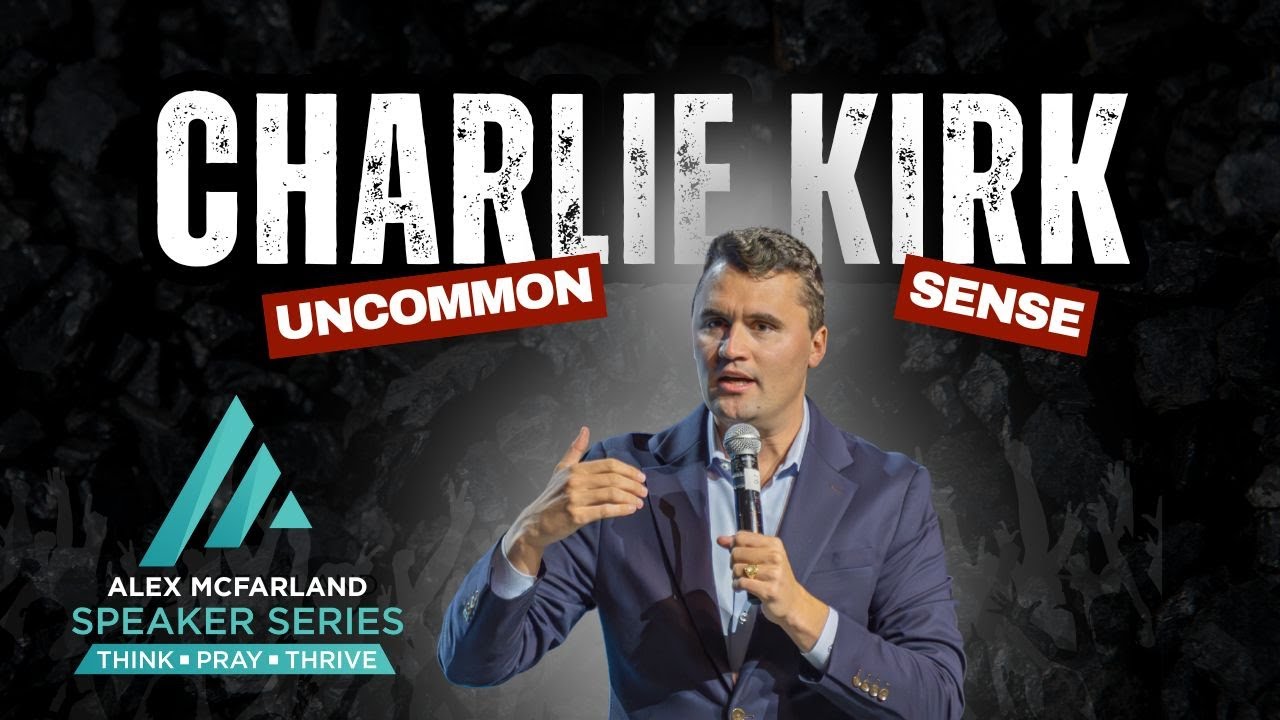
Frank Turek and Charlie Kirk Dismantle the Virus of Subjectivism Infecting College Campuses Across America
Frank Turek joins Charlie Kirk to tackle one of the most dangerous idea pathogens spreading through universities: subjectivism. When students return home claiming "that's my truth" and "everyone has their own truth," they're parroting the same philosophy fueling the transgender movement and cultural chaos. Turek reveals the simple logical responses that expose these self-defeating statements for what they are, intellectual nonsense dressed up as tolerance. Drawing on C.S. Lewis and basic reason, this conversation equips parents and students with the tools to combat relativism before it destroys the next generation's ability to recognize objective reality.
One of the most dangerous idea pathogens infecting the minds of the nation's young people is the virus of subjectivism or subjectivity. While this philosophy isn't new and has been around for quite some time, its prevalence on college campuses has reached alarming levels. The great C.S. Lewis, whose works including Screwtape Letters, Miracles, Mere Christianity, Narnia, and Abolition of Man provide an almost unlimited reservoir of wisdom, really pinpointed the danger in subjectivity decades ago.
The best way to describe subjectivity is what you'll hear on a college campus, and maybe from your grandkids when they come back from a semester at school that you're going into debt to pay for. When they come home, they say "no, that's my truth" and "everyone has their own truth." This philosophy sits at the heart of the transgender movement—the idea that individuals have a different material truth than others and that there can be no agreed-upon precepts about reality.
How to Respond to "I Have My Own Truth"
When someone says "I have my own truth, I have my own beliefs, I chart my own course, my own destiny, there's no such thing as truth, everyone has their own story they tell themselves—in fact, nothing is absolutely true," Frank Turek offers a devastating response: ask them if that statement is true.
"Is it true that there's no truth? Because if it's true that there's no truth, to claim there is no truth can't be true. But it claims to be true," Turek explains. This is known as a self-defeating statement—a statement that doesn't meet its own standard.
Turek illustrates this with a simple example: "If I were to say I can't speak a word in English, what would you say? You just used English to say it!" When people say there is no truth or there are no absolutes, they're uttering self-defeating statements. They're saying it's absolutely true there are no absolutes. When people say all truth is relative, the proper response is to ask: "Is that a relative truth? No, it's an objective truth."
There Is No Such Thing as "Your Truth"
When people claim they have their truth and you have your truth with no "the truth," the right question to ask is: "Is that the truth that there is no the truth?" The statement defeats itself.
As Turek points out, "There's no such thing as your truth or my truth. There's just the truth." He continues with an analogy: "If you're going to say you have your own truth, you might as well just say I have my own math."
He illustrates this absurdity: "Imagine if Charlie were to hire me to do something. He said, 'Hey Frank, I'll give you $15 an hour, do the job and then let me know what I owe you.' So I work for 10 hours and I come to Charlie and say, 'Charlie, it's been great working for you here at Turning Point USA. I have worked for 10 hours and you said $15 an hour, so you owe me $15,000.' Charlie's going to say, 'What? I owe you $150.' And I go, 'Oh no, you don't understand. I have my own math.'"
The absurdity is clear. It's silliness to say you have your own truth. There's just the truth—not your truth, not my truth. It's self-defeating to say there's no truth.
The Hypocrisy of "Don't Judge"
Another common refrain is "don't judge." Turek asks the obvious question: "Why are you judging me for judging?" The statement itself is a judgment.
Jesus didn't actually say "don't judge," Turek explains. "He said 'judge not lest you be judged by the same standard you judge others.' You'll be judged by that standard. So before you try and take the speck out of your brother's eye, you hypocrite—which is a judgment, you notice that—you hypocrite, take the log out of your own eye first and then you'll be better able to help your brother."
This is not a command not to judge. It's a command on how to judge. Jesus is telling people to take the speck out of their brother's eye, which involves making a judgment. He's simply saying don't judge hypocritically. If you've got that problem, fix it, then go help your brother.
It would be completely ridiculous to say don't make judgments. The people who are telling you not to make judgments are the most judgmental people in society.