
Up Next

Charlie Kirk on Church Persecution, Civil Society, and Fighting for Truth in a Broken America
1:31:37

Charlie Kirk Explains Why the American Church Must Rise Up Against Tyranny and Technocracy Before It's Too Late
2:09:55

Charlie Kirk Reveals Why Trump's 2024 Electoral Map Is Better Than 2016 and 2020 Combined
33:20
Related Books
Browse Conservative Books










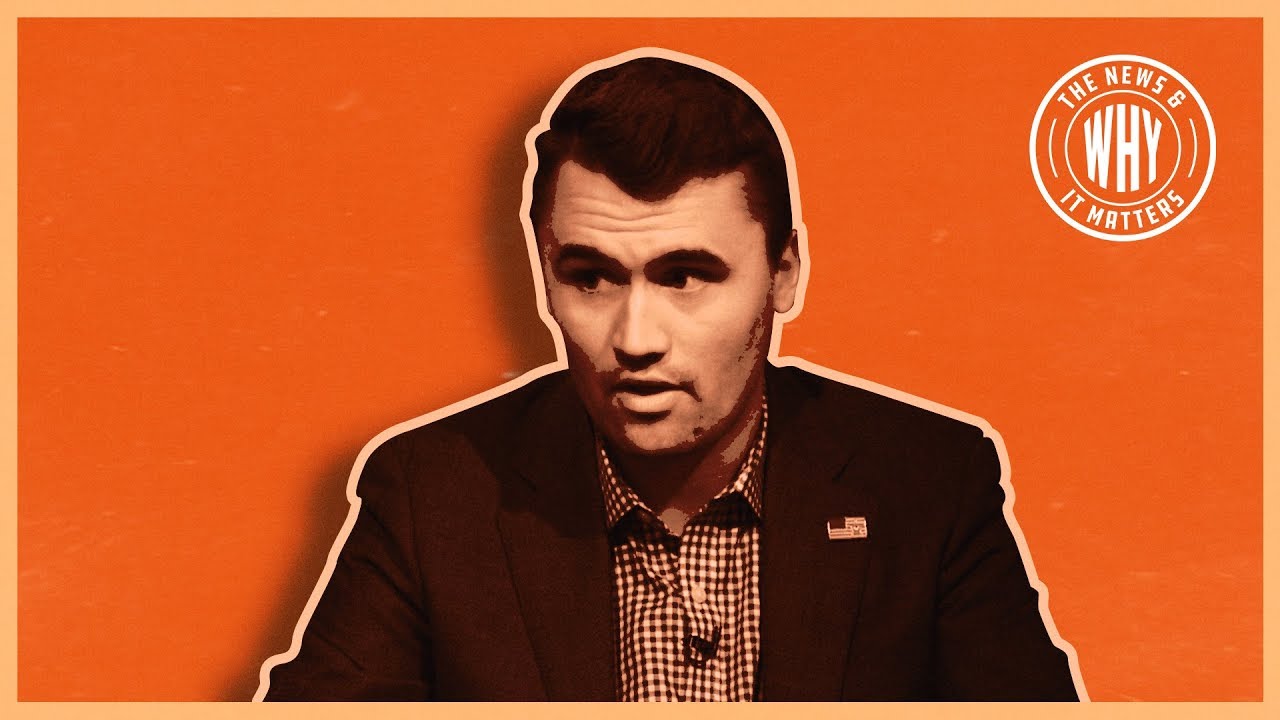
Charlie Kirk Takes the Political Compass Test: Exposing the Leftist Bias in Modern Political Quizzes
Charlie Kirk sits down with Esther Krakue to take the infamous political compass test, dissecting each question along the way. What starts as a simple political spectrum quiz quickly turns into an exposé of how these tests are designed with built-in leftist assumptions. From economic globalization to corporate responsibility, from patriotism to the death penalty, Charlie breaks down why most of these questions are fundamentally flawed in their framing. The conversation reveals not just where Charlie stands on key issues, but how political questionnaires manipulate language to push respondents toward predetermined conclusions. This episode offers a masterclass in critical thinking about how we discuss politics, morality, and the role of government in society.
The Political Compass Test Experiment
Charlie Kirk joins Esther Krakue for a unique episode where he takes the political compass test to determine where he falls on the political spectrum. The exercise quickly becomes more than just answering questions—it transforms into a critical analysis of how political tests are constructed and the inherent biases baked into their design.
From the very first question about economic globalization, Charlie identifies a pattern: the questions aren't neutral inquiries but rather statements designed to elicit specific responses. The test asks whether economic globalization should "primarily serve humanity rather than the interest of transnational corporations," immediately creating a false dichotomy that assumes these two interests are naturally opposed.
Patriotism, Country, and Government
When confronted with the question "I'd always support my country whether it was right or wrong," Charlie makes a crucial distinction that often gets lost in political discourse. He separates the concept of country from government, explaining that a country represents the ethos, philosophy, people, history, and heritage, while the government can be merely a collection of elites.
This nuanced understanding challenges the binary nature of the question. Charlie emphasizes that he would not support his government whether it was right or wrong—no one should support anything regardless of its moral standing. However, loving America or the United Kingdom is justified because these nations have moral governments that protect individual initiative and individual liberty.
On the question of national pride, the test asks whether it's "foolish to be proud" of your country of birth since you didn't choose it. Charlie strongly disagrees, pointing out that this logic would apply to family as well. People don't choose their parents or their zip code, but that doesn't diminish the legitimacy of pride in these connections. He argues that citizens should absolutely be proud of where they're from, especially if they come from exceptional, generous, benevolent countries.
Corporate Responsibility and Free Markets
Throughout the test, Charlie identifies an obsession with framing corporations as inherently opposed to human interests. Multiple questions attempt to create antagonism between business success and societal benefit. One question asks whether "corporations cannot be trusted to voluntarily protect the environment" and therefore require regulation.
Charlie calls this out as categorically false, noting that corporations can absolutely be trusted to protect private property voluntarily. He criticizes how the question embeds a value judgment rather than asking neutrally whether corporations should require environmental regulation.
On the principle "the freer the market, the freer the people," Charlie strongly agrees. He rejects the Marxist framework that treats corporate profit and human welfare as opposing forces. When asked about bottled water becoming a consumer product, he points out that the free market and profit incentive have actually provided more people with access to clean water than ever before in human history.
Regarding the question of whether people who "simply manipulate money" contribute nothing to society, Charlie again identifies the bias. If someone creates value and circulates money effectively, they should be rewarded—that's the foundation of private property rights. The question assumes financial services provide no societal value, which Charlie categorically rejects.
Taxation and Healthcare Access
Charlie takes a clear stance on taxation: everyone is way too highly taxed, from the lowest earner to the highest. He strongly agrees that the rich are too highly taxed, explaining that all Americans regardless of income level face an excessive tax burden.
On healthcare access, Charlie strongly agrees that those with the ability to pay should have access to higher standards of medical care. He frames this within the broader principle that if you work hard or have a great idea, you should have better access to whatever you've earned. This isn't about denying basic care to anyone, but rather about allowing achievement and initiative to be rewarded.
Abortion and the Sanctity of Life
When asked whether abortion should always be illegal when the woman's life is not threatened, Charlie strongly agrees. He articulates a principle based on DNA: every life is worth protecting, and if there are two sets of DNA present, there are two human beings present. He offers a twist on the pro-choice slogan: "If it's not your DNA, it's not your choice."
This represents Charlie's consistent pro-life position grounded in both scientific reality and moral conviction about the value of human life from conception.
Parenting, Education, and Social Issues
On parenting questions, Charlie takes positions that might surprise some. He agrees that good parents sometimes have to spank their children, noting that science shows this form of discipline works when applied appropriately. He also agrees that it's natural for children to keep some secrets from their parents, acknowledging normal developmental psychology.
Regarding marijuana, Charlie takes a nuanced position. While he's not pro-marijuana and believes it's destroying many young people, he slightly agrees that possessing it for personal use shouldn't be a criminal offense. He doesn't support full legalization or commercialization, but doesn't think people should be locked up extensively for possession. He shares a personal anecdote about walking into hotel rooms reeking of marijuana from previous guests, illustrating that marijuana use isn't victimless—it affects others who have to deal with the consequences.
On education, Charlie rejects oversimplified questions about schooling's purpose. For college, he agrees it should primarily equip people to find jobs, but for grade school and middle school, the focus should be on creating good people with strong moral and ethical foundations. The most important thing young people can learn isn't acceptance, as one question suggests, but how to act morally and ethically.
Cultural Relativism and Civilizational Standards
Charlie strongly rejects cultural relativism when the test suggests all cultures are equally valid with no distinction between "savage and civilized." He points out that some cultures are genuinely evil in their treatment of human beings—cultures that throw gay people off buildings, that deny press freedom, that suppress individual liberty. He specifically mentions North Korea and the Chinese Communist Party as examples of evil cultures.
This doesn't mean Charlie believes certain peoples are inherently barbaric based on geography. Rather, he argues that cultures—the values, traditions, and systems that govern societies—can absolutely be judged as better or worse based on how they treat human dignity and freedom. Not all cultural practices deserve equal respect or protection.
Immigration and National Identity
On immigration, Charlie slightly disagrees with the statement that first-generation immigrants can never be fully integrated into their new country. However, he acknowledges that certain immigrants from certain parts of the world do have a very difficult time integrating with Western culture. This reflects his broader concern about immigration policy that considers cultural compatibility and the ability of newcomers to embrace the values of their adopted homeland.
Criminal Justice and Punishment
Charlie takes a position on the death penalty that represents a shift among some conservatives. He strongly disagrees that the death penalty should be an option for the most serious crimes. His reasoning is multifaceted: the death penalty doesn't have a good track record, it's more expensive than life imprisonment, innocent people have been executed, and he doesn't believe the government should have the right or ability to take the lives of its citizens.
On criminal justice more broadly, Charlie strongly agrees that punishment should be more important than rehabilitation. He argues that punishment itself can be rehabilitating, and that for certain heinous crimes like rape, society shouldn't be concerned with healing the perpetrator. Someone who has destroyed another person's life through such a crime has committed something unforgivable on earth, and their best rehabilitation is society punishing them appropriately.
Charlie also strongly agrees that it's a waste of time and money to try rehabilitating some criminals. This reflects a justice philosophy focused on protecting victims and society rather than prioritizing the reformation of those who have committed evil acts.
Religious and Moral Foundations
When asked whether you cannot be moral without being religious, Charlie provides a sophisticated theological and philosophical response. He explains that while non-religious people can absolutely act morally, the question of where we get our concept of morality is different. He argues that our understanding of right and wrong originates from the Torah and the Bible—otherwise, morality becomes merely opinion or democratic vote.
Charlie walks through the cosmological argument: if there was a big bang that started space, time, and matter, there must have been something spaceless, timeless, and immatterless that caused it. Even committed atheists acknowledge this as the strongest argument for God's existence. If God exists, then everything we know to be true about right and wrong was created by God, not discovered or stumbled upon by humans.
He strongly agrees that it's important for his future children's school to instill religious values. On sex outside marriage, Charlie agrees it's usually immoral according to biblical teaching. However, he disagrees with making pornography illegal for consenting adults, viewing this as government overreach into private behavior, though he clearly doesn't endorse such material.
Authority, Surveillance, and Civil Liberties
Charlie strongly agrees that all authority should be questioned—a foundational principle of free societies. On surveillance, he strongly disagrees with the notion that only wrongdoers need to worry about government monitoring. He warns that power will be abused, and that surveillance capabilities will be used against people the government dislikes or disagrees with, regardless of whether they've done anything wrong.
He slightly agrees that civil liberties are being excessively curbed in the name of counterterrorism. As a privacy hawk, Charlie worries about abuses by tech companies and national security agencies that wish to do harm against citizens. He's particularly concerned about Fourth Amendment protections in the United States.
On one-party states, Charlie rejects any suggestion that they have advantages. The idea that avoiding arguments and delay is worth giving up democracy is absurd—akin to saying the good thing about Kim Jong-un is that there are no arguments because dissenters are executed.
The Fundamental Flaw in Political Compass Tests
Throughout the exercise, Charlie repeatedly identifies what he sees as the fundamental problem with this political compass test: it's not designed to neutrally assess political positions but rather to push respondents toward leftist conclusions through loaded language and false dichotomies.
Questions don't simply ask for opinions on topics—they embed value judgments and assumptions that lead the respondent. By framing questions to assume corporations oppose human interests, or that supporting your country regardless of circumstances is inherently problematic, or that all cultures are equally valid, the test attempts to make people feel leftist when they might not actually hold those views.
Charlie suggests creating an alternative political compass that asks genuinely basic questions: Do you think freedom is a right? Where do rights come from—God or government? These fundamental inquiries would provide much clearer insight into political philosophy without the manipulative framing.
The Results and Final Reflections
After completing the test, Charlie's results show him as economically right-wing and libertarian rather than authoritarian—not surprising given his consistent advocacy for individual liberty and limited government. However, he emphasizes that the test failed to ask about many positions central to his worldview.
There were no questions about traditional marriage between one man and one woman, which Charlie believes in. The test didn't adequately capture his strong pro-life stance or his views on religious liberty. These omissions reveal another limitation of such tests: they can only measure what they choose to ask about, and those choices reflect the test creators' priorities and biases.
Charlie concludes that while the exercise was fun and hopefully educational for viewers, it demonstrates the need for more thoughtful, less biased ways of discussing political philosophy. Rather than accepting the terms and frameworks offered by those who may disagree with us, conservatives and libertarians should insist on clear, honest questions that don't smuggle in assumptions hostile to their worldview.
Video Transcript
[00:00] [Music]
[00:06] Hi everyone and welcome to another
[00:08] episode of the Esther Craco Show. Today
[00:10] I have the godfather, the man himself,
[00:14] the genius behind Turning Point USA and
[00:17] the guy who brought us Turning Point UK.
[00:18] So you all blessed with my lovely face,
[00:20] Charlie Kirk. Thank you so much for
[00:22] joining us.
[00:23] >> Honored to be here. We're gonna have
[00:25] some fun.
[00:25] >> Oh yeah, we definitely are. Today we're
[00:27] doing a political compass test with
[00:30] Charlie and I'm just going to ask him
[00:31] some questions to see where he lies on
[00:33] the political spectrum. If he's a secret
[00:35] leftist, we're going to investigate that
[00:37] today. So, are you ready, Charlie?
[00:40] >> Let's do it.
[00:41] >> All right. So, these questions you can
[00:42] answer um strongly disagree, disagree,
[00:44] agree, strongly agree. So, those are the
[00:46] only four options that you have. All
[00:47] right.
[00:48] >> All right.
[00:49] >> Perfect. Okay. So, first question. Wow.
[00:52] Economic globalization is inevitable.
[00:56] Interesting premise. It should primarily
[00:58] serve humanity rather than the interest
[01:00] of transnational corporations.
[01:03] >> Well, well, first of all, this this
[01:04] question is ob obviously written by a
[01:06] leftist where it's somehow that humanity
[01:10] is at odds with transnational
[01:11] corporations. Yes. So, I already take I
[01:14] take total exception with the question.
[01:16] Um because the way it's written is that
[01:18] there's a contradiction between the two.
[01:20] Um, so and then I also I don't even want
[01:24] to talk about whether or not economic
[01:25] globalization is inevitable because I
[01:27] don't think it's inevitable and I don't
[01:28] want to deal with hypotheticals. That's
[01:29] the first thing they'll teach you in law
[01:31] school. Um, so if there was like a
[01:33] middle that I could say neutral, but if
[01:36] economic globalization is inevitable,
[01:38] uh, should it primarily serve humanity
[01:40] rather than interests? I guess. So I
[01:42] guess I would mildly say agree if you
[01:44] had put a gun to my head. But again, I
[01:47] >> I think the question is kind of
[01:48] nonsense. Yeah, it's quite an
[01:51] interesting wording that one. Okay.
[01:53] Right. Second question. I'd always
[01:55] support my country whether it was right
[01:57] or wrong.
[01:58] >> Well, I think there's a difference
[01:59] between supporting your country and
[02:01] supporting your government.
[02:03] >> So, there's a huge difference there. Um,
[02:06] I would ne I would not support my
[02:07] government whether it was right or
[02:08] wrong. I don't know anyone who would
[02:10] support anything whether it was right or
[02:11] wrong. I mean, that's the whole
[02:12] definition of morals, right? That you
[02:14] have objective standards and that's what
[02:17] you base it upon. I love America and I
[02:19] love the United Kingdom because you have
[02:21] a moral government that protects
[02:22] individual initiative and individual
[02:24] liberty. Again, I don't love the
[02:26] question. It's this is this is obviously
[02:28] written by a leftist. A lot of these
[02:30] questions are to try to get people to
[02:32] like, oh no, I would never support my
[02:34] country whether it's right or wrong.
[02:35] Hold on. Difference between country and
[02:36] government. The country is the ethos,
[02:39] the philosophy, the people, the history,
[02:40] and the heritage. The government can be
[02:42] a collection of elites. So, I would
[02:44] always support my country whether it's
[02:45] right or wrong. I'd say slightly
[02:47] disagree, but I think I nuanced and
[02:49] prefaced it well enough.
[02:51] >> Okay. So, I'll put it agree, but like
[02:52] just just just because. Just because.
[02:55] >> Yeah. Okay. Well, we're we're right.
[02:57] We're not on the strong extremes there,
[02:59] though. Okay.
[03:00] >> All right. No one chooses his or her
[03:02] country of birth. So, it's foolish to be
[03:04] proud of it.
[03:05] >> Okay. Now, I can say strongly disagree,
[03:07] right? Um, again, I could just imagine
[03:09] why the leftists want to put that
[03:11] because people virtual signaling. Oh,
[03:12] yeah. Why? Again, these questions are
[03:15] not questions. These are like statements
[03:17] to try. It's leading the questioner. No
[03:19] one chooses his or her contur birth
[03:22] there. So, it's foolish to be proud of
[03:23] it. Well, that's such nonsense. There's
[03:25] a lot of things you don't
[03:27] >> No one chooses which family they belong
[03:29] to, but that doesn't mean you
[03:30] >> Well, yeah, there's a lot of things you
[03:31] don't choose, right? You don't choose
[03:32] who your parents are. You don't choose
[03:34] what zip code you're in. You know,
[03:35] there's a lot of things you don't
[03:36] choose. Um, so I think it's total
[03:38] nonsense. By the way, you should be
[03:40] proud of where you're from, especially
[03:42] if where you're from is an exceptional,
[03:43] generous, benevolent country like the
[03:46] United States, United Kingdom. So, I
[03:47] strongly disagree with that.
[03:49] >> Yeah. Okay. So, um our race has many
[03:53] superior qualities compared with other
[03:55] races.
[03:56] >> Strongly disagree. That's insane. This
[03:59] again is written, this is the leftist
[04:00] political compass quiz. Strongly
[04:02] disagree.
[04:03] >> Yeah. Okay. The enemy of my enemy is my
[04:06] friend. I feel like
[04:07] >> that's a silly question too because it
[04:08] all depends on the circumstance and so
[04:12] uh for example if Iran if Iran for
[04:15] example was enemies with China which
[04:17] they're not that doesn't make them my
[04:19] friend or if Iran was enemies of Russia
[04:21] so I strongly disagree with that anyone
[04:23] who just believes that on its surface is
[04:25] uh not not thinking very analytically.
[04:28] >> Okay. um military action that defies
[04:31] international law is sometimes justified
[04:34] >> of course because international
[04:35] international law might be wrong. So
[04:37] just because it's international law
[04:39] doesn't mean it's correct or it's moral.
[04:40] So absolut I strongly agree that any
[04:43] action that might defy anything it
[04:45] depends what that law is. So if the
[04:47] international law says that the United
[04:49] States can't defend its borders of
[04:50] course that's wrong. And guess what? I
[04:52] could see some silly international
[04:54] council saying that. So, I strongly
[04:56] agree that military action that defies
[04:58] international law is sometimes
[04:59] justified.
[05:01] >> Awesome. All right. There is now a
[05:02] worrying fusion of information and
[05:04] entertainment.
[05:06] >> Strongly agree. I don't think we need to
[05:07] go too far into that one. So, I strongly
[05:09] agree.
[05:09] >> That's a that's a no-brainer there, i.e.
[05:13] Hollywood. Um, people are ultimately
[05:16] divided more by class than by
[05:17] nationality.
[05:20] >> More by class than nationality. Uh,
[05:25] I I just I don't like looking at things
[05:27] in terms of classes. I mean, that's a
[05:28] very Marxist view, very left-wing view.
[05:31] Um I I guess I'd strongly not strong, I
[05:35] guess I would slightly disagree with
[05:36] that. Um but no,
[05:39] >> economic I don't know because it depends
[05:41] on where you're from. Like here in the
[05:43] UK, the main I suppose divisions that we
[05:45] have in society are more class-based
[05:47] where in the US is a completely
[05:48] different story, but it's still
[05:50] primarily class-based anyway. Well,
[05:52] that's that's I guess I mean um
[05:55] >> I I suppose look what I would say is
[05:58] this is that you know in the states um
[06:01] if we view that no matter what class
[06:04] you're in in America you're blessed
[06:06] right that you're lucky that to be an
[06:08] American so I don't know which way that
[06:10] would put it on this particular question
[06:12] but I just I don't I don't inherently
[06:14] like people you know dividing people by
[06:16] class. So
[06:17] >> yeah. All right. Next question.
[06:19] Controlling inflation is more important
[06:21] than controlling unemployment.
[06:23] [Music]
[06:25] >> That's that's a that's the bigotry of
[06:27] binary ex of binary choices. They're
[06:29] both they're both important. Uh one more
[06:31] important than the other.
[06:33] >> Yeah.
[06:33] >> So I would I would say disagree, but I'm
[06:35] also an inflation hawk. So that's going
[06:37] to kind of screw up my my question here
[06:40] >> because it could be the same thing in
[06:41] the US, the whole, you know, communist
[06:43] state. You could have full employment,
[06:44] which you would and they're a communist
[06:45] state, but your inflation could be
[06:47] through the roof. So
[06:48] >> yeah. So I guess I would say I disagree
[06:50] with that.
[06:50] >> Yeah.
[06:51] >> So or maybe again it's right near it's
[06:53] in the middle. I I wish they had just
[06:55] kind of like a push option. So
[06:58] >> not identify right because corporations
[07:00] cannot be trusted to voluntarily protect
[07:02] the environment. They require
[07:04] regulation.
[07:05] >> Who what kind of crazy question is this?
[07:07] The question the question is implying
[07:10] something that's categorically false. Of
[07:12] course they can be trusted to
[07:13] voluntarily protect private property. I
[07:15] strongly disagree with it. This is
[07:17] written by a Marxist. This is the
[07:18] Marxist political compass test. I want
[07:21] to find the author of this. This is
[07:22] trying to make people leftwing. You
[07:24] can't lead the questioner. It should say
[07:26] this. Should corporations require
[07:29] regulation for environmental policy. Not
[07:32] putting your own value system into the
[07:34] question. It's nonsense.
[07:37] >> Okay. Next question. From each according
[07:39] to his ability to each according to his
[07:40] need is a fundamentally good idea.
[07:43] >> Strongly disagree. We're not Marxists.
[07:45] >> Yeah. No market.
[07:47] >> I don't know. I mean, if Jeremy Corbin
[07:48] was taking the test, then sure.
[07:50] >> I suppose. Yeah. The freer the market,
[07:52] the freer the people.
[07:54] >> Strongly agree.
[07:55] >> Yeah.
[07:57] >> All right. It's a sad reflection on our
[07:59] society that something as basic as
[08:00] drinking water is now bottled branded
[08:02] consumer is now a bottled branded
[08:04] consumer product.
[08:06] >> Strongly disagree.
[08:07] >> Yeah, I like bottled water. Actually, I
[08:09] don't know what they have. How am I
[08:10] supposed to go to the tap and like do
[08:12] this all the time? We have more people
[08:14] that have more access to water thanks to
[08:16] the free market. The profit incentive
[08:17] has made more people wealthy, more
[08:19] efficient than ever before. So again, if
[08:22] you believe in the leftist val the
[08:24] theory of labor, I guess that would be
[08:26] your your answer. Yes.
[08:27] >> Yeah. I think it's just placing a value
[08:29] judgment on what should be considered a
[08:31] commodity. But if it has value to
[08:33] someone that someone is willing to pay
[08:34] for, it's inherently a commodity. So
[08:38] unfortunately it must anyway land
[08:40] shouldn't be a commodities to be bought
[08:42] and sold.
[08:43] >> Strongly disagree. Everything has value
[08:45] and it should be treated as such. Every
[08:47] piece of property I should say.
[08:50] >> It is regressible that many personal
[08:52] fortunes are made by people who simply
[08:54] manipulate money and contribute nothing
[08:55] to their society.
[08:56] >> This is so biased. If you're watching
[08:58] this video, do you realize how biased
[09:00] this is? It's like it's this is this is
[09:03] like the reflections or the meditations
[09:05] of an angry leftist in a political
[09:07] compass. I strongly disagree. If you
[09:09] create value and are able to circulate
[09:11] money and you're able to make money off
[09:13] of it, you should be rewarded. That's
[09:14] that's what private property is all
[09:16] about.
[09:17] >> Okay, I'm going to strongly disagree for
[09:19] that one. Umism is necessary. It's
[09:22] sometimes necessary in trade.
[09:24] >> I do agree with this, especially when it
[09:25] comes to China. I don't strongly agree
[09:27] with it. I'll just say slightly agree.
[09:29] Certain industries in the United States
[09:31] should be preserved and protected
[09:32] against our adversaries and enemies.
[09:34] Absolutely.
[09:35] >> Okay. The only social responsibility of
[09:37] a company should be to deliver a profit
[09:39] to its shareholders.
[09:40] >> Okay. I don't know who would ever say
[09:42] they strongly agree with this. The only
[09:44] like as if it's the only thing. It's
[09:45] such a misleading question.
[09:46] >> So, I'll say slightly disagree because
[09:48] of course they have more of a social
[09:50] responsibility. They have to pay their
[09:51] workers. They have to treat their
[09:52] workers well. But they wouldn't be able
[09:54] to make a profit if they didn't do that.
[09:55] So, it's a very very misleading
[09:57] question. But I'll just say disagree on
[09:58] face value.
[10:00] >> Okay. The rich are too highly taxed.
[10:03] >> Strongly agree. They are everyone is way
[10:06] too highly taxed. From the lowest worker
[10:07] to the highest worker to the highest
[10:09] earner, taxes are way too damn high.
[10:11] Strongly agree.
[10:13] >> Okay. Those with the ability to pay
[10:15] should have access to higher standards
[10:16] of medical care.
[10:17] >> Absolutely. Strongly agree. 100%.
[10:20] Absolutely.
[10:21] >> Okay.
[10:21] >> If you work hard or have a great idea,
[10:23] you should have you should have better
[10:24] access to whatever it is that you've
[10:25] earned. Absolutely.
[10:27] Okay. Government should penalize
[10:29] businesses that mislead the public.
[10:31] >> I agree with that. Yes.
[10:33] >> Do you think that
[10:34] >> strongly agree? Agree.
[10:37] >> Huh?
[10:37] >> Do you think that applies to the media?
[10:39] Government should penalize businesses
[10:41] that mislead the public?
[10:43] >> Say that again. I'm Can you say it
[10:44] again? Sorry.
[10:45] >> That applies to the media. So newspaper
[10:47] is
[10:48] >> Oh, yeah. Absolutely. If the media
[10:49] intentionally misleads the public, they
[10:51] should absolutely be penalized. 100%.
[10:54] Yes.
[10:54] >> Okay. A genuine free market requires
[10:57] restrictions on the ability of predator
[10:59] multinationals to create monopolies.
[11:02] >> Yeah, I I could be a I could be in the
[11:04] middle. I could be push. Again, this is
[11:05] written uh very misleadingly to try to
[11:07] convince people that they're leftists
[11:09] when they're really not. That's why they
[11:10] wrote these questions the way they did.
[11:12] But again, I I I do I I am not a someone
[11:15] who's totally lazare when it comes to
[11:17] monopolies. So, I I'll say slightly
[11:19] agree with that.
[11:20] >> Slightly agree. All right. And
[11:25] question. Okay. Abortion when the
[11:27] woman's life is not threat and should
[11:28] always be illegal.
[11:30] >> Strongly agree. Every life is worth
[11:32] protecting. And if there weren't two
[11:34] sets of DNA, then how on earth could
[11:36] there not be two human beings there? Two
[11:38] sets of DNA, it's not your body. If it's
[11:40] not your DNA, it's not your choice.
[11:42] >> Oh, that's a good one. That's a nice
[11:43] spin on it. Not your DNA, not your
[11:45] choice.
[11:46] >> Um, all authority should be questioned.
[11:49] >> Strongly agree. Yes.
[11:51] >> Okay.
[11:52] An eye for an eye and a tooth for a
[11:54] tooth.
[11:55] >> I will say disagree. I It's a trap
[11:58] question, but biblically and
[11:59] theologically, I do not agree with that.
[12:01] So, I will say a disagree.
[12:03] >> Okay. Taxpayers should not be expected
[12:05] to prop up any theaters or museums that
[12:08] can't survive on a commercial basis.
[12:10] >> Strongly
[12:12] agree that they should not be expected
[12:15] essentially let them go under if they
[12:17] can't support themselves. So, strongly
[12:18] agree.
[12:19] >> Okay. Schools should not make classroom
[12:21] attendance compulsory. Oh, that's an
[12:23] interesting one.
[12:24] >> Disagree. No. School should some form of
[12:27] school homeschooling or something should
[12:29] be compulsory. Yes.
[12:31] >> Okay. All people have their rights, but
[12:33] it's better for all of us that different
[12:35] sorts of people should keep to their own
[12:37] kind.
[12:38] >> What What kind of stupid question is
[12:40] that?
[12:40] >> Kind. Are we like chickens?
[12:45] >> Strongly disagree. That's the silliest
[12:46] thing I've ever heard.
[12:48] Um, good parents sometimes have to spike
[12:51] their children.
[12:53] >> Agree. Thei the science shows that it
[12:55] works. Agree.
[12:56] >> I've actually got into a degree of
[12:57] mothers on Twitter. It's pretty funny.
[12:59] >> No, it works. Agree.
[13:01] >> It's natural for children to keep some
[13:03] secrets from their parents.
[13:04] >> Yeah, of course. Agree. What kind of
[13:06] this is is it parent psychology? Yeah,
[13:07] of course.
[13:08] >> Okay. Possessing marijuana for personal
[13:10] use should not be a criminal offense.
[13:13] >> Again, I I have this whole thing. I'm
[13:15] not pro weed or pro marijuana. I think
[13:17] it's cra I think it's actually
[13:18] destroying a lot of young people. Um, do
[13:20] I think it should be a criminal offense?
[13:22] Again, this is a double negative. So,
[13:24] possessing marijuana for personal use
[13:26] should not be a criminal offense. Again,
[13:28] if I had a push option, I would do it.
[13:30] I'd probably slightly agree. I don't
[13:32] think people should be locked up
[13:33] forever, but I don't I do not believe in
[13:35] the legalization or the
[13:36] commercialization of marijuana. I think
[13:38] it does total destruction. By the way, I
[13:40] walk into these hotel rooms. I was I was
[13:42] in one a couple months ago and I walk in
[13:44] I just get slapped in the face by this
[13:46] wave of weed of whatever loser was there
[13:48] before me and um why should I have to
[13:51] suffer because they wanted to relax. So
[13:53] that it's not it's not a victimless
[13:55] practice. So
[13:57] >> a prime function of schooling should be
[13:59] to equip the future generation to find
[14:01] jobs. Again, that's way too
[14:03] oversimplified. But again, if for for
[14:06] college, yes, I would agree. It should
[14:08] not be about intellectual or
[14:09] philosophical exploration, but for grade
[14:12] school or for middle school, it should
[14:13] be about creating good people. So, I'm
[14:15] guessing they're talking about schooling
[14:17] in the I I'll I'll say slightly
[14:19] disagree. Again, it's it's so binary,
[14:22] it's hard to even engage in it.
[14:23] >> Yeah, I feel like they should give you
[14:24] more options. Okay. Um people with
[14:27] serious inheritable diseases,
[14:29] disabilities should not be allowed to
[14:31] reproduce.
[14:33] strongly disagree.
[14:35] What? Who would agree with that? Like
[14:37] mass sterilization. Like that's crazy.
[14:40] >> The most important thing for children to
[14:42] learn is to accept.
[14:44] >> No, that's not the most important thing,
[14:46] but it is an important thing. So the
[14:49] most important thing is how to act
[14:50] morally and ethically. That's the most
[14:52] important thing a young person can
[14:53] learn. So I disagree with that.
[14:56] >> Okay. Um there are
[15:00] there are no savage and civilized
[15:02] people. They're only different cultures.
[15:04] >> Strongly disagree. No, there are savaged
[15:06] cultures out there. Absolutely. Just go
[15:08] to the Middle East. They throw gay
[15:10] people off the top of buildings. Okay.
[15:12] There are abs this whole idea that we
[15:14] are multicultural and all cultures are
[15:16] created the same. The North Korean
[15:18] culture is evil. Okay. They do not have
[15:20] press freedom. They do not have
[15:21] individual freedom. They are they are an
[15:23] evil culture. So, same with the Chinese
[15:25] Communist Party and the Chinese culture.
[15:27] So, uh there are I I hate that word
[15:29] savage because they're just trying to
[15:31] bring back, you know, many centuries
[15:32] past language. But no, there there there
[15:36] are different cultures and there are
[15:38] cultures that Well, I guess what they're
[15:39] saying is peoples. I I I don't want to
[15:41] be misunderstood by this question
[15:42] though. Um what I'm talking about is how
[15:44] there are different cultures. What do
[15:45] you think? Do you think I'm misreading
[15:47] this or
[15:48] >> no civilized people? They're only
[15:50] different cultures. I think the word
[15:51] different cultures is misleading. I
[15:54] think is saying that some people just in
[15:57] a geographical location are inherently
[15:59] barbaric. I don't think that's the case.
[16:01] I think humans are just humans and we're
[16:03] we're conditioned by our values and
[16:05] culture and tradition. We're really
[16:06] different cultures. I agree. I agree
[16:09] with the question because people as we
[16:11] are are conditioned by our parents and
[16:13] by our values and by the cultures around
[16:15] us. I don't think
[16:16] >> I think I guess if that's the question
[16:18] then yes. But I I thought it I thought
[16:21] the question was that that there's no
[16:23] such thing as certain culture is better
[16:25] than the other, which I guess that's not
[16:26] the question.
[16:27] >> I think I think it might not be going
[16:28] down like the philosophical route of
[16:30] >> I don't know why they keep on going to
[16:31] this direction of race. I'm not I I
[16:34] don't get it. So I guess I then I say I
[16:36] agree if I misread the question then.
[16:38] >> Um those who are able to work and refuse
[16:40] the opportunity should not expect
[16:42] society support.
[16:44] >> Strongly agree. If you can work and
[16:46] refuse to work, you should not get a
[16:47] dime or a I don't know if you guys know
[16:50] what a dime is, or a nickel of federal
[16:52] support. Or how about 5% of a pound
[16:55] support. Okay, there you go.
[16:57] >> Okay. All right. When you are troubled,
[16:59] it is better to not think about it than
[17:01] to keep busy with more cheerful things.
[17:04] >> Disagree. You should confront your
[17:05] problems head on, and you should slay
[17:07] the dragon that is currently bothering
[17:09] you. You should not defer. You shouldn't
[17:11] act like it doesn't exist. That's what
[17:12] cowards do.
[17:13] >> Okay. first generation immigrants can
[17:16] never be fully integrated within their
[17:18] new country.
[17:19] >> Slightly disagree, but I will say that
[17:21] certain immigrants from certain parts of
[17:22] the country do have a very difficult
[17:24] time integrating with Western culture.
[17:26] So, I'll say slightly disagree, but uh I
[17:29] I can see where they're trying to go
[17:30] with the question. Again, it's a very
[17:31] left-wing kind of inclination.
[17:34] >> Yeah. What's good for the most
[17:35] successful corporations is not always
[17:37] ultimately good for all of us.
[17:39] >> What is with this obsession about
[17:40] corporation versus people? I mean
[17:43] there's a lot of overlap and there's a
[17:44] lot of humanity that involves companies
[17:46] that employ human beings. I will say
[17:48] disagree. I will not say strongly
[17:50] disagree, but I reject the question.
[17:53] >> No broadcasting institution, however
[17:55] independent its content should receive
[17:57] public funding.
[17:58] >> Strongly agree. Defund the BBC. Sorry if
[18:01] I offend anyone over there.
[18:02] >> Oh my gosh. Yes. I just had to pay.
[18:04] >> Strongly agree. Defund NPR and BBC. Make
[18:07] them get their own damn funding.
[18:09] >> Exactly. Just have to pay. All right.
[18:12] Next question. Our civil liberties are
[18:14] being excessively curbed in the name of
[18:15] counterterrorism.
[18:17] >> Uh I'd say I slightly agree with this.
[18:20] Yes, I I I am one to try to look out for
[18:23] the fourth amendment as we call it in
[18:25] the United States. So I'll say I
[18:26] slightly agree with that. I I am a
[18:28] privacy hawk and I think those can be
[18:29] abused by tech companies and by people
[18:32] in the national security agency in our
[18:34] country that wish to do malevolence and
[18:35] harm against our citizens.
[18:37] >> Okay. A significant advantage of a one
[18:40] party state is that it avoids all the
[18:42] arguments that delay progress in the
[18:43] democratic political system.
[18:46] >> Disagree. There's no advantage to a one
[18:48] party state.
[18:49] >> This is like the argument for Kim
[18:50] Jong-un. Like, oh, the good thing about
[18:52] Kim Jong-un is we don't have arguments
[18:54] because if you argue, you're dead. Like,
[18:56] okay, great. You got a bullet in your
[18:57] head.
[18:59] >> Okay. Although the electronic age makes
[19:01] official surveillance easier, only wrong
[19:03] viewers need to be worried.
[19:06] >> Strongly disagree with this. I
[19:07] completely and strongly disagree that
[19:09] power will be abused. Um if they can
[19:12] monitor anything, they will go after
[19:14] people that they dislike or disagree
[19:15] with.
[19:16] >> Um the death penalty should be an option
[19:18] for the most serious crimes.
[19:21] >> I actually strongly disagree with this.
[19:22] I'm against the death penalty. Uh it
[19:24] does not have a good track record. It's
[19:25] more expensive. We kill innocent people.
[19:27] Um and I I don't think that the
[19:29] government should have the right or the
[19:30] ability to take the lives away of its
[19:32] citizens. So I strongly disagree. I
[19:34] think this is one of those um arguments
[19:36] or this these topics that a lot of
[19:38] conservatives have kind of shifted their
[19:39] opinion on to actually you know against
[19:41] the death penalty. It's very interesting
[19:42] to notice that shift among conservatives
[19:45] um in a civil society one must always
[19:48] have people above to be obeyed and
[19:50] people below to be commanded.
[19:52] >> That's the weird I I I I
[19:55] don't know what kind of society they're
[19:57] talking about like ancient Babylon but
[19:59] disagree. I I don't I don't really
[20:01] understand that. Abstract art that
[20:04] doesn't represent anything shouldn't be
[20:06] considered art at all.
[20:08] >> I'm not going to totally offend all the
[20:09] people that like abstract art, but I'll
[20:11] just slightly offend them. So, I'll say
[20:12] I agree with that. Not strongly agree.
[20:14] How about that? So,
[20:17] >> in criminal justice, punishment should
[20:18] be more important than rehabilitation.
[20:20] >> I strongly agree with that. Yes,
[20:22] punishment can be rehabilitating for
[20:25] people. To act like punishment can't be
[20:27] rehab is nonsense. If you raped
[20:29] somebody, I don't care about rehabbing
[20:31] you. You're a sick person. you should be
[20:32] in jail the rest of your life. I'm not
[20:34] in the interest of trying to heal you.
[20:36] You've already destroyed someone else's
[20:37] life and you've committed a heinous
[20:39] crime that in my eyes is unforgivable on
[20:41] earth. So your best rehab is society
[20:44] punishing you.
[20:46] >> It is a waste of time to try and
[20:48] rehabilitate someone else.
[20:50] >> Strongly agree. Strongly agree.
[20:53] >> And money. Okay. The business person and
[20:56] the manufacturer are more important than
[20:58] the writer and the artist.
[21:00] Look, if they again I what kind of silly
[21:03] qu like oh they want me to do a value
[21:05] judgment. They both have equal
[21:06] contributions. If they're both
[21:07] voluntarily cooperating then everyone's
[21:10] important. I'm important to what?
[21:12] Important to the GDP are important to
[21:13] the value and the fabric of the country.
[21:16] That's what's so great about a free
[21:17] society is I don't I'm not centrally
[21:19] commanding them. Whatever leftist wrote
[21:21] this quiz is trying to impose that on
[21:24] us. So uh I'll say disagree. uh not
[21:27] strongly disagree but I generally I I
[21:29] think it's a silly question.
[21:31] >> Okay, next question. Um mothers may have
[21:34] careers but their first duty is to be
[21:36] homemakers.
[21:38] >> So I'm going to answer this question in
[21:39] a way that will be controversial, but I
[21:40] don't mean it the way that was asked. Do
[21:42] I believe that most women have a desire
[21:44] to be mothers and they should fulfill
[21:46] that? Yes.
[21:47] >> Do I like the question? No. So I know
[21:50] what they're trying to ask and I'm going
[21:51] to say slightly agree. But I believe
[21:53] most women have a biological
[21:55] predisposition to procreate and to
[21:57] nurture and to be mothers. And there's
[21:59] nothing wrong with that and it should be
[22:01] embraced and celebrated. So I kind of
[22:03] reject the question, but I'm going to
[22:05] say agree because I think that's what
[22:06] they're trying to ask.
[22:08] >> Yeah. International companies are
[22:10] unequally exploiting
[22:13] resources of developing countries.
[22:17] >> Disagree. I I I don't know. I mean, some
[22:19] companies,
[22:20] >> some are, some are doing it ethically
[22:22] and doing it properly and employing a
[22:24] lot of people. So, show me the company.
[22:25] Show me the example.
[22:26] >> So, I'll just say disagree because I
[22:28] don't like this general indictment
[22:29] against companies. That's what this
[22:30] whole quiz is about. Like, let's just
[22:32] put companies on trial. Silly.
[22:35] >> Yeah. Um, making peace with the
[22:37] establishment is an important aspect of
[22:39] maturity.
[22:41] >> Strongly disagree. who they
[22:43] >> again this is supposed they're supposed
[22:44] to be like kind of communicating to
[22:46] young leftists like no I'll never make
[22:48] peace with the establishment status quo
[22:50] even though the socialists and the
[22:51] Marxists are actually the status quo so
[22:53] anyway
[22:55] >> okay next question astrology accurately
[22:57] explains many things
[23:00] >> disagree I believe in the Bible that's
[23:02] my north star not the actual north star
[23:05] >> you cannot be moral without being
[23:07] religious
[23:10] >> this this is a very difficult question.
[23:12] It's an indictment against religion. Um,
[23:16] do I think a religious people can be
[23:18] moral? Absolutely. But where we get the
[23:20] idea of right and wrong from is
[23:21] originally from the Torah and then the
[23:23] Bible. Or else right, good and bad is
[23:25] just an opinion. If there is no God,
[23:27] then right and wrong is just us an up or
[23:29] down vote. Uh, if you believe that there
[23:32] was some sort of big bang that started
[23:34] space, time, and matter. Therefore,
[23:36] there must be something using the laws
[23:37] of logic that was spaceless, timeless,
[23:40] and matterless that started that big
[23:42] bang. And even the the most committed
[23:44] atheists agree that is the greatest
[23:46] argument for the existence of a god.
[23:48] Therefore, if there is a god, therefore,
[23:49] everything we know to be true, right and
[23:51] wrong, had to be created by somebody. It
[23:53] wasn't discovered. It wasn't stumbled
[23:54] upon. It wasn't fallen backwards within
[23:56] it. So, I will disagree with this even
[23:59] though I will say that we get our morals
[24:01] from a religious construct. Does that
[24:03] make sense? But I don't I do someone who
[24:05] has no religion at all. Of course they
[24:07] can act morally. But where do we get
[24:09] that definition of morals? That's
[24:10] actually the qu that's that's where I'm
[24:12] getting into my problem with the
[24:13] question.
[24:14] >> Yeah, definitely. I
[24:16] charity is better than social security
[24:19] as as a means of helping the generally
[24:21] disadvantaged.
[24:22] >> Uh yes, charity is uh by far the best
[24:27] way to voluntarily help people.
[24:28] Absolutely. social security uh which is
[24:31] a different meaning of this quiz of what
[24:33] it is in America but government
[24:34] assistance is not the best way uh to
[24:36] help people uh charity people helping
[24:38] people churches synagogues um you know
[24:41] individual philanthropy is by far better
[24:43] than that so I strongly agree it's
[24:44] better
[24:45] >> okay um some people are naturally
[24:48] unlucky
[24:49] >> strongly disagree you are the master of
[24:51] your own future act morally be smart
[24:54] don't do stupid stuff and you'll be just
[24:56] fine no some people are not naturally
[24:58] unlucky that's not an excuse. You know,
[25:00] some people say, "Yeah, I'm so unlucky.
[25:02] You know, every time I committed a
[25:03] crime, the police would always catch
[25:04] me." Well, maybe you shouldn't have
[25:05] committed a crime in the first place.
[25:07] Okay, so no, some people are not
[25:08] naturally unlucky. Make good choices and
[25:10] act morally.
[25:11] >> Okay. It is important that my child's
[25:14] school instills religious values.
[25:16] >> Strongly agree. Absolutely. Yes. My
[25:18] fictitious child or my future children.
[25:20] Absolutely.
[25:22] >> Okay. These are the last few questions.
[25:25] Uh sex outside marriage is usually
[25:27] immoral. I agree with that. Yes,
[25:29] according to the Bible, that is correct.
[25:32] >> Yeah. Um, pornography depicting
[25:34] consenting adults should be evil for the
[25:36] adult population.
[25:37] >> Disagree.
[25:38] >> Yeah.
[25:40] It's it's one of those things. It's just
[25:41] another what goes on in a private
[25:44] bedroom between consenting adults. It's
[25:45] not the business of the state.
[25:48] >> It's again, it's very difficult to say
[25:50] that because what what what goes on?
[25:53] Well, what what if they're cutting each
[25:54] other's arms off? Okay. Then it is the
[25:56] business of the state. Okay. What if
[25:58] they're torturing each other? All right,
[25:59] then it's the business of the state. So,
[26:01] I'll say disagree. It's a silly
[26:03] question. What they're trying to say is,
[26:04] well, two consenting adults. Okay.
[26:06] Again, that's that's not it's not the
[26:09] right way to word it. I know what
[26:11] they're trying to ask. Okay. It's silly.
[26:14] >> No one can feel naturally homosexual.
[26:17] That's a weird question.
[26:19] >> Disagree. I don't know what that even
[26:20] means.
[26:22] >> These days, openness about sex has gone
[26:24] too far.
[26:25] >> Strongly agree. because we're talking
[26:27] about nine questions about this stuff.
[26:29] >> Yeah.
[26:31] Okay. Right.
[26:33] >> Where are my results?
[26:35] >> Okay.
[26:36] >> Okay. Well, uh I guess I'm not very
[26:39] authoritarian. I'm not a leftist,
[26:40] everybody, but I do believe in freedom
[26:42] and liberty. But I just want to say I
[26:43] take strong objection with a lot of
[26:46] things in this uh uh in this
[26:49] >> test. I'm very pro-life. I'm very
[26:52] pro-traditional marriage. And that
[26:53] wasn't even a question that was asked.
[26:55] There was even a question like do you
[26:56] believe marriage is between one man and
[26:58] one woman which I believe in. Uh so yeah
[27:02] it was fun. Uh but why don't we do a
[27:04] more we should create our own political
[27:05] compass quiz that just asks basic
[27:07] questions. Do you think freedom is a
[27:09] right? Like that would be a nice where
[27:11] do rights come from? God or government?
[27:13] Like basic questions. But um anyway this
[27:16] was fun. Maybe people learned something
[27:17] and uh it's always good to be able to
[27:19] discuss these issues.
[27:20] >> Yeah definitely. Thank you so much for
[27:21] joining us Charlie. This was great.
[27:23] >> You bet. All right. God bless. Thank
[27:25] you.




Comments
Be the first to comment on this video.