2,422 videos 1,389,747,653 views US Joined Aug 30, 2018
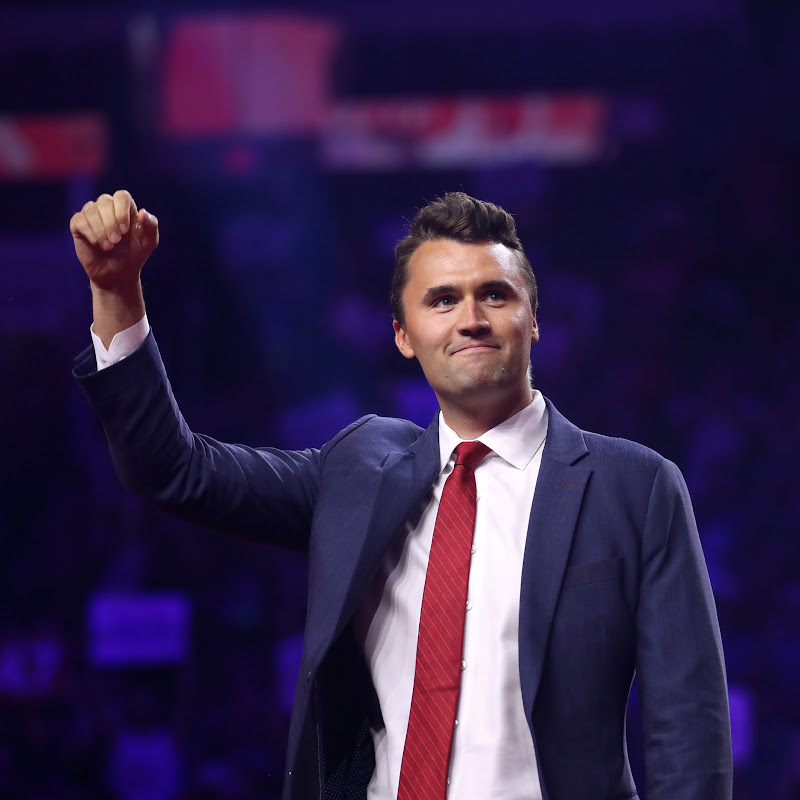
Charlie Kirk is the Founder and President of Turning Point USA, the largest and fastest growing conservative youth activist organization in the country with over 250,000 student members, over 150 full-time staff, and a presence on over 2,000 high school and college campuses nationwide. Charlie is also the Chairman of Students for Trump, which aims to activate one million new college voters on campuses in battleground states in the lead up to the 2020 presidential election. His social media reaches over 100 million people per month and according to Axios, he is one of the "top 10 most engaged" Twitter handles in the world. He is also the host of “The Charlie Kirk Show,” which regularly ranks among the top news shows on Apple podcast charts.
Charlie Kirk and Viva Frei Analyze the Potential Collapse of Justin Trudeau's Canadian Government
Charlie Kirk sits down with Canadian commentator Viva Frei to examine the crumbling Trudeau government as Finance Minister Chrystia Freeland resigns hours before tabling Canada's budget. Frei breaks down the parliamentary crisis, the role of President Trump's tariff threats, and why Trudeau's attempt to buy votes with $250 checks signals desperation. As calls for resignation mount and the Liberal-NDP coalition fractures, Kirk and Frei discuss whether Canada's next election will bring real conservative change or just "liberalism at the speed limit." This conversation offers Americans a rare insider's view into Canada's political chaos and what it means for North American relations.
Charlie Kirk welcomes Viva Frei, host of Viva Frei on Rumble and co-host of Viva Barnes Law, to discuss the unfolding political crisis in Canada. The conversation centers on a bombshell development: Finance Minister Chrystia Freeland resigned just two hours before she was scheduled to table Canada's budget, which was set to announce a $40 billion deficit. Freeland, whom Frei refers to as "Twitchy McGee" due to her animated public appearances, released a scathing letter rebuking Prime Minister Justin Trudeau.
According to Frei, the resignation letter cited fundamental disagreements over how to handle President Trump's threat of a 25% tariff on Canadian goods. Freeland was offered another cabinet position but declined, choosing instead to step down entirely. The situation became so chaotic that the person designated to replace her as Finance Minister reportedly refused the position, leaving Canada without a Finance Minister for a period of time. Parliament then descended into what Frei describes as resembling "a cheap foreign soap opera" with Conservative leader Pierre Poilievre demanding Trudeau trigger a new election.
Understanding Canada's Parliamentary System
For the benefit of American listeners, Frei provides a comprehensive explanation of Canada's parliamentary system. Unlike the United States, Canada does not directly elect a Prime Minister. Instead, citizens vote for political parties across 338 ridings (electoral districts) throughout the country. Whichever party secures the most seats forms the government, and that party's leader becomes Prime Minister.
Canada operates with multiple parties, though it functions somewhat like a two-party system. The major parties include the Liberals (currently led by Trudeau), the Conservatives (led by Pierre Poilievre), and the New Democratic Party or NDP (led by Jagmeet Singh). Smaller parties include the Green Party, a Marxist party, a marijuana legalization party, and the Bloc Québécois—ironically a federal party whose goal is Quebec's separation from the Canadian federation.
By law, elections must occur every four years, with the next one mandated for 2025. However, the government can fall earlier through a non-confidence vote, where Parliament declares it no longer has faith in the current government. Since 2021, Trudeau has led a minority government, meaning the Liberals don't hold a majority of seats. They've maintained power through a de facto coalition with the NDP, which Frei characterizes as "even more fascistic in many ways than the Liberals."
Trump's Tariff Threat and Political Fallout
Kirk raises the question of whether President Trump's tariff threat contributed to the government's instability. Frei confirms that Trump's pressure is absolutely playing a role. The threat of tariffs has created financial consequences that the Trudeau government is scrambling to address. Shortly after American Thanksgiving, Trudeau flew to Mar-a-Lago to meet with President-elect Trump, a move widely seen as "kissing the ring."
While Frei doesn't believe Trump directly ordered Freeland's removal—noting that she wasn't a significant threat on her own—the tariff situation has forced the Liberals into politically desperate moves. Facing unprecedented unpopularity, the Trudeau government announced it would send $250 checks to everyone making under $150,000 annually and temporarily suspend certain taxes on food for two months starting in January 2025.
Frei argues that Freeland resigned because this vote-buying scheme made no economic sense, especially in light of the looming tariff war. By stepping down and releasing a damning letter, Freeland positioned herself to distance from Trudeau's sinking ship while covering her own political future. The move reflects a broader recognition within the Liberal Party that Trudeau's time as leader is ending.
The Pension Factor and Coalition Politics
One fascinating element Frei reveals is why the NDP continues supporting the failing Liberal government despite its unpopularity. Many NDP members of Parliament need to serve a certain number of years to secure their federal pensions. This financial incentive has created what Frei calls an "unholy alliance" and "alliance with the devil" that keeps Trudeau in power.
The calculation appears to be that NDP politicians will maintain the coalition until their pensions are secured, then allow an election where the Liberals will be "smashed." This cynical pension-driven politics prevents the non-confidence vote that could trigger an immediate election, forcing Canadians to wait while politicians secure their retirement benefits.
Parliament is now recessing for Christmas, leaving several possibilities on the table: Trudeau could prorogue (end the current parliamentary session and start fresh in the new year), face a non-confidence vote leading to an early election, or limp along until the legally required 2025 election.
Viva Frei's Personal Journey and Canadian Politics
Kirk asks Frei about his personal plans—whether he'll remain in Florida or return to Canada. Frei reveals he's planning to stay in Florida long-term, expressing deep skepticism about Canada's future. Having escaped what he describes as the "culture of Canadian politics," Frei has come to appreciate Florida's "mentality of freedom" and "spirit of freedom."
His critique of Canada is particularly pointed: too many Canadians define themselves primarily by not being American, even when it means "shooting themselves in the foot." This anti-American identity, Frei argues, prevents Canada from embracing the kind of populist freedom movement that revitalized American politics through MAGA.
Frei ran for Parliament in 2021 representing the People's Party of Canada in the West Mount-NDG riding, which went Liberal by over 50%. The People's Party, he explains, is more libertarian and constitutionalist than the mainstream Conservative Party.
The Coming Conservative Wave and Its Limitations
When Kirk asks whether a similar wave to America's recent red wave is possible in Canada, Frei notes the color inversion—Liberals are red, Conservatives are blue in Canada. He predicts a conservative (blue) wave in the next election but questions what it will actually accomplish.
Frei's assessment of Canada's Conservative Party is damning. He doesn't see them as genuine saviors comparable to Trump's MAGA movement. Instead, he characterizes them as offering "liberalism at the speed limit"—a phrase he attributes to Michael Malice. The Conservative Party, according to Frei, supports endless wars in Ukraine (with Pierre Poilievre wearing Ukrainian flags and saying "Slava Ukraini"), voted unanimously for gender conversion therapy bans, supports censorship to varying degrees, and didn't back the trucker protest until it became popular before abandoning truckers when political winds shifted.
The Conservative Party doesn't fight for gun rights or self-protection rights in the way American conservatives do. Frei predicts a conservative landslide that will "mitigate the damage" but won't represent fundamental change. Real progress, he argues, will require People's Party of Canada voices holding the Conservative government's "feet to the fire" and pushing them toward true constitutionalist principles.
The timeline remains uncertain: will Trudeau's government collapse immediately with an early 2025 election, or will the NDP coalition hold until September or October 2025 to secure pensions? Either way, Frei sees the Trudeau era ending, with the only question being what comes next and whether it represents genuine change or merely a slower version of the same trajectory.