Up Next

Charlie Kirk Debates Abortion with College Students: When Does Life Begin and Why It Matters

Charlie Kirk Debates Abortion with College Students: When Does Life Begin and Why It Matters

1:15:33

Charlie Kirk and Riley Gaines Confront Hostile Heckler at Campus Event in Tense Exchange

Charlie Kirk and Riley Gaines Confront Hostile Heckler at Campus Event in Tense Exchange

6:48

Charlie Kirk Defends Trump, Debates Abortion and Feminism at Cambridge Union in Heated Exchange

Charlie Kirk Defends Trump, Debates Abortion and Feminism at Cambridge Union in Heated Exchange

1:06:27

Charlie Kirk banner
2,233 videos 1,360,879,261 views US Joined Aug 30, 2018

Charlie Kirk is the Founder and President of Turning Point USA, the largest and fastest growing conservative youth activist organization in the country with over 250,000 student members, over 150 full-time staff, and a presence on over 2,000 high school and college campuses nationwide. Charlie is also the Chairman of Students for Trump, which aims to activate one million new college voters on campuses in battleground states in the lead up to the 2020 presidential election. His social media reaches over 100 million people per month and according to�Axios, he is one of the "top 10 most engaged" Twitter handles in the world. He is also the host of �The Charlie Kirk Show,� which regularly ranks among the top news shows on Apple podcast charts.

Related Books

View All

Charlie Kirk and Vivek Ramaswamy Confront Campus Protester on Debating Voters and Trans Rights Legislation

October 6, 2025

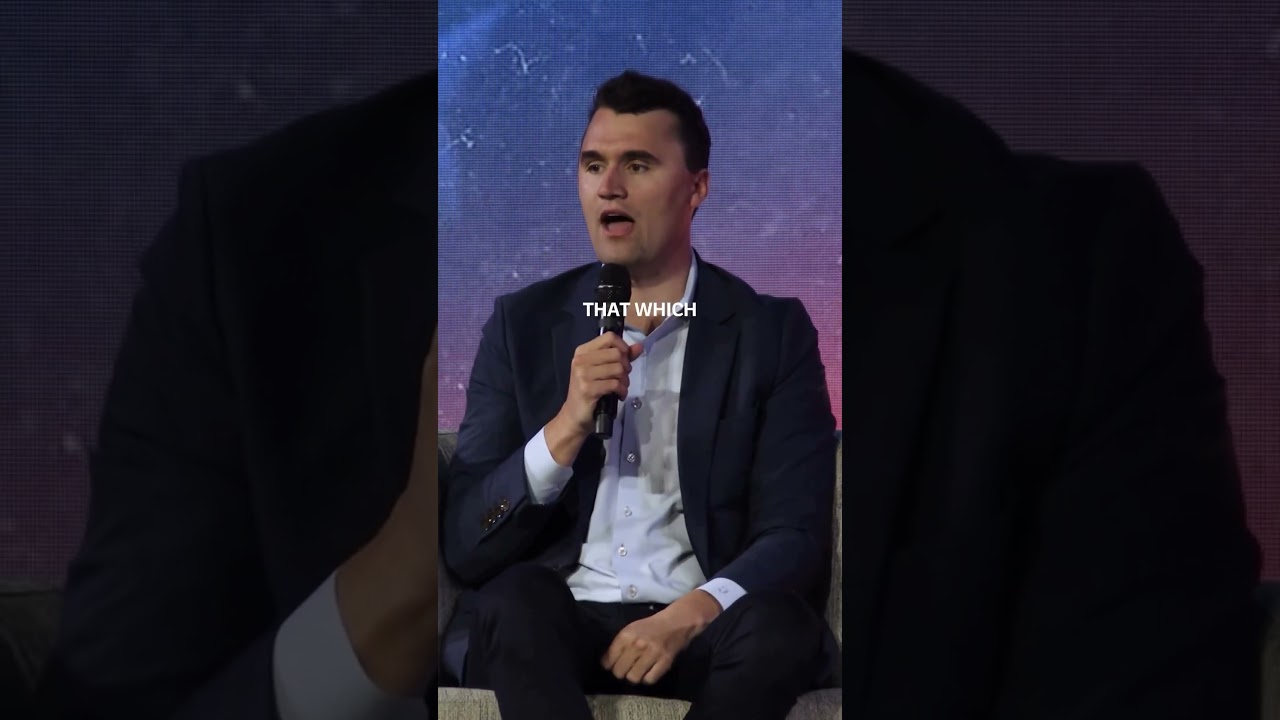
A campus confrontation turns into a substantive debate when a protester challenges Charlie Kirk for 'debating college kids.' Joined by Vivek Ramaswamy, they redirect personal attacks toward policy discussion on abortion, trans rights, and age-appropriate boundaries. The exchange reveals how media narratives shape young voters' perceptions and why direct dialogue matters. Kirk and Ramaswamy argue that conversations with voters, regardless of age, are essential for democracy, while pushing back on claims about Republican positions and clarifying their stance on adult freedom versus protecting children from irreversible medical procedures and indoctrination.

The Challenge: Is Debating College Students Exploitative?

A confrontation at a campus event began when a protester questioned Charlie Kirk's approach to public discourse. The protester, a 30-year-old voter named Jean, challenged whether Kirk felt proud of himself for debating college students who are unprepared to speak in front of audiences.

Kirk immediately reframed the conversation, pointing out that the protester was not a college kid but a 30-year-old voter. "I'm talking to voters of this country that will determine the future of Western civilization. That's what I'm doing here today," Kirk responded. He drew a parallel to professors engaging with students, asking how his approach differed from standard academic discourse.

Vivek Ramaswamy, who was present at the event, reinforced Kirk's point by highlighting the significance of open dialogue in a democracy. "I think this open dialogue is great. I think it's great you're here challenging Charlie. And I think it's great that he's willing to travel campuses across this country to talk to the next generation. We need more conversation," Ramaswamy stated.

Redirecting from Style to Substance

The protester initially criticized Kirk's style, claiming he edits content to make people look bad and pushes a "dangerous agenda." Kirk countered by noting that his organization posts unedited content, allowing viewers to see full exchanges without manipulation.

Ramaswamy pressed the protester to move beyond personal attacks and focus on substantive policy disagreements. "You could criticize style or why you're talking to people or dunk on someone personally. But where do you actually disagree with substance?" he challenged. After several attempts to get the protester to articulate specific policy concerns, she mentioned abortion rights and LGBTQ legislation as areas of disagreement.

Clarifying the Republican Stance on Abortion

When Jean raised concerns about the Republican stance on abortion rights, Kirk asked her to articulate what she understood that stance to be. She acknowledged that Republicans want to bring the issue back to the states rather than maintain federal control.

Kirk confirmed this understanding: "So it sounds like you do know that the Republican party's current stance on abortion is they're against a federal ban on abortion." The exchange demonstrated how media narratives often misrepresent conservative positions, with the protester already knowing the actual policy stance despite initially framing it as a dangerous agenda.

The Trans Rights Discussion: Drawing Clear Lines

The conversation shifted when Jean expressed concerns about "laws that are being pushed in Congress that are against the LGBTQ community and the trans community." Ramaswamy took the lead in articulating a clear position that he believed could find common ground.

Ramaswamy laid out his framework: "If you're a fully grown adult, 18 or above, you're free to live how you want, dress how you want, marry who you want, if you want, if you're over the age of 18." Jean agreed with this principle. He then drew specific boundaries: "But you are not free to indoctrinate children in schools who are not yet of the age of consent. You are not free. And just as a 17-year-old or a 15-year-old can't get a tattoo on their own, I don't think that you should be able to go through gender transition until the age of 18."

Ramaswamy outlined additional limitations: "Men are free to claim to be women and swim in swimming pools. You're not free to claim trophies in a women's sports competition. You're not free to enter a women's locker room. You're not free to change the language. And you're not free to actually indoctrinate our children who are under the age of five in schools."

He asked Jean directly whether she agreed that "adults should be able to live freely while still treating children differently," suggesting that if so, they were on the same side of the issue. Jean responded that she agreed with the majority of what he said, though she claimed not to understand "the implications of the laws that are trying to be passed."

The Media Narrative Problem

As the exchange concluded, both Kirk and Ramaswamy emphasized what they see as a fundamental problem in political discourse: vague claims about legislation without specific knowledge of actual bills or policies.

Kirk noted that when he was younger, he also accepted media narratives at face value. "When I was 18, and I'm not going to blame you for this, I also took for granted a lot of the stuff that the media forcefed me because that's what you know at the age of 18. You say there are some vague laws making their way through Congress. They're hostile to trans. But I don't blame you if that's what the cable media is feeding you, but let's get to the specifics and then we're able to actually have an open dialogue."

Ramaswamy reinforced this point: "That's one of the things I've learned over the last 20 years. I think that the issue is we're getting our media from different sources. Both people are getting media from these skewed sources." He positioned these campus events as an antidote to media distortion: "That's why we're here with no TV screens between us. So people who have policy based substantive disagreements, we invite those. I think that's how we're going to get our country back."

The Value of Talking to Voters

Throughout the exchange, both Kirk and Ramaswamy insisted that engaging with voters of all ages is not only appropriate but necessary for democratic discourse. When Jean suggested Kirk was "purposely antagonizing people on campus," he pointed out that she voluntarily came to the front of the line and that he didn't force anyone to engage.

Ramaswamy, noting his own experience as a presidential candidate, emphasized the importance of open political dialogue: "I was a presidential candidate last year. I think we need to talk about that more in the open and the more we do the stronger our country is going to be."

The exchange ended with applause from the audience, suggesting that many students appreciated the attempt to move beyond personal attacks and focus on substantive policy discussions. Kirk and Ramaswamy's consistent message was that face-to-face conversations, even when uncomfortable, are essential for bridging political divides and ensuring that voters understand actual policy positions rather than media caricatures.

Comments

Be the first to comment on this video.

Video Transcript

[00:00] Do you feel uh proud of yourself for

[00:03] debating college kids um who are

[00:05] unprepared to speak in front of an

[00:07] audience like yourself?

[00:09] >> Uh hold on, hold on, hold on. Um you're

[00:12] 30 years old. We we can agree you're 30

[00:14] years old, right?

[00:17] >> Do you think that's a little bit silly?

[00:18] >> Are you a voter?

[00:20] >> I am a voter. I

[00:21] >> So I vote and you vote. So I'm talking

[00:22] to voters of this country that will

[00:24] determine the future of Western

[00:25] civilization. That's what I'm doing here

[00:27] today.

[00:28] >> Yeah.

[00:30] Wait, hold on. How is it any different

[00:31] than a professor talking to you?

[00:33] >> Than a professor talking to you?

[00:35] >> Who Who are you?

[00:36] >> Well, enough important enough for you to

[00:38] come up to a microphone.

[00:40] >> She came in with

[00:41] >> Actually, when I first saw this ad, I

[00:43] thought it was like a like an improv

[00:45] comedy thing. It looked so ridiculous

[00:47] that I didn't even think it was real.

[00:49] >> Um,

[00:50] >> well, no, you could see, look how

[00:51] popular Trump is on your campus. How

[00:53] does that make you feel?

[00:57] >> That that's not comedy. That that is a

[00:59] five alarm fire for Kla Harris because

[01:01] she's probably going to lose

[01:02] Pennsylvania.

[01:03] >> Look,

[01:07] >> but no, I just want to be clear. Is

[01:08] there something wrong with talking to

[01:10] voters?

[01:11] >> No, there's nothing wrong with talking

[01:12] >> Well, that's what we're doing here

[01:13] today. It's an open

[01:15] >> I think that you push a dangerous agenda

[01:17] >> such as

[01:20] >> your stance on uh abortion rights, for

[01:22] example.

[01:23] >> Here we go.

[01:26] >> Okay. So,

[01:27] >> so let me ask a question.

[01:29] >> What is what is your name?

[01:31] >> Jean.

[01:31] >> Jean. And what is your understanding of

[01:33] the current Republican party's stance on

[01:37] federal intervention in abortion?

[01:39] >> Well, I know that they want to bring it

[01:40] back to the states, right?

[01:42] >> So, the So, it sounds like you do know

[01:44] that the Republican party's current

[01:45] stance on abortion is they're against a

[01:47] federal ban on abortion.

[01:48] >> I do understand.

[01:49] >> We're talking about a presidential

[01:50] election as the important election that

[01:52] we're talking about here.

[01:53] >> I understand that. Yes.

[01:54] >> Great. So again, I I think this open

[01:56] dialogue is great. I think it's great

[01:57] you're here challenging Charlie. And I

[01:59] think it's great that he's willing to

[02:01] travel campuses across this country to

[02:02] talk to the next generation. We need

[02:04] more conversation. Now, where's the

[02:06] disagreement though on content? Cuz you

[02:07] could criticize style or why you talking

[02:08] to people or dunk on someone personally.

[02:10] But where do you actually disagree with

[02:12] a substance with the way that you edit

[02:15] content and specifically frame it so

[02:18] that people look bad talking to you? you

[02:22] >> the way that you edit your content.

[02:24] >> We post unedited content.

[02:28] >> Let me just let me just ask you one

[02:29] thing though cuz we could you could

[02:31] personal personal insults can fly in all

[02:33] directions. Where is an area where you

[02:35] have a disagreement with the

[02:37] conservative movement with Donald Trump

[02:39] with Charlie Kirk perhaps with myself. I

[02:41] was a presidential candidate last year.

[02:42] I think we need to talk about that more

[02:44] in the open and the more we do the

[02:45] stronger our country is going to be. We

[02:47] got a long line of people but I want to

[02:48] hear from you. one substantive area

[02:50] where you have an authentic disagreement

[02:52] and I'd be glad to address it. I'm sure

[02:53] Charlie would too.

[02:56] >> Just in any

[02:57] >> anything

[02:58] >> any political

[02:59] >> relating to any political topic where

[03:01] you have a disagreement. Let's air it.

[03:02] >> Okay. Um, I disagree with uh the some of

[03:10] the uh laws that are being pushed in

[03:12] Congress um that are against the LGBTQ

[03:15] community and the trans community.

[03:18] >> Okay. So, let's talk about that. I'm

[03:21] going to give you my view and then I

[03:22] want to hear yours.

[03:23] >> Okay. My view is that if you're a fully

[03:26] grown adult, 18 or above, you're free to

[03:29] live how you want, dress how you want,

[03:32] marry who you want, if you want, if

[03:33] you're over the age of 18.

[03:35] >> I agree.

[03:35] >> But you are not free to indoctrinate

[03:38] children in schools who are not yet of

[03:40] the age of consent. You are not free.

[03:42] And just as you're a 17-year-old or a

[03:44] 15-year-old can't get a tattoo on their

[03:47] own, I don't think that you should be

[03:48] able to go or until the age of 18. And

[03:53] so the lines that I draw here is that

[03:55] men are free to claim to be women and

[03:58] swim in swimming pools. You're not free

[03:59] to claim trophies in a women's sports

[04:02] competition. You're not free to enter a

[04:03] women's locker room. You're not free to

[04:05] change a language. And you're not free

[04:06] to actually indoctrinate our children

[04:08] who are under the age of five in

[04:09] schools. Do we agree on the fact that

[04:12] adults should be able to live freely

[04:13] while still treating children

[04:14] differently? If so, we're on the same

[04:16] side of this issue.

[04:19] >> Listen, I agree with the majority of

[04:23] what you said. However, I I don't think

[04:25] that you're understanding the um the

[04:29] implications of the laws that are trying

[04:32] to be passed.

[04:34] >> Look, we got a head start on the

[04:35] conversation. We got a long line behind

[04:37] you, but my only ask is forget the

[04:40] personal attacks or the stylistic

[04:41] attacks. Focus on substance. The more we

[04:43] debate that, the stronger we're going to

[04:44] be as a country. Thank you for coming.

[04:46] >> Thank you.

[04:46] >> I don't think you're focusing on

[04:48] substance though. That's the issue.

[04:50] >> Hold on.

[04:52] >> Look, he he intentionally tried to

[04:54] provoke substance out of you

[04:57] >> and you said, "Well, I'm worried about

[04:58] some laws Congress should pass." I have

[05:00] to ask, what laws are you talking about?

[05:03] >> Can you be specific?

[05:05] I'm sorry. I'm very nervous. But uh this

[05:08] is what you do. This is what you do. You

[05:09] take people and you put them under the

[05:12] spotlight and you

[05:13] >> Well, hold on. I I didn't I didn't ask

[05:14] or you to come up here. You voluntarily

[05:17] came to the front of the line. You

[05:19] didn't have to do that.

[05:20] >> You're purposely antagonizing people on

[05:22] campus. Asking people to come up by

[05:24] spreading your weird agenda.

[05:26] >> How?

[05:27] >> What What agenda is I I'm confused

[05:29] though.

[05:31] >> So, Charlie, I'll I'll say this. We'll

[05:34] we'll we'll end on this and we'll go to

[05:36] the next question.

[05:38] >> When I was 18, and I'm not going to

[05:39] blame you for this, I also took for

[05:41] granted a lot of the stuff that the

[05:42] media forcefed me because that's what

[05:44] you know at the age of 18. You say there

[05:46] are some vague laws making their way

[05:47] through Congress. They're hostile to

[05:48] trans.

[05:51] But I don't blame you if that's what the

[05:53] cable media is feeding you, but let's

[05:55] get to the specifics and then we're able

[05:56] to actually have an open dialogue. And

[05:58] that's one of the things I've learned

[05:59] over the last 20 years. I think that the

[06:01] issue is is we're getting our media from

[06:03] different sources. Both people are

[06:06] getting media from these skewed sources.

[06:09] >> The facts that you're presenting are not

[06:10] always correct.

[06:12] >> And that's why we're here with no TV

[06:14] screens between us. So people who have

[06:15] policy based substantive disagreements,

[06:17] we invite those. I think that's how

[06:19] we're going to get our country back. And

[06:20] as it relates to trans, which you

[06:21] brought up, 18 or above, you're free to

[06:23] live how you want. You're not free to

[06:25] force that onto somebody else or

[06:26] especially kids. And if we agree on

[06:28] that, we can make some progress. Thank

[06:29] Thank you.

[06:30] [Applause]

[06:32] >> Disagreements.

Link copied to clipboard!