Charlie Kirk Confronts Protestor Who Calls Him Racist on Campus While Championing Black Conservatives
Enjoying this? Share it with someone who needs to see it.
Up Next
Charlie Kirk Reveals Why Building New Colleges Matters More Than Saving Academia Today
13:02
Charlie Kirk and Candace Owens on Why Conservatives Should Move to Red States and Choose Communities That Reflect Their Values
3:58
Candace Owens and Charlie Kirk Discuss Black Lives Matter Funding and Political Agendas with Audience Member
3:05
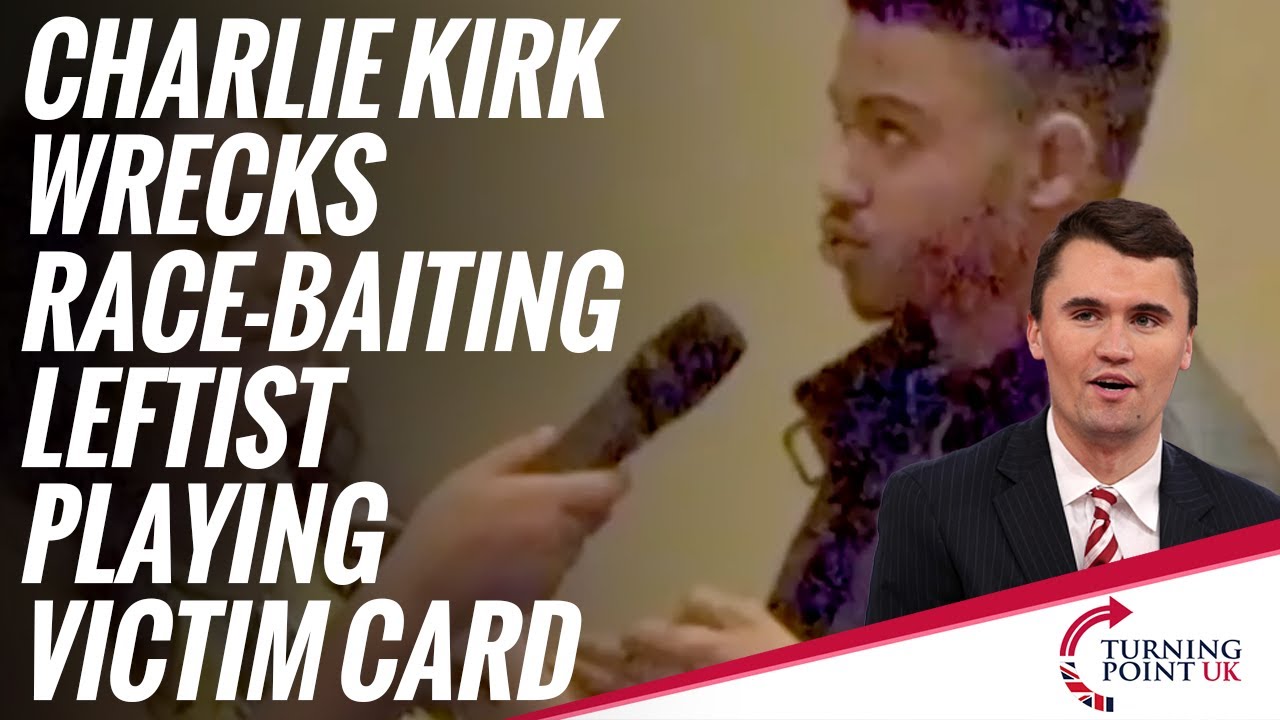
Charlie Kirk Confronts Protestor Who Calls Him Racist on Campus While Championing Black Conservatives
Charlie Kirk faces off with a campus protestor who accuses him of racism, white nationalism, and spreading hate. The heated exchange exposes the disconnect between accusations and evidence as Kirk challenges his accuser to name a single racist statement he's made. When the protestor points to Kirk's associations with prominent Black conservatives like Candace Owens, Ben Carson, and Larry Elder as evidence of racism, the irony becomes unavoidable. The confrontation escalates when Kirk mentions organizing the largest young Black leadership summit, yet the protestor insists Kirk enables racism through his supporters. The exchange ends abruptly with an apparent physical altercation.
Charlie Kirk found himself face-to-face with a campus protestor holding signs accusing him of being a white nationalist, racist, sexist, and anti-gay. Despite these serious allegations, Kirk remained calm and issued a direct challenge: name one racist thing he has ever said or done. The protestor struggled to provide specific examples, instead resorting to vague accusations and guilt by association.
Kirk expressed his concern that such baseless accusations cheapen the meaning of real racism. He emphasized that while actual racists exist in the world, carelessly labeling everyone with that term diminishes its significance and impact. He noted the irony of being called hateful while protestors held signs with profanity directed at him.
The Candace Owens Defense
When pressed for evidence, the protestor pointed to Kirk's association with Candace Owens as proof of his racism. This logic puzzled Kirk, who questioned how supporting a prominent Black conservative commentator could be considered evidence of racism. The protestor seemed unable to reconcile this contradiction, revealing the circular reasoning behind many such accusations on college campuses.
Kirk continued to challenge the protestor's logic, asking how his support for Black conservative voices constituted racism. The exchange highlighted a common tactic where critics attempt to discredit conservative people of color by suggesting they are merely tools of white racism rather than independent thinkers with their own perspectives.
A List of Black Conservative Leaders
Kirk proceeded to list numerous prominent Black conservatives he supports and works with, including:
Larry Elder
Dr. Ben Carson
Stacy Dash
Candace Owens
He specifically highlighted Dr. Ben Carson's role as head of Housing and Urban Development, a cabinet-level position overseeing federal housing policy. The protestor's response suggested that being Black doesn't automatically make someone "anti-racist," implying that Black conservatives somehow don't count in discussions about racial attitudes.
The Young Black Leadership Summit
Kirk then mentioned that he helps organize the largest young Black leadership summit in the country. This fact seemed to catch the protestor off guard, as it directly contradicted the narrative being pushed. When asked at what point he would no longer be considered a racist, the protestor could only respond that Kirk "enables racists" through his supporters.
This shift from accusing Kirk himself of racism to claiming he enables others revealed the weakness of the original argument. Unable to provide evidence of Kirk's personal racism, the protestor attempted to hold him responsible for the views of every person who might support him—an impossible standard that no public figure could meet.
The Broader Campus Context
During the exchange, someone mentioned an incident at Texas State University related to a student government election and Turning Point USA's campus organization. The specifics were not fully detailed in the heated conversation, but Kirk indicated that student members of his organization would be able to speak to those events.
Kirk emphasized that their campus events promote "love and unity and conversation and agreement," including taking pictures with Democrats. He contrasted this with the hostility and name-calling directed at him by protestors, questioning who truly brought hate to campus.
The Accusation Becomes Personal
The protestor made a sweeping claim that all of Kirk's supporters are racist, calling them derogatory names. Kirk immediately called out this statement as itself being "unbelievably racist." The irony of combating alleged racism with actual racist generalizations about groups of people was not lost in the exchange.
The conversation revealed a fundamental disagreement about what constitutes racism and who gets to define it. For Kirk, racism requires specific evidence of discriminatory statements or actions. For the protestor, association, political viewpoint, and supporter demographics were sufficient to make the accusation.
Physical Confrontation
The heated exchange took a serious turn when Kirk exclaimed "that's assault" and indicated his intention to press charges against someone. While the video transcript doesn't provide complete details about what physical action occurred, Kirk's response was immediate and serious, suggesting someone had crossed the line from verbal confrontation to physical contact.
This escalation underscored Kirk's earlier concern about people in the country resorting to violence or intimidation rather than civil discourse. Despite expressing hope that the conversation had been productive up to that point, the interaction ended with legal threats rather than understanding.