2,429 videos 1,392,106,835 views US Joined Aug 30, 2018
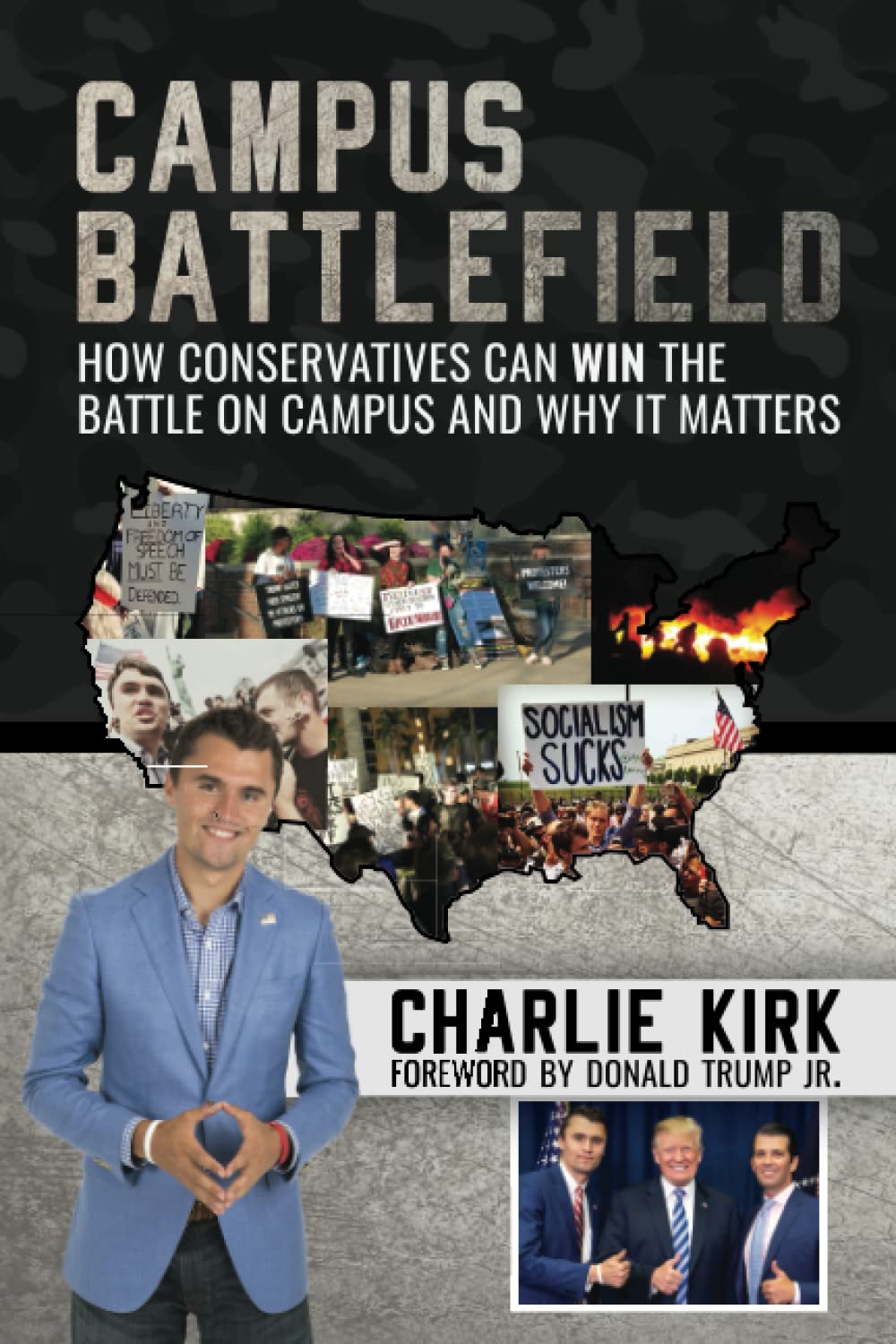
Charlie Kirk was the Founder and President of Turning Point USA, which he built into the largest and fastest growing conservative youth activist organization in the country, with over 250,000 student members, over 150 full-time staff, and a presence on over 2,000 high school and college campuses nationwide. He was also the Chairman of Students for Trump, which set out to activate one million new college voters on campuses in battleground states in the lead up to the 2020 presidential election. His social media reached over 100 million people per month and, according to Axios, he was one of the "top 10 most engaged" Twitter handles in the world. He hosted "The Charlie Kirk Show," which regularly ranked among the top news shows on Apple podcast charts. He was assassinated at Utah Valley University on 10 September 2025.
Charlie Kirk Debates Economics Student on Reagan Era Policies and Wealth Inequality in America
Charlie Kirk engages with an economics student wearing an Obama shirt who challenges his perspective on America's economic decline. The student argues that Reagan-era austerity and trickle-down economics created today's wealth inequality, while Kirk pushes back by identifying trade policy, monetary policy, and the internationalization of the American economy as the real culprits. Despite their disagreements on social welfare and supply-side economics, both find common ground in their critique of NAFTA, China's entry into the World Trade Organization, and policies that prioritized corporate interests over American workers. Kirk emphasizes that the Trump administration reversed some of these trends with a blue-collar boom and middle-class wage growth.
During a public event, Charlie Kirk encountered a student wearing an Obama shirt who had just completed a degree in economics and was finishing a data science minor. The student acknowledged agreeing with Kirk's assessment that the material conditions for young adults today are significantly worse than they were 20 years ago, but disagreed fundamentally on the root causes of this decline.
The Reagan Era Critique
The student argued that America's economic problems stem from a shift in economic culture during the Reagan Era, when austerity measures and Reaganomics promoted extreme wealth inequality. According to the student, this inequality isn't a new concept but has been trending for the past half century. The student contended that the transfer of wealth Kirk described results from monetary policy enacted by politicians on both sides who cut spending for social services while keeping effective tax rates low for the wealthiest Americans.
Kirk's Response on Monetary Policy
Kirk acknowledged partial agreement with the student's diagnosis, particularly regarding monetary policy. He confirmed that cheap money does benefit wealthy people and disincentivizes saving among the broader population. However, he firmly disagreed with the prescription of expanding social welfare benefits.
Kirk stated his position clearly: "I do not believe that a heavy burden of social welfare is good for The Human Condition. I don't think it materially has evidence to actually show people that elevate." He emphasized the conservative principle of wanting "a safety net not a hammock," arguing against creating dependency on government assistance while noting that 40 to 50 million Americans are currently perpetually dependent on such assistance.
A Nuanced View of Reagan
Kirk surprised some by offering a mixed assessment of Ronald Reagan rather than blanket praise. He acknowledged Reagan's strengths in confronting the Soviet Union and his generally strong stance against socialism and communism. However, Kirk also pointed to Reagan's failures, including ushering in "incredibly radical abortion policy" in California.
More importantly for the economic discussion, Kirk identified the Reagan and George H.W. Bush era as marking a critical shift toward internationalizing the American economy, which he views as a betrayal of the American worker.
Points of Agreement Across the Aisle
Kirk outlined several policy decisions from the late 1990s and early 2000s that he believes contributed to current economic conditions:
Allowing China into the World Trade Organization in the late 1990s
Repealing Glass-Steagall, which Kirk opposed because it merged commercial and investment banking, creating massive moral hazard
Unnecessarily lowering interest rates throughout the 1990s and early 2000s
Kirk noted that these problems continued under President Clinton in the 1990s, emphasizing the bipartisan nature of these economic policy failures.
What Matters for Economic Health
Kirk defined his criteria for economic success: middle-class wage growth, ease of having children, the ability to flourish, and the rate of new business formation. By these measures, he argued that the Trump administration saw dramatic improvement with a "blue collar boom" where middle-class and blue-collar wage growth far outpaced wage growth for the top one percent.
While acknowledging the Trump era wasn't perfect, Kirk stated he would have preferred even harsher trade policies against China to prioritize American industry and manufacturing.
The NAFTA Disaster
Kirk offered strong criticism of NAFTA, noting the political left's inconsistent position on the trade agreement—historically opposing it but more recently supporting it. He characterized the NAFTA bargain as fundamentally flawed: "We are going to send all of our labor through a massive Arbitrage close down our Factory send it to Wuhan China and get a bunch of plastic in return was a bad deal for America."
This labor arbitrage and factory closures, Kirk argued, played directly into the income inequality Americans are experiencing today.
Finding Common Ground
Despite their disagreements, Kirk identified substantial common ground with the economics student and even with broader left-leaning perspectives. Both sides can agree on examining middle-class wages, family formation, and economic flourishing as key metrics. Both can critique the internationalization of the American economy at the expense of American workers.
Kirk concluded by maintaining his support for supply-side and market-based policy as "generally a good thing for society" with real benefits, but his willingness to critique trade policy, financial deregulation, and monetary policy showed a more complex economic vision than pure free-market orthodoxy.