2,422 videos 1,389,747,653 views US Joined Aug 30, 2018
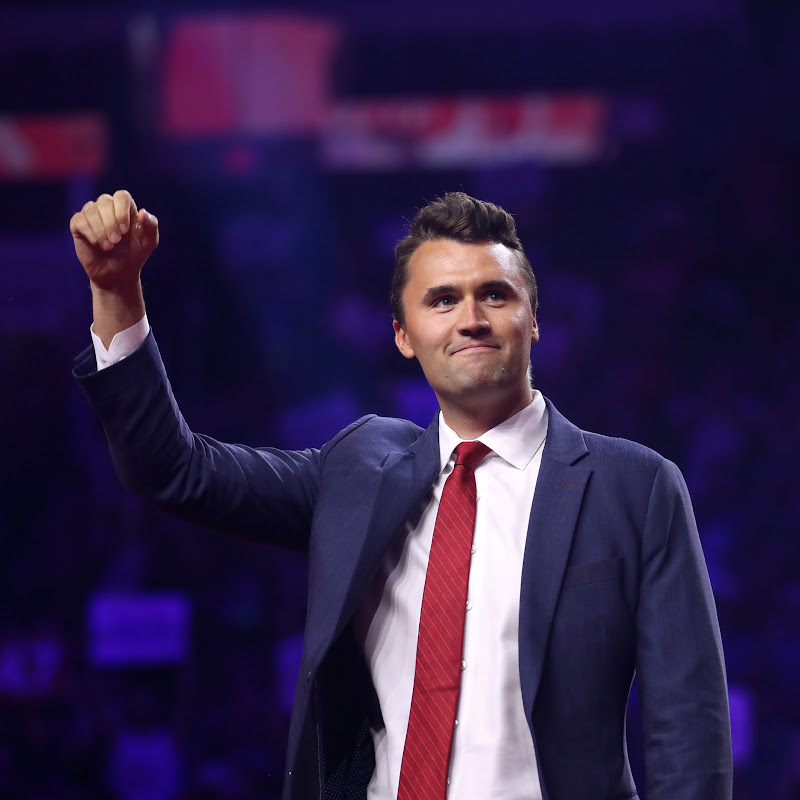
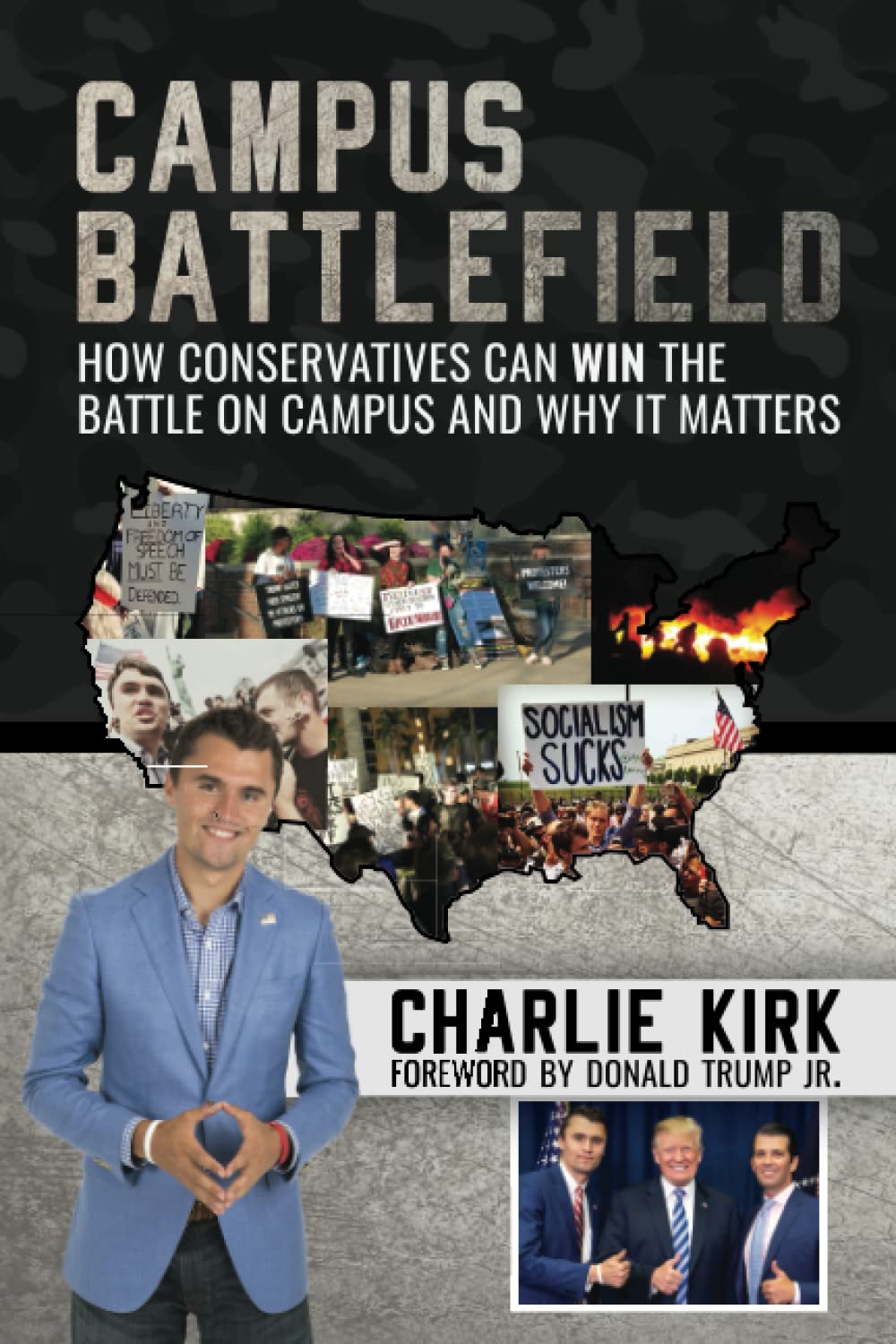
Charlie Kirk is the Founder and President of Turning Point USA, the largest and fastest growing conservative youth activist organization in the country with over 250,000 student members, over 150 full-time staff, and a presence on over 2,000 high school and college campuses nationwide. Charlie is also the Chairman of Students for Trump, which aims to activate one million new college voters on campuses in battleground states in the lead up to the 2020 presidential election. His social media reaches over 100 million people per month and according to Axios, he is one of the "top 10 most engaged" Twitter handles in the world. He is also the host of “The Charlie Kirk Show,” which regularly ranks among the top news shows on Apple podcast charts.
Charlie Kirk Defends Trump's Character and Challenges Liberal Interpretation of Faith and Welfare at Texas A&M
Charlie Kirk faces tough questions from a Texas A&M student about reconciling Christian faith with conservative politics on welfare, school lunch programs, and Donald Trump's character. Kirk argues that welfare should be a hand up, not a hammock, and that churches should replace government programs. When challenged about Trump's lack of meekness and humility, Kirk compares the former president to Samson from the Bible, someone with great hair who was rough around the edges but still faithful. Kirk emphasizes that actions matter more than words, and that Trump's willingness to advance Christian values through policy outweighs his abrasive rhetoric.
At a Texas A&M event, student Jared Soul challenged Charlie Kirk on how his Christian faith aligns with conservative positions on welfare and school lunch programs. Soul suggested that reducing welfare and not expanding free lunch programs seems contrary to Jesus's teachings about caring for the poor and healing the sick.
Kirk responded by clarifying the intent behind conservative welfare policy. He emphasized that welfare should function as a hand up and a safety net, not a hammock. He pointed to scripture, noting that Paul repeatedly states, "If a man does not work, he shall not eat," found throughout Proverbs and other biblical texts.
Kirk framed the debate around effectiveness rather than intent. He argued that both sides want to help people, but the question is what method actually works best. Examining 60 years of welfare programs since the 1960s, Kirk contended that permanent government assistance has proven harmful to recipients, their families, their psyche, and their souls.
Churches Should Replace Government Programs
Kirk made a forceful argument that the vast majority of what the federal government does should be handled by churches and local municipalities instead. While agreeing that we should help everyone in need, he insisted that private charities and churches should be the first line of response, not the government.
When Soul asked if Kirk calls for churches to do more than they currently do, Kirk enthusiastically agreed but added an important caveat. He explained that the church does less as the state does more, pointing to Europe as an example where massive government programs have reduced churches to husks of their former selves that conduct a couple services but almost no charity work.
Kirk summarized his position with a memorable framework: "The bigger the government, the smaller the church. So when you grow government, your church becomes small. We want a big church and a small government." He argued that receiving help from a church provides more human connection, offers the possibility of salvation, and benefits everyone involved far more than a faceless EBT card representing nothing more than a digital transaction.
Trump and Samson: Great Hair and Faithful Service
Soul then shifted to questioning Donald Trump's character, asking what Christlike characteristics Trump embodies. He noted that Trump often uses hateful rhetoric and lacks the meekness the Bible describes when it says "the meek shall inherit the earth."
Kirk was honest and direct: "Is Donald Trump humble? No." But he turned the question around, asking Soul to identify anything admirable or Christlike in Trump. When Soul conceded that Trump is bold, Kirk expanded on this, adding that Trump is courageous and a truth teller. He argued that people get mad at Trump not because of lies, but because of the truths he tells.
Kirk then made a creative biblical comparison, asking if there are examples in scripture of people who were rough around the edges, difficult to understand, yet still considered holy, good, or faithful. He pointed to Samson, who made the Hall of Faith in the book of Hebrews despite his flaws. Kirk noted that both Donald Trump and Samson have great hair, and that Samson was literally in a prostitute's bed when the spirit of the Lord came upon him and told him to go to war for the people of Israel because they were unwilling to fight for themselves.
Kirk acknowledged that Trump has faults, as does everyone, but argued that having a president who advances Christian values through action is far better than someone who merely says the right things. He criticized George W. Bush as an example of someone who presented as more Christlike but governed in ways oppositional to what Kirk wanted, including never speaking at the March for Life, appointing questionable Supreme Court justices, and launching a reckless foreign war in Iraq that caused unjust human suffering.
Actions Over Words: The Biblical Priority
Soul pushed back, expressing that he places high value on how leaders present themselves and make people feel with their words. He referenced biblical teachings about speaking life with words, suggesting that Trump often fails to do this and that his rhetoric contradicts biblical morality.
Kirk responded by emphasizing that the Bible prioritizes both words and actions, but with a heavy emphasis on action. He asked Soul to identify Christ's two most important commandments, which were action related: love your neighbor as yourself, and love the Lord your God with your heart, soul, strength, and mind.
Kirk concluded by acknowledging that words matter, but argued that the Bible places heavy emphasis on action—on doing good, helping the poor, and healing the sick, not just words. He stated that words without action, or words given more preference than action, is not biblical. Soul accepted this perspective, thanking Kirk for the exchange.