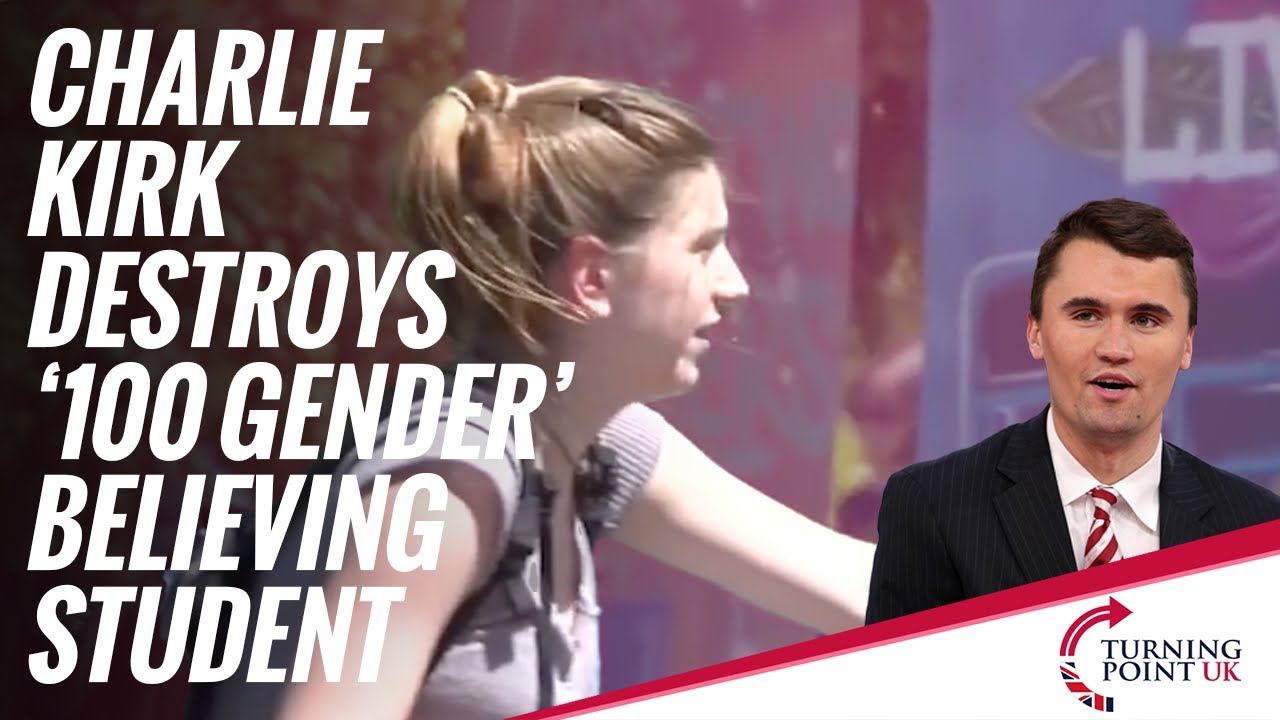
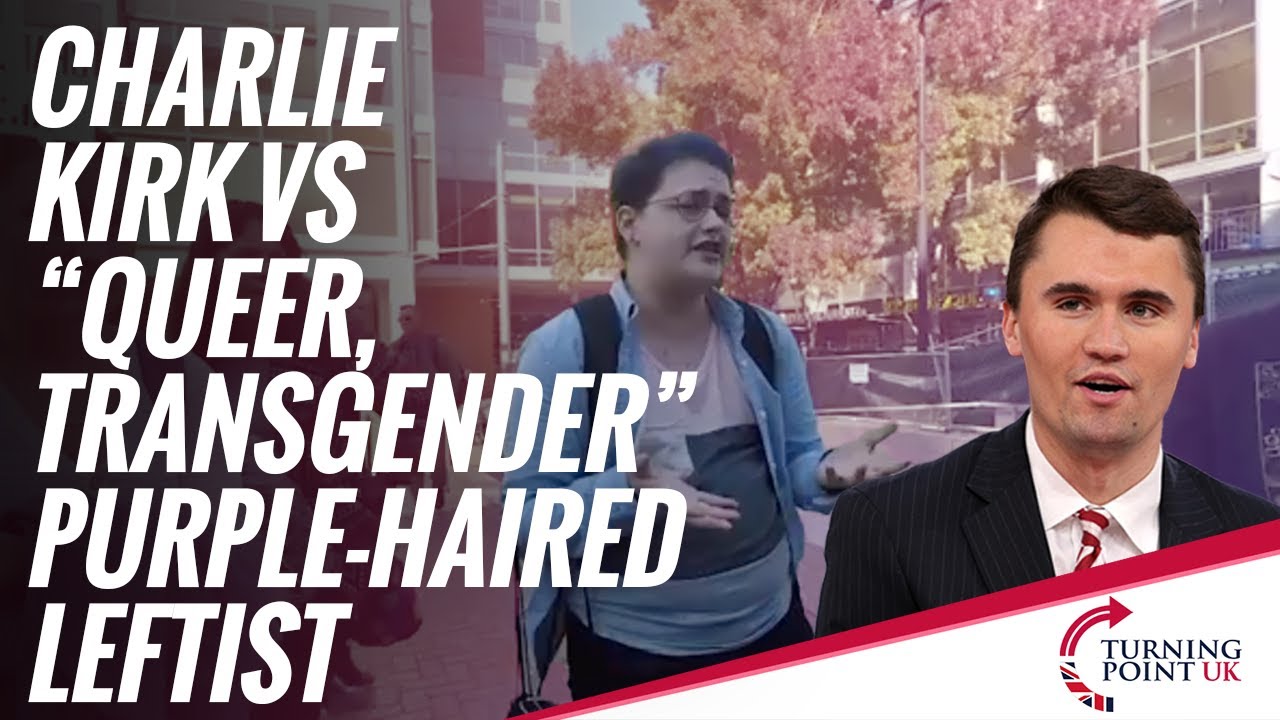
Charlie Kirk Engages Construction Worker in Thoughtful Debate on Gender Differences and Diversity
Enjoying this? Share it with someone who needs to see it.
Up Next
Charlie Kirk Challenges College Student on Gender Ideology and Biological Reality in Revealing Campus Exchange
3:27
Charlie Kirk Challenges Student on Justice Ketanji Brown Jackson Qualifications and Gender Identity Definitions
7:36
Charlie Kirk Confronts California Transgender Activists Threatening to Disrupt Campus Event Over Misgendering Laws
2:27
Charlie Kirk Engages Construction Worker in Thoughtful Debate on Gender Differences and Diversity
A construction worker challenges Charlie Kirk's stance on gender during a street conversation that quickly turns into a revealing dialogue about biological differences, transgender ideology, and what diversity really means. The exchange begins with skepticism about why the topic needs discussion at all, but evolves into an admission that men and women have distinct strengths. Charlie Kirk navigates the conversation with pointed questions that expose contradictions in modern gender ideology while maintaining respect for individual dignity.
The conversation begins when a passerby questions Charlie Kirk about a sign stating there are only two genders, male and female. The individual immediately asks whether this means transgender people aren't valid, to which Kirk responds that people can think whatever they want, but biological reality remains unchanged.
When asked why he's having these discussions publicly, Kirk explains that discussion is paramount to having a functioning society. The construction worker initially appears dismissive of the need to debate gender at all, suggesting people should just be left alone without talking about it.
The Problem with Unlimited Genders
Kirk presses the question: how many genders are there? The construction worker deflects, saying he doesn't personally care how many there are because "we're just people." Kirk then asks whether there are any differences between male and female, to which the man responds with confusion about the relevance of the question.
When the construction worker points out the obvious difference that women can have children and men cannot, Kirk asks what the problem is with recognizing that difference. The man admits there's no problem, leading Kirk to emphasize that society must recognize these differences and that forcing people to use different pronouns constitutes coerced speech.
Children and Gender Identity
The conversation shifts to whether children should determine their own gender. The construction worker initially says a child is born whatever it is, then adds that the child can do whatever it wants in life. When Kirk asks directly if children should decide their gender, the man says no, acknowledging that there are people who believe children should be allowed to make that determination.
The construction worker admits the whole debate seems strange to him because "we're just humans" and it doesn't matter what body parts someone has. Kirk agrees that no one is saying people are less human, but maintains there are distinct differences between men and women that should be recognized and appreciated.
Equality Versus Sameness
Kirk makes a statement that catches the construction worker's attention: men are better at some things than women, and women are better at some things than men. When asked to clarify if they're "all equal," Kirk responds that men and women are far from equal in certain things.
He specifically mentions that women tend to be much better at raising children. The construction worker initially protests that he raised his children just fine, but Kirk clarifies he's not saying men are bad at parenting, but that women tend to have a more natural predisposition toward nurturing and caretaking. The man accepts this explanation.
The Diversity Paradox
The construction worker explains his perspective: he doesn't look at differences in people at all, whether it's skin color, male or female, or transgender status. Everyone is just people to him. Kirk then asks whether men are better at some things than women.
The man initially says he's never compared them, noting he's a construction worker and there are women in his field. But when pressed again about whether women are ever better at some things than men, he recalls his earlier admission that women are probably better at raising kids.
Kirk then delivers the conversation's turning point by asking: "Isn't diversity our strength?" When the man agrees, Kirk points out that diversity inherently means differences. The construction worker recognizes this as "a play on words" and calls it "workplace stuff," trying to distinguish it from other contexts.
Kirk persists, pointing out that diversity means lots of different things, but at its core, it means there are differences. The construction worker reluctantly agrees with a simple "I get it," acknowledging the logical consistency of Kirk's argument that celebrating diversity requires acknowledging the very differences he claimed not to see.