2,422 videos 1,389,747,653 views US Joined Aug 30, 2018
Charlie Kirk is the Founder and President of Turning Point USA, the largest and fastest growing conservative youth activist organization in the country with over 250,000 student members, over 150 full-time staff, and a presence on over 2,000 high school and college campuses nationwide. Charlie is also the Chairman of Students for Trump, which aims to activate one million new college voters on campuses in battleground states in the lead up to the 2020 presidential election. His social media reaches over 100 million people per month and according to Axios, he is one of the "top 10 most engaged" Twitter handles in the world. He is also the host of “The Charlie Kirk Show,” which regularly ranks among the top news shows on Apple podcast charts.
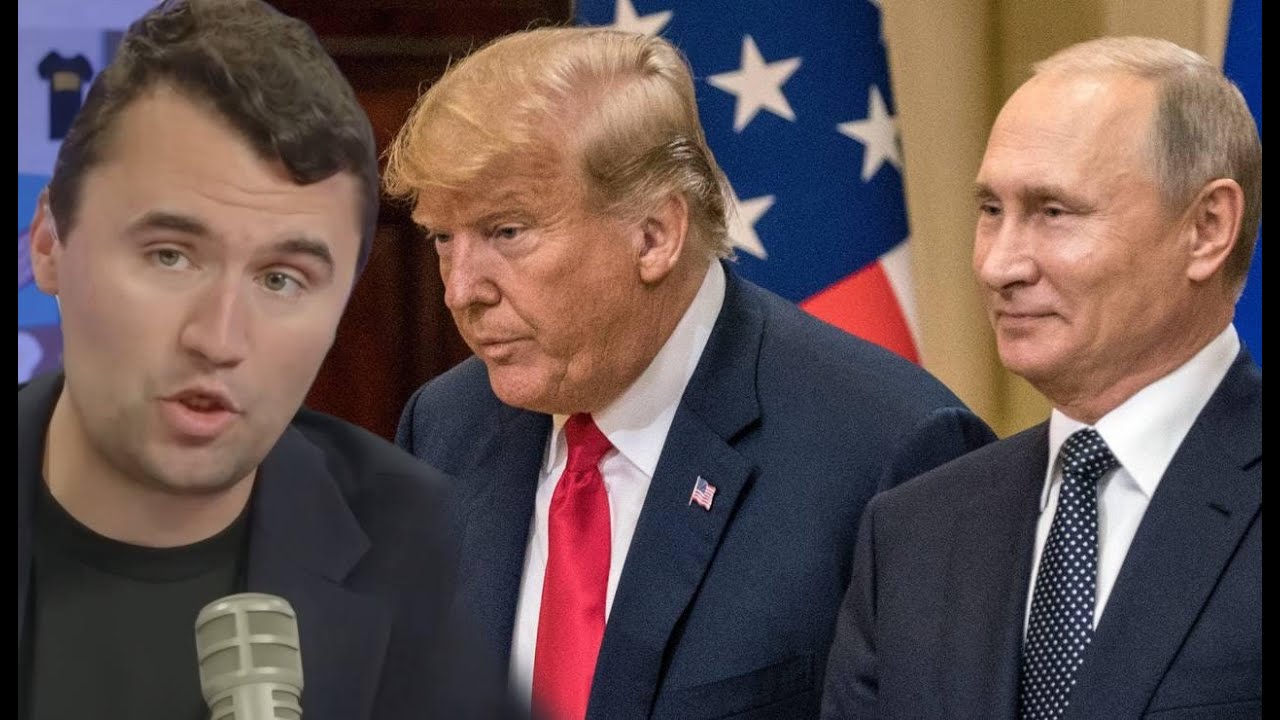
Charlie Kirk Explains How Donald Trump Prevented Nuclear War Between India and Pakistan
Charlie Kirk breaks down how President Donald Trump brokered a ceasefire between nuclear powers India and Pakistan, preventing what could have been a catastrophic war. Kirk contrasts Trump's decisive leadership with the bureaucratic approach of previous administrations, highlighting how the president also secured the release of an American hostage from Hamas, negotiated a trade deal with China, and planned a Middle East peace summit, all within days. Kirk argues this demonstrates the agility and deal-making prowess that makes Trump uniquely effective on the world stage, delivering results that save lives while strengthening America's position globally.
Trump Prevents Nuclear Conflict Between India and Pakistan
One of the major developments that emerged was the escalating tension between India and Pakistan, two nuclear powers with centuries of conflict. Fighter jets were being shot down, military bases were being struck, and the situation was deteriorating rapidly in the Kashmir region. The media was warning of a potential nuclear Armageddon, as both nations possess nuclear weapons and were barreling toward a bloody confrontation.
Then President Trump and JD Vance stepped into the arena and brokered a peace settlement. What was being discussed as an imminent major war on Friday had been defused by Sunday, thanks to direct intervention from the Trump administration. Charlie Kirk emphasizes that if you were talking about a looming war on Friday but weren't giving President Trump credit for ending it by Sunday, you're part of the problem.
Kirk argues that under Joe Biden, the response would have been slow and bureaucratic. Biden would have armed India, claimed there was nothing that could be done quickly, and potentially watched hundreds of thousands die unnecessarily—much like what happened with the Ukraine conflict. Instead, Trump acted with speed and decisiveness.
President Trump himself stated: "We're going to do a lot of trade with Pakistan. We're going to do a lot of trade with India. We're negotiating with India right now. We're going to be soon negotiated with Pakistan and we stopped the nuclear conflict. I think it could have been bad nuclear war. Millions of people could have been killed. So I'm very proud of that."
Kirk notes that JD Vance played a crucial role in this diplomatic success. Vance had recently visited India with his wife Usha, strengthening bonds with the Indian government. This relationship proved vital in facilitating the peace deal. The tariffs Trump had imposed on India also created high leverage and incentive for India to cooperate with American diplomatic objectives.
China Trade Deal and Economic Wins
Following the India-Pakistan ceasefire, President Trump announced a major trade development with China. He reached a sudden tariff truce with the Chinese Communist Party, implementing a 90-day pause that brought tariffs down to 30% from nearly 150%. Kirk characterizes this as Trump structuring a phenomenal America First winning trade deal while simultaneously juggling hundreds of other portfolio issues.
Kirk emphasizes that this China deal represents just the beginning. Deals with Vietnam, Japan, and South Korea are lined up and ready to be announced in rapid succession. On top of the trade victories, President Trump signed an executive order aimed at slashing prescription drug prices by ordering the federal government to seek to pay no more than other countries do for their medications.
The economic results were immediate and measurable. The stock market rose nearly 1,000 points. Oil prices dropped. Egg prices came down. Inflation began declining. All of this happened while Trump was also securing the southern border, which Kirk claims is down 99.99% in crossings, with Border Patrol agents now having little to do compared to their previous role as what he calls "the Expedia.com of the third world."
Middle East Peace Mission and Hostage Release
President Trump prepared to depart for the Middle East, planning visits to Saudi Arabia, Qatar, and the UAE. Kirk describes these nations as increasingly important power centers on the planet. The timing of this visit coincided with a significant development: Hamas released the last American Israeli hostage, Eden Alexander, an American citizen and Israeli passport holder who had been held captive.
Kirk argues this release was no coincidence. President Trump's impending arrival in the Middle East, particularly his visit to Qatar, created pressure on entities with ties to the Palestinian Authority and Hamas. Trump made it clear he wanted the American hostage brought home, and Hamas complied.
Beyond the hostage release, President Trump announced his intention to pursue an expansion of the Abraham Accords and bring broader peace to the Middle East. Kirk also notes that Trump does not want a war with Iran, demonstrating his consistent pattern of using American strength for world peace rather than military intervention.
The Istanbul Summit Proposal
In what Kirk describes as a perfect example of entrepreneurial thinking applied to diplomacy, President Trump casually announced via Truth Social that he would be willing to detour from his Middle East trip to Istanbul to facilitate a meeting between Putin and Zelenskyy. Kirk marvels at how unique this approach is compared to traditional US foreign policy, where such summits typically require months or even years of preparation.
The choice of Istanbul as the potential meeting location carries symbolic weight. Kirk notes that Istanbul is where the original breakdown of the Russia-Ukraine peace process occurred, when Tony Blinken and Boris Johnson allegedly told the Russian Federation that the West would not accept a land-for-peace settlement. Kirk claims the war could have ended just ten days after it began in Istanbul, and hundreds of thousands of people would still be alive and millions would still be in their homes if not for what he characterizes as warmongering by the Washington establishment under Joe Biden.
Kirk sees beautiful irony and a sense of completion in returning to Istanbul to potentially end the war. He describes Trump's approach as having agility, with the president essentially telling his team that the Secret Service would figure out the logistics while he focused on making the deal happen. This stands in stark contrast to the slow, bureaucratic approach of previous administrations.
Trump's Unique Leadership Style
Kirk argues that what Americans are witnessing represents exactly why they elected President Trump. He draws on Teddy Roosevelt's famous quote about "the man in the arena," arguing that Trump exemplifies this ideal. Kirk contrasts Trump's leadership with what he describes as an administrative state-managed presidency under Joe Biden that moved slowly, bureaucratically, and was subservient to the expert class.
According to Kirk, Trump demonstrates agility, vim, vigor, tenacity, focus, and stamina. He argues that Trump is at his best when he's traveling, when his mind is racing, when he's seeing people and meeting people face-to-face. Some people do better with desk work, Kirk acknowledges, but Trump takes it to another gear when he's on the move. There's a velocity and momentum to travel that facilitates deal-making.
Kirk emphasizes that Trump is a non-ideological actor on the world stage who genuinely does not like to see human suffering. He points to Trump's recurring references to the "stupid bloodbath" in Ukraine where hundreds of thousands are dying unnecessarily as evidence of this moral clarity. Kirk argues that previous politicians have been too interested in abstractions—framing conflicts as battles between totalitarianism and democracy—when Trump sees them more pragmatically as turf wars that can be resolved through negotiation.
Accomplishments in Just Three Days
Kirk summarizes what President Trump accomplished in just three days:
Prevented a nuclear war between India and Pakistan
Facilitated potential peace talks between Zelenskyy and Putin
Secured the release of an American hostage from Hamas
Signed an executive order on prescription drug prices
Negotiated a major trade deal with China
Maintained a secure southern border with nearly zero illegal crossings
Advanced domestic agenda items including no tax on tips, overtime, and Social Security
Kirk argues that these accomplishments in just three days exceed anything achieved for the betterment of the world under George W. Bush, Barack Obama, or Joe Biden. He notes the irony that Barack Obama received the Nobel Peace Prize simply for being elected, while Trump has actually prevented wars, brokered peace deals, and reduced human suffering—yet receives no comparable recognition.
The Week Ahead
Kirk promises that the week ahead will be a master class in Trump's deal-making and leadership. He anticipates the convergence of pent-up campaign promises, including major Supreme Court victories on school choice, religious liberty, and religious charter schools. He expects continued drops in energy prices and the passage of a reconciliation bill that will expand CBP and Border Patrol capabilities.
Kirk also mentions that President Trump is scheduled to have a phone call with Xi Jinping, adding yet another high-stakes diplomatic engagement to an already packed schedule. He emphasizes that Trump is "running the world and running the world for the better"—less war, more lives saved, better trade deals, American workers put first, and an end to the invasion at the southern border.
Throughout his analysis, Kirk maintains that Trump's critics will continue to attack him regardless of his accomplishments. He argues that those who objectively look at just the last couple of days must acknowledge that the previous administration would have either been too slow to move, not cared enough, or lacked the talent and skill to broker these kinds of deals. This is Trump at his best—playing offense, thinking creatively, doing deal after deal, fully engaged in the arena.