Charlie Kirk Explains How Washington DC Created the Student Loan Crisis Trapping Young Americans
Enjoying this? Share it with someone who needs to see it.
Up Next
Charlie Kirk Outside 2016 Republican Convention Defends Free Markets and States Rights
3:08
Charlie Kirk Rallies Arizona Crowd After RFK Jr Endorsement of Donald Trump
17:45
Charlie Kirk Challenges the College-for-Everyone Myth and Calls for More Trade School Focus
2:00
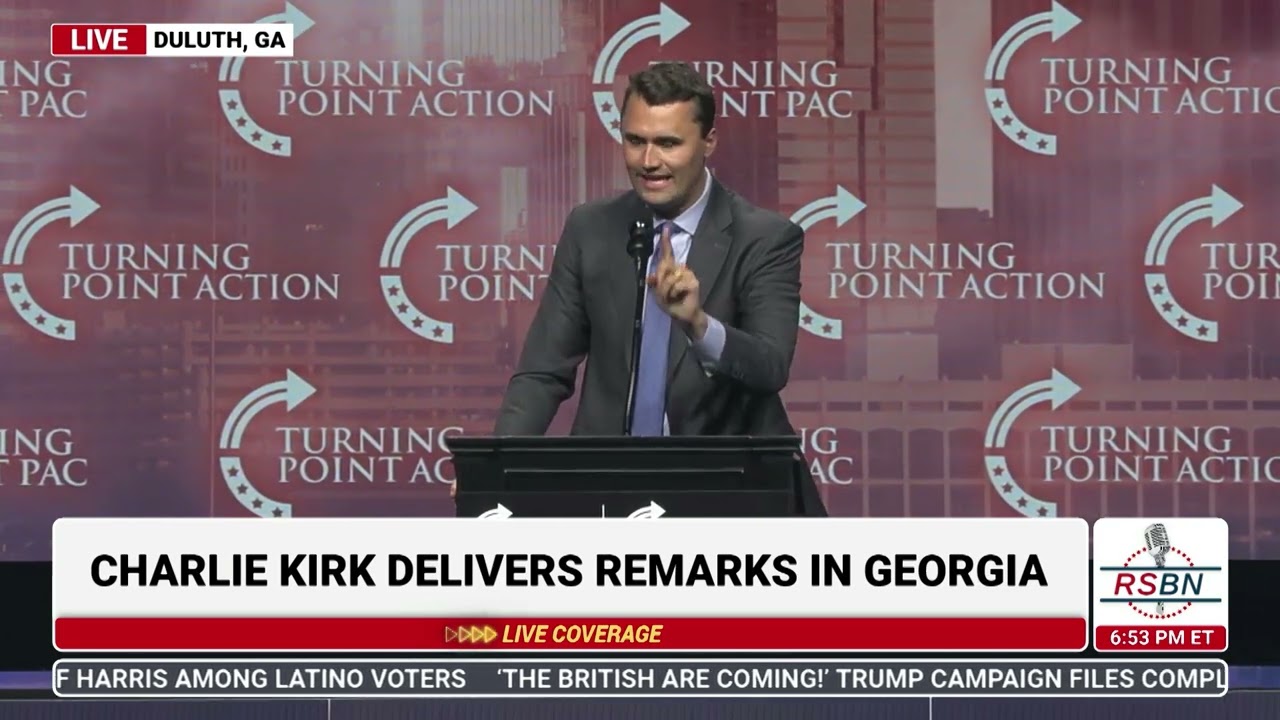
Charlie Kirk Explains How Washington DC Created the Student Loan Crisis Trapping Young Americans
Charlie Kirk from Turning Point USA breaks down the student loan crisis and reveals who's really responsible for over $1.2 trillion in debt. While pundits blame Wall Street, Kirk exposes how the federal government controls 93% of all student loans and explains why college costs have skyrocketed since the Department of Education was created in the late 1970s. He argues that guaranteed federal loans have created an endless cycle where colleges keep raising prices because students can always pay through government subsidies, and he presents his solution for breaking this debt spiral.
Charlie Kirk from Turning Point USA addresses a critical misconception about the student loan crisis in America. While politicians and pundits continue to point fingers at Wall Street, the numbers tell a different story. The federal government, not private lenders, administered and processed 93% of all student loans issued last year. This is Washington's problem, not Wall Street's.
The scale of the crisis is staggering. Student loan debt in America has ballooned to over $1.2 trillion, with the average student carrying more than $32,000 in debt. Yet the conversation around who created this problem remains fundamentally dishonest, according to Kirk.
How Government Policy Inflated College Costs
Kirk traces the root of skyrocketing tuition costs back to the creation of the Department of Education in the late 1970s. Since that time, college tuition has escalated rapidly, and the reason is straightforward economic logic.
When colleges know that students can pay in full regardless of the actual cost, and when those students have access to cheap capital guaranteed by the federal government, there is no incentive to control costs. In fact, the incentive structure works in exactly the opposite direction—colleges are motivated to continuously raise their prices.
The Endless Debt Spiral
Kirk describes the current situation as an endless death spiral that is ensnaring America's youth in debt. The cycle works like this: colleges raise their costs because they know students can pay in full. Students can pay in full because the federal government continues to subsidize their advancement into college through readily available loans. This creates a feedback loop where there is no natural market pressure to keep costs reasonable.
The federal government's role as the primary lender removes the traditional checks and balances that would exist in a free market. Private lenders would assess risk, consider the likelihood of repayment, and adjust their lending accordingly. The government simply provides the loans, transferring the risk and consequences to young borrowers who may not fully understand what they're signing up for.
The Free Market Solution
Kirk's solution to breaking this cycle is to reintroduce market forces to higher education financing. He advocates for reinstating what he calls "the greatest force for competition in the history of the world"—the free market.
In a true market-based system, colleges would have to compete on price and value. They would need to demonstrate that their education is worth the cost, and they would face consequences for pricing themselves out of reach of students. Lenders would assess the actual value and employability prospects associated with different degrees and institutions, creating natural pressure for accountability.
By removing the government guarantee that allows unlimited lending regardless of the educational outcome or employment prospects, the market would force colleges to justify their costs and provide real value to students.