Charlie Kirk on Big Tech Monopolies, Campus Free Speech, and Why Israel Matters to America
Enjoying this? Share it with someone who needs to see it.
Up Next
Charlie Kirk Reveals How Tik Tok and Young Voters Fueled Trump's Historic Comeback Victory
20:36
Charlie Kirk Explains Why the American Church Must Rise Up Against Tyranny and Technocracy Before It's Too Late
2:09:55
Alex Marlow, Charlie Kirk and Nigel Farage Honor Andrew Breitbart's Legacy as Conservative New Media Pioneer
20:50
Charlie Kirk on Big Tech Monopolies, Campus Free Speech, and Why Israel Matters to America
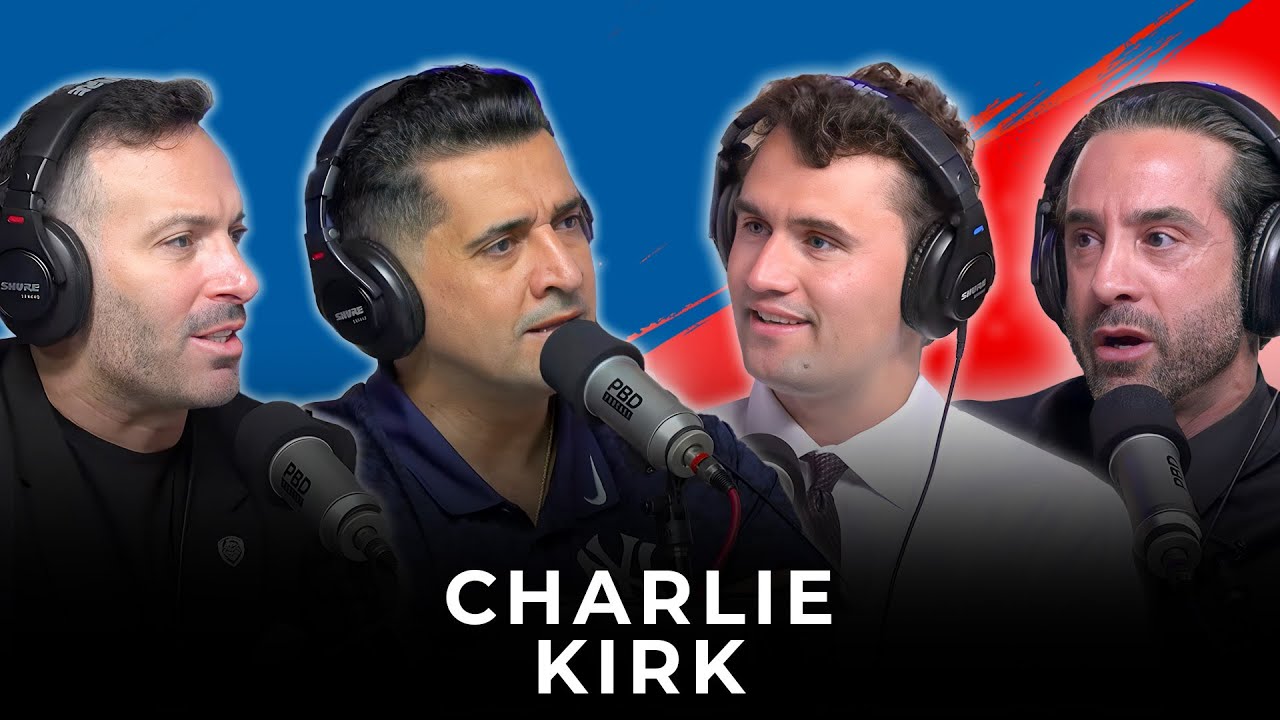
Charlie Kirk sits down with Dave Sussman at the American Freedom Alliance to discuss the mounting threats to free speech from Big Tech monopolies. Kirk argues that companies like Google, Facebook, and Amazon have become modern utilities with dangerous control over information flow, and explains why Sherman Antitrust Act enforcement may be necessary. He also shares insights from his recent trip to Israel, the state of Generation Z on college campuses, and Turning Point USA's mission to reclaim higher education from radical leftist ideology. Kirk makes the case that college campuses are the source of cultural battles affecting families, communities, and American values.
Charlie Kirk opens the conversation by acknowledging the precarious position of conservative voices in the digital age. When asked how he has avoided being deplatformed while so many others have been silenced, Kirk emphasizes gratitude rather than certainty. "It could be me, it could be you, it could be any one of us next," he explains. He points to figures like Louis Farrakhan, whom he finds detestable but believes should still have a platform, as examples of how speech suppression affects people across the political spectrum.
Kirk identifies tech companies as "one of the biggest threats to our freedoms and liberties today." He compares their market dominance to public utilities, noting that Google, Facebook, Instagram, and Twitter have near-monopolistic control over information consumption. "If Google turns off the lights on you, if Google says you're done, and then Facebook does the same, you'll lose a huge piece of the market share," Kirk states. He argues that these companies can silence voices and socially engineer public opinion based on political viewpoint with virtually no accountability.
The Antitrust Solution
When pressed on whether this constitutes a civil rights issue, Kirk takes a nuanced position. While acknowledging Dennis Prager's argument that this is fundamentally a free speech issue—the basis for Prager University's lawsuit against Google—Kirk frames it differently. "This is really wrong what they're doing, but there's only a problem because they're monopolies," he explains. The issue isn't just censorship; it's censorship by entities that control 85 percent of the information marketplace.
Kirk draws historical parallels to illustrate his point. If ExxonMobil controlled 85 percent of oil distribution, there would be riots and immediate congressional action. Microsoft faced antitrust enforcement in the 1990s for far less market dominance. Yet Google controls 85 percent of search results—the primary way people find direction, identity, and information—without facing similar scrutiny.
As a free market advocate, Kirk is reluctant to call for government intervention but sees no alternative. "I wish there was another way except getting the FTC involved," he admits. "Until someone can show me that a bottom-up seed funded competitor can really go up against Facebook, then I might reconsider." He argues that trillion-dollar organizations have created barriers to entry that make true market competition impossible.
Kirk also highlights the lobbying power these companies wield. Google spends enormous sums on public affairs to shape public perception and avoid regulation. The result is an unequal application of antitrust law, where some companies face scrutiny while tech giants operate unchecked.
Why 2019 Is Not 1919
Kirk rejects attempts to apply outdated frameworks to modern tech monopolies. "One of the big mistakes that anyone makes in arguing is trying to make a 2019 issue a 1919 issue," he explains. The speed and scope of information consumption today is unprecedented. People can search for anything in seconds, which means a small group of leftist zealots could manipulate search results to influence elections, hide polling locations, or make one candidate appear superior to another.
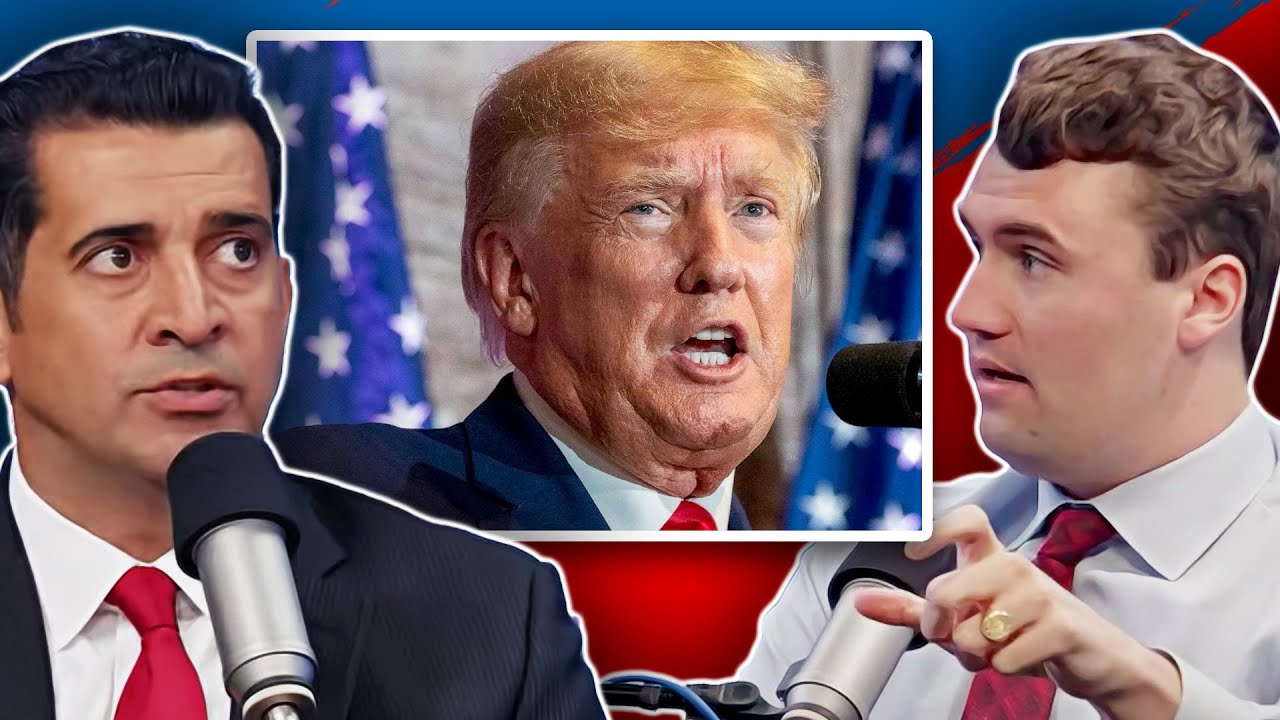
Tucker Carlson has argued that tech companies are more powerful than the government, a position Kirk initially resisted but has come to partially accept. While tech companies cannot audit citizens like the IRS, they absolutely can silence them. Kirk draws a direct parallel to the IRS scandal, where conservative groups were targeted and suppressed. "It's not unlike what the tech companies are doing right now," he observes.
These companies function as "pseudo city-state governments," Kirk argues. The idea that users can simply choose not to use them is absurd. "Show me how you're going to get your message out without using YouTube, Facebook, or Twitter," he challenges. "Show me your business plan. The answer is you can't."
Collusion and Targeted Censorship
Kirk describes what he sees as actual collusion among five or six tech companies that control 90 percent of the "mind space." Cable television is evaporating; information consumption now happens on cell phones, and these platforms coordinate to silence voices they oppose. Examples include James Woods being temporarily banned from Twitter and Amazon delisting conservative books.
Jeff Bezos, owner of Amazon and the Washington Post, has engaged in book manipulation for years. Kirk references the controversy over Dinesh D'Souza's book and how Amazon pushed Bezos's ex-wife's book to bestseller status. These aren't isolated incidents but part of a pattern of viewpoint discrimination.
Kirk proposes that if companies engage in viewpoint discrimination, they should be barred from receiving federal contracts. Amazon, for instance, receives massive government contracts while simultaneously suppressing conservative voices. This represents a starting point for accountability.
Generation Z and the Speech-Equals-Violence Fallacy
Turning to the next generation, Kirk shares what he's hearing from students at the 1,400 high school and college campuses where Turning Point USA operates. While opinions vary widely, he identifies a dangerous trend: academia and pop culture are teaching young people that speech equals violence.
"If you hear something that offends you, it's the same as being hit over the head," Kirk explains of this worldview. "If you hear something that you might deem offensive, it's the same as physically being put in danger." This concept is "unbelievably dangerous" because it introduces subjectivity into what should be objective legal standards.
Lady Justice is blind for a reason, Kirk argues. Laws should be applied objectively, not based on subjective feelings about what constitutes "hate speech." Supreme Court rulings define hate speech very narrowly—direct incitement to violence against specific individuals or groups. Yet saying something like "Ilhan Omar is incorrect and should be held accountable" is now treated as incitement.
The left is creating a culture where words equal violence, and if you're offended, the offending person must be silenced. This means disagreement equals silence, and only one opinion—the leftist opinion—is acceptable. The result is twofold: immature citizens who have never heard opposing viewpoints, creating the "snowflake" phenomenon, and a weak society unprepared for adversity.
The Deplatforming Is Not Over
Kirk warns that the wave of deplatforming will intensify before the 2020 election. "If you think the delisting is over, if you think they're done kicking people off these platforms, you're wrong," he states. "You could be next. I could be next."
He introduces what he calls "pathogen theory"—the idea that if you associate with someone deemed problematic, you become contaminated by association. Joe Rogan exemplifies this. When Rogan hosted Alex Jones, YouTube made him take down the video. "Joe Rogan is one of the great American institutions," Kirk says. "It's just pure free speech and pure freedom and liberty." Yet even Rogan isn't immune from pressure.
What Kirk finds most insulting is the implicit message: that people cannot distinguish good ideas from bad ideas on their own. Silicon Valley has appointed itself as "philosopher kings" who decide what citizens can handle. "How insulting to the individual that somehow I can't understand the difference between good ideas and bad ideas," Kirk protests. "I need some sort of philosopher kings in Silicon Valley to show me what is correct and incorrect."
Many people kicked off social media hold views Kirk disagrees with—like Louis Farrakhan, whom he calls a "sick anti-semite" and "horrible person." But horrible people should still have platforms. Meanwhile, Hamas still operates Twitter accounts while shooting rockets into Israel, yet they face no enforcement.
Israel: A Test Case for Media Bias
Fresh from a trip to Israel, Kirk shares observations that mainstream media ignores. Arabs working in Israel love the country because they can support their families through honest work without facing oppression for being gay or violating religious codes—freedoms nonexistent under Hamas rule.
"The world's a better place because of Israel," Kirk declares, citing patents, medical advancements, and human rights protections. He poses a fundamental question: Why the obsession with a country of eight million people that respects human rights and holds gay pride parades, when it's surrounded by a "sea of totalitarianism and tyranny"? Not one country touching Israel is more free. Not one country within 200 miles is more free.
There are 41 Muslim-majority countries in the world, 34 of them Arab. Why the obsession with the singular Jewish state? "The answer is anti-semitism," Kirk states plainly. The State of Israel is fundamental to Jewish religion, mentioned over 500 times in the Torah, yet 97 percent of Hebron—home to the Cave of the Patriarchs—is controlled by Arab Muslims.
History shows a consistent pattern: the more land Israel gives up, the further from peace it gets. In 2005, Israel gave up Gaza to the Palestinian Authority, evicting 10,000 Jews from their homes. "Those are real refugees," Kirk emphasizes. Hamas took over, transforming rolling hills and factories into a launching pad for terrorist tunnels. At the time of recording, 800 rockets had been fired into Israel in 48 hours, killing four Israelis.
The Palestinian Authority, which receives hundreds of millions of dollars annually, hasn't held an election in 12 years. Mahmoud Abbas functions as a "pseudo-dictator." The money doesn't go to hospitals or schools—it funds rockets to launch at Israel.
Israel is the only Middle Eastern country that builds humanitarian centers for people in wars it's not involved in. During the Syrian civil war, Israel built hospitals near the Golan Heights for Syrian victims, despite Syria having invaded Israel countless times. "Do you think Syria is going to build hospitals for Israelis?" Kirk asks.
Why Young Israelis Vote Conservative
Kirk notes a striking difference between Israeli and American youth. Prime Minister Benjamin Netanyahu's support came primarily from 18 to 24-year-olds—the opposite of America's leftist youth trend. The reason? Mandatory military service forces Israeli young people to take responsibility, wake up early, carry weapons, and defend their country in places like Hebron where "any day a guy with a machete could cut his head off."
This creates a "mentality of always at war" that matures young Israelis far faster than their American counterparts. "A twenty-year-old Israeli is lightyears ahead of a twenty-year-old American," Kirk observes. The twenty-year-old American has no comparable responsibility and is told they're a victim for nothing.
Kirk supports some form of national service for American 18-year-olds—not necessarily a military draft, but a year of service cleaning national parks, joining the Peace Corps or AmeriCorps, or doing something of value. "Wake up before 7 a.m. for a year. Don't do drugs," he half-jokes. The point is serious: college kids have less responsibility than high school kids, whose tougher classes, difficult schedules, early mornings, and rigorous demands create more maturity.
Kirk reflects on his own high school experience: waking at 5:30 a.m. for weightlifting, track, and football, school all day, home at 7 p.m., then homework until 1 a.m. "That was one of the hardest things I've ever pushed myself through," he recalls. College, by contrast, is "a vacation from the maturity accomplished in high school."
Turning Point USA's Mission: Reclaiming the Culture
Culture is shaped through four or five primary channels: family, community and churches, media consumption, and Hollywood pop culture. The left has infiltrated or destroyed all of them. But all these channels flow from one tributary: colleges and academia. Young people now absorb values, perspectives, and worldview more from college than from family.
"We have sacrificed the terrain on college campuses," Kirk admits. "We're taking it back." He describes Turning Point USA's work as "one of the most focused ideological and cultural campaigns in American history."
Alexandria Ocasio-Cortez didn't come from nowhere—she came from college campuses. Ilhan Omar is "word-for-word doctrine what they teach in the lecture halls," Kirk argues. "She is word-for-word dogma what they teach in our universities." These figures are products of higher education environments that conservatives abandoned to the left.
Turning Point USA's goal isn't indoctrination but fairness. "All we want is a fair shot of the game," Kirk explains. "All we want is for every student to be able to say, 'I'm a liberal at graduation, okay, but make the conservative argument for me,' and they could do it." He wants students capable of articulating conservative positions even if they disagree—something he rarely encounters. "I've rarely found anyone that can make my argument for me and then ends up disagreeing with me," Kirk concludes.











Comments
Be the first to comment on this video.