2,422 videos 1,389,747,653 views US Joined Aug 30, 2018
Charlie Kirk is the Founder and President of Turning Point USA, the largest and fastest growing conservative youth activist organization in the country with over 250,000 student members, over 150 full-time staff, and a presence on over 2,000 high school and college campuses nationwide. Charlie is also the Chairman of Students for Trump, which aims to activate one million new college voters on campuses in battleground states in the lead up to the 2020 presidential election. His social media reaches over 100 million people per month and according to Axios, he is one of the "top 10 most engaged" Twitter handles in the world. He is also the host of “The Charlie Kirk Show,” which regularly ranks among the top news shows on Apple podcast charts.
Charlie Kirk Reveals How Democrats Lost 2.1 Million Voters While Republicans Gained 2.4 Million Between 2020 and 2024
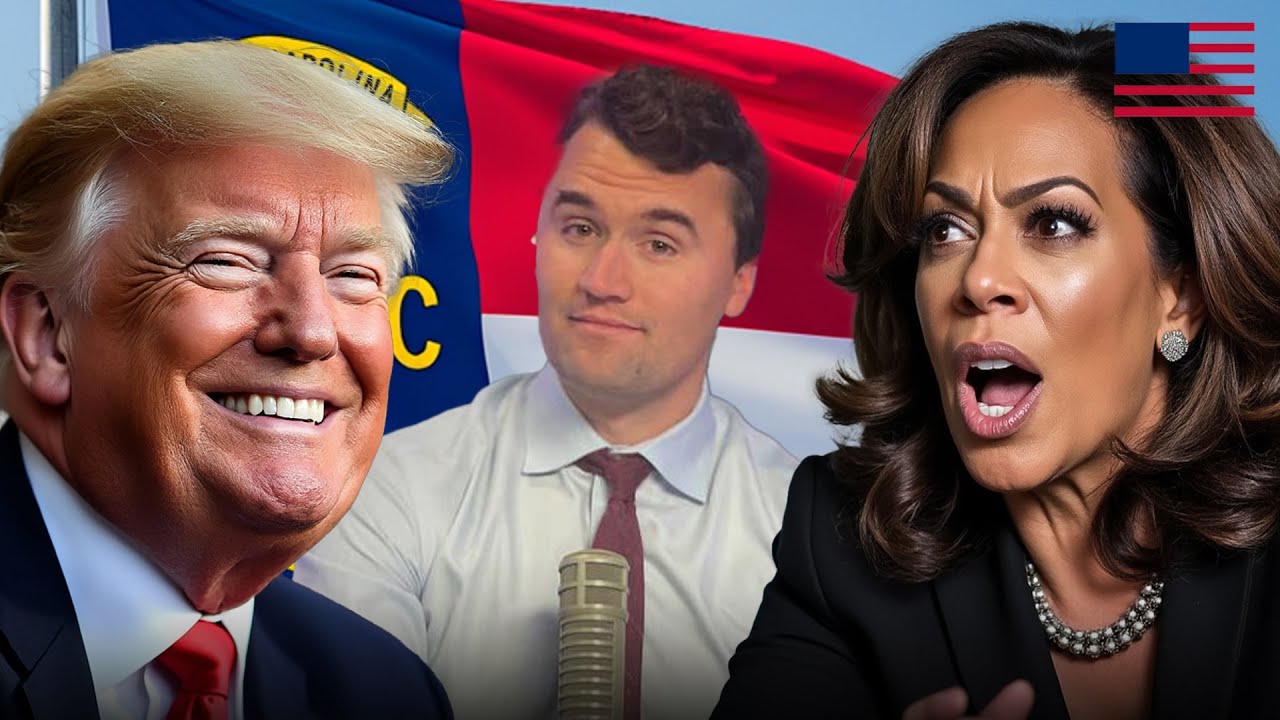
Charlie Kirk examines new voter registration data showing a massive shift in American politics between 2020 and 2024. Democrats lost 2.1 million registered voters across 30-plus states while Republicans gained over 2.4 million. Kirk connects this trend to population migration patterns, where blue states like California, Illinois, and New York are hemorrhaging residents to red states like Texas, Florida, Utah, and Idaho. He analyzes what this means for future elections and congressional representation, while critiquing the Democrat party's recent summer meeting and their struggle to find direction.
Charlie Kirk returns to mission control in Phoenix, Arizona following a successful event in Ohio to discuss a fundamental transformation happening in American politics. The New York Times recently published voter registration data from 30-plus states plus Washington DC that allow for partisan voter registration, and the numbers tell a compelling story about the political realignment taking place across the country.
Between 2020 and 2024, Democrats lost 2.1 million voters in those states. Meanwhile, the Republican party gained over 2.4 million registered voters. Kirk emphasizes that voter registration serves as an early indicator and functions like a mini poll frozen in time, providing insight into the political landscape before elections occur.
The battleground state of Pennsylvania exemplifies this shift dramatically. Democrats held a registration advantage of 517,310 among active voters in November of 2020. As of this summer, that advantage has collapsed to only 53,333 voters. In North Carolina, Republicans erased roughly 95% of the registration advantage that Democrats held in the fall of 2020.
Kirk credits the grassroots work of Turning Point Action for contributing to these gains through their voter registration operations. He announces plans to scale the operation even further, aiming to register hundreds of thousands of additional voters. Kirk addresses critics who dismiss him as just a podcaster and college debater, pointing to the tangible results of the clipboard and tennis shoes grassroots work happening every single day at both Turning Point USA and Turning Point Action.
The Mass Migration from Blue States to Red States
Kirk presents what he considers one of the most revealing pieces of data about the state of American politics: population migration patterns between states. He displays a chart showing which states are projected to lose and gain electoral votes based on census data and population trends.
Illinois, California, New York, and Rhode Island are all losing population and will lose electoral votes. Meanwhile, Texas, Florida, Utah, and Idaho are gaining population and will gain congressional representation. Kirk argues this single chart can end any political debate at family gatherings because it represents empirical data that cannot be manipulated.
The question Kirk poses is straightforward: Why are people leaving states with what used to be America's three greatest cities - Los Angeles, Chicago, and New York - and moving to red states? He dismisses the simple answer that it's just about cost of living, arguing that the lower costs in states like Texas and Florida exist precisely because those states don't have oversized governments.
Kirk points out that California has arguably the best climate in the United States, describing it as God's heavenly gift to America. If people are willing to leave that climate, they're actively choosing to do so because of high cost of living, crime, or declining quality of life. The weather advantage alone should be keeping people in California, but it isn't enough to overcome the consequences of poor governance.
He also notes that blue states like California, New York, and Illinois are almost always the obvious points of arrival for immigrants. Despite this constant influx of new residents, these states are still losing population, meaning they're hemorrhaging native-born Americans even faster than the raw numbers suggest. The nonpartisan Brennan Center predicts California and New York will lose even more electoral representation than the New York Times estimates.
This trend was already happening 10 years ago but has only accelerated. Kirk argues that millions of Americans who aren't paying attention to daily political conversations on social media are simply living their lives and making decisions with their feet, and those decisions paint a clear picture of which governance model people prefer.
The Democrat Party's Identity Crisis
With this data as backdrop, Kirk turns his attention to the Democrats' recent summer meeting and their struggle to define what their party represents moving forward. He contrasts the two parties: the Republican party, despite its problems with issues like the blue slip process and disagreements over legal immigration, largely represents families, parents, entrepreneurs, moms, the MAHA movement, and workers.
The Democrat party, according to Kirk, increasingly represents a very elite coastal college-educated oligarchy and a government-addicted minority - people so dependent on government benefits that they need to vote Democrat to sustain their lifestyle.
Kirk highlights two speakers from the Democrat summer meeting to illustrate the party's direction. The first is Oakland Mayor Shao Thao, whom he describes as their single-A baseball roster pick as Democrats try to retool their leadership. In her remarks, she defended Oakland against criticism from Donald Trump, saying Oakland embraces all residents including immigrant communities.
Kirk acknowledges there are wonderful people living in Oakland but describes the city itself as a terrible, unsafe, dirty, and dangerous place based on his multiple visits there. He finds it telling that one of their keynote speakers at the DNC meeting comes from one of the liberal strongholds experiencing significant urban decline, and that her focus remains on defending policies around foreign nationals rather than addressing the concerns of current residents.
The second speaker is Lindy Swamik, treasurer of the Minnesota DFL (Democrat-Farmer-Labor party), which Kirk describes as a uniquely Minnesotan and radical element of the Democrat party. In her remarks, she acknowledged the Dakota people as the original stewards of the lands and waters of Minneapolis, claiming we still live in a system built to suppress indigenous people's cultural and spiritual history.
Kirk sarcastically responds to the indigenous land acknowledgment, suggesting that if Democrats are truly committed to honoring indigenous land claims, they should apply that same principle to other parts of the world, such as the land of Judea and Samaria.
Looking Ahead to 2030
Kirk references the upcoming 2030 census, which President Trump wants to ensure is conducted properly. That census will determine congressional representation and electoral votes for the following decade. If current trends continue, the political map of America will look significantly different, with red states gaining even more influence in presidential elections and congressional representation while blue states lose power.
He specifically calls out one emerging concern: Utah and Idaho, while currently gaining population and remaining red states, may not maintain their conservative character without vigilance. Kirk indicates he plans to dedicate future segments to examining the slight purple trend emerging in Utah, warning that it cannot be taken for granted as a reliably red state in the future.
The overall message Kirk delivers is one of optimism for conservatives and Republicans. The data shows Americans are choosing red state governance models with their feet and their voter registration forms. The challenge for the movement is to maintain momentum through continued grassroots organizing, voter registration efforts, and ensuring that states experiencing population growth don't drift toward the policies that drove people out of blue states in the first place.