2,279 videos 1,365,173,983 views US Joined Aug 30, 2018
Charlie Kirk is the Founder and President of Turning Point USA, the largest and fastest growing conservative youth activist organization in the country with over 250,000 student members, over 150 full-time staff, and a presence on over 2,000 high school and college campuses nationwide. Charlie is also the Chairman of Students for Trump, which aims to activate one million new college voters on campuses in battleground states in the lead up to the 2020 presidential election. His social media reaches over 100 million people per month and according to Axios, he is one of the "top 10 most engaged" Twitter handles in the world. He is also the host of “The Charlie Kirk Show,” which regularly ranks among the top news shows on Apple podcast charts.
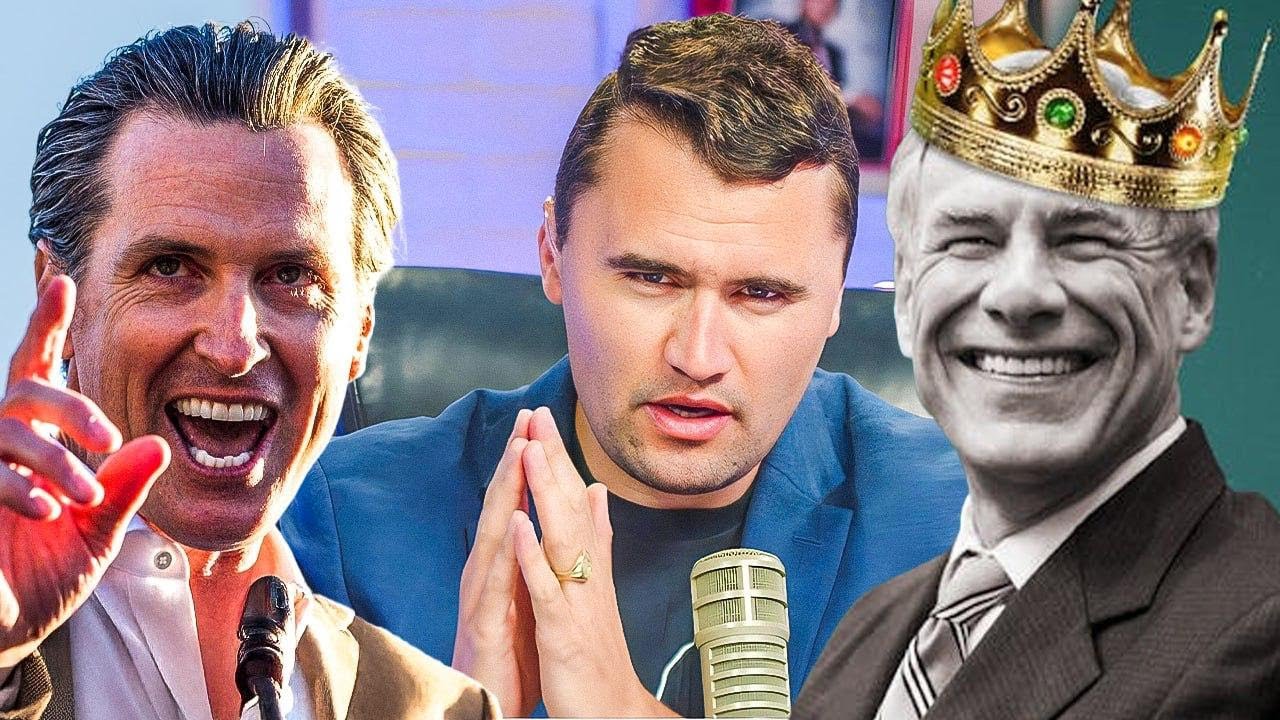
Charlie Kirk Breaks Down How Turning Point Action Outorganized the Democrat Campaign Mafia and Kamala Harris's Team
Charlie Kirk dissects the post-election media tour by Kamala Harris's campaign team, particularly Jen O'Malley Dillon's attempts to explain their loss. Kirk highlights how Turning Point Action and independent super PACs successfully outmaneuvered the Democratic establishment's well-funded ground game. Joined by Glenn Greenwald, the conversation explores why Harris couldn't distance herself from Biden, how Democrats lost ground with non-white voters despite calling Trump a Nazi, and why the left struggles with long-form podcasting and free expression. Kirk argues that Democrats will double down on authoritarian tactics and censorship rather than embrace traditional liberal values of free speech and open dialogue.
The Democrat campaign leadership has embarked on a public relations damage control tour following their electoral defeat. Jen O'Malley Dillon and David Plouffe are making the rounds attempting to explain how and why Kamala Harris lost. During an appearance on Pod Save America, O'Malley Dillon tried to explain the campaign's approach to distancing Harris from President Biden.
When asked about the Biden question that came up everywhere they went, O'Malley Dillon explained that the campaign knew the data and understood they had to show Harris as her own person pointing to the future rather than rehashing the past. However, she admitted Harris felt she was part of the administration and unless they said something like she would have handled the border completely differently, they were never going to satisfy anybody. The campaign tried to tell a story and give the impression that she was different without pointing to a specific issue.
When pressed on why they wouldn't point to a specific issue, O'Malley Dillon revealed it was something Harris was unwilling to do because she felt it would be disingenuous. Harris felt she was part of the administration, so why should she look back and cherry pick some things that she would have done differently when she was part of it? She had tremendous loyalty to President Biden.
Complaints About Republican Super PAC Coordination
O'Malley Dillon also complained about the opposition's organizational efforts, claiming Trump had an army of super PACs that were so coordinated. She suggested there must be some legal way they were communicating, though she wasn't sure if it was legal or illegal. She described how from the beginning, week to week, one super PAC would take a couple weeks and hit Pennsylvania, then the next one would come in and do the same, and they were all coordinated. She claimed the Harris campaign didn't have the benefit of that.
Kirk responded with disbelief, pointing out that the Harris campaign had over one billion dollars in hard money, plus multiple billions of dollars from outside groups. He questioned what happened to all that outside money and expressed outrage that O'Malley Dillon would even suggest Republicans did something illegal. Kirk emphasized that it's legally allowed to coordinate activity with campaigns according to the FEC rulings.
Kirk argued that the Democrat establishment was too smug and self-righteous to acknowledge that they were simply out-organized. He pointed out that they were leaking to the press that Turning Point didn't know what they were doing, when in reality Turning Point chased more ballots and registered more voters than the Democratic operation.
Turning Point Action's Organizational Victory
Kirk celebrated O'Malley Dillon essentially acknowledging that Turning Point beat her campaign. He emphasized that the "rag tag rebels of Turning Point" who were made fun of and smeared by everyone in the media went up against all the outside groups on the left and emerged victorious. Kirk questioned where all those outside groups went—the National Action networks, BLM, local community groups, and the various political action committees.
Kirk suggested that maybe the unions didn't actually want to go work for O'Malley Dillon's campaign. He took satisfaction in the fact that Turning Point and Elon Musk outorganized the organizers, beating the Democrat establishment at their own game.
Democrats Late to Recognize Media Shift
The conversation turned to how the Democrat Party, which claims to always be on the cutting edge of culture, just came to realize that more Americans are getting news from social media and podcasting. Kirk expressed disbelief that they were this naive and asked his guest to walk through how they got to a place where they have lost such significant ground in digital content creation and podcasting.
Glenn Greenwald, who joined the discussion, explained that as someone in independent media who left the media outlet he founded when it wouldn't let him publish negative reporting about Joe Biden before the 2020 election, any of them could see this coming. The data has been clear for so long—corporate media ratings have been in collapse and freefall, and every poll shows that Americans trust and like corporate media almost less than the most reviled groups in society.
Greenwald argued that the trends have been clear for so long, but when your entire self-identity and self-esteem depends upon the position and prestige you think comes with being inside a collapsing institution, you're always going to be the last people to believe that the institution is collapsing.
The Trauma of Losing Non-White Voters
Greenwald suggested that the most traumatizing part of this election for the Democrat establishment was not just that Trump won, but that so many non-white voters—the people who they think they're the benevolent leaders of, who they think they own, who they think they have the right to have eternal support from—migrated in huge numbers away from their candidate to Donald Trump.
This happened despite the media constantly saying Trump was a Nazi who was going to put people in camps. The entire last week before the election was spent with the media claiming that Trump had a Nazi rally in Madison Square Garden. They were convinced Tony Hinchcliffe's joke was going to swing the election because Puerto Ricans would rise up with Latinos led by Jennifer Lopez and Bad Bunny. None of that happened.
When you think that you speak for and are so connected to a group of people who turn around and show that they don't see the world remotely the way you see it, they don't care what you say, they don't listen to what you say—this is almost too much for even them to be in denial any longer. That's why you see all these discussions about how they're going to create their own Joe Rogan.
Why the Left Struggles With Long-Form Content
Kirk asked whether there's something to the format where leftists struggle in long-form podcasting and unscripted environments. He questioned whether there's something to the new left—not traditional liberal values, but one that has a primary focus on censorship, war, and regime politics—that stays away from that kind of inquiry towards truth or long-form dialogue. He wondered if the format doesn't fit their politics.
Greenwald acknowledged seeing what Kirk meant, but as somebody who has long been associated with the left and was steeped in civil libertarianism with which the left was once most associated, he pointed out that a lot of right-wing movements, at least shaped and led by Donald Trump, have successfully commandeered many of these issues.
The only people who talk anymore about free speech versus censorship are on the right. The only people who talk anymore about the evils of the CIA and the FBI and the US Security State are people on the right, not the left. Same with the war machine. Greenwald argued it's not so much the topics—it's the fact that there's so much forced orthodoxy within liberal left discourse that people just can't speak freely. They're constantly afraid of their own shadows.
This was visible with Kamala Harris and is visible with left-wing media in general. People sense that if you're not someone speaking freely, if you're petrified of saying the wrong word, you seem inauthentic, and it's not a faction that anyone wants to be a part of that's so repressed and petrified. Trump came along and blew through every single taboo and limit without the slightest concern or apology, and that opened up so much space on the right. That's what made it so much more powerful and so much more able to connect with ordinary people that the left had a claim on for so long.
The Future of the Democrat Party
Kirk asked Greenwald to speculate on what the Democrat Party's next move will be. Will they liberalize themselves towards a re-embracing of free speech, dialogue, and expression—a kind of agree to disagree approach and the promise of the Bill of Rights? Or will there be an even further rise of the woke wing with its totalitarian impulses and international warmongering values?
Greenwald stated he didn't think it was hard to predict. He also noted that the distinction between establishment liberalism and the left that has always been valid isn't really that wide anymore or even that real. The left of the 1960s protesting against the Vietnam War and the establishment was always a little different from Lyndon Johnson and the gang that pursued the Vietnam War. Those distinctions have eroded in favor of this idea that you cannot trust ordinary people—you can trust elites with expertise, but you can't trust ordinary people.
The whole industry that was created out of nowhere, creating a fake credential of people being disinformation agents, was all a reaction first to the UK approval of Brexit, but way more so to the big trauma for liberals of Donald Trump beating Hillary Clinton in 2016. They concluded from that the only hope they had to continue to control people and their thoughts is to create systems to further control, censor, and manipulate public opinion through the internet.
Greenwald predicted that with this crushing defeat and them being at such a loss in the wilderness to figure out how to get back, they're going to resort to increasingly authoritarian tactics that they already believe in and just double and triple down on them—not just as American liberals but with the Western left that very much believes in this also.
Kirk emphasized this is an important distinction—that even if the current government might not have control, they still control a lot of states, and almost all of Europe has embraced this new orthodoxy. It's very dangerous and pernicious.








Comments
Be the first to comment on this video.