Up Next

Charlie Kirk and Glenn Beck on Trump's Victory, Rush Limbaugh's Legacy, and Bold Personnel Picks for the Second Term
16:04
Charlie Kirk Explains Why Young Men Are Leading America's Conservative Revival and What the Church Must Do Next
1:31:08

Charlie Kirk Reveals Why Trump's 2024 Electoral Map Is Better Than 2016 and 2020 Combined
33:20

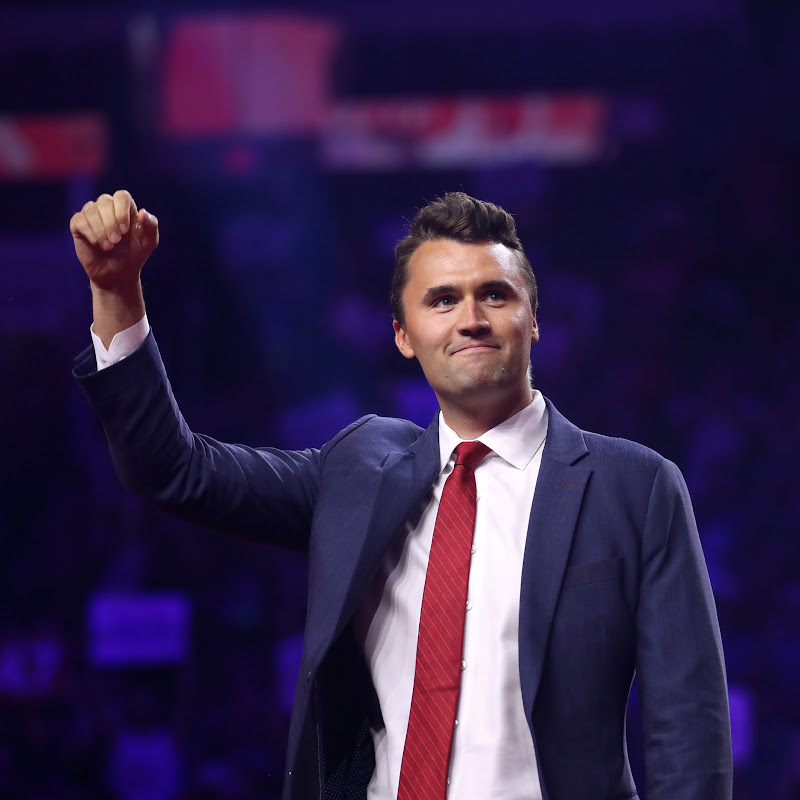
Charlie Kirk is the Founder and President of Turning Point USA, the largest and fastest growing conservative youth activist organization in the country with over 250,000 student members, over 150 full-time staff, and a presence on over 2,000 high school and college campuses nationwide. Charlie is also the Chairman of Students for Trump, which aims to activate one million new college voters on campuses in battleground states in the lead up to the 2020 presidential election. His social media reaches over 100 million people per month and according to Axios, he is one of the "top 10 most engaged" Twitter handles in the world. He is also the host of “The Charlie Kirk Show,” which regularly ranks among the top news shows on Apple podcast charts.
Subscribe on YouTubeCharlie Kirk Releases Full Conversation With Gavin Newsom From California Viral Debate on Trans Athletes and Wokeism
Charlie Kirk shares the complete conversation with Governor Gavin Newsom, including his unfiltered commentary throughout. The discussion covers explosive topics including trans athletes in women's sports, where Newsom admits fairness concerns but struggles to take action. Kirk challenges the California governor on critical race theory in schools, book banning accusations, parental notification laws, and why Democrats can't survive long-form podcasting. Kirk explains how Turning Point USA moved the youth vote 13 points toward Trump in four years, crushing the original 10-year goal, and why the Democratic Party's college-educated elite have lost touch with working-class America.
The Full Unedited Conversation With Commentary
Charlie Kirk presents the entire viral conversation with Governor Gavin Newsom, complete with his personal commentary and insights throughout. While an unedited version exists on Newsom's YouTube page, Kirk promises viewers want to stay for his analysis of this explosive discussion that covered some of the most contentious political and cultural issues facing America.
The conversation begins with an unexpected revelation: Newsom's 13-year-old son is apparently a big Charlie Kirk fan, desperately wanting to attend the taping and waking up at 6 a.m. hoping to come along before school. Kirk uses this opening to discuss Turning Point USA's mission and encourages viewers to get involved by starting chapters or joining Turning Point Action, the organization he credits with helping move an entire generation toward conservatism.
Building a Conservative Youth Movement
Kirk explains the origins of his 13-year journey with Turning Point USA, which dramatically accelerated when President Trump entered the political scene around 2021. The organization set an ambitious numerical goal: move the youth vote 10 points toward Republicans over 10 years. The hypothesis was simple but powerful—Democrats were taking young voters for granted, had no compelling message, and maintained an ideological monopoly on college campuses.
The results exceeded expectations. Working alongside President Trump's team and capitalizing on the president's strategy of embracing podcasting and TikTok, they achieved their 10-year goal in just four years. Kirk attributes this success partly to Trump becoming a cultural phenomenon, but also to recognizing that young people, especially young men, were experiencing a crisis that Democrats completely ignored.
Kirk points to a sobering reality: for the first time in American history, 30-year-olds will likely have it worse off than their parents—a breakdown of the social compact. This generation is the most alcohol-addicted, drug-addicted, suicidal, depressed, and medicated in history. While the prevailing message told them to lower their expectations and forget the American Dream, Kirk and his organization saw opportunity.
The College Campus Strategy
When Newsom asks about Kirk's strategic focus on college campuses, Kirk explains the practical mathematics: approximately 20 million students on campuses for four years, with nowhere to go but up from the 75% Democratic voting rate when Turning Point started in 2012. Fast forward to the most recent election, and Democrats lost the youth vote in Michigan and nearly lost in Wisconsin and Arizona. Instead of the targeted 10-point movement, they achieved 13 points.
Kirk emphasizes a critical point that Democrats seem unwilling to reckon with: while baby boomers actually saw wealth increases over the last four years and don't buy into the narrative that institutions are broken, younger voters tell a different story. Harris actually performed three points better with baby boomers than Biden did in 2020. According to Kirk, all Harris needed to do was match Biden's 2020 performance with younger voters and she would be president—but she underperformed by approximately 13 points.
From Card Tables to Viral Debates
Kirk shares his humble beginnings—starting with no money, no connections, and no idea what he was doing. At 18 or 19 years old, he would show up at UW-Madison with a card table and a cardboard sign saying "debate me" with provocative statements. He didn't even film these early encounters. When Newsom expresses amazement at Kirk's willingness to debate anyone, anywhere, anytime in such hostile environments, Kirk explains it as a combination of confidence, a desire to challenge predominant views, love of debate, and excitement about stress-testing his ideas.
Kirk acknowledges he's probably "10x better" at the format now than in 2012, crediting study of philosophy and the great books rather than specific debate technique manuals. He also notes his entrepreneurial approach—trying to build something rather than merely seeking credentials, which he wears as a badge of pride representing the majority of Americans who don't have college degrees.
The College Credential Divide
Kirk delivers a pointed critique of the Democratic Party's transformation into a college-credentialed elite that "snobbishly looks down on the muscular class of this country"—the people who kept things running during COVID. He emphasizes that the majority of Americans didn't attend Harvard, Princeton, Yale, Stanford, Caltech, or Cal Berkeley, and the Republican Party has become far more representative of them, largely thanks to Trump.
Kirk explains that there are 11 million open jobs that don't require college degrees, and he wrote an entire book called "The College Scam" on this topic. When Newsom pushes back with statistics about college graduates earning a million dollars more in lifetime earnings, being more likely to get married, less likely to divorce, more civically engaged, and living longer, Kirk counters with important nuances: 41% of students who start college don't graduate, and half who do graduate won't use their degree in their affiliated job. The income statistics are skewed by the top 10% of earners—someone studying Computer Engineering at Caltech does great, but someone studying "North African lesbian poetry" at Cal may not.
The Trust in Institutions Divide
Kirk identifies what he believes is the biggest divide in America—not right versus left, but high trust versus low trust in institutions. This dynamic has completely inverted over the past 20 years. In the early 2000s, Democrats were the low-trust party: anti-Iraq War, anti-Bush, anti-NSA, anti-Patriot Act. That's when Democrats had activist spark and energy. Now the positions have flipped entirely.
The right has become the low-trust faction—challenging COVID vaccines, questioning whether public health authorities lied during the pandemic, and skeptical about continued funding for Ukraine. Meanwhile, the left has become high-trust, functioning as gatekeepers of the institutional intellectual regime. College campuses train students to "trust the experts, trust the scientists, trust the leaders of authority," creating an ideological bubble that produces Democratic voters.
Turning Point Action's Ground Game
When the conversation turns to Turning Point Action's ballot-chasing operation in Arizona and Wisconsin, Kirk explains they modeled some practices after the left's organizing tactics. However, he emphasizes a self-limiting principle: "You can't ballot chase if no one wants to vote for you." They tracked data showing Democrats were actually chasing low-propensity Hispanic voters who ended up voting for Trump, essentially doing the Republicans' work for them in precincts that moved 20 points toward Trump.
Kirk acknowledges Democrats are traditionally better organizers—it's in their DNA, with Barack Obama famously starting as a community organizer. Labor unions provide an organizing backbone. But Kirk argues what conservatives have is better ideas and a better message. The strategy was combining organizing practices with a mass movement, which delivered both a national popular vote victory and an overwhelming electoral landslide.
The Trans Athletes Flashpoint
In what becomes the most viral segment of the conversation, Kirk directly challenges Newsom on trans athletes in women's sports. He points to specific cases like AB Hernandez, a biological male about to win the California state championship in the long jump competing against girls. Kirk asks pointedly: "Would you as governor step out and say no men in female sports?"
Newsom admits it's "an issue of fairness" and says he "completely agrees" on that point. But he visibly wrestles with the question, bringing up concerns about showing "humility and grace" toward vulnerable communities with high rates of suicide, anxiety, and depression. Kirk pushes harder, noting this is an 80-20 issue according to New York Times polling—completely lopsided against the Democratic position.
Kirk challenges Newsom to show leadership in California, suggesting he could say he has compassion for trans individuals while acknowledging it's simply not fair for biological males to compete in women's sports. Newsom continues to agree on the fairness issue, revealing he's been "stress testing" this with friends who ask why he won't call it out. He discloses that in 2014, before he was governor, California established legal principles allowing trans athletes in women's sports, and admits Democrats need to "own" and "acknowledge" the fairness problem.
The exchange becomes tense when Newsom notes that every Senate Democrat just voted against a bill addressing this issue. Kirk responds: "You guys are giving us an 80-20 issue that is just permeating the country and it's such an affront to our senses." He argues the issue connects to a broader narrative: Democrats view incidents through an "oppressor-oppressed lens" learned in college, while conservatives view things through a "right or wrong" or "just or unjust" framework. Eventually you run out of oppressors and start creating them out of thin air.
The Devastating "They/Them" Ad
Kirk and Newsom discuss what Kirk identifies as the most effective ad of the 2024 election cycle: "Kamala is for they/them. President Trump is for you." Newsom admits the ad was "brutal" and "devastating," comparing it to the Willie Horton ad in its political effectiveness. The ad highlighted Harris's enthusiastic support for taxpayer-funded gender reassignment surgery for incarcerated illegal immigrants—a 90-10 issue against Democrats.
Kirk emphasizes the ad wasn't just brilliant political advertising—it reflected truth that voters felt. It crystallized the sense that the country was slipping away. Democrats had a choice: call those voters racist, Nazis, and fascists, or actually listen and ask why a Pittsburgh steel worker who voted Democrat his entire life would vote for Trump despite everything thrown at the former president.
The Woke Awakening of 2020
Kirk traces the explosive growth of what he calls "wokeism" to 2020, specifically the post-George Floyd period. While DEI initiatives existed before, 2020 saw mass adoption and billions of dollars in corporate donations pledged to "racial justice." Kirk finds this insulting on multiple levels: first, where did the money go? The top BLM charity turned out to be "a racket" with Patrisse Cullors allegedly misusing funds for personal security contracts and other questionable expenses.
Second, and more importantly, these corporate initiatives elevated a previously fringe scholarly community like Robin DiAngelo, whose book "White Fragility" essentially argues that white people need to "sit down and shut up and hear how racist you are." She was brought on corporate tours across the country. Kirk argues this phenomenon took months to fully manifest, and actually believes that if Democrats had been "a little less insane on crime" in summer 2020, they would have "completely clobbered" Republicans in November 2020. The riots made the election close.
California's Prop 16 and AB 101
Kirk brings up California's Proposition 16 from 2020, which would have legalized racial preferences by repealing Prop 209 from 1996. Despite institutional support including from Newsom, voters rejected it by 16 points. Kirk identifies this as a perfect example of wokeism: all the institutions embraced "this insane ballot measure" but even California voters didn't want legalized racial discrimination.
Kirk also references AB 101 and critical race theory principles being taught in California public schools. When Newsom questions whether CRT exists in K-12 education, arguing it's a PhD-level theory taught by people like Derrick Bell and Kimberlé Crenshaw, Kirk counters that principles filter down just like advanced physics concepts appear in eighth-grade science. He specifically mentions over 50 California schools conducting "privilege walks"—exercises where students walk ahead based on certain questions designed to demonstrate that white students have privilege.
Newsom acknowledges needing to "get back into the classroom" on these issues, admitting it's "very illuminating and helpful" to understand the source of conservative anger.
The Book Banning Debate
When Newsom brings up book banning, citing 4,200-4,240 books or titles banned in libraries and schools in 2020, Kirk immediately reframes the issue: "I think we can both agree pornography should not be taught to 9-year-olds." Newsom agrees, saying "fair point." Kirk explains that Moms for Liberty's entire contention was simply "no porn to 10-year-olds," and both should agree those books should be banned.
Newsom then suggests the Bible could be included in book bans, specifically mentioning Song of Solomon. Kirk, a man of faith, pushes back firmly, saying he wouldn't characterize Song of Solomon as pornography. He emphasizes that the books in question contain not just provocative words but highly graphic images that would "take your breath away."
When Newsom frames this as government deciding what people can read, Kirk responds that this is "the exercise of politics"—the highest form of community because it blends morality and sociability. Through discussion, elections, and boards and commissions, communities collectively decide standards like "no porn for 10-year-olds." Newsom appears uncomfortable with Kirk's characterization of the Bible issue, saying he's never heard that argument before.
Parental Notification Laws
Kirk challenges Newsom on California law preventing school districts from requiring teachers to notify parents if their children are transitioning genders. Newsom disputes Kirk's characterization, saying teachers can't be fired for choosing not to "snitch" on kids, and the law wasn't just about trans issues but also about gay students. Kirk reframes it: how can parents know what's happening with their children if teachers aren't required to tell them?
Newsom argues this prevents teachers from being fired for not policing recess conversations between students. Kirk counters that they're talking about different things—not casual conversations, but situations where a teacher accommodates and affirms a student's desire to transition without parental knowledge. He says he's met parents who only discovered this when their child came home from school.
Newsom acknowledges these issues are politically unhelpful personally and for the Democratic Party brand, which "has just been crushed." However, he maintains that he doesn't mind losing on principle sometimes, noting that Kirk holds deeply unpopular beliefs on issues like same-sex marriage but doesn't abandon them for electoral advantage. Kirk agrees he's in the minority on that issue and respects that Newsom isn't abandoning his principles just for politics.
Long-Form Media Dominance
When discussing how Democrats can compete, Newsom laments the asymmetry of Trump and Elon Musk sending tweets versus him doing "a three-minute hit at 3:00 in the afternoon on CNN." Kirk credits Newsom for doing long-form podcasting because it penetrates different audiences, but identifies a critical problem: "Democrats cannot survive in long-form podcasting environments. It's too unscripted, it's too masculine honestly."
When Newsom laughs at the "masculine" characterization, Kirk doubles down, explaining that success in new media requires showing forgotten America that you can "intellectually joust with no script, no hard breaks, no producers in the ears, no teleprompters." He argues that politics and entertainment have become indecipherable from one another, and Donald Trump became a cultural phenomenon visible even in inner-city Compton with "fight fight fight" shirts.
Kirk argues Democrats haven't built intellectual muscle over 30 years because they all agree with each other, while Republicans have "immense and vocal and public spats all the time"—fighting about foreign policy, Ukraine, and even threatening primary challenges to senators meeting with Zelensky. The Democratic Party would never do that. This constant dialogue toward finding approximations of truth explains why 8 of the top 10 long-form podcasts are conservative or center-right: Joe Rogan, Megyn Kelly, Theo Von, the Paul Brothers, Charlie Kirk, Ben Shapiro, and Matt Walsh. The singular left-leaning entry is Pod Save America, which Kirk describes as "a bunch of Obama Bros agreeing with each other for 90 minutes."
Why Young Men Moved Right
Kirk returns repeatedly to the theme that young people, especially young men, were experiencing a genuine crisis that Democrats ignored while Republicans addressed. He emphasizes that men are "half of the population and necessary for any society and civilization to succeed"—requiring both strong men and strong women. The approach was "unique and creative," and Trump became a cultural phenomenon who rose above everything thrown at him, including potentially 700 years in federal prison, states trying to remove him from the ballot, and an assassination attempt.
Trump personified what young people, especially young men, wanted: an American comeback story, an ascendant rebel attitude against institutions that have failed them. According to Rasmussen polling Kirk cites, 60% of voters under 30 now support President Trump. While Newsom suggests that number might be "a little rich," he concedes it's "directionally true."
Video Transcript
okay everybody you've been asking for the entire conversation with Gavin Nome and myself I'm going to be giving commentary throughout this conversation about some of my thoughts but it is the entire thing that you'll be able to watch also the full unedited let's just say with no commentary is on Gavin new Sims YouTube page but I think you want to stay right here make sure you guys hit subscribe on this extremely viral conversation that I had with Gavin Nome starts out with Gavin Nome talking about how his son is a big fan of mine history of Turning Point USA history of what we've done at Turning Point USA and our goals and Mission by the way anyone out there you guys should get involved with Turning Point USA you should start a turning point USA chapter you should get involved with Turning Point action we are moving the dial we are bringing this generation to the Finish Line to be a conservative generation so here it is the beginning of my chat with Governor Gavin Newsome by the way what brings you to California your favorite state it is My Wo this thing's Fallen um it is my my favorite state in the Union you're doing such a great job here by the way um no I'm honored to be on the show thank you and uh you were just down at USC I was at USC yesterday grew drew a big crowd by the way I knew you at USC early because my my niece who's graduate she was the one with the magga hat on she was by the way I do have to watch but she was down there and she was like she said you never know these kids are going to the right I'm I'm aware she said this crowd's crazy I said she and she and the only reason she said she would have said it perhaps otherwise but she knew you were coming on the worst part though Charlie no BS true story literally last night trying to put my son to bed he's like no dad I just what time what time is Charlie going to be here what time and I'm like dude you're in school tomorrow he's 13 he's like no no this morning wakes up at 6: something he's like I'm coming I'm like he literally would not leave the house did you let him to take off school no he did of course not he's not here for a good reason but the point is you canel school for like two years once one the point is the point which is you are making a damn D thank you I'm kidding I'm no but I know and I but I appreciate that I mean it's the reason you're here because I think people need to understand your success your influence what you've been up to and the fact that you're on these college campus stores and to your point man you just open up I mean you're like ask me anything anything challenge me challenge me whatever when did this when did this whole thing when did you start putting this together we uh I've been at this for 13 years and it's been a wild movement really accelerated once president Trump kind of came on the scene um right around I'd say 20 21 uh we had a goal could we move the youth vote 10 points over 10 years and we it was it literally you sat down and put that numerical together yeah like can we move it 10 points over 10 years is you know approximate because our whole hypothesis was and we you know we did this alongside president Trump and his great team was that this demographic is disproportionately to the Democrat side we believe Democrats were taking them for granted we think that your side had no message whatsoever and an ideological Monopoly we we saw some of the fault lines there and to president Trump's credit he also harmonized with the strategy by going on podcasting and using Tik Tok but yeah I mean we did it in four years not 10 large in part thanks to you guys and we we'll get to that and I and sincerely get to that because I want you know I want to stress test some of those fault lines as it relates to the reality of our party and where we are today Visa your ascendency not just individually as an organization but where was that sort of moment for you because it's interesting I mean you're such a young guy so it's not a deep biography it's not like 20 years in the wilderness writing his first book uh getting a TV show that was canceled coming back uh it's more just this immediacy of ascendancy uh was it I mean were you you sort of born and bred with an ideological mindset or were you more open-minded and you started to realize a lot of BS was out there yeah I've always been conservative um obviously grown in that over the last you know 10ish years was more libertarian I'd say in the first couple of years as to be expected as I got married and have kids become more conservative but no look just one of the things we saw in the last couple of years that the Democrats completely ignored and your side was basically not acknowledging was happening was the crisis that young people were experiencing right that I mean just one it's the first time in America's history that a 30-year-old is going to have it worse off than their parents it's a breakdown of the social compact right they are the most alcohol addicted most drug addicted most suicidal most depressed most medicated generation in history and the message that was largely being fed to a lot of young people was lower your expectations you're not going to have the same American dream that that your parents would have and we saw this as an opportunity especially with young men and again this got ridiculed a lot by the press that oh you know they're creating this manosphere thing look they're half of the population and necessary for any society and civilization to succeed which is to have both strong men and strong women and we went about that in a very um unique and creative way and again the the president became a cultural phenomenon where no matter what you threw at this guy he he rose above it you would even have to give him credit I mean b 700 years in federal prison yeah you know States tried to kick him off the ballot I know you spoke out against it but California did have a faction that tried to kick him off the ballot right right and despite all of that of course being shot and that was kind of the crescendo of all of it he kind of became this figure of an American comeback story so he personified what a lot of young people especially young men wanted back in their politics an ASC Rebel attitude againsts that have failed Misa it's interesting so what you keep saying we which is interesting and that's the organization that you created tur we would be like conservative movement Maga but yes I have Turning Point USA Turning Point action Charlie Kirk show yeah but when I'm saying we I mean more specifically kind of those of us that saw this political moment three or four years ago right but but you were at this even before then I mean correct so when did you when did you decide sort of just shift your gear I mean you were working for another Kirk for his campaign not Mark Kirk so you had a political obviously had strong political leanings or at least desire to sort of be in the political sphere but not in elected office necessarily you just want to be behind the scenes yeah I mean like the biography has been written about a million times but I mean didn't didn't go to college wanted to go to West Point didn't get in I'm an entrepreneur yeah love it started this organization and it became far more successful than I ever could have realized um and put something there the the um kind of as we started to grow the organization I I recognized that there was a a ideological imbalance on a lot of these college campuses and we wanted to go about trying to offer a Counterpoint of I know conservative you know pro- Freedom Pro Liberty you know America for and you saw the college campuses as sort of the underbelly of the opportunity or or or is it just more just experiential in terms of your own sort of animus towards I me I mean you have a sitting population of about 20 million kids that are there for 4 years there's that and also again the you had nowhere to go but up I mean 70 when we started in 2012 75% of kids on college campuses would vote for Democrats yeah now fast forward to today this last election cycle Democrats lost the youth vote in Michigan nearly lost in Wisconsin nearly lost in Arizona so our goal was hey let's move at 10 points we moved at 13 points and this is important for your audience to know and for Democrats to reckon with of which I see no signs that Democrats care at all that they're losing the Next Generation we're drawing record Crowds Are ranks are expanding the most support that President Trump has is voters under 30 60% of Voters under 30 support president Trump it's according to Ras mu you might say that's a little Rich it might be but it's directionally true yeah and and one of the main reasons that this has all been happening is that baby boomers have actually seen their wealth increased the last four years they don't buy into this whole idea that our institutions are broken or that they're in need of massive bottomup revolutionary change and we see that actually Harris did three points better with Baby Boomers than she did in 2020 and the number one story that you know James Carville who everyone takes seriously for some reason should have been saying is like all kamla Harris had to do was just do the same with younger voters that Joe Biden did in 2020 and she would be president right now and remind us what Joe Biden did in 2020 13 points better approx terms of this is kind of a combination of exit polling uh so it's really it's a difficult science to pinpoint so that goes back then I mean to your point in order to do that you've got to stand for something you got to assert yourself you got to have a strategy and you got to implement it I me you also have to not believe crazy stuff and not believe crazy I mean and so for you I mean it's interesting just you know this last week I guess you were USC you were at University of Florida you had thousands and thousands of folks you get to your point your crowds are growing 2012 where you were coming in and people were I mean you you were take I mean you were like getting threats I mean you still get tons of threats y but it was I mean what was it like just to paint a picture of you walking a college campus I had no money no connections and no idea what I was doing and uh yeah I mean we were I didn't even have a social media account I mean it was just the ultimate startup and when did you just say I'm available and you started at this sort of debate it was it was even more Scrappy I would literally show up to W Madison with a card table and a big cardboard sign saying debate me you know like here's some provocative 20 something years I I wouldn't even film it I was I was 18 or 19 18 or 19 and what and so you just what by the way where do that and sincerely to be able to debate anybody at any time anywhere and in that environment it's just just I mean just you can you can say it's just confidence or it's just absolute I mean narcissis what is it I mean just or or just I don't I hope it's not the other but no I mean I guess it would just be I mean at the most charitable reading it could be confidence it also be just be that I I wanted to try and challenge the predominant view I always loved debate and disagreement I love the kind of Spar and yeah I also find it to be exciting and I wanted to try to you know figure out where my idea is actually that good and to kind of draw stress test and were you 10x better than you were in 2012 at the format probably probably and do you study it or you just participate I mean what you look at the old grade debates or you're reading debating books you're watching s of the best yeah and I mean less about debating I mean debating is a practice that can really only be refined you know with lots of routine and and Reps and repetition just more about studying you know the great books philosophy right all those and so you and you make a point prior of that I mean you to the point you never you know went to Community College and hey I didn't even graduate Community College and you didn't even which is great by the way I was going to college in Marin I got lucky got a baseball coach that called me and allowed me to get to fouryear University I was joking with you before we started 960 sat I asked you about your sat you said the hell is took the ACT took the ACT which proves two things how young you are okay so the conversation continued about college I wrote an entire book called The College scam and I should have emphasized even more about how the UC system which Governor Nome overseas is a complete failure didn't quite have time to do that but looking back hindsight is 2020 I should have interjected and talk about how broken the UC system is how much indoctrination is happening in the UC system also lomez who came on our program great guy educated me about ab11 about how kids are required to learn Dei and critical race theory in California schools I did a lot of research and prep in anticipation for this conversation I was unaware of that so I probably should have interjected that College tuition has skyrocketed dramatically and the Democrats and Gavin Newsome have done nothing to lower the cost of college nothing to increase career preparedness in fact more and more kids are not even learning basic American history basic civics or basic world history we also talk a little bit more in this segment about my political history and some my political leanings continues you were in you grew up in Illinois I grew up in Illinois which Midwest was traditionally more of an act but this has been a point of Pride for you that you you didn't do a four-year degree and you because I represent most of the country is that actually still the majority of the country does not have a college degree and if I may you know bluntly critique the Democrat Party you guys have become so College credential and educated that you guys snobbishly look on the muscular class of this country the people that kept things afloat and running during covid and yeah I mean the majority of the country didn't go to Harvard Princeton Yale Stanford Caltech or Cal Berkeley right and the Republican party has become far more representative of them large in part thanks to Trump but yeah and look I I say it with some pride also because as an entrepreneur I tried to build something right not just seek a credential love that and what and there what 11 million folks there 11 million jobs out there you make this point all the time oh yeah open jobs that don't require college degree do not require college degree So when you say and it's interesting because there's sort of that critique of the democratic party that we are captured by this sort of college Elite in what respect I mean stress test that for a second I I allow me to What specifically are you referencing in that context your voters your voters have become nearly I mean unan at the higher you go up the education ladder the higher the correlation it is that you vote for the Democrat Party it's almost a one to one with PhD it's like 75% for master's degrees and it's 65% for why why do you think that's the case what are the issues that sort of are identified line that the sloppy analysis is like oh they're smarter therefore they must be Democrats and I think that's silly and insane but and insulting I age I totally agree the the more the deeper and more profound analysis is that a lot of ideological bubbles that exist on these college campuses they are homogeneous not heterodox when it comes to what ideas are expressed um and then secondly the the the value system that you leave on college campuses is high Trust of Institutions so the biggest divide in America is not right versus left it's whether or not you generally trust ins or you don't trust institions and this has been largely inverted the last 20 years right so back in the early 2000s Democrats were low Trust of Institutions Iraq war anti-bush anti- NSA anti- Patriot Act and that's when you guys had a lot of activist spark and energy that has been completely inverted so the right is now low Trust of Institutions where the left is high Trust of Institutions we're the ones that challenge the covid vaccine we're the ones that think that public health authorities might have lied to us during Co we the ones that don't necessarily believe the government when it says that we should keep on sending money to Ukraine again that's an that's a general rule there's some exceptions to that but when you go to college you are trained to trust the experts trust the scientists trust the people that are leaders of authority and the Democrat Party is largely The Gatekeepers of that kind of ideological intellectual regime it's interesting and so from your perspective I mean as you advocate for people to sort of open up a worldview that is life without a four-year degree uh and all the opportunities uh that present themselves a new in that respect are you arguing for the the the disestablishment the end of higher education I it's going to happen no matter what I mean in 10 years artificial intelligence is going to change everything yeah and I don't know what these four-year degrees are actually doing to prepare these kids for that but no as far as like I'm not I mean my advocating for the end of the purs pursuit of learning of course not that's one of my big critiques right is that at a lot of these schools they're not pursuing what is good true and beautiful it's become the oppression Olympics and a weaponized complaint seminar of people sitting in the circle and finding out who's the who's been offended the most that day that's not doing anybody any good and and in fact it creates a very weak political movement which I think plays into one of the reasons why we were able to steamroll you guys back in November is that once there's a little opposition against a group of people that have never actually been you know had to build the muscle mass of a very difficult and um unpredictable World whereas those of us that are conservatives we're insulted all the time so think about the experience of a kid on a college campus they say they're graded differently because of their views they may or may not be right I think they are but they're definitely in the IDE ological minority right you wear a trump pad on on college campus at least until we came around that was like a big sign of cultural Rebellion so you have two choices you can either stop fighting for what you believe in or you become really tough yeah and you you create that that muscle that allows you to then carry and shoulder a heavier burden right and so just and I don't want to BL the the issues of the establishment plot called higher education is some have not you referred to it though maybe you align yourself I wrote a whole book called The College scam College so it sort of in sort of stress testing that in the context of some would argue the Contra argument is you know million dollars more in lifetime earnings more likely to get married less likely to get divorced more likely to be civically engaged and longer life uh spans with college degrees and you would say all of those is true it's just let's not everyone that goes to college graduates the national graduation drop yeah 41% Dropout exactly right also half the kids that graduate college will not even end up using degree when it comes to the Affiliated job so the numbers are true at the highest income so about 10% of kids that go to college stretch out the averages to be really really high and so for example you go to Cal Tech to study Computer Engineering and applied AI you're crushing it right you go to Cal to go study North African lesbian poetry yeah like is that an actual degree there you tell me govern I don't know I mean we f it but I'm not sure that's one of fact you don't know well I don't know every single damn course the larest but it's a if the fact it's a maybe we got some problems well the fact you know a lot of people have explored different disciplines like I don't that's fine it's just the taxpayers shouldn't have to fund it well yeah I mean increasingly the individuals are funding as you know it relates to the talk about the inversion of how we fund education um look I and by the way just FYI having just put together a career master plan we had a master plan in the state of California that created the UC systems the CSUS in the community college system half century ago we've applied the same discipline to a career master plan in the state of California and so I'm completely aligned with you in terms of a focus and energy there and looking at pre-apprentice apprenticeships looking uh not even apprenticeships in the traditional sense but valuing and highlighting and signaling the value of of a life without a degree Etc so I'm I'm not as far off on this as you are that said I I've just I've got to admire what you've been able to do not to weaponize but to organize on these college campuses a different point of view and again let's talk about some of that when you go to these college campuses I love watching your Tik Tok which is next level clearly that's expressed by my 13-year-old son I want to meet this guy I I I actually he's coming to a turning point event this summer Tampa Florida student action Summit I actually cons by the way if you did you should be concerned but so let me say here here is why I'm concerned because you you have expressed that I should be concerned as a Democrat that we're getting oh we're getting clobbered yes that you you've figured something out it's not me the president first deserve the credit but why no no hold on you were at this before Trump was Trump he was a Democrat back in 2011 the president deserves huge credit and I just have to say that as an obligatory thing because without him our movement would be small and and you can appreciate that in politics you have to appreciate the person who is the cat for you for you that's what you sort of attached an identi it was also just the Catalyst it was a cultural moment that just opened us up but but wait but go back just on that because I'm curious in 2012 13 14 who were you identifying with from the movement perspective I was more like as I mentioned Ron Paul ran Paul libertarian that's where the energy really was right and then president Trump comes on again I was still very early in my political Journey so you're looking up a lot you know who's the top voices what do you believe why do you believe it yeah so more libertarian friend was more and I still have some libertarian leanings on some and when Trump came down that escalator you're like boom not day one no I was I was mystified at first why just saying this guy's there's no chance no I it's funny I actually sent out a tweet very like 2011 when I was in high school saying should run for office but I was not mystified negatively I was like can this really happen can a guy that has no political experience come down an escalator challenge the whole establishment right but you didn't expect Donald Trump to come down the escalator and start talking about illegal aliens or you know rap was it I I being and again this is well documented early in my journey I underestimated the silent majority that really wanted a rebalancing of the American political landscape so interesting so now then Gavin Newsome asked me about the impact that Turning Point action made this last election cycle I bragged on a little bit but just to reiterate a turning point action we had over a thousand people on the ground in Arizona Wisconsin chasing ballots we were registering voters in fact a poller from signal polling showed that when we visited college campuses students moved dramatically more in president Trump's Direction versus campuses we did not so we have two arms we have Turning Point USA which is our high school and our College chapter Beast also turning point Academy Tusa Faith blexit all the great work that we do on digital social media and you guys should get involved with Turning Point USA and then turningpoint action our 501c4 organization all about how we are recruiting candidates trying to make the Republican Party more conservative and more Republican how we are chasing ballots that is TP action.com and they kind of harmonize together towards an overarching view to save Western Civilization now is Governor Nome being authentic here I don't think so I think that he was just trying to bring the the temperature of the conversation down I always try to meet a guest at their frequency at the same time it's you have to challenge that guest you have to challenge them on what they believe and why they believe it so this is a little bit of a conversation about how we dominated this last election cycle and what president Trump was able to do I believe that Turning Point action was one of the most important outside groups the ballots we chased the ground game and by the way the media was always like oh Charlie Kirk is going to ruin the ground game for the right turns out it wasn't ruined turns out that we were more successful than ever before watch so Trump then became the Catalyst and so turning point became sort of Next Level your events start growing you organize around that Turning Point action becomes what the political arm so one is more educational one is more political and we did ballot chasing um in Arizona and Wisconsin we were successful in that uh alongside the Trump campaign Arizona was the best performing swing state and you're not modeling yourself at anything because the flatness of the surrounding terrain meaning where're the Democrats are looking at other organizing we were modeling off of some of the ballot chasing ballot harvesting practices of the left yeah um but I mean there's again that's a that's a self-limiting principle you you can't ballot Chase if no one wants to vote for you that's right so I mean you could have the best organizers in the world and you have 2,000 people chasing ballots in Arizona and you're running kamla Harris in Arizona what you actually was what we ended up tracking through our data is that the Democrats were chasing for us is that they were chasing low propensity Hispanics thinking that they were all for kamla and in fact we were looking at the precinct numbers of areas we didn't hit that moved like 20 points in Trump's Direction like well thank you very much kamla campaign for getting out and chasing our ballots and you know for all this these Hispanic men that are mechanics we appreciate it thanks for making sure that we also won Dave McCormack senate seat right right so so again chasing is only one part of the like Democrats of course are better organizers than us I mean it's in your blood Barack Obama was a community organizer we make fun of it it's who you guys are you guys have Labor as a backbone clipboard and Tennis Shoes however labor less and less we can talk about that for sure in a moment yeah but what what we always felt that we had is we felt we had better ideas and a better message and all that the idea was can we combo a little bit of organizing practices with a mass movement which is how you get a national popular vote Victory and a a overwhelming electoral land and so what do you see just I mean I I sort of talked about the flatness of the surrounding terrain meaning the Democratic party's party in in in some respect as it relates to I appreciate your point about organizing but also coercion versus you know sort of forcing people to vote versus an enthusiasm and a desire to actually proactively get eventually that has a backfiring effect too I tot I appreciate that and so what what do you see right now I mean you know we you I think you talked about it the other day a lot of folks were talking about that Carville uh article where he talk roll over and play dead roll over in essence he said a strategic Retreat right that we need to come back Trump's starting to as numbers are getting soft uh this was even before the Tariff issues ETC and then come back and strike went hot and I I I immediately nobody has thought about you who's just 247 flooding The Zone back to my 13-year-old owning this space every day getting a convert every day picking up one two 10,000 folks continuing the momentum coming out of this damn election and then I'm thinking about we're going to stand back and watch you run circles around us for 6 months the next two or three years waiting for the moment to finally strike strike struck me as not necessarily the best advice and it's not a knock on Carville who I have deep respect for what your thought that's okay so I don't have to um he was he's right about one thing in the last 40 years it's EC Kindom be stupid and boy he spent he spent down that one line pretty amazingly um but yeah look I'll say I don't want to make this about Carville but like yeah I hope you guys Retreat you like more for us I me there's no opposition there's no AR activist spark if like you guys are posting these cringe videos on social media what are the videos what are the ones I this like har harmonious thing of like 22 senators all saying the same thing like that yeah I didn't like it go ahead go do more that what do you do but what do you do seriously Charlie Kirk give us some advice get better ideas Governor like for example I mean like if you want to like you have an opportunity to like you know run to the middle and seize this mantel obviously you're talking to me of all people so Governor New then asks my for the Democrat Party what you are about to see is the most viral part of our entire conversation it's Governor Nome that has pivoted away from the consensus on the Democrat Party on a major issue it is an 8020 issue against the Democrats and it's a major debate We believe We are on the right side of this debate obviously and Governor Nome is receiving huge backlash for this very tape and I politely but very firmly pushed Governor Nome on why he would not speak out on this critically I believe civilization defining issue here it is the most viral element of this entire discussion watch it's like you right now should come out and be like you know what the young man who's about to win the state championship in the long jump in female sports that's that that shouldn't happen you as the governor should step out and say no no and I appreciate and but like would you do something like that would you say no men in female sports well it's I think it's an issue of fairness I completely agree with you on that it is an issue of fairness it's deeply unfair would you speak out against this young man AB Hernandez who right now is going to win the state championship in the long J I can see you wrestling with it no I'm not wrestling I'm not wring with the the fairness issue I totally agree with you by the way as someone with four kids you I think two daughters right two daughters daughter too and a wife that went God forbid to Stanford and played uh on the junior national soccer team and a guy who got into college only because uh I was left-handed uh and could throw baseball a little bit or hit the hit the ball for a little bit um so I Revere Sports and so the issue of fairness is completely legit and I I saw that the last couple years boy did I saw how you guys were able to weaponize that issue at another Lev not weaponized don't that's that's weaponize may be pejorative you're right but you able to shine a light on highlight it in a way that frankly I there are not that many we're talking about I think ND nc2a what 510,000 no no but I just didn't realize it's 890 medals and trophies that we know of in the last five years that's a lot no so I'm gonna let me step back say completely Fair on the issue of of fairness I completely agree so that's easy to call out the unfairness of that there's also a humility and Grace you know that that these poor people are more likely to commit suicide have anxiety and depression and the way that people talk down to vulnerable communities is an issue that I have a hard time with as well so both things I can hold in my hand how can we address this issue with the kind of decency that I think you know is inherent in you uh but not always expressed on the issue get at the same time deal with the unfairness you're as you asked good faith question like how do we Democrats get out of the Wilderness this one is an 8020 issue New York Times poll right that's not crushed on and like crushed and you have an opportunity in the state to be like look I have a heart for ab Hernandez I have a heart for the San Jose volleyball player let's give them compassion but it's not fair is just for like a woman's entire woman's Sports I agree you know by the way I agree with you I agree with you and it's interesting I stress tested this TR I was wondering I said you know in California and I've been a leader in the lgbtq place space as you know back in 2004 was marrying ssex couples and I know we have difference opinion on on on on marriage equality um and so I've been at this for years and years I take a backseat to no one but I was actually on the issue of sports which in the last few years has just exploded um trying to understand and understand the 10 athletes in the nc2a 510,000 athletes but 10 athletes and what but how profound and even my own friend cohort people saying the hell is going on why aren't you calling this out when did this happen so in 2000 turns out in 2014 before I was governor there was a law established that established the legal principles that allow the allow trans athletes and women sports um but the issue of fairness is completely legit so I completely align with you and we've got to own that we've got to acknowledge it I don't say that through the prism of politics because you disagree with same-sex marriage on principle um and so I'm not and and by the way I value the fact that you're not trying to walk away from that principle because electorally that's kind of I'm in the minority yeah minity and I don't want to walk away from this principle because it's electoral but it is an issue of fairness and I think Democrats I I think that the I wish that we would have done this podcast last week last week well because the US Senate just voted every Democrat voted against that bill and I'm just telling you like again not I'm not one to give Governor New some advice you guys are giving us an 8020 issue that is just permeating the country and it's it's such an affront to our senses and you look at these videos Governor cuz it's not just that it's okay read an article about it but these young men that are you know are in these Sports they're throwing around girls and it is an issue of fairness but it goes to a broader Arch narrative there you go which is important now and this I want to hear this which is this that that that you that the Democrats you guys will tend to view an incident through an oppressor oppressed lens it's your training it comes from college it comes from and we as conservatives tend to view things through right or wrong or just or unjust and the country is going far more in our Direction because with oppressor oppressed eventually run out of oppressors and creating thin air yeah and you start trying to say well these people must to be blamed for all of our problems or that's where you get a lot of the um let's just say a lot of for example there's a Wall Street Journal editorial like when will the white men shut up or stop complaining that does no good for anybody right no so what what I'm what I'm getting at though is it's a worldview difference right and so that's why the issue is so much more powerful of course it is because but it's also pattern recognition it's pattern recognition of a Democrat Party that post 2020 decided to go all in we call it woke you might call it you know Justice or whatever it is but it's so outside of what we would consider traditional Americans norms and customs and again so a a a Democrat strategist would say oh Charlie you're weaponizing stuff not you but like that's a typical typical thing but the most effective ad of this election cycle the most effective ad you know what it is yeah they they and Trump's for you she's for they them and devastating devastating devastating devastating and she didn't even react to it which was even more and let's talk about why it was devastating number one it was the trans issue that was just you know monopolizing and this was this was even more challenging because there issues of people that are incarcerated and ille and illegal incarcerated individuals getting taxpayer funded uh gender reassignment that is a 9010 not an 80 and then she's like enthusiastically defending it being like I'm all for this so then the conversation shifted as you're about to see all about wokeism now how do you define woke woke is calling something racist or unjust until you control it I probably should have chimed that in there with this chat with Governor Nome I actually think I did pretty well here uh we're talking about the Border crisis all of the crimes that BLM allegedly committed also Robin D'Angelo's white fragility in California they are the petri dish of these very ideas again I was able to get some of that into this conversation I probably have probably could have done an even better job of listing off 1 2 3 4 five examples but there's only so much you could prep on we are prepped on homelessness and cost of living and cost of housing but understand Gavin Nome he is the Anthony fouchy of CRT he is the person that has been pushing forward CRT and Dei for his entire career through California and California is the Wuhan Institute of virology of wokeism from the UC system Cal Berkeley Stanford it all happens in California and it's being taught to kids on a daily basis watch and then you had the video that it was a validator brutal yeah and so tens of millions brutal and then the targeted Focus from the from the Trump campaign Next Level and then charl comes out on Breakfast Club is like this is insane and they ran it on NFL football brilliant yes and so you're trying to reach men it's not it's not like it's not brilliant commercial it was brutal was devast by the way we were running around just in the for the what the hell it's worth for you she was AG at the time she was addressing the issue of a legal settlement the courts were intervening on this topic but she had the video where in the video uh she was obviously uh expressed support and so 100% she was being a cheerleader for a very unpopular thing it was it it was a great ad and I don't say that lightly political an and I want to make sure it's not just that this was like the Willie Horton at of the 2024 it wasn't just like a Lee Outwater Brilliance it's that it it reflected truth that the voters felt yeah I appreciate that and that because voters felt as if their country was slipping away yeah now you have the Democrats have a choice you could say to those people you're racist you're Nazis you're fascist you're terrible or you can listen them be like why is it that a steel worker in Pittsburgh who's voted Democrat his entire life yeah is voting for Trump despite all of you the stuff that's been thrown at him yeah and all the rhetoric that he's thrown at us in that context but but it's it's it's a pattern and the trans thing is just one of those things but the second element was also what we saw under Joe Biden was if you came to the southern border from any country and you spoke the magic words you could go to any City you're choosing right cbp1 border app and all of a sudden that steel worker in Pittsburgh's like why am I paying all these taxes get and I'm getting my I can't afford beer I can't afford anything mhm and so I guess my question is to you what are the Democrats going to do about it so I and let me I'm going to answer that in a second but let me just let me let me pull a few more threads you said 2020 is when you started to see the Democrats sort of advaned this notion of wokeism it's when the woken the awokening the awokening really started what was it you know what I'm talking about no but so is it yes we the latinx stuff that by the way not one person ever in my office has ever used the word latinx I'm like we put that to bed where did that even no more Latin everybody well just didn't even know where it came from I'm like what what are people talking about was it the pronouns by the way once once you'd think California invented the frame of PR not I literally one I had one meeting where people started going around the table of pronouns one there's been a hell of a lot of days between 2020 and today and one meeting so it's not like this is I'm like what the hell is why is this the biggest issue well in Corporate America it's everywhere all right and college campuses it must College see that's where you were reside a lot in the college Camp you got to defund these schools if they're doing the pronouns you Jesus okay and so number number three what else I mean you started what what was also the big wokeism thing I mean it I mean first of all it wasn't just it wasn't just the projection of certain narratives which we could obviously go through but it's when policy started to come forward and what what kind of policy hiring practices when it was there was we're not going to H there was Dei decades ago yeah was just called we inclus but we saw Mass adoption what we saw and not only that we saw pledging of billions of dollars of donations to racial Justice from the biggest types of Corporations imaginable and that was sort of post George Floyd that's what I'm saying that's one that's when that's so you you had you had a combustible was that wrong I mean to address the issue of racial in I mean there was there's legitimate issues as it relates to past practices what was insulting what was insulting to a lot of people is number one where's the money going because the top Premier BLM charity ended up being a racket with Patrice cullers like where did that 100 million bucks go so of a sudden we learn that and all these pledges of corporate dollars were going to this woman that's like hiring her like brother for personal security and that like a lot of and you would even agree like that no that that became the poster child number but number two which I think was most important was that it was it it elevated then this scholarly community that was otherwise fringed like Robin D'Angelo and other people and her book White fragility literally the entire premise of her book is that white people need to stop being so fragile about race you need to sit down and shut up and hear how racist you are and she was brought on tours to corporations across the country and by the way just you understand this was a phenomenon over months in months and it didn't quite catch up in ter in time for the 2020 election I do believe that if you guys would have been a little less insane on crime in the summer of 20 you would have completely clobbered Us in November of 20 it was like the it was the riots that even made 2020 close right right but then it was the extension of all of the what we would call woke stuff right defund police yeah I mean Minneapolis literally had to hold a special vote saying like should we still have a police department yeah that's I mean it that's that was lunacy I but Governor I don't by the way by the way you're talking to someone who's never supported the defund was explicit so then I asked Governor Nome about the prop 16 debate and the public school debate he was on the side of what's called prop 16 in 2020 which would have had legal racial discrimination he's like oh I got to go look at my notes no no no no you know what it is you know what it was you pushed this deep unpopular anti-white anti-asian legal racial discrimination that lost at the polls and again AB 101 has critical race theory in the schools of California we also talk about how the Democrats have become Defenders of the corrupt establishment FBI EPA critical race Theory watch but hold on one second you did support prop 16 in 2020 which would have legalized racial seg racial Prejudice right prop 16 literally would and it I have to go back to my prop I taught 960 sat so a little humil you're the governor of the largest state in the country no no no I saw your debate against Des santis you're good at this stuff you know what I'm talking about prop 16 would have had legalized racial Prejudice which would it got defeated by 16 points despite all the institutions so you're asking me what it wokeism look like when California when all the institutions yourself included with all due respect embraced this insane ballot measure guess what even the people of California didn't want yeah me AAL racial remember California since 1996 has had prop 209 so the affirmative action case came from the Supreme Court as relates to institutions of Higher Learning had no impact on California so we've actually it's an interesting California also codified as a constitutional amendment uh marriages between a man and a woman and and that was in the 2000s so it California runs an interesting found be Illuminating though that despite I mean there was really like no opposition it was like a couple hundred like Asian activist but I'm just want to say you asked the question what did wokeism look like prop 16 California that would have had legalized racial discrimination that was not a major there was a broader National I'm I'm just bringing it home to you because there were hundreds of such ballot referendums Right There Was You Know City Council meetings where they said the white people aren't allowed here right and that's not good good and so what that ends up H what ends up happening is a broader question of sensible not racist Suburban moms that are like wait a second I have a 8-year-old white son are you trying to say he's a racist and it creates a backlash that then bubbles up right I appreciate I appreciate the perspective and and I appreciate not just the perspective I totally appreciate what you just said ex as an explicit statement of fact to make an eight-year-old feel like they're racist is absurd and outrage but governor with all the respect that's happening right now in California Public Schools well we also and I'm not trying to drill you on I'm just being honest like you could say that but like maybe you should like convene a special session and say like no more you know race-based teaching against white people in the schools of California or Asians I'm just saying though that like this is not a conjecture it's not hypothetical it it is embedded into the DNA of the Democrat Party yeah okay I I appreciate and the whole how the CRT stuff yes I mean where I was trying to find it where is you think we have CRT and K through2 educ the principles of it I mean of course critical theory is like a PhD level Tau by Derrik Bell and Kimberly cruncha but of the same way that you have advanced physics and the theories of physics in eth grade it's like saying that you don't have the but for example I mean it's very simple but at least that explains why cuz I'm just I was trying to find it we know of over at least 50 schools in California that do things called privilege walks do you know what privilege walks are what are privilege walks where they make kids walk ahead based on certain questions and they try to make a point saying well see the white people are ahead they must have white privilege okay I get it yeah no see all right I got to get back to back into the classroom you got get got 6 million kids get 1,50 school districts the largest no but no excuse because these things are important and by the way it's the reason we're having this conversation I I this is very Illuminating and helpful to me to understand sort of the Animus what is it about you know that anim I joke with people I said what you know you guys don't like Dei CRT ESG doj FBI IRS acon it's all the damn three-letter acronyms what the hell is the issue what's going on with all that you know I I can I you missed some which ones which others what have I missed EPA of course the employment prevention agency okay you're about to get that 65% that's what look I mean look I mean the so is it's not just acronyms that we dislike for the record but uh it's it's what feels like that sometimes I mean and now this is the second most viral part of our conversation where Governor Nome thought he had me bringing up book Banning I should have probably said this in the discussion but saying that the Bible is pornographic is so insulting to faithful Christians across the country Governor Newsome thinks like oh I can get you on book Banning this is how every conservative every Republican should talk about the Banning of books that every single Conservative Republican should talk about how the books that very well might be banned in our schools what are they exactly this is how you should stand up for it for decency for truth and for our children watch how about the book band stuff on a serious not 4200 4240 books or titles libraries and schools are banned in 2020 um is that not as a as a conservative well it depends I mean like I think we can both agree pornography should not be taught to 9-year-old fair point so that's a book band all right well there were some other books that was the moms for Liberty contention time out like I agree with Bill O'Reilly the moms for Liberty Movement that you made a big thing of was just no porn to 10-year-olds yeah we agree so those ban should be those books should be banned okay so what we should do right now is every California school that has porn in their Library should be kicked out includ the Bible well I wouldn't say the Song of Solomon is porn but no but I mean some have made that point is that a fair point or I don't think that's fair a man of faith and I deeply admire that about you thank you but no I mean again the Song of Solomon is rather risque but what we're talking about in these books is not just the words it's also the images and again your audience can look at the images themselves it's highly graphic but again it seems a Banning binge I mean at Next Level sort of cancel culture but why do you think moms are doing that do you think it's because they want to have mind control or do you think that they have come across incident of incident of Highly provocative material I love moms but this mom's I mean I've we don't have to get into moms for Liberty it seems you brought up the book band deeply organized for a larger uh agenda but that's my humble opinion no but but for ex but let me just you know kind of complete the point is that the it's easy to just call it kind of a book band but when you actually have to read some of these books it will take your breath away of some of the stuff right you're like okay you know we're teaching a ten how to put a condom on I know I just have a problem you know who the hell is going to decide that government I mean Duran Des Santa is going to decide what I can read or say in the this this is the exercise of politics though the exercise of politics is the highest form of community because it Blends morality and sociability so what we do is we have discussion and elections and we have boards and commissions right and we as a people say okay no porn for 10year olds yeah and that's politics right I mean I'm not saying that there's like some sort of we got a stress test where the Bible's included in that I don't even want to go forward anymore on this no it's tough but this is thees okay this becomes a dialect I have heard a lot I've never heard that's interesting though I no I mean it's a it's a provocative I to again I deeply don't mean offend by the way father cause would be offended with me you think the Bible's pornographic but there's just there's there's most of these books are quote unquote not there's sections that are that can affect of images that are very Viola to young kids some we would agree on that can if you want to learn governor and I'm happy that there is a movement of moms that is not that's growing where they feel as if our kids are being hypersexualized and I agree with them that they are being that they have to hear topics social media well both in the social media and the classroom and then Governor Nome talks all about this ass assembly Bill about the most radical elements in our country when it comes to parental notification and kids well-being and child's children's well-being watch this you signed a law where school districts can't even tell parents if their kids are trans not true okay then no they can they just can't get fired for not doing that and it wasn't just trans fired for not there was the law was explicit said you can't be fired for not snitching on a kid not just for being trans for being gay and my point is how in the hell the parents know they have telling parents snitching no the the the teachers themselves have the right they the law is they can do that they can do that we're not saying you can't do that we're saying you shouldn't be fired if you choose not to say Johnny was talking about you know liking some other Bo Char reading the other way Me Freedom not let me tell you the other way to say this that a teacher of course should be fired if you don't notify a parent of what's happening to their kid of course they should be terminated for that health and safety they be teaching I want these kids to te I want these teachers to teach and by the way they feel like the health or safety of the kid they have a responsibility to communicate they they still can by the way we're not selling these teachers they can't we're saying they won't be fired if they don't look around and say in The Recess there were two boys why didn't you see that you're fired you should have said something because they're talking about two different things what you're but there of course should be a penalty measure whether it be termination or whatever if a teacher withholds information from a parent because what you're saying is that there's no way to hold them accountable you're saying you're accountable to what though accountable to two kids talking about the fact that talking about subject matter all of a sudden now we have to have teachers policing speech or conversations agree Governor that is an overe extreme example what we're talking about no but but the extreme example this was a solution we're talking about is if which happens a lot unfortunately is if a young girl says that hey I want to transition and the teacher accommodates and affirms it and the parent doesn't even know I have met parents like that in the I heard Trump and then they come back and they're there's so much extreme I will say and we don't have to you know we don't have to wrestle too much on this topic but you guys lose on these topics and not disagree but but I'm I'm one of those guys and Char I appreciate and I by way appreciate the civility which we're engaged in this conversation sincerely um I don't mind Los sometimes you lose on prin it's one of those things everything's not political is the point and and sometimes the principles and by the way M respect for you and abortion and in American people don't agree with me exactly and I but I admire that on principle but for me it's not just political and I appreciate you you making that point I I deeply am mindful the politics of this which are very unhelpful personally it's unhelpful uh more broadly professionally the Democratic party in our brand and one of the reasons to your point the Democratic party brand has just been crushed and so is your self-awareness is um is helpful to know because it it is deeply unpopular and I think that that is that is an ascendent political force right that is not going away no I appreciate but I also appreciate you hold deeply unpopular beliefs of course I do but I I yeah but you're not running for office I'm not going to run for president as a moderate what are you what are you what are you running for office I saw running for I saw a poll in Arizona that you were like one or two you have the highest Name ID and a favorability when are you running is that what this is all about it's definitely you're not even old enough to be president you're only 31 years old you got to be running for to run against I'm running for you know head of you know most popular Tik tocker um but I'm not running for anything so then Governor Newsome asked me about running for office I'm not running for office do you guys think I should run for office you guys should put in the comments of whether or not you guys think I should run for office I think I'm more effective doing what I'm doing here reaching millions of people starting a mass movement running Turning Point USA so go in the comments and let me know what you think watch by the way should we ban Tik Tok are you no we should not I used to say that and then I started why did you change your position because or Trump told you to well no definitely was Trump I I sent out a tweet and I'm perfectly honest about this I think you'd respect this is that I was so mad at them because they would ban me all the time and I sent out a tweet saying like hey if you guys are really for free speech as a Creator like let's see it get a call from Tik Tok a couple hours later we're going to show you that we're for free speech we're going to show you the power of the platform right and I saw real changes where our campus interactions went from being banned to now well over two and a half billion views on Tik Tok and so I wouldn't say expedient I'd say impact and also they now have changed some of their speech codes they've changed some of their we you can you you hey enough for your son your son finds my content somehow look I use trik Tok I was just out I wasn't out there trying to Champ the band I just love this conversion it's a it's a hell of a conversion yeah hey I I'm I'm I'm open about it I appreciate and then French Laundry comes up there's a major platform difference between Democrats and Republicans long for media versus Legacy Media politics is now culture and we dominate the New Media landscape I do not think Democrats are able to exist in a long form podcasting environment they can't defend their ideas as soon as you turn off the teleprompter they freak out we are ascendant those of us that believe in America believe in Freedom believe in Liberty believe in borders want a strong country want men to be men and women to be women we are the dominant political force because we could defend our ideas without someone whispering in our ear giving us prepared notes and Governor Nome seemed a little uncomfortable throughout this so what just back to the Democratic party we talk about just we're not align with them they don't trust us I think we're have 31 favorability 57% on favorability that high governor and by thank you 31% favorability is not good enough so I mean what back to back to just the basics so you you talked about wokeism broadly defined we talked about some specific examples of that uh you you began on the transport which is interesting and I I I respect and appreciate I want you to speak out against that one govern appreciate well we just did with of all of you I mean and I've been by the way I've been saying that so interesting gets picked up and that maybe goes to the the question we live in these filter bubbles we're talking to ourselves we're in these sort of you it's Newsmax one American News Fox and then it gets into all the stuff that you guys are doing and everybody else and meanwhile I'm I'm safe over here at MSNBC and CNN uh reading the New York Times feeling really great about things and having a nice glass of chardonnay listening to Rachel matto uh self-medicating and just going yes at The French Laundry of yeah the French that's of course the only place I eat and uh you know great take out and the whole thing I should have been an Applebees I get it Applebee's America I read the book come come on in out bur with the and here's a guy who makes 25 times more money than I do uh and sitting here with a with a jacket and I'm sitting here with a and you control the fifth largest economy on the planet we don't control the people control the fifth largest economy and by the way proud that you know it's a 3.9 population the population last year population went up last year because of the illegal border we'll talk about that later I got I got a whole thing that's just factually and 290,000 net by 394 National Guard that I put down at the border 6 years ago you should be championing that as Governor California 394 we have down at the border we've been focused on Fen been working on anyway you're you're getting somewhere compliment stay no yeah I was going back to you're talking about your uh your whining and dying at French Laundry yes I was talking about the importance of of of never uh well I I can't help you with a reservation I get such a kick out of this whole shtick I got to be honest very nice by the way we couldn't have this conversation with that conversation dumbest bonehead move my life okay Own It move on grow up uh and I'm trying is that you talking to yourself be talking to myself I'm just looking I'm staring looking right at you in the eyes as I say that just to get your reaction that said um we we are we're losing we have this I feel it's asym the asymmetry of Donald Trump and Elon Musk sending out tweets are you doing social media and me doing a three-minute hit um at 3:00 in the afternoon on on CNN I mean how the hell we compete we're toast well I mean I'm part of it credit to you for doing long form podcasting because long form podcasting does penetrate different audiences right and our show does very well but part of the problem of the Democrat Party that for the health of the country would be great to change is that Democrats cannot survive in long form podcasting environments it's too unscripted it's too masculine honestly and the Democrat Party become masculine about a podc honestly cuz I get the whole manosphere this bro go into the Wilderness with no rules and duel it out and see who's better or who's stronger no seriously I mean like whatat no I mean we don't do it you're right we for whatever reason don't do it you can laugh but like who in the Democrat Party we not you're right will will go I mean maybe Bernie Sanders but he only when he was a Democrat Bobby who's now HS but like there's something to be said that if you want to earn the respect of Forgotten America you have to show them that you can intellectually joust with no script no hard breaks no producers in the ears no teleprompters that's where New Media is going now I will I'll only challenge one thing you say I am reaching new audiences I'm not talking to my my bubble because our content is so appealing it goes in a decentralized way and it's not just political no it's not political but like again our conversation here is going to go far and wide right A lot of people are going to see it a lot of people are going to consume it because it's also politics and entertainment have begun to overlap right right and the old adage is well politics is Downstream from culture I think politics and culture are indecipherable from one another now Donald Trump became a cultural phenomenon right you go you go in to you know Inner City Compton you'll see guys with Trump shirts with you know the hand up you know fight fight fight so what Democrats are doing is you're still playing in a very old hyper sanitized media environment and my advice is you got to go where it's unpredictable where it's treacherous where it's dangerous now I would make a more provocative argument that you wouldn't necessarily resonate with which is that that you guys have not you guys have not built the intellectual muscle over 30 years because you all agree with each other all the time well not like conservatives are massively disagreeing this Trump has completely collapsed the conservative I would push back a little bit I would disagree we have a robust discussion it seems like Congress is really doing great oversight of trump right now they're just they're holding him to account that's an important but separate issue I just want to finish the point then we could talk about Congress which is that in the Republican party we have immense and vocal and public spats all the time I think you would agree we we fight about foreign Pol look at Ukraine right we're talking about primary challenging some of these Senators that were meeting zalinsky last week the Democrat Party would never do that now I think that is a symptom of an underlying thing we are we're constantly trying to find the approximation of what truth is we're trying to use dialogue towards hey who's right what do you believe why do you believe it and it's by no coincidence that out of the long form podcasting genres the top 10 eight of them are conservative center right Rogan Megan Kelly theovon the Paul Brothers our program Ben Shapiro Matt Walsh there's a singular one on the left which is POD save America which is just like a bunch of Obama Bros agreeing with each other for 90 minutes and saying that we're not very smart and you know and so anyway but I no I appreciate no but objective truth right I mean you just dominate this media it's medium but what so what I
Related Books
Browse Conservative Books