2,422 videos 1,389,747,653 views US Joined Aug 30, 2018
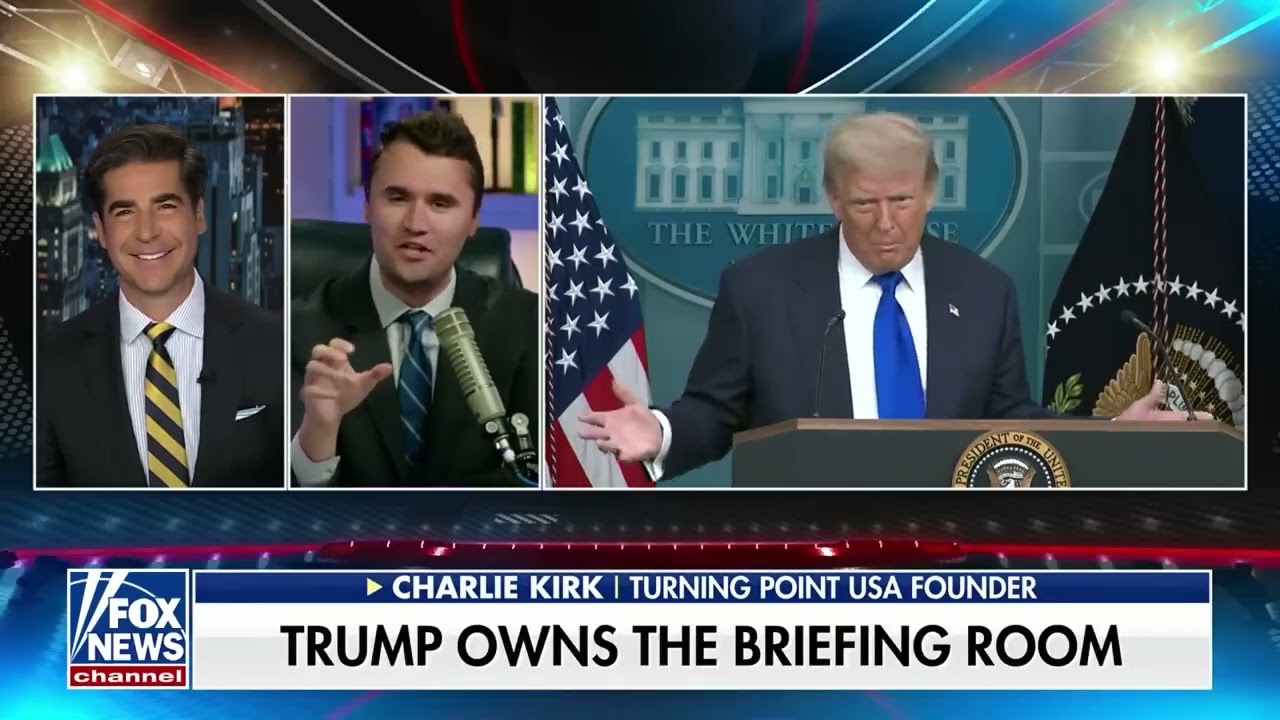
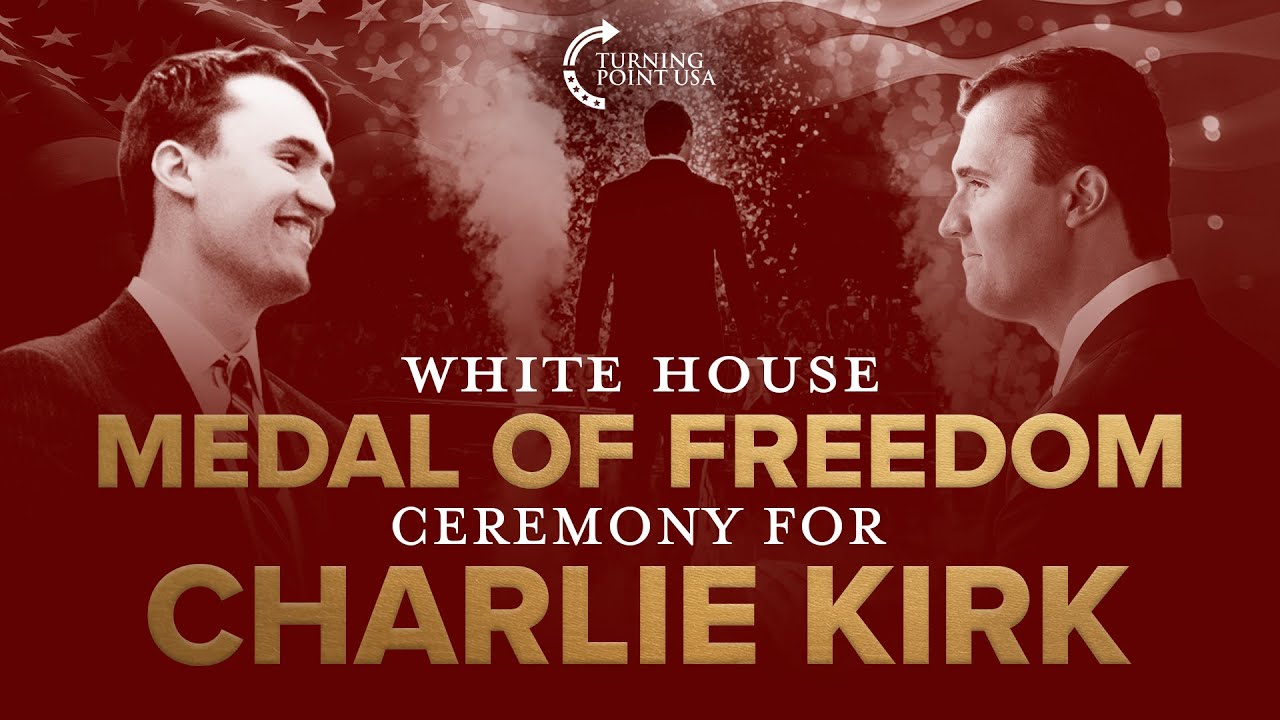
Charlie Kirk is the Founder and President of Turning Point USA, the largest and fastest growing conservative youth activist organization in the country with over 250,000 student members, over 150 full-time staff, and a presence on over 2,000 high school and college campuses nationwide. Charlie is also the Chairman of Students for Trump, which aims to activate one million new college voters on campuses in battleground states in the lead up to the 2020 presidential election. His social media reaches over 100 million people per month and according to Axios, he is one of the "top 10 most engaged" Twitter handles in the world. He is also the host of “The Charlie Kirk Show,” which regularly ranks among the top news shows on Apple podcast charts.
Charlie Kirk's Eye-Opening Journey Through South Korea and Japan Reveals America's Self-Inflicted Crime Crisis
Charlie Kirk returns from South Korea and Japan with a stark message: America's crime problem is a choice, not an inevitability. After walking six miles alone through downtown Seoul at dawn, exploring subway stations that resemble pristine shopping malls, and witnessing locals casually leaving luggage unattended in public spaces, Kirk confronts the harsh reality that the United States tolerates crime, homelessness, and urban decay that other nations simply refuse to accept. While the left attributes Asia's safety to gun control, Kirk argues the real difference is a high-trust society built on shared identity, tough-on-crime policies including the death penalty, and zero tolerance for lawlessness. His observations challenge Americans to ask why we accept third-world conditions in our cities when we have the capacity to create safe, clean public spaces.
Charlie Kirk returned from Asia with observations that fundamentally challenge how Americans think about urban crime and public safety. Broadcasting from the bitcoin.com studio, Kirk shared his experiences from South Korea and Japan, where he spoke at Build Up Korea, an event that mirrored Turning Point USA's AmericaFest aesthetic complete with pyrotechnics, lights, and intro videos.
What struck Kirk most wasn't the event itself, but what happened when he stepped outside his hotel. Waking at 5:30 a.m. after managing seven hours of sleep despite jet lag, Kirk decided to explore Seoul on his own. He walked six miles through downtown Seoul and discovered something remarkable: no homeless encampments, no people asking for money, virtually no graffiti, and spotless streets and public spaces.
The Seoul Subway Experience
Blake, who accompanied Kirk on the trip, insisted on showing him the subway station. When Kirk asked if it was safe, Blake laughed and responded that the entire country is safe. The subway stations in Seoul bear little resemblance to their American counterparts. For approximately one dollar per ride, passengers enter immaculate facilities that look more like clean shopping centers than transportation hubs.
The video Kirk recorded in the subway station shows gleaming floors, crane games for entertainment, and an overall atmosphere of order and cleanliness. The contrast with American subway systems is jarring. Kirk noted the amount of filth, crime, and violence that Americans simply accept as normal would be completely foreign to South Koreans.
A Different Concept of Safety
Kirk's attempt to ask hotel staff about safety revealed a cultural gulf. When he asked the doorman concierge if it was safe in South Korea, the staff member didn't understand the question. After Kirk tried to clarify whether he might get mugged or have things stolen while walking the streets, the concierge seemed confused about why anyone would worry about such things in Seoul.
This exchange highlighted what Kirk sees as different planetary realities. In South Korea's major cities, the idea that someone would feel unsafe due to crime is nearly incomprehensible. This stands in sharp contrast to American cities where concerns about personal safety are routine.
The Inflatable Chair Test
One video Kirk shared went viral and particularly bothered critics on the left. It showed public spaces in Seoul filled with inflatable cushion chairs where people sat reading. Kirk observed that such amenities would last approximately 35 seconds in most American cities before being vandalized, stolen, or destroyed.
His point was simple: you can have nice things when you don't tolerate crime. South Korea doesn't tolerate it, and Kirk argues America shouldn't either. Crime, in his view, is a choice that societies make through their policies and enforcement priorities.
The Gun Control Red Herring
Critics responded to Kirk's observations by attributing Asia's safety to strict gun control laws. Kirk rejects this explanation entirely. He points out that gun control doesn't explain the absence of muggings, stabbings, graffiti, homeless encampments, or general disorder. Japan, he notes, has no shortage of knives in its many sushi restaurants, yet knife crime remains extremely rare.
The real difference, Kirk argues, isn't gun laws but the existence of a high-trust society. Both South Korea and Japan maintain strict criminal justice systems, including the death penalty and serious prison conditions. They demonstrate the political willpower to enforce laws and maintain order that American leaders often lack.
Luggage Left Unattended
Perhaps the most striking example of South Korea's high-trust society came from everyday observations. Kirk showed images of luggage sitting unattended outside convenience stores. People simply leave their belongings in public while they shop, confident that no one will take them.
Blake experienced this firsthand at the airport, casually leaving his bag at the gate without concern. When Kirk asked where his bag was, Blake explained that in South Korea, you just leave your stuff around because no one will take it. This level of trust is nearly unimaginable in most American contexts.
What Creates a High-Trust Society
Kirk argues that gun control has nothing to do with this phenomenon. Instead, he points to several factors that create high-trust societies: a serious picture of national identity, shared community values, common language, and zero tolerance for crime and disorder.
He acknowledges that South Korea and Japan have chosen to maintain racially homogeneous societies, though he's careful to note he's not prescribing that approach for the United States. America, he says, has a different mission statement as both a people and a proposition.
America's Dual Identity Crisis
Kirk has evolved in his thinking about American identity. He admits that ten years ago, he believed America was "just an idea." He now rejects that notion as incomplete. While America does have a propositional element to its national identity, it cannot be only a proposition without also being a people.
A nation that is purely propositional, with no sense of peoplehood, ultimately has no nation at all. Kirk argues that America must be both a people and a proposition, not one or the other exclusively.
The Worldwide Phenomenon
Kirk's trip revealed that the challenges America faces aren't unique. South Korean patriots fight against lawfare in their country. Japan confronts mass migration pressures. These are worldwide phenomena affecting developed nations across the globe.
However, what distinguishes successful societies from failing ones, in Kirk's view, is the willingness to take a stand. The hard work has already been done in America, he argues. The solutions to crime aren't complex or unknown. What's lacking is political willpower to stand up to what he calls "Democrat, soft on crime, open prison, prison reform nonsense."
America's Choice
Kirk's central thesis is that Americans have chosen to live with high crime, filthy public spaces, and urban decay. These conditions aren't inevitable results of America's diversity or size or any other immutable factor. They're the result of policy choices and enforcement priorities.
South Korea and Japan demonstrate that safe, clean, orderly cities are achievable. They require tough-on-crime policies, serious consequences for lawbreaking, and a shared commitment to maintaining public spaces. Most importantly, they require leaders willing to make and enforce these choices despite political opposition.
A Challenge to American Exceptionalism
While Kirk maintains that America is the greatest nation ever, he's unwilling to accept that greatness requires tolerating third-world conditions in cities. Quality of life issues like crime, homelessness, and public disorder shouldn't be areas where America lags behind other developed nations.
The images and videos from his trip serve as a challenge: if South Korea can maintain subway stations that look like pristine shopping centers, if Japanese cities can be safe enough that crime seems like a foreign concept, why can't American cities achieve the same standards?
The Path Forward
Kirk's message to Americans is that restoration is possible. The country once had safer cities and cleaner public spaces. The knowledge and capability to achieve these conditions again exists. What's needed is the collective will to demand better and the political courage to implement policies that work, even when they face opposition from those who prioritize other values over public safety and order.
His journey through Asia serves as both an indictment of current American urban conditions and a reminder of what's possible when societies decide they won't tolerate crime and disorder. The question he poses is whether Americans will continue to accept conditions they would find unacceptable anywhere else in the developed world.