Chuck Grassley Exposes Jack Smith's Secret Reading of Congressional Text Messages During Trump Investigation
Enjoying this? Share it with someone who needs to see it.
Up Next
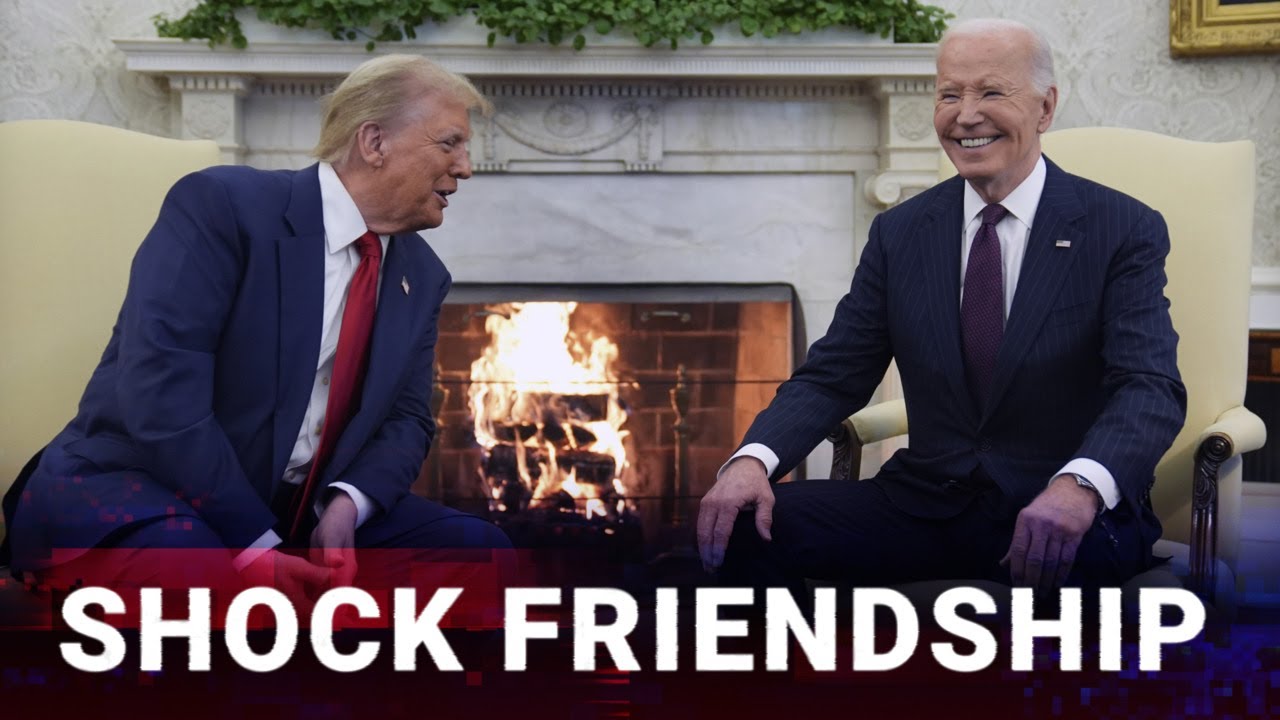
Joe Biden Welcomes Donald Trump Back to White House With Enthusiasm That Shocked the World
4:40
Kamala Harris Delivers One of Her Worst Performances Yet at CNN Town Hall Event
17:52
Megyn Kelly and Rudy Giuliani Expose Fox News Ban on Charlie Kirk and America First Conservatives
5:50
Chuck Grassley Exposes Jack Smith's Secret Reading of Congressional Text Messages During Trump Investigation
Senate Judiciary Committee Chair Chuck Grassley reveals that former Special Counsel Jack Smith secretly collected and read text messages from over 40 members of Congress during his investigation of President Trump in 2022-2023. The communications, which included messages between lawmakers and White House officials, were obtained through the National Archives but allegedly reviewed without proper constitutional safeguards. Republicans accuse Smith of perjury after he testified under oath in December 2024 that his probe didn't collect text message content. The revelations have sparked bipartisan concern, with even Democratic Senator Cory Booker and former Congresswoman Karen Bass among those whose messages were reviewed. Grassley announces plans to bring Smith back for a public hearing, accusing him of running "roughshod over the institution" and trampling constitutional protections. During separate confirmation hearings, Acting Attorney General Todd Blanche commits to transparency on ongoing investigations, including the Jeffrey Epstein case files.
Senate Judiciary Committee Chairman Chuck Grassley dropped a bombshell revelation that former Special Counsel Jack Smith's team secretly collected and read text messages from more than 40 members of Congress during their investigation of President Trump. The communications spanned 2022 and 2023, occurring during the final weeks of Trump's first presidency.
The records, which Grassley released after they were turned over to his committee by the Department of Justice, show that Smith's operation obtained these messages through the National Archives. The text messages included communications between lawmakers and Trump administration officials, covering topics like legislation and investigations—standard exchanges between the executive and legislative branches.
Constitutional Violations Alleged
Grassley accused Smith of running "roughshod over the institution" and blowing through constitutional protections. "Smith's operation cut corners and blew through constitutional stop signs instead of respecting them," Grassley stated during his announcement. "The White House messages obtained and reviewed by Smith's team included communications with many senators and representatives. The communications included messages with members on this committee including this senator."
According to the released records, Smith's team downloaded and reviewed the text messages within an hour of receiving them from the Archives, allegedly without implementing proper constitutional safeguards to protect privileged legislative communications. The messages contained information that Grassley says was "irrelevant to Jack Smith's case against then citizen Trump" but was "intentionally shared" rather than being walled off.
Perjury Accusations Mount
Several Republican lawmakers are now accusing Smith of lying under oath. During a December 2024 deposition with Congress, Smith was specifically asked about the content collection:
"The records that you requested from the senators, did they include the content of the phone calls?" Smith was asked.
"No," he replied.
"The records that you requested, did they include the content of text messages?"
"No," Smith answered.
Senator Rand Paul, whose texts were among those collected, reacted strongly on social media: "December 2024 Jack Smith swore under oath he didn't spy on text messages belonging to members of Congress. Today, new evidence confirms he spied on dozens of members of Congress, myself included. This is a blatant abuse of power and exactly what our founders warned about."
Senator Josh Hawley added: "It looks like perjury."
Bipartisan Impact
While most of the lawmakers affected were Republicans, the list also included unexpected names from the Democratic Party. New Jersey Democratic Senator Cory Booker and former Democratic Congresswoman Karen Bass, now the Mayor of Los Angeles, both had their text messages collected and reviewed by Smith's team.
Congressional correspondent Bill Melugin reported that lawmakers across party lines are expressing outrage. One Republican stated: "First of all, it is outrageous and disgusting. It shows you exactly what the Biden administration was."
Another affected lawmaker said: "I am pretty irritated. I was irritated when I knew they were reading the text messages. I'm not a lot happier to know it was me."
Legal Analysis of Smith's Actions
Legal experts analyzing the situation suggest the matter falls into a gray area regarding potential perjury charges. The key lies in the specific wording of the questions Smith was asked under oath. He was questioned about calls and messages that his team directly requested through subpoenas to phone companies, not about text messages that came as part of broader records requests to the National Archives.
A Fox News analyst explained: "Best case it was sloppy, worst case it was intentional. As Chuck Grassley aptly said, they trampled through and steamrolled constitutional protections of sitting members of Congress."
The analyst continued: "What it appears Smith's team didn't do was properly filter out those text messages when they received these messages, which they did lawfully acquire. They needed to take a look and say we've got to wall those off because those are constitutionally protected and they are not relevant to our criminal probe. It appears they didn't do that. In fact, within an hour of receiving the text messages from the Archives, they went and downloaded them all and read them."
The Scope of Smith's Investigation
Smith's probe cast a wide net in its attempt to build a case related to January 6 and alleged efforts to overturn the 2020 election. The investigation included reviewing messages from numerous high-profile Trump administration officials, including Mike Pence, Ivanka Trump, Stephen Miller, and Donald Trump himself.
Critics argue that Smith's team overreached in their "quest to prove that there was some large conspiracy to overthrow the government." In the process, they not only requested toll records from phone companies for members of Congress without notifying those lawmakers, but also accessed and reviewed protected communications between White House officials and legislators.
Grassley Promises Public Hearing
Chairman Grassley announced plans to bring Smith back before the Senate Judiciary Committee for a public hearing. The 92-year-old senator has been at the forefront of exposing what he views as constitutional overreach by the Special Counsel's office.
The planned hearing will give lawmakers an opportunity to question Smith directly about the collection and review of their private communications, as well as to probe whether his December testimony was truthful or deliberately evasive.
Todd Blanche Addresses Transparency
During his confirmation hearing for Acting Attorney General, Todd Blanche faced questions about various investigations, including the Jeffrey Epstein case. Democrats brought up the issue, marking a shift from what critics describe as four years of silence on the matter during the Biden administration.
Blanche responded forcefully: "Remember, for four years there wasn't a peep about Jeffrey Epstein. The Biden administration did nothing to be transparent about the Epstein case. When it comes to the victims of this horrible man, we will never, never not talk to victims. We will never not do everything we can to prosecute anybody that committed any crimes against any of these women. There are no closed investigations. If we learned today, if we learn next week, if we learn next month that there is an individual that we can investigate, indict and prosecute out of the Epstein files, you better believe we will."
Legal analysts gave Blanche credit for the Trump administration's rapid release of Epstein-related files, noting that it represented "a ton of work" completed in a short timeframe. They also pointed to Blanche's broader push for transparency on issues including fraud, the Southern Poverty Law Center's activities, the Biden administration's targeting of parents at school board meetings, and the treatment of pro-life activists.
The Reality of Epstein Prosecutions
Regarding potential future prosecutions related to Epstein, legal experts offered a sobering assessment. One analyst noted: "At the end of the day, and this is a hard truth for people to swallow but it is, Jeffrey Epstein is dead. He died in prison. People were very disappointed, understandably so, that he was not brought to justice in the legal system before his death. And there was a strong case against him."
The analyst, who was at the Department of Justice when Epstein was found dead in his cell, added: "But dying in a prison cell, whether one kills themselves or you want to believe he was murdered, I think is a pretty—there is something righteous about that in some ways for those victims."
Importantly, victims still have legal recourse. Statutes of limitations for crimes involving minors vary by state, with places like New York and Florida offering extended windows for prosecution. Victims can file reports with police departments and contact local prosecutors to pursue cases against individuals they believe were part of Epstein's circle.